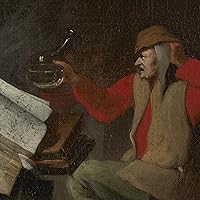
A Four Thousand Year History rewrites science's past. Instead of focussing on difficult experiments and abstract theories, Patricia Fara shows how science has always belonged to the practical world of war, politics, and business. Rather than glorifying scientists as idealized heroes, she tells true stories about real people - men (and some women) who needed to earn their living, who made mistakes, and who trampled down their rivals in their questfor success.Fara sweeps through the centuries, from ancient Babylon right up to the latest hi-tech experiments in genetics and particle physics, illuminating the financial interests, imperial ambitions, and publishing enterprises that have made science the powerful global phenomenon that it is today. She also ranges internationally, illustrating the importance of scientific projects based around the world, from China to the Islamic empire, as well as the more familiar tale of science in Europe, fromCopernicus to Charles Darwin and beyond.Above all, this four thousand year history challenges scientific supremacy, arguing controversially that science is successful not because it is always right - but because people have said that it is right.
Patricia Fara is a historian of science at the University of Cambridge. She is a graduate of the University of Oxford and did her PhD at the University of London. She is a former Fellow of Darwin College and is currently a Fellow of Clare College where she is Senior Tutor and Tutor for graduate students. Fara is also a research associate and lecturer in the Department of History and Philosophy of Science. Fara is author of numerous popular books on the history of science and has been a guest on BBC Radio 4's science and history discussion series, In Our Time. She began her academic career as a physicist but returned to graduate studies as a mature student to specialise in History and Philosophy of Science, completing her PhD thesis at Imperial College, London in 1993.
Her areas of particular academic interest include the role of portraiture and art in the history of science, science in the 18th century England during the Enlightenment and the role of women in science. She has written and co-authored a number of books for children on science. Fara is also a reviewer of books on history of science.
This is not a book to be lightly tossed aside, but one to be hurled with great force. I'm not sure who first came up with this quote, but I have never found it more fitting. It is a pity to say this, as there is much interesting material covered, but the knee-jerk relativisation with which every chapter is inevitably terminated outweighs any merit. The book attempts to do what it alleges, briefly covering Babylon, Ancient Greece, China and Islam, albeit missing India, the source of our numeracy and numeration. However, as it gets to the revolution in European science, the narrative becomes more and more saturated with the worst kind of cod pseudo-philosophy. Read this book unfamiliar with the material, therefore, and you will come away with a good general impression of the chronology of scientific evolution, but at the cost of a freight of unsupported value-judgements and distorted pop-science versions of the real advances.
About a third of the way in I was already feeling irritated, but the crude naivety of the cultural relativism diminished, only to raise its head again at the end. Towards the end the author is committing such crashing solecisms as endorsing the view that genes cannot be "selfish", a characterisation whose limits Dawkins has been absolutely clear in explaining, and uncritically transmitting climate-denialist talking points about impending ice-ages and scientists having a financial interest in prognosticating disaster to acquire grant funds. (This last conspiracy-theoretical gem uncritically handed on from Roy Spencer, no less.) Superficially plausible when one is unfamiliar with the territory, the full weakness of this work grips one in its flabby tentacles when it trespasses on familiar ground.
The author relativises "Western" science by defending the "spiritual" thrust of Islamic enquiry, and perhaps vice-versa, which is all very well, but Western science surpassed Islamic during the Enlightenment in ways that are objectively verifiable and utterly undeniable. A spiritual quest is all very pretty but it is not what we understand by science today. The abstract search for objective knowledge is not only superior in terms of results, it is also clearer conceptually. Clarity seems not to be an aim that the author endorses, however, as she conflates jargon with secrecy. Any technical field develops a jargon, of course - to communicate technical concepts clearly, you need the terms to fit them.
Worst of all, the author is allegedly a philosopher of science yet she does not even seem to communicate Kuhn clearly. It is not mounting evidence that drives paradigm shifts but something far more nebulous - more of a general feeling that the old paradigm is not elegant. As Kuhn said, the epicycles of Ptolemaic cosmology were not measurably inferior to the predictions of the Copernican model. The results were to begin with about as good as each other, but the idea of epicycles was ugly. It is only in retrospect that we can see that heliocentrism is objectively more true - it predicts the positions of planets not merely as seen from Earth but as seen from a spaceship on the other side of Jupiter. In this sense, and many others, cultural relativism fails, and so do the author's value-judgements and appeals to motivation: Science gets results.
Rahat okunan,karmaşık teknik terimlerin ve terminolojinin kullanılmadığı son derece keyifli ve sürükleyici bir kitap. Oldukça soyut ve zihinde canlandırması zor süreç,kavram ve alet edevatı bile çok basit bir şekilde anlatmış yazar.
Kitabın hacmi göz korkutmasın üslubu çok akıcı,bölümlerin uzunluğu çok yerinde olduğu için okuması kolay diyebilirim. Ancak ismi dört bin yıllık bilim tarihi olsa da genelde avrupa özelde ingiltere odaklı diyebilirim çünkü ağırlıklı olarak avrupa (oranlarsam %20-25) ve ingiltere (%80-75) deki gelişmeler anlatılmış.
Tabiki antik medeniyetlere de değinilmiş başlangıç adı taşıdığı için ancak mesela uzak doğuda insanlar bilim namına ne yapıyordu sorusunun cevabını arayanlara hitap eden bir kitap değil.
Yazar bilim tarihçisi dolayısıyla bilimin tarihsel sürecini anlatırken çok iyi bir aktarım diline sahip. Süreci ve gelişmeleri birbirine çok rahat bağlayıp okuyanın kafasına oturmasını sağlıyor ancak daha yakın döneme ait bilimin meşgul olduğu sorunlar ve olgularla ilgili son bölümler bana çok üstünkörü geçilmiş gibi geldi. Sanki güncel ve yakın tarihli meseleleri çok iyi takip etmiyor izlenimine kapıldım.
Bilim tarihine merakı olanların okumalarını tavsiye ederim dört bin yıl gibi bir süreç ya da 400küsür sayfa gözünüzü korkutmasın yağ gibi akıyor kitap ver herşey derli toplu biçimde kafanıza oturuyor.
Patricia Fara has the hard academic chops - a degree in physics - and exactly the right contextual background - a PhD in History of Science - to attempt a book such as this, but as all scientists know, the right ingredients do not always provide the expected outcome. Fortunately for us, Fara is both well practiced and extremely capable, delivering a wonderful, insightful and non-traditional perspective on the history of science.
Fara’s logical framework is not just a chronological retelling, but is grouped into seven sections containing logical themes: Origins, Interactions, Experiments, Institutions, Laws, Invisibles and Decisions. The book does unfold sequentially, but each section’s thematic underpinning helps readers link the seemingly unrelated events of a particular era. The thematic approach allows Fara to bring in important points or relations that are completely ignored elsewhere. For example, the slightly different German approach to experiments and their view of Naturalphilosophen is well explained and allows readers to reflect on our British-American centric views of science. Later, Fara takes dead aim at the common misconception of the scientific revolution, showing instead the inevitable intertwining of commerce, trade, culture and politics. Similarly, the chapter on Uncertainties (concluding the Invisibles section) was a delight to read, weaving together Freud, Einstein and “the 20th century’s most important philosopher of science”, Karl Popper.
For those familiar with the subject, Fara’s storytelling is more akin to Bryson’s entertaining “A Short History of Nearly Everything” than it is to Stewart’s more analytical “Why Beauty is Truth: The History of Symmetry”, though she shares with the latter a very strong scientific imprint - a powerful combination. Enhanced by a crisp prose, interesting anecdotes, and a generous sampling of interesting illustrations, Fara combines the best mix of storytelling, scientific facts, and academic opinion. The accompanying illustrations - 59 of them - are interesting, illuminating, always germane, and well explained in the body.
With respect to the groundbreaking scientific discoveries themselves, Fara provides explanation not just of the discoveries, but also: their historical context; as noted above their conceptual links to other, seemingly unrelated events and discoveries; and to their lasting impact on future scientific thought. For example, Darwin’s Theory of Natural Selection (commonly referred to as his Theory of Evolution) receives the recognition it deserves, but it is featured not just as the groundbreaking science it was at the time, but also as a catalyst for more discovery as its truth was debated over the following decades.
The role of women in science, and the treatment of women (and non-Nordic races) is firmly and repeatedly noted, as befits an author whose previous books include “Pandora’s Breeches: Women, Science and Power in the Enlightenment”. Interesting too are the many examples of research practices we would now consider unethical, and in particular where they took place (e.g. USA, Sweden), and who conducted them (e.g. Pasteur).
Fara’s book is an excellent overview of the triumphs (and failures) of science over the past four millennia. She gives structure and context to what appear to be isolated islands of discovery - discoveries that have advanced our knowledge and made our lives easier, richer, or healthier - and in just over 350 pages she explores these far flung islands to map a storied archipelago. Well researched, well written, and hopefully well read.
Patricia fara mempunyai ketajaman penulisan seorang jurnalis, pemerhatian yg mendalam seorang akademik dan sikap sinikal seorang skeptik.
Buku Science 4000 year of history sememangnya unik bagi genrenya. Ada hampir sedozen bab besar yang kemudiannya dibahagikan pula kepada topik2 cambahan. Setiap satu daripadanya hanya dinamakan dgn satu perkataan (yg relevan dgn subjek penulisan ketika itu) spt Invisibles, Institutions, Laws. Setiap subtopik itu ditulis dalam gaya esei atau artikel dalam erti kata ia ditulis secara berfokus kepada subjek yg khusus. It is rather discursive instead of pedantic. So, setiap topik boleh dibaca secara bersendiri (relatifnya). Namun selesai membaca, pembaca akan menyedari yg penstrukturan sebegitu menjumlah menjadi lebih daripada yg disangka.
Aku perlu ikhtisaskan lagi apa yg aku maksudkan dgn unik bagi buku. Patricia fara menanggap subjek kajiannya lewat dinamika institusi yg berbilang yg menjadi kayu ampu kepada penyebaran dan perkembangan perusahaan sains. This is definitely not a great man's (or scientists) account.
Fara melucutkan selendang sepanjang 4 ribu tahun yg menyelubungi kisah sejarah sains dan -aku katakan ini tanpa sebarang percubaan untuk menjadi hiperbolik- beliau effectively menelanjangkan sains melalui kaca mata sejarah. Selepas membaca buku ini, adalah sukar utk pembaca menerima lagi gambaran perkembangan sains yg muluk2 dan cantik2 sahaja. Sains berkembang pesat bukan sahaja di makmal dan balai cerapan tetapi juga di balik pintu istana raja, di pasar2 awam, di pelabuhan2 besar, di rumah2 individu pengumpul artifak dari serata alam, di kawasan bawah tanah serta di medan perang. Hakikatnya sains seperti juga perusahaan2 manusia yg lain, sering bersekutu dgn perdagangan, ketenteraan, dan tampuk kekuasaan bagi melangsungkan agendanya itu.
Dan juga saintis yg kemudiannya ditabalkan oleh dunia kontemperer sebagai tokoh2 pembaharuan atau epitome of a great man selalunya tidaklah begitu out-of-this world bila diteliti. Newton spt kata JM keynes bukanlah saintis yg pertama, sebaliknya adalah magi yg terakhir.
Persoalan2 utama yg melanda sains selalunya dibayangi dgn pengaruh kuasa politikal ketika itu. The author's treatment bagi abad 18 dan 19 adalah spot-on di sini. Era Zaman Pencerahan ini merupakan era pengklasifikasian di mana saintis2 dan pengkaji2 mula menilik cara2 pengklasifikasian yg baru terhadap ilmu2 semasa. Hanya menjelang pertengahan abad ke-19 baharulah istilah2 pegun spt sains dan biologi wujud umpanya. Hasil2 keputusan yg dicapai bukanlah sangay didapati kerana suatu nilai objektif yg terkandung di balik pengkategorian tersebut, tetapi sering dipengaruhi dgn perkiraan2 yg non-rasional atau simbolik.
This book have a tinge of feminism in it which is good if youre wondering why you didnt find any notable scientist who are also women in history.
Untuk topik agama vs sains, aku rasa penulis is overly trying to be sophisticated. As a result aku tak begitu yakin dgn penjelasan dan konklusi yg diberikannya.
The writing is just ok but the ordering of events and shifting of focus throughout the writing is expertly done.
An excellent read, but not exactly what I was expecting. This not an academic text charting the development of scientific discovery but rather more of an Arts and Humanities take on how human knowledge got to be where it is; a lot of exposition is built around various pieces of art and explaining their context and meaning (lending it an Art History feel to the whole thing, which was an interesting take on things).
The book is split into themed chapters, starting with Origins (which contains an excellent section on how contemprory views of early scientific history have squeezed centuries of disparate, progressive thinking into neat little strata), and ending with Decisions, speculating on the morals and ethics of modern science, and future we face as a species thirsty for knowledge and power.
It outlines the path of science as controlled first by religion and now politics. In its infancy, science and religion were easy bedfellows, and for all intents and purposes one and the same thing; science was used to prop up religious accounts of the nature of world. As the discoveries of Copernicus, Newton, Darwin and the like challenged religious orthodoxy, science, as we know it, began to diverge from natural theology and has now become a tool of governments and political doctrines.
What I most enjoyed was Fara’s attempts to redress the balance in terms of the typically chauvinist history presented of the singular, usually Western, scientific hero who periodically changed the way we thought about the world overnight. There is a keen emphasis on the collaborative and cumulative nature of all scientific endeavor, and that self-marketing and ambition are usually the drivers that mean we now associate particular discoveries with one man. There is also a passionate defence of the largely forgotten role of women in the history of science, which I found refreshing.
It was interesting to read of how arbitrary the path of development now seems in hindsight; Fara frequently stresses how the contemporary culture, and later economy, shaped and defined what was science and what wasn't, what was interesting and what wasn’t. Whilst kudos is also due for highlighting the largely downplayed role of Arab and Asian (i.e. ‘non-Western’) cultures in science, I found that in trying to be so even handed the book sometimes steered uncomfortably close to a strange moral relativism
Very enjoyable and informative read, with a curious and heady blend of hard science, history and art. I did find the closing chapters discussion the future of science rather weak – I know we look in to the future by studying our past and all that, but perhaps the prognostication should have been left to others. This book is not just one for science buffs, but written with a clarity that makes it a good read for even those with just a passing interest in man’s greatest enterprise.
I have just finished this book and it was an amazing experience for me. It is obvious that long working hours have spent to writing this book. There are tons of knowledge, historical events and popular names in 7 chapters. But in my opinion the most impressive main idea about on this book is that the author is included non-popular names into historical scientific events.
As I mentioned above the book is divided 7 different chapters and all chapters start with a quote which is selected by Patricia Fara. (Origins, Interactions,Experiments, Institutions, Laws, Invisibles, Decisions)
In all chapter the author reminds us that the science is a kind of cumulative progress and the most famous scientists were not "a revolutionary heroes" or "lone genius" as we thought. She does not forget to honor that the non-popular heroes behind the dozens of scientific events.
Astrological observations in Babylon is really well explained with the facts. With this scope the author brings a harsh criticism of Euro-centrism on the basis of solid evidence in Islamic golden era or China's history.
She is cleverly shaping to whole stories with the chronologically from beginning to until ending chapter. With the author's template you can notice simply that the science evolved with socially and politically factors.
Addition to these she also tries to explain how women have been blocked by men from the history of science for hundreds of years...
I'd like to point out that, unfortunately, she usually wears "a Britain glass" in this global story so for this reason whole story is leading us by British ideas. It creates lack of idea diversity, especially, to making interpretation about on industrial revolutionary.
Nevertheless, this book can be defined as "a masterpiece" or "science history 101" that tries to look at from a wide angle perspective about on astrology, geology, cosmology, modern physics, Darwinism, environment with political sense. We're talking about on, easier said than done, 4000 years...
Finally, she has shared her valuable sources in the last pages of book therefore it's a big opportunity to get deeper information about of all this scientific topics!
Fara has not one birthplace for science, but three. The book is almost unique among popular surveys of the history of science in devoting substantial attention to the Chinese natural philosophical heritage. Almost as ancient as the Babylonian tradition, this is certainly the oldest continuous one, and Fara draws from recent scholarship to flesh out an interesting picture. But this attention peters out fairly early, as the book shifts to the more canonical origin for science.
That would be Europe. For all the attention that Fara devotes to debunking heroic narratives supposedly perpetrated by most historians of science—Isaac Newton draws her particular ire—from Babylon and China she goes on to replicate much of the standard narrative: first Greece, next a light touch on Rome (mostly Galen), the Christian West through to the early modern era, and then a slower pace from the 18th century to the present (with a heavy, some might say excessive, attention to developments in Britain). We only glimpse China once or twice more and never really see Latin America or Africa except from shipboard. (On the other hand, her account of science and medieval Islam is spot on.)
Bu kadar sayfada anlatması imkansız olan bir hikayeyi, kusurlarına, eksikliklerine rağmen olabildiğinde derli toplu ve sistemli bir şekilde anlatmaya çalıştığı için takdire değer. Yüzyıllara dayanan bu süreci tekdüze ve tek boyutlu bir şekilde de anlatmıyor; bilim tarihinin her zaman ciddi deneylere dayalı olmadığını; bu süreçte rastlantılara, kişisel çıkarlara, şu anda “bilimsel” görülmeyecek türlü gelişmelere, siyasi çekişmelere, askeri kaygılara, etik tartışmalara da bol bol yer olduğunu gösteriyor.
En uzun sürede bitirdiğim kitap olarak benim için önemli bir yeri olacak. Zor bir kitap değil ama pandemi dönemi başlamışım anca bitirdim. Avrupamerkezci olmamaya çalışan ve her konuyu sıkmadan, önemli yerlerini anlatan keyifli bir bilim tarihi kitabı.
Science: A Four Thousand Year History is an unconventional take on the history of science. Unlike conventional histories, Patricia Fara, tries to debunk scientists and their achievements rather than celebrating them as heroic genusis in pursuit of reality. She Frequently emphasizes where notable figures were wrong or misguided and how their discoveries often involved luck or methods no longer accepted as scientific, often sitting in judgment of what contemporary prejudices colored scientific findings and ideas. Fara never discounts their ideas wholesale, but comes close on several occasions, especially if they come into conflict with our modern social norms and the feminist movement. She stresses how science is fallible and subject to personal, political, and material pressures.
In an effort to destroy the picturesque ideal of mostly European lone scientific genius making great discoveries isolated in their laboratories Fara traces the origins of science to several sources now thought of as magical or unscientific, such as concepts and techniques rooted in astrology and alchemy. Artisans and technicians, not just canonical philosophers and "scientists," have always been important contributors, she points out. She reminds us, too, that amateur observers and collectors have long played significant roles. These observations and many others along the same lines are not particularly controversial or surprising. Fara tries too hard at times to bolster the importance of minor figures, especially women, doing fairly mundane things that were important to scientific discoveries to the point that it feels like she would rather fore sack what the discoveries have given us as a society to build up minor role players to make up for a slight of history.
It is very substantive, thought-provoking, and briskly-paced. In support of the main themes Fara has interesting things to say about science and religion, non-Western contributions (with noticeable omissions; Rome, per-Colombian Americas, India), the contributions of women, the roles of scientific institutions, and many other important related subjects.
What a fascinating book, though a bit recycled. From what I know about the history of science and technology, this book was a broad survey reiterating what many other history of science historians have claimed. Nonetheless, she adds spice to it by writing it in narrative format while leaving room to analyze her evidence and give you an in-depth picture of what is going on. For instance, her chapter on the Early Modern period was fascinating. Fara's piece on Descartes disappointed me because he was much more than what she claimed, but, overall, the way she intertwined the relationship of Agrippan Magic with the search for knowledge, all culminating into what we call the birth of science today (or Newtonian Mechanics) was outstanding. Another thing I really enjoyed was he intentional implications that literature is as far removed from science as well think. It was implied andn ot really argued, but you could see in almost every chapter. In short, She really knows he stuff!
Sıkıştırılmış bir Dünya bilim tarihi. İnsanın bilime yönelik bakışının nasıl evrimleştiğini görmek açısından iyi. Bir de yazarın kişilere dayanan bir tarih yazımı yok, bilimin toplumsal üretimine iliskin de ipuçları var. Şimdiye kadar hep gözardı edilen halkın birikimi, kadınların bilimsel uretimdeki rolü ya da bilimin metalaşması, biliminsanları arasındaki rekabet gibi meselelere de yer vermiş. Ama kitap neredeyse tüm insanlık tarihini ele almaya çalıştığı için, doyurucu olamıyor. Belki böylesi de gereklidir.
Her ne kadar Avrupamerkezci bilim tarihi anlayışını eleştirse de tüm kitap neredeyse sadece Britanya'nın bilim tarihini anlatıyor. Ama ilginç bir şekilde Britanya'ya bu kadar odaklanması benim kitabı sevme sebeplerimden biri oldu. Kitap kavramlar üzerinden bir bilim tarihi anlatımı yapsa da aşağı yukarı bir kronoloji izliyor. Sermaye birikiminin, sömürgecilik yarışının, reklamcıların/pazarlamacıların, girişimcilerin ve medyanın modern bilimin gelişiminde ne kadar etkili olduğunu göstermesi bakımından önemli.
Not at all a history of four thousand years of science, but a general (and largely anecdotal) critique of such histories. Very well written and amusing but not exceptionally illuminating, though I can imagine it a provocative discovery for a naïve history-of-science consumer.
The author has such a huge bias against the "lone genius" theory of history (which is seriously flawed and exaggerated in nearly all instances) that she can't even mention a famous scientist without adding "and a gifted self-promoter". It's not as if the only quality of a good scientist is self promotion. Obviously the Crick/Watson versus Rosalind Franklin issue is a famous one, and Franklin deserves much more credit than she got initially. I think in the current retellings people go out of their way to point that one out. Sometimes though it isn't the person who discovers the crucial piece of evidence but the person who synthesizes all the available information and gets to the right idea first that matters. And sometimes it's not the first person to have an idea (Copernicus and heliocentrism) but the one that said it convincingly enough for anyone to listen. Science and technology is about progress, and stating an idea that doesn't cause people to move on from that point isn't contributing in a meaningful way to that progress. Even if you are more right or earlier than someone else.
The main thesis that the history of science and technology is far more complicated than the stories we're told in junior high (I guess middle school now) is definitely true. You lose people, however, if you insist on the complete story with all the contributions and backstories on everyone and everything all the time. I think most serious students of the history of ANYTHING understand that. I suppose it's good to be reminded of that, but the repetitive bludgeoning here is a bit much. And the indictment of the entire idea that some people really have contributed more to science than others, that some ideas really were key to accelerating progress and moving things forward.
The last chapter is largely a tirade about how technology is destroying the planet - again there is definitely some truth to this but it is itself a simplification of the real story. Ironic given the previous 300 pages of repeated rantings about the oversimplification of narrative. Then there's one paragraph that says that some people think technology is evil without understanding the higher standard of living that comes with it. Balanced "reporting" - and almost a self-reference or admission of guilt.
In summary, too complainy, too dedicated to the alternate hypothesis, and too anti-technology. Good to hear other opinions as antidotes to simplistic views and unabashed support of technology, but a bit over the top. She also got a couple simple facts wrong in her antinuclear complaints about Chernobyl and nuclear weapons. Not that I'm biased again antinuclear people - which I am - but I have more respect for the ones that can at least explain the physics correctly.
"Uma Breve História da Ciência", de Patricia Fara, conta, de forma cronológica, a evolução do pensamento científico desde os primórdios dos babilônios e gregos até os dias atuais. De plano, as interações entre ciência, magia, alquimia e religião são abordadas na tentativa de definir o fenômeno científico.
Deixando clara a inviabilidade de demarcação de um ponto inicial para a ciência, a professora de Cambridge indica não haver um pai único para o fenômeno científico, sobretudo diante do fato de que a ciência nada mais é do que a constante evolução dialética de saberes humanos a partir de métodos também em evolução.
De fato, todos os grandes inovadores científicos basearam suas descobertas em trabalhos anteriores, sendo impossível definir a pureza de quaisquer invenções. Nas próprias palavras de Isaac Newton: se enxerguei mais longe, foi porque estava sobre os ombros de gigantes.
A maçã de Isaac Newton, a chaleira de James Watt ou a pipa de Ben Franklin são boas tentativas de difusão da ciência a partir de marcos específicos ou de supostas descobertas heroicas. No entanto, a ciência não é apenas um resultado, um teorema, um produto ou amostra. Ela é integrante da sociedade humana e desenvolve-se paulatinamente, relacionando-se à indústria, ao comércio, à guerra, à paz, à prosperidade, à medicina e aos governos.
Aristóteles, Ptolomeu, Arquimedes, Pitágoras, Copérnico, Kepler, Newton, Lamarck, Watt, Lavoisier, Darwin, Mendel, Marie Curie e Pasteur, entre diversos outros, são alguns dos grandes nomes da ciência abordados na breve história de Patricia Fara. O mais importante, no entanto, é a certeza de que a ciência e sua história são contínuos em evolução.
Leitura recomendada de um livro denso e com muita informação.
Quite an unorthodox take on science and its history, starting from the title. The author gives strong emphasis on socio-economic contexts and political decisions as source and determining factors in the deployment of science as we know it today. Besides providing spicy demistifications, the book remarks that our current conception of science is peculiar and not necessary; and while we are nowadays supposed to look at it as the grand final destination of a millennial quest, we should instead remind that in many occasions in the past other cultures or civilizations purposely chose not to go ahead in such eminently materialistic and reductionist direction for some precise and grounded reasons, and not because they missed the opportunity or were intellectually or morally inferior. Readers looking for a linear sequence of events according to the canon will be both surprised and challenged, as the book is more interestingly organized in small chapters that try to capture stages that are rather self-contained and for this very reason partly overlapping in time, hence the opportunity and sometime the necessity of non-linear ordering with anticipations and backtrackings. The focus is only marginally on technicalities and in-depth descriptions of discoveries or ideas, but rather an the encompassing dynamics and adaptation of the very concept of knowledge acquisition and on its dovetailing with societal issues, religious beliefs, technical breakthroughs, commercial opportunities and geographical exploration - as best represented by the multifaceted discussion of evolutionism.
As one could glean from the title, this book covers A LOT of history. So much so that it was overwhelming and a tough read - one perhaps best left to science academics. While there were many fascinating insights in the book (how science is represented in art for example), Patricia Fara's strokes begin quite broad. Fara does then move into more specific contributions from significant figures in science - sometimes as just a single line or comment. I actually found this a bit frustrating because these comments were often things I would like to have explored more deeply! Fara, a Cambridge University professor, is extremely knowledgeable in this subject area and her insights are detailed and articulate.
The book is divided into seven sections: Origins, Interactions, Experiments, Institutions, Laws, Invisibles, and Decisions, and there are then several chapters in each section. For example, in the Experiment section we have: Exploration, Magic, Astronomy, Bodies, Machines, Instruments, and Gravity. It is difficult to generalize as there is much to examine in the history of science, but if I could, I would say that the four thousand year journey described here seems to have been an attempt to extract productive scientific principles from a variety of influences - religious, political, personal biases, magic, ideological, etc. I learned much about the roots of science and just how intertwined scientific processes have been with these other influences and the struggles that have taken place to extract them. The struggle continues...
Fara’nın “Dört Bin Yıllık Tarih: Bilim” kitabı, dikkat çektiği sorularla, insanın kafasını açan, düşündüren, heyecan veren bir okuma vaat ediyor. 510 sayfalık kitaba dönüp baktığımda, altını çizdiğim, yanına notlar, işaretler düştüğüm pek çok paragraf görüyorum. Fara, bilim tarihi birikiminden, anekdotlar, olgular, analizler açısından zengin ve besleyici bir seçme çıkarıyor okurun karşısına. Her dönemin taşıdığı düşünsel, kültürel eğilimleri, kuramsal düzeyde yürütülen iktidar savaşlarını, bunun bilimsel bilgi üretimine yansıyan yanlarını gösteriyor. Kitabın renkli yanlarından biri de, bilimle ilişkilendirilebilecek resimlerdeki unsurların taşıdığı dönemin kültürüyle ilgili sembolik anlamların okumasıdır. Fara’nın, bilim tarihi üzerindeki sorgulamasını yorumlardan ziyade, yer yer kritik sorular sorarak yaptığını söyleyebiliriz. Ana akım bilim tarihi yazımından gerçekten kopabilmiş midir kitap? Biz de sormakla yetinelim. Ama bilimin asıl mirasının bilimsel yöntem olduğunu vurgulamayan bir sorgulamanın, çağımızın ruhuna uygun bir biçimde bilim-karşıtlığına düşmeye hazır ince bir dengede duracağını belirtelim.
Pretty cool history of science by Patricia Fara, whose main intention going in was to smash simplistic narratives in the account (particularly that of Western paternalism over the sciences). I would say she does a pretty good job of doing that, giving us a nuanced history of science that shows us the development of the profession from its infancy in the astrological observations in Babylon to the emergence of sociobiology, environmentalism, string theory, and other trends in scientific discussion in the present day. Kudos to Fara for calling attention to the situation of women in the sciences too!
Una gran obra de divulgación sobre la historia de la ciencia y que abarca muchos períodos y lugares. Eso sí, lo que parecían atisbos de una buena crítica social, han acabado siendo eso, solo atisbos y frases muy vagas. Todo para contentar al lector y convencerle de que la práctica científica no es neutral, mensaje necesario, sí, pero demasiado superficial. Viendo las citas a Marx entiendo que la autora tiene conocimiento suficiente como para señalar debidamente a los responsables de la mala práctica científica. Por lo menos me alegra ver que valora como toca el potencial de la ciencia para mejorar la sociedad, aunque a veces haga conexiones de causalidad demasiado atrevidas y poco argumentadas.
This book is rather sobering and does an excellent job of being fair. It was refreshing to not have science glorified or condemned all the time. It has made me rethink the science media I consume and has piqued my interest in topics I wish the author had covered more: science in ancient Babylon, China, and the Islamic world. As someone not well versed in science beyond the basic college core this book was not beyond comprehension nor patronizingly simple in tone. Perfect balance for an introduction to the history of science.
I'm really into science, and I think that's why I finished it. It's a book with a nice proposal, but it gets lost into it. It's very boring most of the times, and as person who sees science as such an enthusiastic thing, the moments where I felt it were rare. I liked the way the author showed us some women that are not talked about when we think about story of science and tried to change the idea that most people has of scientist = genius. Reslly want to read more of Patricia Fara, but this one was not the best to start with.
What a fantastic achievement to compress the whole history of science and at the same time to present a modern non-Eurocentric interpretation which dares to dismiss great men and the scientific revolution. It is a brilliantly inclusive account which credits the non-European empires, women and artisans and often-dismissed periods like the middle ages. All contributed, not just Copernicus, Newton and the 17th century. The later chapters on Big Science also nail much of the debates on Bad Science. A modern classic.
Although the book had an engaging and informative start, it begins to sound like a rant after the early origins sections. I loved how Patricia debunked historians’ traditional approach to retelling science history and showed how their personal opinions often distort the story. However, it felt contradictory when she then presented the same history through her own strong viewpoint, essentially doing the very thing she had criticised. This shift turned me off the rest of the book.
Stopped at the end of the Introduction, greatly irritated and writing exclamation signs at several statements made there. Then I decided to read reviews and my suspicions were confirmed. I will not waste my time reading this book. I do not remember not reading a book (that I was eagerly looking forward; the contents looked interesting) after just reading the introduction. 0/5
Um livro enciclopédico, com um relato histórico como promete da história da ciência. Leitura longa mas progressivamente mais envolvente com o aproximar da era moderna. Muito interessante sobretudo para uma perspectiva diferente da luta da ciência pela afirmação, financiamento e evolução. Gostei muito!
I guess I'm not as interested in the history of science as I thought I was, because I only made it to 1700AD or thereabouts. Probably not much of scientific interest happened in the last 300 years, so if you read this book I think you can safely skip the last three centuries.