

What do you think?
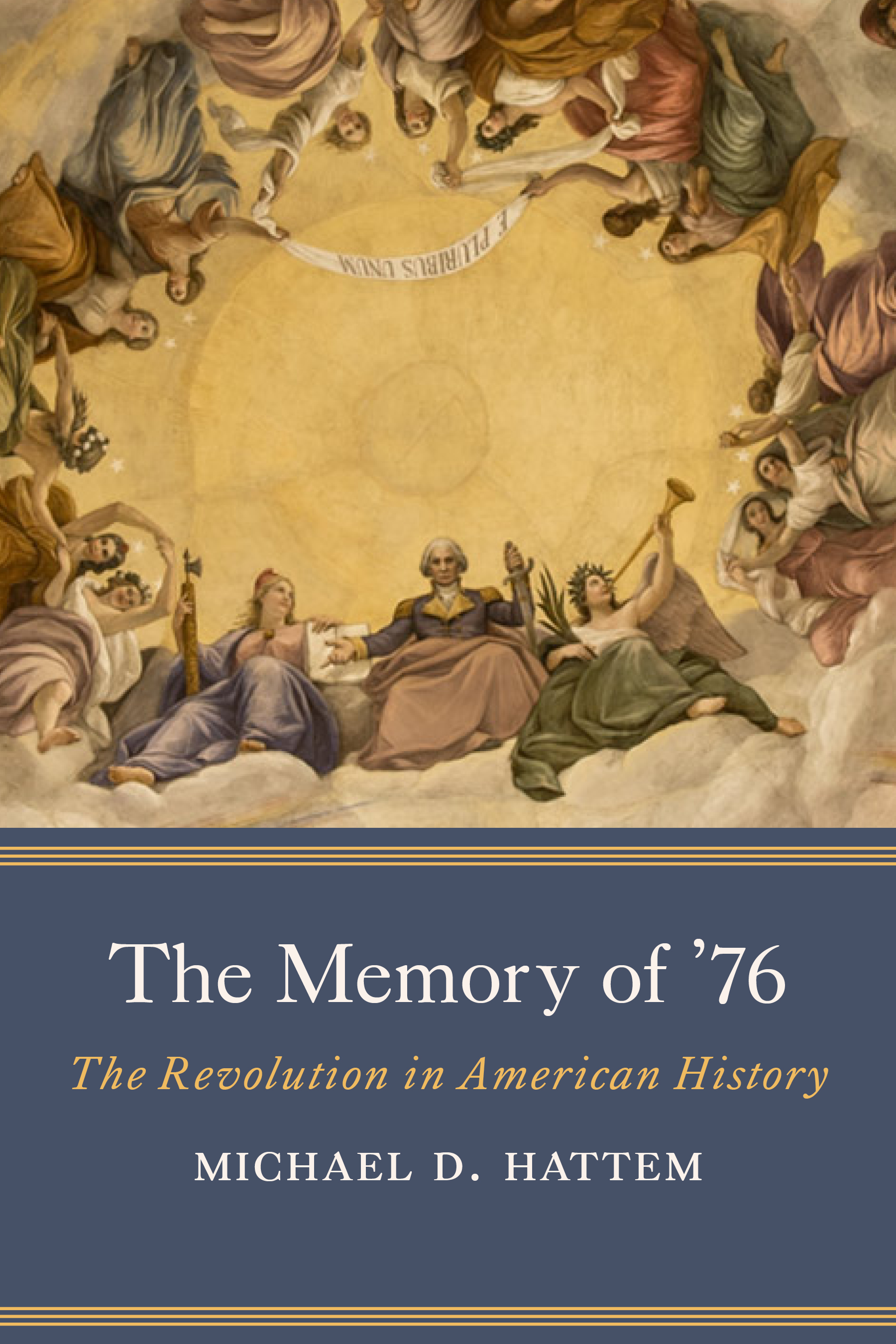
The Memory of ’76: The Revolution in American History
The surprising history of how Americans have fought over the meaning and legacy of the Revolution for nearly two and a half centuries
Finalist, 2025 George Washington Book Prize
Americans agree that their nation’s origins lie in the Revolution, but they have never agreed on what the Revolution meant. For nearly two hundred and fifty years, politicians, political parties, social movements, and ordinary Americans have constantly reimagined the Revolution to fit the times and suit their own agendas.
In this sweeping take on American history, Michael D. Hattem reveals how conflicts over the meaning and legacy of the Revolution—including the Declaration of Independence and the Constitution—have influenced the most important events and tumultuous periods in the nation’s history; how African Americans, women, and other oppressed groups have shaped the popular memory of the Revolution; and how much of our contemporary memory of the Revolution is a product of Cold War–era propaganda. Hattem argues that the memory of the Revolution has provided a “shared language” that generations of Americans have used to express their political beliefs as well as their visions of the nation’s future.
By exploring the Revolution’s unique role in American history as a national origin myth, The Memory of ’76 shows how remembering the nation’s founding has often done far more to divide Americans than to unite them, and how revising the past is an important and long-standing American political tradition.
Finalist, 2025 George Washington Book Prize
Americans agree that their nation’s origins lie in the Revolution, but they have never agreed on what the Revolution meant. For nearly two hundred and fifty years, politicians, political parties, social movements, and ordinary Americans have constantly reimagined the Revolution to fit the times and suit their own agendas.
In this sweeping take on American history, Michael D. Hattem reveals how conflicts over the meaning and legacy of the Revolution—including the Declaration of Independence and the Constitution—have influenced the most important events and tumultuous periods in the nation’s history; how African Americans, women, and other oppressed groups have shaped the popular memory of the Revolution; and how much of our contemporary memory of the Revolution is a product of Cold War–era propaganda. Hattem argues that the memory of the Revolution has provided a “shared language” that generations of Americans have used to express their political beliefs as well as their visions of the nation’s future.
By exploring the Revolution’s unique role in American history as a national origin myth, The Memory of ’76 shows how remembering the nation’s founding has often done far more to divide Americans than to unite them, and how revising the past is an important and long-standing American political tradition.
352 pages, Hardcover
Published July 23, 2024
About the author
Michael D. Hattem
3 books31 followersMichael D. Hattem is a historian of early America specializing in the American Revolution and historical memory. He earned his PhD in History from Yale University and BA in History from the City College of New York. He has taught a wide variety of early American history and American Studies courses at Knox College and Lang College at The New School.
Ratings & Reviews
Friends & Following
Create a free account to discover what your friends think of this book!
Community Reviews
Displaying 1 - 11 of 11 reviews

October 7, 2024
Best book that’s been assigned in grad school by a mile

December 10, 2025
The book examines, beginning with the year 1800, how the Revolution was viewed by successive generations of Americans. In terms of the research, it is truly impressive, especially in that it manages to cover so many eras. Yet, the premise sounds better than the read turns out to be, which is mainly about how different groups have attempted to define the Revolution for their own propagandistic purposes. By the end it doesn't seem that that much has been discovered, for do not partisans grasp at anything they can in order to sway their audiences?
I was surprised at the omission of the 1976 Freedom Train. I also thought the book might have had a section on Ho Chi Minh, as he referenced the Revolution quite often. For that matter, it might have discussed the Star Wars series of movies as part of their appeal is no doubt in echo of the Revolution.
I didn't care for the wording in some places. "Lafayette bought his own ship" could simply have been "Lafayette bought a ship". The passage discussing how Reagan talked about the Revolution in hopes of swaying Democratic voters to his side probably meant it was just one of the tools he used, but as written implies it was the only one. There were a few more examples of problematic wording as well.
A bit of amusement is to be had in realizing that Jefferson transformed from a New Deal Democrat under FDR to an individual liberties Republican under Reagan in just a couple generations. I guess the moral of the story is that in Jefferson's writings one can find anything desired if one but looks hard enough.
I was surprised at the omission of the 1976 Freedom Train. I also thought the book might have had a section on Ho Chi Minh, as he referenced the Revolution quite often. For that matter, it might have discussed the Star Wars series of movies as part of their appeal is no doubt in echo of the Revolution.
I didn't care for the wording in some places. "Lafayette bought his own ship" could simply have been "Lafayette bought a ship". The passage discussing how Reagan talked about the Revolution in hopes of swaying Democratic voters to his side probably meant it was just one of the tools he used, but as written implies it was the only one. There were a few more examples of problematic wording as well.
A bit of amusement is to be had in realizing that Jefferson transformed from a New Deal Democrat under FDR to an individual liberties Republican under Reagan in just a couple generations. I guess the moral of the story is that in Jefferson's writings one can find anything desired if one but looks hard enough.

September 1, 2024
Powerful story of how we use the Revolution to support our political, religious and cultural views. The memory of the American Revolution continues to divide us more than unite us, just like the original Revolution.

August 30, 2025
well-researched, well-organized, & well-written

March 6, 2026
An academic study of how America and Americans remember (and celebrate) the founding of our Republic. Hattem looks as celebrations centennials and semi-centennials, and at how the American Revolution was remembered in the past and how it's celebrated today.
For history buffs and academics, this study provides plenty of food for thought.
For history buffs and academics, this study provides plenty of food for thought.

December 30, 2025
An incredibly insightful telling of American history through the lens of how events and eras were shaped by the often changing memories of the revolution and the nation's foundational documents. I was fortunate to hear the author speak to my local historical society which whet my appetite to read this book. It proved to be a long read for me due to my taking an academic approach with highlighter in hand, but it was well worth the effort. It provides a unique look at U.S. history from 1800-present. Very impressive work by Dr. Hattem.

June 3, 2026
“The popular memory of the revolution has been an important vehicle through which Americans have defined and voiced their understanding of the present and their hopes for the future… generation after generation has reimagined the revolution in ways that are most meaningful and useful at the time.”
This book tells how the myth of the American Revolution follows the hero’s Journey. “Ultimately, the memory of the revolution has provided a nation that is still relatively young, with an epic, mythical past replete with heroes (reluctant and otherwise), villains, peril, daring escapes aided by a seemingly enchanted natural world, and meaningful revelations about how the world or nation should be.” Most significantly, it tells how the American Revolution is not only mythologized, but done so through a biased lens to skew the events and their meanings as propaganda or rhetoric in the narrow context of a modern lens. This involves the use of symbols and sites to push agenda, even including the restoration of Mount Vernon and Monticello, the establishment of colonial Williamsburg, and the traveling of liberty Bell centuries after the revolution to drive political and cultural selling points to justify specific groups’ skewed narratives.
In this telling and retelling of the national genesis, “Throughout our history, conflict over the memory of the revolution has tended to become more vehement and consequential when one or more of five circumstances exist: unusually high levels of political partisanship, economic uncertainty, active social movements against inequality and injustice, increased immigration (or perceptions of it), and major anniversaries.” Through this framework the author explains the theory through six phases of controlling the narrative of myth of the revolution:
1. Memorializing the revolution immediately after the war and Democratizing the revolution in the early 19th century. As the nation settled into its creation, the story of the war was captured through the romanticism of its ideals and focused on the socially elite leadership, none greater than the deification of G Washington after his death.
2. Sectionalizing the revolution in the decades leading up to the civil war, where “the revolution served as a battle cry for radical abolitionists, pro-slavery democrats, moderate republicans, women’s rights activists, southern matrons, free African Americans, confederates, and more. Some groups even had their own internal conflicts over narratives and meanings for the revolution.” In this era, the war’s narrative began to expand beyond the revolutions leadership to include all those involved, especially the common citizens and Soldiers.
3. Nationalizing the revolution from the end of the Civil War through 1915, where reconstruction, continued expansion west, and increased immigration turned the war into a foundation of unifying national identity for newcomers (and those with no direct ties to the war), and a platform for conservatives to create “us vs them” politics and biased social narratives tied to the revolution (SAR, DAR, and eventually UDC, etc).
4. Modernizing the revolution in the early 20th century, during which restoration of colonial sites were used (at least initially) to basically whitewash history by political/social/economic elites, meanwhile progressives/socialists attempted to claim closer identity to the ideological foundations of the revolutionaries.
5. Americanizing the Revolution after 1945, where additional research began to attempt to uncover a closer version of the truth about the revolution, as well as place it in the backdrop of fighting communism in the Cold War.
6. Contesting the revolution in the 1970s and into the new millennium, beginning with the cultural attempts to reject the capitalist “buy-centennial” agenda and activists voicing their opinions on how the revolution should be remembered in the context of what the founding of the nation has meant to them.
The argument of what the revolution means continues today, with the creation of far right role-playing and using revolutionary symbols to push their agendas, academia struggling to evolve on how to appropriately teach new generations about our origins in the context of our time, and the cultural influx of “founder chic” for books, movies, and plays interpreting the lives of our revolutionary predecessors.
This book tells how the myth of the American Revolution follows the hero’s Journey. “Ultimately, the memory of the revolution has provided a nation that is still relatively young, with an epic, mythical past replete with heroes (reluctant and otherwise), villains, peril, daring escapes aided by a seemingly enchanted natural world, and meaningful revelations about how the world or nation should be.” Most significantly, it tells how the American Revolution is not only mythologized, but done so through a biased lens to skew the events and their meanings as propaganda or rhetoric in the narrow context of a modern lens. This involves the use of symbols and sites to push agenda, even including the restoration of Mount Vernon and Monticello, the establishment of colonial Williamsburg, and the traveling of liberty Bell centuries after the revolution to drive political and cultural selling points to justify specific groups’ skewed narratives.
In this telling and retelling of the national genesis, “Throughout our history, conflict over the memory of the revolution has tended to become more vehement and consequential when one or more of five circumstances exist: unusually high levels of political partisanship, economic uncertainty, active social movements against inequality and injustice, increased immigration (or perceptions of it), and major anniversaries.” Through this framework the author explains the theory through six phases of controlling the narrative of myth of the revolution:
1. Memorializing the revolution immediately after the war and Democratizing the revolution in the early 19th century. As the nation settled into its creation, the story of the war was captured through the romanticism of its ideals and focused on the socially elite leadership, none greater than the deification of G Washington after his death.
2. Sectionalizing the revolution in the decades leading up to the civil war, where “the revolution served as a battle cry for radical abolitionists, pro-slavery democrats, moderate republicans, women’s rights activists, southern matrons, free African Americans, confederates, and more. Some groups even had their own internal conflicts over narratives and meanings for the revolution.” In this era, the war’s narrative began to expand beyond the revolutions leadership to include all those involved, especially the common citizens and Soldiers.
3. Nationalizing the revolution from the end of the Civil War through 1915, where reconstruction, continued expansion west, and increased immigration turned the war into a foundation of unifying national identity for newcomers (and those with no direct ties to the war), and a platform for conservatives to create “us vs them” politics and biased social narratives tied to the revolution (SAR, DAR, and eventually UDC, etc).
4. Modernizing the revolution in the early 20th century, during which restoration of colonial sites were used (at least initially) to basically whitewash history by political/social/economic elites, meanwhile progressives/socialists attempted to claim closer identity to the ideological foundations of the revolutionaries.
5. Americanizing the Revolution after 1945, where additional research began to attempt to uncover a closer version of the truth about the revolution, as well as place it in the backdrop of fighting communism in the Cold War.
6. Contesting the revolution in the 1970s and into the new millennium, beginning with the cultural attempts to reject the capitalist “buy-centennial” agenda and activists voicing their opinions on how the revolution should be remembered in the context of what the founding of the nation has meant to them.
The argument of what the revolution means continues today, with the creation of far right role-playing and using revolutionary symbols to push their agendas, academia struggling to evolve on how to appropriately teach new generations about our origins in the context of our time, and the cultural influx of “founder chic” for books, movies, and plays interpreting the lives of our revolutionary predecessors.
July 6, 2026
A solid read. Clear and lacking very little, though I am 100 pages in as he covers the Civil War and I am wondering where are all of the stories about the indigenous peoples? They are generally absent in our national retelling, and Hattem is desperate to continue that legacy (they appear finally in page 260 and only take up a page worth from the 1970s bicentennial period).
----------------------------------------------
I have some qualms with the way Hattem frames the South during the Civil War. He says, "Once they believed the Constitution could no longer protect slavery, it was no longer deserving of reverence" (92). He continues, when talking about the VP of the Confederacy's Cornerstone Speech, "Now, on a chilly day in Georgia, the vice president of the new Confederate States of America dramatically and forthrightly rejected the Revolution" (93). Continuing in kind he says, "They came to see the Revolution's value as symbolizing a form of cultural heritage rather than as a direct source of political ideals[...]a long-standing heritage that people could relate to, but it was also devoid of any ideological meaning" (93).
This is at best fundamentally wrong. I wont even lambast him for the truly daft claim that there is no ideological meaning. He needs a historical materialist (or honestly just any political scientist) to help him grasp how Northern and Southern economies diverged on the issue of slavery and how this is as much a battle of ideals as it is geographic destiny. They did see themselves as a continuation of the Revolution and the Constitution but saw that the Declaration was not legally binding. What is abundantly clear is that a lot of these founding fathers were slave-owners too, and so, in order to "protect" their economy (slavery) and uphold their originalist interpretations (Dred Scott), they imbued themselves with the national iconography. The North, let's be honest, was honed in their "anti-slavery" position as much by their economy as by their desire to be distinguished from the culture of the southern states. It would be delusional to see the North as some sort of bastion of equality, as we all know how rampant their de facto segregation was (and is!). I hope it is clear that I am not in favour of the Southern position, but Hattem's attempt to make them write themselves out of the country's will with his sleight of hand is just baseless. The degeneracy of racism in this country was upheld by endless generations, it just so happened the elites in the North benefited less from slavery. It would be best if both "North and South" could come to terms with our shared history of oppression, and perhaps then we'd actually try and discontinue the perpetual practice (I am obviously mostly referring to the white men of the North and South).
----------------------------------------------
I have some qualms with the way Hattem frames the South during the Civil War. He says, "Once they believed the Constitution could no longer protect slavery, it was no longer deserving of reverence" (92). He continues, when talking about the VP of the Confederacy's Cornerstone Speech, "Now, on a chilly day in Georgia, the vice president of the new Confederate States of America dramatically and forthrightly rejected the Revolution" (93). Continuing in kind he says, "They came to see the Revolution's value as symbolizing a form of cultural heritage rather than as a direct source of political ideals[...]a long-standing heritage that people could relate to, but it was also devoid of any ideological meaning" (93).
This is at best fundamentally wrong. I wont even lambast him for the truly daft claim that there is no ideological meaning. He needs a historical materialist (or honestly just any political scientist) to help him grasp how Northern and Southern economies diverged on the issue of slavery and how this is as much a battle of ideals as it is geographic destiny. They did see themselves as a continuation of the Revolution and the Constitution but saw that the Declaration was not legally binding. What is abundantly clear is that a lot of these founding fathers were slave-owners too, and so, in order to "protect" their economy (slavery) and uphold their originalist interpretations (Dred Scott), they imbued themselves with the national iconography. The North, let's be honest, was honed in their "anti-slavery" position as much by their economy as by their desire to be distinguished from the culture of the southern states. It would be delusional to see the North as some sort of bastion of equality, as we all know how rampant their de facto segregation was (and is!). I hope it is clear that I am not in favour of the Southern position, but Hattem's attempt to make them write themselves out of the country's will with his sleight of hand is just baseless. The degeneracy of racism in this country was upheld by endless generations, it just so happened the elites in the North benefited less from slavery. It would be best if both "North and South" could come to terms with our shared history of oppression, and perhaps then we'd actually try and discontinue the perpetual practice (I am obviously mostly referring to the white men of the North and South).

December 4, 2024
Michael Hattem explores the tension between historical memory and factual history from the American Revolution through 250 years to current times in his book, The Memory of '76. This historical examination provides insight into the issues the United States is currently facing. Hattem's writing is engaging while being fair and balanced. The Memory of '76 is certainly a worthwhile and interesting read.
December 28, 2024
Hattem explains how Americans observed their independence. There was much to learn but I found little about the effort in 1876 to collect the speeches that were supposed to have been made in every county in the nation (and its territories like Dakota). Definitely worth a read!
June 8, 2025
A firmly negative perspective of how Americans remember history that was not warmly received on my end in these trying times of division. Perhaps in a cheerier age I would have found it more thought-provoking.
Displaying 1 - 11 of 11 reviews