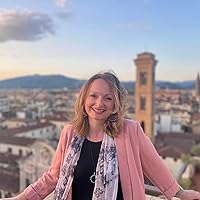
At the heart of the gospel is a radical message of we are capable of unlimited development, of becoming even as Christ is. But what does this path of transformation look like and feel like in practice? For centuries, so much of Christianity has focused on what to believe. Thomas McConkie redirects this conversation to the simple but potent practices we can engage in body, heart, mind and spirit—awakening us to a greater measure of the Sacred right here and now. “At-one-ment” becomes a spiritual reality in which we can all participate, not just a historical event in which a select few believe.
In a clear and elegant sequence, McConkie describes ancient and modern approaches to awakening the mind, purifying the heart and healing the body, as well as common challenges that come up along the way. Whatever the reader’s personal beliefs, this book is intended to complement their worldview and provide practical, actionable steps toward realizing a greater fullness of all that they are meant to become.
When all is said and done, I just think it’s really neat that this man found a philosophy, a way of processing his existence, that connected him to wholeness, to his divinity, and to the Savior of the World. That’s beautiful. And it’s really cool that he wants to share his discoveries with anyone who will listen, to try to bless their lives as he has been blessed. That’s commendable, and I appreciate that.
What I connected with:
I’m interested in meditation now. :) There were a lot of nuggets in the beginning and in “Investigating the Self” section that I liked. Here are some notes I took at various audio clips in chapters 1 and 3:
- Meditation is a practice of intentionally guiding attention to what matters most. He is discovering what it means to “live prayerfully.”
- Acknowledge qualities of my behavior. Be more intentional about what plants I want to plant in my garden.
- Righteousness is what makes me want to be more righteous! The “natural man” will gladly engage in self improvement projects till the end of time. But that’s an excuse to not accept ourselves exactly as we are, and therefore not accept God the way God is.
- You hunger and thirst after righteousness because your essence is already righteousness. You’re good to the core.
- The topic of radical grace of taking myself to be whole. Don’t motivate myself from a perspective of perfection and striving. I strive in order to compensate for what I lack. That leads to burn out. Rest in my wholeness and it will energize me. Come from a perspective of abundance.
- How to be an anchor to someone who is suffering.
- What if this is already heaven? Treat this very moment as the better place you were hoping to get to. You’ve arrived. This is it! How would that affect how you view and treat your life?
- Concentration – train the mind and heart to stay focused on the glory of God so we can be filled with light and comprehend God. Without concentration, we are distracted.
- Our attention. What we attend to = what we assign value to = what we worship. Story of the horse giving two eyes, full attention, to the person.
- Fully present with you = you are valuable = You are important. Story of his business partner who would notify him if his attention was being divided.
What I didn’t connect to as much:
- The overly flowery writing was difficult to process via an audiobook. This book reads like poetry, and I’m not accustomed to consuming this format. It was distracting from his message, although I understand why he wrote that way because his message was very philosophical and transcendent and existential, so I guess flowery writing fits.
- The deeply philosophical bent of the “Infinite Self” section was hard to connect to. I have a feeling I’m missing a lot of interesting food for thought by blowing through it via audiobook. I’m sort of intrigued but not enough to digest it slowly. And that makes me feel a little guilty. But while it was mildly intriguing, it was simultaneously kinda uninteresting, if that makes sense. It was hard to grasp without pondering it and reading it slowly. I think someone who loves philosophy would really love this book.
* I bought the audiobook and the narration by the author was good, albeit a little hard to hear.
This was the book I needed to read right now. It addresses and expands on what I’ve been learning about our head, heart, and body centers through the enneagram, through an LDS perspective. The book has exercises and meditations I will continue to explore. And I’ll definitely be reading the entire again, more slowly next time. So much to learn and understand.
Few books have changed the way I want to worship and this one is one of them. Love love! I have never actively used meditation to worship rather meditation has been something I’ve thought as to help my mental health and find a calm but after this book I think it’s necessary for worshipping!
❤️ my only regret is not writing down quotes earlier but here are a few near the end of the book that I’m keeping near and dear!
We tend to think of church as the place we go to overcome our animal drives, the appetites of the natural man and woman. But our lower nature has no trouble at all taking up residence in religious life and refusing to yield to a more vulnerable life in Christ. Here, just like everywhere else, we can learn to fit in, say all the right things, enjoy the admiration of the community, and feel as though we're in perfect control of our own salvation. Ironically, church might be one of our favorite places to hide from the disturbing process of transformation in the end.
When we deny the experience of not knowing, we pretend to be more certain about elements of our faith than we actually are, always ready to rationalize and defend every last doctrinal point. It wounds our cerebral pride at this stage to imagine that there are not only things we don't know but can't know. One antidote to this trap is to practice relaxing into unknowing at appropriate times, learning to tolerate the anxiety we feel when we don't have all the answers.
Because we prefer to take multiple perspectives more fluidly in this range of development, we're more aware than ever that seemingly contradictory views might actually reconcile with one another at a deeper level.
She raised a beautiful family in the Church with unusually talented children who span the entire spectrum of faith and belief, some more traditional and some much less so. While some parents may have found the situation troubling, Karen always struck me as being appreciatively inquisitive with all of her children in their uniqueness. Rather than wag a doctrinaire finger at others for deviating from the one path, it was as if her whole being conveyed the message, "Tell me what it's like to be you." She didn't presume to know the way people should be so much as she let others teach her what kind of diversity was possible in human life. Her open heart didn't arbitrarily stop at the borders of her family, either. She was radiant towards me and my wife, towards other people in her neighborhood- I imagine towards everyone. Karen genuinely relished others' beingness and the unique perspectives that make all of us who we are.
We realize that we cannot be whole without one another's unique embodiments. I recover more of my innate complexity, more of the fullness of being by appreciating the way you live out the fullness of your being. And so we love to be in the fullness and the resonance of community at this stage.
We realize that truth bodies forth innumerable forms
It took me a really long time to slog through this. It is heavy reading and is meant to be gone through at a slow pace. There were several reflective exercises that were useful and enlightening. There were also some really great quotes. Nevertheless, I struggled with a lot of the book.
Somehow, despite McConkie's assuring the reader over and over of his constant self-vigilance - lest he think himself superior, I couldn't escape his self-importance just oozing out of it. It seemed to me that included with several profound items, there was an awful lot of dressed up drivel.
McConkie has allowed for responses like mine by noting that any good/bad we see in others (presumably including himself and the content of this book) is solely a projection of ourselves. The response to my feeling is already handled by the book's premise (the identical position taken up in Who Moved My Cheese?, I might add) is that it can only mean I'm not prepared to be as enlightened as I should be. Therefore, I will be handled patiently with kid gloves until I can reach the heights of the sixth person - and it doesn't bother me to be assessed like that. He certainly could be right. And I learned a lot, regardless of how off-putting much of the writing was.
While I see a lot of value in the claim that much of what we loathe in others is actually what our own shortcomings are (also noted by Philip Roth in The Anatomy Lesson), I don't buy that it necessarily accounts for 100% of admiration and disdain we feel towards others.
Lastly, my biggest struggle is his insistence that every religious tradition has truth and goodness to offer. While I agree that many, maybe even most do, I am not prepared to make or accept blanket statements that all religious traditions offer some goodness/truth. For example, I have to question where that applies in a devil-worship tradition.
I liked that McConkie argues truth in perspective - meaning what a person's perspective or experience is feels true to them. What I don't buy is that because an experience feels true, it therefore is true. It seemed to me like there was way too much trying to marry together everything McConkie liked about the different faiths he's explored, and it immediately put me in mind of Paul's words to the Thessalonians when they tried to add Jehovah to the pantheon.
I admit, I was really put off by the nonprofit "School of Wisdom" (mentioned in the About the Author write-up). I agree with McConkie that meditation, stillness, and awareness of others and of the world around us are desperately needed skills that we'd all do well to improve upon, but the presentation was far too reminiscent of the art gallery scene in the movie L.A. Story, and there were certainly times where my response to the exaggerated prose was the same as Steve Martin's audience was to him in that scene.
The end goes through a summary of the human race as a holistic thing - comprehensively to be saved or not - meaning each loss (of a person who might have received salvation?) is counted as a decrease in light for the entire human race, because as a community/species/creation, we are One. That was an interesting thought - along with all the capital letters freely disbursed throughout the writing, which I didn't love as a Christian or as an editor - but he warned at the beginning he would do that and explained why. I just was not fully on board.
This entire review has been hidden because of spoilers.
This is a unique and thought-provoking perspective on the Atonement and faith. I found some helpful ideas here. These are some of my favorites:
"I capitalize certain words to invoke a sense of the Divine (p. xvii)."
"I didn't see Jesus walking by my side that evening, reassuring me he'd been there all along. My body simply relaxed. But that, exactly that, was heaven to me (p. 4)."
"By paying attention to how we pay attention, we can transform beyond what we imagined was possible (p. 5)."
"I was discovering little by little what it meant to 'live prayerfully.' Meditation has since become one of the most important tools I use when working with others (p. 5)."
"Choose what we take to be a worthy object of concentration (p. 6)."
"I've tried to relate to you the personal way in which Life invited me to transform (p. 17)."
"When we bounce around on the surface level of thougth and emotion, we are blinded to the deeper spiritual realities that literally constitute human-divine life (p. 18)."
"When we survey the wisdom traditions of the world, we see a pattern again and again. For millennia, humans have recognized and honored different ways of knowing (p. 22)."
"We forget what it's like to rest in the simple feelings of being, born of the Divine Light moment to moment (p. 23)."
"Becoming something new goes far beyond affirming a belief in certain ideas (p. 24)."
"The knowing of the heart is a totally distinct quality from the knowing of the mind (p. 25)."
"My mind was confused. I recall thinking, 'What am I doing at church?' But an inner knowing told me I'd come home (p. 26)."
"'Live prayerfully--walk softly and give God plenty of ways to get through to you' (p. 27)."
"Christ teaches us that true life comes in and through death (p. 30)."
"What I've learned through my body practicing stillness over the years is that when I am relaxed, openhearted, and willing enough moment-to-moment experience is consecrated. Everything takes on a tinge of the Holy (p. 32)."
"I was moving foward and backwads imultaneously. I was weightless and substantial all at once. For a moment, I enterned God's dance--the play of opposites (p. 32)."
"Rather than relating to this life as a test to get somewhere better, what if you treated this very moment as the better place you were hoping to get to? (p. 33)"
"The heart works by a totally distinct perceptual reality (p. 35)."
"To open up to the immensity of the heart's knowing requires us to humble ourselves in ways that cause the mind to recoil (p. 37)."
"Chasing a certain vision... we've lost touch with our own bodies as well as with the earth herself who sustains us (p. 41)."
"When the heart is awake and clear, we learn about unity and our Oneness with all that is Sacred. The intellect celebrates multiplicity and makes enpowering distinctions. Spirit, or Intelligence, animates all these diverse ways of knowing and more (p. 42)."
"Mortality exercises us in this way. Our sense of self contracts and expands julike like a muscle when we're working out at the gym (p. 43)."
"Much of the time all that people really need is to feel a grounded, embodied presence--something to steady them as an earthquake shakes them to the core. Other times when you're called to bear another's burden, the instrument of choice will be the heart. Oftentimes people don't need our advice or counsel. What they need is to feel felt. They need to feel like you're resonating with them. Like you know how they feel without even saying it (p. 44)."
"Be present with the people you love, and notice what you sense in a given moment: What is called for? (p. 46)"
"Reading scripture is transformative practice. Praying is transformative practice. Temple worship, ministering, and even attending your local pancake breakfast sponsored by the stake is transformative practice. Potentially (p. 47)."
"What we do outwardly is far less important than the depth from which we source our motivation (p. 49)."
"'If we can't rest in Sacred Presence in this moment, undistracted, how can we fully consecrate our lives over an entire lifetime?' (p. 52)"
"Jesus's life in its entirety was the quintessential example of Christian meditation (p. 53)."
"How can we as a people and a Church restore and evolve our own style of contemplation, including unique insights form our tradition that would lead to the theosis of humanity? (p. 56)"
"If we train our minds and our hearts to stay focused on the Glory of God, we will be filled with Light. We will come to comprehend all things and to know the very Mind and Heart of God (p. 57)."
"In the Doctrine and Covenants, we're given a simple set of practice instructions. We're told that if we can train our mind to be single to God's Glory as Christ did, this ability will catalyze a process whereby our own being is gradually transformed into pure Light (p. 60)."
"The elemental skill at play here is concentration, and concentration can be cultivated (p. 60)."
"We are born to comprehend more and more of Divine Reality until the perfect day (p. 61)."
"Joseph clearly understood that this high-energy spiritual states are somethign we can get used to. Absorption in Divine Glory isn't as much about a singular experience we attain somehow so much as a state of being we are continualy invited into through inexhaustible Grace (p. 61)."
"Meditation isn't something we learn to do, it's something we get used to (p. 62)."
"We're being filled with Light in a way and at a rate that is completely unique and personal to us. God is pouring out as much blessing over us as we can possibly stand (p. 62)."
"Think about when you're with somebody who pays complete attention to you. They are fully present with you and only you. You know by the quailty of their presence and attention that you are valuable. You are important to this person (p. 65)."
"When we give ourselves fully to something, we implicitly say, 'I value this. This is worthy of my life energy, of my spirit' (p. 66)."
"Like the horse, we can give 'both eyes' to whatever we choose (p. 67)."
"When I let my defenses down and trusted, Christ took hold of my heart and claimed me as His own Body and Spirit. Walking back into a sacrament meeting is where my experience led me. I wonder where yours will lead you (p. 68)."
"Withdraw as Jesus did, to lonely places, into solitude, if only for just a few minutes... Over time as we find a new equilibrium in stillness, it's not even about physically withdrawing. The practice becomes the subtle skill of paying attention in a new way and from a new place in ourselves (p. 75)."
"When we train ourselves to rest in stillness, we become more sensitive to the revelation and the inspiration that arises out of the Sacred Stillness itself (p. 77)."
"My first visit back to Church after so many seasons away was a master class in the heart's way of knowing. By Grace, the heart's knowing prevailed that day. I felt the touch of an immense Love and Power that had been with me all along. I just didn't always have the eyes to see. I felt deeply and I knew clearly that there was genuine spiritual nourishment to be found within these walls. Here was a spring of water welling up to eternal life (p. 83)."
"If our hearts are not awake and receptive, our ideas about who Christ is will prevent us from seeing Him (p. 84)."
"It is the heart that harmonizes with the song of redeeming Love. How do we know Christ? Do our hearts not burn within us? (p. 85)"
"The heart has the capacity to attune to the great beyond, to register and receive information from the sea of Spirit in which we're immersed (p. 86)."
"To exercise the heart's knowing, we rely on the foundational skill of keeping an eye single (p. 87)."
"As we wake up through the heart, we realize in a direct and awe-inspiring way that, like Divinity itself, we have no beginning or end (p. 87)."
"The heart can and must thaw to regain its proper function. The heart of stone becomes a heart of flesh. It's often painful (p. 91)."
"If avoiding pain is a major stumbling block in learning to live a more abundant life from the heart, then another challenged we face is sheer noise (p. 91)."
"Don't get too caught up in the content of your thoughts (p. 94)."
"Everything, everyone, is present right here and now... 'Eternity is in love with the production of time.' The intimacy and closer-than-close quality is hard to describe, but on that day, I felt I got a glimpse of the scriptural wisdom that says, 'They reside in the presence of God, on a globe like a sea of glass and fire, where all things for their glory are manifest, past, present, and future, and are continually before the Lord' (p. 95)."
"We don't like to get caught learning. We want to appear to others as masters in all situations to avoid experiencing our own vulnerability. Repentance in this context is a painful, even humilitating, process that we like to avoid (p. 101)."
"Paradoxically, God lights our way with a ray of darkness--with unknowing. We have faith that we are being guided, though we cannot know how or to what end (p. 102)."
"When our heart is soft, we spontaneously resonate with the spiritual aliveness of all things (p. 106)."
"Christ has walked this path. He has made peace with the core vulnerabilities of human-divinity, His and ours. He has subdued the appetities that would enslave us and steal energy from our higher nature. Christ has done this... He asks us to walk the path with Him (p. 127)."
"I can remain in God's rest. This is actually true abundance: no matter what life's circumstances are, no matter what discomfort is erupting in the body, at the deepest level, I can know that Divine Reality will provide for me (p. 129)."
"The more we can bring full awareness and compassion to our collective woundedness, the more these aspects of our One Body are transformed by Sacred Love (p. 138)."
"Obedience in its pure form is an alignment with true principles and spiritual patterns that guide us toward becoming what we're meant to become (p. 140)."
"True religion... is perfect repentance (p. 141)."
"He taught repentance, not because we should be ashamed of our depraved humanity but because it is and always has been God's good pleasure to give us the kingdom, if we only had eyes to see. This is the good news!... We are born vulnerable, not sinful. We are wounded, not estranged from God (p. 141)."
"Christ would have us be whole. He would heal us from our need to escape vulnerability and reach us the way of Divinity by fully embracing the wounds of all worlds (p. 142)."
"How do we become a new creature in Christ?... As our minds wake up and become single, we learn to abide in greater Light. As the heart becomes pure, Divine Love reveals itself to be both our substance and salvation. As we become more willing to submit to the full range of anguish and ecstasy in our physical tabernacle, we experience Life more abundantly (p. 143)."
"We have the opportunity to fall up from one stage of maturity into a fuller embodiment, a greater Majesty, without end (p. 145)."
"In Latter-day Saint theology, the Fall is better understood as an ascent. Physical embodiment is a leap into a greater measure of divinity. Our desire is to continually progress on our path to godhood (p. 149)."
"I was a Latter-day Saint, a faithful one at that--and my heart longed to return to the community in worship and service (p. 152)."
"Second-person perspective is the great shift from 'I' to 'we.' I can actually see you for the first time--at least, gradually. You are different from me, and together we form a we. Your wants matter just like my wants matter, and so the negotiating begins. From this perspective, we have to learn to start sharing with others and getting along. Over time we learn what it means to be in a family with others, in a church, in a community (p. 162)."
"A monumental shift occurs as our minds become capable of constructing the experience of other (p. 163)."
"As Latter-day Saints, some of our highest, shared purposes include becoming more like Christ and building a Zion community (p. 163)."
"I envy the Baha'i people for how meticulously they take care of one another by not saying hurtful things behind one another's backs (p. 166)."
"God's purpose is to grow us into autonomous beings capable of discerning for ourselves what is good. If we outsource this process of discernment to another, we will never exercise our divine capacity to choose for ourselves... What Christ wants is to change the substance of our beings. Anyone can go with the flow, following the rules in order to blend with the masses. Following the rules alone does not forge us into celestial beings (p. 171)."
"Based on our talents and passions, we engage across seemingly unrelated systems and create combinations never before seen (p. 181)."
"The Buddhist approach to spiritual life has deepend my intimacy with God immensely (p. 183)."
"'Tell me what it's like to be you.' She didn't presume to know the way poeple should be so much as she let others teach her what kind of diversity was possible in human life. Her open heart didn't arbitrarily stop at the borders of her family, either. She was radiant towards me and my wife, towards other people in her neighborhood--I imagine towards everyone (p. 184)."
"We cannot be whole without one another's unique emobidments. I recover more of my innate commplexity, more of the fullness of being by appreciating the way you live out the fullness of your being... The notion that there are absolute truths that we must cleave to softens. Notice how I say 'softens.' Truth doesn't go away. (Where could it go?) We still very much respond to Truth in this new walk of life. But our naive belief that we have mastered the truth, that this is what we call it and this is how we do it, all of that starts to soften. We realize that Truth bodies forth innumerable forms. Through a plurality of perspectives, we learn more about the Fullness and the Wholeness of Truth (p. 185)."
"If we don't have access to compassionate awareness in our dealing with others, then the problem is not with them. It's with us. The more we accept ourselves in all our shortcomings, the more readily we fully accept and forgive others in turn (p. 188)."
"Think of a person who holds a perspective that you find to be challenging or ever irriatating and patently wrong. Take some deep breaths, relax through the body, and try to find yourself holding this same view. Ask yourself, What's right about this perspective? (p. 189)"
"Who we are is so infinite, it is beyond thought and belief altogether (p. 201)."
"To realize our true nature, Christ asks us to take up our cross and join Him in death (p. 202)."
"When we've learned to steady our attention, we can keep an eye single on what matteres most for as long as we choose. With a unified mind, we can get used to greater degrees of Glory (p. 204)."
"So often we equate faith with belief. But I like to understand faith as free fall (p. 206)."
"'If God cares so wonderfully for wildflowers that are here today and thrown into the fire tomorrow, he will certainly care for you. Why do you have so little faith?' Why do we hedge our bets in spiritual life? Why do we fear losing control of who we think we are? Why do we wish to build bigger barns for our harvest as an insurance plan against tomorrow's unkown?" (p. 209)"
"As Christ lives through us in increasing measure, we become more dynamic, more creative, more alive (p. 210)."
"In Christ we are brought to life. And this divine life cannot be understood apart from collective participation (p. 216)."
"This is Zion by any other name: a community of beings waking up to our unique personhood while knowing this personhood to be inescapably constituted by Divine Life, Love, and Light (p. 219)."
Psychology, philosophy, contemplation, worship, truth, mindfulness, wounds, identity, growth and development… At-One-Ment was just what I needed during a time focused on healing. This book took me 3 months to read because I often finished a chapter and then immediately started that chapter over to re-read it and think on it more. I got both a physical copy and audiobook so that I could continue to revisit it.
I love this quote by Hugh B. Brown, “While I believe all that God has revealed, I am not quite sure I understand what he has revealed, and the fact that God has promised further revelation is to me a challenge to keep an open mind and be prepared to follow wherever my search for truth may lead.” I’m grateful my search for truth led me to this book.
At-One-Ment 1 Sentence Summary: Embodying the Fullness of Human-Divinity is more than a book—it’s a guidebook, a challenge, a map, an invitation, a gentle provocation to a new way of life.
My Rating: 3.5 stars, rounded up
My Thoughts: this book has been on my TBR for almost 3 years, so I’m glad I was finally able to read it. I was anticipating more of a spiritual/autobiography/teaching-esque book, but found it was more like a self-help guide. I still really rooted it and I feel inspired to make some changes in my life!
Recommend to: LDS readers, young adults, those interested in meditation/self-reflection, etc.
Very good. Worth owning and marking up. He narrates and has a great meditative voice so listening was good. I’ll want to reread.
It’s just full of good reminders of how to live well and with peace. And I appreciate him sharing his own faith journey. I think it resonates with many.
This book is a presentation of LDS theology through the lenses of Buddhist meditation, contemplation, developmental psychology, and an array of resources from different religious leaders and philosophers. When I first started reading the book, I was afraid I was going to experience some cognitive dissonance because of the influence of so called eastern religious thinking. There was some dissonance with the use of some of the terminology, but the eclectic lenses gave me an opportunity to broaden my thinking, both about how I go about believing and about myself. It is a fascinating read though not an easy read.
I loved so much about this book, I felt sad as I was finishing it and knew it would be one that I’d have to reread! I loved his personal stories and also felt really interested in his review of adult development. Would highly recommend!
This is not a light read, nor would I try listening to it. The author brings his extensive knowledge of meditative practices and asks us to slow down, to contemplate, to really become at-one with ourselves and with God. This book took me a long time to read. He places QR-codes throughout the book for us to try out some meditation. He also has diagrams that are just better seen than listened to. For these two reasons, you might want to buy the book. McConkie tends to go deep -- maybe a 3rd reason to buy the book -- so you can go back to it again and again. Soooooo many good nuggets in this book.
--What we pay attention to over time will change us in dramatic ways. What we pay attention to is ultimately what we worship.
--Your direct experience is the only teacher.
--Transformation is an intimate process of getting to know yourself at the deepest level.
--NOW is all we ever have to work with. We start to take personal responsibility for our moment-to-moment response to life. How we respond to each moment is how we grow into the stature of eternal beings. This is it. Eternity is NOW.
--Many of us ... have the habit of feeding on new concepts without letting the nutrients really enter the bloodstream.
--If our conduct is SPONTANEOUSLY becoming more selfless, more virtuous, we can trust we're headed in the right direction.
--To exercise the heart's latent capacities, we need to train ourselves to see through surface-level emotions into the heart's unsearchable depths. Like stirring up mud in a pot, our emotions risk obscuring the clarity of the heart's profound sensitivity and knowing. It's no different from a chronically glutted mind that has no room for inspiration or creativity because it's so full of spam -- random thoughts full of empty calories.
--Dr. Charles Burwell, dean of Harvard Medical School from 1935 to 1949, famously said to his students, "Half of what we are going to teach you is wrong, and half of it is right. Our problem is that we don't know which half is which."
--Let us never forget that knowledge is always expanding in surprising ways.
--As we practice, we learn that to remain awake through all of our faculties requires extra effort, at least at first.
--Spiritual life always risks becoming performative, not transformative.
--What we do outwardly is far less important than the depth from which we source our motivation.
--In Christian terms, when we are honest about who we really are, we realize we're called to the cross. We're called to die the one we thought we were. Again and again.
--If we can't rest in Sacred Presence in this moment, undistracted, how can we fully consecrate our lives over an entire lifetime? Will our days and our lives not be filled with distraction, just as our moments are?
--In today's word, with limitless opportunities to amuse ourselves, to numb out, we will figuratively FALL ASLEEP in the garden again and again as Christ prays in our midst. The untrained mind will be tossed about by the winds of distraction. In our modern times, distraction may be the most potent form of temptation.
--Worship is none other than what we consciously attend to, moment to moment, in our daily lives. Whatever it is we pay attention to, we are implicitly worshiping.
--Every act of attention represents what we value in that moment. Attention always follows intention.
--What we attend to, we assign value to. What we assign great value to, we end up adoring and worshiping. Conscious awareness proves to be a powerful spiritual resource. If what we attend to naturally grows and flourishes, then the inverse is also true: what we don't pay attention to naturally contracts, diminishes, and falls into unconsciousness.
--If we don't acknowledge the difficulty of training a fragmented mind, the potency of our transformation will remain limited.
--If even Jesus sought solitude during his earthly mission, how much more so do we need solitude to fortify our prayer life in an age of hyperstimulation? Left to our own devices, we are almost constantly feeding on the content of the mind. Add to that already bloated diet a feed of information through our digital devices, and we've got a bona fide case of sensory gluttony. Solitude -- a practice of sensory fasting -- is a prerequisite to concentration practice that we need now more than ever.
--A mature heart practice is not about always trying to feel good. It is about being willing to feel MORE.
--We risk worldliness in the Church every bit as much as we risk worldliness outside the Church, sometimes even more so. From a transformative perspective, worldliness is any attempt to find security through finite means -- safety, pleasure, the esteem of others, and the insatiable need to control our circumstances. The gospel invites us to leave this worldliness behind and find security in the only Reality that is worthy of our hearts. We are not sanctified by perfecting the false self but waking up to an entirely new dimension of self, whose center of gravity is Christ.
--When our heart is soft, we spontaneously resonate with the spiritual aliveness of all things.
--Sin in this sense is a vain but understandable attempt to avoid our deepest suffering.
--Remember, the prime directive of the body is to get comfortable and to stay comfortable.
--Our core vulnerabilities are out greatest temptations.
--In exactly the most disturbing moments of your life, you can train yourself to open up, relax, and trust that something from beyond is making you holy.
--We will be constantly tempted to blunt what we're feeling by acting out and engaging in short-term strategies that make us feel a little better now but a lot worse in the long run. Sin is what feeds the energy centers and our chronic sense of lack.
--God uses time and mortality to create beings who can withstand Eternity.
--Life is hard, serving up one intense experience after another. ... As we become more honest about our own disturbances ... we start to feel more compassion for the way others are acting out.
--Our lower nature will always seek as much safety, pleasure, esteem, and control as possible.
--When a sense of lack threatens to overwhelm us, we are prone to acting out and missing the mark.
--An increase in Light for one is an increase in Light for all.
I'll be thinking about this for a long time. I wish I had the capacity to do every meditation and reflection invited in it, but I wanted to finish the whole book before meeting with the author tomorrow. So I probably broke role #1 of Wirthlin McConkie-ism and read for a goal instead of for the moment.
But I'm so glad I did because the end is all about person perspectives and being unique but unified and I'm very curious to know more about those things.
Big takeaways for me *embrace all kinds of knowing, not just intellectual, but also heart/ body knowing. I'm not sure yet how to do that, but I love the idea. *anything that isn't compassion is "playing with ego" *full presence, unprotected by distraction
I took this as an online course (and repeated it many times because I loved it so much!) many years before he turned the material into a book, and I consider it one of the most important things I've ever done. I think McConkie's work is transformative and extraordinary. It was fun to see what he did with the material to create this book. And I will appreciate having the text to refer to often. But nothing will replace the conversational tone and power of the course for me. It's my favorite!
This is a beautiful book. It talks about grace, the atonement, and transformation, different ways of knowing/intelligence, contemplation/meditation, repentance, energy centers, stages of faith, and more. Bonus, there are QR codes for short, guided meditation sessions with the author.
HIGHLY recommend for anyone with an LDS background interested in contemplation or mystical spirituality. Thomas McConkie is a mentor and friend, and has put in the time and effort to really deeply integrate eastern wisdom with his LDS heritage. I love this book; it impacted me deeply.
Perfect for anyone going through a faith crisis or wanting to understand worship. It couldn’t have come at a better time for me. I appreciate his perspective on worship, pain, adult development, and Christianity.
This is such an interesting combination of seemingly incongruous things: Buddhism and Mormonism, philosophy and practicality, meditation and journal prompts, poetry and personal anecdotes. But it works. Not because it walks fine lines between things that are superficially different, but because it pulls them together into one great whole. As Whitman would say, "it is large, it contains multitudes" and it embraces the complexity of contradiction, uncertainty, and change.
This book is a rare distillation of authentic spiritual wisdom. Every one of its 220 pages reveals treasures for those with eyes to see, and it does a particular service to followers of Christ interested in learning from His handiwork among all the nations of the earth: "For behold, the Lord doth grant unto all nations, of their own nation and tongue, to teach his word, yea, in wisdom, all that he seeth fit that they should have . . . " (Alma 29:8). At One Ment draws deeply from the fountains of Buddhism, Sufism, Christian contemplative practices, and Restoration theology, and deepened my appreciation that the 'nation and tongue' of my birth, while wonderfully rich in spiritual heritage, benefit from what other nations and tongues have to contribute, and that we may in fact depend upon each other to reach the fulness of Zion that God intends for us.
Development theory is another important 'tongue' at play in this book, the longest chapter of which, "Transformations of Faith," is dedicated to elucidating and likening to faith. Six stages of personal development are presented as ever-widening circles enlightenment, each building upon previous stages. Here, however, it's important to note that we should never feel ourselves to be more superior, advanced, or developed than another, for each stage contains truths, principles, concepts, and gifts that should be held and kept sacred throughout life. McConkie wisely notes that, "Development is in fact omnidirectional -- we grow up, we grow down, we grow all around. We revisit previous spaces with new awareness, and the most foundational of our developmental qualities are each God seeds in their own right." This reminds me of a wonderful piece of Joseph Smith's King Follett Discourse in Nauvoo in 1844 when he said: " . . . I take my ring from my finger and liken it unto the mind of man—the immortal part, because it had no beginning. Suppose you cut it in two; then it has a beginning and an end; but join it again, and it continues one eternal round. So with the spirit of man." We are eternal and have an endless capacity for growth and development as we transform into one-ness with God.
Somewhere among the higher spheres of development we may attain to profound humility, compassion, and a level of connectedness symbolized by the still-common LDS practice of referring to our fellow congregants as 'brothers' and 'sisters.' This is a tradition we would do well to keep alive, and here are two reasons why from this book:
1. "If you ever experience anything but compassion towards someone, you're just messing around with the ego." pg. 211
2. "If Christ is God's Son, then we are God's Sonship and Daughtership, all of us, collectively, forever. The nobility of a single soul ennobles us all. The perdition of another amounts to a diminishment of our communal light." Accepting this level of responsibility and connection to others is what Christ prayed for us in John 17:21-23 "That they all may be one; as thou, Father, art in me, and I in thee, that they also may be one in us: that the world may believe that thou hast sent me. And the glory which thou gavest me I have given them; that they may be one, even as we are one: I in them, and thou in me, that they may be made perfect in one; and that the world may know that thou hast sent me, and hast loved them, as thou hast loved me."
I got this book at a Faith Matters conference where the author signed our copy “Damon and Emily, Abiding with you in the inexhaustible Love of One Heart.” What a beautiful sentiment. Thomas McConkie left the religious faith of his youth and began his spiritual journey through other philosophies and traditions, feeling especially pulled toward Buddhism. As he reconnected with God through this process, he felt led back to the faith of his family, but with expanded wisdom and perspective. He is a gentle teacher whose words and experiences help you draw inward and upward in your spiritual journey. He offers some beautiful thoughts to ponder. Also, there are QR codes for guided meditations throughout the book, which I enjoyed.
Chapters: The Human-Divine, Increase in Being, An Eye Single, The Sacred Heart, Divine Vulnerability, The Infinite Self, Transformations of Faith, At-One-Ment
-“When I say meditation, I mean any practice of intentionally guiding attention towards what we value most…What we pay attention to over time will change us in dramatic ways. What we pay attention to is ultimately what we worship.” p. 5-6
-“We could say that all authentic spiritual practice involves increasing our sensitivity and receptivity to more being, more Light—to higher meaning.” p. 24
-“Yielding to different ways of knowing in different moments of life is another way of saying, ‘Live prayerfully—walk softly and give God plenty of ways to get through to you.” p. 27
-“Spiritual life always risks becoming performative, not transformative…what we do outwardly is far less important than the depth from which we source our motivation.” p. 48-49
-“If we train our minds and our hearts to stay focused on the Glory of God, we will be filled with Light….’if your eye be single to my glory, your whole bodies shall be filled with light’…If we learn to hold our gaze, our whole attention on God, we will be illuminated.” p. 57, 59
-“We learn in the way of the heart to bring caring awareness to life’s joys as well as life’s sorrow. A mature heart practice, then, is not about always trying to feel good. It is about being willing to feel more.” p. 89
-“As Christ heals me and makes me more whole, this Wholeness reaches backwards and forwards in time simultaneously. Wholeness itself increases. This Wholeness in Christ heals previous generations who weren’t nearly as fortunate as I am in my current circumstances. The unfulfilled yearnings of my ancestors feel as though they find resolution.” P. 137-138
-“Keeping myself open to the pain and suffering of my ancestors was Holy Work. Divinity seeks embodiment endlessly in order to be all things and to know all things. In the depths of Sorrow, I experienced Sacred Joy for the privilege of being in communion with fellow Saints from across the veil and bearing a small part of their burden with them.” p. 137
-“I hope by any healing I’ve been graced with that my children will start with a greater sense of Wholeness than I knew growing up. I hope that my soul’s migration towards Wholeness will support their capacity to become more whole in Christ than any generation before. It’s all to say that we’re never doing this work alone, or exclusively for ourselves.” p. 138
An interesting and difficult read. At times very captivating and other times I was lost. There’s a lot of cool things with meditation, Buddhist teachings, and scriptural practice interwoven throughout.
Some of my favorite quotes:
Atonement is a continual one-ing with all of ourselves, all beings, and all of sacred reality. One body and spirit in Christ.
Worship is none other than what we consciously attend to moment to moment in our daily lives. Whatever it is we pay attention to, we are implicitly worshiping. every act of attention represents what we value in that moment. Where our heart is, there will be our treasure. Attention always follows intention.
The gospel asks us to give up the fantasy of comfortable transformative change. The very mentality that we can secure salvation through perfect obedience is itself a fantasy, derived from the natural man and woman.God‘s purpose is to grow us into autonomous beings, capable of discerning for ourselves what is good. If we outsource this process of discernment to another, we will never exercise our divine capacity to choose for ourselves. It’s not about being commanded anymore. We know the commandments by heart. But knowing something by heart and a change of heart are two very different realities. What Christ wants is to change the substance of our beings. What do I commit myself to? What do I choose to do with this terrible freedom? Terrible because we are now ultimately responsible for our own destiny. Shifting from commandment-following to commitment-making agents, we show God and the heavens the stuff we’re made of.
If you ever experience anything, but compassion towards someone, you’re just messing around with the ego.
Mind-blowing, soul-expanding, this book is transformative! It has taken all my views of the gospel of Jesus Christ (and all other good religious or spiritual traditions and beliefs) and both expanded and contracted them, opened up the universe and yet showed its simplicity. I have new eyes for many scriptural passages (especially in the New Testament) that previously made no sense to me.
I hope to become more "at-one" with God and with my brothers and sisters on earth through practicing what Thomas has introduced in this book: a greater fulness of gospel living and divine loving. I've read books about the Atonement before but this book has given me the best idea of WHAT it is--beyond a payment of debt or an erasure of error or a healing of personal sorrow--but a unity with all in Divine Wholeness.
It also shows so clearly the necessity of a community of faith--a church--in order to achieve "at-one-ment" with Christ, even as it draws from many faith traditions and ties them into The Church of Jesus Christ of Latter-day Saints. I'm sure I will be re-reading this book many times and using it as a catapult to send me into further study of the world's faith traditions and their part in divine truth. I know my life will be filled with more love and less fear as I internatize what I have learned here.
QR codes for audio meditation tracks are included.
I found a lot of good things here: the importance of the knowing of the heart and the body as well as the mind (I am convinced we over-rely on the mind in western culture and thus sometimes in the LDS church). The power of meditation and mindfulness and acceptance (we could be more mindful and not see obedience as a means to an end as much as a state of being of heaven itself) Recognition of the goodness inherent in our spirits which hungers and thrusts after righteousness (we are prone to self-flogging). The reality of the divine within us and within all mankind (interesting conception of repentance or metanoia as the moving beyond the false self to the infinite self). The concept of developmental stages within a faith journey I found very useful (we are far too judgmental of others’ stages of spirituality).
Some of it didn’t quite resonate with me. Maybe I’m still too traditionalist to fully appreciate it. Seemed the atonement is being made into something other than what Christ said it was. It also seemed off-putting in some ways that the author implies he has reached higher states of enlightenment than the rest of us. But there was plenty of food for thought here.
This book was full of nuggets of wisdom and new ways of thinking about faith and the world. In fact, I really want to try meditating after reading this. I really resonated with the way that meditation has allowed him to connect with source/God, the earth, and all the creatures/people in the world. I have never consistently meditated, but I have felt that connection he describes many, many times. I would love to actively deepen it.
His voice is very slow and soothing... maybe too much for me. haha. But every time I was tempted to put him on 1.5 speed, I remembered the whole point of the book is to slow down and live meaningfully and at one with God and the earth. So I didn't.
"Thomas McConkie directs this conversation to practices we can engage in body, heart, mind and spirit—awakening us to a greater measure of the Sacred right here and now. McConkie describes approaches to awakening the mind, purifying the heart and healing the body, as well as common challenges that come up along the way. Whatever the reader’s personal beliefs, this book is intended to complement their worldview and provide practical, actionable steps toward realizing a greater fullness of all that they are meant to become."
Loved Thomas McConkie’s ability to peacefully disrupt a worldview and introduce new ideas that may fit a precious meaning or understanding but in a whole new way. I appreciate his breaking down and sharing another approach to mindfulness and meditation that is both accessible and stretching.
He talks about the body as a path to divinity, as eternity happening right now rather than later, about accepting ourselves as ultimately good, facing paradox, and a lot more I appreciate. I plan on reviewing my notes and highlights again and again to bring me back to where this helped me be.
I admittedly struggled to connect and understand many of the concepts in this book at first. It took me more than a year to finish, actually. But, that is its beauty. You have to really sit with it and let it simmer for a while. It is certainly one of the small handful of paradigm-shifting books I've read surrounding my spirituality and concept of myself. I really enjoyed the meditations in the book as well and would recommend that people take the time to actually do them! It's worth the investment.
I'm a so so meditator at best, but this book has literally changed my life. It gave me a lot of new ways to think about myself and my relationships and the world, that make everything beautiful again. The Christian and Mormon content of the book...I could appreciate, since it's the water I've been swimming in, but this book is much more than that. It's the spirituality, love and patience you wish you would have grown up learning to access.