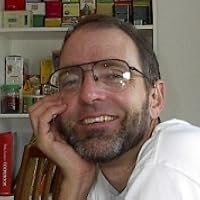
To lose his Government post after a scant year and spend the rest of the rest of the war as a backbencher was a grievous trial for Harold Nicolson. Yet it is precisely this middle-distance view that made him a superb recorder of those tumultuous times from 1939 to 1945. In Parliament he had a window on history-in-the-making; elsewhere he found the needed leisure and detachment to collate his thoughts, consider the deeper aspects of what he observed, and predict the future.
Ever since 1930, Nicolson had consigned to his journals the rich overflow of a capacious mind, sharply honed by the disciplines of scholar, diplomat and writer. Now, within the context of total war, these diaries became a precious storehouse for heightened emotions and sudden insights, for touching vignettes of Britain under fire and daily barometric readings of hope or despair.
Through their pages runs a warm, witty mosaic of casual talk, reflecting his wide interests and immense talent for friendship. Whether chatting with the King and Queen of England, Anthony Eden, Charles de Gaulle, Wendell Willkie, André Maurois, Edouard Benes, Harold Macmillan, Dylan Thomas, Edward R. Murrow, Nancy Astor, Arthur Koestler, or Eve Curie, he always has something of substance to impart, something to crystallize the moment. Even the towering Churchill gains a fresh, human profile made up of many informal meetings.
Scattered among the entries is a remarkable series of letters, mostly between Nicolson and his wife Vita, known to many readers as V. Sackville-West. A strong bond had been forged long ago by the dissimilar pair--he convivial, outgoing; she reserved, essentially private--but their strength of affection under pressure is moving indeed. Frequently parted by his busy life in London, each recalls the lethal pill to be used if invasion occurs; each shares anxious moments for two sons in service.
Apart from their historic value and elegance of style, these pages portray a British gentlemen who looks for quality in all things and finds his greatest courage when affairs are going badly. Though he is often critical of his peers, no judgment is more searching than that imposed upon himself.
This second volume of three owes much to its editor, the Nicolsons' second son, who has pared and annotated the original text with consummate skill, provided useful links, and written a trenchant introduction. Appearance of the first volume last year produced instant acclaim on both sides of the Atlantic. The War Years expands its promise and confirms Sir Harold Nicolson as a member of that small, select band whose journals will help to interpret our century for those who follow.
Sir Harold George Nicolson KCVO CMG was an English diplomat, author, diarist and politician. He was the husband of writer Vita Sackville-West, their unusual relationship being described in their son's book, Portrait of a Marriage.
The second volume of Nicolson’s remarkable diaries contain a wonderful collection of observations, opinions, desires and fears. His dedication to his work (as government minister, politician and writer) and family illuminate and propel every entry. No less absorbing are the collections of letters interspersed between them, recreating this momentous historical period with intimacy and warmth. Indispensable.
I recently read a Tweet from a bookseller which asked readers if they had adopted a book recently. It was one of those simple, but leading questions that started me thinking. Yes, I thought. I have 'adopted' quite a few literary strays - most discovered lurking on the shelves of second-hand shops. Yet these have turned out to be some of the most fruitful and interesting reads - particularly for an omnivore like me who is constantly searching for new sources of material as background for my own writing. My latest acquisition is 'Diaries and Letters 1939 - 1945' by Harold Nicolson who formed one half of the creative - and somewhat eccentric - marriage with Vita Sackville-West. This has proved a rich source of insights as Nicolson served in the Ministry of Information and so got to observe the workings of wartime Government, especially Churchill who he greatly admired. There are also intriguing references to lunches with Guy Burgess and, on 29th June, 1940 an ironic comment that 'Guy Burgess comes to see me, and I tell him that there is no chance now of his being sent to Moscow." Set against this are Harold's letters to Vita who he clearly loved dearly although he accused her of having a dual personality "The one tender, wise and with such a sense of responsibility. And the other rather cruel and extravagant." Ironically, this letter crossed with one from Vita informing him that she had 'just had the most awful shock: Virginia has killed herself." This, of course, was a reference to the writer Virginia Woolf who had been Vita's close friend and lover. There are also poignant references to the Nicolsons' home at Sissinghurst, Kent where Harold and Vita created a world-famous garden. My favourite image from this intriguing book? That of a sentry patrolling the tower at Sissinghurst silhouetted against the night sky.
I found this in my mother's library and was intrigued enough to bring it home, never expecting to read it cover to cover. Then I began noticing the author's name used as reference in other books on the period and I recognized this as an important work. I read it in about a week, that's how interesting I found it. Reading it, I looked at WW2 through the eyes of someone who is gut-scared of losing, but who is standing with Churchill against those who would make peace with Hitler. He tells us what it was like to live those darkest, finest hours of London's Battle of Britain. We share the surprise of really knowing the war is over when he walks out into a London night all lit up and the plastics have been taken off bus windows. I almost gave it only three stars because there is much here that was of little interest to me, for instance the debates about government pensions, but it does all add to the effect of traveling back into that time with the author. It it a grand work of writing and a masterly work of editing by his son, Nigel.
Well, I enjoyed most of these reflections by Nicholson, a literate and humane man who knew everybody, from Dylan Thomas to Churchill (very well), and moved with ease through literary, political and cultural circles. But I was stopped by the fact that these wartime diaries didn't mention the plight of the Jews until page 266, let it go until I saw there were some (minor) disparaging references to them, then later on, an admission that he somehow opposed anti-Semitism but "disliked Jews.'' A product of his time and class, no doubt, and he, like Churchill, was on the "right side'' during the war, but I could have done without finding out his personal prejudice on this subject. The perils of keeping a personal diary, in addition to letters, no doubt. The rest of it was fine, and his animadversions don't rise to the level of Fascism (though he does admit to sympathy for Oswald Mosley, the imprisoned pro-Nazi agitator, again more on the basis of class than politics). I was at first inclined to overlook it - Hemingway, Eliot, others, expressed similar opinions, and Pound was worse, of course - but they bothered me. The letters from Vita about Virginia Woolf and the accounts of the ins-and-outs of British wartime politics are elegant, polished and entertaining, though.
This book has been sitting on my bookshelf for, literally, half a century. I don't know how/why I ever acquired it, but in my efforts to thin out the bookshelf, I picked it up to check out and couldn't put it down. Harold Nicolson was the second son of an aristocratic family--he came from wealth and he lived well, but it's clear from the diary and letters that he needed to work. Mostly this was as a journalist, but he was a Member of Parliament for the ten-year term from before World War II to the election that came when it ended. He served as a deputy minister of information (propaganda) for a time and then he on the Board of Governors of the BBC. Never a major figure, he was at the periphery of all the great events of this time--intimate with Churchill (though disappointed that Churchill didn't give him a greater role in his government) and Anthony Eden. He was not, however, a Tory. Neither was he Labour. He was part of a small parliamentary group called National Labour which was a component of the national coalition government that got Britain through the war. With his social, political and journalistic connections he had insight from various points of view to all the important events of the era. He also had strong international connections, especially with the French government-in-exile and Charles DeGaulle (although he did not like DeGaulle). His wife was Vita Sackville West, the poet, so he was also immersed in artistic England. An excellent writer, he was also modest and self-effacing, which only sharpens his observations. Overall, it was fascinating to see what people were thinking and experiencing day-to-day through the lead up to the war, the blitz of London, Dunkirk and then the day-to-day battles and ups-and-downs across Africa, Asia, Russia and Europe. The diaries are edited, so there's nothing superfluous but they're also fully of quotidian details--walking home from the House of Commons in the dark during London's black-outs, dinner at Rule's, fire watch on Victoria Tower, worrying about his sons in the military, disappointing reviews of his books, weeding the garden at Sissinghurst (their home, where Vita lived full time while Harold had a flat in London when Parliament was in session).
Diaries and Letters, Vol. 2: The War Years, 1939-1945 doesn't pander to polite society; Harold Nicolson calls out the soft tyranny of public consensus that punishes anyone who dares to think differently.
One star deducted for untranslated non-English: several Latin and German, but especially for HUNDREDS of examples of untranslated French! Very frustrating!
Harold Nicholson, a skilled writer (married to Vita Sackville-West) with connections to the Bloomsbury Group, was a Member of Parliament during World War Two. Reading this volume of excerpts from his diaries and letters (well-edited and -footnoted by his son Nigel) gives you a good sense of what the war felt like at the time. Particularly interesting was the beginning of the book, when Britain faced a stronger adversary nearly alone. The Germans and Japanese had the momentum, winning one victory after another. The British didn't seem able or motivated to defend their imperial possessions and allies, and Britain's imperial subjects and allies didn't seem able or motivated to effectively defend the empire. Britain was pushed out of continental Europe and the Asian Pacific, India wanted self-rule, Ireland remained neutral, Russia signed a peace treaty with Germany, and an overwhelming invasion was expected at any time. Luckily for Britain, Hitler had Eastern plans.
Nicolson, a writer, diplomat, and member of Parliament, gives great insight on Churchill, on the operations of the House of Commons during the war, and on changes in society brewing in the U.K. Published in 1967. Fit well with other memoirs I was reading during this period, including Nigel Nicolson's book on the marriage of Harold and Vita Sackville-West. Nicely edited by Nigel.
Many bits from this book are included in the wonderful "Writers on World War II" anthology.
Probably will read again. Might give it 5 stars then. Call it 4.49 stars now.