

What do you think?

Empire's Son, Empire's Orphan: The Fantastical Lives of Ikbal and Idries Shah
A rollicking story of two literary fabulists who revealed the West’s obsession with a fabricated, exotic East. Claiming to come from Afghanistan, Ikbal and Idries Shah convinced spies, poets, orientalists, diplomats, occultists, hippies, and even a prime minister that they held the keys to understanding the Muslim world. Gambling with the currency of cultural authenticity, father and son became master players of the great game of empire and its aftermath as their careers extended from colonial India and wartime Oxford to swinging London and literary New York. Empire’s Son, Empire’s Orphan unravels a quagmire of aliases and pseudonyms, fantastical pasts and self-aggrandizing anecdotes, high stakes and bold schemes that painted the defining portrait of Afghanistan for almost a century. From George Orwell directing Muslim propaganda to Robert Graves translating a fake manuscript of Omar Khayyam and Doris Lessing supporting jihad, Nile Green tells the fascinating tale of how the world was beguiled by the dream of an Afghan Shangri-La that never existed.
384 pages, Hardcover
Published July 2, 2024
About the author
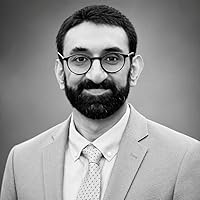
Nile Green
22 books33 followersNile Green is Professor of History at UCLA, with an interest in the multiple globalizations of Islam and Muslims. He was awarded a Guggenheim Fellowship in 2018.
In pursuit of the patterns of both global and local Islams, he has traveled and researched in India, Pakistan, Iran, Afghanistan, Chinese Central Asia, the Caucasus, Syria, Turkey, Egypt, Israel, Yemen, Oman, Jordan, Morocco, South Africa, Myanmar, Malaysia, Uzbekistan, and Kazakhstan.
His seven monographs, seven edited books, and over seventy articles have traced Muslim networks that connect South and Central Asia with the Middle East, the Indian Ocean, Africa, Japan, Europe and the United States. His most recent book, The Love of Strangers: What Six Muslim Students Learned in Jane Austen’s London, was selected by the New York Times Book Review as Editors’ Choice. An earlier book, Bombay Islam: The Religious Economy of the West Indian Ocean, received both the Middle East Studies Association’s Albert Hourani Award and the Association for Asian Studies’ Ananda K. Coomaraswamy Award. His other books include Terrains of Exchange: Religious Economies of Global Islam; Sufism: A Global History; and, as co-editor, Global Muslims in the Age of Steam and Print, 1850-1930.
He served for eight years as founding director of the UCLA Program on Central Asia, as well as on various editorial and advisory boards, including the International Journal of Middle East Studies. He has held several visiting positions, such as at the École des Hautes Études en Sciences Sociales in Paris, and fellowships, including the Luce/ACLS Fellowship in Religion, Journalism & International Affairs. Before moving to the United States from his native Britain, he was Milburn Junior Research Fellow at Oxford University. He holds degrees from London and Cambridge.
In pursuit of the patterns of both global and local Islams, he has traveled and researched in India, Pakistan, Iran, Afghanistan, Chinese Central Asia, the Caucasus, Syria, Turkey, Egypt, Israel, Yemen, Oman, Jordan, Morocco, South Africa, Myanmar, Malaysia, Uzbekistan, and Kazakhstan.
His seven monographs, seven edited books, and over seventy articles have traced Muslim networks that connect South and Central Asia with the Middle East, the Indian Ocean, Africa, Japan, Europe and the United States. His most recent book, The Love of Strangers: What Six Muslim Students Learned in Jane Austen’s London, was selected by the New York Times Book Review as Editors’ Choice. An earlier book, Bombay Islam: The Religious Economy of the West Indian Ocean, received both the Middle East Studies Association’s Albert Hourani Award and the Association for Asian Studies’ Ananda K. Coomaraswamy Award. His other books include Terrains of Exchange: Religious Economies of Global Islam; Sufism: A Global History; and, as co-editor, Global Muslims in the Age of Steam and Print, 1850-1930.
He served for eight years as founding director of the UCLA Program on Central Asia, as well as on various editorial and advisory boards, including the International Journal of Middle East Studies. He has held several visiting positions, such as at the École des Hautes Études en Sciences Sociales in Paris, and fellowships, including the Luce/ACLS Fellowship in Religion, Journalism & International Affairs. Before moving to the United States from his native Britain, he was Milburn Junior Research Fellow at Oxford University. He holds degrees from London and Cambridge.
Ratings & Reviews
Friends & Following
Create a free account to discover what your friends think of this book!
Community Reviews
Displaying 1 - 17 of 17 reviews
July 4, 2024
What a biased book! Was it really written by a professor? Aren't real professors objective?
Another possibility, also rather unprofessorial, is that Green simply does not understand and therefore feels the need to attack. An understander has no need to attack other understanders.
I have read so many books on Sufism that I finally start understanding a little of this non-linear and non-sequential thinking. It is the way of thinking which produces insight, new ideas, inventions, and propels humanity forward on its endless evolutionary trajectory.
But the poor professor displays none of the above. His books are pretty pedestrian, step by step, from here to there. It's true that he wants to create a wider picture but he does not know how. Desperately, he tries to add gravitas to his contrived framework (expressed in the title itself) by attaching some irrelevant quotes from an old book by Gosse. What a ridiculous schemata! Didn't the professor specializing in Sufism learn anything from the Sufi Naqshbandis/Designers?
Wouldn't it be better if this describer of Sufi externals made an effort to study IN Sufism rather than ABOUT it? Although Sufism is understood mostly by people with insight (writers and poets like Lessing, Graves, Borges; psychologists like Ornstein, Deikman, Stuart Litvak), perhaps even an academic could achieve it if he seriously treated the fact that his own Chair is named after Ibn Khaldun, obviously the same type of inspired Sufi as Ikbal Ali Shah and Idries Shah whom he inexplicably and pointlessly decided to oppose.
Another possibility, also rather unprofessorial, is that Green simply does not understand and therefore feels the need to attack. An understander has no need to attack other understanders.
I have read so many books on Sufism that I finally start understanding a little of this non-linear and non-sequential thinking. It is the way of thinking which produces insight, new ideas, inventions, and propels humanity forward on its endless evolutionary trajectory.
But the poor professor displays none of the above. His books are pretty pedestrian, step by step, from here to there. It's true that he wants to create a wider picture but he does not know how. Desperately, he tries to add gravitas to his contrived framework (expressed in the title itself) by attaching some irrelevant quotes from an old book by Gosse. What a ridiculous schemata! Didn't the professor specializing in Sufism learn anything from the Sufi Naqshbandis/Designers?
Wouldn't it be better if this describer of Sufi externals made an effort to study IN Sufism rather than ABOUT it? Although Sufism is understood mostly by people with insight (writers and poets like Lessing, Graves, Borges; psychologists like Ornstein, Deikman, Stuart Litvak), perhaps even an academic could achieve it if he seriously treated the fact that his own Chair is named after Ibn Khaldun, obviously the same type of inspired Sufi as Ikbal Ali Shah and Idries Shah whom he inexplicably and pointlessly decided to oppose.
September 11, 2024
Niles Green's credentials as a historian of Islam are authentic and hegemonic. In this year of the centenary of Idries Shah's birth, and thirty years since his death, Green takes the opportunity to kick up a sandstorm--a bit like the Charles Atlas beach bully. His targets are long dead; and the traces they left are easy to deconstruct and reconstitute in a fresher context, informed by the postmodern sensibility. That may be done with goodwill or bad faith and dishonesty.
Following closely in the footsteps of previous attacks-- by opponents of the cosmopolitan, rehabilitative, sufism espoused by Idries Shah---Green rummages in the dustbins of colonial grandees, and lesser bureaucrats, and treats their recorded observations as pristine, acute, and objective. Smith & Wesson ammunition for the scholarly sniper.
Green does an indecent enough job of shooting the sitting ducks. However, when he does miss the mark, the threadbare facticity of his undeniably beautiful writing becomes apparent. Such moments are signalled by the unscholarly usage: 'Surely'.
* Surely, Ikbal Ali Shah could not have travelled unhindered around Soviet era Uzbekistan? Green does not think so. Yet, Fitzroy Maclean followed a similar itinerary, years later when soviet control of that region was far more consolidated.
* Surely, Ali Shah never set foot in Afghanistan? Green paints a lurid picture of a foreign chancer and preposterous fraud. Surely, such an unreliable narrator is easily dismissed? Yet, in several other places, in the first section of the book, Green depends heavily on Ali Shah’s self-reports e.g. the events in Saudi Arabia.
Green acknowledges that Ali Shah’s books were written by a penniless family man, on a failing mission—in a foreign and arrogantly hostile land- —whose eyes were on possible mass marketability in the hope of feeding his children.
Nevertheless, Green’s agenda leaves him no scruple. Quotes from Ikbal’s books are selected to rollick the reader, now presumed to be savouring the predicament of a scoundrel found out.
Green does balance the cartoonish picture, a little bit, when he quotes a favourable, sympathetic, and perhaps understanding review from an eminent orientalist: H.A.R. Gibb. The bucket is immediately kicked over though by a further quotation that contains standard scholarly criticism.
Similarly, a ringing endorsement from the Agha Khan, which I presume Green found impossible to ignore, is kicked up the arse with the suggestion that the eminent personage does not read carefully enough.
I dare say that Green could, if he wanted to, bring his superb historiographic skills to use against any of the authors of of the documents supposedly damning Shah; and make against each a spellbinding case— subjecting his subjects to similar accusations of “dubious associations” (p143) “credentialised” turncoats (p147) “blurred identities” ( 157)
Surely, Green would spare George Orwell (who he seems to idolise) that ordeal? In fact, Green’s disappointment at not uncovering some vituperative statement, levelled against Shah by Orwell, is quite palpable. Green has to content himself with his discovery that a list of best Asian authors, compiled by Orwell does not include Akbar Ali Shah.
Green appears intent on subjecting Ikbal Ali Shah to be hanged as a fraud, fantasist, and fake. In order to do so he floods the jury’s critical faculties with a bravura display of liquid detail that serves to make his concatenation of inferences wash. I could argue, and in some detail, that Green’s reading is biased from the start; but I will spare any casual reader that.
Suffice to say that having hanged the father as a fraud and plagiarist, Green swings his noose around the son, Idries.
In a lengthy review— which Amazon keeps deleting—-I detailed Green’s many errors and omissions on the matter of Idries Shah in the postwar period. I know those times very well. My suspicion is that Nile Green feels that his hatchet cut deep in Part One, no need then to bother much about consolidating his case in Part Two? So Green fills the pages with tiresome quips against tired targets e.g “ trendy Hampstead liberals”—strewth ! In several places he berates the Shahs' supposed neglect of the muslim communities, in the north of England, who live in what he designates as ‘terraced slums’. Similar, presumably, to the terraced slum that I grew up in. I had, and have, many muslim friends. We did not need Idries Shah to speak for us and improve our lot; we had politicians for that purpose.
Idries Shah’s mission, as far as I understand it, was one of sufic repair. He succeeded in that, despite dodgy near-relatives; after all: parents are inevitable, siblings are conditional.
Following closely in the footsteps of previous attacks-- by opponents of the cosmopolitan, rehabilitative, sufism espoused by Idries Shah---Green rummages in the dustbins of colonial grandees, and lesser bureaucrats, and treats their recorded observations as pristine, acute, and objective. Smith & Wesson ammunition for the scholarly sniper.
Green does an indecent enough job of shooting the sitting ducks. However, when he does miss the mark, the threadbare facticity of his undeniably beautiful writing becomes apparent. Such moments are signalled by the unscholarly usage: 'Surely'.
* Surely, Ikbal Ali Shah could not have travelled unhindered around Soviet era Uzbekistan? Green does not think so. Yet, Fitzroy Maclean followed a similar itinerary, years later when soviet control of that region was far more consolidated.
* Surely, Ali Shah never set foot in Afghanistan? Green paints a lurid picture of a foreign chancer and preposterous fraud. Surely, such an unreliable narrator is easily dismissed? Yet, in several other places, in the first section of the book, Green depends heavily on Ali Shah’s self-reports e.g. the events in Saudi Arabia.
Green acknowledges that Ali Shah’s books were written by a penniless family man, on a failing mission—in a foreign and arrogantly hostile land- —whose eyes were on possible mass marketability in the hope of feeding his children.
Nevertheless, Green’s agenda leaves him no scruple. Quotes from Ikbal’s books are selected to rollick the reader, now presumed to be savouring the predicament of a scoundrel found out.
Green does balance the cartoonish picture, a little bit, when he quotes a favourable, sympathetic, and perhaps understanding review from an eminent orientalist: H.A.R. Gibb. The bucket is immediately kicked over though by a further quotation that contains standard scholarly criticism.
Similarly, a ringing endorsement from the Agha Khan, which I presume Green found impossible to ignore, is kicked up the arse with the suggestion that the eminent personage does not read carefully enough.
I dare say that Green could, if he wanted to, bring his superb historiographic skills to use against any of the authors of of the documents supposedly damning Shah; and make against each a spellbinding case— subjecting his subjects to similar accusations of “dubious associations” (p143) “credentialised” turncoats (p147) “blurred identities” ( 157)
Surely, Green would spare George Orwell (who he seems to idolise) that ordeal? In fact, Green’s disappointment at not uncovering some vituperative statement, levelled against Shah by Orwell, is quite palpable. Green has to content himself with his discovery that a list of best Asian authors, compiled by Orwell does not include Akbar Ali Shah.
Green appears intent on subjecting Ikbal Ali Shah to be hanged as a fraud, fantasist, and fake. In order to do so he floods the jury’s critical faculties with a bravura display of liquid detail that serves to make his concatenation of inferences wash. I could argue, and in some detail, that Green’s reading is biased from the start; but I will spare any casual reader that.
Suffice to say that having hanged the father as a fraud and plagiarist, Green swings his noose around the son, Idries.
In a lengthy review— which Amazon keeps deleting—-I detailed Green’s many errors and omissions on the matter of Idries Shah in the postwar period. I know those times very well. My suspicion is that Nile Green feels that his hatchet cut deep in Part One, no need then to bother much about consolidating his case in Part Two? So Green fills the pages with tiresome quips against tired targets e.g “ trendy Hampstead liberals”—strewth ! In several places he berates the Shahs' supposed neglect of the muslim communities, in the north of England, who live in what he designates as ‘terraced slums’. Similar, presumably, to the terraced slum that I grew up in. I had, and have, many muslim friends. We did not need Idries Shah to speak for us and improve our lot; we had politicians for that purpose.
Idries Shah’s mission, as far as I understand it, was one of sufic repair. He succeeded in that, despite dodgy near-relatives; after all: parents are inevitable, siblings are conditional.

July 6, 2024
Copied this: 'Calificado en Estados Unidos el 10 de julio de 2024.
'I found this in Etudes Sufies, which actually specializes in Sufism rather than just history: If there is a body of persons who know how to communicate with people at large with consummate efficiency, in spite of the relative strangeness of the material and ideas communicated, it seems as if they would certainly do so, as and when it was possible. The possibility would depend upon the time and the people. And it is hard to resist the conclusion that Idries Shah is a man with the requisite communication capacity.
'To someone rooted in Eastern analogical traditions of thought, and especially the Arabic language, the very name of the man becomes significant when he is thinking along the above lines. Idries means the « scholarly communicator. » And Idris is the traditional link between higher powers and humanity in the personage of the prophetic Idris of our scriptures. Shah, though a Persian word, is customarily employed not only for descendants of the Prophet (Persian-Shahim, Arabic-Sayedna) but also conveys the sense of the succession of kingly capacity, which operates in a continual series of levels, from the highest rarefication to the lowest, terrestrial one.
'I am aware that here I am writing in a vein and a language that may not be familiar to all my readers, especially those who are not accustomed to the traditional symbolic use of words. But this usage exists, and it is possible to note that it is being used increasingly in the West today. This in itself can be a justification for its continued employment.
'In our tradition, the teacher will often dress himself in the clothes of the people with whom he is to interact, and among whom he will live. There is an interesting story about the custom of the great-grandfather of Idries Shah, the Jan-Fishan Khan, whose personal name was Mohammed Shah.
'The quite astonishing finesse, wisdom, and consideration shown by Saiyid Mohammed Shah indicates how personal interactions can be employed to create effects that are perhaps improbable in societies more familiar to us today. When the Saiyid once went to visit someone in Damascus, he first went to stay in Basra. There he lived the same kind of life as the man who he was about to see, to familiarize himself completely with the surroundings and outlook of his host. When he eventually presented himself at this man’s house, he was, as was his custom, dressed in almost exactly the same style of clothes as the man he was visiting. This behavior contrasts with the cloud of retainers that other people of rank always took with them when visiting anyone at all-just in order to impress or to maintain a sense of their own dignity. In a vivid metaphor, Saiyid Mohammed Shah used to call this artificial behavior « changing the air, » altering the atmosphere, and making things different from how they really should be. It is a common practice among certain Saiyids to dress like the people they are seeing; known as « putting on the local clothes. »
'This kind of deliberate and measured action, based upon insight and experience, is a far cry from the hit-or-miss methods employed by gurus. It is equally remote from the dogmatic approach of the externalist theologian or religious leader working through insistence, indoctrination, and the inculcation of a particular belief. It posits a third manner of operating: from knowledge.
'It is interesting to compare the behavior and capacity of the Afghan sage of a century ago with the current adaptation of the same tendency and ability in his great-grandson Idries Shah. It sheds light, too, on the nature of the observer when we turn to the pages of one of Britain’s major literary journals, The Spectator, where a man of letters is seeking to account for Shah’s remarkable experiences and power to enter any circle in the East:
'A nobly born Moslem… speaking a kind of Esperanto of sophistication, and able to meet on personal–not journalistic–terms almost anyone he cares to call on in the Middle East, describes a journey there… An intensely interesting book, both for its unusual subject and for the author’s outlook–worldly, astringent, high-spirited. 3
'In the colonialist period, from which much of the East has only very recently emerged, such men as Shah were regarded by some as a potential threat, to the temporarily ruling power, to a degree that those who did not live through such times might now find it hard to believe. The existence of an alternative system of thought, of an intact society within the imperial domains of the West, a society with its own hierarchies and chains of command, which transcended national and colonial borders, these were obvious drawbacks from the administering power’s point of view.
'For this reason, just as much as because of the recurrent cycles of local coercive societies, the work of the Saiyids has for generations been carried out with considerable discretion. Traveling as students, practicing the military arts, carrying on international trade, and fulfilling religious obligations were the main fields that were open to them; and consequently we find them working in these fields, often in a more or less uneasy relationship with the administering elements, throughout the Eastern world, from the confines of China in the east to North Africa in the west.
'The need was always to help to maintain the structures of thought and social organization in which certain objectives could be reached; to keep abreast of the current developments in the expanding world, and to adapt the methods of teaching to changing situations. This could only be done by knowing the inner meaning of the thought in which they dealt, and sometimes only at the risk of their motives being seriously misunderstood.'
A 3 personas les resultó útil
'I found this in Etudes Sufies, which actually specializes in Sufism rather than just history: If there is a body of persons who know how to communicate with people at large with consummate efficiency, in spite of the relative strangeness of the material and ideas communicated, it seems as if they would certainly do so, as and when it was possible. The possibility would depend upon the time and the people. And it is hard to resist the conclusion that Idries Shah is a man with the requisite communication capacity.
'To someone rooted in Eastern analogical traditions of thought, and especially the Arabic language, the very name of the man becomes significant when he is thinking along the above lines. Idries means the « scholarly communicator. » And Idris is the traditional link between higher powers and humanity in the personage of the prophetic Idris of our scriptures. Shah, though a Persian word, is customarily employed not only for descendants of the Prophet (Persian-Shahim, Arabic-Sayedna) but also conveys the sense of the succession of kingly capacity, which operates in a continual series of levels, from the highest rarefication to the lowest, terrestrial one.
'I am aware that here I am writing in a vein and a language that may not be familiar to all my readers, especially those who are not accustomed to the traditional symbolic use of words. But this usage exists, and it is possible to note that it is being used increasingly in the West today. This in itself can be a justification for its continued employment.
'In our tradition, the teacher will often dress himself in the clothes of the people with whom he is to interact, and among whom he will live. There is an interesting story about the custom of the great-grandfather of Idries Shah, the Jan-Fishan Khan, whose personal name was Mohammed Shah.
'The quite astonishing finesse, wisdom, and consideration shown by Saiyid Mohammed Shah indicates how personal interactions can be employed to create effects that are perhaps improbable in societies more familiar to us today. When the Saiyid once went to visit someone in Damascus, he first went to stay in Basra. There he lived the same kind of life as the man who he was about to see, to familiarize himself completely with the surroundings and outlook of his host. When he eventually presented himself at this man’s house, he was, as was his custom, dressed in almost exactly the same style of clothes as the man he was visiting. This behavior contrasts with the cloud of retainers that other people of rank always took with them when visiting anyone at all-just in order to impress or to maintain a sense of their own dignity. In a vivid metaphor, Saiyid Mohammed Shah used to call this artificial behavior « changing the air, » altering the atmosphere, and making things different from how they really should be. It is a common practice among certain Saiyids to dress like the people they are seeing; known as « putting on the local clothes. »
'This kind of deliberate and measured action, based upon insight and experience, is a far cry from the hit-or-miss methods employed by gurus. It is equally remote from the dogmatic approach of the externalist theologian or religious leader working through insistence, indoctrination, and the inculcation of a particular belief. It posits a third manner of operating: from knowledge.
'It is interesting to compare the behavior and capacity of the Afghan sage of a century ago with the current adaptation of the same tendency and ability in his great-grandson Idries Shah. It sheds light, too, on the nature of the observer when we turn to the pages of one of Britain’s major literary journals, The Spectator, where a man of letters is seeking to account for Shah’s remarkable experiences and power to enter any circle in the East:
'A nobly born Moslem… speaking a kind of Esperanto of sophistication, and able to meet on personal–not journalistic–terms almost anyone he cares to call on in the Middle East, describes a journey there… An intensely interesting book, both for its unusual subject and for the author’s outlook–worldly, astringent, high-spirited. 3
'In the colonialist period, from which much of the East has only very recently emerged, such men as Shah were regarded by some as a potential threat, to the temporarily ruling power, to a degree that those who did not live through such times might now find it hard to believe. The existence of an alternative system of thought, of an intact society within the imperial domains of the West, a society with its own hierarchies and chains of command, which transcended national and colonial borders, these were obvious drawbacks from the administering power’s point of view.
'For this reason, just as much as because of the recurrent cycles of local coercive societies, the work of the Saiyids has for generations been carried out with considerable discretion. Traveling as students, practicing the military arts, carrying on international trade, and fulfilling religious obligations were the main fields that were open to them; and consequently we find them working in these fields, often in a more or less uneasy relationship with the administering elements, throughout the Eastern world, from the confines of China in the east to North Africa in the west.
'The need was always to help to maintain the structures of thought and social organization in which certain objectives could be reached; to keep abreast of the current developments in the expanding world, and to adapt the methods of teaching to changing situations. This could only be done by knowing the inner meaning of the thought in which they dealt, and sometimes only at the risk of their motives being seriously misunderstood.'
A 3 personas les resultó útil

April 7, 2024
What a fascinating book with a well-researched premise about the Shah family and its legacy on diplomacy, politics, religion and the self-help movement. The book is about the life and career of Ibal (the father) and his two sons, Idries and Omar, who helped build a new narrative about India, Afghanistan, and the Muslim/Sufi world. It is amazing to read that so many people were drawn into their web and how their influence was promoted for so many years. Their narrative sounded plausible, but was it really?, and the web these people spun is the basis of the book.
It is hard to write a review without giving away the premise of the book, so I want you to read it and see for yourself. I very much enjoyed reading the book, but wish it gave more backstory into Idries’s life, and if he had children and how they viewed their family’s legacy given the evidence. Did his wife have any idea how he conducted his life? I have many questions, but would have to do more research myself.
I think the book is very timely as we get to see how people can believe a narrative that is false if it is pushed with conviction and presented as real.
It is hard to write a review without giving away the premise of the book, so I want you to read it and see for yourself. I very much enjoyed reading the book, but wish it gave more backstory into Idries’s life, and if he had children and how they viewed their family’s legacy given the evidence. Did his wife have any idea how he conducted his life? I have many questions, but would have to do more research myself.
I think the book is very timely as we get to see how people can believe a narrative that is false if it is pushed with conviction and presented as real.
July 16, 2024
How truthful is it? There are always people who want to become famous on the bones of a successful people.
Other scholars have other opinion about Idries Shah. For example, Dr. EMIR AREF TAMER, D.LITT. who is educated in Syria and Lebanon, Dr. Tamer is an authority on Islamic culture, as well as a poet, novelist, and historian. He has published twenty full-length works, among which are included scholarly historical and literary studies. A member of several learned societies in the East and West, including the Royal Asiatic Society of London, he is the son of the Emir Tamer El-Ali, head of the Ismailia Community in Syria.
He stated completely different opinion about Idries Shah:
The essential and inner significance of the mystical doctrine undoubtedly meets other certitudes of Islam in the analytical revelations of Idries Shah. In a word, he works at a more profound and sophisticated level than most thinkers employ, and this has plainly led to his being able, through perception and not shallowness, to lay bare basic truths of human existence.
It is only an interpretative method such as this that can command the respect of people with a greater range of understanding than narrow theoreticians; and it is only such a mind as that of Idries Shah that can also render, on the lower level, indications of the truth of the unity of the human experience of the divine in a manner that can bridge the gap between more superficial thinkers, of whatever ideology.
But in order to see whether the work being done by Shah accords with tradition, we may briefly turn to something written in the London Times some years ago, which represents the unalloyed traditional belief about the nature and operation of the family of the Prophet:
They do no preaching, but circulate their message in a special way unfamiliar to this age and not specified … Humanity had to perfect itself by welding together, under rare and secret auspices, the scattered elements that it inherited, as well as imbibing certain secrets which took shape only rarely and under difficult conditions. Some of the methods were conventional study…
The London Times has the slogan: « When the Times speaks, the world listens. » The world, is seems, is certainly listening a great deal to Shah and the traditions that are now being released in greater volume than they have for centuries.
The doctrine of a source of knowledge, developed in a specialized manner and transmitted from a remote origin to a receiving culture, may seem bizarre, as some Western observers have noted. But it is not without significance that the concept, which, in the more-stilted days from which we have recently emerged, appeared improbable in the extreme, now finds far readier acceptance where it would hardly be expected. Taking this quotation from a newspaper with a daily readership of three million people, Walter Lang, in speaking of the work of Idries Shah, notes:
It may indeed be true that the mere reading of such material will, in the long run, switch in new areas of the brain – areas which have hitherto been dormant, but which in « normal » humanity would be fully active. In which case it seems high time that official psychology took a close look at a remarkable foundling which has been deposited overnight on the Western doorstep.
Other scholars have other opinion about Idries Shah. For example, Dr. EMIR AREF TAMER, D.LITT. who is educated in Syria and Lebanon, Dr. Tamer is an authority on Islamic culture, as well as a poet, novelist, and historian. He has published twenty full-length works, among which are included scholarly historical and literary studies. A member of several learned societies in the East and West, including the Royal Asiatic Society of London, he is the son of the Emir Tamer El-Ali, head of the Ismailia Community in Syria.
He stated completely different opinion about Idries Shah:
The essential and inner significance of the mystical doctrine undoubtedly meets other certitudes of Islam in the analytical revelations of Idries Shah. In a word, he works at a more profound and sophisticated level than most thinkers employ, and this has plainly led to his being able, through perception and not shallowness, to lay bare basic truths of human existence.
It is only an interpretative method such as this that can command the respect of people with a greater range of understanding than narrow theoreticians; and it is only such a mind as that of Idries Shah that can also render, on the lower level, indications of the truth of the unity of the human experience of the divine in a manner that can bridge the gap between more superficial thinkers, of whatever ideology.
But in order to see whether the work being done by Shah accords with tradition, we may briefly turn to something written in the London Times some years ago, which represents the unalloyed traditional belief about the nature and operation of the family of the Prophet:
They do no preaching, but circulate their message in a special way unfamiliar to this age and not specified … Humanity had to perfect itself by welding together, under rare and secret auspices, the scattered elements that it inherited, as well as imbibing certain secrets which took shape only rarely and under difficult conditions. Some of the methods were conventional study…
The London Times has the slogan: « When the Times speaks, the world listens. » The world, is seems, is certainly listening a great deal to Shah and the traditions that are now being released in greater volume than they have for centuries.
The doctrine of a source of knowledge, developed in a specialized manner and transmitted from a remote origin to a receiving culture, may seem bizarre, as some Western observers have noted. But it is not without significance that the concept, which, in the more-stilted days from which we have recently emerged, appeared improbable in the extreme, now finds far readier acceptance where it would hardly be expected. Taking this quotation from a newspaper with a daily readership of three million people, Walter Lang, in speaking of the work of Idries Shah, notes:
It may indeed be true that the mere reading of such material will, in the long run, switch in new areas of the brain – areas which have hitherto been dormant, but which in « normal » humanity would be fully active. In which case it seems high time that official psychology took a close look at a remarkable foundling which has been deposited overnight on the Western doorstep.
July 4, 2024
Thank God I bought this book at a deep discount because otherwise I would demand a refund. I never heard of Mr Green but I have read very many books by all the Shah family and I recently reviewed the eight volumes of "Idries Shah Centenary" just published by Tahir Shah, himself author of over 150 books. So I hoped for something objective, perhaps a tribute to these two giants of thought who helped so many millions of readers in several dozens languages all over the world.
I was pretty soon disillusioned. Reportedly the author is a professor of something somewhere, it even looks as if he were using sources quite extensively. But then, as I kept turning pages, it soon became clear that even when the sources could be interpreted as proof of ingenuity of both protagonists, if for other people they would be interpreted as the ability to overcome extreme hardships, where any reasonable reviewer would be laudatory, this 'historian' displays an obviously non-academic bias. Just look at his choice of judgmental adjectives, at the choice of derisive and arrogant comments.
Could it be something personal, some envy of someone whose previous books were not popular and bringing attention to himself by attacking these two illustrious giants of non-sequential thinking? I must be wrong, a professor would not do any such thing.
Also, as a historian, he would understand that everything evolves, so why should Sufism be calcified?
I was pretty soon disillusioned. Reportedly the author is a professor of something somewhere, it even looks as if he were using sources quite extensively. But then, as I kept turning pages, it soon became clear that even when the sources could be interpreted as proof of ingenuity of both protagonists, if for other people they would be interpreted as the ability to overcome extreme hardships, where any reasonable reviewer would be laudatory, this 'historian' displays an obviously non-academic bias. Just look at his choice of judgmental adjectives, at the choice of derisive and arrogant comments.
Could it be something personal, some envy of someone whose previous books were not popular and bringing attention to himself by attacking these two illustrious giants of non-sequential thinking? I must be wrong, a professor would not do any such thing.
Also, as a historian, he would understand that everything evolves, so why should Sufism be calcified?

November 30, 2025
Very contentious this, see all those one star reviews? Idries Shah was not exactly what he claimed to be, and nor was his Dad, Ikbal. However, they gathered together some beautiful stories, disseminated an extraordinary and colourful picture of a multicultural 'East' that baffled, enchanted and beguiled thousands of readers and students throughout the 'West'. They were very successful and worked hard at it. Idries had a brother Omar who also formed a branch of the family firm.
I read this in conjunction with Holy Men of the Electromagnetic Age by Raphael Cormack. I recommend this latter to anyone interested in Palestine in the 20th century, by the way.
I found Empire's Son, Empire's Orphan on the back cover blurb of Holy Men along with one by Alberto Manguel, always a recommendation I would follow. Ninethly, I had to buy my copy from America. Putting two and two together with the one star reviews on here, I am thinking that debunking the Shahs is not a popular pastime in the UK, where Idries and Omar were brought up after many temporal and spiritual adventures.
'The spiritual governs and controls the material everywhere' it is said, possibly by a Sufi sage.
Anyway, Idries seemed to distance his branch of Sufism from Islam and this alone is contentious as anyone who has studied Muyiddin Ibn'Arabi will attest.
Finally why all the one star reviews? This book is extremely well researched and has twenty-three pages of notes with bibliographic details given in full.
I read this in conjunction with Holy Men of the Electromagnetic Age by Raphael Cormack. I recommend this latter to anyone interested in Palestine in the 20th century, by the way.
I found Empire's Son, Empire's Orphan on the back cover blurb of Holy Men along with one by Alberto Manguel, always a recommendation I would follow. Ninethly, I had to buy my copy from America. Putting two and two together with the one star reviews on here, I am thinking that debunking the Shahs is not a popular pastime in the UK, where Idries and Omar were brought up after many temporal and spiritual adventures.
'The spiritual governs and controls the material everywhere' it is said, possibly by a Sufi sage.
Anyway, Idries seemed to distance his branch of Sufism from Islam and this alone is contentious as anyone who has studied Muyiddin Ibn'Arabi will attest.
Finally why all the one star reviews? This book is extremely well researched and has twenty-three pages of notes with bibliographic details given in full.
July 6, 2024
As some others already stated, it is a book unexpected of someone professed to be Sufi influenced. After all most classical Sufis say that Sufism is love, and, further, ordinary love is the bridge to the Real (love). I haven't detected any not only love but even ordinary sympathy for the Shahs, after all they are also fellow travelers in the Journey of life.
The book reads almost like yellow journalism (something similar is mentioned by a reviewer on the British Amazon). ANYthing the Shahs do is immediately judged negative, even things as obvious as fighting life difficulties.
And all their extremely unusual life achievements, both in endless extremely popular books translated probably into over 30 languages, and in other areas of professional activity and human service are belittled and ridiculed.
Interestingly, Tahir Shah about a month earlier published 8 volumes entitled "Idries Shah Centenary" and in it many of the negative theories of Green are dispelled. Is it possible that Green gave Tahir Shah a pre-publication copy? It doesn't sound probable considering that Green shows so much rather non-academic hostility to these giants and popularizers of Sufi thought.
So, if you want to improve your efficiency, better go to the Shahs rather than to Green.
The book reads almost like yellow journalism (something similar is mentioned by a reviewer on the British Amazon). ANYthing the Shahs do is immediately judged negative, even things as obvious as fighting life difficulties.
And all their extremely unusual life achievements, both in endless extremely popular books translated probably into over 30 languages, and in other areas of professional activity and human service are belittled and ridiculed.
Interestingly, Tahir Shah about a month earlier published 8 volumes entitled "Idries Shah Centenary" and in it many of the negative theories of Green are dispelled. Is it possible that Green gave Tahir Shah a pre-publication copy? It doesn't sound probable considering that Green shows so much rather non-academic hostility to these giants and popularizers of Sufi thought.
So, if you want to improve your efficiency, better go to the Shahs rather than to Green.
July 13, 2024
I wonder if Green was ever personally offended by anybody connected with the Idries Shah Foundation, or the Scheherazade Foundation. Everything in his book sounds so subjective and unacademic. On the other hand, he thanks Tahir Shah in Acknowledgements. So, what is it? Sheer interpersonal psychology of someone offended or a purportedly historical book?
Speaking of Tahir Shah, he himself has over 150 books to his name. He just published “Idries Shah Centenary” a month ago, debunking many Greens conspiracy theories with documents. And it is 8 volumes, not just one.
Should we expect another book from Green, this time attacking the writing of Tahir Shah? Or is it simply a method of attaching oneself to the names and reputations of these great writers? Many authors manage to sell their unremarkable books by attaching themselves to great names, say, Einstein but without adding anything to the field of Physics.
What is Green’s contribution to the field of the Sufi psychology and self-development? How does it compare with millions of people in dozens of countries helped by the two sages whom Green criticizes so baselessly?
Speaking of Tahir Shah, he himself has over 150 books to his name. He just published “Idries Shah Centenary” a month ago, debunking many Greens conspiracy theories with documents. And it is 8 volumes, not just one.
Should we expect another book from Green, this time attacking the writing of Tahir Shah? Or is it simply a method of attaching oneself to the names and reputations of these great writers? Many authors manage to sell their unremarkable books by attaching themselves to great names, say, Einstein but without adding anything to the field of Physics.
What is Green’s contribution to the field of the Sufi psychology and self-development? How does it compare with millions of people in dozens of countries helped by the two sages whom Green criticizes so baselessly?
July 16, 2024
I thought I was reading some scurrilous gossip. Pretty boring after a while. Many guesses and assumptions and nearly all of them negative. I have tried to read one other of your few books and I had to stop after some browsing.
Could you write something as useful and helpful as the Shahs? But if you think that Sufism is all these ancient tribal customs it is as if you were confusing the temporary and the secondary with the primary and essential. The structure of the book looks artificial and then the poor-quality content is jammed into this contrived framework with results for everyone to see. You would need a totally new methodology, Mr. Green. And some learning, beyond superficialities. Is it still possible or is too late in life?"
Helpful
Could you write something as useful and helpful as the Shahs? But if you think that Sufism is all these ancient tribal customs it is as if you were confusing the temporary and the secondary with the primary and essential. The structure of the book looks artificial and then the poor-quality content is jammed into this contrived framework with results for everyone to see. You would need a totally new methodology, Mr. Green. And some learning, beyond superficialities. Is it still possible or is too late in life?"
Helpful
January 28, 2025
Spurious and ill-founded book, without merit.
It is sad that Nile Green has descended to this sort of trashy denigration, so far removed from the acts of a true historian. It also makes me wonder about Nile Green's other books and if they show similar unbalanced bias.
It is sad that Nile Green has descended to this sort of trashy denigration, so far removed from the acts of a true historian. It also makes me wonder about Nile Green's other books and if they show similar unbalanced bias.

Want to Read
May 15, 2024I received this book for free through Goodreads Giveaways. It is an advance reading copy.
July 11, 2024
Green has a chance to get on Wikipedia as a footnote for the entries about all three Shahs.
Better this than nothing.
Better this than nothing.
Read
July 12, 2024Thoroughly well researched if unsympathetic. I have been calling for a credible biography of Idries Shah for years.

July 13, 2024
Okay. The writing is good, but I feel like this was written for people already familiar with the history, so I was missing things. The subject matter is interesting but it's not a light read.
Read
January 4, 2025No wonder this book is biased given the outspoken opinions about scholars published by Idries Shah.

July 2, 2024
Nile Green's “fantastical” book, Empire's Son, Empire's Orphan: The Fantastical Lives of Ikbal and Idries Shah, about Ikbal Ali Shah and his son, the writer and thinker Idries Shah who helped establish the Sufi mystical tradition in the West, comes in the same ignoble tradition as James Moore and L.P. Elwell-Sutton's hatchet jobs, and they will hardly get a footnote in history. Had the author taken a less adversarial and scornful stance and been able to gain the confidence and cooperation of members of the Shah family that he evidently desired and sought, the work, and its sources, might have been greatly improved.
According to a recent and uninspiring review in the NYT by Robyn Creswell, “Ikbal and Idries are tricky subjects for biography. They kept no diaries and left only scattered correspondence”. And yet Tahir Shah managed to collect and publish an 8-volume set of information to coincide with the centenary of his father, Idries Shah's birth, on 16 June 2024. So a great deal of interesting and useful material has been left out of this work.
The evidence appears very damning. However, with the sparse use of citations, it's difficult to tell where Nile Green's imaginative re-enactment and speculation delivered as statements of fact leave off and where hard evidence begins. This gives the illusion of intimate acquaintance.
Green writes: “In telling their story, I tried to treat them with the balance of empathy and factual accuracy due to any biographical subjects.” (p308).
And yet we have this kind of material, which shows callous utter disrespect:
“Early in 1964, just before The Sufis was published, Gerald Gardner was sailing home, after wintering in Lebanon, aboard the cruise liner Scottish Prince. He died en route and was buried in Tunis in the Christian Cimetière du Belvédère. It was an ironic end for an English witch, but for Idries, the closure was timed perfectly: interred with his former mentor were the British occult roots of the Sufi master from Afghanistan.” (p224).
And:
“At seventy-five, Sirdar Ikbal Ali Shah, aka Sheikh Ahmad Abdullah, aka John Grant, aka the Brigand King Habibullah Kalakani, was dead.” (p250).
I will not repeat the words with which I annotated these offending passages, but as you may well imagine, they were not polite.
According to a recent and uninspiring review in the NYT by Robyn Creswell, “Ikbal and Idries are tricky subjects for biography. They kept no diaries and left only scattered correspondence”. And yet Tahir Shah managed to collect and publish an 8-volume set of information to coincide with the centenary of his father, Idries Shah's birth, on 16 June 2024. So a great deal of interesting and useful material has been left out of this work.
The evidence appears very damning. However, with the sparse use of citations, it's difficult to tell where Nile Green's imaginative re-enactment and speculation delivered as statements of fact leave off and where hard evidence begins. This gives the illusion of intimate acquaintance.
Green writes: “In telling their story, I tried to treat them with the balance of empathy and factual accuracy due to any biographical subjects.” (p308).
And yet we have this kind of material, which shows callous utter disrespect:
“Early in 1964, just before The Sufis was published, Gerald Gardner was sailing home, after wintering in Lebanon, aboard the cruise liner Scottish Prince. He died en route and was buried in Tunis in the Christian Cimetière du Belvédère. It was an ironic end for an English witch, but for Idries, the closure was timed perfectly: interred with his former mentor were the British occult roots of the Sufi master from Afghanistan.” (p224).
And:
“At seventy-five, Sirdar Ikbal Ali Shah, aka Sheikh Ahmad Abdullah, aka John Grant, aka the Brigand King Habibullah Kalakani, was dead.” (p250).
I will not repeat the words with which I annotated these offending passages, but as you may well imagine, they were not polite.
Displaying 1 - 17 of 17 reviews