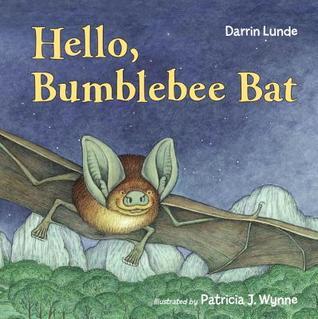
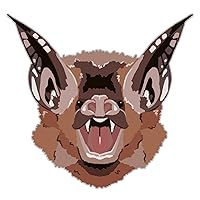
My name is Bumblebee Bat. I may be small, but I'm a great flyer. I live in a secret cave with my brothers and sisters.
Want to know more? Then open this book and fly with Bumblebee Bat into the night.
A series of questions and answers introduce children to the life and habitat of the exotic and endangered Bumblebee Bat. Scientifically accurate illustrations make these exotic animals accessible to young readers.
Back matter includes additional child-friendly facts.
Hello, Bumblebee Bat is a sweet, nonfiction book about one type of bat, the Bumblebee Bat. It is about the size of a bumblebee, hence the name! The book touches on habitat, diet, sleeping habits and facts about the anatomy of these cute, friendly night creatures.
This book could be a great resource to show kindergartners that informational books are interesting and not boring! It could be used as an animal study as part as a kindergarten or first grade article study/non-fiction study. It would also serve well in a kindergarten or first grade class as a resource for comparing and contrasting different types of bats and introducing the Venn diagram to showcase these findings.
This was a WOW book for me because I read it with my son and was able to learn things about this bat right along with him. Being taught something new at the same time as my son is being taught something new, was special in that I could experience the newness and curiosity with him. It was also special because it reminded me that we NEVER stop learning, and that as a future educator, I need to constantly remind myself to always keep finding new information to learn about. If I am going to teach children, I don't ever want to stop learning.
Darrin Lunde has written an informational picture book on the smallest bat in the world, the bumblebee bat. He introduces facts about the bats through a question and answer format that will appeal to the intended young audience. There is also a list of additional facts on the last full spread including the astonishing fact that bumblebee bats are "as light as a dime." Patricia J. Wynne's illustrations are done in watercolor, ink and colored pencil. For most of the spreads the text is on one page and a simple depiction of the facts from the text illustrates the facing page. The colors are mostly blues, greens and browns that echo the dusk and dawn time of day that bumblebee bats are most active. The regular placement of the text and the repetitive structure of the question and answer format make this a good choice for early fluent beginning readers. This works as both a read-aloud and as a source of information for children curious about bats. Look on the dust jacket and the CIP page at the back to see an actual size illustration of the bumblebee bat as a bonus!
This book is a non-fiction picture book. It won a Geisel Award as well. The book gives information about the bumblebee bat, the smallest bat in the world and one of the endangered species. The book is done completely in a question/answer format. While the book provides solid information, the format is not conducive to holding a younger child's interest, primarily because it's not told in the format of a story. It's presented more like information found in an encyclopaedia.
2008 Geisel Honor Award I love the question-answer format with this book. I could see kids researching an animal and then writing their report in this type of format. I think kids learn more than they think they will by listening to this story!
Not overwhelmed with information, but simple and fun to read. There's enough repetition that my beginning reader could read it with me, and we learned a bit about bats along the way. Nicely done.
This book is an excellent way to provide children with information regarding the Bumblee Bat. The bat is the main character, and throughout the story, there are other animals/insects that ask the bat questions, revealing information to the reader about the bat. This is a great way to convey information to children, as they are most likely interested in the visuals that the book represents.
I love how informational this book is without it feeling like a nonfiction book. This way, it does not feel 'boring' to children, rather, captivated by the little bumblebee bat. This book goes through lots of information about bumblebee bats, such as habitats, sleeping, food, likes, dislikes, etc. I also think children who love animals would love this book. Overall, I loved learning about bumblebee bats!
"Hello, Bumblebee Bat" by Darrin Lunde is a great book that takes us on the journey to learn about the worlds smallest bat. This book is both entertaining and educational. Darren Lunde, the author, uses simple vocabulary, and an engaging storytelling technique to teach us about the fascinating bumblebee bat, and it's interesting characteristics. This book introduces young readers to the adorably cute bumblebee bat, but it also teaches young readers about the importance of conservation and protecting endangered wildlife species. with the simple vocabulary and beautiful pictures, "Hello, Bumblebee Bat" is an excellent choice for young Raiders, who are interested in learning about nature and wildlife. This book is perfect when introducing the different parts of the animal kingdom, and overall it's in educational and interesting, read for young readers. I would recommend this book for an at home library and a classroom. I plan to have this book in my classroom in the future.
The bumblebee bat was discovered in Thailand in 1973. This is one of the smallest mammals known on the planet and is only about the size of a bumblebee (hence the name). This cute little book was a really neat find for my young children as we were learning about Thailand and the unique animals that are found there.
This was fun! I’d never heard of bumblebee bats and thought the information was informative and interesting. Sometimes nonfiction books can be so dry and this was not!
Materials used: “watercolor, ink, and colored pencil”
Great non-fiction book for story time (PreK-2). Each 2-page spread poses a question ("Bumblebee bat, what do you look like?", "Bumblebee bat, where do you live?") accompanied by a clear illustration, so kids can help predict the answer to the question before you read the rest of the text to them.
I like how simple the story is. This would be great for younger students who are interested in bats. It gives them very basic information about bumblebee bats.
This is an informational book about the Bumblebee Bat that is as small as a bumblebee, hence the name. The drawings are cute and the information is simple for young children.
Question and answer format gives facts about the bumblebee bat. I wasn't a fan of the flat prose style or the cartoony illustrations, but I think that's more of a personal preference.
The tail membrane is incorrect. The membrane drawn here forms more of a V or U shape (possibly upside down), but the accurate shape would be an upside down W shape. Not happy. Inaccurate.
Someone checked out a ton of books on bats and just returned them so I helped myself. This is very cute about a little bat. It's very informative and simple for younger readers. Love it.
Read as part of my quest to read all the Theodore Seuss Geisel honor books to my toddler. Informative and engaging. Can't believe how small these little bats are!
A great book for children ages 3 and up who want to learn more about bats. It's very easy to read, and would be good for one-on-one or a story hour. Each page starts out with a question a child may ask, followed by a short, easy to understand answer. I really like how the one end page has a life-sized drawing of a bumblebee bat -- which really is about the size of a large bumblebee. The illustrations are clear and simple. The bats are so ugly, they are cute (which is kind of how bats are, anyway). I wonder if the authors may consider adding "sidebar" information that may appeal to older children (such as information on echolocation). As it stands, it's age range is 3 years to about first or second grade. But it is a cute book.
This "story" is made up of a series of questions, kind of like an interview, asked of a small bat found in Thailand. The questions are very conversational, and the bat's answers simple, understandable, and informative. The illustrations are very well done.
About half way into the book comes the question, "Bumblebee Bat, how do you see at night?" The bat answers, "I make a squeaky sound that bounces back from whatever it hits. I see by hearing." A helpful picture accompanies this showing the sound waves traveling from the bat to a moth and back again. When I finished reading this page, my five-year old son asks, "Daddy, is that echolocation?" Yes, this brought a big smile to my face.
Genre: Controlled Vocabulary/ Geisel This story is a series of questions asked to Bumblebee Bat. After each question the bat replies with an answer. The end of the book also provides a brief background on Bumblebee Bats.
Point of View The point of view of the book is an interesting one, since we do not know who is posing the questions to the bat. Is a narrator posing the questions, or is the reader by virtue of reading the book posing the questions? Bumblebee Bat than replies to the question thus allowing the reader to get an answer to the question.
Curriculum Connection: Lesson on bats, habitats, or questions and answer. The book is best suited for younger students, grades K-3.
This informational text gives information about bumblebee bats in the form of questions and answers. The narrator asks things like “what do your look like?” and “how do you sleep?” And a bumblebee bat gives simple answers.
I love the question/answer format of this book. I think this is a great way to make the information easy for young readers to understand and digest. This book is about a unique topic and written in a unique way, and I think it could be a great teaching tool.
Illustrations: watercolor, ink, colored pencil
Lunde, D. Ill: Wynne, P. (2007). Hello, Bumblebee Bat. Watertown, Ma: Charlesbridge.
I learned fascinating things about the bumblebee bat. It is tiny and very light. The pattern of this book could easily be used as a re-write about just about any animal. It could be done as a shared writing, then students could each do their own book on a different animal. The question/answer format is perfect for kids and provides a structure for the facts that they could research for their particular animal. Great book.
Bumblebee Bats are so cute and endangered! This is what I learned from reading this book. A story to explain how bats live, this book could also be read around Halloween since bats are very popular at that time. Each page asks differnt questions that children may be wondering, and can add to their knowledge of animals. At the end of the book there is also a few pages about bumblebee bats. Children love and remember facts about animals, so I definitely recommend this book to young elementary aged children.
This short story about the characteristics of the bumblebee bat is set up in a question-answer format. Children will enjoy “talking” with a bumblebee bat as they learn about the habitats, fears, diet, and physical features about the smallest bat in the world.
I really enjoyed learning about the bumblebee bat and know I can find lots of fun activities to do with young children as they learn about bats.
11/28/23 - "Nocturnal Animals" Contrasted to last year, this book went over really well! The kids were interested in the facts and made great observations.
11/3/22 - "Night Critters" The group's attention wandered during this book, but I don't think that was the book's fault. We needed a wiggle break. I would try this book again for a future storytime. I love that this is nonfiction but reads in a very engaging manner that is perfect for storytime.
Well if that isn't the cutest little bat I've ever seen! Reminds me of the moth here in the U.S. that hovers like a bat, and is right around the same size. The illustrations are clear and engaging, and the repetitive text with its simple answers is readable for lower elementary students. I'd like to see a video of this bat!