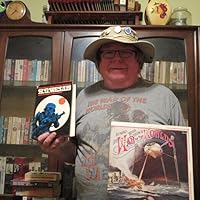
One man's war against the NVA . . . and the U.S. Army. A true story of terror, heroism and survival in the green hell of Vietnam. 1st Lt. Eric Smith , leader of a military intelligence team nicknamed the Dirty Dozen, recounts his wartime experiences with interrogators, interpreters, prisoners of war and counterintelligence agents. A close, unflinching look at combat intelligence.
Excellent book for an LPD. Honest and engaging memoir of an Army intelligence officer's tour in Vietnam 1968-69. Fantastic lessons and insights into the mind of an 'average' officer. Not the greatest literature and it's clear the officer was a mixed performer with some questionable views. But, that honesty and willingness to reflect his own biases is what makes this book useful. Probably not that insightful for the general public but if you're a field grade looking for an LPD choice I'd pick this well before the musings of an overachiever like 'The Unforgiving Minute.'
Not by the Book: A Combat Intelligence Officer in Vietnam, by Eric Smith. Is a memoir of a young lieutenant in Vietnam in 1967-68 who was part of the notorious Americal Division and responsible for the interrogation of captured Vietnamese, after separating the innocent civilians (IC), Vietnam Cong (VC), and North Vietnamese (NVA). The Geneva Convention forbade torture, which Lieutenant Smith believed in, at least personally, so his interrogation techniques sometimes had to be rather inventive.
As a combat memoir his writing is direct, and sometimes crude, though considering the subject matter not really out of place. It is also most informative, in a rather depressing sort of way, concerning our intelligence gathering operations at the division and brigade levels at the height of the war. For example, a fundamental problem was that very few Americans could speak Vietnamese and we had to rely on our South Vietnamese allies for help. The problem with that was that some of those “Allies” were, in fact, Communist VC infiltrators and our intelligence was thereby compromised. Also, the language itself has many nuances. The word for “mother,” for example, can also mean “horse” and also a vile expletive, depending on one’s voice inflection.
Creative interrogation techniques he used while stationed at a certain hospital included telling wounded, ignorant VC farmers that the X-ray machine was going to permanently sterilize them and they would never be able to have children. However, if he answered his questions he would lower its power so it would reveal only his internal injuries enabling proper medical treatment. This usually worked.
He also observed first hand the effects that combat stress had on people, himself included. Having myself serving stateside in the National Guard from 1971 to 1977, I am humbled every time I read a memoir of that terrible war and I have a difficult time passing judgement on anyone who could not handle the stress, having never walked in their shoes.
He did make one observation I tend to agree with. “In my experience … . [t]orture was counterproductive… . Prisoners who were being mistreated would, if they were smart, simply make up information to satisfy their captors. It’s what I would do under the same circumstances. We had a hard enough time verifying detainee’s often vague and uninformed stories without having to worry about deliberate fabrications. Generally speaking, a prisoner who spoke voluntarily gave more accurate and coherent information.” (P. 179).
This is not a history of the war and passes no judgements of our involvement there, but is rather an intimate, if not a bit frustrating and even a bit depressing snapshot of one, low level intelligence officer’s experiences, and provides a different and enlightening window into our failure there.
One of the more interesting books I have read about the vietnam war. It was also one of the funniest, which is unusual for a first-person nonfiction book. The book is about the author's experiences as a military intelligence officer assigned to the Americal Division in post-Tet Vietnam. During his tour, he was assigned both division h.q., then to a brigade intelligence gathering team. Unlike most of the books about peoples experiences in the war, the author was not a combat infantry officer. Except for the occasional rocket attacks and two instances where he is sent out to the bush is he shot at. Most of the time he is fighting the usual enemies of someone in the "rear". Boredom, loneliness, mixed feeling about the war, and the realization that the training in intelligence gathering he received in the states is not compatible with the situation in Vietnam. And a chain of command and an entrenched military bureaucracy that treats people that question policy and regulations with outright hostility, or mind-numbing apathy. One of the best examples of this comes near the end of his tour. His M.I. teams are getting a lot of V.C. suspects that are caught in the villages around the brigade base camp selling bags of marijuana at rock bottom prices to the soldiers. The author wonders if this could be a prelude to an attack. So he sends a request up the chain of command to see if there were any other reports increased drug sales around bases before they were attacked. The response he got back was quick and to the point. "THERE IS NO DRUG PROBLEM IN THE UNITED STATES ARMY! PERIOD! And that was the end of that. One of the funniest scenes in the book happens when the author is reviewing some captured documents. In one some party official in Hanoi orders people in V.C./N.V.A. controlled villages that during an attack they are not to go in too there bunkers. Instead, they are to gather in the village square and eat rice and sing patriotic songs until the attack is over. The author laughs at the irony that like the Americans , the enemy had to deal with there own dumb orders from out of touch leadership. This scene along with a few others make this make this one of the funniest non-fiction books I read about the war. It is also a good read because it gives a different perspective of the war. The authors' war wasn't the same hell as that the grunts in the bush dealt with on a daily basis; it was still filled with a full share of terror, suffering, boredom, frustrations, humor, and small joys in small personal victories that seem to make up the Vietnam experience for those that were there.
Not by the Book is a short memoir, leavened by above-average writing (Smith became a reporter and cartoonist after the war) and some humor, but ultimately slightly misleading. An ROTC cadet from Georgetown, Smith found himself funneled into the very bottom of the military intelligence apparatus. He was lucky. He had a "safe" job at the HQ of the Americal Division (later notorious for the My Lai Massacre), which was about the safest spot for a green Lieutenant to be I Corps in 68-69. Safe is of course relative, with regular rocket attacks, sapper infiltration, and Vietnam in general. Of Smith's friends, one lost an arm, one went insane, and one was imprisoned for raping a child.
The actual job was, well, bored with interludes of terror covers it well. First there was a lot of paper shuffling, where it turned out that captured document exploitation was being handled by one overworked Private who didn't and couldn't care about the difference between propaganda leaflets, diaries, and high-valued captured orders. Smith worked up something that got useful information down to the Combined Document Exploitation Center in Saigon and intelligence back up in less than a week. This system processed between 30,000 and 50,000 pages in his time with the Division, although never to the standards of Smith's COs. The bad part of the job were the interrogations, and separating out the handful of VC or NVA from the masses of innocent civilians caught up in battalion sweeps. With his broken Vietnamese, Smith could stumble through some of the interrogations. The ugly parts where when his CO assigned him to conduct interrogations in a abattoir of a field hospital, trying to get information out of wounded VC before they died. When Smith was rotated to his next assignment, this job was split across three officers to spare their minds.
There was plenty of Vietnam Chaos. Smith was assigned to lead a convoy of clerks and translators on Route 1 (The "Street Without Joy") so Division could demonstrate to Battalion that it controlled the vehicles. He was sent into a hot LZ to secure the vital intelligence of Vietnamese grave scrolls under the assumption they were secret Chinese orders. The entire "black list" of high value VC commanders in I Corps turned out to be bunk, because American typewriters lacked the diacritic marks to indicate Vietnamese tones. Smith also wound up in command of a Battalion Military Intelligence Team nicknamed "The Dirty Dozen" because of their partying and black-market thieving. For the most part, they seemed like they were trying to do their job with a minimum of violence (some violence, as Smith and one of his subordinates both wound up beating a prisoner severely).
The best moment is Smith's description of "combat" during his convoy. He saw and heard his unit under fire, went for the radio, and regained his senses three hours later, everybody fine, nobody looking at him like he had been gibbering nonsense. No one else saw that they were under fire. But for three hours on a dangerous mission, Smith was commanding purely by reflex and no one noticed. The mind plays tricks.
The book closes with some simple lessons learned, which were promptly ignored. The best "simple" interrogation technique (as far as any of this is simple) is to demonstrate to a prisoner that you already know everything, so it doesn't hurt if they give you a few more pieces. Interrogators need close access to order of battle info. Translators are unreliable, and the Army needs to get language capacity as close to the front lines as possible. Soldiers need to know what happens to prisoners, so they'll treat them correctly, which means that interrogators have to send reports back to capturing units. Currently, all HUMINT is classified unless otherwise specified, which means the people who need it most can't see it.
This is one of my favorite books. I picked it up while we were stationed in Germany off-post before any of our household goods had arrived so there was nothing to do but read. It turned out to be one of my favorite books ever. Eric Smith is very funny.