At Fire Hour is a sweeping, soulful novel that tells the story of Bhekisizwe Makhatini, a young black South Africa writer, detained and forced into exile, who undergoes a creative writing masters in the UK and military training with the ANC in Angola and in the Soviet Union, and faces the angst of choosing between his writing and his passionate desire to pit his new military skills against the apartheid regime. But Makhatini faces another challenge - suspicion by his ANC comrades that he was released from detention in return for spying on the ANC, that lingers throughout his exile life and beyond. But, is he a sellout?
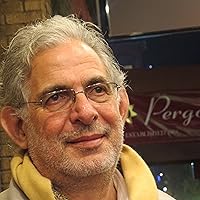
Barry Gilder was born in Durban, South Africa in 1950. He obtained a BA degree in English and Philosophy at the University of Witwatersrand in 1972. From 1974 to 75 he served on the National Executive Committee of the National Union of South African Students.
He went into exile in 1976 and joined the African National Congress (ANC) in London, where he worked as a musician. In 1979, he went to Angola, where he underwent training with the ANC's armed wing, Umkhonto we Sizwe (MK). In 1980, he underwent military and intelligence training in Moscow. He later served as head of the ANC's intelligence unit in Botswana, where he was also a member of the ANC's Regional Political-Military Committee.
Barry spent a brief period in Zimbabwe from 1990 to 1991, where he worked as the Administrative Editor of Africa Information Afrique. He was granted amnesty and returned to South Africa in 1991. From 1992, he worked as Head of Communications and later Deputy Director of Matla Trust, an organisation set up by Nelson Mandela to provide voter education to South Africa's newly-enfranchised electorate before the first democratic elections in 1994.
At the end of 1994, the ANC tasked Barry to assist in establishing South Africa's new democratic intelligence services. From 1995 until 1999, he served as a General Manager and then Deputy Director-General of the South African Secret Service. From 2000 to 2003, he served as Deputy Director-General of the National Intelligence Agency (South Africa's domestic service). From 2003 to 2005, he served as Director-General of the Department of Home Affairs, and from 2005 until his retirement from government at the end of 2007, he served as Coordinator of Intelligence.
In 2010, Barry joined in the establishment of a new think tank in South Africa – the Mapungubwe Institute for Strategic Reflection (MISTRA) – formed by former high-ranking officials in the democratic government. He served as MISTRA's Director of Operations until January 2013, spent two years in New Delhi, where he began work on a novel, returned to South Africa in 2014, rejoined MISTRA as Manager of Publications, and, in 2016, became Director of Operations again.
Barry served as South Africa's ambassador to Syria and Lebanon, based in Damascus, from 2019 to 2023.
Barry's story and that of the South African liberation struggle and the challenges of democratic governance are contained in his book: 'Songs and Secrets: South Africa from Liberation to Governance', published by Jacana Media in South Africa in June 2012, by Hurst Publishers in the UK and internationally in November 2012 and by Oxford University Press in the US in February 2013.
Barry obtained a Master of Arts in Creative Writing from the University of the Witwatersrand in 2018, and the novel prepared for the Master's – 'The List' – was published by Jacana Media in Johannesburg in September 2018. He obtained a PhD in Creative Writing from Wits University in 2023, and the novel prepared for the degree, 'At Fire Hour', was published by Jacana Media in September 2023.
Barry now works as a freelance editor and proofreader through Amazwi Creatives, a partnership with his wife, Dr Reneva Fourie, providing editing, proofreading, ghostwriting and research services for authors, academics and organisations in South Africa, the United Kingdom, the EU and internationally.
At Fire Hour by Barry Gilder is a beautifully crafted novel, a gripping narrative in artfully woven rich prose and dialogue that realistically includes bits of African lingua franca, interspersed with poetry providing lightness and welcome distraction. It would be a mistake to read this novel too fast. Although the complex plot set in the South African liberation struggle is captivating, the reader could miss nuances that are too often absent from biographies and historical narratives.
Beyond the author being an admirer of the Russian school of reality literature of famous novelists like Leo Tolstoy and (a century later) Mikhail Sholokhov, this novel depicts the reality of various branches and aspects of the ANC in exile. Several renowned artists come into the narrative with their real names and amazingly well-described personalities, leading to the story of the exceptional role of culture and the contribution of the arts to the resistance against apartheid. Outstanding examples, like the poets Mongane Wally Serote, ‘Willy’ Keorapetse Kgositsile, and graphic artist Thami Mnyele, or jazz musicians ‘Dollar Brand’ aka Abdullah Ibrahim, and Jonas Gwangwa who is familiar to world-wide solidarity movements as the leader of the ANC’s cultural ensemble ‘Amandla’. In fact, the author himself was at the time a singer and composer of struggle songs that have contributed significantly to the South liberation struggle – and was also a trained soldier and ANC intelligence officer in Botswana.
One of the big issues in Gilder’s story is what constituted a frequent existential dilemma for artists and writers as well as intellectuals, academics and other professionals between their strong urge to take up arms and fight the bloodthirsty militarised apartheid system or to rather stick to contributing through their talents – although the latter choice was not necessarily safer, nor necessarily exclusive. A main theme is the fact that for non-armed ANC militants to exercise their artistic or intellectual capacities against apartheid at the frontline, often in contact with comrades inside the country, was also a very dangerous choice. History shows that many murders and attempted assassinations by the regime in the frontline states – Botswana, Mozambique, Swaziland, Zimbabwe, Lesotho – and elsewhere were targeted against artists and intellectuals.
In this novel, Barry Gilder tells first-hand of the creation of the famous Medu Arts Ensemble of ‘cultural workers’ in Gaborone, Botswana, close to the South African border and how it succeeded to relate closely to the cultural resistance inside the country. Apartheid’s deadly June 1985 attack on Gaborone left, among others, the artist, Thami Mnyele, dead.
The main fictional character of the novel is Bheki Makhatini, a poet who cannot live without his notebooks and pencil stubs to write down all he sees and experiences. As a leader of the militant South African Students Organisation, SASO, he regularly visits an ANC exile contact, Pumla, in Botswana to report the situation and activities inside the country. This was how ANC cadres stayed in touch and often led or advised the resistance and political underground inside the country from the frontline states.
South Africa did not have the conditions for a maquis, neither because of its geography nor due to the collaborator regimes of the rural bantustans, which were reserves of cheap labour and, already since the South African Union in 1910, covered by a tight web of oppressive surveillance and mostly forced collaboration of so-called ‘traditional’ governance. Therefore, since the banning of the ANC in 1960, the liberation movement was forced to reorganise and work from exile while many, like Nelson Mandela, languished in prison.
Apartheid’s security police (SB), suspicious of Bheki’s trips to Botswana, arrest and badly torture him. They want to know who his ANC contacts are. Bheki has a psychological reaction to bad torture that makes his mind and memory disconnect. As a result, he is unable to remember what he might have said or done from that point. Then the SB police, realising Bheki’s potential as an ANC cadre, set a vicious trap by releasing him without obvious motive. That will cause Bheki to be suspected of having been recruited as an apartheid agent.
Bheki joins the ANC in exile and chooses as nom de guerre ‘Sholokov’, his much-admired Russian-Soviet author of And Quiet Flows the Don, awarded the 1965 Nobel Prize. Initially, Bheki is unaware of the suspicion of him that informs the riveting plot thread throughout the novel, reappearing and disappearing again without the reader being able to wholly forget that it might be fatal – especially if one knows that the multiple manipulations of the apartheid forces peaked during the 1980s and badly infected the ANC body, its armed wing, Umkhonto we Sizwe, and the internal underground structures. Thus, the SB not achieving their aim, they remain a threat to Bheki until the end of his life.
For those who have known the South African liberation struggle, this novel is an insider’s reality story covering the struggle from the late 1970s through the crucial 1980s and ending after liberation. It gives a lively description of life in the ANC and the different cadre deployments, among others, at the frontline in Botswana, the military training camps in Angola, further training in the Soviet Union, the international department in London, the headquarters in Zambia, while emphasising the importance of discipline and deployments, often at the expense of ignoring family, in order to achieve the united action needed for sustaining such a big, protracted struggle.
For Bheki and Pumla this is far from easy. After their first night as lovers in Gaborone, they are seldom based in the same country. For communication they depend on comrades’ goodwill and safe but slow, hand-carried mail routes connecting the ANC’s wide world of places of deployment. Pumla especially longs for her husband when, unknown to him, she is pregnant and gives birth to their son Maxim. But their delight of being at last the three together at the Medu culture festival in Gaborone is short lived. Bheki’s voice is hoarse when he recites his last poem: Words do not / slice skin / shred flesh / shatter bone / Dethrone dictators
That night Bheki and his unit of guerrilla fighters cross the border fence into South Africa ready to face the enemy and fight.
Besides the cultural pillar of the struggle, the story lifts a veil on what was called ‘Security’ or ‘Mbokodo’, the ANC’s feared intelligence unit, which the author knew well. However, he does not hesitate to describe how this unit, at times, committed violence and even criminal violence – in this story even fed by personal motive and abuse of rank.
In brief, exile in the ANC was a tough life, accepted as the way to freedom, but in reality, not as romantic as it is sometimes portrayed in later autobiographies and oral histories. Some of the scenes of extreme violence in firefights or torture were part of that life and can’t be avoided in reality literature. Yet they might not be easy to read – or to write.
In my reading, the sprinkle of poetic moments in the text with their airy language opened myriad little windows to related human and natural landscapes. Thus, they were not only welcome breathers in a creatively crafted text, but inevitably led my mind to the universality of the struggle for freedom of peoples in Palestine, Vietnam, Cuba, WWII Europe, from Toussaint Louverture to the Mau-Mau in Kenya and so many, many more of humanity who did not count the price to pay for this highest of good to bequeath to their children.
At Fire Hour by Barry Gilder is a moving novel set during the turbulent years of the struggle against apartheid. Bhekisizwe Makhatini’s wrestle between his love for art and his desire to fight for the freedom of his country is grippingly narrated. Even more gripping is the emotional roller coaster ride evoked by the themes of loyalty, betrayal, love and revolution. This well-researched novel, drawing on archival material, reveals how artists, as activists, shaped South Africa’s history for the better.
I’m not really one for South African political ‘struggle’ novels but ‘At Fire Hour’ by Barry Gilder stopped me in my tracks. Here is a literary story that takes in the horrors, the determination, the passion, love and the role of art in a way that grips, informs and pays homage to the many creatives forced to leave South African during the apartheid years. There’s more than a little of Gilder’s own experiences as an exile, ANC and MK member; in fact many parallels when you read his bio, his has been a fascinating career. But it is this that gives the book the edge, drawing on the real and lacing it with a powerful yet vivid imagination. Gilder has created an insightful, authentic rendering of history through the eyes of Bhekisizwe (Bheki) Makhathini, poet, author and activist. Detained by the Boers, tortured and forced into exile in 1976, the suspicion that he betrayed the ANC is a cloud that hovers over him throughout his life, driving his artistic purpose forward. Even as a respected member of the ANC, training with the MK in Russia and Angola, leading revolutionary attacks, the whispers follow him. There is no evidence, but there are consequences. He is accepted in the UK for a Masters in Creative writing where he hones his craft; his similarly exiled friends are the La Gumas, Wally Serote and other luminaries; he falls in love with a fellow operative, Pumla. It is a life that revolves around his activism and his literature, often solitary, a courageous life and, as we move through to 2020 Gilder recreates it in colurful landscapes, the smells, the sounds almost tangible, through the horrors to freedom and what that means today. Never underplaying the role of politics, the undercurrents and the subversions, but always cognizant of the role of art and literature. The poems that open sections of the book are powerful and heartfelt – rendered simply, effectively and memorable. Deserving of a volume of their own. It is a story of sacrifice, commitment and loss, discourse, discussion and debate and Gilder holds the reader tightly. I was slowly but surely drawn in to join these discussions, to understand more of our history but it was the creative role that held me. How do we understand the past? Through the writings of others – think Tolstoy, Dickens, Orwell – all showing us that politics can be art, art can be political. As we look back in history – not just our own - the role of the artist to portray the time; the writer to describe, is a vital part of our understanding and learning of what went before and what might become. All writers have a message and it is up to the reader to interpret that. At Fire Hour is a work of literature that will hold its place amongst South African historical novels as a new generation learns the cost of freedom.
A well plotted novel that covers the South African exile experience during apartheid. Following the love story of two activists that includes cultural activism in Europe, military training and deployment in Southern Africa and Russia, spy scares and the difficulties of exile, this book gives an excellent and accurate look at the life of activists forced to leave home but still working towards liberating South Africa. Gilder, who has first hand experience, is well placed to capture the nuances, and effortlessly weaves his fictional characters with historical figures for a complex and moving story. A rare look into the world of South African exiles during the apartheid era and their fight to take back their country.
I wrote At Fire Hour after many years of reflecting on the exile experience of South African activists and artists during the struggle against apartheid — the dislocation, the loyalties, the moral ambiguities, and the small moments of humanity that survive inside struggle.
The novel follows Bheki Makhathini and others whose lives are shaped by exile, art, activism and return.
I hope readers find in it both a political story and a human one.