Mindblowing.
A girl is dead. Or dying. Or dead. Or on the threshold of … A sneak peak into an entirely strange world.
We get a view on how things get results entirely different from the ones envisioned. So very many topics addressed: families, relations, identity, perception, religion and how it sometimes develops into something else, scary and foreign. This all is delivered in a package I couldn't resist. Incredible.
Q:
Her name was Leila.
Tequila Leila … (c)
Q:
she might take offence and playfully hurl a shoe – one of her high-heeled stilettos. (c)
Q:
Never in a thousand years would she agree to be spoken of in the past tense. The very thought of it would make her feel small and defeated, and the last thing she wanted in this world was to feel that way. No, she would insist on the present tense – even though she now realized with a sinking feeling that her heart had just stopped beating, and her breathing had abruptly ceased, and whichever way she looked at her situation there was no denying that she was dead. (c)
Q:
This early in the morning they would be fast asleep, each trying to find the way out of their own labyrinth of dreams. (c)
Q:
There was so much she wanted to know. In her mind she kept replaying the last moments of her life, asking herself where things had gone wrong – a futile exercise since time could not be unravelled as though it were a ball of yarn. (c)
Q:
In the sky high above, a sliver of yesterday’s moon was visible, bright and unreachable, like the vestige of a happy memory. She was still part of this world, and there was still life inside her, so how could she be gone? How could she be no more, as though she were a dream that fades at the first hint of daylight? Only a few hours ago she was singing, smoking, swearing, thinking … well, even now she was thinking. It was remarkable that her mind was working at full tilt – though who knew for how long. She wished she could go back and tell everyone that the dead did not die instantly, that they could, in fact, continue to reflect on things, including their own demise. People would be scared if they learned this, she reckoned. She certainly would have been when she was alive. But she felt it was important that they knew. (c)
Q:
How could you possibly change gears the moment you walked out of an office where you had spent half your life and squandered most of your dreams? (c)
Q:
At some level invisible to the human eye, opposites blended in the most unexpected ways. (c)
Q:
The five of them: Sabotage Sinan, Nostalgia Nalan, Jameelah, Zaynab122 and Hollywood Humeyra. (c) Ok, this is taking a bit too far the talking names thingy.
Q:
How could seemingly sane minds be so consumed with all those crazy scenarios of asteroids, fireballs and comets wreaking havoc on the planet? As far as she was concerned, the apocalypse was not the worst thing that could happen. The possibility of an immediate and wholesale decimation of civilization was not half as frightening as the simple realization that our individual passing had no impact on the order of things, and life would go on just the same with or without us. Now that, she had always thought, was terrifying. (c)
Q:
The old woman was widely respected in the neighbourhood, and considered, for all her eccentricities and reclusiveness, to be one of the uncanny ones – those who had two sides to their personality, one earthly, one unearthly, and who, like a coin tossed into the air, could at any time reveal either face. (c)
Q:
When men asked – and they often did – why she insisted on spelling ‘Leyla’ as ‘Leila’, and whether by doing so she was trying to make herself seem Western or exotic, she would laugh and say that one day she went to the bazaar and traded the ‘y’ of ‘yesterday’ for the ‘i’ of ‘infinity’, and that was that. (c)
Q:
the thought she kept returning to was this: all these years she had been scared of make-believe Gypsies who kidnapped small children and turned them into hollow-eyed beggars, but maybe the people she should be fearing were in her own home. Maybe it was they who had snatched her from her mother’s arms.
For the first time she was able to stand back and regard herself and her family from a mental distance; and what she found out made her uncomfortable. She had always assumed they were a normal family, like any other in the world. Now she wasn’t so sure. What if there was something different about them – something inherently wrong? (c)
Q:
As the tastes of lemon and sugar melted on her tongue, so too her feelings dissolved into confusion. … Just as the sour could hide beneath the sweet, or vice versa, within every sane mind there was a trace of insanity, and within the depths of madness glimmered a seed of lucidity. (c)
Q:
To this day she had been careful not to show her love for her mother when Auntie was around. From now on she would have to keep her love for her aunt a secret from Mother as well. Leila had come to understand that feelings of tenderness must always be hidden – that such things could only be revealed behind closed doors and never spoken about afterwards. This was the only form of affection she had learned from grown-ups, and the teaching would come with dire consequences. (c)
Q:
… she had a tendency to do everything to excess: she smoked too much, swore too much, shouted too much and was simply too much of a presence in their lives – a veritable maximum dose. (c)
Q:
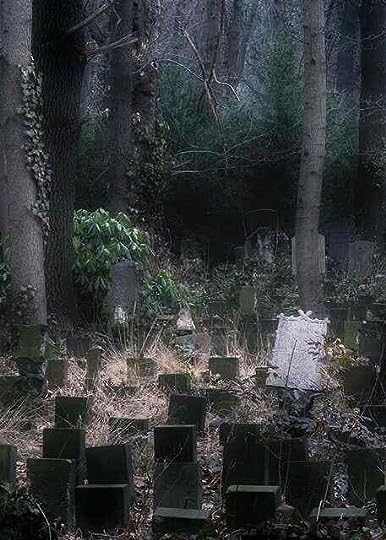
She regarded her memory as a graveyard; segments of her life were buried there, lying in separate graves, and she had no intention of reviving them. (c)
Q:
Tell me, was your mother also a hygiene freak?’
That made Leila stop cold. No more itching. (c)
Q:
A few of the labourers had a good voice, and they liked to sing, taking turns in leading. In a world they could neither fully understand nor prevail in, music was the only joy that was free of charge. (c)
Q:
This city always surprised her; moments of innocence were hidden in its darkest corners, moments so elusive that by the time she realized how pure they were, they would be gone. (c)
Q:
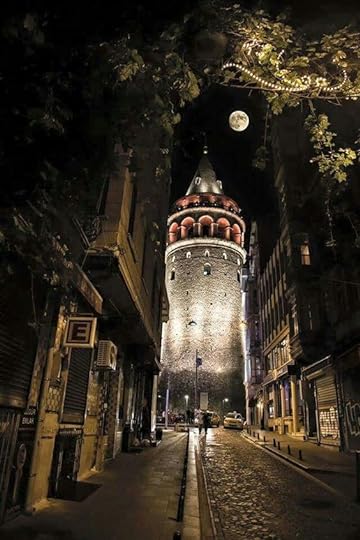
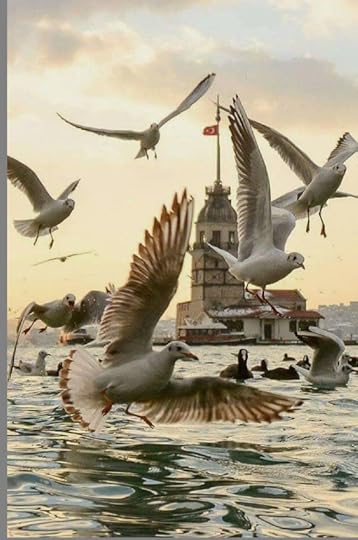
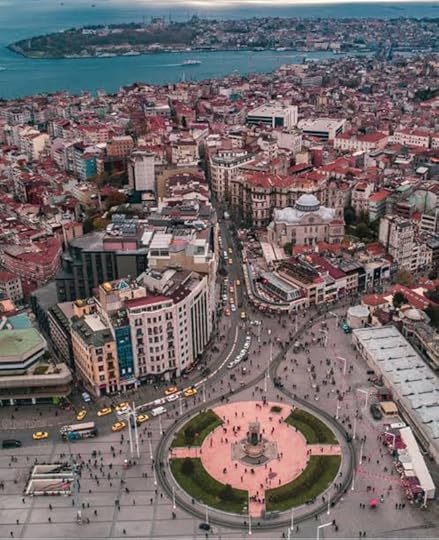
… Istanbul, the city where all the discontented and all the dreamers eventually ended up. (c)
Q:
Her life, like a door, had closed, and she was eager for another to open elsewhere. He who has not travelled in the world has no eyes, she thought. (c)
Q:
Once our spirits are broken, they know we won’t go anywhere. … She was thinking, maybe she was only a half-broken horse, too frightened to bolt, too lame to dare, but still able to remember the sweet taste of, and therefore to yearn for, freedom. (c)
Q:
She would go to a place where she could create herself anew. … You could traverse deserts, climb mountains, sail oceans and beat giants, so long as you had a crumb of hope in your pocket. (c)
Q:
Make friends, good ones. Loyal ones. No one can survive alone – except the Almighty God. And remember, in the desert of life, the fool travels alone and the wise by caravan. (c)
Q:
Here comes a boy named Ali … what an idiot, he thinks he is Dali! It had cut him to the core of his being, the endless jeering, the barbs. But one day, when a new teacher asked everyone in the class to introduce themselves, he leaped to his feet first, and said with a steady, confident smile: ‘Hi, my name is Ali, but I like it better when people call me D/Ali.’ From then on the snide comments had stopped, but he, headstrong and independent, had started using, and even enjoying, what was once a hurtful nickname. (с)
Q:
It was the expression on his face, as if he were perpetually dissatisfied or disenchanted with what he saw, what he heard, what he couldn’t bring himself to be part of. (c)
Q:
Her father-in-law’s dentures, soaking in a glass of water beside the box, smiled conspiratorially. (c)
Q:
She wondered whether, just as too many cooks spoiled the broth, too many revolutionaries could ruin a revolution, but once again she kept her thoughts to herself. (c)
Q:
She had often thought five was a special number. The Torah contained five books. Jesus had suffered five fatal wounds. Islam had five pillars of faith. King David had killed Goliath with five pebbles. In Buddhism there were five paths, while Shiva revealed five faces, looking out in five different directions. Chinese philosophy revolved around five elements: water, fire, wood, metal, earth. There were five universally accepted tastes: sweet, salty, sour, bitter and umami. Human perception depended on five basic senses: hearing, sight, touch, smell, taste; even though scientists claimed there were more, each with a baffling name, it was the original five that everyone knew. (c)
Q:
They had spent that evening chatting and laughing, as if nothing could ever pull them apart and life were merely a spectacle, exciting and unsettling, but without any real danger involved, like being invited to someone else’s dream. (c)
Q:
Istanbul was an illusion. A magician’s trick gone wrong. (c)
Q:
Truth could be corrosive, a mercurial liquor. It could eat holes in the bulwarks of daily life, destroying entire edifices. (c)
Q:
‘Why did you allow Yourself to be so widely misunderstood, my beautiful and merciful God?’ (c)
Q:
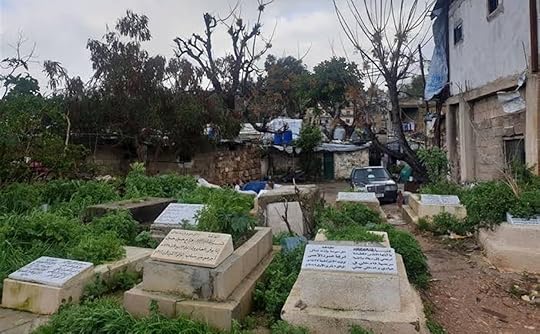
‘I feel … I think … I’m inside a grave.’
‘Yes, we can tell,’ said Nalan.
‘Don’t panic, my dear,’ said Zaynab122. ‘Think about it this way. You’re facing your fear, it’s good for you.’ (c)