

What do you think?
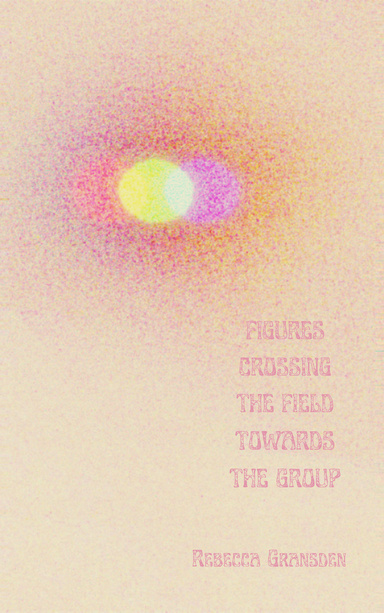
Figures Crossing the Field Towards the Group
A pilgrimage. An England in delirium.
88 pages, ebook
Published October 21, 2023
About the author
Rebecca Gransden
23 books273 followersThis author has always lived by the sea.
She tends to write about the edges of things so if you inhabit the fringes you may find something to like.
If you are interested in reading any of her books then send her a message and she'll get it to you in the digital format (PDF, MOBI, or eBook) of your choice.
Fellow indies - feel free to get in touch.
She tends to write about the edges of things so if you inhabit the fringes you may find something to like.
If you are interested in reading any of her books then send her a message and she'll get it to you in the digital format (PDF, MOBI, or eBook) of your choice.
Fellow indies - feel free to get in touch.
Ratings & Reviews
Friends & Following
Create a free account to discover what your friends think of this book!
Community Reviews
Displaying 1 - 29 of 29 reviews

December 24, 2025
Winner of the 2026 Queen Mary Small Press Fiction Prize
Night fires glow down path ways Flo can see to the sides, the flick of flame on dusk trunks, coal wood singe shine, fat bugs run in cracks. Sparks sail through the wood and out to the plains, pin the skies with titch flames to mock the stars in their heights. The flame light brings out blooms of all hues, bulge as they seep from a day sleep, dusk a ruse to fire. Spores sneeze from the gapes, hang the path ways, twink in dusk light, gold to fly and take the night. Find a twitch nose, set it right, claim a lung, set in tight.
Figures Crossing the Field Towards the Group by Rebecca Gransden was initially self-published under her own imprint in 2023, but in 2025 was published by Tangerine Press in some stunning new editions, including specially commissioned artwork by the collective Harry Adams.
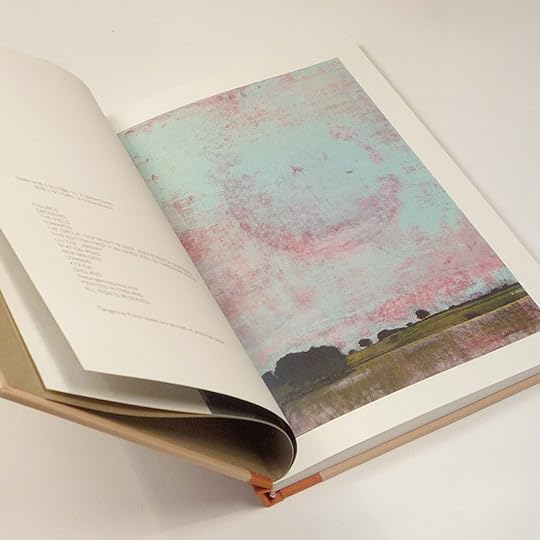
This is Tangerine Press's entry for the 2026 Queen Mary Small Press Fiction Prize, a prize for which they were longlisted in the inaugural year a decade earlier for Chris Wilson's The Glue Ponys.
Gransden's own description of the work, which is subtitled "A Pilgramage. An England in Delirium':
"Figures Crossing the Field Towards the Group is the culmination of a decade’s writing, and the final prose offering penned as part of the ‘pilgrimage works’ cycle. The novella charts the journey of a young girl who is impelled to wander an England beset by a mysterious apocalyptic event. In the course of the journey she encounters others that have been uprooted, and all must confront an ineffable delirium which has infected the land."
The novel is told in the close third-person perspective of a young girl, who is searching for a boy, her brother, town bro of sis, twin sis of bro, and they did not know which came first in an England blighted by a strange infestation, people advised to flee the country, as a man she meets explains:
The man stops a few feet from Flo, his mess of black hair full of dirt and car oil. His grey coat swings down to the floor, and on him is trash he bangs. He is a one man band of drab things, stuffs that did work in the past.
His voice like a drunk horn says:
—Who are you girl, who walks this road? All are gone to the sea.-
Flo stands doll still. The one man band looks, his eyes hid in his hair mess.
—You better scramble to the coast, to the last boats, there won't be many more, leaving from these shores.—
Flo looks like she has no clue, and she fights tears.
—Confused yes? Ah, I see. There’s something spreading up from the far south east. Maps on televisions show it, when the damned screens work. Humongous red blob expanding and inflating across the land. All these damned instruments and computers hanging off me can change to heavy screens and I’ll crush myself underneath, play the sweetest symphony. They never say what it is, only to leave, get to the transport, sail away to a land off the television map.
The spreading red blob also comes with a hum that disrupts communication and Gransden represents this in the novel by narrating the text in single syllables (hence 'bro' and 'sis'), although written and verbal communication, as in the example above, are not subjected to this constraint. This adds brilliantly to the depiction of the disrupted state of both people and nature:
Tight roads, the verge gone wild in too quick a time, grass spread in a craze, strange zig zag stems, leaves mash with fronds, buds nod rot fruit and drop to make squelch meat tracks. There have been no cars for days nor dead ones. All beasts have slunk off else where. Lone birds with mad minds peck out drum codes on sick bark and boughs.
The novel is told in a series of short vignettes as the young girl encounters those who have not fled, hoping for information on her brother, but those she meets are engaged in their own strange pursuits, as Sean Stewart's blurb for the novel expresses well: "Some of these individuals are ravaged and on the edge of death, while others are immersed in their own hermetic practices, be they solipsistic, nihilistic, or otherwise. None wish to engage for more than the brief time necessary to offer their meagre assistance."
The text is interrupted in the middle by a brief section “Public Information Dreams”, inserted with no context, which records the observations of two kids, designated at Kid P and Kid Q, who seem to be recording a film of various interactions between them:
Observer: 35
Day: 163
10:37:45 am — Kid Q exits property by back door (3b) and moves to end of garden. Weather is bright sunshine, occasional cloud shadows. No occlusion. Kid Q walks back and forth between end of garden and house, carrying objects. Objects observed to be recording equipment as previously noted (ID476). Kid Q collects the objects together on an empty patch of lawn behind the garden shed. The patch of lawn is square and is mostly unseen from the house. It ends at an overgrown fence, approx. 6ft tall that marks the perimeter boundary of the property’s rear. Beyond the rear fence are fields but the garden is not visible from this location due to the density of the foliage (full description and photographs of the layout of the property and garden are included in additional notes, at this time in the process of compilation). Kid Q assembles the recording equipment. Video camera on tripod is situated in the corner behind the shed and arranged to point across the lawn square diagonally, taking in as much of the space as possible.
10:52:13 am — Kid P exits house by the open back door (3b). Observed to have a listless demeanour. Kid P joins Kid Q. Kid Q and Kid P engage in long conversation (see transcript).
In the second half, defying the suggestions of those who do offer limited help that she head North, the narrator instead turns south, approaching the coast. And as she does, if anything the narration becomes more monosyballic, even some syllables themselves fracturing:
Flo is on a plain of fi eld that dips far off, where there are box grey builds that look titch from so far, a strain to a dull va le where smoke hangs low in sick wisps. Out in the ex panse she sees her arms, full of bruise. The wood left its marks. She licks these wounds, the taste of salt, her skin to smart. A guest on a dead heath, ghost moan crank, to shake a void orb from the sky, kiss a christ chi ld on the eye, make it wink and weep.
Dry husk burs roll in a foul wind, snake and bump cross the ache of the earth. Flo drags mean feet on, she hangs her arms, a dull thud pulls her head down. A murk so bad falls on the land, that it is use less.
Very impressive - 4.5 stars, rounded to 5 for the distinctiveness.
Playlist
https://www.youtube.com/watch?v=zaqYx...
Tangerine Press
Tangerine Press has been publishing misfits, mavericks and misanthropes since 2006. We put out titles in numerous formats: handbound, hardcover, limited editions; handsewn chapbooks; broadsides; art prints and occasional ephemera, as well as more readily available trade paperbacks where possible.
Imprints and side projects include Tangerine Graphic Arts (artists books); Sick Fly Publications (chapbook series); Rogue Editions (unexpected variants) and 10,000 Productions (record label). We have been known to dabble in 1970s pornography and the occasional bookburning too.
Tangerine champions work by authors who often exist on the fringes of society.
Queen Mary Small Press Fiction Prize judges' citations:
Our prize judge Marina Benjamin writes:
Rebecca Gransden has written a post-apocalyptic novel of quiet unease, the end of things coming like a thief in the night—except the night is red-hued, grainy, blurred, the landscape blasted and littered with dead and dying bodies. There is a sense of time having stopped. Even language is disintegrating, which Gransden’s poetic genius captures in heart-stoppingly affecting monosyllabic prose. Once read this book won’t be forgotten. Tangerine Press is unique, artisanal, visionary, uncompromising.
Judge Susanna Crossman writes:
A mesmerising dystopian novel, Figures Crossing the Field Towards the Group by Rebecca Gransden is a reading experience. We tumble into this book, as though the writing itself were a broken landscape that we enter, seized. Through breath-taking prose, we travel on a seismic journey with a young woman through a society demolished, where bodies rot, and geology has erupted, dissolved. This year Tangerine Press celebrate a decade of publishing ‘misfits, mavericks and misanthropes’ producing beautiful handmade often limited-edition books. Gransden’s glorious text, in its second print run, is another jewel in their crafted collection.
And judge Stu Hennigan writes:
Figures Crossing the Field Towards the Group by Rebecca Gransden is a work of breathtaking originality in form, style and execution. Gransden’s startling stylistic innovations create a language that’s familiar and alien in equal measure, a soon-to-come Newspeak stripped back to the bare bones that simultaneously recalls the alliterative poetry of the Anglo-Saxons. Perennial mavericks Tangerine Press have been quietly publishing writing and writers from the margins for the last two decades in formats that are often works of art in themselves; Gransden’s text, with its ancient memories of a mythic future, is another gem to add to their hugely impressive collection.
Night fires glow down path ways Flo can see to the sides, the flick of flame on dusk trunks, coal wood singe shine, fat bugs run in cracks. Sparks sail through the wood and out to the plains, pin the skies with titch flames to mock the stars in their heights. The flame light brings out blooms of all hues, bulge as they seep from a day sleep, dusk a ruse to fire. Spores sneeze from the gapes, hang the path ways, twink in dusk light, gold to fly and take the night. Find a twitch nose, set it right, claim a lung, set in tight.
Figures Crossing the Field Towards the Group by Rebecca Gransden was initially self-published under her own imprint in 2023, but in 2025 was published by Tangerine Press in some stunning new editions, including specially commissioned artwork by the collective Harry Adams.
This is Tangerine Press's entry for the 2026 Queen Mary Small Press Fiction Prize, a prize for which they were longlisted in the inaugural year a decade earlier for Chris Wilson's The Glue Ponys.
Gransden's own description of the work, which is subtitled "A Pilgramage. An England in Delirium':
"Figures Crossing the Field Towards the Group is the culmination of a decade’s writing, and the final prose offering penned as part of the ‘pilgrimage works’ cycle. The novella charts the journey of a young girl who is impelled to wander an England beset by a mysterious apocalyptic event. In the course of the journey she encounters others that have been uprooted, and all must confront an ineffable delirium which has infected the land."
The novel is told in the close third-person perspective of a young girl, who is searching for a boy, her brother, town bro of sis, twin sis of bro, and they did not know which came first in an England blighted by a strange infestation, people advised to flee the country, as a man she meets explains:
The man stops a few feet from Flo, his mess of black hair full of dirt and car oil. His grey coat swings down to the floor, and on him is trash he bangs. He is a one man band of drab things, stuffs that did work in the past.
His voice like a drunk horn says:
—Who are you girl, who walks this road? All are gone to the sea.-
Flo stands doll still. The one man band looks, his eyes hid in his hair mess.
—You better scramble to the coast, to the last boats, there won't be many more, leaving from these shores.—
Flo looks like she has no clue, and she fights tears.
—Confused yes? Ah, I see. There’s something spreading up from the far south east. Maps on televisions show it, when the damned screens work. Humongous red blob expanding and inflating across the land. All these damned instruments and computers hanging off me can change to heavy screens and I’ll crush myself underneath, play the sweetest symphony. They never say what it is, only to leave, get to the transport, sail away to a land off the television map.
The spreading red blob also comes with a hum that disrupts communication and Gransden represents this in the novel by narrating the text in single syllables (hence 'bro' and 'sis'), although written and verbal communication, as in the example above, are not subjected to this constraint. This adds brilliantly to the depiction of the disrupted state of both people and nature:
Tight roads, the verge gone wild in too quick a time, grass spread in a craze, strange zig zag stems, leaves mash with fronds, buds nod rot fruit and drop to make squelch meat tracks. There have been no cars for days nor dead ones. All beasts have slunk off else where. Lone birds with mad minds peck out drum codes on sick bark and boughs.
The novel is told in a series of short vignettes as the young girl encounters those who have not fled, hoping for information on her brother, but those she meets are engaged in their own strange pursuits, as Sean Stewart's blurb for the novel expresses well: "Some of these individuals are ravaged and on the edge of death, while others are immersed in their own hermetic practices, be they solipsistic, nihilistic, or otherwise. None wish to engage for more than the brief time necessary to offer their meagre assistance."
The text is interrupted in the middle by a brief section “Public Information Dreams”, inserted with no context, which records the observations of two kids, designated at Kid P and Kid Q, who seem to be recording a film of various interactions between them:
Observer: 35
Day: 163
10:37:45 am — Kid Q exits property by back door (3b) and moves to end of garden. Weather is bright sunshine, occasional cloud shadows. No occlusion. Kid Q walks back and forth between end of garden and house, carrying objects. Objects observed to be recording equipment as previously noted (ID476). Kid Q collects the objects together on an empty patch of lawn behind the garden shed. The patch of lawn is square and is mostly unseen from the house. It ends at an overgrown fence, approx. 6ft tall that marks the perimeter boundary of the property’s rear. Beyond the rear fence are fields but the garden is not visible from this location due to the density of the foliage (full description and photographs of the layout of the property and garden are included in additional notes, at this time in the process of compilation). Kid Q assembles the recording equipment. Video camera on tripod is situated in the corner behind the shed and arranged to point across the lawn square diagonally, taking in as much of the space as possible.
10:52:13 am — Kid P exits house by the open back door (3b). Observed to have a listless demeanour. Kid P joins Kid Q. Kid Q and Kid P engage in long conversation (see transcript).
In the second half, defying the suggestions of those who do offer limited help that she head North, the narrator instead turns south, approaching the coast. And as she does, if anything the narration becomes more monosyballic, even some syllables themselves fracturing:
Flo is on a plain of fi eld that dips far off, where there are box grey builds that look titch from so far, a strain to a dull va le where smoke hangs low in sick wisps. Out in the ex panse she sees her arms, full of bruise. The wood left its marks. She licks these wounds, the taste of salt, her skin to smart. A guest on a dead heath, ghost moan crank, to shake a void orb from the sky, kiss a christ chi ld on the eye, make it wink and weep.
Dry husk burs roll in a foul wind, snake and bump cross the ache of the earth. Flo drags mean feet on, she hangs her arms, a dull thud pulls her head down. A murk so bad falls on the land, that it is use less.
Very impressive - 4.5 stars, rounded to 5 for the distinctiveness.
Playlist
https://www.youtube.com/watch?v=zaqYx...
Tangerine Press
Tangerine Press has been publishing misfits, mavericks and misanthropes since 2006. We put out titles in numerous formats: handbound, hardcover, limited editions; handsewn chapbooks; broadsides; art prints and occasional ephemera, as well as more readily available trade paperbacks where possible.
Imprints and side projects include Tangerine Graphic Arts (artists books); Sick Fly Publications (chapbook series); Rogue Editions (unexpected variants) and 10,000 Productions (record label). We have been known to dabble in 1970s pornography and the occasional bookburning too.
Tangerine champions work by authors who often exist on the fringes of society.
Queen Mary Small Press Fiction Prize judges' citations:
Our prize judge Marina Benjamin writes:
Rebecca Gransden has written a post-apocalyptic novel of quiet unease, the end of things coming like a thief in the night—except the night is red-hued, grainy, blurred, the landscape blasted and littered with dead and dying bodies. There is a sense of time having stopped. Even language is disintegrating, which Gransden’s poetic genius captures in heart-stoppingly affecting monosyllabic prose. Once read this book won’t be forgotten. Tangerine Press is unique, artisanal, visionary, uncompromising.
Judge Susanna Crossman writes:
A mesmerising dystopian novel, Figures Crossing the Field Towards the Group by Rebecca Gransden is a reading experience. We tumble into this book, as though the writing itself were a broken landscape that we enter, seized. Through breath-taking prose, we travel on a seismic journey with a young woman through a society demolished, where bodies rot, and geology has erupted, dissolved. This year Tangerine Press celebrate a decade of publishing ‘misfits, mavericks and misanthropes’ producing beautiful handmade often limited-edition books. Gransden’s glorious text, in its second print run, is another jewel in their crafted collection.
And judge Stu Hennigan writes:
Figures Crossing the Field Towards the Group by Rebecca Gransden is a work of breathtaking originality in form, style and execution. Gransden’s startling stylistic innovations create a language that’s familiar and alien in equal measure, a soon-to-come Newspeak stripped back to the bare bones that simultaneously recalls the alliterative poetry of the Anglo-Saxons. Perennial mavericks Tangerine Press have been quietly publishing writing and writers from the margins for the last two decades in formats that are often works of art in themselves; Gransden’s text, with its ancient memories of a mythic future, is another gem to add to their hugely impressive collection.

December 24, 2023
In the midst of an apocalyptic event of unknown provenance—a mass of red spreading north from the southern counties—a young girl named Flo sets out on a journey to search for her twin brother. As she travels, she encounters a series of eccentric characters, the few left behind in the wake of a widespread evacuation of the country’s population from the coast out to sea. Some of these individuals are ravaged and on the edge of death, while others are immersed in their own hermetic practices, be they solipsistic, nihilistic, or (in one unusual case) altruistic. None are of much help to Flo, other than the few who direct her vaguely toward the south and perhaps share a small amount of food or water. None wish to engage for more than the brief time necessary to offer their meager assistance. Society has come to resemble what one would expect in such a time: every person chiefly looking out for themselves, living in fear of the 'others' who have devolved into a brutish existence marked by mindless violence. Throughout the book, the nature and transmission of the pestilence remains vague. There is talk of 'anti-spores', pools of blood, and of a hum spreading through communication wires, possibly as a means of control. The hum has altered the very appearance of written language, pushing words apart, leaving only single syllables behind. This constraint is present in the third-person narration we read but is removed during periods of dialogue. Gransden uses the monosyllabic constraint to push her typically creative word use even further, resulting in a rhythmic, chantlike flow to the prose—entirely appropriate for conveying the visceral details Flo discovers as she moves through such a foreign, disrupted landscape. As with the best of work that employs the tropes of apocalyptic fiction, this unusual novella ends with many of its questions floating in the scarlet haze it generates, leaving them for the reader to ponder in the wake of what is surely a singular literary experience.

June 9, 2025
Full review here: https://www.erratumpress.com/england-...
Gransden’s novel follows the journey of Flo travelling the English countryside looking for her twin brother, known simply as “bro”. Flo is like a flâneur drifting through a far more twisted version of W.G. Sebald’s The Rings of Saturn, a psycho-geographical tour of the southern landscape filled with poetic horror akin to the work of Algernon Blackwood, Arthur Machen and Robert Aickman, offering haunting descriptions such as, “Glim glow flicks gold in the whole room, the place is a cloud dream as she wakes. It is as if the sun is a gem and she rests in the room that is its wood heart.” Gransden captures the bucolic sense of pastoral England, its tranquil, often tepid sense of safety, “Warm in the night. Soft in the night. The wood makes its dark, it stirs the black.” Flo walks under, “The sun a dull disc of pea soup.” However, Gransden sinks deeper into the unconscious English landscape and finds something older and far more troubling, as Flo encounters a series of ravaged strangers in this deserted wasteland. At one point she learns, “Those trucks, the ones outside. I watched them through the open door. They unloaded kids, lots of them. Took them off, holding hands. They were like dark shadows in the sun.”
Gransden’s novel follows the journey of Flo travelling the English countryside looking for her twin brother, known simply as “bro”. Flo is like a flâneur drifting through a far more twisted version of W.G. Sebald’s The Rings of Saturn, a psycho-geographical tour of the southern landscape filled with poetic horror akin to the work of Algernon Blackwood, Arthur Machen and Robert Aickman, offering haunting descriptions such as, “Glim glow flicks gold in the whole room, the place is a cloud dream as she wakes. It is as if the sun is a gem and she rests in the room that is its wood heart.” Gransden captures the bucolic sense of pastoral England, its tranquil, often tepid sense of safety, “Warm in the night. Soft in the night. The wood makes its dark, it stirs the black.” Flo walks under, “The sun a dull disc of pea soup.” However, Gransden sinks deeper into the unconscious English landscape and finds something older and far more troubling, as Flo encounters a series of ravaged strangers in this deserted wasteland. At one point she learns, “Those trucks, the ones outside. I watched them through the open door. They unloaded kids, lots of them. Took them off, holding hands. They were like dark shadows in the sun.”

November 21, 2023
All narration is in monosyllables. Each word. This singularity chops into stylistic properties: It empowers the verb in each terse sentence; it deflowers Latinate diction in favor of consonant-tough Germanic; it creates its own vocabulary (kind of like Anthony Burgess’ Nasdat in A Clockwork Orange); and it achieves a stasis of hard horror-prose. A verbal aphasia. A stuckness, which is the post-apocalyptic wasteland that traps the protagonist. Grandsen’s freakoid book suggests Samuel Beckett plays which are all social and psychic paralysis, where all directions are a nightmare circularity.
December 26, 2023
This book shines like a yolk
In a sky with the shell still on it
So the sun will glow red through your palm.
Like the book’s front, the words in this slim text dot the page, and sound by sound they writhe from each gaze that tries to lay claim, words cooked down to their base. Speech, dreams, and the head of each piece seem to break the book’s rule. And, once in a while, a break is nice. Here’s a small key to the book, I think: “To find a way to go is a bet laid with chance, and she is a push fiend.” This could also be read as a phrase for the one who wrote the book: “she is a push fiend.” Yes, this book pushed and pushed at my head. And I am in luck as I like a hard read. Let’s let the book soak up the last word, like bread as it yanks the air from the air, left out on the stove: “A cold round moon is on the rise.”
In a sky with the shell still on it
So the sun will glow red through your palm.
Like the book’s front, the words in this slim text dot the page, and sound by sound they writhe from each gaze that tries to lay claim, words cooked down to their base. Speech, dreams, and the head of each piece seem to break the book’s rule. And, once in a while, a break is nice. Here’s a small key to the book, I think: “To find a way to go is a bet laid with chance, and she is a push fiend.” This could also be read as a phrase for the one who wrote the book: “she is a push fiend.” Yes, this book pushed and pushed at my head. And I am in luck as I like a hard read. Let’s let the book soak up the last word, like bread as it yanks the air from the air, left out on the stove: “A cold round moon is on the rise.”

October 6, 2025
What in the good god did I just read—and did I love it? Why yes... yes, I think I kind of fell in love. Once I got used to the writing, that is. And guuurrrl, Gransden really makes us work for it, doesn’t she?
Set in England and impressively narrated in single-syllable words the entire way through, this story follows Flo, a girl on a mission to find her brother after nearly everyone else has fled in an attempt to outrun an unexplained, encroaching mass of red. Along the way, she encounters a parade of strange, sickly, and eccentrically broken people who, while not exactly helpful, point her toward where they think her brother might have gone.
It’s a stark and charred world Flo walks through... barren, brutal, and full of apocalyptic horrors she cannot unsee and yet refuses to flinch from.
Gransden doesn’t hand you a map. She leaves you to figure it out on your own. And somehow, you do. This is a slow, surreal burn of a novella where mother-tongue minimalism meets end-times dread. And when it hits, it hits like a fever you don’t want to break.
Fans of The Country of Ice Cream Star by Sandra Newman and The Only Ones by Carola Dibbell—where language bends, breaks, and rebuilds itself around fierce female protagonists—will absolutely devour this. If you love stories where women face impossible odds and the prose dares you to keep up, this one’s for you.
Set in England and impressively narrated in single-syllable words the entire way through, this story follows Flo, a girl on a mission to find her brother after nearly everyone else has fled in an attempt to outrun an unexplained, encroaching mass of red. Along the way, she encounters a parade of strange, sickly, and eccentrically broken people who, while not exactly helpful, point her toward where they think her brother might have gone.
It’s a stark and charred world Flo walks through... barren, brutal, and full of apocalyptic horrors she cannot unsee and yet refuses to flinch from.
Gransden doesn’t hand you a map. She leaves you to figure it out on your own. And somehow, you do. This is a slow, surreal burn of a novella where mother-tongue minimalism meets end-times dread. And when it hits, it hits like a fever you don’t want to break.
Fans of The Country of Ice Cream Star by Sandra Newman and The Only Ones by Carola Dibbell—where language bends, breaks, and rebuilds itself around fierce female protagonists—will absolutely devour this. If you love stories where women face impossible odds and the prose dares you to keep up, this one’s for you.

Read
March 5, 2024Written largely under an Oulipean-like constraint's Gransden's prose is studded with phrases of uncanny beauty. Occupying a mythic mode in which each character is fundamentally estranged from (and part-of, and accepting of) an incomprehensible reality Figures Crossing the Field is a tonally questing work in which the ambiguous relationship between 'bro' and 'sis' contains within it the lost melody of a civilisation and its discontents.

January 21, 2026
3/27/26 Update: Co-winner for the 2026 Queen Mary Small Press Fiction Prize
-------------------------------
2/12/26 Update: Longlisted for the 2026 Queen Mary Small Press Fiction Prize
-------------------------------
Immensely lyrical and evocative, Gransden's novella immerses the reader amidst a decaying English countryside as most inhabitants have fled and a kind of sonic hum eats away at what remains, including language itself. A sister (Flo) looks for her twin brother in a series of short chapters/vignettes introducing us to various settings that vary from the benign to the menacing depending on both the flora/fauna and the scant cast of characters, most of whom seem only a push away from dissolution. Much like the hum pervading the land, there's a low lying menace in the background of all this that sort of flirts with the reader's nerves in the same way her prose poetry tap dances in and out of what almost feels like iambic pentameter (thanks to the staccato, monosyllabic word arrangements). The familiar is defamiliarized and it is unlikely the world will ever be the same. More a narrative experience than an arc per se, Gransden leads the reader to a kind of liminal place from which to ponder many a question.
I'm thrilled Tangerine Press picked up this title and submitted it for the 2026 Queen Mary Small Press Fiction Prize (formerly the Republic of Consciousness Small Press Prize)--hoping it makes the longlist, which should be out within the week I believe.
---------------------------------------------
My ranking of the nominees I read for the 2026 Queen Mary Small Press Fiction Prize:
1) Figures Crossing the Field Towards the Group by Rebecca Gransden, from Tangerine Press
2) Ghost Driver by Nell Osborne, from Moist Books
3) The First Jasmines by Saima Begum, from Hajar Press
4) Darryl by Jackie Ess, from Divided Publishing (note: I read the American edition by Clash Books, which I believe is slightly different from the edited version submitted to the prize)
5) SPIT by David Brennan, from époque press
-------------------------------
2/12/26 Update: Longlisted for the 2026 Queen Mary Small Press Fiction Prize
-------------------------------
Immensely lyrical and evocative, Gransden's novella immerses the reader amidst a decaying English countryside as most inhabitants have fled and a kind of sonic hum eats away at what remains, including language itself. A sister (Flo) looks for her twin brother in a series of short chapters/vignettes introducing us to various settings that vary from the benign to the menacing depending on both the flora/fauna and the scant cast of characters, most of whom seem only a push away from dissolution. Much like the hum pervading the land, there's a low lying menace in the background of all this that sort of flirts with the reader's nerves in the same way her prose poetry tap dances in and out of what almost feels like iambic pentameter (thanks to the staccato, monosyllabic word arrangements). The familiar is defamiliarized and it is unlikely the world will ever be the same. More a narrative experience than an arc per se, Gransden leads the reader to a kind of liminal place from which to ponder many a question.
"Lone birds with mad minds peck out drum codes on sick bark and boughs. A vile taint in the air stays faint, a stray hint on pre birth squint."
I'm thrilled Tangerine Press picked up this title and submitted it for the 2026 Queen Mary Small Press Fiction Prize (formerly the Republic of Consciousness Small Press Prize)--hoping it makes the longlist, which should be out within the week I believe.
---------------------------------------------
My ranking of the nominees I read for the 2026 Queen Mary Small Press Fiction Prize:
1) Figures Crossing the Field Towards the Group by Rebecca Gransden, from Tangerine Press
2) Ghost Driver by Nell Osborne, from Moist Books
3) The First Jasmines by Saima Begum, from Hajar Press
4) Darryl by Jackie Ess, from Divided Publishing (note: I read the American edition by Clash Books, which I believe is slightly different from the edited version submitted to the prize)
5) SPIT by David Brennan, from époque press

October 14, 2025
My thoughts on Figures Crossing the Field Towards the Group by Rebecca Gransden:::::::
Flo needs to go find her twin brother. The English countryside that she will traverse is radically different than normal. A red blight, coming from the south, is overtaking the land. It emits a hum that distorts and alters matter. Some have given into the hum. Other's lives have been completely destroyed by it. Most have simply left England to avoid the surreal hell that is forming. Flo is heading into the source of the hum. What she finds there will turn your brain inside out.
The language in Figures Crossing created by Rebecca Gransden is unique. It is literally expressing the effects of the hum. Here she writes in only monosyllables. The hum is tearing apart our ability to comprehend words. It starts slowly within the story. And it builds.
Like all great apocalyptic fiction, Gransden eases us into the horror. With mutated nature, animals, people, cultures, we come to see a world wholly unlike our own on the surface. I felt as if beneath our everyday experiences this could be lurking.
The language in the book demands close reading. And rereading. Once the image and plot begin to reveal itself, the immersion is all encompassing. I haven't read that many books where this is done as successfully here. I can still see certain parts as vividly as when I read them.
Here we experience prose poetry at its finest. Beautiful descriptions of nature that will leave you stunned. The odd characters mixed with Gransden's worship of the natural world leaves you in awe for most of the read. The hidden world revealed into a dream like atmosphere. Always shifting. Changing you along with Flo as she searches for bro.
Figures Crossing the Field Towards the Group is an accomplishment on all fronts. I suggest buying a copy from Tangerine Press. Or you can get it from megacorpdemonco.
I very much look forward to reading more of her work and whatever she gives us in the future.
Flo needs to go find her twin brother. The English countryside that she will traverse is radically different than normal. A red blight, coming from the south, is overtaking the land. It emits a hum that distorts and alters matter. Some have given into the hum. Other's lives have been completely destroyed by it. Most have simply left England to avoid the surreal hell that is forming. Flo is heading into the source of the hum. What she finds there will turn your brain inside out.
The language in Figures Crossing created by Rebecca Gransden is unique. It is literally expressing the effects of the hum. Here she writes in only monosyllables. The hum is tearing apart our ability to comprehend words. It starts slowly within the story. And it builds.
Like all great apocalyptic fiction, Gransden eases us into the horror. With mutated nature, animals, people, cultures, we come to see a world wholly unlike our own on the surface. I felt as if beneath our everyday experiences this could be lurking.
The language in the book demands close reading. And rereading. Once the image and plot begin to reveal itself, the immersion is all encompassing. I haven't read that many books where this is done as successfully here. I can still see certain parts as vividly as when I read them.
Here we experience prose poetry at its finest. Beautiful descriptions of nature that will leave you stunned. The odd characters mixed with Gransden's worship of the natural world leaves you in awe for most of the read. The hidden world revealed into a dream like atmosphere. Always shifting. Changing you along with Flo as she searches for bro.
Figures Crossing the Field Towards the Group is an accomplishment on all fronts. I suggest buying a copy from Tangerine Press. Or you can get it from megacorpdemonco.
I very much look forward to reading more of her work and whatever she gives us in the future.

May 18, 2024
This novella is a tapestry woven from threads whose exact makeup remains tantalisingly outside of our knowhow. Via staccato sentences, Flo and her twin bro embark on an adventure whose particulars are clouded in a kind of poetic grace.

May 1, 2026
This is a post-apocalyptic novella that charts the journey of a young girl, Flo, as she searches for her brother, across an empty land, strewn only with the horrors of what remains, its inhabitants having fled from the apocalypse that has spread from the south. The premise may sound familiar, but this is a refreshingly different take, and completely captivating.
Those who have remained are affected in ways that seem bizarre and at first unclear, though the text begins to shed some light.
One of those ways is the altering of the written word. The account therefore, is in single syllables, a sort of deconstructed language that at first is off-putting. I set the book aside for a few days, and began again with a clearer frame of mind.
The resulting style has a rhythmic feel to it, and reads something like writing from the Beat Generation than modern literature, with broken and tangled words. This only serves to enhance the vision of a bewildering and often terrifying land, slowly decaying, regressing to a prehistoric state.
With a fresh approach, what had initially daunted soon became the novel’s strongest feature. It’s not 100 pages, but begs a second reading for many of its paragraphs, so beautiful is the language. There are a couple of breaks from the main plot which work less well, but Grandsen has to be admired for being bold enough to experiment and break the mould of what is expected from this sort of fiction.
The novel was the joint winner of the inaugural Queen Mary Small Press Fiction Prize last month.
Those who have remained are affected in ways that seem bizarre and at first unclear, though the text begins to shed some light.
One of those ways is the altering of the written word. The account therefore, is in single syllables, a sort of deconstructed language that at first is off-putting. I set the book aside for a few days, and began again with a clearer frame of mind.
The resulting style has a rhythmic feel to it, and reads something like writing from the Beat Generation than modern literature, with broken and tangled words. This only serves to enhance the vision of a bewildering and often terrifying land, slowly decaying, regressing to a prehistoric state.
With a fresh approach, what had initially daunted soon became the novel’s strongest feature. It’s not 100 pages, but begs a second reading for many of its paragraphs, so beautiful is the language. There are a couple of breaks from the main plot which work less well, but Grandsen has to be admired for being bold enough to experiment and break the mould of what is expected from this sort of fiction.
The novel was the joint winner of the inaugural Queen Mary Small Press Fiction Prize last month.

June 6, 2026
A short (93 pages) book written in a sort of prose poetry mode. Flo is a woman wondering a countryside almost completely depopulated due to some non-specific blight. She encounters odd characters on the way, trying to locate her lost twin brother.

June 28, 2025
A strange, cryptic, and wonderful journey through the woods. The beautiful and the grotesque are weaved throughout the landscape, reminding me of Sea of Glass, but in nature. Each word is precisely picked and placed, resulting in a silvery, blissful experience. As someone who grew up in the middle of the woods, I loved this world.
“I wanted to be a vessel for new growth, so I kept still. That was all I needed to do.-“
“I wanted to be a vessel for new growth, so I kept still. That was all I needed to do.-“

February 27, 2026
I do appreciate the innovation but I found it a right pain to read - I need my syllables!

April 20, 2026
I would have liked this more if I had understood more than 30% of it
March 15, 2026
“She thinks that time is at waste, and she needs to find the sun, a way to curve from the west to the south, and find the coast. Too long has been spent in a mope of not know what to do. There is a plan, there was a plan. If bro is with old hands, they would try to flee, and take all the kids to the sea.”
Figures Crossing the Field Towards the Group
Rebecca Gransden
Figures Crossing the Field Towards the Group
Rebecca Gransden
Read
January 1, 2024Realidade desrealizada de senso e direção, a necessidade de conexão a única bússola (por enquanto) funcional. Forma mais estranha de começar o ano em termos de leituras. A linguagem aqui é duma poesia disforme, palavras descolam-se dos seus sítios e colam-se noutros, ficam viradas do avesso e nós também, parecendo quase necessário ler isto diante dum espelho para lhe dar algum sentido ou nexo. Mas isto é bom — muito bom, excelente até, atrevo-me a dizer. Gransden tem uma voz ímpar, até me surpreende não ouvir falar dela em círculos underground.

June 7, 2026
This book really made me work. It might just be because I'm a non-native speaker and I couldn't place the dialect (I did try to google some of the things, and google suggested it might be Yorkshire and/or old English but I don't think it was either, I'm not sure). I think that the author just did whatever she felt like, stylistically, and didn't follow any particular dialect. Especially because near the end she mentions something about one-syllable words, which is mostly how she wrote. Then again, I'm no expert & could totally be wrong. Whatever the case, it wasn't easy for me to read.
It also wasn't easy for me to make sense of what happened - nor am I sure I'm really supposed to understand, or the author even really understands. I don't mean that in a bad way. I just mean that this always seems, to me, the kind of genre where the author follows some feeling or impulse and the result doesn't have to completely make sense. And I like that. But maybe I'm just too stupid to get it.
So here's what I think happened. Something is happening to England. A plague, or maybe it's technology finally literally rotting all brains away (what with the wires and all that). But then there's the Bay Kok, so maybe it's something else. Or maybe Flo projected the Bay Kok image onto a human, I'm really not sure we can know. In any case, most people have fled England by boat and those who remain are doomed to die.
Flo and her brother were close, but he fell down a cliff and she couldn't save him. Her mind, as traumatised minds sometimes do, rejects this knowledge. So Flo sets out to find her brother. On her way, she meets all kinds of people. Mostly, I think this is a portrait of the kind of people that would stay behind. I was especially touched by the guy who felt bad for the harm that humans have done to nature, so he let nature inhabit him. Quite literally. I love how Flo wanted to help him, but he said he didn't need help. We're so bound to feel that a human who is inhabited by nature needs help, that we need to be on top of the food chain and clean of everything else, but this guy figured why not? And in the end, I think that most of the people that Flo met on her way weren't worse off than those she met at the coast in the end. That was no picnic, so Flo flees and comes to the cliffs, and seeing the cliffs sparks her memory of what happened to her brother, and she remembers. That's what I think happened.
And I think it's possible that Flo and Bro are Kid P and Kid Q, but the Public Information Dreams might also have been a random interlude. Or they might have been put in to argue that the earth deserves to be cleansed of humans, because what are we even doing? Why are these kids even being observed? What is this we call "study"? In any case, I thought this chapter was so different from everything else that it must either be pivotal or random. And I think the scene about the never changing but often different scene on the tv was random, but it was lovely.
In any case, I like this kind of book because I can keep thinking about it. I can keep interpreting and every day my interpretation could be different, and that might be because I'm stupid or it might be because there's not one (or any) right way to interpret this book.
It also wasn't easy for me to make sense of what happened - nor am I sure I'm really supposed to understand, or the author even really understands. I don't mean that in a bad way. I just mean that this always seems, to me, the kind of genre where the author follows some feeling or impulse and the result doesn't have to completely make sense. And I like that. But maybe I'm just too stupid to get it.
So here's what I think happened. Something is happening to England. A plague, or maybe it's technology finally literally rotting all brains away (what with the wires and all that). But then there's the Bay Kok, so maybe it's something else. Or maybe Flo projected the Bay Kok image onto a human, I'm really not sure we can know. In any case, most people have fled England by boat and those who remain are doomed to die.
Flo and her brother were close, but he fell down a cliff and she couldn't save him. Her mind, as traumatised minds sometimes do, rejects this knowledge. So Flo sets out to find her brother. On her way, she meets all kinds of people. Mostly, I think this is a portrait of the kind of people that would stay behind. I was especially touched by the guy who felt bad for the harm that humans have done to nature, so he let nature inhabit him. Quite literally. I love how Flo wanted to help him, but he said he didn't need help. We're so bound to feel that a human who is inhabited by nature needs help, that we need to be on top of the food chain and clean of everything else, but this guy figured why not? And in the end, I think that most of the people that Flo met on her way weren't worse off than those she met at the coast in the end. That was no picnic, so Flo flees and comes to the cliffs, and seeing the cliffs sparks her memory of what happened to her brother, and she remembers. That's what I think happened.
And I think it's possible that Flo and Bro are Kid P and Kid Q, but the Public Information Dreams might also have been a random interlude. Or they might have been put in to argue that the earth deserves to be cleansed of humans, because what are we even doing? Why are these kids even being observed? What is this we call "study"? In any case, I thought this chapter was so different from everything else that it must either be pivotal or random. And I think the scene about the never changing but often different scene on the tv was random, but it was lovely.
In any case, I like this kind of book because I can keep thinking about it. I can keep interpreting and every day my interpretation could be different, and that might be because I'm stupid or it might be because there's not one (or any) right way to interpret this book.

February 16, 2026
Out on a sol morn with gold etch scene on god rays, the air fills with shine she can breathe. Gems glist mid worn rocks on the road side, shim stems bound in sweet scent, bulb roots grown plump, buds burst and bump. Coast plants, light and tall, grass waves, thin, at reach, play in a warm wind that is a stroke down the road. There is a change in the heat glow-the feel of it is good to Flo, it makes her skip and her heart run true.
She does not know the way to go to find bro, more now than then, and then not much, a gist of a hunch. Cut loose she wilds long an empt straight road, with beaut cream buds and still trees, that live in the heat. Fuzz seed heads sprink in white tinks, and when Flo walks the road the gild light winks.
Joint Winner of the 2026 Queen Mary Small Press Fiction Prize (the first year of the rebranded Republic of Consciousness Prize).
Published by the New Malden based Tangerine Press who have been “publishing misfits, mavericks and misanthropes since 2006. We put out titles in numerous formats: handbound, hardcover, limited editions; handsewn chapbooks; broadsides; art prints and occasional ephemera, as well as more readily available trade paperbacks where possible”. They were previously longlisted in the prize’s first year – 2017 – for “Glue Ponys” by Chris Wilson.
The author Rebecca Gransden previously published the novella under her own imprint in 2023 and has described it as “chart[ing] the journey of a young girl who is impelled to wander an England beset by a mysterious apocalyptic event. In the course of the journey she encounters others that have been uprooted, and all must confront an ineffable delirium which has infected the land”.
Or in the words of the blurb
“In the midst of an apocalyptic event of unknown provenance - a mass of red spreading north from the southern counties - a young girl sets out on a journey. Along the way she encounters a series of eccentric characters, the few left behind in the wake of a widespread evacuation. Some of these individuals are ravaged and on the edge of death, while others are immersed in their own hermetic practices, be they solipsistic, nihilistic, or otherwise. None wish to engage for more than the brief time necessary to offer their meagre assistance. There is talk of 'anti-spores' pools of blood, and of a hum spreading through communication wires. The hum has altered the very appearance of written language, pushing words apart, leaving only single syllables behind. This constraint is present in the third-person narration we read but is removed during periods of dialogue.”
Or perhaps more faithfully expressed (and apologies as this is a very poor pastiche of some much more thoughtful writing but one I could not resist).
Figs Cross Field To a Group is a short book. But it made the long list for Queen Mag Small Press Prize.
Set in dark end times in a land which might be ours. It tells of a blight of spores which flow north. Of a mass of red and pools of blood. And a hum which breaks up words to just one syll bull. Cept for dye log which has no such con strain. Late on ev en the one syll wo rds start to break.
The plot has a girl Flo who sets out on a grim to the North to looks for her twin bro. And those she meets live or dead or at times be tween the two are just as grim.
End of pastiche!
Overall this is a very distinctive novella although I think it might have been more effective at around a third of the length perhaps as a short story in a linked collection, as much of Flo’s journeys across the ravaged countryside, and many of the encounters she has with those who choose not to join the widespread evacuation felt like loose variations on a theme.
However the effect I think is perhaps more aimed to be cumulative and it definitely felt succeeds in creating a strong and image filled impression of the country in flux that Flo finds.
And while one does not comes away with a clear grasp of the world being described I think that is appropriate - too many dystopian novels have characters explaining the new world almost straight to the reader whereas our experience even of Covid is of being unmoored and disorientated - and that is even more likely here with the break up of communication.
I would say that the solo-syllable effect felt at times more to act as an Oulipian constraint than to be entirely logical (given we don’t really know what written form we are reading) - and the dialogue exception felt more like the need for some necessary exposition (somewhat like my use of the blurb).
However again the cumulative effect is striking and different.
Overall this is a very unique book and I think exactly the sort of fiction that the Queen Mary Prize should be promoting.
—It will never come to this. IT WILL NEVER COME TO THIS_
The sky looms with dark now, churns. It is near black in the midst of the crowd. The seams of the camp jump with brief flicks of hell light. Flo makes a push through groan bods, it is like they read a book on the not dead and it is the lone way they know how to be in this mess. The race of her heart spurs her on, she might get out, find the cliff edge. Rust cars sit, some burnt out, bon fi res up front, she sees stakes, and shakes her head. They did it. They did. They fell back on myth and made the worst of things boil

April 18, 2026
'On a high coast a lone girl sits and thinks of a boy and the push that sent him down to the rocks.'
I really wanted to like this...but I didn't. I understand why Gransden is experimenting with non-standard English (the breakdown of language clearly mirrors the post apocalyptic world the protagonist finds herself in) but I hated it. The constantly truncated and abbreviated words meant I was way more focused on the form than the content. For a majority of the text I found it hard to distinguish what was even happening. It then made the moments of violence seem cheap and jarring, because the build up to them was unclear. It you are willing to sit with this and decode it maybe that experience would be really fun, but I was expecting a quick read so I was just frustrated.
There were moments of real potential where glimmers of poetry shone through, but this just wasn't for me. I just wish the story had been told in a format that helped me connect to the narrative rather than serving as a barrier.
I really wanted to like this...but I didn't. I understand why Gransden is experimenting with non-standard English (the breakdown of language clearly mirrors the post apocalyptic world the protagonist finds herself in) but I hated it. The constantly truncated and abbreviated words meant I was way more focused on the form than the content. For a majority of the text I found it hard to distinguish what was even happening. It then made the moments of violence seem cheap and jarring, because the build up to them was unclear. It you are willing to sit with this and decode it maybe that experience would be really fun, but I was expecting a quick read so I was just frustrated.
There were moments of real potential where glimmers of poetry shone through, but this just wasn't for me. I just wish the story had been told in a format that helped me connect to the narrative rather than serving as a barrier.
March 9, 2026
Figures Crossing the Field Towards the Group by Rebecca Gransden - ⭐ ⭐ ⭐ ½
A fe ver dream, a strange tale of a girl named Flo in search of her bro, and some where a red mass is spread, blood pools and a hum that breaks word into sin gle syll. Beaut and strange is the world, dark trees and red orbs, black birds cries rend the air, this eve late yet no bro is to be found. Flo meets men or grown girls or strange sights we have yet to hear, and on ly as they speak do the sylls merge.
"She feels lost and lone, her heart hurts, it is a fear that it might be true that she will not find bro, there is no hope, and no path she knows to take."
Yet this land sans lo gic and warmth on which she treads we know not what hap pens. The world seems to break like as the words, and I have yet to know what the book tru means cept tis bout a girl in search of her bro in a ra vaged world. Lush is her prose, reads like po ems, yet wears me out it does at the end. I love it, I love it not, yet I won't for get it for a long time. An im pre ssive read in deed.
"Dusk is as a dream in this place."
A fe ver dream, a strange tale of a girl named Flo in search of her bro, and some where a red mass is spread, blood pools and a hum that breaks word into sin gle syll. Beaut and strange is the world, dark trees and red orbs, black birds cries rend the air, this eve late yet no bro is to be found. Flo meets men or grown girls or strange sights we have yet to hear, and on ly as they speak do the sylls merge.
"She feels lost and lone, her heart hurts, it is a fear that it might be true that she will not find bro, there is no hope, and no path she knows to take."
Yet this land sans lo gic and warmth on which she treads we know not what hap pens. The world seems to break like as the words, and I have yet to know what the book tru means cept tis bout a girl in search of her bro in a ra vaged world. Lush is her prose, reads like po ems, yet wears me out it does at the end. I love it, I love it not, yet I won't for get it for a long time. An im pre ssive read in deed.
"Dusk is as a dream in this place."
September 8, 2026
Was recommended this by a friend (who works in a bookshop) who said it was his favourite book of last year. The beginning took some getting used to with the language and monosyllabic approach, but the further I got the more I understood why he loved it so much.
It's easy to draw comparisons to McCarthy's "The Road" but Gransden really managed to express the same tension, dread and doom that the former did. Plus with it being set in the UK, it was more relatable, and felt it was more folk horror than post-apocalyptic, which I really liked a lot.
Plus, it's a very short read (although I was wishing it went on for longer by the end) and most chapters only last 2-4 pages, so most people could probably finish it in a sitting or two - took me three because I'm so slow.
It's easy to draw comparisons to McCarthy's "The Road" but Gransden really managed to express the same tension, dread and doom that the former did. Plus with it being set in the UK, it was more relatable, and felt it was more folk horror than post-apocalyptic, which I really liked a lot.
Plus, it's a very short read (although I was wishing it went on for longer by the end) and most chapters only last 2-4 pages, so most people could probably finish it in a sitting or two - took me three because I'm so slow.

October 30, 2025
A fascinating short work, written in red, composed entirely of single-syllable words. Its staccato rhythm evokes “Beowulf” or another Old English epic, steeped in a mysterious atmosphere reminiscent of “A Field in England.” The plot feels secondary to the prose, which functions as an exercise in pure immersion—unexpected, challenging, rewarding.
April 9, 2026
I’ve never read anything like this before and I don’t know if I ever will again. A weird, spacey, subversive piece of literature that makes your brain prickle. What’s happened? What will happen? Where is Flo going? The composition of the prose, more like short snapshots of events, is so interesting. Haunting in each sense of the word.

February 2, 2026
I haven't read anything like this, ever. There is a gritty deep connection with earthiness and decay rooted in a dystopian British landscape. The text is mostly words of one syllable which adds a chanting quality. This will definitely stay with me...
June 1, 2026
From initial "sin", Flo journeys through all nine rings of hell and finds redemption in some form. Terrifying, beautiful, lyrical. Reminiscent of Riddley Walker, Dhalgren, the Southern Reach, but unique. Will almost certainly read this one again.
August 26, 2025
Superb from start to finish.

Read
September 14, 2025Clearly skilled poetically but did not work for my own tastes
October 3, 2025
Epic mythical travelogue, Joycean poetics with an Irish accent in a deep dark forest of dreams.
Displaying 1 - 29 of 29 reviews