

What do you think?

The First Tycoon: The Epic Life of Cornelius Vanderbilt
A gripping, groundbreaking biography of the combative man whose genius and force of will created modern capitalism.
Founder of a dynasty, builder of the original Grand Central, creator of an impossibly vast fortune, Cornelius “Commodore” Vanderbilt is an American icon. Humbly born on Staten Island during George Washington’s presidency, he rose from boatman to builder of the nation’s largest fleet of steamships to lord of a railroad empire. Lincoln consulted him on steamship strategy during the Civil War; Jay Gould was first his uneasy ally and then sworn enemy; and Victoria Woodhull, the first woman to run for president of the United States, was his spiritual counselor. We see Vanderbilt help to launch the transportation revolution, propel the Gold Rush, reshape Manhattan, and invent the modern corporation—in fact, as T. J. Stiles elegantly argues, Vanderbilt did more than perhaps any other individual to create the economic world we live in today.
In The First Tycoon, Stiles offers the first complete, authoritative biography of this titan, and the first comprehensive account of the Commodore’s personal life. It is a sweeping, fast-moving epic, and a complex portrait of the great man. Vanderbilt, Stiles shows, embraced the philosophy of the Jacksonian Democrats and withstood attacks by his conservative enemies for being too competitive. He was a visionary who pioneered business models. He was an unschooled fistfighter who came to command the respect of New York’s social elite. And he was a father who struggled with a gambling-addicted son, a husband who was loving yet abusive, and, finally, an old man who was obsessed with contacting the dead.
The First Tycoon is the exhilarating story of a man and a nation maturing the powerful account of a man whose life was as epic and complex as American history itself.
Founder of a dynasty, builder of the original Grand Central, creator of an impossibly vast fortune, Cornelius “Commodore” Vanderbilt is an American icon. Humbly born on Staten Island during George Washington’s presidency, he rose from boatman to builder of the nation’s largest fleet of steamships to lord of a railroad empire. Lincoln consulted him on steamship strategy during the Civil War; Jay Gould was first his uneasy ally and then sworn enemy; and Victoria Woodhull, the first woman to run for president of the United States, was his spiritual counselor. We see Vanderbilt help to launch the transportation revolution, propel the Gold Rush, reshape Manhattan, and invent the modern corporation—in fact, as T. J. Stiles elegantly argues, Vanderbilt did more than perhaps any other individual to create the economic world we live in today.
In The First Tycoon, Stiles offers the first complete, authoritative biography of this titan, and the first comprehensive account of the Commodore’s personal life. It is a sweeping, fast-moving epic, and a complex portrait of the great man. Vanderbilt, Stiles shows, embraced the philosophy of the Jacksonian Democrats and withstood attacks by his conservative enemies for being too competitive. He was a visionary who pioneered business models. He was an unschooled fistfighter who came to command the respect of New York’s social elite. And he was a father who struggled with a gambling-addicted son, a husband who was loving yet abusive, and, finally, an old man who was obsessed with contacting the dead.
The First Tycoon is the exhilarating story of a man and a nation maturing the powerful account of a man whose life was as epic and complex as American history itself.
Audible Audio
First published April 21, 2009
Ratings & Reviews
Friends & Following
Create a free account to discover what your friends think of this book!
Community Reviews
Displaying 1 - 30 of 634 reviews

September 14, 2010
*Whew* I'm sure that such a ...comprehensive book deserves a comprehensive review, and yet I barely had the fortitude to make it through the reading. Right now I don't even have the desire to attempt a Binksian or Sorensenian book review so I'll just ramble and pretend T.J. Stiles - the author of this book - won't be offended. Maybe he should be. He took the time to organize over 100 pages of footnotes at the end of the thing; the least I owe him is a well-organized book review.
100 pages of notes! How do you research that? Stiles leaves no doubt that he developed a certain affection for Vanderbilt in all his research, and how could he not? I feel like Jim Halpert and Ben Folds are my friends because I hang out with them so much, but Stiles ends up really KNOWING Vanderbilt.
The First Tycoon chronicles "The Commodore's" uber-capitalistic rise to power first in the steam boat industry, and most famously (maybe notoriously?) in railroads.
Stiles argues that nobody has affected more economic change in U.S. history (world history?) then our dear Commodore. He was able to grasp economic abstractions that would come to define what the market became long before anyone else. And he was relatively uneducated. (I love the quote from The New York Sun “And old sea captain who knew him well used to say it was fortunate that the Commodore was not educated; for had he been he would have been a god.”)
Much of the book was economic. Steamboat acquisitions and sales and partnerships, followed by railroad acquisitions and sales and mergers and consolidations and the gold standard and moving off the gold standard and dividends and watering the stock... Though it gives the context of an economically changing nation, and shows history from a different lens then I’ve studied in the past, I found it quite tedious.
The book delves into the personal as well. And I mean personal. I’m sure our stock watering friend Cornelius would have loved to learn how much was written of his flatulence. Or his child-rearing skills. Or his, “terrible bowel disorders” and “anal stenosis, a constriction often caused by scar tissue – in his case, the result of surgery he had had decades earlier for hemorrhoids.” LET ME DECLARE THIS NOW: IF I EVER BECOME RICH AND FAMOUS AND IMPORTANT, AND SOMEONE DECIDES A BIOGRAPHY SHOULD BE WRITTEN ABOUT ME, PLEASE LEAVE OUT MY MEDICAL HISTORY. Thank you.
I actually liked much of the personal. I loved the interplay between Vanderbilt and his sons. Talk about living in the shadow of your father.
And some of the things he said to his daughters about his grandchildren? “Yes, they are nice children, but they are not Vanderbilts.” ...I’m not a violent person, but if I was his daughter I think I would have slapped him and walked out. And damn the money.
Speaking of money, was he the richest man in America’s history? Most people would go with Rocka on that one, but Stiles argues that that’s like comparing apples to economic principles that haven’t been invented yet. Like another founding member of Jordabecker book club mentioned, “If three guys are on an island and 1 has three apples and the other two have nothing, based on that islands GNP that guy’s the richest person in the world... right?” It really depends on the factors you take into account.
Like I said, a rambling review of a well researched book. I’ll never read it again, but I’ll proudly display it on my shelf and subtly drop fishing comments hoping someone asks me about it.
100 pages of notes! How do you research that? Stiles leaves no doubt that he developed a certain affection for Vanderbilt in all his research, and how could he not? I feel like Jim Halpert and Ben Folds are my friends because I hang out with them so much, but Stiles ends up really KNOWING Vanderbilt.
The First Tycoon chronicles "The Commodore's" uber-capitalistic rise to power first in the steam boat industry, and most famously (maybe notoriously?) in railroads.
Stiles argues that nobody has affected more economic change in U.S. history (world history?) then our dear Commodore. He was able to grasp economic abstractions that would come to define what the market became long before anyone else. And he was relatively uneducated. (I love the quote from The New York Sun “And old sea captain who knew him well used to say it was fortunate that the Commodore was not educated; for had he been he would have been a god.”)
Much of the book was economic. Steamboat acquisitions and sales and partnerships, followed by railroad acquisitions and sales and mergers and consolidations and the gold standard and moving off the gold standard and dividends and watering the stock... Though it gives the context of an economically changing nation, and shows history from a different lens then I’ve studied in the past, I found it quite tedious.
The book delves into the personal as well. And I mean personal. I’m sure our stock watering friend Cornelius would have loved to learn how much was written of his flatulence. Or his child-rearing skills. Or his, “terrible bowel disorders” and “anal stenosis, a constriction often caused by scar tissue – in his case, the result of surgery he had had decades earlier for hemorrhoids.” LET ME DECLARE THIS NOW: IF I EVER BECOME RICH AND FAMOUS AND IMPORTANT, AND SOMEONE DECIDES A BIOGRAPHY SHOULD BE WRITTEN ABOUT ME, PLEASE LEAVE OUT MY MEDICAL HISTORY. Thank you.
I actually liked much of the personal. I loved the interplay between Vanderbilt and his sons. Talk about living in the shadow of your father.
And some of the things he said to his daughters about his grandchildren? “Yes, they are nice children, but they are not Vanderbilts.” ...I’m not a violent person, but if I was his daughter I think I would have slapped him and walked out. And damn the money.
Speaking of money, was he the richest man in America’s history? Most people would go with Rocka on that one, but Stiles argues that that’s like comparing apples to economic principles that haven’t been invented yet. Like another founding member of Jordabecker book club mentioned, “If three guys are on an island and 1 has three apples and the other two have nothing, based on that islands GNP that guy’s the richest person in the world... right?” It really depends on the factors you take into account.
Like I said, a rambling review of a well researched book. I’ll never read it again, but I’ll proudly display it on my shelf and subtly drop fishing comments hoping someone asks me about it.

January 4, 2010
I admit that I'm not too comfortable with the world of high finance and economics. This might be odd, considering I majored in finance in college. Then again, I spent most of my college years smoking in the library, checking out coeds on the quad, starting food fights in the cafeteria, and playing tricks on the crusty dean. My copy of Adam Smith's Wealth of Nations sits unread on my bookshelf. I swear, I'll get to it someday; as of now, however, I can't get past the first turgid page. When I think of the various economic types, I find myself agreeing with John Kenneth Galbraith's observation that: "Under capitalism, man exploits man. Under communism it's just the opposite."
To the extent I think about economics, I conceive the free market as a python that swallows its own tail. You may start with open and spirited competition, but as winners emerge and losers fall away, your free market tends to constrict and become a little less than free.
That is the cycle that T.J. Stiles recounts in his biography of Cornelius Vanderbilt, The First Tycoon. In the 18th Century, the U.S. economy was marked by aristocratic privilege, where friendly state legislatures conferred charters on wealthy families and passed laws preventing competition. At the beginning of the 19th Century, following the ratification of the Constitution and the rise of Republicanism, the old order gave way to a middle class resentful of aristocracy and scrambling to enter the marketplace. By the end of the 19th Century, of course, we found ourselves in the era of robber barons and impossibly huge monopolies.
It's an interesting journey, and Stiles has chosen a good character to follow. Cornelius Vanderbilt is that favorite American archetype: the self-made man. Quitting school at a young age, he started his own ferry service in the tricky waters off New York City. Eventually, he went to work for steamboat entrepreneur Thomas Gibbons, and was in the thick of Gibbons' fight against monopoly holder Aaron Ogden. This fight, as any first year law student can tell you (probably with a shudder at the remembrance of all things pertaining to first year con law), went all the way to the Supreme Court, where it became a seminal case delineating the reach of the Commerce Clause. (If this sounds horribly boring, or complex, rest assured that Stiles tells the story in an entertaining, easy-to-follow manner. Suffice it to say, I got through these sections with nary a single flashback to the Commerce Clause-induced nightmares I suffered in law school).
When Thomas Gibbons died, Vanderbilt started his own steamboat line. From there, his wealth and prestige grew, till he was known as the Commodore. Later in life, he extended his influence into railroads, and built the Grand Central Depot. Along the way, he piloted steamships through the dangerous Nicaraguan rivers, donated boats to the Union Navy during the Civil War, and was betrayed by so many former friends that I stopped keeping count. When he finally died, his fortune was so vast as to be - literally - immeasurable. It was estimated that if Vanderbilt had sold all his assets at the moment of his death, he would have taken out one of every twenty dollars in circulation. My wallet is currently stuffed with old movie ticket stubs, and I'm eating old cheese on my couch, so I can't really conceptualize how much scratch that is. But it seems like a lot.
I went into this book expecting to hate Cornelius Vanderbilt. I thought I'd be able to draw a line from Vanderbilt's desiccated corpse to the fat cats on Wall Street who caused the Great Recession but still swim in pools filled with Spanish doubloons, and smoke cigarettes laced with $100 bills (or whatever it is that wealthy people do in their leisure time).
Surprisingly, I came to the end of this doorstop-sized volume thinking Vanderbilt was an okay guy. This is true for a couple reasons. First, in my ignorance, I probably confused Cornelius - hard-working, prescient, dutiful, and relatively humble - with his Paris Hilton-like descendants, who were known more for building extravagant monuments to the estate tax (see, e.g., the Breakers mansion) than for actually contributing anything to society.
Second, Stiles really likes the guy. And really, there's much to like. He is a an example of that rare-yet-exalted breed of self-made men, who was able to succeed in our sainted free market by dint of hard work, canny decisions, and guts. Unfortunately, Stiles gets a little carried away with his reverence. Yes, he had many positive traits, including personal courage, devotion to country (exemplified by his generous donations to the Union war efforts in the Civil War), foresight, and vision. He had a bad side too. A cutthroat side. A colluding, labor crushing, influence peddling side. This gets glossed over quite a bit.
Interestingly, in a book so large and detailed, I never felt like I got a grasp of Cornelius Vanderbilt. This isn't for lack of effort on Stiles' part. It's just the reality of the historical record. Vanderbilt was barely literate, and he didn't leave behind a ream of documents letting us know what he thought or felt. His childhood and early years are mostly a black hole, lit only by a few anecdotes that Stiles admits are apocryphal. A hundred pages into the book, Vanderbilt is already in his 30s. His home life - he had two wives and a passel of children - is virtually unknown. The only personal details we get that serve to humanize Vanderbilt are in his relationship with Cornelius Jr., the black sheep son, who tended to write a lot more than his father (thereby leaving a long record of failed ventures, gambling debts, and trips to the asylum).
It's a little disappointing to read so much about a man, without ever feeling that the man lived, breathed, walked this earth and died. However, Stiles is triumphant in evoking Vanderbilt's place within his times, and the contributions he made to America's expansion. He wasn't simply a super rich man, though he was super rich. He was at the forefront of the transportation revolution. His steamboats helped open the American west by transporting easterners across Central America and on to California. And though he didn't build railroad tracks across the continent, his consolidation of the New York Central and Hudson Railroad assured the preeminence of the railroad (while ushering in the age of the mighty corporation).
Stiles places great emphasis on context, so that you understand the world in which Vanderbilt operated, even if you never really know Vanderbilt. Moreover, Stiles does a really good job explaining the often-difficult financial concepts presented in this book. Even though yesterday's corporations are like lemonade stands compared to today's, it still takes a talented author to lucidly explain the various stock splits and financial chicaneries that Vanderbilt and his competitors engaged in.
Ultimately, Vanderbilt's life is emblematic of the schizophrenic nature of the free market, which tends to get less free the longer firms compete. He began as a strident free-marketer, fighting - sometimes with his knuckles - for the ability to simply hang his shingle and compete. At the end of his life, he was the richest man in America, and engaged in creating an unconquerable dynasty that would last well beyond his death. He started small and transformed into a man who would - in the immortal words of The Simpsons' C. Montgomery Burns - "trade it all for a little more."
To the extent I think about economics, I conceive the free market as a python that swallows its own tail. You may start with open and spirited competition, but as winners emerge and losers fall away, your free market tends to constrict and become a little less than free.
That is the cycle that T.J. Stiles recounts in his biography of Cornelius Vanderbilt, The First Tycoon. In the 18th Century, the U.S. economy was marked by aristocratic privilege, where friendly state legislatures conferred charters on wealthy families and passed laws preventing competition. At the beginning of the 19th Century, following the ratification of the Constitution and the rise of Republicanism, the old order gave way to a middle class resentful of aristocracy and scrambling to enter the marketplace. By the end of the 19th Century, of course, we found ourselves in the era of robber barons and impossibly huge monopolies.
It's an interesting journey, and Stiles has chosen a good character to follow. Cornelius Vanderbilt is that favorite American archetype: the self-made man. Quitting school at a young age, he started his own ferry service in the tricky waters off New York City. Eventually, he went to work for steamboat entrepreneur Thomas Gibbons, and was in the thick of Gibbons' fight against monopoly holder Aaron Ogden. This fight, as any first year law student can tell you (probably with a shudder at the remembrance of all things pertaining to first year con law), went all the way to the Supreme Court, where it became a seminal case delineating the reach of the Commerce Clause. (If this sounds horribly boring, or complex, rest assured that Stiles tells the story in an entertaining, easy-to-follow manner. Suffice it to say, I got through these sections with nary a single flashback to the Commerce Clause-induced nightmares I suffered in law school).
When Thomas Gibbons died, Vanderbilt started his own steamboat line. From there, his wealth and prestige grew, till he was known as the Commodore. Later in life, he extended his influence into railroads, and built the Grand Central Depot. Along the way, he piloted steamships through the dangerous Nicaraguan rivers, donated boats to the Union Navy during the Civil War, and was betrayed by so many former friends that I stopped keeping count. When he finally died, his fortune was so vast as to be - literally - immeasurable. It was estimated that if Vanderbilt had sold all his assets at the moment of his death, he would have taken out one of every twenty dollars in circulation. My wallet is currently stuffed with old movie ticket stubs, and I'm eating old cheese on my couch, so I can't really conceptualize how much scratch that is. But it seems like a lot.
I went into this book expecting to hate Cornelius Vanderbilt. I thought I'd be able to draw a line from Vanderbilt's desiccated corpse to the fat cats on Wall Street who caused the Great Recession but still swim in pools filled with Spanish doubloons, and smoke cigarettes laced with $100 bills (or whatever it is that wealthy people do in their leisure time).
Surprisingly, I came to the end of this doorstop-sized volume thinking Vanderbilt was an okay guy. This is true for a couple reasons. First, in my ignorance, I probably confused Cornelius - hard-working, prescient, dutiful, and relatively humble - with his Paris Hilton-like descendants, who were known more for building extravagant monuments to the estate tax (see, e.g., the Breakers mansion) than for actually contributing anything to society.
Second, Stiles really likes the guy. And really, there's much to like. He is a an example of that rare-yet-exalted breed of self-made men, who was able to succeed in our sainted free market by dint of hard work, canny decisions, and guts. Unfortunately, Stiles gets a little carried away with his reverence. Yes, he had many positive traits, including personal courage, devotion to country (exemplified by his generous donations to the Union war efforts in the Civil War), foresight, and vision. He had a bad side too. A cutthroat side. A colluding, labor crushing, influence peddling side. This gets glossed over quite a bit.
Interestingly, in a book so large and detailed, I never felt like I got a grasp of Cornelius Vanderbilt. This isn't for lack of effort on Stiles' part. It's just the reality of the historical record. Vanderbilt was barely literate, and he didn't leave behind a ream of documents letting us know what he thought or felt. His childhood and early years are mostly a black hole, lit only by a few anecdotes that Stiles admits are apocryphal. A hundred pages into the book, Vanderbilt is already in his 30s. His home life - he had two wives and a passel of children - is virtually unknown. The only personal details we get that serve to humanize Vanderbilt are in his relationship with Cornelius Jr., the black sheep son, who tended to write a lot more than his father (thereby leaving a long record of failed ventures, gambling debts, and trips to the asylum).
It's a little disappointing to read so much about a man, without ever feeling that the man lived, breathed, walked this earth and died. However, Stiles is triumphant in evoking Vanderbilt's place within his times, and the contributions he made to America's expansion. He wasn't simply a super rich man, though he was super rich. He was at the forefront of the transportation revolution. His steamboats helped open the American west by transporting easterners across Central America and on to California. And though he didn't build railroad tracks across the continent, his consolidation of the New York Central and Hudson Railroad assured the preeminence of the railroad (while ushering in the age of the mighty corporation).
Stiles places great emphasis on context, so that you understand the world in which Vanderbilt operated, even if you never really know Vanderbilt. Moreover, Stiles does a really good job explaining the often-difficult financial concepts presented in this book. Even though yesterday's corporations are like lemonade stands compared to today's, it still takes a talented author to lucidly explain the various stock splits and financial chicaneries that Vanderbilt and his competitors engaged in.
Ultimately, Vanderbilt's life is emblematic of the schizophrenic nature of the free market, which tends to get less free the longer firms compete. He began as a strident free-marketer, fighting - sometimes with his knuckles - for the ability to simply hang his shingle and compete. At the end of his life, he was the richest man in America, and engaged in creating an unconquerable dynasty that would last well beyond his death. He started small and transformed into a man who would - in the immortal words of The Simpsons' C. Montgomery Burns - "trade it all for a little more."
October 3, 2010
This is a very good book, but like Vanderbilt's life, extremely long. Vanderbilt himself was awkward with language, and consequently neither wrote or spoke publicly much during his life, so there is no introspection in this book. And while he aged, perhaps gracefully, to be the preeminent American businessman of his age (dying with as much as 10% of all American monetary value!!) his life didn't have the progression of Rockefeller or Carnegie who transformed from businessman to philanthropist during their long lives. Vanderebilt did endow a University (interestingly in the South as part of his personal reconstruction effort after the Civil War), but it consumed neither much time nor resources.
So the book, while extremely well written and researched, is essentially repetitive as his life was repetitive. He conquered the Steamboat and the Railroads -- both interesting -- but using many of the same techniques and philosophy.
So while this was an interesting book, I am delighted to be finished with it. Like one of Vanderbilt's railroads, it was well run and stayed on the track, but didn't go anyplace you didn't expect when you left the station.
So the book, while extremely well written and researched, is essentially repetitive as his life was repetitive. He conquered the Steamboat and the Railroads -- both interesting -- but using many of the same techniques and philosophy.
So while this was an interesting book, I am delighted to be finished with it. Like one of Vanderbilt's railroads, it was well run and stayed on the track, but didn't go anyplace you didn't expect when you left the station.

October 31, 2022
https://wp.me/p4dW55-1dO
Cornelius Vanderbilt (1794-1877) may be the least-remembered - andpossibly most influential- of the major nineteenth-century industrialists. This descendant of Dutch immigrants began modestly enough but eventually assembled the nation's largest fleet of ships - earning a fortune in the process. In his second act he built, bought and consolidated a massive railroad enterprise headquartered in New York. He died in the early years of what we consider the Gilded Age.
In this masterful biography, Stiles exposes nearly every facet of Cornelius Vanderbilt's life - from his early days scrapping for nickels to his final years spent handing control of his business empire to his oldest son. The 571-page narrative is underpinned by extraordinary research in an investigative effort made even more impressive by the fact that Vanderbilt did not maintain a diary and left behind no collection of papers to peruse.
Stiles's writing style is often, but not always, fascinating and colorful. But readers will quickly observe that he is unusually skilled at embedding Vanderbilt's actions - and the major events of his life - within the context of his era. In fact, I can think of few other biographies that surround their characters with as much historical context as Stiles.
As a result, anyone navigating this biography will become well exposed to the major political and economic forces prevailing between the presidencies of James Madison and Ulysses Grant. This includes keen observations on slavery, monetary policy, the rise of the corporate trust, the financial depressions of the 1800s and the California Gold Rush. And Vanderbilt's view of the Civil War is especially interesting.
Other notable strengths of this book include the author's consistent efforts to introduce key supporting characters, his ability to describe complex financial transactions and his frequent assessments of Vanderbilt's strengths, weaknesses and impact on the economic and social fabric of the country.
In addition, the book ends with a compelling Bibliographical Essay which describes the author's approach to researching his subject's life and a thoughtful critique of an earlier (and controversial) biography of Vanderbilt. But the biography's most notable strength may be its ability to analyze the strategic decisions Vanderbilt confronted as he built his business empire in the face of countless cunning competitors.
Readers seeking a consistently entertaining read may find this biography occasionally tedious or flat, however. In addition, the narrative can becomes so focused on context that Vanderbilt temporarily fades into the background. And while the conflict was important to Vanderbilt's steamship operation, not all readers will be enthralled with the multi-chapter thread focusing on political unrest in Nicaragua.
Finally, Stiles's focus on Vanderbilt's family (which included two wives and thirteen children) is uneven, and the narrative does occasionally seem more like a labyrinthine business school case-study than like a biography.
Overall, however, T.J. Stiles's biography of Cornelius Vanderbilt is simply marvelous. Readers requiring a carefree reading experience may be somewhat disappointed. But anyone interested in uniquely astute biographies, the Gilded Age, or nineteenth-century American history will find this a compelling choice. In a world where content is king "The First Tycoon" really shines.
Overall rating: 4½ stars
Cornelius Vanderbilt (1794-1877) may be the least-remembered - andpossibly most influential- of the major nineteenth-century industrialists. This descendant of Dutch immigrants began modestly enough but eventually assembled the nation's largest fleet of ships - earning a fortune in the process. In his second act he built, bought and consolidated a massive railroad enterprise headquartered in New York. He died in the early years of what we consider the Gilded Age.
In this masterful biography, Stiles exposes nearly every facet of Cornelius Vanderbilt's life - from his early days scrapping for nickels to his final years spent handing control of his business empire to his oldest son. The 571-page narrative is underpinned by extraordinary research in an investigative effort made even more impressive by the fact that Vanderbilt did not maintain a diary and left behind no collection of papers to peruse.
Stiles's writing style is often, but not always, fascinating and colorful. But readers will quickly observe that he is unusually skilled at embedding Vanderbilt's actions - and the major events of his life - within the context of his era. In fact, I can think of few other biographies that surround their characters with as much historical context as Stiles.
As a result, anyone navigating this biography will become well exposed to the major political and economic forces prevailing between the presidencies of James Madison and Ulysses Grant. This includes keen observations on slavery, monetary policy, the rise of the corporate trust, the financial depressions of the 1800s and the California Gold Rush. And Vanderbilt's view of the Civil War is especially interesting.
Other notable strengths of this book include the author's consistent efforts to introduce key supporting characters, his ability to describe complex financial transactions and his frequent assessments of Vanderbilt's strengths, weaknesses and impact on the economic and social fabric of the country.
In addition, the book ends with a compelling Bibliographical Essay which describes the author's approach to researching his subject's life and a thoughtful critique of an earlier (and controversial) biography of Vanderbilt. But the biography's most notable strength may be its ability to analyze the strategic decisions Vanderbilt confronted as he built his business empire in the face of countless cunning competitors.
Readers seeking a consistently entertaining read may find this biography occasionally tedious or flat, however. In addition, the narrative can becomes so focused on context that Vanderbilt temporarily fades into the background. And while the conflict was important to Vanderbilt's steamship operation, not all readers will be enthralled with the multi-chapter thread focusing on political unrest in Nicaragua.
Finally, Stiles's focus on Vanderbilt's family (which included two wives and thirteen children) is uneven, and the narrative does occasionally seem more like a labyrinthine business school case-study than like a biography.
Overall, however, T.J. Stiles's biography of Cornelius Vanderbilt is simply marvelous. Readers requiring a carefree reading experience may be somewhat disappointed. But anyone interested in uniquely astute biographies, the Gilded Age, or nineteenth-century American history will find this a compelling choice. In a world where content is king "The First Tycoon" really shines.
Overall rating: 4½ stars

February 25, 2010
The early 19th Century time was a fascinating time for American business. Before railroad transportation most businesses consisted of small shops and farms. The primary means for shipping goods to far-away places was the use of rivers and oceans through shipping. The rights to shipping had dated back to the Revolutionary times when a family controlled water way rights and continued to do so up and until the mid 19th Century. One shipper spent his life attempting to break this monopoly. His name was Thomas Gibbons. Gibbons went to war over shipping rites with the Livingston’s monopoly over steamboat traffic in New York. The book details the difficult task of overturning a century’s worth of doing business.
Cornelius Vanderbilt was a little lucky because he landed a job as a young man on the steamship of Mr. Gibbons. Gibbons mentored Vanderbilt in the areas of shipping. Vanderbilt responded by spending endless hours mastering the art of directing a steamboat. As Gibbons spent his time wrestling with the legal system Vanderbilt took over the steamboat duties.
Gibbons case would make its way up to the Supreme Court where he would prevail. Gibbons vs. Ogden opened the way for free competition among steamboat operators.
Soon after this Supreme Court monumental decision Gibbons died. Vanderbilt took over the business and devised ways of competing with the Livingston’s and other well established businesses.
He first looked for quicker ways to get passengers to desired destinations. He studied the boats design and engineered improvements. He also sought out more powerful engines. His most successful effort though was reducing ticket prices. He lowered the price, setting off price wars and continued lowering until his competitors could take no more. He would offered them an option to pay him off and he would leave the area. He took that money, bought more and better steamboats and moved to another location. He continued to do the same trick in the next location.
He quickly learned how to manipulate the stock market before there were rules to regulate stock market improprieties. He bought stock in rival steamboat companies until he had enough to take control. He only did it to those he saw as potentially profitable.
He had enemies just as good at stock manipulation but he somehow always knew how to outsmart them.
When gold was discovered in California in 1849 Vanderbilt quickly took advantage of the situation. East coasters who looked to go to California to make their fortune had to take a steamboat to Panama. At Panama they had to travel over land and then take another steamboat to California. Vanderbilt envisioned another quicker route and came up with one through Nicaragua and named it the Accessory Transit.
The author then ventures into the odd story of William Walker. Walker was a private American citizen who led invasions of foreign countries attempting to make them a state of America, much like Texas had done. He jumped into Nicaragua’s Civil War and led his side to victory. He afterwards became Nicaragua’s Governor. As Governor he abolished Vanderbilt’s Accessory Transit. He did not realize what a mistake this was because he offended Vanderbilt. Vanderbilt, as a response, made an alliance with neighboring Costa Rica and funded an invasion of Nicaragua which disposed Walker.
Another odd story revolves around America’s Civil War. The U.S. government asked Vanderbilt to provide his greatest steamship which he named after himself. It was equipped to battle and destroy the Confederates most devastating ocean vessel- the Merrimack. He met with President Lincoln to discuss the details. The author surmises that Vanderbilt was uncomfortable in this meeting because Lincoln was one of the very few men that Vanderbilt was not taller than.
The Railroad replaced the steamboat as the dominant means of transportation in the 1860’s. As the transportation went so went Vanderbilt. He saw the struggling to make a profit New York and Harlem Railroad and bought it. He recognized that it was a potential money maker because it was the only train in a bustling Manhattan. At the time, four huge railroads controlled all the traffic between the West and the Atlantic Ocean. Of those Vanderbilt owned half of them -the New York Central and Hudson. He made them the most profitable of the giants through quick transportation, low rates and upscale improvements. He then continued to buy up railroads, as he had done with steamboats, by buying up stock in a particular company until he could control it.
In 1869, Vanderbilt built the continents largest railroad station –the Grand Central Depot on New York’s 42nd street. The Depot turned that area of the city into a major economic center as businesses sprouted up around it.
He had many children, too many to keep tabs on. His son Corneil did not live up to his fathers expectations. He became a big time gambler that Vanderbilt refused to bail out many times. Corneil though would use his father’s name to befriend other prominent and wealthy people who eagerly would lend Corneil money in hopes of garnering a relationship with his father. One such person was Horace Greeley, the founder of the New York Tribune.
Vanderbilt seemed to prefer the use of his son-in-laws to run various parts of his organization. For example, his daughter Sophia married Daniel Torrance whom Vanderbilt placed as head of the New York Central Railroad. He did however turn his enormous empire over to his eldest son William.
When he died in 1877 he left William a $95 million dollar inheritance. He was viewed in the Church of the Strangers on Mercer Street and buried at the Moravian Cemetery on Staten Island.
Cornelius Vanderbilt was a hard working smart individual who became America’s original Tycoon and helped turn New York City into one of the World’s greatest cities.
Cornelius Vanderbilt was a little lucky because he landed a job as a young man on the steamship of Mr. Gibbons. Gibbons mentored Vanderbilt in the areas of shipping. Vanderbilt responded by spending endless hours mastering the art of directing a steamboat. As Gibbons spent his time wrestling with the legal system Vanderbilt took over the steamboat duties.
Gibbons case would make its way up to the Supreme Court where he would prevail. Gibbons vs. Ogden opened the way for free competition among steamboat operators.
Soon after this Supreme Court monumental decision Gibbons died. Vanderbilt took over the business and devised ways of competing with the Livingston’s and other well established businesses.
He first looked for quicker ways to get passengers to desired destinations. He studied the boats design and engineered improvements. He also sought out more powerful engines. His most successful effort though was reducing ticket prices. He lowered the price, setting off price wars and continued lowering until his competitors could take no more. He would offered them an option to pay him off and he would leave the area. He took that money, bought more and better steamboats and moved to another location. He continued to do the same trick in the next location.
He quickly learned how to manipulate the stock market before there were rules to regulate stock market improprieties. He bought stock in rival steamboat companies until he had enough to take control. He only did it to those he saw as potentially profitable.
He had enemies just as good at stock manipulation but he somehow always knew how to outsmart them.
When gold was discovered in California in 1849 Vanderbilt quickly took advantage of the situation. East coasters who looked to go to California to make their fortune had to take a steamboat to Panama. At Panama they had to travel over land and then take another steamboat to California. Vanderbilt envisioned another quicker route and came up with one through Nicaragua and named it the Accessory Transit.
The author then ventures into the odd story of William Walker. Walker was a private American citizen who led invasions of foreign countries attempting to make them a state of America, much like Texas had done. He jumped into Nicaragua’s Civil War and led his side to victory. He afterwards became Nicaragua’s Governor. As Governor he abolished Vanderbilt’s Accessory Transit. He did not realize what a mistake this was because he offended Vanderbilt. Vanderbilt, as a response, made an alliance with neighboring Costa Rica and funded an invasion of Nicaragua which disposed Walker.
Another odd story revolves around America’s Civil War. The U.S. government asked Vanderbilt to provide his greatest steamship which he named after himself. It was equipped to battle and destroy the Confederates most devastating ocean vessel- the Merrimack. He met with President Lincoln to discuss the details. The author surmises that Vanderbilt was uncomfortable in this meeting because Lincoln was one of the very few men that Vanderbilt was not taller than.
The Railroad replaced the steamboat as the dominant means of transportation in the 1860’s. As the transportation went so went Vanderbilt. He saw the struggling to make a profit New York and Harlem Railroad and bought it. He recognized that it was a potential money maker because it was the only train in a bustling Manhattan. At the time, four huge railroads controlled all the traffic between the West and the Atlantic Ocean. Of those Vanderbilt owned half of them -the New York Central and Hudson. He made them the most profitable of the giants through quick transportation, low rates and upscale improvements. He then continued to buy up railroads, as he had done with steamboats, by buying up stock in a particular company until he could control it.
In 1869, Vanderbilt built the continents largest railroad station –the Grand Central Depot on New York’s 42nd street. The Depot turned that area of the city into a major economic center as businesses sprouted up around it.
He had many children, too many to keep tabs on. His son Corneil did not live up to his fathers expectations. He became a big time gambler that Vanderbilt refused to bail out many times. Corneil though would use his father’s name to befriend other prominent and wealthy people who eagerly would lend Corneil money in hopes of garnering a relationship with his father. One such person was Horace Greeley, the founder of the New York Tribune.
Vanderbilt seemed to prefer the use of his son-in-laws to run various parts of his organization. For example, his daughter Sophia married Daniel Torrance whom Vanderbilt placed as head of the New York Central Railroad. He did however turn his enormous empire over to his eldest son William.
When he died in 1877 he left William a $95 million dollar inheritance. He was viewed in the Church of the Strangers on Mercer Street and buried at the Moravian Cemetery on Staten Island.
Cornelius Vanderbilt was a hard working smart individual who became America’s original Tycoon and helped turn New York City into one of the World’s greatest cities.

January 3, 2017
Some reads are quick jogs, others are walks in the park and some gallop along. This was a marathon.
Now, let me explain myself in that it's a good marathon, the type you feel good about because you think you've accomplished something. Most biographies fill the pages with just enough information to keep the reader involved. But this book's paragraphs are packed with details so that the reading itself takes longer just to be able to comprehend it all. The life of Cornelius Vanderbilt was amazing, but so were the times in which he lived.
He exemplified the Jacksonian ideal of being a self-made man. An exceptionally hard worker from Dutch roots, he started his career young by running his own ferry service between his Staten Island home and Manhattan. From there, he built the fastest ships before becoming a railroad baron. Tying this all together was the transition America was making from a pre-Civil War rural economy to a post-Civil War urban economy where the very first tycoon, Mr. Cornelius Vanderbilt, was at the top of the 1 percenters. He and a select few created the first corporations and started controlling the markets, leading to more and more financial panics as the many started being controlled by the few.
How wealthy was Cornelius Vanderbilt? In the book's Epilogue, author T.J. Stiles points out that if Microsoft's Bill Gates liquidated his estate, he would take $1 out of every $138 circulating in the United States. By contrast, Vanderbilt would have taken $1 out of every $9! C'mon, that's astonishing!
I first encountered the existence of Vanderbilt from the movie musical, Hello Dolly!. There is a song in the movie where the characters sing, "Vanderbilt, kowtows to us", and I always wanted to know who that was and why he was so important. After Vanderbilt, there was J.P. Morgan, Rockefeller, Carnegie, Astor, Ford, a whole universe of men who changed the way America and the world thought of money. Oh right, and Vanderbilt also controlled time...the railroad presidents created the time zones we know today, not the politicians, so more money could be made. So, Vanderbilt was Dr. Strange AND Scrooge McDuck!
More and more, the national impinged upon the local, the institutional upon the individual, the industrial upon the artisanal, the mechanical upon the natural.
I'm not sure I have ever read a more researched biography. Stiles has done a superb job of not only outlining the life of Cornelius Vanderbilt but of explaining the dynamic shift that took place in the 19th Century as the Gilded Age began. In the Bibliographical Essay, the author also takes time to refute a wild theory about Vanderbilt being syphilitic, doing so with clear precision. As a reader, I appreciate that, as I know that the history of the person I am reading has been written honestly and not for sensationalism.
The only reason I don't give it five stars is because I was never emotionally involved with the subject, perhaps because of the overwhelming amount of data. Still, this is a knockout and worthy.
Book Season = Winter (use dollar bills for matches)
Now, let me explain myself in that it's a good marathon, the type you feel good about because you think you've accomplished something. Most biographies fill the pages with just enough information to keep the reader involved. But this book's paragraphs are packed with details so that the reading itself takes longer just to be able to comprehend it all. The life of Cornelius Vanderbilt was amazing, but so were the times in which he lived.
He exemplified the Jacksonian ideal of being a self-made man. An exceptionally hard worker from Dutch roots, he started his career young by running his own ferry service between his Staten Island home and Manhattan. From there, he built the fastest ships before becoming a railroad baron. Tying this all together was the transition America was making from a pre-Civil War rural economy to a post-Civil War urban economy where the very first tycoon, Mr. Cornelius Vanderbilt, was at the top of the 1 percenters. He and a select few created the first corporations and started controlling the markets, leading to more and more financial panics as the many started being controlled by the few.
How wealthy was Cornelius Vanderbilt? In the book's Epilogue, author T.J. Stiles points out that if Microsoft's Bill Gates liquidated his estate, he would take $1 out of every $138 circulating in the United States. By contrast, Vanderbilt would have taken $1 out of every $9! C'mon, that's astonishing!
I first encountered the existence of Vanderbilt from the movie musical, Hello Dolly!. There is a song in the movie where the characters sing, "Vanderbilt, kowtows to us", and I always wanted to know who that was and why he was so important. After Vanderbilt, there was J.P. Morgan, Rockefeller, Carnegie, Astor, Ford, a whole universe of men who changed the way America and the world thought of money. Oh right, and Vanderbilt also controlled time...the railroad presidents created the time zones we know today, not the politicians, so more money could be made. So, Vanderbilt was Dr. Strange AND Scrooge McDuck!
More and more, the national impinged upon the local, the institutional upon the individual, the industrial upon the artisanal, the mechanical upon the natural.
I'm not sure I have ever read a more researched biography. Stiles has done a superb job of not only outlining the life of Cornelius Vanderbilt but of explaining the dynamic shift that took place in the 19th Century as the Gilded Age began. In the Bibliographical Essay, the author also takes time to refute a wild theory about Vanderbilt being syphilitic, doing so with clear precision. As a reader, I appreciate that, as I know that the history of the person I am reading has been written honestly and not for sensationalism.
The only reason I don't give it five stars is because I was never emotionally involved with the subject, perhaps because of the overwhelming amount of data. Still, this is a knockout and worthy.
Book Season = Winter (use dollar bills for matches)

February 6, 2024
― “If he had been able to sell all his assets at full market value at the moment of his death, in January of that year, he would have taken one out of every twenty dollars in circulation, including cash and demand deposits.”
― T.J. Stiles, The First Tycoon: The Epic Life of Cornelius Vanderbilt
Growing up in the coastal flats of Virginia, I was in awe the first time I saw the mountains. That sense of awe is why I mostly vacationed in the mountainous regions of our country. It had long been my plan to move to the mountains when I retired. The place I chose to retire is Western North Carolina. I am blessed to live in a vacation wonderland. The high country of North Carolina offers so much to do.
The Great Smoky Mountains National Park is the most visited national park in the nation. Perhaps you have enjoyed driving the iconic Blue Ridge Parkway, hiked portions of the Appalachian Trail, visited some of the gorgeous waterfalls, or explored the Joyce Kilmer Memorial Forest. Perhaps you have visited the city of Asheville, home to the beautiful Biltmore Estate, the largest privately owned home in the United States. The house was constructed in the late 19th century by one of the grandsons of Cornelius Vanderbilt, a self-made man who became one of the wealthiest Americans of the 19th century.
Given that we live in a community just 15 miles east of Asheville, I became interested in learning more about the man Cornelius Vanderbilt, whose wealth helped build the Biltmore estate. What better way to learn about the man Cornelius Vanderbilt than to read T.J. Stiles’ book The First Tycoon: The Epic Life of Cornelius Vanderbilt, winner of the Pulitzer Prize and the National Book Award.
A descendant of Dutch settlers, Cornelius Vanderbilt was born into humble circumstances on May 27, 1794 on Staten Island, New York. He quit school at age 11 to work with his father ferrying cargo and passengers between Staten Island and Manhattan. At age 16, he acquired a small two-masted sailing craft, known as a periauger, with the understanding that he would have to share his profits with his parents, who had provided a loan. By making shrewd deals and undercutting the competition , he earned more than $1,000 in his first year (about $25,000 today).
He later worked as a steamboat captain. Seeing the potential for the growing steamship industry, partnered with Thomas Gibbons in a steamship business, giving him the opportunity to learn how to manage a large commercial operation. He became a dominant force in the industry by aggressive marketing, shrewd deals and engaging in fierce fare wars with his rivals. His ruthless approach to business would earn him numerous enemies. In some cases, his competitors paid him hefty sums not to compete with them. In addition to gaining a reputation as ruthless, he was publicly nicknamed “Commodore,” a moniker he embraced.
― “Gentlemen: You have undertaken to cheat me. I won’t sue, for the law is too slow. I’ll ruin you. Yours truly, Cornelius Vanderbilt.”
― T.J. Stiles, The First Tycoon: The Epic Life of Cornelius Vanderbilt
The California Gold Rush in the early 1850s gave Vanderbilt another opportunity. He launched a steamship service that transported prospectors from New York to San Francisco on a route across Nicaragua. In the 1860s, Vanderbilt retired from shipping, having amassed nearly $30 million in wealth. He shifted his focus to the railroad industry, where he built another empire and helped make railroad transportation more efficient. When Vanderbilt died in 1877, he was worth more than $100 million, the equivalent of nearly $3 billion in 2024.
By 1864, he had retired from shipping, having amassed nearly $30 million in wealth, acquiring the New York & Harlem and Hudson Line. In a ruthless act, he forced the Central Railroad to sell him a controlling interest. “There is no friendship in trade,” he often said. He eventually consolidated his hold on all rail traffic from New York City to Chicago. Today, it is estimated that Vanderbilt would have been worth more than $200 billion, making him the second wealthiest person in American history after John D. Rockefeller.
As I write this review, I find it difficult to separate the man from the book. Vanderbilt was not just fiercely competitive, he was ruthless. I do not like the man, Cornelius Vanderbilt. He was rough and uncultured. Stiles uses a number of adjectives to describe Vanderbilt: “austere,” “pugnacious,” “very offensive,” “boorish,” “illiterate,” and “unpopular.” The author also describes him as an “overbearing” father and a “terrible” husband. Despite my feelings about Vanderbilt, I recognize that Stiles offers a complete, respected biography of this titan, including a thorough account of the Commodore’s personal life. It is a comprehensive portrait of this complex, if deeply flawed, man.
― T.J. Stiles, The First Tycoon: The Epic Life of Cornelius Vanderbilt
Growing up in the coastal flats of Virginia, I was in awe the first time I saw the mountains. That sense of awe is why I mostly vacationed in the mountainous regions of our country. It had long been my plan to move to the mountains when I retired. The place I chose to retire is Western North Carolina. I am blessed to live in a vacation wonderland. The high country of North Carolina offers so much to do.
The Great Smoky Mountains National Park is the most visited national park in the nation. Perhaps you have enjoyed driving the iconic Blue Ridge Parkway, hiked portions of the Appalachian Trail, visited some of the gorgeous waterfalls, or explored the Joyce Kilmer Memorial Forest. Perhaps you have visited the city of Asheville, home to the beautiful Biltmore Estate, the largest privately owned home in the United States. The house was constructed in the late 19th century by one of the grandsons of Cornelius Vanderbilt, a self-made man who became one of the wealthiest Americans of the 19th century.
Given that we live in a community just 15 miles east of Asheville, I became interested in learning more about the man Cornelius Vanderbilt, whose wealth helped build the Biltmore estate. What better way to learn about the man Cornelius Vanderbilt than to read T.J. Stiles’ book The First Tycoon: The Epic Life of Cornelius Vanderbilt, winner of the Pulitzer Prize and the National Book Award.
A descendant of Dutch settlers, Cornelius Vanderbilt was born into humble circumstances on May 27, 1794 on Staten Island, New York. He quit school at age 11 to work with his father ferrying cargo and passengers between Staten Island and Manhattan. At age 16, he acquired a small two-masted sailing craft, known as a periauger, with the understanding that he would have to share his profits with his parents, who had provided a loan. By making shrewd deals and undercutting the competition , he earned more than $1,000 in his first year (about $25,000 today).
He later worked as a steamboat captain. Seeing the potential for the growing steamship industry, partnered with Thomas Gibbons in a steamship business, giving him the opportunity to learn how to manage a large commercial operation. He became a dominant force in the industry by aggressive marketing, shrewd deals and engaging in fierce fare wars with his rivals. His ruthless approach to business would earn him numerous enemies. In some cases, his competitors paid him hefty sums not to compete with them. In addition to gaining a reputation as ruthless, he was publicly nicknamed “Commodore,” a moniker he embraced.
― “Gentlemen: You have undertaken to cheat me. I won’t sue, for the law is too slow. I’ll ruin you. Yours truly, Cornelius Vanderbilt.”
― T.J. Stiles, The First Tycoon: The Epic Life of Cornelius Vanderbilt
The California Gold Rush in the early 1850s gave Vanderbilt another opportunity. He launched a steamship service that transported prospectors from New York to San Francisco on a route across Nicaragua. In the 1860s, Vanderbilt retired from shipping, having amassed nearly $30 million in wealth. He shifted his focus to the railroad industry, where he built another empire and helped make railroad transportation more efficient. When Vanderbilt died in 1877, he was worth more than $100 million, the equivalent of nearly $3 billion in 2024.
By 1864, he had retired from shipping, having amassed nearly $30 million in wealth, acquiring the New York & Harlem and Hudson Line. In a ruthless act, he forced the Central Railroad to sell him a controlling interest. “There is no friendship in trade,” he often said. He eventually consolidated his hold on all rail traffic from New York City to Chicago. Today, it is estimated that Vanderbilt would have been worth more than $200 billion, making him the second wealthiest person in American history after John D. Rockefeller.
As I write this review, I find it difficult to separate the man from the book. Vanderbilt was not just fiercely competitive, he was ruthless. I do not like the man, Cornelius Vanderbilt. He was rough and uncultured. Stiles uses a number of adjectives to describe Vanderbilt: “austere,” “pugnacious,” “very offensive,” “boorish,” “illiterate,” and “unpopular.” The author also describes him as an “overbearing” father and a “terrible” husband. Despite my feelings about Vanderbilt, I recognize that Stiles offers a complete, respected biography of this titan, including a thorough account of the Commodore’s personal life. It is a comprehensive portrait of this complex, if deeply flawed, man.

April 22, 2019
The First Tycoon: The Epic Life of Cornelius Vanderbilt was a meticulously and extensively researched biography of Cornelius "Commodore" Vanderbilt. This interesting and compelling book told not only the story of this powerful man but also the history of America during one of the most sweeping and memorable times in our history. Born in Staten Island, New York in 1794 at the time of George Washington, Vanderbilt began as a young boy working for his father's ferry service in New York Harbor and later starting his own ferry service as a young man. He later became associated with Thomas Gibbons and his steamboats as well. Gibbons, fighting against a steamboat monopoly, ultimately prevailed when the U.S. Supreme Court ruled in his favor in the landmark decision in Gibbons v. Ogden. Ultimately Vanderbilt went on to become an entrepreneur in the steamboat and steamship industry. It was during this time that he also began to build up his interests in the railroad industry. During his lifetime, there was the war of 1812, the Industrial Revolution, The Civil War, the doctrine of Manifest Destiny as the country moved westward, as well as the panic of 1873 and resulting depression. Stiles opens this epic biography in a packed courtroom in lower Manhattan on November 12, 1877 where the will and massive fortune of Cornelius Vanderbilt was being contested by two of his children. As he points out so poignantly, most of those in the courtroom had lived their entire lives in the shadow of Cornelius Vanderbilt, the Commodore. I loved this book and the exciting tale it told, not only of the man but of America.
"Perhaps there were those who understood that Vanderbilt's true significance was more complex, even contradictory. How could it not be? His life spanned a period of breathtaking changes, from the days of George Washington to those of John D. Rockefeller (with whom he made deals). "
"Yet in those daily handfuls of silver shillings he discovered his hunger for money, an ache that would mingle with his pride and longing for control to shape his life at every turn."
"In the immediate aftermath of Gibbons v. Ogden, however, no one doubt that the world had become a better place. The Livingston monopoly could not stop steamboats from entering New York waters from other states, the Supreme Court ruled; to the public, this was a blow for freedom. Chief Justice Marshall's decision provided one of those rare turning points in history that is recognized as one at the time."
"At fifty-four, Vanderbilt could look back on a career of breathtaking leaps of imagination. Steamboats and railroads, fare wars, market-division agreements, and corporations; all were virtually unknown in America when he mastered them. He was about to imagine a work of global significance--to create a channel of commerce that would help to make the United States a truly continental nation."
"Perhaps there were those who understood that Vanderbilt's true significance was more complex, even contradictory. How could it not be? His life spanned a period of breathtaking changes, from the days of George Washington to those of John D. Rockefeller (with whom he made deals). "
"Yet in those daily handfuls of silver shillings he discovered his hunger for money, an ache that would mingle with his pride and longing for control to shape his life at every turn."
"In the immediate aftermath of Gibbons v. Ogden, however, no one doubt that the world had become a better place. The Livingston monopoly could not stop steamboats from entering New York waters from other states, the Supreme Court ruled; to the public, this was a blow for freedom. Chief Justice Marshall's decision provided one of those rare turning points in history that is recognized as one at the time."
"At fifty-four, Vanderbilt could look back on a career of breathtaking leaps of imagination. Steamboats and railroads, fare wars, market-division agreements, and corporations; all were virtually unknown in America when he mastered them. He was about to imagine a work of global significance--to create a channel of commerce that would help to make the United States a truly continental nation."

November 30, 2016
This is a very, very, very exhaustive and detailed tome on Commodore Cornelius Vanderbilt. He was quite a man and a pioneer in the steamship and railroad business. Considered one of the robber barons of the gilded age, Vanderbilt made friends and enemies on his rise to the top of the financial and transportation business. He was a smart and cunning man. You either loved or hated him depending on which side of the deal you were on. He was a powerful man and he deserves a powerful biography. This is it!
Stiles follows Vanderbilt from the time he started working for his father running an import / export business on an old sailboat through his time building paddle boats and steamships, building a route from Nicaragua to California during the gold rush, moving into the railroad business and to his death at the age of 82. He almost died many times due to crashes and ill health, but he rallied each time and persevered through to be one of the richest men in the world.
This book really deserves a higher rating, but it was too much for me at the time I was reading it. I appreciate the details. Stiles was well researched and it shows. I will certainly take a stab at his other works, but for this reading, I found myself struggling to stay interested and often found my mind wondering at times.
Stiles follows Vanderbilt from the time he started working for his father running an import / export business on an old sailboat through his time building paddle boats and steamships, building a route from Nicaragua to California during the gold rush, moving into the railroad business and to his death at the age of 82. He almost died many times due to crashes and ill health, but he rallied each time and persevered through to be one of the richest men in the world.
This book really deserves a higher rating, but it was too much for me at the time I was reading it. I appreciate the details. Stiles was well researched and it shows. I will certainly take a stab at his other works, but for this reading, I found myself struggling to stay interested and often found my mind wondering at times.

May 15, 2024
Epic, indeed. Not just a masterful biography of a fascinating and iconic American giant, this beautifully written book is a vividly detailed chronicle of the massive economic changes, societal upheavals, and structural transformation of America in the 1800s. Read it and be mesmerized. Highest recommendation.
February 20, 2012
Now that I finally finished this thing up what do I think? I think it's still hampered by the fact that the subject, Cornelius Vanderbilt, just didn't do very many interesting things. The author does a game job of presenting things, and while I appreciate the stunning amount of research that must have gone into this thing, as a book it just reads way too detailed. There's plenty of non-fiction books out there that are really educational but also well-written and entertaining, I'd stick to those. Recommended if you have a lot of interest in the subject matter, otherwise I'd suggest you read through Cornelius Vanderbilt's surprisingly detailed Wikipedia page and save yourself a bunch of hours.
I did learn a lot and it was quite interesting in some parts. The three most interesting parts of the book:
1. William Walker, the private American citizen who launched an invasion of Nicaragua and immensely screwed up Vanderbilt's business interests in building a canal there.
2. The Erie War, displaying the stunning amount of corruption and unethical behavior that permeated the business, legal, and governmental worlds of the time
3. The material on the relationship of Vanderbilt to his children.
I did learn a lot and it was quite interesting in some parts. The three most interesting parts of the book:
1. William Walker, the private American citizen who launched an invasion of Nicaragua and immensely screwed up Vanderbilt's business interests in building a canal there.
2. The Erie War, displaying the stunning amount of corruption and unethical behavior that permeated the business, legal, and governmental worlds of the time
3. The material on the relationship of Vanderbilt to his children.

March 15, 2011
You don't tug on Superman's cape
You don't spit into the wind
You don't take the mask
off that ole Lone Ranger
and you don't mess around with Cornelius Vanderbilt
This book won the Pulitzer Prize and rightfully so. What an amazing life was this one of over 80 years that played such a vital part in the history of the United States.
Knowing absolutely nothing about the Commodore before starting the book, I was eager to find out about him, expected a scoundrel and found a man of character. Stiles obviously admires Vanderbilt and he makes a good case for that admiration.
Vanderbilt was a competitor whose emotional self-control, business sense and vision kept him coming up on top regardless of the particular business he was in. Equally remarkable was his success in engineering, though he had no formal higher education. For example, he had ideas about what would make a speedy but large steamship, went to the shipyard and directed the plans be made into metal and, sure enough, the result was a record breaker.
What times he lived in! It wasn't uncommon for steamboats on a common route to race each other even to the point of deliberately colliding and with a full load of passengers excitedly cheering their boat on! Boilers exploded regularly with the carnage you'd expect, but on the docks people were eager to board. Excitement, danger and fascination with technological progress were inseparable. The word for those with initiative was "go-aheadism", a trait Vanderbilt had in full.
But Stiles doesn't stop with Vanderbilt himself. We meet the whole extended family in a book filled with characters. The Commodore was particularly fond of bringing sons-in-law into his businesses and they, too, succeeded. We meet a full cast of competitors such as Jay Gould and Jim Fisk. Though fighting many in business, Vanderbilt could ally with them as well and competition would not necessarily kill a friendship.
Did you know that Vanderbilt played a key role in the fight between the ironclads Monitor and Merrimack? He also played a key role in the Gold Rush by way of a route across Nicaragua that competed with the Panama route before the famous canal was built. Did you know he was an avid horseman, racing his buggy in the rural areas of northern Manhattan Island almost to the end of his life? This is only a tiny sampler of remarkable things you'll encounter in The First Tycoon.
Paralleling his many successes were the failures of his son, nicknamed Corneil. Whereas the Commodore could do no wrong in the making of money, Corneil could never keep a penny in his pocket, but had such skill as a confidence man that he was able to repeatedly talk others out of their funds. Throughout the book, we follow Corneil in tandem with his father.
Let me leave you with a paragraph from the book that indicates the insight you can expect to find from Stiles...
"Marx says somewhere that men make their own history, but they do not make it just as they please; they do not make it under circumstances chosen by themselves. He forgot to add that great plans often come about by accident. How many times had Vanderbilt embarked on important enterprises only because of chance? His (many enterprises) originated in the unexpected. He was quick to turn trouble to his advantage, and to prey on the weak and vulnerable."
Ok, ok, I'll stop and let you run to the bookstore.
You don't spit into the wind
You don't take the mask
off that ole Lone Ranger
and you don't mess around with Cornelius Vanderbilt
This book won the Pulitzer Prize and rightfully so. What an amazing life was this one of over 80 years that played such a vital part in the history of the United States.
Knowing absolutely nothing about the Commodore before starting the book, I was eager to find out about him, expected a scoundrel and found a man of character. Stiles obviously admires Vanderbilt and he makes a good case for that admiration.
Vanderbilt was a competitor whose emotional self-control, business sense and vision kept him coming up on top regardless of the particular business he was in. Equally remarkable was his success in engineering, though he had no formal higher education. For example, he had ideas about what would make a speedy but large steamship, went to the shipyard and directed the plans be made into metal and, sure enough, the result was a record breaker.
What times he lived in! It wasn't uncommon for steamboats on a common route to race each other even to the point of deliberately colliding and with a full load of passengers excitedly cheering their boat on! Boilers exploded regularly with the carnage you'd expect, but on the docks people were eager to board. Excitement, danger and fascination with technological progress were inseparable. The word for those with initiative was "go-aheadism", a trait Vanderbilt had in full.
But Stiles doesn't stop with Vanderbilt himself. We meet the whole extended family in a book filled with characters. The Commodore was particularly fond of bringing sons-in-law into his businesses and they, too, succeeded. We meet a full cast of competitors such as Jay Gould and Jim Fisk. Though fighting many in business, Vanderbilt could ally with them as well and competition would not necessarily kill a friendship.
Did you know that Vanderbilt played a key role in the fight between the ironclads Monitor and Merrimack? He also played a key role in the Gold Rush by way of a route across Nicaragua that competed with the Panama route before the famous canal was built. Did you know he was an avid horseman, racing his buggy in the rural areas of northern Manhattan Island almost to the end of his life? This is only a tiny sampler of remarkable things you'll encounter in The First Tycoon.
Paralleling his many successes were the failures of his son, nicknamed Corneil. Whereas the Commodore could do no wrong in the making of money, Corneil could never keep a penny in his pocket, but had such skill as a confidence man that he was able to repeatedly talk others out of their funds. Throughout the book, we follow Corneil in tandem with his father.
Let me leave you with a paragraph from the book that indicates the insight you can expect to find from Stiles...
"Marx says somewhere that men make their own history, but they do not make it just as they please; they do not make it under circumstances chosen by themselves. He forgot to add that great plans often come about by accident. How many times had Vanderbilt embarked on important enterprises only because of chance? His (many enterprises) originated in the unexpected. He was quick to turn trouble to his advantage, and to prey on the weak and vulnerable."
Ok, ok, I'll stop and let you run to the bookstore.

May 28, 2012
Mammoth effort by Stiles to not only tell Vanderbilt's incredible story, but to also describe the vast economic and social changes that took place in America from 1794 - 1877. Well-reasoned and researched, this great biography is essential to understanding how the American economy came into being re: Wall Street and large corporations. Stiles plays it fair when it comes to Vanderbilt - showing many times that he was indeed no saint and could squash his enemies with one swift move, but also showing a side not often attributed to him - his attempt to help the country during the Civil War, the endowment to Vanderbilt University, and his increasing devotion to his family as he got older. Comprehensive endnote section demonstrates that Stiles is truly in command of his craft. Highly recommended!

March 13, 2016
A great biography of a major American business leader. Cornelius rose to become one of the wealthiest men in the United States by the time of his death. He began in a family of very modest means. Step by step, he rose into the highest echelon of American entrepreneurs.
At the outset of his working life, he was just another employee. But, with time, hard work, and some luck, he developed a presence in the ferry boat business in the New York City area. Early on, he found a benefactor--and in this manner became a modest player in the great Supreme Court decision--Gibbons v. Ogden which struck down monopoly contracts between states and the shipping/passenger water industry. He began to develop a greater presence in steamboats and shipping. This eventually led him to operate transatlantic ships and transportation from the east coast to California--with an overland link through Nicaragua.
Even as he was at his peak in the steamboat business, he turned his interest to railroads, which had become a major sector in the United States business galaxy. By his death, he had accumulated massive wealth. The book does an excellent job in providing details of the evolution of his business career--as well as his private life.
Among issues discussed that are worth considering: while he could play hardball in the business world (his Wall Street machinations are well described), he also developed efficiencies in his businesses leading him to be able to deliver good service at a lower cost than his competitors. This is fascinating in that many major businessmen used their position in the market to increase prices and increase profits. Poignant are some of the challenges faced bu his family, such as a son who was a gambling addict.
Overall, a wonderful telling of the tale of Cornelius Vanderbilt, the "admiral."
At the outset of his working life, he was just another employee. But, with time, hard work, and some luck, he developed a presence in the ferry boat business in the New York City area. Early on, he found a benefactor--and in this manner became a modest player in the great Supreme Court decision--Gibbons v. Ogden which struck down monopoly contracts between states and the shipping/passenger water industry. He began to develop a greater presence in steamboats and shipping. This eventually led him to operate transatlantic ships and transportation from the east coast to California--with an overland link through Nicaragua.
Even as he was at his peak in the steamboat business, he turned his interest to railroads, which had become a major sector in the United States business galaxy. By his death, he had accumulated massive wealth. The book does an excellent job in providing details of the evolution of his business career--as well as his private life.
Among issues discussed that are worth considering: while he could play hardball in the business world (his Wall Street machinations are well described), he also developed efficiencies in his businesses leading him to be able to deliver good service at a lower cost than his competitors. This is fascinating in that many major businessmen used their position in the market to increase prices and increase profits. Poignant are some of the challenges faced bu his family, such as a son who was a gambling addict.
Overall, a wonderful telling of the tale of Cornelius Vanderbilt, the "admiral."

November 26, 2012
The Commodore comes alive
It's hard, quite hard, translating 19th century finances to today, or stature.
But, pretend that one person was a pioneer in both the equivalent of computer operating systems AND online communications, and had the money of both. In other words, Cornelius Vanderbilt approaches a combination of Bill Gates and Sergey Brin, or something like that, with a fortune worth a least $100 billion in today's economy.
It would be easy indeed to stereotype this person as a Gilded Age "robber baron." And, previous biographies have primarily done that.
T.J. Stiles writes a sympathetic, yet not overly high-gloss, take on the life of the man who gained the honorary title "Commodore" for his prowess in developing the steamship industry before moving into railroads.
As part of that, Stiles situates Vanderbilt's rise within that of the nation as a whole, the nation's attempt to wrestle with the power, legal definitions, and legal control of corporations and more.
That said, while Vanderbilt had a sense of personal honor, it does appear that his personality might not have adapted so well to the growing size, and form, of the corporation in the 20th century.
Stiles portrays a deep enough description of the Commodore for individual readers to make those judgments and more.
It's hard, quite hard, translating 19th century finances to today, or stature.
But, pretend that one person was a pioneer in both the equivalent of computer operating systems AND online communications, and had the money of both. In other words, Cornelius Vanderbilt approaches a combination of Bill Gates and Sergey Brin, or something like that, with a fortune worth a least $100 billion in today's economy.
It would be easy indeed to stereotype this person as a Gilded Age "robber baron." And, previous biographies have primarily done that.
T.J. Stiles writes a sympathetic, yet not overly high-gloss, take on the life of the man who gained the honorary title "Commodore" for his prowess in developing the steamship industry before moving into railroads.
As part of that, Stiles situates Vanderbilt's rise within that of the nation as a whole, the nation's attempt to wrestle with the power, legal definitions, and legal control of corporations and more.
That said, while Vanderbilt had a sense of personal honor, it does appear that his personality might not have adapted so well to the growing size, and form, of the corporation in the 20th century.
Stiles portrays a deep enough description of the Commodore for individual readers to make those judgments and more.

July 4, 2015
Started off promising charting Vanderbilt as a transitional figure in a transitional time, but the bulk of the book was pretty dull, deal to deal as the fortune was built. The explanation that Vanderbilt was important because he could see the abstract nature of value at a time when people saw this as somewhat suspect was interesting.

April 1, 2010
I did it! Four doorstoppers on Nineteenth Century America. Before 'The First Tycoon': 'What Hath God Wrought' by Daniel Walker Howe, 'A Country of Vast Designs' by Robert Merry, and 'Team of Rivals' by Doris Kearns Goodwin.
The funny thing is I enjoyed it, and actually am inspired to read more American history. As I was finishing Stiles' excellent biography, I heard about President Obama reading Edmund Morris's 'The Rise of Theodore Roosevelt,' and immediately wanted to read that. (Obama was the inspiration for finally reading 'Rivals,' and I enjoyed Morris's 'Dutch,' about Reagan.)
The Commodore was a pivotal figure, born when George Washington was president, When he died in 1877, the Jeffersonian and Jacksonian ideal of individual entrepreneurs wringing concrete material wealth from a prosperous land, if only they were left alone, was a dying myth. Due to the efforts of this pioneer of corporatization, as well as a larger role played by government because of the Civil War, capital had become an abstraction. Wealth was measured as much by power and force of will, strong suits for Vanderbilt, about what people felt and believed, as by tangible property.
As Stiles points out many times, it was a monumental change in perception and a legacy with which we are still coming to terms today.
But Vanderbilt was no flimflam artist, and earns Stiles's respect, if not his affection. This was a manipulator with a code, who derided mere speculators.
The biographer is faced with the problem of a not very likeable character, who, as most economically powerful men do, played his cards close to his chest. The most colorful stories about Vanderbilt--that he died of syphilis after years of hidden dementia, that he carried on an affair with a voluptuous spiritual medium--turn out to be stories, based on flimsy evidence. (Stiles is scrupulous about checking and rechecking sources.)
So as the story of a person, 'The First Tycoon' is less than engaging. But as the the story of a time that one person so strongly influenced, it's spectacular. As a young man, Vanderbilt swaggered into the steamship business and the competition that lead to the historic Gibbons v. Ogden Supreme Court decision. He was the primary mover in establishing the alternate route to the California gold fields through Nicaragua, a route of importance I had never realized before reading 'The First Tycoon.' He was instrumental in defeating the infamous would-be-king of Nicaragua, William Walker, one of the biggest news stories of the day. Vanderbilt played a part in helping the Union to win the Civil War, and in reconciling with the South, and squashing Reconstruction, in its aftermath. And then, as an old man, he took control of a huge railroad empire and profoundly changed America's economic culture.
Stiles recounts this epic history in the well-written prose it deserves, and as much as possible, given Vanderbilt's secretiveness, makes clear and understandable the financial maneuvering of the Commodore and rivals like Gould and Rockefeller.
Read American history! It's fun!
The funny thing is I enjoyed it, and actually am inspired to read more American history. As I was finishing Stiles' excellent biography, I heard about President Obama reading Edmund Morris's 'The Rise of Theodore Roosevelt,' and immediately wanted to read that. (Obama was the inspiration for finally reading 'Rivals,' and I enjoyed Morris's 'Dutch,' about Reagan.)
The Commodore was a pivotal figure, born when George Washington was president, When he died in 1877, the Jeffersonian and Jacksonian ideal of individual entrepreneurs wringing concrete material wealth from a prosperous land, if only they were left alone, was a dying myth. Due to the efforts of this pioneer of corporatization, as well as a larger role played by government because of the Civil War, capital had become an abstraction. Wealth was measured as much by power and force of will, strong suits for Vanderbilt, about what people felt and believed, as by tangible property.
As Stiles points out many times, it was a monumental change in perception and a legacy with which we are still coming to terms today.
But Vanderbilt was no flimflam artist, and earns Stiles's respect, if not his affection. This was a manipulator with a code, who derided mere speculators.
The biographer is faced with the problem of a not very likeable character, who, as most economically powerful men do, played his cards close to his chest. The most colorful stories about Vanderbilt--that he died of syphilis after years of hidden dementia, that he carried on an affair with a voluptuous spiritual medium--turn out to be stories, based on flimsy evidence. (Stiles is scrupulous about checking and rechecking sources.)
So as the story of a person, 'The First Tycoon' is less than engaging. But as the the story of a time that one person so strongly influenced, it's spectacular. As a young man, Vanderbilt swaggered into the steamship business and the competition that lead to the historic Gibbons v. Ogden Supreme Court decision. He was the primary mover in establishing the alternate route to the California gold fields through Nicaragua, a route of importance I had never realized before reading 'The First Tycoon.' He was instrumental in defeating the infamous would-be-king of Nicaragua, William Walker, one of the biggest news stories of the day. Vanderbilt played a part in helping the Union to win the Civil War, and in reconciling with the South, and squashing Reconstruction, in its aftermath. And then, as an old man, he took control of a huge railroad empire and profoundly changed America's economic culture.
Stiles recounts this epic history in the well-written prose it deserves, and as much as possible, given Vanderbilt's secretiveness, makes clear and understandable the financial maneuvering of the Commodore and rivals like Gould and Rockefeller.
Read American history! It's fun!

November 2, 2017
“The First Tycoon” by T.J. Stiles, published by Alfred A. Knopf.
Category - Biography/History Publication Date – 1994.
This book has received excellent reviews through the years and I would have to heartily agree. However, I would caution the reader that he or she must be interested in Cornelius Vanderbilt, his life and this period of American History. If not, I would stay away from this book because you will never reach the ending.
It is hard to image the tremendous wealth that Vanderbilt made during his lifetime. His legacy can be seen in Vanderbilt University, the Biltmore House (although he did not construct it), and the fortunes he willed to his family.
Cornelius came from very humble beginnings and by hard work and cunning almost had a monopoly in the steamship business. He was able to outwit his rivals and destroyed many of them. His vision was so far reaching that he moved from steamships to railroads. It is here that he accumulated his vast wealth. Again, he outsmarted his competition and almost gained a monopoly in railroading.
Although he shunned charities he was a true patriot in that he bailed out the United States Government many times. He used the stock market and bonds to his advantage. Yes, some of it was underhanded but legal at the time.
A great read for anyone interested in his story and the American way of life during this period in history.
Category - Biography/History Publication Date – 1994.
This book has received excellent reviews through the years and I would have to heartily agree. However, I would caution the reader that he or she must be interested in Cornelius Vanderbilt, his life and this period of American History. If not, I would stay away from this book because you will never reach the ending.
It is hard to image the tremendous wealth that Vanderbilt made during his lifetime. His legacy can be seen in Vanderbilt University, the Biltmore House (although he did not construct it), and the fortunes he willed to his family.
Cornelius came from very humble beginnings and by hard work and cunning almost had a monopoly in the steamship business. He was able to outwit his rivals and destroyed many of them. His vision was so far reaching that he moved from steamships to railroads. It is here that he accumulated his vast wealth. Again, he outsmarted his competition and almost gained a monopoly in railroading.
Although he shunned charities he was a true patriot in that he bailed out the United States Government many times. He used the stock market and bonds to his advantage. Yes, some of it was underhanded but legal at the time.
A great read for anyone interested in his story and the American way of life during this period in history.
March 27, 2025
Well researched and written well. A page turner for me.

September 22, 2015
The steamboat. Cornelius Vanderbilt age 30, in 1824 and working with Thomas Gibbons- Commander of Gibbons' forces. Gibbons vs Ogden. Remarkable so far. Aaron Ogden-hero of the Revolution- former New Jersey Governor.
Vanderbilt had incredible admiration for the much older Thomas Gibbons, who died May 16 1826.
John Quincy Adams entered the White house in March 1825 and the Erie Canal was completed by November of that year.
Cornelius was in court over neglect of his wife and by then 6 children
It is interesting to note that he named two sons (the first died) the name of George Washington.
Vanderbilt now has had two close encounters with death, the latter a train accident. He is known as an obscure captain and a fearsome commodore known as Andrew Jackson's pilot not his peer. This makes Vanderbilt even more driven.
Stiles now talks about the creation of "The Bank" -The Second Bank of the United States known as the Monster to Andrew Jackson and the brainchild of Alexander Hamilton.
While the Bank War was going on, while Andrew Jackson of the Democratic party and The Whigs wrestled, the injured Vanderbilt took off for New York and laid in bed under Dr Lisly's orders.
Politics, Abolitionists, Slavery. Now, Oct 30 1844- Passions ran high through the streets of New York.
Yankee Sullivan (b 1813 in Ireland) broke teeth and smashed cheeks of Whigs. He was a prizefighter- jailed in Australia and stowed away to the United States
The stories in those times say that Commodore Vanderbilt clobbered this fighter one night but there is no further evidence. Yankee Sullivan is known as a Celebrity bare-knuckle prizefighter.
Vanderbilt was never accepted to the Elite of Power until July 2 1846 after completing his palace on Staten Island.
The Croton Aqueduct carried a good supply of fresh water.
Stiles references Dickens in the description of wealth and ladies dressed in silks, satins, stockings and shoes.
Vanderbilt still driven considered no distractions, even his wife, Sophia. With his wife away, he built the Atlantic... Only concerned himself with Stonington, the liners and his governess. His sons often talked about Vanderbilt's abusive ways to them.
Despite his train accident he is not afraid of these locomotives as he proves 4 years later in 1837.
What is the Great Will Contest?
By Summer of 1834, Vanderbilt returned with a lawsuit and many ideas to move forward with the steamboats and plans to form more connecting lines fostering business.
His brain was ticking, seventeen years in the business, he envisioned a steamboat with one engine which had the power of two, travelling not 384 ft per minute but 700 feet per minute ( 1835).
I am trying to capture the relationship between Thomas Hone and Vanderbilt or even Francis Grund and Vanderbilt. Many people were curious about him; referring especially to, his making money faster than any broker on Wall Street.
Hone was suffering Economic hardship yet Vanderbilt, who was referred here as uneducated, was rising in wealth and consequently in social stature.
Charles Dickens (1842) was puzzled. But, Vanderbilt was smart..
Stiles writes in detail about the conflicts in smart dealing and formed partnerships.
He makes mention to Herman Melville's novels, Moby-Dick and The Confidence-Man with reference to Billy Vanderbilt.
Then on to William Gibbs McNeill and the Stonington shares. The dialogue here is amazing. McNeill is in terrible debt to The Philadelphia Banks and Vanderbilt wants total control of his railroad, worth millions.
And of course Gold. It is 1848- The Gold Rush- The Rush to the Diggins. Lieutenant Sherman, The Mexican War and California remains American territory.
In 1872, Vanderbilt is now 78 years old. He survived so much:
The great Erie war of 1868 is fully described-- Plots to seize the Erie Railway; Daniel Drew versus Jay Gould.
Control of Erie-- And then New York Central...
Gould, Fisk and Eldridge intent on driving out Drew-- Corruption that lead to losses and a legal comedy within stocks and shares trading world. 100000 shares. And the Erie war culminated in July 1869. All the newspapers of that time had their input on Vanderbilt.
Charles F Adams compared him to Louis XIV.
In Chapter 17, the author talks about oil refineries, John D Rockefeller and the importance of the Railroad for transport.
Then the end:
Vanderbilt's abdominal pain was severe and he took opiates for pain. On Jan 4, 1877 after being sick with diverticulitis of the colon, he died. At age 83.
What a great book by author, T. J. Stiles. Incredible detail throughout this period and a complete Bibliography.
Vanderbilt had incredible admiration for the much older Thomas Gibbons, who died May 16 1826.
John Quincy Adams entered the White house in March 1825 and the Erie Canal was completed by November of that year.
Cornelius was in court over neglect of his wife and by then 6 children
It is interesting to note that he named two sons (the first died) the name of George Washington.
Vanderbilt now has had two close encounters with death, the latter a train accident. He is known as an obscure captain and a fearsome commodore known as Andrew Jackson's pilot not his peer. This makes Vanderbilt even more driven.
Stiles now talks about the creation of "The Bank" -The Second Bank of the United States known as the Monster to Andrew Jackson and the brainchild of Alexander Hamilton.
While the Bank War was going on, while Andrew Jackson of the Democratic party and The Whigs wrestled, the injured Vanderbilt took off for New York and laid in bed under Dr Lisly's orders.
Politics, Abolitionists, Slavery. Now, Oct 30 1844- Passions ran high through the streets of New York.
Yankee Sullivan (b 1813 in Ireland) broke teeth and smashed cheeks of Whigs. He was a prizefighter- jailed in Australia and stowed away to the United States
The stories in those times say that Commodore Vanderbilt clobbered this fighter one night but there is no further evidence. Yankee Sullivan is known as a Celebrity bare-knuckle prizefighter.
Vanderbilt was never accepted to the Elite of Power until July 2 1846 after completing his palace on Staten Island.
The Croton Aqueduct carried a good supply of fresh water.
Stiles references Dickens in the description of wealth and ladies dressed in silks, satins, stockings and shoes.
Vanderbilt still driven considered no distractions, even his wife, Sophia. With his wife away, he built the Atlantic... Only concerned himself with Stonington, the liners and his governess. His sons often talked about Vanderbilt's abusive ways to them.
Despite his train accident he is not afraid of these locomotives as he proves 4 years later in 1837.
What is the Great Will Contest?
By Summer of 1834, Vanderbilt returned with a lawsuit and many ideas to move forward with the steamboats and plans to form more connecting lines fostering business.
His brain was ticking, seventeen years in the business, he envisioned a steamboat with one engine which had the power of two, travelling not 384 ft per minute but 700 feet per minute ( 1835).
I am trying to capture the relationship between Thomas Hone and Vanderbilt or even Francis Grund and Vanderbilt. Many people were curious about him; referring especially to, his making money faster than any broker on Wall Street.
Hone was suffering Economic hardship yet Vanderbilt, who was referred here as uneducated, was rising in wealth and consequently in social stature.
Charles Dickens (1842) was puzzled. But, Vanderbilt was smart..
Stiles writes in detail about the conflicts in smart dealing and formed partnerships.
He makes mention to Herman Melville's novels, Moby-Dick and The Confidence-Man with reference to Billy Vanderbilt.
Then on to William Gibbs McNeill and the Stonington shares. The dialogue here is amazing. McNeill is in terrible debt to The Philadelphia Banks and Vanderbilt wants total control of his railroad, worth millions.
And of course Gold. It is 1848- The Gold Rush- The Rush to the Diggins. Lieutenant Sherman, The Mexican War and California remains American territory.
In 1872, Vanderbilt is now 78 years old. He survived so much:
The great Erie war of 1868 is fully described-- Plots to seize the Erie Railway; Daniel Drew versus Jay Gould.
Control of Erie-- And then New York Central...
Gould, Fisk and Eldridge intent on driving out Drew-- Corruption that lead to losses and a legal comedy within stocks and shares trading world. 100000 shares. And the Erie war culminated in July 1869. All the newspapers of that time had their input on Vanderbilt.
Charles F Adams compared him to Louis XIV.
In Chapter 17, the author talks about oil refineries, John D Rockefeller and the importance of the Railroad for transport.
Then the end:
Vanderbilt's abdominal pain was severe and he took opiates for pain. On Jan 4, 1877 after being sick with diverticulitis of the colon, he died. At age 83.
What a great book by author, T. J. Stiles. Incredible detail throughout this period and a complete Bibliography.

October 18, 2015
This book won the 2010 Pulitzer Prize for Biography and the National Book Award for Nonfiction in 2009. This is a serious book written with the future scholar in mind. I have enjoyed reading this excellent in-depth biography. The author opens the book with the courtroom drama of Vanderbilt’s children fighting over the Will. Stiles leaves the courtroom drama to tell the story of Vanderbilt.
Cornelius Vanderbilt (1794-1877) made his fortune in building steamships and railroad lines. He built the Grand Central Terminal in NYC with his own money. He was considered the richest man in America in the 19th Century. To me what made Vanderbilt so impressive is that he left school at age 11 but continued his self taught learning and was a self made entrepreneur. Vanderbilt was one of the first Americans to learn how to construct and operate steamships. Besides his skill with steamships, both the running and building of them, Vanderbilt appears to have been a genius in the stock market. He was one of the few men of his time that understood stocks and how they could be used. According to Stiles, Vanderbilt changed corporations from those created to build a public work to that of a publicly held corporation by individuals for profit. Vanderbilt funded the University that bears his name in Nashville, Tennessee. The author made it clear that Vanderbilt hated debt. He paid cash for stocks and bonds he bought. Vanderbilt apparently stated that not paying cash for the stock at time of purchase was going to create a big depression if there was a sudden decline in stock prices and margins were called. He also thought that Wall Street and banks should be regulated.
Vanderbilt did not write a diary, wrote very few personal letters, and gave no speeches; therefore, Stiles had only the business side to research. The author was able to provide a more complete understanding of Vanderbilt as the book progressed. I particularly enjoyed Stiles stating the myth or commonly told stories about Vanderbilt then revealing the truth with verified documentation. Some of the personal side of Vanderbilt was revealed later in the book, with his passion for horses; he raised and raced trotters and racehorses then eventually became a famous breeder of these horses. Stiles also unveils him to have been a skilled whist player and as he aged with more time on his hands he competed in tournaments. Vanderbilt is still famous today for having built the horse race track in Saratoga Springs. Vanderbilt and friends would spend the summers there racing and playing whist. Because of the scarcity of personal information, Stiles built the biography about the history and culture of the time which greatly adds to the understanding of Vanderbilt. The section about Nicaragua reads like an action novel. I learned so much about the history of the Mosquito Coast from Stiles and the history of Walker-Vanderbilt conflict.
The book is extremely well written in simple easy to understand prose. Stiles did meticulous research and carefully documented his book. I learned a lot not only about Vanderbilt but the times in which he lived. There is so much information in this book I think I will have to read it several times to gather it all in. This book will make a great reference book in anyone’s library. T. J. Stiles is a well known biographer. The book is long at about 30 hours.
Mark Deakins did a good job narrating the book. Deakins is a film actor and audiobook narrator.
Cornelius Vanderbilt (1794-1877) made his fortune in building steamships and railroad lines. He built the Grand Central Terminal in NYC with his own money. He was considered the richest man in America in the 19th Century. To me what made Vanderbilt so impressive is that he left school at age 11 but continued his self taught learning and was a self made entrepreneur. Vanderbilt was one of the first Americans to learn how to construct and operate steamships. Besides his skill with steamships, both the running and building of them, Vanderbilt appears to have been a genius in the stock market. He was one of the few men of his time that understood stocks and how they could be used. According to Stiles, Vanderbilt changed corporations from those created to build a public work to that of a publicly held corporation by individuals for profit. Vanderbilt funded the University that bears his name in Nashville, Tennessee. The author made it clear that Vanderbilt hated debt. He paid cash for stocks and bonds he bought. Vanderbilt apparently stated that not paying cash for the stock at time of purchase was going to create a big depression if there was a sudden decline in stock prices and margins were called. He also thought that Wall Street and banks should be regulated.
Vanderbilt did not write a diary, wrote very few personal letters, and gave no speeches; therefore, Stiles had only the business side to research. The author was able to provide a more complete understanding of Vanderbilt as the book progressed. I particularly enjoyed Stiles stating the myth or commonly told stories about Vanderbilt then revealing the truth with verified documentation. Some of the personal side of Vanderbilt was revealed later in the book, with his passion for horses; he raised and raced trotters and racehorses then eventually became a famous breeder of these horses. Stiles also unveils him to have been a skilled whist player and as he aged with more time on his hands he competed in tournaments. Vanderbilt is still famous today for having built the horse race track in Saratoga Springs. Vanderbilt and friends would spend the summers there racing and playing whist. Because of the scarcity of personal information, Stiles built the biography about the history and culture of the time which greatly adds to the understanding of Vanderbilt. The section about Nicaragua reads like an action novel. I learned so much about the history of the Mosquito Coast from Stiles and the history of Walker-Vanderbilt conflict.
The book is extremely well written in simple easy to understand prose. Stiles did meticulous research and carefully documented his book. I learned a lot not only about Vanderbilt but the times in which he lived. There is so much information in this book I think I will have to read it several times to gather it all in. This book will make a great reference book in anyone’s library. T. J. Stiles is a well known biographer. The book is long at about 30 hours.
Mark Deakins did a good job narrating the book. Deakins is a film actor and audiobook narrator.

December 27, 2012
Stiles's rendering of Cornelius Vanderbilt starts off strong. For over 100 pages the writing is riveting. What follows is a lot of detail on water and rail routes and deals. While the original research and its presentation are certainly worthy of the National Book Award, for me, and perhaps many other general readers, more than half the book was a slog.
What makes the opening strong is the discussion of the patrician attitudes of the founders, how this manifested itself in not only politics but the economy. Stiles has the best description I've read yet of the Jacksonian view and how that view took hold. He shows how the Supreme Court decision Gibbons vs. Ogden was part of the Jacksonian legacy and how it paved the way for the "little guy" as an entrepreneur.
In what follows there are fascinating parts such as Vanderbilt and the Nicaragua enterprise, the Civil War and almost anything about the family. Stiles gives the best explanations I've read of the greenback dollar and stock watering. What bogged it down for me were the long descriptions of sea and land routes and the many financial maneuvers.
I think the problem for the historians such as Stiles who are doing serious research is the conflict of documenting long and complex findings and writing them for the general reader. The Bibliographical Essay at the end (it would be great if more books had one) shows the limitations of the Vanderbilt biographies to date. It also shows how Stiles found things that if not printed here could be forever buried. The challenge is how to accommodate all them and still have a book for the general, and not academic, reading market. For figures, like Vanderbilt, perhaps the conflict cannot be resolved.
What makes the opening strong is the discussion of the patrician attitudes of the founders, how this manifested itself in not only politics but the economy. Stiles has the best description I've read yet of the Jacksonian view and how that view took hold. He shows how the Supreme Court decision Gibbons vs. Ogden was part of the Jacksonian legacy and how it paved the way for the "little guy" as an entrepreneur.
In what follows there are fascinating parts such as Vanderbilt and the Nicaragua enterprise, the Civil War and almost anything about the family. Stiles gives the best explanations I've read of the greenback dollar and stock watering. What bogged it down for me were the long descriptions of sea and land routes and the many financial maneuvers.
I think the problem for the historians such as Stiles who are doing serious research is the conflict of documenting long and complex findings and writing them for the general reader. The Bibliographical Essay at the end (it would be great if more books had one) shows the limitations of the Vanderbilt biographies to date. It also shows how Stiles found things that if not printed here could be forever buried. The challenge is how to accommodate all them and still have a book for the general, and not academic, reading market. For figures, like Vanderbilt, perhaps the conflict cannot be resolved.

November 24, 2013
EPIC—IN DETAIL.
2.5 stars is closer to reasonable.
Listening to THE FIRST TYCOON: The Epic Life of Cornelius Vanderbilt, by T. J. Stiles, although rife with interesting moments, was made, at times, confusing and overwhelming by its far too excruciating attention to minor details. I really don't care that 'Commodore' was putting on shoes, with four buckles on them, while receiving a visitor—who considered the shoes stylish, by the way, and thought he might like to have a pair like them—in his sitting room, on the second floor. With all this extraneous crap, I lost track of just who this important visitor was, and just what important business he was about. This, losing the wheat in the chaff of minutiae, happened again and again throughout this story. I would have liked to know who it was that shot himself in the final thirty minutes, or so, of this story. Thanks to the mind numbing trivia proceeding the telling, though, I never will.
Recommendation: Do not listen to the audio book edition. If you are a big fan of C. Vanderbilt's life, you might find it more fruitful and less confusing to read this one.
MP3 Audio book editions, 28 hours and 45 minutes.
2.5 stars is closer to reasonable.
Listening to THE FIRST TYCOON: The Epic Life of Cornelius Vanderbilt, by T. J. Stiles, although rife with interesting moments, was made, at times, confusing and overwhelming by its far too excruciating attention to minor details. I really don't care that 'Commodore' was putting on shoes, with four buckles on them, while receiving a visitor—who considered the shoes stylish, by the way, and thought he might like to have a pair like them—in his sitting room, on the second floor. With all this extraneous crap, I lost track of just who this important visitor was, and just what important business he was about. This, losing the wheat in the chaff of minutiae, happened again and again throughout this story. I would have liked to know who it was that shot himself in the final thirty minutes, or so, of this story. Thanks to the mind numbing trivia proceeding the telling, though, I never will.
Recommendation: Do not listen to the audio book edition. If you are a big fan of C. Vanderbilt's life, you might find it more fruitful and less confusing to read this one.
MP3 Audio book editions, 28 hours and 45 minutes.

June 5, 2024
This biography is only for the truly committed. 736pp or 28 hours of audio - take your pick. Having loved Chernow's biography of John Rockefeller, I stormed into this book with the utmost enthusiasm only to be bogged down in the intricacies of rail rate wars and Corneel's (son of Cornelius) gambling debts.
Cornelius Vanderbilt "The Commodore" is a towering figure in American and capitalist history, and I walked away from this book with a deep appreciation of what he accomplished and his business acumen/fearlessness/some would argue ruthlessness, but also his integrity.
Some of my criticism is because I am less familiar with the rail and steamboat industries than oil refining. Vanderbilt was born in 1795 too, pushing the historical context back further relative to Rockefeller. Overall, I wish this book would have been 200pp rather than the full length. I'm happy I read it, but Stiles made me earn it.
Cornelius Vanderbilt "The Commodore" is a towering figure in American and capitalist history, and I walked away from this book with a deep appreciation of what he accomplished and his business acumen/fearlessness/some would argue ruthlessness, but also his integrity.
Some of my criticism is because I am less familiar with the rail and steamboat industries than oil refining. Vanderbilt was born in 1795 too, pushing the historical context back further relative to Rockefeller. Overall, I wish this book would have been 200pp rather than the full length. I'm happy I read it, but Stiles made me earn it.

March 3, 2011
If you want to know EVERYTHING about Cornelius Vanderbilt, this is the book for you! It's over 800 painstakingly-researched pages long and details the Commodore's life from his ventures in steamboats to pioneering the fine art of becoming a railroad tycoon. Along the way, we meet his wives, children, business partners and rivals. Vanderbilt became the richest man in America during this time, even though he was semi-literate with not a lot of formal education.
This saga is long and at times, frustratingly boring. It took me a month of reading in bits and pieces. But I recommend it for any serious reader who wants a glimpse into 19th century business and politics.
This saga is long and at times, frustratingly boring. It took me a month of reading in bits and pieces. But I recommend it for any serious reader who wants a glimpse into 19th century business and politics.

January 14, 2020
Summary: So well researched and written like a beautiful story. It's really a 4.5 for me, but he deserves a rating above 4 stars overall, so I rounded up to help. I personally think Stiles does a horrible job in explaining the financial deals, so I explain what I gather below.
Stiles... call me in the future if you need help understanding the financial transactions. You're too brilliant to get caught up with poor explanations.
Stiles might get credit for being the first person to make me aware that there are gender differences in recanting an autobiography. He tells this story like a dude. I mean, even the title, right? And in that regard, those parts of the book are fantastic.
I read this book b/c I needed to start to understand the whole situation with the transcontinental railroad, the players, the banking that was done, and a lot of thoughts of the time. I'm considering it as an allegory for something I'm writing. He delivered, so in that regard, I almost thought to round up.
My notes:
p. 105 - "If ever corporations were necessary, it was now, for railways were far more costly and far more complex than textile mills (almost all of which were owned by individual proprietors or partnerships.) Curiously, their organizers never wanted to create those corporations in the first place. Historian John Lauritz Larson argues that New England's first railroad promoters initially planned their lines as public works, to be built and owned by the state (as they sometimes were in other regions, as in the case of the Michigan Central.)
From an infra perspective, this explains a lot of the mess that is our US railway system. While I'm researching not from this perspective, this makes me want to do a comparison of the US vs. Europe. China and HK are very different. Intrigued.
p. 157 - He talks about the idea that Vanderbilt was new money and how he and Sophia (who by the way he doesn't mention is Vanderbilts cousin/wife) receive snickers from the wealthy. They live btw at 10 Washington Place, which I have walked past a million times. Got to take a closer look, next time.
p. 160 - This page is SOOO deep, I have to quote 3 different parts of it.
He starts to talk about the type of businessman that Vanderbilt was. This is the first book I've read about a "robber baron" that portrays the men as corrupt. I then googled and realized I literally chose the 3 barons that were far less guilty (Carnegie, JP Morgan, Rockefeller). Totally loved this way of framing stuff. Said a different way, on a scale of 1 to 10, Vanderbilt is like a 6/7, b/c there is Gould and Fisk. Definitely adding those two biographies at some point soon.
Also, I love on P. 160 that reminds the reader the following: "It is important to remember that the corporation originated in mercantilism. Legal historian Morton J. Horwitz describes it as 'an association between state and private interests for public purposes.'"
This is so important. In today's world, we miss this point so much it's crazy. We ought to be thinking about corporations as a subset of government, but we don't so, we don't understand how much we've outsourced to corporations and what it means to break them up. Anyway, that's not Stiles's point...
He's saying, that when we judge the stuff Vanderbilt did to get the railroads built we ought to think about it on these terms, as that's how they might more have been thinking about relationships between enterprise and state.
Out of order, I also love that he talks about the way people thought in the 19th century, that isn't actually different from today, but he wants to point it out. Basically, that you had people that were just in execution mode, then you had these visionaries that were trying to see a world that lasted to the 21st century. "They saw that everything in the economy could be further abstracted into a substanceless something that might be bought or sold, that banknote or a promissory note or the right to buy a share of stock at a certain price could be traded at prices that varied from day to day... this invisible architecture, and grasped its innumerable possibilities."
p. 164 - one of the few stories about his children. He's no father of the year.
p. 198 - like a king, he married off his daughters to acquire trusted sons-in-law to be a part of his dynasty.
p. 203/249/267 - The whole business in Nicaragua, deserves more time to digest and understand. He gets a lot of the detail in this. This story is broken up temporally, which my ignorance makes difficult to understand and follow. Apparently, unlike the following century, we didn't at that time even pretend we weren't involved/were passively involved in foreign wars (i.e. M/E oil stuff).
p. 209 - This whole manslaughter in Staten Island thing. The dude was a gangster. There are other moments like this throughout.
Around p. 215, this whole Europe trip, where he went and why. Very cool.
p. 217 - he had bad grammar and did not speak with great oration, which made him sensitive to public speaking. It's a curious thing, as I personally, despite being a trained orator choose to speak in plain language as a style. I wonder if he couldn't code switch or if he was really ineffective, a la, he should go to Toastmasters.
p. 275, This rowboat story is very gangster. It's as cold and he wants to go home, the captain won't go b/c of conditions. He buys the whole boat. Then while their out they got to row. Captain won't let them. Vanderbilts like, I'm pushing you in or all of us are rowing. He gives the rows to his friends and everyone rows together to get them onshore.
p. 293 - All this talk of the postal stuff, I finally realized that this was during the period oil wasn't as big a deal for that area. Postal is gold... it's like the internet of the day.
p. 322 - This part - I think - is talking about why Vanderbilt supported what he did as related to Harper's Ferry. It was really about protecting the steamship infra that was ending mail down the river.
p.339 - At this point, he's moving from steamships to railways and has been slowly buying up the Harlem railway line for a while (like 10 years!!) He doesn't write it this way, but I wish he would have, this is the line that runs from Grand Central out to Fordham University (in case you know NYC well). Not the thing that is now the High Line. I was very confused while reading this until I realized that.
Anyways, to get it done, he has to deal with all the unions, mob bosses, and corrupt officials. And you gotta think Commodore Vanderbilt is no "nice guy." I mean, he was willing to fight a war to get a Westcoast steamship mail line done. And he's basically dealing with mobsters in NYC. Here's where I think Stiles could have leaned in even more.
p. 383 - I hate how he explains banking, but this is baller stuff. This was a major reason why I wanted to doc him a star. It's so poorly explained and I know he doesn't have the financial background to understand what he wrote. He basically takes out a loan, converts his options to stock, diluting everyone. This looks like a massive need for capital signal or a poison pill to the market. Panic selling ensues, he buys back the stock for super cheap.
This is such a baller a move. It's still legal today. But there are all sorts of things a company usually puts in its bylaws when going public not to allow it and depending on how you do it, it's on the border. You def can't do it without notification or vote.
p. 395 - This whole thing with this dude Keep is funny... this happens in business and it's a joy to watch. The way he blockades the dude and gets him to sign a bad deal with Corning to end the blockade. Then highlights how royally bad this was as a financial decision for the company. I mean, what kind of idiot brings a known enemy into a negotiation then goes with what he says in order to compromise/keep the peace internally. This for reals happens all the time. And you can't let do it. It will never go well. This is the moral of the story. Keep tries to deny he did anything, but then the shareholders come back with you are "president of the company, and yet he was not 'a party to' its agreement?"
So then Vanderbilt gets all that dudes shares and b/c the stock is depressed he gets them at an awesome price.
p. 425 - he's not like gould in fisk. Congress found no evidence of bribery and stuff like that. He's more a financial engineer (which no one also tends to like).
p. 434 Again. Weirdly explained. Basically he wants to get rid of a bunch of people. So he issues a scrip because he's sanctioned against diluting the stock outright. The scrip is an option with 2 components. First, it dilutes everyone as it's issued kinda like a warrant (to get him through the period). Second, he declares a 4% dividend on both stock and script (since this is structured as stock). This is all done with a capital infusion he puts in (likely with friends and family money). The stock goes up, but on one believes the dividend outside the inner circle, so they sell at the new price which includes the stock price+ the dividend.
He then buys at this price with the capital he used to justify issuing the scrip and reallocates it to the shareholders that supported him.
In other words, the use of proceeds was to buy back shares and issue a large dividend. But since the buying back of the shares just gives everyone back the capital, basically, it's a near zero-cost move. This is baller and I 'm not sure if you could do it on public equity today. Maybe private equity.
Point is the shareholders sue b/c they assumed use of proceeds was for infrastructure. Here's where he really shows he doesn't understand. Since Stiles doesn't call it a stock buyback, he doesn't then just tell us whether this was common or not in that period. Instead, he talks about bank accounts and book value (which is incorrect, technically the way he's describing it b/c cash adds to BV, but whatevs).
p. 438 - Who is this Tenn C lady and how do I learn more. She sounds like a real character!!!
p. 463 - buys a church to make up for his activities in the S? poorly explained.
p. 472 - story with his son i've heard. It's so sad. A little short though here.
Stiles... call me in the future if you need help understanding the financial transactions. You're too brilliant to get caught up with poor explanations.
Stiles might get credit for being the first person to make me aware that there are gender differences in recanting an autobiography. He tells this story like a dude. I mean, even the title, right? And in that regard, those parts of the book are fantastic.
I read this book b/c I needed to start to understand the whole situation with the transcontinental railroad, the players, the banking that was done, and a lot of thoughts of the time. I'm considering it as an allegory for something I'm writing. He delivered, so in that regard, I almost thought to round up.
My notes:
p. 105 - "If ever corporations were necessary, it was now, for railways were far more costly and far more complex than textile mills (almost all of which were owned by individual proprietors or partnerships.) Curiously, their organizers never wanted to create those corporations in the first place. Historian John Lauritz Larson argues that New England's first railroad promoters initially planned their lines as public works, to be built and owned by the state (as they sometimes were in other regions, as in the case of the Michigan Central.)
From an infra perspective, this explains a lot of the mess that is our US railway system. While I'm researching not from this perspective, this makes me want to do a comparison of the US vs. Europe. China and HK are very different. Intrigued.
p. 157 - He talks about the idea that Vanderbilt was new money and how he and Sophia (who by the way he doesn't mention is Vanderbilts cousin/wife) receive snickers from the wealthy. They live btw at 10 Washington Place, which I have walked past a million times. Got to take a closer look, next time.
p. 160 - This page is SOOO deep, I have to quote 3 different parts of it.
He starts to talk about the type of businessman that Vanderbilt was. This is the first book I've read about a "robber baron" that portrays the men as corrupt. I then googled and realized I literally chose the 3 barons that were far less guilty (Carnegie, JP Morgan, Rockefeller). Totally loved this way of framing stuff. Said a different way, on a scale of 1 to 10, Vanderbilt is like a 6/7, b/c there is Gould and Fisk. Definitely adding those two biographies at some point soon.
Also, I love on P. 160 that reminds the reader the following: "It is important to remember that the corporation originated in mercantilism. Legal historian Morton J. Horwitz describes it as 'an association between state and private interests for public purposes.'"
This is so important. In today's world, we miss this point so much it's crazy. We ought to be thinking about corporations as a subset of government, but we don't so, we don't understand how much we've outsourced to corporations and what it means to break them up. Anyway, that's not Stiles's point...
He's saying, that when we judge the stuff Vanderbilt did to get the railroads built we ought to think about it on these terms, as that's how they might more have been thinking about relationships between enterprise and state.
Out of order, I also love that he talks about the way people thought in the 19th century, that isn't actually different from today, but he wants to point it out. Basically, that you had people that were just in execution mode, then you had these visionaries that were trying to see a world that lasted to the 21st century. "They saw that everything in the economy could be further abstracted into a substanceless something that might be bought or sold, that banknote or a promissory note or the right to buy a share of stock at a certain price could be traded at prices that varied from day to day... this invisible architecture, and grasped its innumerable possibilities."
p. 164 - one of the few stories about his children. He's no father of the year.
p. 198 - like a king, he married off his daughters to acquire trusted sons-in-law to be a part of his dynasty.
p. 203/249/267 - The whole business in Nicaragua, deserves more time to digest and understand. He gets a lot of the detail in this. This story is broken up temporally, which my ignorance makes difficult to understand and follow. Apparently, unlike the following century, we didn't at that time even pretend we weren't involved/were passively involved in foreign wars (i.e. M/E oil stuff).
p. 209 - This whole manslaughter in Staten Island thing. The dude was a gangster. There are other moments like this throughout.
Around p. 215, this whole Europe trip, where he went and why. Very cool.
p. 217 - he had bad grammar and did not speak with great oration, which made him sensitive to public speaking. It's a curious thing, as I personally, despite being a trained orator choose to speak in plain language as a style. I wonder if he couldn't code switch or if he was really ineffective, a la, he should go to Toastmasters.
p. 275, This rowboat story is very gangster. It's as cold and he wants to go home, the captain won't go b/c of conditions. He buys the whole boat. Then while their out they got to row. Captain won't let them. Vanderbilts like, I'm pushing you in or all of us are rowing. He gives the rows to his friends and everyone rows together to get them onshore.
p. 293 - All this talk of the postal stuff, I finally realized that this was during the period oil wasn't as big a deal for that area. Postal is gold... it's like the internet of the day.
p. 322 - This part - I think - is talking about why Vanderbilt supported what he did as related to Harper's Ferry. It was really about protecting the steamship infra that was ending mail down the river.
p.339 - At this point, he's moving from steamships to railways and has been slowly buying up the Harlem railway line for a while (like 10 years!!) He doesn't write it this way, but I wish he would have, this is the line that runs from Grand Central out to Fordham University (in case you know NYC well). Not the thing that is now the High Line. I was very confused while reading this until I realized that.
Anyways, to get it done, he has to deal with all the unions, mob bosses, and corrupt officials. And you gotta think Commodore Vanderbilt is no "nice guy." I mean, he was willing to fight a war to get a Westcoast steamship mail line done. And he's basically dealing with mobsters in NYC. Here's where I think Stiles could have leaned in even more.
p. 383 - I hate how he explains banking, but this is baller stuff. This was a major reason why I wanted to doc him a star. It's so poorly explained and I know he doesn't have the financial background to understand what he wrote. He basically takes out a loan, converts his options to stock, diluting everyone. This looks like a massive need for capital signal or a poison pill to the market. Panic selling ensues, he buys back the stock for super cheap.
This is such a baller a move. It's still legal today. But there are all sorts of things a company usually puts in its bylaws when going public not to allow it and depending on how you do it, it's on the border. You def can't do it without notification or vote.
p. 395 - This whole thing with this dude Keep is funny... this happens in business and it's a joy to watch. The way he blockades the dude and gets him to sign a bad deal with Corning to end the blockade. Then highlights how royally bad this was as a financial decision for the company. I mean, what kind of idiot brings a known enemy into a negotiation then goes with what he says in order to compromise/keep the peace internally. This for reals happens all the time. And you can't let do it. It will never go well. This is the moral of the story. Keep tries to deny he did anything, but then the shareholders come back with you are "president of the company, and yet he was not 'a party to' its agreement?"
So then Vanderbilt gets all that dudes shares and b/c the stock is depressed he gets them at an awesome price.
p. 425 - he's not like gould in fisk. Congress found no evidence of bribery and stuff like that. He's more a financial engineer (which no one also tends to like).
p. 434 Again. Weirdly explained. Basically he wants to get rid of a bunch of people. So he issues a scrip because he's sanctioned against diluting the stock outright. The scrip is an option with 2 components. First, it dilutes everyone as it's issued kinda like a warrant (to get him through the period). Second, he declares a 4% dividend on both stock and script (since this is structured as stock). This is all done with a capital infusion he puts in (likely with friends and family money). The stock goes up, but on one believes the dividend outside the inner circle, so they sell at the new price which includes the stock price+ the dividend.
He then buys at this price with the capital he used to justify issuing the scrip and reallocates it to the shareholders that supported him.
In other words, the use of proceeds was to buy back shares and issue a large dividend. But since the buying back of the shares just gives everyone back the capital, basically, it's a near zero-cost move. This is baller and I 'm not sure if you could do it on public equity today. Maybe private equity.
Point is the shareholders sue b/c they assumed use of proceeds was for infrastructure. Here's where he really shows he doesn't understand. Since Stiles doesn't call it a stock buyback, he doesn't then just tell us whether this was common or not in that period. Instead, he talks about bank accounts and book value (which is incorrect, technically the way he's describing it b/c cash adds to BV, but whatevs).
p. 438 - Who is this Tenn C lady and how do I learn more. She sounds like a real character!!!
p. 463 - buys a church to make up for his activities in the S? poorly explained.
p. 472 - story with his son i've heard. It's so sad. A little short though here.

December 27, 2013
THE FIRST ROBBER BARON AND THE EMERGENCE OF THE MODERN CORPORATION
He was the first robber baron. Other familiar names from the nineteenth century—John D. Rockefeller, Andrew Carnegie, J. P. Morgan—were young men in the early days of their careers when he was at the peak of his fame. Following the Civil War, he became the richest person in American history, and to this day remains the third-richest, bested only by Rockefeller and Elon Musk. (Yes, richer by far than Jeff Bezos, Mark Zuckerberg, and Warren Buffett, insofar as such things can be determined.)
More importantly, he was one of the original architects of the modern corporation. He “consolidated” one regional railroad into another to form one of the country’s first massive, impersonal corporations. And he singlehandedly restored order and stabilized the US economy in the midst of one of the most severe financial panics in our history.
A CAREFULLY BALANCED BIOGRAPHY
This man, Cornelius Vanderbilt, is the subject of T. J. Stiles’ magnificent biography. Researched in great depth, written with verve, and scrupulously balanced, The Last Tycoon rejects the familiar one-dimensional portrait of Vanderbilt as an illiterate, uncouth tyrant. He restores Vanderbilt to the complex, contradictory, brilliant, flesh-and-blood person he really was while correcting significant errors in previous histories of mid-nineteenth century America.
A LIFE SPANNING 18 PRESIDENCIES
Born in the second year of George Washington’s presidency, “Commodore” Vanderbilt witnessed the passage of 83 years. He outlived not just nearly all his contemporaries but several of his children as well. His life spanned the administrations of the nation’s first 18 presidents but (in my judgment, not Stiles’) proved more consequential than all but four of them (Washington, Jefferson, Jackson, and Lincoln).
In several ways, the Commodore (as he called himself during the last half of his life) had far-reaching impact on the growing nation. He pioneered the efficient, low-cost passage to California in the wake of the Gold Rush, thus helping knit the country together, accelerate Western population growth, and shift tons of gold from the West Coast to fuel economic development in the East. He led the development and rationalization of the railroad network that heightened New York’s preeminence as the country’s financial center and biggest port. And he broke new ground in the development of the entity known as the corporation.
COBBLING TOGETHER THE MODERN CORPORATION
In hindsight, it seems to me, it was Vanderbilt’s groundbreaking work in piecing together his railroad empire that has left the biggest imprint on our times. Stiles painstakingly relates how the Commodore’s patient and protracted campaign eventually created the massive New York Central Railroad, one of the first of the huge corporations that soon came to dominate American life. (The other was the Pennsylvania Railroad, with which Vanderbilt alternately collaborated and competed.)
As Stiles makes clear, it’s difficult for us today, living in a world awash in corporations, to understand that the term “corporation” bore an entirely different meaning for much of the nineteenth century.
Originally, the corporation was a creature of the state, chartered for a specified number of years to advance the public interest in a particular way—building a canal, for example. The time limits fell by the wayside as the nineteenth century proceeded. But state-chartered corporations otherwise looked much the same in 1870 as they had in 1810. For example, a small group of wealthy investors would pool their money to build a railroad from one town to the next, seek a state charter, hire the dozens or even hundreds of employees they needed, then operate the business for as long as it proved profitable (which was not always the case).
But there weren’t that many wealthy investors with the necessary legislative connections. So, the number of corporations was strictly limited. The board and officers of any corporation could be easily identified, and it was they who personally managed the company. Capitalization was limited, usually no more than a few million dollars at most. But that was a time when a million dollars was truly a fortune.
VANDERBILT’S LEGACY
More than anyone else, Cornelius Vanderbilt changed all that. As the US economy grew from mid-century through the Civil War, Vanderbilt shifted his efforts from the steamboat business he had dominated (meriting the honorific “Commodore”) into the fast-growing railroad industry. Just as steamboats had dominated transportation for decades, the railroads—the “high tech” of their day—soon far surpassed them.
As Stiles notes, “The railroad sector surpassed all other industries combined, and individual railway corporations overshadowed any other kind of firm. Most manufacturing was still conducted in family-owned workshops and small mills; very few factories represented as much as $1 million of investment . . . Even the largest commercial banks rarely boasted a capitalization of more than $1 million. By contrast, at least ten railroads had a capitalization of $10 million or more even before the [civil] war began.” Small wonder that Vanderbilt, with his monumental ambition and ego, was drawn into the fray!
HIS FORTUNE GREW WITH THE RISE IN POPULATION AND THE DRIVE TO THE WEST
As the country’s population grew, fueled by increasing immigration, and the attractiveness of New York’s port became irresistible, “Western” (now Midwestern) farmers and industrialists alike demanded ever-greater shipping capacity from West to East. The Commodore responded by financing and running a series of small railroads that constituted strategic links along the way. His unsurpassed talent as a business strategist and financier enabled him to outsmart and outperform his competitors. The end result was the creation of a corporation that employed not dozens or hundreds but tens of thousands. The New York Central encompassed thousands of miles of track across the Northeast and Midwest. And it was capitalized in the tens of millions of dollars (the equivalent of billions today).
With a few exceptions—notably, Vanderbilt himself in his waning years—these behemoths could no longer be managed by amateurs. The modern corporation was born, with its insatiable need for salaried functionaries filling bureaucratic niches. Within a decade of Vanderbilt’s passing in 1877, the US Supreme Court enshrined the change in law by insisting that corporations are persons, entitled to all the rights embodied in the Fourteenth Amendment. The rush was then on to a world in which the corporation is king.
Anyone interested in US history—or, for that matter, anyone who loves biography—will find The Last Tycoon to be a richly rewarding reading experience.
ABOUT THE AUTHOR
T. J. Stiles won the Pulitzer Prize twice and the National Book Award for his biographies of Commodore Vanderbilt and George Armstrong Custer. Those two books followed his account of the life of Jesse James, which received rave reviews upon its publication in 2002. Stiles was born and raised in rural Minnesota and graduated from Carleton College there with Distinction in History. He then earned both an MA in History and a Master’s of Philosophy from Columbia University. Working at Oxford University Press, he edited a number of anthologies of primary sources on American history. After two decades in New York City, he now lives in Berkeley, California, with his wife, son, and daughter.
He was the first robber baron. Other familiar names from the nineteenth century—John D. Rockefeller, Andrew Carnegie, J. P. Morgan—were young men in the early days of their careers when he was at the peak of his fame. Following the Civil War, he became the richest person in American history, and to this day remains the third-richest, bested only by Rockefeller and Elon Musk. (Yes, richer by far than Jeff Bezos, Mark Zuckerberg, and Warren Buffett, insofar as such things can be determined.)
More importantly, he was one of the original architects of the modern corporation. He “consolidated” one regional railroad into another to form one of the country’s first massive, impersonal corporations. And he singlehandedly restored order and stabilized the US economy in the midst of one of the most severe financial panics in our history.
A CAREFULLY BALANCED BIOGRAPHY
This man, Cornelius Vanderbilt, is the subject of T. J. Stiles’ magnificent biography. Researched in great depth, written with verve, and scrupulously balanced, The Last Tycoon rejects the familiar one-dimensional portrait of Vanderbilt as an illiterate, uncouth tyrant. He restores Vanderbilt to the complex, contradictory, brilliant, flesh-and-blood person he really was while correcting significant errors in previous histories of mid-nineteenth century America.
A LIFE SPANNING 18 PRESIDENCIES
Born in the second year of George Washington’s presidency, “Commodore” Vanderbilt witnessed the passage of 83 years. He outlived not just nearly all his contemporaries but several of his children as well. His life spanned the administrations of the nation’s first 18 presidents but (in my judgment, not Stiles’) proved more consequential than all but four of them (Washington, Jefferson, Jackson, and Lincoln).
In several ways, the Commodore (as he called himself during the last half of his life) had far-reaching impact on the growing nation. He pioneered the efficient, low-cost passage to California in the wake of the Gold Rush, thus helping knit the country together, accelerate Western population growth, and shift tons of gold from the West Coast to fuel economic development in the East. He led the development and rationalization of the railroad network that heightened New York’s preeminence as the country’s financial center and biggest port. And he broke new ground in the development of the entity known as the corporation.
COBBLING TOGETHER THE MODERN CORPORATION
In hindsight, it seems to me, it was Vanderbilt’s groundbreaking work in piecing together his railroad empire that has left the biggest imprint on our times. Stiles painstakingly relates how the Commodore’s patient and protracted campaign eventually created the massive New York Central Railroad, one of the first of the huge corporations that soon came to dominate American life. (The other was the Pennsylvania Railroad, with which Vanderbilt alternately collaborated and competed.)
As Stiles makes clear, it’s difficult for us today, living in a world awash in corporations, to understand that the term “corporation” bore an entirely different meaning for much of the nineteenth century.
Originally, the corporation was a creature of the state, chartered for a specified number of years to advance the public interest in a particular way—building a canal, for example. The time limits fell by the wayside as the nineteenth century proceeded. But state-chartered corporations otherwise looked much the same in 1870 as they had in 1810. For example, a small group of wealthy investors would pool their money to build a railroad from one town to the next, seek a state charter, hire the dozens or even hundreds of employees they needed, then operate the business for as long as it proved profitable (which was not always the case).
But there weren’t that many wealthy investors with the necessary legislative connections. So, the number of corporations was strictly limited. The board and officers of any corporation could be easily identified, and it was they who personally managed the company. Capitalization was limited, usually no more than a few million dollars at most. But that was a time when a million dollars was truly a fortune.
VANDERBILT’S LEGACY
More than anyone else, Cornelius Vanderbilt changed all that. As the US economy grew from mid-century through the Civil War, Vanderbilt shifted his efforts from the steamboat business he had dominated (meriting the honorific “Commodore”) into the fast-growing railroad industry. Just as steamboats had dominated transportation for decades, the railroads—the “high tech” of their day—soon far surpassed them.
As Stiles notes, “The railroad sector surpassed all other industries combined, and individual railway corporations overshadowed any other kind of firm. Most manufacturing was still conducted in family-owned workshops and small mills; very few factories represented as much as $1 million of investment . . . Even the largest commercial banks rarely boasted a capitalization of more than $1 million. By contrast, at least ten railroads had a capitalization of $10 million or more even before the [civil] war began.” Small wonder that Vanderbilt, with his monumental ambition and ego, was drawn into the fray!
HIS FORTUNE GREW WITH THE RISE IN POPULATION AND THE DRIVE TO THE WEST
As the country’s population grew, fueled by increasing immigration, and the attractiveness of New York’s port became irresistible, “Western” (now Midwestern) farmers and industrialists alike demanded ever-greater shipping capacity from West to East. The Commodore responded by financing and running a series of small railroads that constituted strategic links along the way. His unsurpassed talent as a business strategist and financier enabled him to outsmart and outperform his competitors. The end result was the creation of a corporation that employed not dozens or hundreds but tens of thousands. The New York Central encompassed thousands of miles of track across the Northeast and Midwest. And it was capitalized in the tens of millions of dollars (the equivalent of billions today).
With a few exceptions—notably, Vanderbilt himself in his waning years—these behemoths could no longer be managed by amateurs. The modern corporation was born, with its insatiable need for salaried functionaries filling bureaucratic niches. Within a decade of Vanderbilt’s passing in 1877, the US Supreme Court enshrined the change in law by insisting that corporations are persons, entitled to all the rights embodied in the Fourteenth Amendment. The rush was then on to a world in which the corporation is king.
Anyone interested in US history—or, for that matter, anyone who loves biography—will find The Last Tycoon to be a richly rewarding reading experience.
ABOUT THE AUTHOR
T. J. Stiles won the Pulitzer Prize twice and the National Book Award for his biographies of Commodore Vanderbilt and George Armstrong Custer. Those two books followed his account of the life of Jesse James, which received rave reviews upon its publication in 2002. Stiles was born and raised in rural Minnesota and graduated from Carleton College there with Distinction in History. He then earned both an MA in History and a Master’s of Philosophy from Columbia University. Working at Oxford University Press, he edited a number of anthologies of primary sources on American history. After two decades in New York City, he now lives in Berkeley, California, with his wife, son, and daughter.

December 20, 2018
Competitive to the core, he had spent his life outdoing other men, whether sailing New York Bay or navigating the Nicaraguan rapids; fighting with his fists or waging rate wars; racing his steamboats or running four-footed trotters; designing steamships or planning sprawling enterprises.” ...
p. 372
This is a great biography of Cornelius (aka Commodore) Vanderbilt. He was truly a self-made man who become the richest and most powerful person in the country during the 19th century.
It is interesting to contemplate if he would have been as successful today as he ended up being in his life. My guess, is most definitely not. He was a pioneer of shipping, later railroads, but most importantly big corporations. While he had plenty of competition during his time, I would think that in today’s world, he wouldn’t become as big as he did during his lifetime. He was basically uneducated, but his greatest asset was that he was fearless in business, and he surrounded himself with smart, loyal, people - mostly his son William, and his sons-in-law.
One of the most interesting things I learned about Commodore Vanderbilt was that while he hailed from New York, and therefore supported the Union during the Civil War, he did quite a few things for the South after the war like agreeing to be a surety on the bond to release Jefferson Davis. Vanderbilt was a patriot, although not a very lovable guy.
My interest about the Vanderbilt legacy was piqued after I visited his grandson, George Vanderbilt’s, Biltmore Estate in Asheville, NC a couple of years ago. I learned a lot about Cornelius from this biography. I believe that an appreciation for business, stock market, etc would help someone enjoy Vanderbilt’s story more. I’m an accountant, so I was okay with all the business details that Stiles included in this biography, but I can see that it would get tedious for some readers. So, with that caveat alone, I highly recommend this bio. If you’ve ever played the game monopoly, Vanderbilt probably had his hand in all 4 railroads in one way or another at some point.
p. 372
This is a great biography of Cornelius (aka Commodore) Vanderbilt. He was truly a self-made man who become the richest and most powerful person in the country during the 19th century.
It is interesting to contemplate if he would have been as successful today as he ended up being in his life. My guess, is most definitely not. He was a pioneer of shipping, later railroads, but most importantly big corporations. While he had plenty of competition during his time, I would think that in today’s world, he wouldn’t become as big as he did during his lifetime. He was basically uneducated, but his greatest asset was that he was fearless in business, and he surrounded himself with smart, loyal, people - mostly his son William, and his sons-in-law.
One of the most interesting things I learned about Commodore Vanderbilt was that while he hailed from New York, and therefore supported the Union during the Civil War, he did quite a few things for the South after the war like agreeing to be a surety on the bond to release Jefferson Davis. Vanderbilt was a patriot, although not a very lovable guy.
My interest about the Vanderbilt legacy was piqued after I visited his grandson, George Vanderbilt’s, Biltmore Estate in Asheville, NC a couple of years ago. I learned a lot about Cornelius from this biography. I believe that an appreciation for business, stock market, etc would help someone enjoy Vanderbilt’s story more. I’m an accountant, so I was okay with all the business details that Stiles included in this biography, but I can see that it would get tedious for some readers. So, with that caveat alone, I highly recommend this bio. If you’ve ever played the game monopoly, Vanderbilt probably had his hand in all 4 railroads in one way or another at some point.
December 25, 2024
This fascinating and brilliantly researched book delves into the life of Cornelius “Commodore” Vanderbilt, one of the most influential figures in American history. Rising from humble beginnings during the early days of the United States, Vanderbilt built an unparalleled legacy through hard work, fierce competitiveness, and perhaps a touch of corruption. His success far exceeded that of the “New York elite,” who refused to accept him as one of their own.
Starting in the steamship industry, Vanderbilt left an indelible mark on America, however, he ultimately subsequently cemented his place in history as the king of the railroads. Beyond his business acumen, Vanderbilt became a symbol of American ambition and resilience. His patriotism was evident in his support of President Lincoln during the Civil War and in his role in creating the first truly large American corporations. Vanderbilt was America’s first “tycoon,” paving the way for figures like Andrew Carnegie, John D. Rockefeller, and others who would follow.
The author masterfully tells Vanderbilt’s story against the backdrop of a rapidly evolving nation. Born during George Washington’s presidency, Vanderbilt lived through the Civil War, economic depressions, and the transformative birth of modern America. His influence helped shape the country as we know it today.
This book is a compelling account of a man whose vision and determination defined an era and left an enduring legacy.
Starting in the steamship industry, Vanderbilt left an indelible mark on America, however, he ultimately subsequently cemented his place in history as the king of the railroads. Beyond his business acumen, Vanderbilt became a symbol of American ambition and resilience. His patriotism was evident in his support of President Lincoln during the Civil War and in his role in creating the first truly large American corporations. Vanderbilt was America’s first “tycoon,” paving the way for figures like Andrew Carnegie, John D. Rockefeller, and others who would follow.
The author masterfully tells Vanderbilt’s story against the backdrop of a rapidly evolving nation. Born during George Washington’s presidency, Vanderbilt lived through the Civil War, economic depressions, and the transformative birth of modern America. His influence helped shape the country as we know it today.
This book is a compelling account of a man whose vision and determination defined an era and left an enduring legacy.
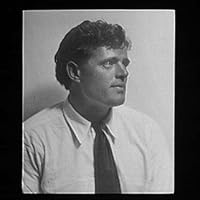
December 10, 2012
This Pulitzer Prize-winning book is one of the best biographies I've read. Vanderbilt's long lifetime spanned from George Washington's presidency to the Centennial. He personified the change in American business from sole proprietorships to huge corporate ownership. He started out operating a sailboat ferry across New York Harbor from his native Staten Island to Manhattan. Through frugality and good management he acquired a fleet of ferries and coastal sailboats. He got into steamboats early, and was involved in the famous Gibbons vs Ogden Supreme Court decision. Vanderbilt personified the Jacksonian virtues of laissez-faire free market competition, and gradually bested the post-colonial upper-crust merchant oligarchs who looked down on him as a vulgar party-crasher. He owned so many steamboats on so many different routes, that he was given the nickname "Commodore," which stuck, even after he got into railroads in a big way starting at age 70. He consolidated the only two railroads with tracks directly into Manhattan (the Harlem and Hudson River Railroads) into the New York Central, and built it into one of the dominant (and the most profitable) of the main east-west railroads of the late ninteenth and early twentieth centuries. As he aged, he always chose diplomacy first, and only when repeated diplomatic efforts failed, did he resort to aggressive rate-cutting and maneuvering to subdue his rivals. He was a hard guy, tough on his family, but had a personal side which the author illuminates. He loved his trotting horses as much as he loved his family members. It's interesting to follow the rise of someone who has imparted a famous name to history, like Astor, Rockefeller, and Carnegie, to see all the people he crossed paths with, and how much of his legacy remains in the northeast. I wind up respecting the builders of these empires, more than their hedonistic, unproductive, leisure class descendants who today populate People magazine!
Displaying 1 - 30 of 634 reviews