

What do you think?
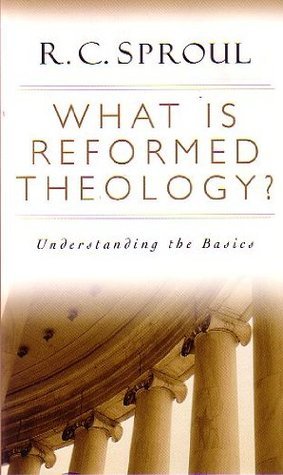
What is Reformed Theology? Understanding the Basics
Few evangelical Christians today understand Reformed theology, even though it has become an immensely influential theological tradition. Recognizing only key terms relating to predestination or the five points, many Christians want a better explanation of the concepts and beliefs that make up a Reformed perspective. What is Reformed Theology? is an introduction to a doctrine that has eluded so many evangelical Christians. And who better to teach about Reformed theology than R. C. Sproul? In thoroughly expounding the foundational doctrines and five points, Sproul asserts the reality of God's amazing grace. For anyone wanting to know more about Reformed theology, this candid book offers a coherent and complete introduction to an established belief.
236 pages, Paperback
First published September 10, 1997
About the author
R.C. Sproul
694 books2,093 followersDr. R.C. Sproul (1939–2017) was founder of Ligonier Ministries, an international Christian discipleship organization located near Orlando, Fla. He was founding pastor of Saint Andrew’s Chapel in Sanford, Fla., first president of Reformation Bible College, and executive editor of Tabletalk magazine.
Ligonier Ministries began in 1971 as the Ligonier Valley Study Center in Ligonier, Pa. In an effort to respond more effectively to the growing demand for Dr. Sproul’s teachings and the ministry’s other educational resources, the general offices were moved to Orlando in 1984, and the ministry was renamed.
Dr. Sproul’s radio program, Renewing Your Mind, is still broadcast daily on hundreds of radio stations around the world and can also be heard online. Dr. Sproul produced hundreds of lecture series and recorded numerous video series on subjects such as the history of philosophy, theology, Bible study, apologetics, and Christian living.
He contributed dozens of articles to national evangelical publications, spoke at conferences, churches, and academic institutions around the world, and wrote more than one hundred books, including The Holiness of God, Chosen by God, and Everyone’s a Theologian. He signed the 1978 Chicago Statement on Biblical Inerrancy and wrote a commentary on that document. He also served as general editor of the Reformation Study Bible, previously known as the New Geneva Study Bible.
Dr. Sproul had a distinguished academic teaching career at various colleges and seminaries, including Reformed Theological Seminary in Orlando and Jackson, Miss. He was ordained as a teaching elder in the Presbyterian Church in America.
Ratings & Reviews
Friends & Following
Create a free account to discover what your friends think of this book!
Community Reviews
Displaying 1 - 30 of 456 reviews

November 28, 2016
One of my book goals of the year was to read more books that will help me grow spiritually - and I realized in recent months that I have kind of neglected theological books in my reading plan this year. Time to catch up! I saw "What Is Reformed Theology?" by R.C. Sproul up for review, and I decided to request it. I have some friends who go to a Reformed Theology church, and I generally agree with them on doctrine, but I really didn't know what was meant by "reformed theology". I was hoping to learn more from this book.
It did not disappoint! The first half of this book goes through points of sound biblical doctrine that I think all Christians agree on, but the part I liked is that it also included the church history that involved each point - including past heresies, and biblically why some of the great theologians came to the conclusions they did.
A Few Negatives
This book got a little sticky here and there. The section on the different views of communion, while educational for distinguishing between different denominations, made the whole subject pretty confusing to me.
I feel like the author had a habit of lumping people together in groups, perhaps not always fairly. He used the term "dispensationalist" in a way that I have not heard before, and I don't agree with how he characterized this group. I have generally agreed with the (traditional) dispensationalist view of how to interpret Scripture, etc, but Sproul seemed to be picking on dispensationalism and contrasted dispensationalism with covenant theology. I have never heard these two terms put at odds with one another like this, and I don't think dispensationalism and covenant theology are mutually exclusive, as he seems to imply. He even says later that dispensationalists think that a person can be completely carnal and still a Christian because a new nature isn't necessarily given (in direct contradiction to Scripture) - I have never heard that and totally disagree. I may have to research more, but I grew up around people who described themselves as dispensationalists and I never heard anyone claim that, so I feel like he was being too rigid by lumping everyone together here. I have always just viewed dispensationalism as a way of interpreting Scripture literally that takes into account historical time periods; not as a complete theological system.
I also felt in reading this book that the author focused too much on intellectual arguments and quotes from the reformers - which were excellent - but I would have appreciated a greater focus on the Scriptures that back up these points as well. There was plenty of Scripture in this book, but I just wished he had connected some of the points he was making to Scripture a little more clearly.
A Brief Digression On Calvinism And Evangelism
The second part of the book focuses on the five points of Calvinism, which is where the distinguishing feature of Reformed Theology lies. This is where a lot of you may stop reading, but let me just say, I think Calvinism gets a little bit of a bad rap in Christian culture today. This book explains the five points of Calvinism very well, I thought. The truth is, I tend to agree with Calvinism, because the underlying concepts are firmly rooted in Scripture. Even the doctrine of election, the one everyone likes to argue about, is really about who enables us to believe. Is it from our own virtue and intelligence, or is it because God has stirred our hearts and given us the ability, even to believe? I think the latter is what is in line with Scripture. But I still hesitate to call myself a Calvinist, not because I disagree with any of their points necessarily, but because I think Calvinism gets a little too hung up on the intellectual and neglects the practical. There is one point that I've never heard a Calvinist explain to my satisfaction, and I wish this book would have addressed it more clearly too - and that is the matter of evangelism.
This book addressed evangelism in a cursory way by referring to the "external call", and then focusing on the Spirit's "internal call" that leads someone to salvation, but I wish it would have focused a little more on what we, as Christians, are to do as far as evangelism goes. In Scripture there is a clear call to evangelism, for Christians to tell others about the "good news" of Jesus and His sacrifice for our sins. This is a pretty vital piece to the puzzle in how someone comes to know Jesus, and Scripture doesn't minimize it's importance.
"How then will they call on him in whom they have not believed? And how are they to believe in him of whom they have never heard? And how are they to hear without someone preaching? And how are they to preach unless they are sent? As it is written, “How beautiful are the feet of those who preach the good news!”" Romans 10:14-15
I feel like Calvinism in practical terms seems to minimize the importance of evangelism, when it is clearly something we are called to in Scripture. The focus seems to always be on the point of election (which to be fair, is forced upon Calvinists because other Christians are always attacking them on this point), and I wish we could all just chill out a little and remember that God's ways are not our ways and His thoughts are not our thoughts. His actions do not have to make perfect sense to our little human brains, but He is always righteous and good, and He owes explanations to no one.
God told us what He needs us to know in His Word, which is truth, and it's just our job as Christians to believe His Word and do what He says, and pray and ask for clarity when something is confusing. I think there are some on the anti-Calvinist side who would do well to get back to a focus on and understanding of Scripture instead of rejecting the (biblical) concept of election outright because it doesn't jive with their own sense of justice. Our focus should ever be on Scripture because that is where the truth lies, and Christian culture today seems to be poorly lacking here. And I think there are some on the Calvinist side who would do well to stop hitting others over the head intellectually with the election concept and instead point other Christians to Scripture and pray for the Holy Spirit to make His truth clear. And we all need to recognize and remember that the concept of election has no bearing either way on the call to evangelism toward those who are still lost in their sin. Scripture makes it very clear that we are to proclaim the truth of the Gospel.
So there you go, a little opinion on the Calvinism debate. Back to the book.
Positives
This book addressed the "justice" concern of some who don't agree with Calvinism very well, better than any other piece I've read on the subject. I like this quote:
"The concept of justice incorporates all that is just. The concept of non-justice includes everything outside the concept of justice: injustice, which violates justice and is evil; and mercy, which does not violate justice and is not evil. God gives his mercy (non-justice) to some and leaves the rest to His justice. No one is treated with injustice. No one can charge that there is unrighteousness in God." pg. 187-188
I thought that explained really well why it is not correct to say God is not just when He chooses to save only some. Like I said, this book overall explains Calvinism (and Reformed Theology) better than any other book I've read. Whether you are a Calvinist, or have just been confused by any points of Calvinism in the past, I think this is a great resource if you really want to understand the beliefs of Calvinism clearly.
And as for Reformed Theology, the defining point touches on something I mentioned earlier - the distinction between unconditional election, and conditional election. Conditional election says that God calls those who He foresees will accept Him, and this is where that point gets sticky: who gives those people the ability to accept Jesus? Is it something good in themselves that allows people to accept Jesus? I'd have to say no - based on Scripture (many of the supporting Scriptures are shared in this book), it is the Holy Spirit who calls the believer and enables them to believe, and without the Holy Spirit working in us, none of us would believe. We'd go on choosing our sin. Unconditional election (which is what distinguishes Reformed Theology) says that it is nothing in ourselves that enables us to be saved, but it is by God's grace in working in us to enable us to seek Him and find Him.
In case you think that is a nit-picky distinction, you should be aware that this book is very intellectual and breaks each doctrine down to its elements, which I found very interesting, and very well done (though it perhaps falls into debating things that aren't as important here and there as well). If you have ever wanted to know more about the basics of Christian doctrine and how we get those basics, and what the Reformation was all about, pick up this book for the first half. If/when you want to learn more about where Calvinism gets it's five points, dive into the second half of this book.
I think I'll just wrap up this review with my favorite quote from this book:
"I cannot adequately explain why I came to faith in Christ, and some of my friends did not. I can only look to the glory of God's grace toward me, a grace I did not deserve then and do not deserve now." pg. 177
That's the bottom line, isn't it? For me, this book was a great reminder that it is not through any virtue of mine but only through His power and grace that I am saved, and that is a strikingly beautiful thing.
Note: I received a copy of this book for free in exchange for a review. This is my honest opinion.
It did not disappoint! The first half of this book goes through points of sound biblical doctrine that I think all Christians agree on, but the part I liked is that it also included the church history that involved each point - including past heresies, and biblically why some of the great theologians came to the conclusions they did.
A Few Negatives
This book got a little sticky here and there. The section on the different views of communion, while educational for distinguishing between different denominations, made the whole subject pretty confusing to me.
I feel like the author had a habit of lumping people together in groups, perhaps not always fairly. He used the term "dispensationalist" in a way that I have not heard before, and I don't agree with how he characterized this group. I have generally agreed with the (traditional) dispensationalist view of how to interpret Scripture, etc, but Sproul seemed to be picking on dispensationalism and contrasted dispensationalism with covenant theology. I have never heard these two terms put at odds with one another like this, and I don't think dispensationalism and covenant theology are mutually exclusive, as he seems to imply. He even says later that dispensationalists think that a person can be completely carnal and still a Christian because a new nature isn't necessarily given (in direct contradiction to Scripture) - I have never heard that and totally disagree. I may have to research more, but I grew up around people who described themselves as dispensationalists and I never heard anyone claim that, so I feel like he was being too rigid by lumping everyone together here. I have always just viewed dispensationalism as a way of interpreting Scripture literally that takes into account historical time periods; not as a complete theological system.
I also felt in reading this book that the author focused too much on intellectual arguments and quotes from the reformers - which were excellent - but I would have appreciated a greater focus on the Scriptures that back up these points as well. There was plenty of Scripture in this book, but I just wished he had connected some of the points he was making to Scripture a little more clearly.
A Brief Digression On Calvinism And Evangelism
The second part of the book focuses on the five points of Calvinism, which is where the distinguishing feature of Reformed Theology lies. This is where a lot of you may stop reading, but let me just say, I think Calvinism gets a little bit of a bad rap in Christian culture today. This book explains the five points of Calvinism very well, I thought. The truth is, I tend to agree with Calvinism, because the underlying concepts are firmly rooted in Scripture. Even the doctrine of election, the one everyone likes to argue about, is really about who enables us to believe. Is it from our own virtue and intelligence, or is it because God has stirred our hearts and given us the ability, even to believe? I think the latter is what is in line with Scripture. But I still hesitate to call myself a Calvinist, not because I disagree with any of their points necessarily, but because I think Calvinism gets a little too hung up on the intellectual and neglects the practical. There is one point that I've never heard a Calvinist explain to my satisfaction, and I wish this book would have addressed it more clearly too - and that is the matter of evangelism.
This book addressed evangelism in a cursory way by referring to the "external call", and then focusing on the Spirit's "internal call" that leads someone to salvation, but I wish it would have focused a little more on what we, as Christians, are to do as far as evangelism goes. In Scripture there is a clear call to evangelism, for Christians to tell others about the "good news" of Jesus and His sacrifice for our sins. This is a pretty vital piece to the puzzle in how someone comes to know Jesus, and Scripture doesn't minimize it's importance.
"How then will they call on him in whom they have not believed? And how are they to believe in him of whom they have never heard? And how are they to hear without someone preaching? And how are they to preach unless they are sent? As it is written, “How beautiful are the feet of those who preach the good news!”" Romans 10:14-15
I feel like Calvinism in practical terms seems to minimize the importance of evangelism, when it is clearly something we are called to in Scripture. The focus seems to always be on the point of election (which to be fair, is forced upon Calvinists because other Christians are always attacking them on this point), and I wish we could all just chill out a little and remember that God's ways are not our ways and His thoughts are not our thoughts. His actions do not have to make perfect sense to our little human brains, but He is always righteous and good, and He owes explanations to no one.
God told us what He needs us to know in His Word, which is truth, and it's just our job as Christians to believe His Word and do what He says, and pray and ask for clarity when something is confusing. I think there are some on the anti-Calvinist side who would do well to get back to a focus on and understanding of Scripture instead of rejecting the (biblical) concept of election outright because it doesn't jive with their own sense of justice. Our focus should ever be on Scripture because that is where the truth lies, and Christian culture today seems to be poorly lacking here. And I think there are some on the Calvinist side who would do well to stop hitting others over the head intellectually with the election concept and instead point other Christians to Scripture and pray for the Holy Spirit to make His truth clear. And we all need to recognize and remember that the concept of election has no bearing either way on the call to evangelism toward those who are still lost in their sin. Scripture makes it very clear that we are to proclaim the truth of the Gospel.
So there you go, a little opinion on the Calvinism debate. Back to the book.
Positives
This book addressed the "justice" concern of some who don't agree with Calvinism very well, better than any other piece I've read on the subject. I like this quote:
"The concept of justice incorporates all that is just. The concept of non-justice includes everything outside the concept of justice: injustice, which violates justice and is evil; and mercy, which does not violate justice and is not evil. God gives his mercy (non-justice) to some and leaves the rest to His justice. No one is treated with injustice. No one can charge that there is unrighteousness in God." pg. 187-188
I thought that explained really well why it is not correct to say God is not just when He chooses to save only some. Like I said, this book overall explains Calvinism (and Reformed Theology) better than any other book I've read. Whether you are a Calvinist, or have just been confused by any points of Calvinism in the past, I think this is a great resource if you really want to understand the beliefs of Calvinism clearly.
And as for Reformed Theology, the defining point touches on something I mentioned earlier - the distinction between unconditional election, and conditional election. Conditional election says that God calls those who He foresees will accept Him, and this is where that point gets sticky: who gives those people the ability to accept Jesus? Is it something good in themselves that allows people to accept Jesus? I'd have to say no - based on Scripture (many of the supporting Scriptures are shared in this book), it is the Holy Spirit who calls the believer and enables them to believe, and without the Holy Spirit working in us, none of us would believe. We'd go on choosing our sin. Unconditional election (which is what distinguishes Reformed Theology) says that it is nothing in ourselves that enables us to be saved, but it is by God's grace in working in us to enable us to seek Him and find Him.
In case you think that is a nit-picky distinction, you should be aware that this book is very intellectual and breaks each doctrine down to its elements, which I found very interesting, and very well done (though it perhaps falls into debating things that aren't as important here and there as well). If you have ever wanted to know more about the basics of Christian doctrine and how we get those basics, and what the Reformation was all about, pick up this book for the first half. If/when you want to learn more about where Calvinism gets it's five points, dive into the second half of this book.
I think I'll just wrap up this review with my favorite quote from this book:
"I cannot adequately explain why I came to faith in Christ, and some of my friends did not. I can only look to the glory of God's grace toward me, a grace I did not deserve then and do not deserve now." pg. 177
That's the bottom line, isn't it? For me, this book was a great reminder that it is not through any virtue of mine but only through His power and grace that I am saved, and that is a strikingly beautiful thing.
Note: I received a copy of this book for free in exchange for a review. This is my honest opinion.

March 29, 2016
Maybe more like 3.5 Thank you, Ligonier Ministries, for the free copy of this book.
This is a very clear and helpful explanation of the essential doctrines within Reformed Theology. One thing that makes me a bit uncomfortable is the constant reference to the Westminster Confession and the other Reformers in the support of RT. Sproul seems to quote from the WCoF as much as or more than Scripture itself. And though I appreciate the WCoF as a helpful synthesis of Scripture, it is not the inspired Word of God. Perhaps I am being too sensitive. To be fair, Sproul does examine Scripture very carefully in this book and mentions toward the end that we must allow Scripture to interpret Scripture, especially in cases of ambiguity or seeming contradictions. A proper view of the WCoF would be that it is descriptive, not prescriptive, of the Scriptures that Reformed Theology is based on and should be examined and reexamined against God's Word.
Something that confused me a bit was Sproul's reference to Dispensationalism and Dispensationalist Calvinists. My understanding of Dispensationalism comes primarily from Michael Vlach's book Dispensationalism: Essential Beliefs and Common Myths. Vlach emphasizes that Dispensationalism concerns itself only with the doctrines of the Church and End Times and that Dispensationalism and Calvinism are not mutually exclusive. So Sproul's brief treatment of Dispensationalist Calvinists as not real Calvinists confused me.
Overall, I very much appreciate Sproul's clear explanation. There is much to continue to think about, pray about, and study. Even though I agree with much in this book, I'm not sure that I could unequivocally call myself a 5-point Calvinist. I don't think that I will ever really 'arrive' at full understanding of how seemingly opposing passages fit together, but it is my desire to continue to study and learn and let the Lord change my thinking.
This is a very clear and helpful explanation of the essential doctrines within Reformed Theology. One thing that makes me a bit uncomfortable is the constant reference to the Westminster Confession and the other Reformers in the support of RT. Sproul seems to quote from the WCoF as much as or more than Scripture itself. And though I appreciate the WCoF as a helpful synthesis of Scripture, it is not the inspired Word of God. Perhaps I am being too sensitive. To be fair, Sproul does examine Scripture very carefully in this book and mentions toward the end that we must allow Scripture to interpret Scripture, especially in cases of ambiguity or seeming contradictions. A proper view of the WCoF would be that it is descriptive, not prescriptive, of the Scriptures that Reformed Theology is based on and should be examined and reexamined against God's Word.
Something that confused me a bit was Sproul's reference to Dispensationalism and Dispensationalist Calvinists. My understanding of Dispensationalism comes primarily from Michael Vlach's book Dispensationalism: Essential Beliefs and Common Myths. Vlach emphasizes that Dispensationalism concerns itself only with the doctrines of the Church and End Times and that Dispensationalism and Calvinism are not mutually exclusive. So Sproul's brief treatment of Dispensationalist Calvinists as not real Calvinists confused me.
Overall, I very much appreciate Sproul's clear explanation. There is much to continue to think about, pray about, and study. Even though I agree with much in this book, I'm not sure that I could unequivocally call myself a 5-point Calvinist. I don't think that I will ever really 'arrive' at full understanding of how seemingly opposing passages fit together, but it is my desire to continue to study and learn and let the Lord change my thinking.

September 4, 2020
Some books are worth reading again and again. This is such a book.
I am grateful to R.C. Sproul for introducing me to Reformed Theology. My life has been forever changed. 🌷
I am grateful to R.C. Sproul for introducing me to Reformed Theology. My life has been forever changed. 🌷

December 21, 2022
Both informative and stirring! Resulted in me diving into scripture more - can’t think of a better end to a book

June 27, 2025
Sneaky sneaky Sproul, you nearly tricked me into Calvinism 👹

August 17, 2023
O carte monumentală.(!!!)
În spațiul evanghelic românesc există un iz respingător ce însoțește conceptul de calvinism. Doctrină reformată este cel puțin insuficient înțeleasă și este în mod consecvent prezentată greșit de către majoritatea evanghelică arminiană/pelagiană/semipelagiană. Cartea lui R.C.Sproul este o bună și solidă introducere în teologia reformată. În stilul său inconfundabil, didactic, coerent și foarte bine structurat, autorul etalează înaintea minții cititorului un sistem teologic complex și dezarmant de consecvent cu învățătura Scripturii. Fără a avea pretenția că răspunde la toate întrebările posibile și că are toate argumentele clare fără echivoc, firul logic al cărții este revelator în privința doctrinelor de bază ale teologiei reformate.
După o lectură atentă cred că există cel puțin următoarele opțiuni viabile:
1. Realizezi că ești calvinist.
2. Nu te consideri calvinist, însă căutând argumente biblice clare pentru poziția ta teologică ajungi în impas, descoperi povara grea de argumente pro doctrină reformată și devii calvinist.
3. Rămâi un arminian mult mai bine informat și devii mai civilizat în discuțiile contradictorii.
În spațiul evanghelic românesc există un iz respingător ce însoțește conceptul de calvinism. Doctrină reformată este cel puțin insuficient înțeleasă și este în mod consecvent prezentată greșit de către majoritatea evanghelică arminiană/pelagiană/semipelagiană. Cartea lui R.C.Sproul este o bună și solidă introducere în teologia reformată. În stilul său inconfundabil, didactic, coerent și foarte bine structurat, autorul etalează înaintea minții cititorului un sistem teologic complex și dezarmant de consecvent cu învățătura Scripturii. Fără a avea pretenția că răspunde la toate întrebările posibile și că are toate argumentele clare fără echivoc, firul logic al cărții este revelator în privința doctrinelor de bază ale teologiei reformate.
După o lectură atentă cred că există cel puțin următoarele opțiuni viabile:
1. Realizezi că ești calvinist.
2. Nu te consideri calvinist, însă căutând argumente biblice clare pentru poziția ta teologică ajungi în impas, descoperi povara grea de argumente pro doctrină reformată și devii calvinist.
3. Rămâi un arminian mult mai bine informat și devii mai civilizat în discuțiile contradictorii.

March 27, 2025
Sproul, R. C. What is Reformed Theology? Grand Rapids, MI: Baker Books, reprint 2016.
There is one drawback to Sproul’s success as a writer: because he was so successful as a teacher, when a book is labeled as basic, one risks confusing it as simple. This is certainly true to an extent. The second half of the book, the so-called “five points,” is familiar ground and likely found in other Sproul books. The first half of the book is where it shines. He covers the five solas.
Nature
Before beginning with the solas, Sproul grounds his work, not only in the centrality of God, but in God’s self-revelation, both in nature and speech. The former should not be missed. Sproul, following the historic Reformed faith, champions natural theology. If natural revelation is God’s speech in creation to us, natural theology is our response to it. Its scope is universal. It is clear enough that those who reject its testimony are in sin.
Sproul’s remarks, while excellent, could have been more developed. When those who first approach Reformed theology, or worse who fancy themselves budding apologists, hear of God’s revelation in nature, they likely think it refers to trees or mountains. It does, but it covers much more. It also includes the laws of logic. Sproul brings this out in Classical Apologetics. Before I can even assent to God’s special revelation, I have to use God’s natural revelation (e.g., grammar, logic). If the latter is so obscure that I inevitably suppress it, then it is unclear how I can even affirm the gospel.
God
God is incomprehensible but not unintelligible. Sproul makes this clear by the dictum finitum non capax infinitum, the finite cannot contain the infinite. If I had perfect knowledge of God, then I would be God–at least I would know what God knows.
Although he does not label it as such, Sproul champions the analogia entis, the analogy of being. If God is “wholly other,” per Karl Barth, then there is no basis of communication between God and man. Indeed, we would not even have grounds to say God is wholly other, for the “is” in that sense would be a radically different type of being to which we have no access.
Faith Alone
Justification is a forensic activity. We hold to a synthetic, not an analytic justification. A synthetic proposition is when something is added to the predicate. An analytic proposition is a tautology. Rome holds to analytic justification. God declares me just because I already am just (see below). For Rome, baptism is the instrumental cause of justification. God washes away the stain of original sin and infuses grace in the soul. I then cooperate with grace for the rest of my life.
By contrast, Protestantism holds to an alien righteousness, for us, not in us. We receive it by saving faith.
Conclusion
This book is basic. It advertises itself as such. It is dated in some respects, for there is no mention of the New Perspective on Paul, but that is not a drawback. Those who fall prey to the New Perspective are weak on foundations. Sproul’s survey of the Five Points is what you would expect.
There is one drawback to Sproul’s success as a writer: because he was so successful as a teacher, when a book is labeled as basic, one risks confusing it as simple. This is certainly true to an extent. The second half of the book, the so-called “five points,” is familiar ground and likely found in other Sproul books. The first half of the book is where it shines. He covers the five solas.
Nature
Before beginning with the solas, Sproul grounds his work, not only in the centrality of God, but in God’s self-revelation, both in nature and speech. The former should not be missed. Sproul, following the historic Reformed faith, champions natural theology. If natural revelation is God’s speech in creation to us, natural theology is our response to it. Its scope is universal. It is clear enough that those who reject its testimony are in sin.
Sproul’s remarks, while excellent, could have been more developed. When those who first approach Reformed theology, or worse who fancy themselves budding apologists, hear of God’s revelation in nature, they likely think it refers to trees or mountains. It does, but it covers much more. It also includes the laws of logic. Sproul brings this out in Classical Apologetics. Before I can even assent to God’s special revelation, I have to use God’s natural revelation (e.g., grammar, logic). If the latter is so obscure that I inevitably suppress it, then it is unclear how I can even affirm the gospel.
God
God is incomprehensible but not unintelligible. Sproul makes this clear by the dictum finitum non capax infinitum, the finite cannot contain the infinite. If I had perfect knowledge of God, then I would be God–at least I would know what God knows.
Although he does not label it as such, Sproul champions the analogia entis, the analogy of being. If God is “wholly other,” per Karl Barth, then there is no basis of communication between God and man. Indeed, we would not even have grounds to say God is wholly other, for the “is” in that sense would be a radically different type of being to which we have no access.
Faith Alone
Justification is a forensic activity. We hold to a synthetic, not an analytic justification. A synthetic proposition is when something is added to the predicate. An analytic proposition is a tautology. Rome holds to analytic justification. God declares me just because I already am just (see below). For Rome, baptism is the instrumental cause of justification. God washes away the stain of original sin and infuses grace in the soul. I then cooperate with grace for the rest of my life.
By contrast, Protestantism holds to an alien righteousness, for us, not in us. We receive it by saving faith.
Conclusion
This book is basic. It advertises itself as such. It is dated in some respects, for there is no mention of the New Perspective on Paul, but that is not a drawback. Those who fall prey to the New Perspective are weak on foundations. Sproul’s survey of the Five Points is what you would expect.

Read
January 24, 2026I have the utmost respect for R.C. Sproul. In fact he was one of the reasons I came to Reformed theology. Which is why I was genuinely disappointed with this book.
The overall content is fantastic. Sproul is an excellent teacher, and the material in this book really highlights his abilities to take complex concepts and make them simple. However, you can tell this book was adapted from his online lectures with light editing. As a result, reading it feels somewhat disorganized.
The book is split into two parts. In Part 1, Sproul explains covenant theology and “God-centered” Theology, which were both excellent. But, the remaining chapters are on Sola Fide, Sola Scriptura, and Christ as the Prophet, Priest, and King (which detoured into Lutheran and Reformed views of the Lord’s Supper oddly). These topics are helpful to know, but these seem to belong to historic Protestantism in general, not solely Reformed theology.
The entirety of Part 2 is dedicated to explaining TULIP, which I thought Sproul did a fine job with. Still, the way the book is structured gives the impression that half of what it means to be Reformed is understanding soteriology. Maybe I would have been fine with this when I was in the cage stage, but it feels a little lopsided and misleading as an introduction to Reformed theology.
Finally, I wished Sproul had brought down the full Westminster sledgehammer a bit more. He quotes from it constantly, and the book suffers from being way too general and could be elevated just by being more specific to a given Reformed tradition. Talk about polity, the regulative principle, the second commandment, the sacraments, etc. Sadly, these things are hardly mentioned or never addressed.
I gave it 2 stars because of my disappointment, but the content is great if each chapter is taken in isolation. If you’re wanting to read this book, I recommend listening to the lectures instead. And if you really want to read it, just skip to Part 2 of the book and enjoy picking . . . flowers 🌹.
The overall content is fantastic. Sproul is an excellent teacher, and the material in this book really highlights his abilities to take complex concepts and make them simple. However, you can tell this book was adapted from his online lectures with light editing. As a result, reading it feels somewhat disorganized.
The book is split into two parts. In Part 1, Sproul explains covenant theology and “God-centered” Theology, which were both excellent. But, the remaining chapters are on Sola Fide, Sola Scriptura, and Christ as the Prophet, Priest, and King (which detoured into Lutheran and Reformed views of the Lord’s Supper oddly). These topics are helpful to know, but these seem to belong to historic Protestantism in general, not solely Reformed theology.
The entirety of Part 2 is dedicated to explaining TULIP, which I thought Sproul did a fine job with. Still, the way the book is structured gives the impression that half of what it means to be Reformed is understanding soteriology. Maybe I would have been fine with this when I was in the cage stage, but it feels a little lopsided and misleading as an introduction to Reformed theology.
Finally, I wished Sproul had brought down the full Westminster sledgehammer a bit more. He quotes from it constantly, and the book suffers from being way too general and could be elevated just by being more specific to a given Reformed tradition. Talk about polity, the regulative principle, the second commandment, the sacraments, etc. Sadly, these things are hardly mentioned or never addressed.
I gave it 2 stars because of my disappointment, but the content is great if each chapter is taken in isolation. If you’re wanting to read this book, I recommend listening to the lectures instead. And if you really want to read it, just skip to Part 2 of the book and enjoy picking . . . flowers 🌹.

January 21, 2016
A simple, succinct introduction to the basic tenets of reformed theology. Well worth the read for both new and veteran Christians, as well as those interested in reformed theology.

August 20, 2023
Good read! I have to say that R.C. Sproul has helped me lay the groundwork for organizing a lot of the questions I've had about my faith into logical theological categories through this book. Based on that alone, I'd say that this book was successful in its goal of helping the reader understand some of the basics of Reformed theology.
I do have a couple of issues though:
(1) From my (very limited) formal knowledge of Reformed Christianity, being "reformed" does not mean that you are Calvinist - and if not for what little I knew beforehand I would have walked away from this book thinking that Reformed = Calvinism. Sproul dedicates half of this book to defending five-point Calvinism (TULIP).
(2) In my opinion Sproul could have done a better job of adhering to sola scriptura, which he emphasizes as a key foundational element of Reformed theology. In defense of TULIP, the split between references to Luther/Calvin/WCF and the Bible seems to be 70/30. For someone who wasn't convinced by 3/5 points, I would have found Sproul's arguments more thought-provoking with less Luther/Calvin/WCF (dkm!) and more Bible.
Despite those two issues, I'm glad to have read this book. Not sure that I would come back to it, but it's given me a clearer image of Reformed tradition and Calvinism to engage with. close to 4 stars
I do have a couple of issues though:
(1) From my (very limited) formal knowledge of Reformed Christianity, being "reformed" does not mean that you are Calvinist - and if not for what little I knew beforehand I would have walked away from this book thinking that Reformed = Calvinism. Sproul dedicates half of this book to defending five-point Calvinism (TULIP).
(2) In my opinion Sproul could have done a better job of adhering to sola scriptura, which he emphasizes as a key foundational element of Reformed theology. In defense of TULIP, the split between references to Luther/Calvin/WCF and the Bible seems to be 70/30. For someone who wasn't convinced by 3/5 points, I would have found Sproul's arguments more thought-provoking with less Luther/Calvin/WCF (dkm!) and more Bible.
Despite those two issues, I'm glad to have read this book. Not sure that I would come back to it, but it's given me a clearer image of Reformed tradition and Calvinism to engage with. close to 4 stars
January 21, 2026
I was looking for a good primer on reformed theology or the reformed tradition to recommend to new members/young Christians. Even though the title is "What is Reformed Theology? Understanding the Basics" the book did not live up to the title. Some sections were great, but it felt like transcripts of his lectures (which I love) were copied and pasted with little editing.
It gets very deep, makes use of latin/greek/hebrew terms. Not an intro to the basics, rather a quite detailed, narrow description of TULIP and the SOLAS. The notes are in the back (boo!); there is no summary of terms anywhere, but some helpful illustrations.
Chapter 8 on Limited Atonement was the weakest chapter imo. Pages 190-194 in particular were very confusing and came across like some kind of eternal justification view (or post-cross automatic justification), it needs clarification.
I hold RC in high regard and use Ligonier resources all the time for teaching, but this book needs a new title or a heavy edit to make it an actual primer on the 'basics' of reformed theology. Unfortunately, I cannot suggest handing this out to those interested in learning about the basics of reformed theology, and I think there are better books out there for the more well-read to dig into.
It gets very deep, makes use of latin/greek/hebrew terms. Not an intro to the basics, rather a quite detailed, narrow description of TULIP and the SOLAS. The notes are in the back (boo!); there is no summary of terms anywhere, but some helpful illustrations.
Chapter 8 on Limited Atonement was the weakest chapter imo. Pages 190-194 in particular were very confusing and came across like some kind of eternal justification view (or post-cross automatic justification), it needs clarification.
I hold RC in high regard and use Ligonier resources all the time for teaching, but this book needs a new title or a heavy edit to make it an actual primer on the 'basics' of reformed theology. Unfortunately, I cannot suggest handing this out to those interested in learning about the basics of reformed theology, and I think there are better books out there for the more well-read to dig into.
May 21, 2026
Probably a 3.75/5, but I'll round up to 4/5.
Overall, this is a helpful book covering some of the core doctrines and emphases within Reformed theology. The doctrines of grace get the most ink spilled opposed to other aspects of Reformed theology like covenant theology (though he talks a little about this and they cannot be separated fully). From what I've listened to of Sproul, his ability to make a logically and biblically sound argument for something is incredible. That is certainly a strength of this book as he argues against other viewpoints like Arminianism, Semi-Pelagianism, and Roman Catholicism.
Sproul is great. However, if someone wanted to read this, I'd point them more towards the lecture series it's based off of. I think Sproul's writing pales in comparison to his lectures. And if someone wanted a book on Reformed soteriology of a similar size, I'd be more eager to recommend "Saved by Grace" by Anthony Hoekema.
Overall, this is a helpful book covering some of the core doctrines and emphases within Reformed theology. The doctrines of grace get the most ink spilled opposed to other aspects of Reformed theology like covenant theology (though he talks a little about this and they cannot be separated fully). From what I've listened to of Sproul, his ability to make a logically and biblically sound argument for something is incredible. That is certainly a strength of this book as he argues against other viewpoints like Arminianism, Semi-Pelagianism, and Roman Catholicism.
Sproul is great. However, if someone wanted to read this, I'd point them more towards the lecture series it's based off of. I think Sproul's writing pales in comparison to his lectures. And if someone wanted a book on Reformed soteriology of a similar size, I'd be more eager to recommend "Saved by Grace" by Anthony Hoekema.

June 30, 2026
Very helpful explanations for complex topics and I appreciated how he approached the arguments against his viewpoint. Gave me a lot to think about!

February 26, 2026
Don’t know why I never added this to my read list. Read it like two years ago. Good book

August 11, 2023
A fantastic read. I thoroughly enjoyed going through this with my church. Sproul breaks down the five points in light of Biblical passages and Church history both working through the doctrinal points and through the views of those who disagree with those points.
Highly recommend reading for any Christian.
Highly recommend reading for any Christian.
June 24, 2025
Seriously a great and to-the-point book explaining separations of Roman Catholicism, various levels of Pelagianism, and other groups in disagreement with doctrine in Reformed Christianity. The second half of the book focuses in the five points of Calvinism in such a profound way, yet it is not overwritten. Always a bonus for Sproul to add in tidbits of Aquinas 🙂↕️.
Notable quotes:
“Thomas Aquinas observed that people are seeking happiness, peace, relief from guilt, personal fulfillment, and such other beliefs. We understand that these benefits can be found ultimately in God alone… In our fallen condition we desire the benefits that only God can give us but we do not want him.”
“We do not’ find’ God as a result of our search for him. We are found by him.”
Notable quotes:
“Thomas Aquinas observed that people are seeking happiness, peace, relief from guilt, personal fulfillment, and such other beliefs. We understand that these benefits can be found ultimately in God alone… In our fallen condition we desire the benefits that only God can give us but we do not want him.”
“We do not’ find’ God as a result of our search for him. We are found by him.”

May 22, 2008
This is the best summary of Reformed doctrine that I have read. It explains in clear language the Reformed faith and I HIGHLY RECOMMEND it to anyone wishing a study of the basics of the Christian faith.
This book will challenge you to search the Truth of God by examining Scripture. This is not an all-encompassing exposition but a great start to discovering Truth.
This book will challenge you to search the Truth of God by examining Scripture. This is not an all-encompassing exposition but a great start to discovering Truth.

December 26, 2011
Excellent, excellent book! Even better than I had anticipated. Topics covered: what are the distinctives of reformed theology?, faith alone, Scripture alone, covenant theology, and the five points of Calvinism.

July 27, 2017
When it comes to explaining complex concepts in the simplest way, R. C. Sproul is one of the best.
A great primer on reformed theology for those unfamiliar. Winsome and fair toward opposing view points, while being convincing of his own perspective and biblical convictions.
A great primer on reformed theology for those unfamiliar. Winsome and fair toward opposing view points, while being convincing of his own perspective and biblical convictions.

October 7, 2022
Concise and exactly what I expected. I love how he went into a very brief history of the reformation for those who aren't as familiar with the origin of the term at the beginning of the book.
I'm really starting to love Sproul's writing style. It's clear with short, pithy statements that help with the goal of the book.
I was a little sus about a couple of sentences when he was talking about God's reaction to creation (Dolezal's ruined me, I can't unsee/unhear it now lol) but I can't remember the exact context since I read this over audiobook. If I'm wrong about the context of his statements, please someone correct me. Lol
Besides that, I've found that simple books like this on theology are not only helpful for personal edification but also for the use of counseling others in these subject matters. Overall, a pretty good and easy to understand summary for those who are brand spankin' new to reformed doctrine or for people who are acutely familiar and want a good base overview to determine their next smaller branch of study.
(Listened to audiobook for free on Hoopla)
I'm really starting to love Sproul's writing style. It's clear with short, pithy statements that help with the goal of the book.
I was a little sus about a couple of sentences when he was talking about God's reaction to creation (Dolezal's ruined me, I can't unsee/unhear it now lol) but I can't remember the exact context since I read this over audiobook. If I'm wrong about the context of his statements, please someone correct me. Lol
Besides that, I've found that simple books like this on theology are not only helpful for personal edification but also for the use of counseling others in these subject matters. Overall, a pretty good and easy to understand summary for those who are brand spankin' new to reformed doctrine or for people who are acutely familiar and want a good base overview to determine their next smaller branch of study.
(Listened to audiobook for free on Hoopla)

June 25, 2025
I enjoyed it! Ive read Chosen by God before, so the second half of the book just felt like a repeat of that. It might be because I’m also reading Gentle and Lowly right now, but the book just felt harsh to me. I understand it is a book on theology, but I felt like there should be more reflection on the beauty of Christ. Sometimes I just felt like there was too much emphasis on depravity and others’ wrongness (or radical corruption by Sprouls vocabulary). Then again, I’m not RC Sproul or someone who has studied theology nearly as long as Sproul did! It was a great book, and think I should read it again to retain more of the content!

March 29, 2024
I thought it was great! I will say, it was too high level for a simple introduction. It seems like he’s writing to someone who already “understands the basics.” This book is great for someone who kind of, sort of has a grasp on the basics of reformed theology. But for someone who has no clue, and is asking the question, “What is reformed theology?” it would be a bit much.

August 2, 2026
As someone who was went to a reformed church for a few years I found this book especially helpful in explaining and connecting to scripture doctrine that is often brought up and discussed.
Overall, I think this is a great, easy to read book, that gives a solid introduction to the major pillars and characteristics of reformed theology.
Overall, I think this is a great, easy to read book, that gives a solid introduction to the major pillars and characteristics of reformed theology.

August 1, 2021
This book was life changing and one that I am sure I will read again and again. Theologically rich and based on scripture, it opened my eyes to deeper truths about God’s sovereignty. Highly recommended!!!!

January 22, 2024
This is a classic Sproul work and is his bread and butter. Sproul clearly defends historic Protestantism and breaks down the key tenants of reformed theology in an accessible way. Worthwhile to go through with someone who is investigating the reformed tradition.

April 13, 2019
Wowza this book informed me more than i anticipated it would. For someone who knew the bare minimum of reformed theology, this book broke it down simply without making me feel like an idiot for not understanding things.
August 6, 2023
A great introduction to the history and exploration of reformed theology. A must read for someone in or entering into a reformed church. I think it is also a valuable read for someone who takes issue with any letter of TULIP or other facet of reformed theology.
I read it for a book study at my church. This was a great way to read the book as the ideas and terminology can be difficult to understand.
I read it for a book study at my church. This was a great way to read the book as the ideas and terminology can be difficult to understand.

April 6, 2022
Very informative to someone who grew up in a Baptist church, but never really cared about theology until recently. I now attend a reformed church, but wanted to understand the main tenants more fully. This is a very useful book in breaking down what reformed Christians believe.

March 9, 2021
Sproul's didactic approach makes the most complicated terms seem clear as daylight. He adresses the distorted logic of the most common arminian counterarguments over the reformed perspective, elegantly deconstructing each of them and, finally, presenting the biblical perspective.
This book is an ideal synthesis of the basics of reformed theology.
Wether you're new to reformed theology and want to understand its main assumptios, or you're familiar with it but you need some structure in your "reformed" way of thinking, I bet this is what you're looking for.
This book is an ideal synthesis of the basics of reformed theology.
Wether you're new to reformed theology and want to understand its main assumptios, or you're familiar with it but you need some structure in your "reformed" way of thinking, I bet this is what you're looking for.

October 9, 2020
Well, shoot. It only took 7-1/2 years to go from heretical Pelagian to 100% Reformed/Calvinist, and with several Reformed/Calvinist books and lectures during that span of time, this book is what finally brought me the rest of the way.
Displaying 1 - 30 of 456 reviews