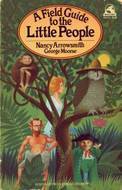
This is a title that had been on my shelf for a decade or two, one of the first books I purchased from the secondhand bookshop Capitol Bookstore back when it was still The San Francisco Bookstore. Having finished a book of essays by W.B. Yeats last week, where the Ireland of myth and magic and his boyhood poets of choice, Edmund Spenser among them, were frequently mentioned, spurred me to finally read this. Admittedly, an ambitious whim to write a similar field guide to creatures endemic to my corner of the Philippine archipelago had something to do with it.
First off, this ain't no Faerie Queen. What it is is an engaging, well-researched compendium of the numerous species and sub-species of elves that populate Europe. Or used to, at least. Much work went into compiling and labelling, as most elves, depending on their region and/or parentage, are known by different names and endearments. I liked how the entire book is written as if it were fact, with tongue firmly in cheek. It is never condescending, so an impressionable child would have taken it as gospel truth, and from the onset, the writer is dismissive of the elves and fairies we know from popular literature (Spenser's Faerie Queen, Tolkien's hobbits), as "the imagination and fancy of writers often alter or confuse the facts of elf-existence as it has been recognized in folk belief for centuries." Each elf is identified by name/names, with a paragraph or two on their characteristics and the region they hail from. This is followed by Identification--the elves's height, skin color, clothing of choice, and other significant, distinguishing marks. Next comes Habitat, identifying the countries the elves have been known to flourish or come from, and their abodes of choice--be it water, hill, forest, humans' hearth. The next few paragraphs, and the ones I enjoyed best, are dedicated to anecdotal stories of elf-human encounters. Full page sketches are provided for some of the species discussed in the book.
Here are some things I've noted down, should I hurtle through time and space and find myself in the realm of elves, in yonder Europe of olde:
- Elves shun iron, steel, Christianity, and modern conveniences (like electricity), which accounts for their withdrawal--their disenfranchisement from the world of men.
- Most elves wear red hats. And sometimes, but rarely, gray. In most species, take away the hat and you take away their power.
- Most Elves have the mental capacity of children, and are as prone to mischief, tantrums, imagined slights, and cavalier alliances as human toddlers are.
- Most elves love animals and are "transmutative" shape-shifters.
- Elves love music, love to dance.
- Most elves live in trees (especially fruit trees), caves, underneath hills, abandoned houses.
- Water-based elves (mermaids, mermen, water nymphs, kelpies) seem to be the most dangerous and diabolical among the elves.
- Elven womenfolk of all sizes seem to have pendulous breasts which sag low enough to be slung over their backs, especially when nursing.
- Opulent gifts of new clothes and shoes for an elf's duties voluntarily rendered in a household are guaranteed to put a stop to this; something I learned from The Elves and the Shoemaker early on.
- Once upon a time, elves had a foothold in all of Europe, and elf-human unions and offspring were indeed, a thing. Changelings, too.
- The duende, my (Philippine) Cebuano dialect's translation for elf/dwarf, figures in this field guide. "Universally known in Spain and Portugal," they must have hitched a ride with our early colonizers.
Lastly, Nancy Arrowsmith states that "Children, poets, seers, healers, those gifted with second sight, men and women at peace with and in tune with their natural surroundings have historically been those most likely to enter into contact with the Little People." I do believe in fairies!