Jump to ratings and reviews
Rate this book

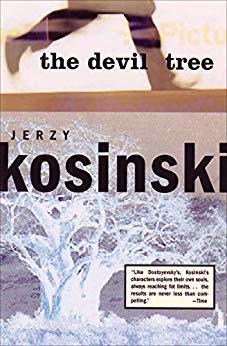
The Devil Tree

Rate this book
Kosinski's classic, acclaimed as "an impressive novel . . . should confirm [his] position as one of our most significant writers" (Newsweek).

A searing novel from a writer of international stature, The Devil Tree is a tale that combines the existential emptiness of Camus's The Stranger with the universe of international playboys, violence, and murder of Patricia Highsmith's The Talented Mr. Ripley.

Jonathan Whalen's life has been determined from the start by the immense fortune of his father, a steel tycoon. Whalen's childlike delight in power and status mask a greater need, a desire to feel life intensely, through drugs, violence, sex, and attempts at meaningful connection with other people--whether lovers or the memory of his dead parents. But the physical is all that feels real to him, and as he embarks on a journey to Africa with his godparents, Whalen's embrace of amoral thrill accelerates toward ultimate fulfillment.

"Savage . . . [Whalen is] a foolproof, timeless American character." --Cosmopolitan

228 pages, Kindle Edition

First published January 1, 1973

39 people are currently reading
911 people want to read

About the author

Jerzy Kosiński

64 books610 followers
Kosiński was born Josef Lewinkopf to Jewish parents in Łódź, Poland. As a child during World War II, he lived in central Poland under a false identity his father gave him to use, Jerzy Kosiński. A Roman Catholic priest issued him a forged baptismal certificate. The Kosiński family survived the Holocaust thanks to local villagers, who offered assistance to Jewish Poles often at great personal risk (the penalty for assisting Jews in Nazi-occupied Poland was death). Kosiński's father received help not only from Polish town leaders and churchmen, but also from individuals such as Marianna Pasiowa, a member of the Polish underground network helping Jews to evade capture. The family lived openly in Dąbrowa Rzeczycka near Stalowa Wola, and attended church in nearby Wola Rzeczycka, obtaining support from villagers in Kępa Rzeczycka. They were sheltered temporarily by a Catholic family in Rzeczyca Okrągła. The young Jerzy even served as an altar boy in a local church.

After World War II, Kosiński remained with his parents in Poland, moved to Jelenia Góra, and earned degrees in history and political science at the University of Łódź. He worked as an assistant in Institute of History and Sociology at the Polish Academy of Sciences. In 1957, he emigrated to the United States, creating a fake foundation which supposedly sponsored him; he later claimed that the letters from eminent Polish communist authorities guaranteeing his loyal return, which were needed for anyone leaving the communist country at that time, had all been forged by him.

After taking odd jobs to get by, such as driving a truck, Kosiński graduated from Columbia University, and in 1965 he became an American citizen. He received grants from Guggenheim Fellowship in 1967, Ford Foundation in 1968, and the American Academy in 1970, which allowed him to write a political non-fiction book, opening new doors of opportunity. In the States he became a lecturer at Yale, Princeton, Davenport University, and Wesleyan.

In 1962 Kosiński married Mary Hayward Weir who was 10 years his senior. They were divorced in 1966. Weir died in 1968 from brain cancer. Kosiński was left nothing in her will. He later fictionalized this marriage in his novel Blind Date speaking of Weir under pseudonym Mary-Jane Kirkland. Kosiński went on to marry Katherina "Kiki" von Fraunhofer, a marketing consultant and descendant of Bavarian aristocracy. They met in 1968.

Kosiński suffered from multiple illnesses towards the end of his life, and was under attack from journalists who alleged he was a plagiarist. By the time he reached his late 50s, Kosiński was suffering from an irregular heartbeat as well as severe physical and nervous exhaustion. Kosiński committed suicide on May 3, 1991, by taking a fatal dose of barbiturates. His parting suicide note read: "I am going to put myself to sleep now for a bit longer than usual. Call it Eternity".

Ratings & Reviews

What do you think?
Rate this book

Friends & Following

Create a free account to discover what your friends think of this book!

Community Reviews

5 stars
223 (18%)
4 stars
399 (33%)
3 stars
415 (34%)
2 stars
121 (10%)
1 star
32 (2%)
Displaying 1 - 30 of 82 reviews
Profile Image for Glenn Russell.
1,511 reviews13.3k followers
October 10, 2017

“So this is insanity. How interesting. What happens next?”
― Jerzy Kosiński, The Devil Tree

Jerzy Kosinski's novel The Devil Tree takes place in 1970s America, a world of the Me generation, where an entire population had easy access to multiple partner sex, powerful mind-bending and sense-enhancing drugs and a plethora of self-help books ranging from jogging, diet, and speed-reading to primal screams, transactional analysis and do-it-yourself psychodrama. Being an adult and holding a philosophy of self-indulgence and pleasure, especially the pleasure of enjoyable sensations, is one thing, but, since as an adult, one is usually obliged to hold down a fairly routine job and attend to the round of family and everyday practical matters, one's hedonism must be tempered with a good measure of pragmatism and stoicism, which is to say, one has to learn to delay one's pleasure-seeking and bouts of self-absorption.

But what of those men and women who have enormous piles of money given to them, and thus freed from any need for job or work, and miles removed from taking on the responsibility of family and children? Well, meet the novel's main character, Jonathan James Whalen, one such man, a man in his 20s, with a huge family fortune but no family- no wife and children, no brother or sister, and, most dramatically as the result of two separate tragedies, no mother or father. Whalen is a family of one - himself. And being super-rich in the 1970s this mean Me with a capital "M", which, in turn, means Me and my desires and pleasures - many, many desires and oh-so-many pleasures.

Similar to Kosinski's autobiographical first novel, The Painted Bird, this work is nearly free of dialogue. And the story is not broken into chapters but rather told in short first person and third person vignettes revealing in spurts and bursts the character of Whalen and others around him, including Karen, his friend and lover he's known since childhood, as well as his departed parents -- emotionally distraught mother and famous entrepreneurial father . The vignettes seem to match the mind-set of the super-rich, especially Whalen: staccato, psychological, intensely preoccupied with self and with the unending search for satisfaction and a meaning in life through other people. Not a happy formula. And, predictably, Whalen and Karen experience more frustration and dissatisfaction than satisfaction and happiness.

And speaking of the psychological, Whalen belongs to that 1970s Me generation mass-phenomenon: the encounter group, which prompts his musing: "I don't like to think I'm as confused or simple-minded as others, but if I really am more complex, more experienced than they are, why should I want them to understand me?"

Here is a one of Whalen's reflections on his life and wealth: "When I was a child, I thought my possessions and properties belonged to me because I was pretty, as everyone continually assured me. Now I know I despise people who associate the way I look with my money and family connections, as though physical attractiveness is merely a matter of expensive shirts and custom-made suits. But even now it's hard for me to imagine being very wealthy and ugly at the same time: money and beauty are still my God-given rights."

How different are Whalen's reflection on money and beauty than most other Americans in the 1970s or any time, for that matter? Before devoting his complete creative energy to fiction, Kosinski studied and wrote in the social sciences. We can read this novel on a number of levels, including a work of keen sociological insight. The Devil Tree as a mirror on an entire society and culture. What do you see when you look in the mirror, America? Do you see any differently now that you are 40 years removed from the 1970s and the Me generation?

We follow Whalen going round and round and round for years in a high-speed, money-glutted, drug and liquor induced whirlwind, when finally he gains a measure of control of his emotions and can choose freely. But what a choice. Halfway through the novel we read: "My depressions are no longer such natural urges as sex, sleep and hunger. Now they are completely calculated. I could as easily have done something else yesterday afternoon, but I chose to enact a familiar ritual, to dull my mind and lose myself completely. I went to the liquor store and bought a fifth of Jack Daniel's. I went upstairs, poured myself a drink and put on a record. By six I had finished half the bottle and was thoroughly depressed, but comforted by the thought that I had selected my mood. I felt that at last I had total emotional control." So there we have it: freely choosing depression. What a statement on the super-rich lifestyle.

Toward the end of the novel, Whalen finally realizes he has been followed for quite some time, which leads to some real drama and propels him into real action fueled by the real emotion of revenge. Within this episode of revenge, Whalen relays the meaning of `the devil tree', a meaning involving the devil getting tangled in the tree's branches and turning the tree upside down. Considering his horrific childhood, Kosinski developed a sharp, penetrating observation of the plight of human entanglement when money is the tree.
Profile Image for Jeffrey Keeten.
Author 5 books252k followers
June 11, 2015
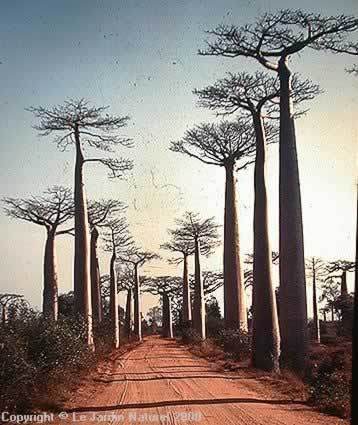
”The native calls the baobab ‘the devil tree’ because he claims that the devil, getting tangled in its branches, punished the tree by reversing it. To the native, the roots are branches now, and the branches are roots. To ensure that there would be no more baobabs, the devil destroyed all the young ones. That’s why, the native says, there are only full-grown baobab trees left.”

 photo Baobab20Tree_zpskjnfqrxh.jpg

Jonathan James Whalen is caught up in the roots of his life. The ghosts of his parents, the snares of his wealth, the pursuit to feel something through drugs, sex, and therapy, and absolutely no idea of what to do with his life are all keeping him trapped in the same place regardless of where he is geographically. He travels around Africa, finds himself in exotic brothels, and moves from woman to woman looking for some kind of fulfillment from the world around him. The issue of course is the same for anyone: regardless of where you are, you are still you.

If this book were set in the 1980’s, Jonathan might have appeared in the novel Less Than Zero. He could have hung out with Clay and Blair and their circle of rich, uninspired, fairly useless individuals with no individuality, and blended in quite well. Waking up with a pair of tan legs slung across his stomach, his head aching from too much alcohol and too little information, and his nose dripping blood into his mouth would be a very familiar set of circumstances for Jonathan.

Of course, this is the early seventies, not the coke fueled eighties, so his drug of choice is something with a little longer history of providing escape for the shattered and the bored. ”You smoke it yourself, lay it on your woman, and will she make love! Meanwhile, you lie still, your eyes shut, that sucks all your juices. With every smoke you see waterfalls turn into ice, ice into stone and stone into sound. Sound turns into color, and color becomes white, and white becomes water.”

It is a mind expanding experience if you have a mind that can expand. Jonathan is missing some of those emotional triggers, those memories that make the next moment more meaningful, and the ability to react properly to the various stimuli that he continues to chase. He wants to feel…anything.

Karen is his on again off again girlfriend, the Blair of this story. She is as messed up as he is, but though she is insightful to his afflictions, she is oblivious to her own. ”She says I am passionless and self-contained, that I have limited emotions with no extremes of anger, happiness or sorrow, I lost them somewhere abroad, she says, as if I had them before I left.”

”You’re hiding something.” She smiled. “You’re hiding a dead body. Your own.”

Jonathan has an actress friend who is complaining about the expectations that producers/directors have for an actress who wishes to act. The casting couch has been around long before Hollywood, and I’m sure it is still one of the crasser points of negotiation today. ”’We’ll pay you five hundred and fifty dollars a week to blow us and on the side you can be star!’ That wouldn’t be as bad. Women should have double cunts: one for business and one for pleasure. At least in this city they should.” I could see how bartering sex for a chance at a job could lead a woman to think that making love with someone she cares about is just one more negotiation.

For all his questing Jonathan doesn’t ever find what he is looking for, partly because he is unwilling or unable to search within himself. At the end of the book he is gazing out at the river, great view, from a “rest home.” He has all that money and none of the imagination to find a way to make himself happy.

 photo Jerzy20Kosinski_zps2t2pshkj.jpg
Jerzy Kosinski

Jerzy Kosinski wrote an expanded version of this book a decade or so after the 1973 edition. The writing is pared down, leaching out, in my opinion, too much meaning. There are many lost opportunities for thoughts and concepts to acquire more significance. I do wonder if he realized this which is what prompted the revision. The intent of course is to have the writing reflect the lack of feelings of Jonathan Whalen. For me it was too barren, too peeled, too edited. I would recommend reading the new version to those who are thinking about reading this book. Kosinski came under criticism with charges of plagiarism for his critically acclaimed novel Being There. He was in Ill health and tired of dealing with the claims against his integrity. He made the decision to kill himself in 1991. He left a simple note. "I am going to put myself to sleep now for a bit longer than usual. Call it Eternity." For a writer he was very succinct.

If you wish to see more of my most recent book and movie reviews, visit http://www.jeffreykeeten.com
I also have a Facebook blogger page at: https://www.facebook.com/JeffreyKeeten
Profile Image for Vit Babenco.
1,779 reviews5,763 followers
February 4, 2018
‘Money can't buy happiness,’ is an old trite saying. Some believe it and some don’t.
The Devil Tree by Jerzy Kosiński is a rather biased and speculative contemplation on the theme of riches.
Nowadays I see Jerzy Kosiński as a kind of timeserver and his novels are like the old yellowed amateurish photographs – they are curious but do not touch.
The recent Dictionary of Occupational Titles lists over twenty thousand specialized professions in America; being a millionaire is not one of them.
Our culture offers exciting, often desirable, archetypes: Politician, Explorer, Artist, Saint, Madman, Prophet, Murderer, Lover, Warrior, Sportsman, Messiah, Genius. But where, except on the Titanic, do we find the archetype of Millionaire?
As Oscar Wilde remarked, “Millionaire models are rare enough; but… model millionaires are rarer still!”
Money brings satiation and satiation brings cloyingness and cloyingness brings listlessness and listlessness brings emptiness…
And trying to fill the emptiness within is like filling the grave – it multiplies sadness.
The inner void can only be filled with insanity.
Profile Image for Roxanne.
601 reviews31 followers
April 7, 2019
Almost gave this a 5. But not quite. This book hooked me. Perhaps because I was in college in the 70's I related to what Kosinski was writing about. These were the biggest issues of the time - and he covers them all. I will say that I am glad the book was fairly short - and that he writes quickly. But I do like his writing. It is refreshing - not prosey and not trite and not a cheap thrill. Kind of perfect in a way. However, not for the faint of heart. Very interesting and raw- sexually explicit in a sort of anatomical way. Weird. Anyway - I enjoyed this book immensely. I was in the mood for it for sure.
Profile Image for Elizabeth.
236 reviews1 follower
July 28, 2008
I was helping my mom clean the attic this spring when I came across this book in a box of her old stuff. I asked her what it was about and if it was good. She thought for a minute, then she said "I read that a long time ago, I can't really remember. But I think if you liked Night by Elie Wiesel, you will like this one too"
So I am expecting a harrowing account of the Holocaust.
No, that's totally not what it was about.
It's about a young guy (Whalen) who loses both his parents and is left with a trust fund bigger than Exxon's profit margins. He travels the world, smoking opium and degrading women. He also has some sort of unidentified metal illness. The book is fragmented, never knowing who the narrator is, where they are or what they are doing. It is difficult to follow the plot. I guess from the perspective of a severely disturbed main character it makes sense.
Anyway, I didn't find the characters or the story line satisfying.
Profile Image for Rich Gamble.
82 reviews8 followers
November 15, 2012
This is the third Kosinski book I've read in as many days - scandals and morbid suicide aside this guy could certainly write. In this, his fourth novel, Kosinski seems to be just dialling it in parts which brings it up short of his previous efforts; A witty anecdote here, a kinky sex scene there... Most akin to Steps but with poorer quality control and recurring characters there is still a lot to like.

This book has aged compared to his other work but this gives lots of charm - it just feels so 70's. I could just imagine all the wood-finished walls..red and brown colour pallet in all those bedrooms and offices..before Brazilian waxing and nylon.. The one that gets me the most is the passage about the newest high speed computer that 'will require a whole building to house it', can 'execute an instruction in one-hundred-billionth of a second' and 'can print out 2,000 lines of complex information per minute'.

There is however some jarring references to "black people" of the kind only Tom Wolfe would get away with these days but if you can look past that its well worth a read once you have finished his earlier classics.
Profile Image for Terry.
616 reviews17 followers
July 17, 2012
Whalen, a man who lives off a large inheritance, has everything he wants. Still, he is plagued with unhappiness. His adventures take him on travels throughout Asia and Africa, but return him to Manhattan. His problems include drugs and women whom he can't understand. He attends an encounter group with members who don't know why a man who has everything could possibly have problems. Kosinski writes the novel in short sections filled with exciting verbs, but few adjectives. Many of the less important details are left to the imagination. The book is full of Kosinski style sex and violence. Favorite ideas: death as an animal inside waiting to get us, being a literalist or having intuition, man as the only mammal that can say no.
Profile Image for Erik Cameron.
34 reviews1 follower
May 23, 2007
Gawd, this was depressing. Not that I have a problem with depressing books, either: in this case, the prose was plodding and fantastical, leaving one with the feeling that in order to like the book, you must see the protagonist as some kind of darkly romantic badass. If you are unable to do so, you're screwed, buddy!

Note: I felt much the same way about (the movie of) Requiem For A Dream. In both cases, the mean opinion (get it, get it?) seems to be much higher than mine.
Profile Image for Matthew.
167 reviews3 followers
April 8, 2012
This book was stylistically really amazing and Whalen, the main character, was such an empty human being. The book succeeds at conveying his emptiness and the shallowness of his surroundings. It felt like a work much of its time during the late 60s, early 70s when people were disillusioned by the material excesses of society. I guess that never really went away though so it wasn't really dated. This book also remind me a lot of Phillip Roth in both good and bad ways.
Profile Image for Bullet.
35 reviews3 followers
August 8, 2010
I liked this book because it had some really deep insights, but I'll be honest. I have no idea what happened. The switching between first and third person threw me off for a long time, and each short chapter seemed completely unrelated to the story, or whatever came before or after it.
Profile Image for Lukasz Pruski.
973 reviews141 followers
January 29, 2014
Jonathan is a billionaire, a heir to one of the greatest fortunes in the world. Karen is an extremely beautiful and famous model. Can one imagine more boring characters to star in a novel? Their sex life is described in such detail that one might suspect "The Devil Tree" is Jerzy Kosinski's masturbatory fantasy.

The novel takes place in the 1970s. Jonathan comes back to the U.S. after a long stay abroad to avoid draft. There is no plot in the usual sense of the word. The novel is a sequence of episodes (vignettes) that happen at various times of Jonathan's life. However, there is an actual, classical ending, which is one of the best parts of the book.

The Seventies were indeed the times of sexual experimentation, and those people who could afford it did stretch the conventional boundaries of sexual expression. In addition to sex, Mr. Kosinski attempts to present a portrait of the U.S society in the 1970s. Critics find that the author satirizes the rich, the famous, and the powerful. I do not see the satire. Instead, I see the author's fascination with the extremely rich and extremely beautiful people.

Jonathan and Karen seem to be seeking the meaning of life. "The challenge I face now is how to actualize, how to concretize, the quiet eminence of my being," muses Jonathan. Both characters are obsessed by the notion of freedom, but since they are almost infinitely rich and beautiful and free to do absolutely anything, the notion can have no meaning for them. As Jonathan can buy a medium-sized country at his whim, he misses the happiness of an ordinary person who buys a new book or a new piece of clothing.

"The Devil Tree" has some truly atrocious passages (e.g., about certain aspects of women's physiology) as well as several well-written fragments, for instance the astute deconstruction of the American business myth. To me, the weakest aspect of the book is that it completely lacks emotion. It has some wisdom, but no heart.

Two stars.

Profile Image for Kitap Ezgisi.
314 reviews13 followers
September 11, 2015
www.kitapezgisi.com

Rahatsız, çatlak, sıra dışı adamın bir eseri ile daha tanışmış oldum. Okuduğum ilk kitabı olan “Boyalı Kuş” kitabı kadar olmasa da bu kitapta da ağır konusu, özenle seçilmiş kelimeleri ile güzel bir serüvene çıktım.

Kosinsky çok zor bir hayat geçirmiş bir yazar. Yönetime karşı başkaldırıları doğrultusunda zorluklara göğüs germiş, ne olursa olsun amacından şaşmamış bir kişilik. Küçüklüğünden beri yaşadığı zorlu hayatı da kitaplarına yansıtmayı ihmal etmemiş. Boyalı Kuş kitabı küçük bir çocuğun yaşadıklarını anlatıyordu, son derece rahatsız edici bir anlatım ve olaylar zinciri olsa da neden bu kadar rahatsız edici olduğunu anlamak çok da zor değil. Yazar zaten az çok yaşamış olduğu şeyleri, yani kendi hayatının bir kısmını bizlere aktarmış ve bu sayede de kitaptaki sizi içerisine alan cümlelerin yoğunluğu istenildiği gibi verilmiş.

Şeytan Ağacı’nda ise zengin bir aileye sahip olan ve onların ölümüyle büyük bir mirasa konan Jonathan’ın hayatı anlatılıyor. Yakışıklı, cinsellik düşkünü bu zengin adam aynı zamanda Afyon bağımlılığı ile de hayatının bir kısmında mücadele vermiş. Bu genç adamın hayat mücadelesine, her ne kadar zengin bir züppe de olsa kendisini geliştirme ve düşünme tarzına tanıklık etmek farklı bir yolculuktu.

Paran varsa her şeyi satın alabilir misin? Bazı şeylerin satın alınamadığı, paranın her zaman mutluluk getirmediği, rahatsız edici bir dünyanın içerisine çekiyor sizi kitap. Kosinski’nin asla huzur vermeyen, sizi bir şekilde tedirgin eden, ama tedirgin ederken de diğer kitaplardan çok farklı şeyleri size sunan farklı anlatım tarzı ile buluşmanız, tanışmanız gerekiyor. Her cümlesini, kelimesini seçerek her bir kitabını en az üç senede yazmış olan bu çatlak dehanın dünyasını kaçırmayın derim…
Profile Image for Anna Prejanò.
127 reviews33 followers
May 5, 2013
Il meno convincente dei tre romanzi di Kosinski che ho letto finora (gli altri due sono “L’uccello dipinto” e “Abitacolo”), tuttavia interessantissimo per approfondire questo eccentrico e originale “scrittore-filosofo”, i cui personaggi “sono manichini animati, funzioni, puri segni algebrici”, come scrive Giovanni Raboni nella postfazione. Vale a dire simboli. Di che cosa esattamente? Delle pulsioni primitive (bisogno di potenza, di sicurezza, di realizzazione, di distinzione, di eccitazione, di evasione) e dei traumi che ogni essere umano subisce nel suo sviluppo personale (la scoperta del principio di realtà), ovvero di ciò che Freud chiamava Es (o Id). Che poi è l’oggetto nascosto delle fiabe, e infatti Kosinski gioca con il modello della fiaba: il bambino abbandonato dai genitori che deve superare terribili prove iniziatiche (“L’uccello dipinto”), l’eroe invisibile aiutato da oggetti magici (“Abitacolo”), il principe erede di un regno favoloso e la bella principessa (“L’albero del diavolo”). In tutti e tre i romanzi la narrazione in prima persona (in quest’ultimo bizzarramente alternata a parti in terza persona, senza grande efficacia, a mio parere) dà garanzia al lettore dell’incolumità del protagonista alla fine della storia. Che non ci sia da aspettarsi un classico lieto fine è inutile dirlo. Del resto, l’albero del diavolo è un albero a rovescio: radici verso il cielo, rami nella terra.
Profile Image for Jasmine.
668 reviews57 followers
May 16, 2010
There is something really great about this book. I think something that you actually need in books but don't tend to get from american books, basically a lack of resolution. There are moments when this book forshadows later problems, "how do you know if you are crazy." But really the book is about identity and belonging and the book asks us clearly to find these things. But then tells us they are unfindable. There is no prefect relationship. There is no hope for freedom, because even in freedom we get trapped in trying to keep it. Whalen spends time trying to be everything he can possibly want. The book becomes one giant contradiction. basically in the end those who know what they are missing end up crazy. I suppose this book agrees with nietzsche we should envy the ignorant.

The book is written in a funny format, move as a series of vignettes than a novel and it switches between first and third person narration.

these are devil trees
This entire review has been hidden because of spoilers.
7 reviews6 followers
December 16, 2007
I'm blown away that I entered this book into the search engine, and found that there are actually people that know about it and are actively reading it! It's been a long time, since I last gave it a read; but, for a teenager, just about to finish high school, this book had a profound influence on my views of people (trust fund kids, specifically). Kosinski wonderfully conveys the inner working's of a man's brain, in a way that feels real, natural, as if the words are a progression of my own thoughts. With all of the sticky darker thoughts that go through our minds, as well as the sweet and dreamy, included in the story. It helped me understand my period of experimenting with drugs (the "why" of it, I guess), and to come to terms with the naughtier end of my teenage sexual fantasies. It's one of Kosinski's easier reads; my first reading of it... I think that it only took me a single day to plow through the entire thing (really, that's the best way to do it with this book).
Profile Image for Steven.
488 reviews16 followers
July 10, 2020
I thought the Devil Tree knew when to end, and it became more episodic at the end (where he thrives in my view: in fragments and jumps)....maybe as good as the Painted Bird (I'm sure many would disagree)...I see Steps still as being his best book, a masterpiece....looking forward to cockpit but I can see him becoming a parody of himself (same would say he did after Being There...which is a good book, different for him, fun, satirical...the one book where he doesn't seem to be writing the same book in different times and for different views...I like that obsessiveness in certain authors...). Great drowning scene! Probably my favorite in all of literature...got to check my drowning scene list.
Profile Image for John Pappas.
Author 8 books28 followers
December 5, 2009
An old book and still a mind bending adventure. Jerzy Kozinski is one those unique writers that after you've read him lingers forever in your conciousness. And as a writer I appreciate reading someone that has so obviously labored over every word he puts down. The effect is mesmorizing.
Profile Image for Mary Emily O'Hara.
45 reviews
May 16, 2013
You know, I love Jerzy Kosinski but at times his novels are just too rapey for me to handle. I had to put this one down less than half of the way through just to survive sane and intact. Enjoy!
Profile Image for Jim Sanderson.
124 reviews20 followers
June 17, 2015
I really liked this book - it's hard, though, to say I enjoyed it. A scathing indictment of materialism, The Devil Tree explores the hollowness of wealth. I'll never forget the ending.
Profile Image for Aimee.
47 reviews5 followers
March 2, 2025
Not at all what I expected, but good. 3 1/2 stars.
Profile Image for Ian.
Author 15 books36 followers
June 28, 2020
Kosinski’s fourth novel presents the adventures and narcissistic reflections of a young man named Jonathan James Whalen. Born into enormous wealth, Whalen, a college dropout and recovering addict, is aimless, lacks any sort of marketable skill or talent, and spends much of his time partaking in decadent or bohemian pleasures: traveling, experimenting with drugs, having sex. Whalen’s father was an industrial magnate who amassed the family fortune in steel, then extended his business interests into other profitable arenas such as pharmaceuticals, shipping, finance and manufacturing before dying in a drowning accident. The story, such as it is, begins with Jonathan’s return home to the United States after his mother’s suicide and following an extended period abroad, visiting places like Nepal and Burma. If Jonathan’s mind was expanded by his travels, it doesn’t show as he remains a remarkably shallow individual who seems to derive satisfaction from impressing strangers with his wealth. He also seems obsessed with how unhappy he is and how empty his life is, despite the independence that his father’s money grants him. Much of the book is given over to his relationship with a girlfriend of sorts named Karen, a model reputed for her beauty with whom Jonathan maintains a fractious on-again, off-again relationship. Their encounters are almost always sexual, but are not especially passionate and, indeed, have a chilling, clinical quality to them that seems to signify that neither Karen nor Jonathan is psychologically capable of finding happiness or fulfillment anywhere, particularly in each other. The difference is that Jonathan keeps searching his soul looking for reasons why happiness and fulfillment elude him, while coolly cynical Karen apparently never expected to be happy in the first place and couldn’t care less. In the book’s latter half, Jonathan suspects that he’s being followed and goes to great lengths to find out who and why, finally tracing his pursuers back to the Company, which perceives him, as heir and majority stakeholder—and someone who leads an itinerant, unstructured, impulsive lifestyle—as a rogue element that they can’t control and whose erratic behaviour renders the Company vulnerable on many fronts. It is at this point that Whalen realizes that he will never be free. The Devil Tree is anything but a conventional novel, in both structure and focus. The narrative is constructed as a series of vignettes and brief first- and third-person aphorisms and reflective passages presented from a variety of perspectives. This fragmented story of a young man who can find no purpose in being alive, who is trapped in a world of privilege, implies that modern life is vacuous and destructive to the human psyche, that all of us are held captive by the very society that we have built, that our values are twisted, our potentials blunted, our aspirations illusory. In this respect, The Devil Tree is a profoundly pessimistic novel, but at the same time we can only marvel at the single-minded tenacity with which Kosinski approaches Whalen’s story and the level of skill and craft needed to engage the reader in the antics of a character who is essentially a pathetic and self-centred wastrel. Despite the shortcomings of its protagonist, the novel is fascinating, thought-provoking and undeniably disturbing. However, at no point does it generate the creepiness and suspense of his early masterworks, The Painted Bird and Steps.
Profile Image for Yair.
333 reviews100 followers
December 18, 2025
"Once in a while he longed for change, and he knew that the longing itself was a prelude to recovery. But the longing tired him, and then all he wanted was to endure."

Kosinski, Jerzy. The Devil Tree (p. 206). Grove Atlantic. Kindle Edition.
Profile Image for Dirk Dursty.
68 reviews
May 2, 2023
I love novels with this sort of non-linear flow and I love Kosinski’s works. While not packing quite the wallop of some of his other works, this still had me thoroughly feelin’ it.
Profile Image for Filip Deptula.
62 reviews
April 4, 2023
I may have missed the point of this book, but it wasn’t what I expected. I despised the main character. The plot was mostly nonexistent. I didn’t find many motifs or themes worth commenting. What made this book interesting was the structure.
42 reviews
April 25, 2019
Something Completely Different

I decided to read this book after i saw the movie, "Being There". I was not disappointed. It took me a few pages, as there are no chapters, to understand what the author was saying. The title is a clue but not a spoiler. This book was a departure from the books i have been reading. It is worth it. It is not for young people, say under the age of18, but it can be for those who are young at heart. The book made me question my choices in life but in a good way. Try it.you may like it.
Profile Image for Donald Fox.
17 reviews
July 14, 2016
Psychological self-analysis from the '70s (October 22, 2008)

In college, I read Kosinski's novel "Being There" and was very impressed by its themes around solipcism and the society that is more interested in superficialities than substance and the subsequent dangers thereof. In this interesting novel, "The Devil Tree," written a couple years later, Kosinski looks at another character who has some similarities to the main character, Chauney Gardner, from "Being There." However, this time around, the hero, Jonathan Whalen, is an extremely weathly individual who can indulge in caprice, but who seems to not be satisified with the privileges that money can afford. He has sought travel, drugs, sex, and consumerism, but ultimately is unhappy or at least not fulfilled. Kosinski uses an interesting technique by providing separated paragraphs to serve as individual snapshots of Jonathan's thoughts, worries, insecurities an ennui. While the whole tone of psychological self-discovery and search for meaning is now a bit dated, the actual revelations of Jonathan concerning his relationships with his parents, his lovers and others around him are of great interest. There are some poignant sections looking at his adolscent angst, as well as others that protray humor in some of his dealings in self-gratification. However, the group-therapy scenes do become somewhat tedious with the continual back and forth conversations which try to convey a sense of individuals struggling to delve deeper into their individual and community psyches. His unfulfilling and unsatisfactory relationship with Karen is frustrating, but Karen's discovery of her relationship with men and sex most likely made this novel a welcome addition to women's liberation literature in the early '70s. Although the novel seemed to reek of the 70s sense of "finding one's self" (and some may really enjoy that nostalgia), most readers will truly appreciate Kosinski's call for individual authenticity in the face of societal mediocrity and lethargy.
Displaying 1 - 30 of 82 reviews

Can't find what you're looking for?

Get help and learn more about the design.