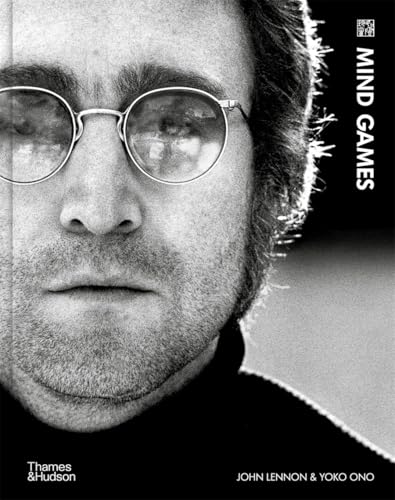
The definitive exploration―told in revelatory detail―of the writing, recording, and release of John Lennon’s celebrated and magical fourth solo album Mind Games , and the era that inspired it. Described by Yoko Ono as "ahead of its time," Mind Games is a breakthrough album from John Lennon in which he employs a Plastic Ono Band comprising the cream of the crop of New York session musicians―a fan favorite that remains a cult classic ever since its first release on October 29, 1973. This insightful and beautiful book presents handwritten lyrics, letters, artworks by Lennon and Ono, and previously unseen photography alongside their firsthand commentary about the lyrics, songs, and album artwork, as well as contributions from the musicians, friends, engineers, and key figures involved in the making of this landmark album. Mind Games was the product of an exceptionally turbulent time for the Lennons. While Nixon and Hoover were attempting to have Lennon deported, John and Yoko endured endless litigations and as the popular press turned on them once again, they bravely rose above it all, continuing their campaigns for non-violent peaceful protest to end the war in Vietnam and for equal rights for women. It was also an exciting time when they both re-embraced mysticism and magical thinking. In this sumptuous volume, text and images from the key players are woven together to reveal not only the details behind the creation, recording, and release of this groundbreaking commercial and skillfully crafted recording, but also to shed new light on a period of transformation and experimentation for Lennon and Ono. Publication will coincide with extensive publicity surrounding the release of a completely remixed and reissued 6 x CD / 2 x BluRay digital edition of Mind Games , together with two deluxe Mind Games boxsets, bringing the album to a new generation of listeners. 750 color illustrations
John Winston Ono Lennon, MBE, was an English singer-songwriter who rose to worldwide fame as one of the founding members of The Beatles, and together with Paul McCartney formed one of the most successful songwriting partnerships of the 20th century.
Born and raised in Liverpool, Lennon became involved in the skiffle craze as a teenager, his first band, The Quarrymen, evolving into The Beatles in 1960. As the group began to undergo the disintegration that led to their break-up towards the end of that decade, Lennon launched a solo career that would span the next decade, punctuated by critically acclaimed albums, including John Lennon/Plastic Ono Band and Imagine, and iconic songs such as "Give Peace a Chance" and "Imagine".
Lennon revealed a rebellious nature and acerbic wit in his music, his writing, on film, and in interviews, and became controversial through his work as a peace activist. He moved to New York City in 1971, where his criticism of the Vietnam War resulted in a lengthy attempt by Richard Nixon's administration to deport him, while his songs were adapted as anthems by the anti-war movement. Disengaging himself from the music business in 1975 to devote time to his family, Lennon reemerged in October 1980 with a new single and a comeback album, Double Fantasy, but was murdered weeks after their release on the sidewalk outside his home in the Dakota. Ironically, "Imagine" (imagine all the people, living life in peace) was a featured cut from this album.
Lennon's album sales in the United States alone stand at 14 million units, and as performer, writer, or co-writer he is responsible for 27 number one singles on the US Hot 100 chart. In 2002, a BBC poll on the 100 Greatest Britons voted him eighth, and in 2008 Rolling Stone ranked him the fifth greatest singer of all time. He was posthumously inducted into the Songwriters Hall of Fame in 1987 and into the Rock and Roll Hall of Fame in 1994.
Starts a little slow text-wise (there are great pictures throughout this oversized book), but then it gets really fascinating with accounts of John and Yoko’s relationship, their activism and life in New York, Beatles mentions and the making of Mind Games. One of my favorite details in the book is how drummer Jim Keltner’s drumming shouldn’t fit, but it does.