
What do you think?
Rate this book

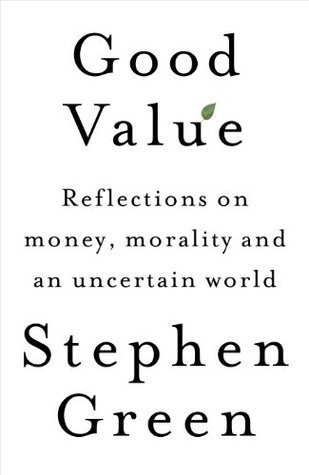
How should we create wealth in societies, and why is it necessary to do so? What improves the lives of the largest number of people? And how do we, living in a globalised world caught in an age of financial and ecological turbulence, respond to the differing needs of individuals and institutions?
Stephen Green, Chairman of HSBC, reflects on how the human desires for exploration and exchange have led us into a globalised, urban world, and considers why it is that capitalism is the best system by which to improve material human wealth. As the world's financial order is in a state of flux, how do we align these drives, and capitalism, with our spiritual and psychological needs? And how should the financial sector respond not only to the current crisis but to the wider needs of the people it serves. Do businesses - and banks in particular - have a duty to society that goes beyond the creation of profit? Does open market capitalism remain our best hope for creating wealth that benefits all of society? Encompassing history, politics, religion and economics, Good Value offers new perspectives on how we can live in a richer, more dynamic world.
216 pages, Kindle Edition
First published July 2, 2009


The story of the people in the Old Testament is the story of a people whose chosenness lies not in being different from others, but precisely in being representative because they are so exactly like others. Their leaders were often greedy, philandering, corrupt, violent--all the things that people with power and wealth so often are. Those who were led were fickle, and no doubt did many of the same things as their leaders on a smaller scale ... The only thing extraordinary about this commonplace history was the unique response it provoked from a group of figures known as the prophets--who were sometimes solitary outsiders, but sometimes even establishment figures. Through generations, they kept up a critique of all that was going on--often powerfully expressed in poetry that stands comparison with the greatest literature of any human culture--in the name of their God ... It is striking that, while popular usage has debased the idea of sin, evil is a concept that retains its power to bring us up short. We remain both fascinated and nonplussed by it, as we repeatedly find it not just "out there" in some supernatural guise, nor "just there" in some nightmarish historical event that we can ring-fence because we were not involved, but in us and among us--alongside the creativity and beauty which are the hallmarks of our original grace.


