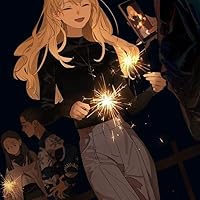
Alice has always tried to be a decent person. She gets good grades, comes home on time, and has never really given her dad and her stepmom any reason to worry. But now that junior year of high school has started, Alice is a little sick of people assuming she's a goody-goody, so she decides to start shaking things up. First there are the dates with Tony, a cute senior who’s a lot more experienced than Alice. Then the fights with her stepmom about the new cat, the car, and everything else start. But when Alice sneaks off to a party that her parents don’t know about and a near-tragedy follows, she starts to realize every choice has a consequence, and danger rarely leads to good ones.
Phyllis Reynolds Naylor was born in Anderson, Indiana, US on January 4, 1933.
Her family were strongly religious with conservative, midwestern values and most of her childhood was spent moving a lot due to her father's occupation as a salesman.
Though she grew up during the Depression and her family did not have a lot of money, Naylor stated that she never felt poor because her family owned good books. Her parents enjoyed reading stories to the children--her father would imitate the characters in Huckleberry Finn and Tom Sawyer--and her mother read to them every evening, "almost until we were old enough to go out on dates, though we never would have admitted this to anyone."
By the time Phyllis reached fifth grade, writing books was her favorite hobby and she would rush home from school each day to write down whatever plot had been forming in her head - at sixteen her first story was published in a local church magazine.
Phyllis has written over 80 books for children and young people. One of these books, "Shiloh," was awarded the Newbery Medal in 1992, was named a Notable Children's Book by the American Library Association and was also Young Adult Choice by the International Reading Association.
Naylor gets her ideas from things that happen to her or from things she has read. "Shiloh" was inspired by a little abused dog she and her husband found. The little dog haunted her so much that she had to write a story about him to get it out of her mind.
book 19. first read july 2007: I've been reading PRN's Alice series since I was in 5th grade or so, and it astonishes me that she is still cranking out new ones. For a while I was aging at about the same rate as Alice- I believe we both entered 7th grade together- but obviously I rocketed past her at some point. Still, I get a little excited when I see there's a new one out.
first read, july 2007: I will always admire PRN's fearless approach to topics that have put this series on just about any banned book list I've ever viewed...but sometimes, in this series, I wonder just how much you can put a character through. Alice's friends go through all kinds of hardships: one commits suicide, another is beaten by her boyfriend, another gets leukemia, another anorexia, another is molested by a relative, yet another is molested on a train (and has nudist parents), another two are ridiculed for being gay, a teacher dies from heart disease etc etc. Alice feels it all, discusses everything with her beloved father (her mother died when she was young) and mulls it over with her friends. Stretched out over how many books now? 20? I guess this spreads this hardship into bite-sized pieces...but reflecting on Alice's life as a whole is mighty depressing.
My only other minor complaint is that PRN needs to stop saying things like "slacks" for "pants" if she expects us to believe that Alice is in high school.
That said, Alice really is emotionally well-captured as an average high school girl, and this book (in which Alice is a junior in high school) reminds me SO MUCH of myself at that age. In this one, Alice's friends are being reckless with alcohol, and Alice is clashing with her new stepmother over staying out late, using the car, etc. Her mood swings always ring true and PRN manages to make them humorous instead of depressing. As in, it's funny because it's TRUE.
second read, march 2011: this is the one where alice goes to the snow ball with "fast" tony. patrick calls 5 months early to ask her to prom. (aww)
I enjoy this series, but at the same time it is sort of strange to me. Although the books are contemporary, they discuss texting and cell phones and the internet, something about them seems old fashioned. Sort of an 80s vibe. Some of her words are not ones a real 16 year old would use. The one that bugs me the worst for some odds reason, is when the characters discuss marriage, they say it like, "When I choose to marry", or "If I ever marry." And they say it incessantly. No 16 year old would talk like that. But at the same time, the book was pretty graphic for a YA selection. I don't mind, but my 11 year old is reading the fourth book, and I'm trying to decide when I need to slow her progress down. She is not quite ready for this. It seems sort of wrong to read about the same goofy little Alice, who got buried in a collapsing igloo is now letting boys get very fresh with her!
Back on my Alice bullshit after a three-year hiatus from my reread. Quarantine will really do it to you.
Unfortunately, this is one of the least memorable late series entries. Alice finds out some frenemies think she's a Miss Goody Two Shoes so she does various things to try to make herself edgier, including heavy petting with a cool senior in a Buick LeSabre (the make/model of Tony's car is mentioned an amazing amount of times), staying out all night to research an article for the school paper (is it still edgy if it's for school?), a night out in Georgetown, getting on the back of a stranger's motorcycle. All of these events feel kind of independent from one another, though, more like items on a timeline rather than experiences that culminate into any overarching plot. Her attitude and angst are also pretty grating, but feel appropriate for a disgruntled teen.
She also clashes with her dad and stepmom in a way that feels realistic, even if it's not super enjoyable to read. The first 2/3rds of the series feature Alice desperately wanting her Dad to marry Sylvia, and now she's finding out that merging two households is messy and frustrating. She also sees her Dad making long-term life decisions that do not involve her (big home renovations, getting a new pet, expanding his store) and it's uncomfortable for her.
The one where... - Gwen continues to be so underutilized. Regulated to "you go, girl" hypeman, when she is clearly the smartest and most together of the group. At one point, Alice calls Gwen, who is black, uppity, which is played for a joke. - Everyone is still obsessed with getting married in their early 20s. Alice shakes her head at Lester for being one of those rare boys who is not ready for marriage at 24. They also insist on using marry as a verb so frequently – 'I would be so happy if they were to marry', 'will you ever marry', etc. etc. I can't fault PRN for being old and using old slang, but I think an editor could have given this an update. - As a cat parent, I'm distressed by Alice's apathetic attitude towards Sylvia's cat escaping (which is Alice's fault). Go find the cat Alice!! (The cat comes back and is fine.) - Alice, attempting to eavesdrop on her dad and stepmom, inadvertently ends up listening to them have sex. It's as scarring as I remember. - A lot of detailed description of home renovations, if you're into that.
I honestly don't know if it's just me, but I feel like it's about time the series starts to wrap up. When Alice does something stupid, it feels inauthentic, because she's been learning so many lessons for so many years. But of course, at the same time, as she very clearly says, her hormones are more impulsive. And maybe that's the problem. Maybe I think books for MG can be a little more telling than showing, a little more explicitly didactic, so long as they're interesting and all... but books for teens should be a little more subtle.
Again, posting, by the school office staff, all the couples' pictures from the Snow Ball, is inappropriate. Way to celebrate the popular kids for being popular, instead of focusing on academics.
I really liked the episode of Mrs. Cary teaching the kids in Public Speaking to be able to argue both sides of a controversial issue. "I'm not asking you to change your minds. But teaching you to *think* is more important than teaching you facts.... This assignment is meant to help you examine a topic from another perspective."
I'm really uncomfortable about the portrayal of Molly, the classmate with cancer. "There's one cure for feeling so completely lousy and low that I can barely stand myself. That's finding someone who's a lot worse off than I am and concentrating on her for a while. The first person who came to mind, other than Amy Sheldon, was Molly, so I drove over there after dinner." Don't readers see how Molly is being *used* ? Alice doesn't spend time with Molly because she *likes* doing so, but only goes to see her as therapy or from a sense of duty.
:sigh: Only a few more books in the series.
But hey, you know what? I might just read others by Naylor later, too.
October 2023 reread Alice makes a lot of unwise choices in this volume, which is out of character for younger Alice but on par with high school Alice, who is pushing boundaries and trying to form an identity. Tensions with Sylvia also come to a head after a year of living together. Reading this as an adult, I can see both sides of the conflict and neither is entirely right or wrong (though I tend to sympathize with Alice, in that Sylvia doesn’t make much effort in fitting into the established McKinley family, but rather she and Ben seem to be forming their own and leaving Alice on the outskirts). Only new character in this book is Claire, a woman Lester is dating from the gym. She is mentioned a few times but only seen briefly on page.
October 2020 reread Picking up where I left off in my Alice Series reread from last fall. The Alice books are very much comfort reads, one of the few first person narratives that I adore. Still gave a few chuckle snorts regardless of this being a fifth read through.
February 2018 reread I took three Alice books on vacation this year and read through them quickly. I still love these stories, though the tone changed a bit when she left middle school for high school. Still, love the embarrassing moments she hasn't quite grown out of and love the back-n-forth between Alice and Lester.
This has finally the kind of energy again that the early books had. She argues with her step mom and I think those scenes are particularly well done because while one tends to pick a side, both sides are well represented and even within the argument nobody is made to seem stupid over not presenting the authors own side. And the old clique truly isn't the same anymore which is an important part of this book and which I particularly liked, despite it being also sad.
Alice is now a junior in high school and she is tired of being seen as a goody-two-shoes. She takes more chances and clashes against her parents.
Book takes place: Fall semester of junior year. Alice's life lessons: Just because you're growing up doesn't mean that you aren't still your father's little girl. Best Alice moment(s): Alice's unrequited crush on a different senior; Alice and Tony; Alice and Sylvia's blow-up rage moment; Alice's bad judgment in the closet; the girls' night out in Georgetown; Alice and Liz posing as runaways; Lester's Christmas present
There are so many things in this series that ring true--namely, the focus on sex (discussion of, speculation on, and who's having) in the recent books--but there's just as much that never really feels genuine, like how excited the whole school gets over school dances. As with all the recent Alice titles, this one covers a lot of ground--dating the Bad Boy to shed the good-girl image, drunk driving, Issues with stepparents, friend with leukemia, and Boys and Boys and Boys. For all the Problem Novel areas it covers, it's remarkably non-preachy. This entry into the series isn't bad, as the Alice books go, but that doesn't mean it's a great book.
The "Alice" books are a guilty pleasure for me, especially because I wouldn't dream of letting J. read them until she's at least 30. ;) Alice and her friends are very real characters, and the stories touch on subjects of importance to kids without seeming too much like an Afterschool Special. I recently found out that Phyllis Reynolds Naylor is 76 years old, which makes it all the more remarkable that she can read modern teenagers' minds so well.
Alice is so give outable to teens and mayyybe even some tweens who are ready (or think they are ready) for teen books. There are definitely some teen books they can't handle, but Alice reminds me a bit of Myracle's Thirteen (or rather, Thirteeen reminds me of Alice, since Alice came to be first) in such a great way.
I liked the book because when I'm a little older I feel like this book will be really relatable. I think the best part of the book is all of it because I can't pick a favorite. I think the theme of the book is to be yourself because Alice wanted a boy to ask her to the dance and she was thinking about acting differently. I would recommend this book to 8th graders.
This entire review has been hidden because of spoilers.
Finally! I just knew there had to be a new one I hadn't read. Continues Naylor's high standards, with some darker stuff happening. Alice makes some poor decisions here, but also some good ones. The situations seemed incredibly real. Naylor really knows this age group.
Funny, heatfelt, and real,...all qualities I've come to expect from the Alice books, and this one is no exception. I love this series, and I have since I was 12!
I followed the Alice series religiously and this was a nice turn-around. Maybe as I was the daughter of a single dad, there was a responsibility placed on you to be a bit more mature than the other kids. And like Alice, I generally didn't feel like breaking the rules. But her progression to wanting to explore who she is comes off naturally and is a breath of fresh air. She is able to reevaluate who are her friends are, and you get to see her grow up.
The nostalgia of this series ❤️ Although, I’m not sure I made it this far in the series back when I was a kid. It was difficult at times to put myself back in those 16 year old shoes to view the situations through Alice’s eyes rather than my own. Also, I feel like Naylor has mostly hinted around sexual content thus far in the series, but this book was fairly descriptive. I suppose this is to show Alice’s growth, but it caught me off guard since I remember this series as my “childhood series.”
Wow, Alice gets reckless in this one. Glad she still had enough common sense not to give herself to Tony or to get in Brian's car, though. Brian is awful. Alice is annoying in this book and totally rotten to Sylvia and Ben, but I guess it's just a part of her growing up. Gosh. My age, and driving out at night like that with friends, going that far with a guy... Liz is really looser too.
I was not a huge fan of this installment in the Alice-Series, I understand that teenage years can be difficult and everything but it felled like Alice should experience it all at once, all the fighting with parents and so, in one installment instead of sprinkling it in throughout her growing up.
One of the best books in the Alice series. Also, there are many books where characters do things that make me cringe, but none that make me cringe as much as the scene when Alice hides in her dad's and Sylvia's closet. I almost can't even read that part.
Alice's experiences are VERY different than my own high school experiences, but we were both selfish, self-absorbed teenagers, which kind of describes every teenager.
the writing in this is CRAZY for "children and young teen". but as someone who started reading this series as a 7 year old I need to know how it ends. but the explicit content is wild.