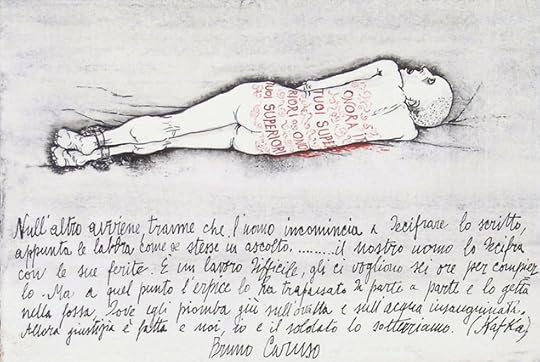
'The condemned man looked so doggishly submissive, it really seemed as if one might allow him to roam the slopes freely, and only needed to whistle when it was time for the execution, and he would come.'
Kafka transformed the possibilities of the short story, his unique imagination giving his dark tales a sense of dream-like logic and unreality, in which their horrors are humorous and unease pervades. In these two stories, a traveller is shown the workings of an elaborate machine with a bloody purpose, and a son awakens unimagined resentments in his father.
This book includes In the Penal Colony and The Judgement.
Franz Kafka was a German-speaking writer from Prague whose work became one of the foundations of modern literature, even though he published only a small part of his writing during his lifetime. Born into a middle-class Jewish family in Prague, then part of the Austro-Hungarian Empire, Kafka grew up amid German, Czech, and Jewish cultural influences that shaped his sense of displacement and linguistic precision. His difficult relationship with his authoritarian father left a lasting mark, fostering feelings of guilt, anxiety, and inadequacy that became central themes in his fiction and personal writings. Kafka studied law at the German University in Prague, earning a doctorate in 1906. He chose law for practical reasons rather than personal inclination, a compromise that troubled him throughout his life. After university, he worked for several insurance institutions, most notably the Workers Accident Insurance Institute for the Kingdom of Bohemia. His duties included assessing industrial accidents and drafting legal reports, work he carried out competently and responsibly. Nevertheless, Kafka regarded his professional life as an obstacle to his true vocation, and most of his writing was done at night or during periods of illness and leave. Kafka began publishing short prose pieces in his early adulthood, later collected in volumes such as Contemplation and A Country Doctor. These works attracted little attention at the time but already displayed the hallmarks of his mature style, including precise language, emotional restraint, and the application of calm logic to deeply unsettling situations. His major novels The Trial, The Castle, and Amerika were left unfinished and unpublished during his lifetime. They depict protagonists trapped within opaque systems of authority, facing accusations, rules, or hierarchies that remain unexplained and unreachable. Themes of alienation, guilt, bureaucracy, law, and punishment run throughout Kafka’s work. His characters often respond to absurd or terrifying circumstances with obedience or resignation, reflecting his own conflicted relationship with authority and obligation. Kafka’s prose avoids overt symbolism, yet his narratives function as powerful metaphors through structure, repetition, and tone. Ordinary environments gradually become nightmarish without losing their internal coherence. Kafka’s personal life was marked by emotional conflict, chronic self-doubt, and recurring illness. He formed intense but troubled romantic relationships, including engagements that he repeatedly broke off, fearing that marriage would interfere with his writing. His extensive correspondence and diaries reveal a relentless self-critic, deeply concerned with morality, spirituality, and the demands of artistic integrity. In his later years, Kafka’s health deteriorated due to tuberculosis, forcing him to withdraw from work and spend long periods in sanatoriums. Despite his illness, he continued writing when possible. He died young, leaving behind a large body of unpublished manuscripts. Before his death, he instructed his close friend Max Brod to destroy all of his remaining work. Brod ignored this request and instead edited and published Kafka’s novels, stories, and diaries, ensuring his posthumous reputation. The publication of Kafka’s work after his death established him as one of the most influential writers of the twentieth century. The term Kafkaesque entered common usage to describe situations marked by oppressive bureaucracy, absurd logic, and existential anxiety. His writing has been interpreted through existential, religious, psychological, and political perspectives, though Kafka himself resisted definitive meanings. His enduring power lies in his ability to articulate modern anxiety with clarity and restraint.
The Judgement. You don't need to know any biographical details about Kafka to know that he didn't get on with his father, that he was a domineering, manipulative bully who sapped all his son's self-confidence as if the man became a child again under the onslaught of his wounding words, you only need to read this book. He couldn't have written this in such a chilling manner if he hadn't lived it.
>b>The Penal Colony is a much more interesting story. What it's about is supposedly the product of a very devious and cruel mind, that of a true sadist. But it's much deeper and far more chilling than that. And of course, at the end, someone dies.
That's Kafka for you, always a trip towards mortality.
It's a peculiar apparatus," said the Officer to the Traveler, gazing with a certain admiration at the device, with which he was, of course, thoroughly familiar.
A nameless officer in a deteriorating penal colony tries to convince a visitor of the importance of his execution machine. While preparing to put a prisoner to death he gets nostalgic for the old days of the colony, and attempts to coax the visitor to help him make the colony the resplendent place once it was.
You should have seen the executions in earlier days! The entire valley was overflowing with people, even a day before the execution. They all came merely to watch. Early in the morning the Commandant appeared with his women. Fanfares woke up the entire campsite. I delivered the news that everything was ready. The whole society-and every high official had to attend-arranged itself around the machine.
Rather harrowing reading, brutal and grotesque at the same time, orchestrated for four persons: the Officer, Traveller/Visitor, Soldier and The Condemned Man. Oh, and the apparatus obviously. If it comes to their relationship we get rather enigmatic and elusive idea while the description of execution machine and killing technique we get to the every sickish, barbaric detail, with the future participant docilely standing nearby.
The condemned man looked so doggishly submissive, it really seemed as if one might allow him to roam the slopes freely, and only needed to whistle when it was time for the execution, and he would come.
He doesn't know the sentence that has been passed on him?" "No," said the officer again, pausing a moment as if to let the explorer elaborate his question, and then said: "There would be no point in telling him. He'll learn it on his body.
I'm not sure about the message Kafka delivers here. Maybe it's premonition of the future fascist totalitarianism and its methods or perhaps Kafka's defiance against hated office job and tyrranical father or maybe one can read In the penal colony as an allegory of human life in general, life that passes under the sign of anguish and ordeal, and all its experiences are literally engraved on our skin?
Devilishly gruesome and brutal short story which possesses sentiments of semi-religious insanity that involves a torture device and the explanations of it's history and workings, can't help but think that there are early indications to the rise of Nazism contained within. Far too short to rate any higher, but worthy of killing a brief amount of time.
Very smart story, i admire it from many angles. First of all the characters, i liked so much the officer's zeal and enthusiasm, the condemned man's curiosity and - at the same time - contentment and the soldier's indifference.
The officer's long speeches were very strong and concentrated although it contains many details and analysis. The last scene with the stick in the explorer's hand was magnificent.
This has got to be the most brilliant short story I've ever read. My love for Kafka increases everyday. I'm not sure what the inner meaning of this story actually was, but it appealed to my sadistic side almost too much. By which I mean, of course there are a lot of layers to the story, it is Kafka after all, but I suppose nothing jumps out immediately. Even as I'm writing this, little things are making themselves known to me. How I would love to view this!
The Judgment, also translated as The Verdict– short story by Franz Kafka, author of The Metamorphosis http://realini.blogspot.com/2016/06/m... The Castle, three major books included by the luminaries of our age on the list of 100 Greatest Books of humanity
9 out of 10
It is tempting to try and take a lighter look at the works of Franz Kafka, maybe because the atmosphere is so gloomy, tragedy is otherwise in the air, and as a ‘defense mechanism’, instead of accepting what is inevitable, in this context, nothing good can be conceived, and even then, if we have a character prosperous, somewhat cheerful, advancing in his career, finding a good companion, that is the exception that confirms the rule, it also serves as a contrast, it is all Kafkaesque, so what good does a bit of merriment…
Indeed, it is more a question of mood – if one comes to the book with a happy attitude, then he uses a lens, comb that will keep the positive and dismiss the unfortunate, as in ‘Be a merit finder, not a fault finder…there is nothing either good or bad, but thinking makes it so, Hamlet, William Shakespeare’ or we could consider The Paradox of Choice http://realini.blogspot.com/2015/07/t... a classic of psychology by Barry Schwartz from which we learn that there are two kinds of people
You could be a Maximizer or a Satisfizer, the former is the one that keeps looking for perfect, maximum, as the name suggests, only to be disappointed, unhappy, for whenever he buys something, a car say, he will immediately see another on the road that is a better Choice, he finds that there was another, better deal he could have had, while the Satisfizer will take the best available option and be (spoiler alert) satisfied with it…The Paradox of Choice teaches us another, paradoxical truth, that the more choice one has, the more overwhelmed one is, which is actually the paradox, having alternatives is excellent, but too many is the opposite, tested and researched, the conclusions are in the book
Now, the reason for amusement was the start of The Judgment, which involves…Russia, in itself a reason to become depressed, angry, think of Putin and his invasion of Ukraine, beheaded soldiers, atrocities that include (to name just recent developments) the sentencing of one leader of the opposition to twenty five years (well, if he disapproves of the short despot in the Kremlin, what do we expect) the arrest of a journalist from The Wall Street Journal, the bombardment of a Russian town by a…Russian airplane, the opening of another trial for Alexey Navalny, the one they had tried to kill using a military grade poison, novitchock, and they will never release from jail, as long as they have the same tyrant at the helm.
After the fatal inclusion of Russia in the story, a smile opens up, because the man that went to Russia, since this story by glorious Franz Kafka http://realini.blogspot.com/2015/02/t... was published in 1912, we can see that this is happening more than one hundred and ten years ago, has problems in Sankt Petersburg and then we find reason to be merry…but of course he has trouble, what do you expect, if he has chosen Russia, there must be, but I am being preposterous, in an attempt to be funny
I have seen a wondrous documentary Putin, the Story of a Russian Spy, about the rise of this dictator, that is so popular with the Russians that one has to wonder, what is it about such vile fellows that appeals to the masses – it is not just Russia, America has elected another crook, of a different breed, but a loathsome creature nonetheless, I mean Trump, not flawed, but a million times better Biden – how could they support him even after he went to war in Georgia, Crimea and then again Ukraine, last year
The other reason for merriment would be a peculiar take on the conversation between the main character, Georg Bendemann, and his father, the young man mentions the friend in Russia, and the parent says first that he had maintained a correspondence with the man in Sankt Petersburg, but then he doubts his (the friend’s) existence, which you may not fund amusing, but then I read as ‘to have a friend who lives in Russia is impossible, nobody in his right mind does that…at least nobody who could have a say on it’
Again, this is just jocularity of a sort, but the father is serious, if bizarre, he accuses his son of wanting him dead, and critics have looked at this for parallels with Kafka’s life – Magister Ludi Kingsley Amis writes about the fact that ‘the writer edits from his own life’ http://realini.blogspot.com/2022/12/m... he/she/they do not necessarily put down what happened to them ad literam, unless it is in their memoirs, but we can find the author on every page, with what he/she has experienced, although in modified form, using artistic license
Anthony Powel is one of my absolute favorites – I can hardly wait to start reading again the monumental, roman fleuve A Dance To The Music of Time, albeit there have been some worrying experiences lately, where after the elation, enthusiasm, catharsis provoked by first works, the end of the trilogy – as in the case of Nice Work http://realini.blogspot.com/2023/04/n... the last in The Campus Trilogy by David Lodge – did not repeat the rise to the zenith, something also experienced when reading again a novel that was so adjectival the first time…White Man Falling for instance
The divine author of A Dance To The Music of Time has said that ‘he does not know about in vino veritas, but in writing there is’ something along these lines http://realini.blogspot.com/2013/08/t... Kafka does not give me the same exuberant, ecstatic experience as reading Anthony Powell, in fact, what Franz Kafka describes in his fundamental prose is what we have seen in reality in these realms, in Eastern Europe, during communism and in its aftermath, we have traces of Kafka in the everyday life today…I am however proud to say that I took part in the revolution against the Kafkaesque, to take down Ceausescu, one of the most abject tyrants the world has seen and here is the link to the page from the Newsweek article that covered the rebellion, wherein I am Realini Ionescu mentioned as a source http://realini.blogspot.com/2022/03/r...
bela tradução e posfácio parcialmente esclarecedor do modesto carone. fazia tempo que nao lia nada do kafka, e tinha me esquecido da simplicidade e da potencia.
"In the Penal Colony" revolves around the rather, um, unique system of justice and punishment used in the place where it is set. The judicial system of this penal colony is based on the idea that, as one character says, "Guilt is never to be doubted." The accused are never tried nor given an opportunity to defend themselves. Instead, they are simply put to death at the order of the judge in an elaborate and apparently brutal fashion. This short story explores the practice 'Capital Punishment' in a terrific theme with surreal scenes describing primitiveness in a colony of conservative soldiers.
Two stories by Franz Kafka, part of the Penguin (mini) Modern Classics Series.
Classics Review:In the Penal Colony is a sampler, containing the stories "The Judgment" (1912) and "In the Penal Colony" (1914). In both stories Franz Kafka (1883-1924) offers the world as an unpredictable and dangerous place. Rather than present this as an actual story collection (of which there are many), this Penguin series gives the reader a mere hint of Kafka so as to quickly decide if his writing is up your street.
In "The Judgment" the routine and quotidian life of a father and son, business partners, spins into something wildly different. It's tempting to interpret the story in many ways: psychologically, religiously, or autobiographically spring to mind. My choice, as a non-academic, is to read it more literally, letting the emotions created (if any) resonate with those themes, as a form of expressionism. There's no need to delve too deep. This is how the world seems to Kafka, people are not what they seem, tension and conflict are inevitable.
"In the Penal Colony," the other story, presents an explorer in a foreign country who watches the demonstration of a unique torture device. The story reflects the times and Kafka's own existence. It vaguely presages Shirley Jackson's "The Lottery," and may even look forward to the rise of terror, the horrors of the First World War, and European fascism, while unexpectedly looking back at the Spanish Inquisition. For those so inclined it can be easily read as an extended and intricate religious allegory.
In the Penal Colony contains two of Kafka's strongest stories and ones that he felt mattered, which was unusual as he was hypercritical of his work and wanted it all destroyed at his death. This selection is representative and gives an accurate sense of Kafka's writing. Readers who relish these pieces will most likely enjoy his other work. Those who dislike these may want to read no further Kafka. [5★]
U kažnjeničkoj koloni - Veoma interesantna priča sa dosta simbola koje mogu da govore o bilo čemu, što zavisi od čitaočeve interpretacije. Po mom mišljenju, ima određeno mikro i makro značenje. U makro svetu, ovaj događaj simboliše kraj stare vlasti (mašina koja se uništava zajedno sa poslednjim slugom prethodne vlasti je zaista jedna moćna slika) i po meni, čak izražava nadu da će stvari postati sve bolje. Kako činovnik opisuje stari svet (presuda se Izvršavala bez znanja optuženog) podseća doista na svet Procesa i dolaskom u novi svet, taj svet nestaje. U mikro značenju ovaj događaj ukazuje na to koliko je neko spreman da umre zarad svojih principa i njihovog dokazivanja. Takođe, kako činovnik priča o mašini i jelte smrtnim kaznama podseća na pričanje o nekoj određenoj umetnosti i kako publika reaguje na nju i sve manje je osetljivija na bizarnosti. Gledano iz perspektive kapitalizma, takođe govori o tome kako mašine "zasenjuju" ljude i otupljuju saosećanje kod mase.
Presuda - zaista jedna tužna priča o čoveku koji ima svaki razlog da se oseća srećno, ali ne može zbog sebičnog pritiska od strane bola i tuge koji njegovi bližnji osećaju.
“O narrador kafkiano em momento algum oferece ajuda ao leitor, limitando-se a atirá-lo com indiferença e sem aviso prévio no mundo indevassável das suas figuras.”, Modesto Carone. Uma “barata-humana”, um jovem comerciante em ascensão e um aparelho de execução penal. O que esses três possuem em comum? Muitos dirão que nada, mas, infelizmente, esses não conhecem a genialidade do Kafka. O meu primeiro contato com Kafka aconteceu ano passado, quando A metamorfose foi eleita a leitura do meu clube do livro. Apaixonada pela escrita do autor, eu fui correndo procurar as suas outras obras. Por indicação, comprei um livro que reúne duas novelas: O veredicto e Na colônia penal (edição da Companhia das Letras com tradução de Modesto Carone: mais do que indicada!). Assim que comecei a ler O veredicto, senti que esse tinha uma ligação com a obra A metamorfose. Primeiramente porque as duas novelas possuem a mesma temática: são relatos de família nos quais os personagens principais vivem conflitos com os demais membros, em especial com os pais. Lendo o posfácio escrito por Modesto Carone, confirmei que a relação entre as histórias estava correta. O desejo inicial do Kafka era reunir em uma obra, intitulada Filhos, as novelas O veredicto, A metamorfose e um fragmento chamado O foguista. Mais tarde, Kafka pensou em reunir as novelas O veredicto, A metamorfose e Na colônia penal num único volume chamado Punições. Entretanto, esses planos do autor acabaram não se concretizando. Como eu mencionei, a ligação que pode ser feita entre O veredicto e A metamorfose é perceptível e quase que direta. As duas novelas são passadas em um ambiente familiar, onde os personagens centrais se veem em conflito com os seus familiares. O pai, nos textos kafkianos, exerce uma figura de poder, autoritária. É ele quem condena os personagens centrais, ou seja, dá o veredicto. Analisando um pouco mais esses dois textos, em A metamorfose eu senti mais facilidade para fazer um julgamento dos personagens, tanto porque a novela é maior e, portanto, mais aprofundada, como também porque, embora Kafka escreva com uma linguagem objetiva e desprovida de emoções, acabou auxiliando o julgamento do leitor a partir da narrativa dos fatos. Por sua vez, eu terminei O veredicto me sentindo extremamente confusa. A trama possui basicamente três personagens: Georg Bendemann, o seu pai e o amigo de Georg (não nomeado). Georg é um rapaz inseguro que começa a ter sucesso na vida, tanto no empreendimento do pai quanto na vida amorosa, tendo acabado de ficar noivo. Além disso, a opressão paterna sofrida por Georg começa a desaparecer após a morte de sua mãe e à medida que o pai envelhecia. De início, acompanhamos as dúvidas de Georg sobre revelar o seu noivado ao amigo. O motivo nos parece nobre: diante das infelicidades vividas pelo amigo, que havia se refugiado na Rússia, Georg se sente hesitante em contar os seus sucessos e acaba limitando o contato a assuntos triviais. Entretanto, após decidir escrever uma carta honesta ao amigo, finalmente abordando a sua vida íntima, Georg busca o pai para pedir sua opinião. É nesse momento que o cenário muda: o pai se volta contra Georg, julgando que este o abandonou, ao amigo e à própria mãe, em prol do seu orgulho. Embora estivesse velho, doente e descuidado, o pai continuava a exercer poder sobre o filho que assiste impassível a sua “sentença”. Ao terminar a novela, eu fiquei alguns minutos refletindo, tentando entender quem, de fato, tinha razão na história. Pelo histórico do Kafka, eu tendia a acreditar na “inocência” do filho. A minha única dúvida consistia no descaso de Georg com o pai, que estava numa idade avançada e precisava de cuidados. Entretanto, me pareceu que o julgamento do pai foi tão somente baseado em seu ressentimento, por não conseguir suportar o que interpretava como sua decadência: o seu envelhecimento, a morte da mulher e a transmissão dos seus negócios ao filho. No que diz respeito à novela Na colônia penal, embora essa se distancie das outras aqui mencionadas, as três possuem um ponto em comum: o julgamento opressivo. Dessa vez, esse se dá não através da figura paterna, mas de um oficial. Na colônia penal, temos quatro personagens principais: o oficial, o explorador, o condenado e um soldado. A obra começa com o oficial explicando ao explorador como funcionava o aparelho de execução que usaria para matar o condenado. Resumidamente, a invenção consistia em um aparelho de tortura. O explorador, a princípio hesitante em estar presente em uma execução, questiona ao oficial se o condenado conhecia a própria sentença. Para a sua surpresa, o oficial informa que não. Indo além, o explorador questiona se ele ao menos sabia que havia sido condenado. Novamente o oficial responde com uma negativa. Então, é informado ao explorador que não havia oportunidade de defesa na colônia penal, uma vez que isso poderia colocar em dúvida toda a verdade alegada pela vítima. Na colônia penal talvez seja a melhor novela do Kafka dessas três que eu li, mas prefiro não escolher uma favorita. O texto é carregado de questionamentos sobre o senso de justiça, e o desfecho da obra é magnífico. Como Modesto Carone menciona em seu posfácio, Kafka elaborou ao longo dos anos um estilo cada vez mais objetivo, onde a menor palavra pode assumir o máximo de significado.
incrível me da vontade de comprar o box todo de obras completas dele. tudo nesse pedacinho de papel é perfeito desde a tradução muito boa e fluida ao espaçamento entre linhas e a fonte e a vibe meio sebo anos 90 dessa edição... não elogio vcs sempre mas parabéns companhia das letras mandaram bem nessa. quanto ao kafka não vou comentar nada além de que alugou um predião na minha mente e que vai ser tudo o que eu vou pensar pelos próximos tempos.
São duas novelas curtas! Gostei mais da colônia penal, são umas 60 páginas que aborda o tema dos julgamentos, algo que lembra a inquisição, ao totalitarismo, às ditaduras e também às máquinas no sentido da tecnologia mas também como funcionamento de um sistema, como no livro dele “o processo”.
This tiny book contains two short stories, both of which have dark themes. The first is only a few pages long while the other takes up the majority of the book.
I enjoyed both but did find at times the second one a little long winded. I definitely recommend them though if you're a fan of short stories!
A short but very profound story about different aspects:
1. The relationship between father and son.
2. How we change our emotions and thoughts quickly - we can go from empathy and generosity to anger, or from love to hate in a matter of seconds.
3. The guilt we carry from the most absurd things.
4. How each individual lives in their own world, with their own visions and selfishness.
5. The guilt that each one carries, however absurd it may be.
6. The verdict we impose on ourselves and others, by a constant judgment by our own references.
7. The place of power where we place ourselves over others - through social hierarchies (such as the relationship of father and son) and the ideas we develop, for example the supposed "pity" we feel for others, we constantly put ourselves above of others.
8. The different characters we create from ourselves that we show at work, in society and at home, in our intimacy.
9. The "well of vanity" that we are.
Around all of this, there are other issues constantly present in Kafka's stories: alienation, condemnation and absurd condemnation.
The narrative revolves around a character who becomes engaged and decides to tell his or her engagement to a friend who moved to another city and who is experiencing difficulties and who does not want to return to his hometown because of the shame of not having given in nothing in life.
The protagonist does not want to tell the friend of his engagement not to make him more unhappy. Georg works and lives with his father, a widowed and old man.
Most of the story takes place in a dark room, with the windows closed, in a conversation between the father and son about Georg's decision to tell his friend about his engagement and the speeches his father makes to him in the light of that event.
As in other stories, Kafka provokes to life the selfish proportions that defy and define the limits of itself: its horizon, its hopes, expectations, memories and depravations, reaching the end of itself: the absurd meaning.
____
In the Penal Colony
Kafka's ability to use metaphors as a means of reflection on ourselves, the culture that surrounds us and the central themes of humanity is shocking in this history by mixing with the extremes of violence.
Behind the narrative, there are as in others of his works the notion of the absurdity of life and how this same absurdity becomes truth, or truths either for an individual or for an entire society, or at least for a part of it.
With a core of ruthless action and characters who move quickly from compassion to vengeance, from despair to derision, we note that Kafka reflects that there are also individuals who can defend and cling to traditions, rules, myths, religiosities, and political systems even though these seem illogical to most.
And people who are even willing to sacrifice with their own lives as proof of their loyalties in situations that even extremely painful ones find in their consciences the serenity - fruit of a superior truth that surrounds them and that they believe. Would that be a portrait of obsession? Illusion? Religious or political extremism?
Kafka also points out that however incoherent some systems may seem to be unsupported by the majority and that society believes it has surpassed, there can always be hidden followers ready for redemption.
The story points to two issues that appear in two other great narratives of Kafka: justice, as in The Process; and hallucination, as in The Metamorphosis.
Here, in relation to justice, the condemned person does not know what his accusation, had no right of defense and does not know what his condemnation will be. The judge, on the other hand, has a book of laws that no one can understand nor what is written. The executioner is more concerned with the gear and the machine that performs justice than with the defendant.
The hallucination occurs from the perspective of the characters. In a few lines, Kafka shows us how empathy can arise and disappear in different situations and hierarchies quickly. How compassion can turn into revenge quickly. That the pendulum of human emotions can swing extremely fast between what we feel in our own skin, what we know or not in theory, in the social, in the individual, and again in our own idea of justice and revenge.
This is a deep and sadistic story about humanity.
____
Veredito
Uma história curta, mas muito profunda sobre diferentes aspectos:
1. A relação entre pai e filho.
2. Como mudamos de emoção e de pensamentos rapidamente - podemos ir da empatia e da generosidade à raiva, ou do amor ao ódio em questão de segundos.
3. A culpa que carregamos das coisas mais absurdas.
4. Como cada indivíduo vive em seu próprio mundo, com suas próprias visões e egoísmo.
5. A culpa que cada um carrega, por mais absurda que ela seja.
6. O veredito que impomos à nós mesmos e aos outros, por um julgamento constante por nossas próprias referências.
7. O lugar de poder onde colocamos nós mesmos sobre os demais - através de hierarquias sociais (como a relação de pai e filho) e sobre as idéias que desenvolvemos, por exemplo a suposta "pena" que sentimos pelos outros, constantemente nos colocamos acima dos demais.
8. Os diferentes personagens que criamos de nós mesmos que mostramos no trabalho, na sociedade e em casa, na nossa intimidade.
9. O "poço de vaidade" que somos.
Em torno de tudo isso, há outras questões constantemente presentes nas histórias de Kafka: a alienação, a condenação e a condenação absurda.
A narrativa gira em torno de um personagem que torna-se noivo e decide contar ou não seu noivado a um amigo que mudou-se para outra cidade e que passa por dificuldades e que não quer retornar à sua cidade de origem pela vergonha de não ter dado certo em nada na vida.
O protagonista não quer contar ao amigo de seu noivado para não deixá-lo mais infeliz. Georg trabalha e mora com o pai, um homem viúvo e já velho.
A maior parte da história se passa dentro de um quarto escuro, com as janelas fechadas, numa conversa entre o pai e o filho sobre a decisão de Georg contar do noivado ao amigo e os discursos que o pai faz para ele em função desse acontecimento.
Como em outras histórias, Kafka provoca apontando à vida as proporções egoístas que desafiam e definem os limites dela mesma: seu horizonte, suas esperanças, expectativas, memórias e depravações, chegando ao fim dela mesma: o absurdo que se significa.
_____
Na Colônia Penal
A habilidade de Kafka usar metáforas como meios de reflexão sobre nós mesmos, a cultura que nos cerca e os temas centrais da humanidade é impactante nessa história por misturar-se aos extremos da violência.
Por trás da narrativa, há como em outros de seus trabalhos a noção do absurdo da vida e de como esse mesmo absurdo torna-se verdade, ou verdades seja para um indivíduo ou para uma sociedade inteira, ou pelo menos para uma parte dela.
Com um núcleo de ação cruel e personagens que passam rapidamente da compaixão à vingança, do desespero ao escárnio, notamos que Kafka reflete que existem também indivíduos que podem defender e apegar-se à tradições, regras, mitos, religiosidades e sistemas políticos mesmo que esses pareçam ilógicos para a maioria.
E pessoas que estão inclusive dispostas a sacrificarem-se com suas próprias vidas como prova de suas lealdades em situações que mesmo extremamente doloridas encontram em suas consciências a serenidade - fruto de uma verdade superior que as envolve e que elas crêem. Isso seria um retrato de obsessão? Ilusão? Extremismo religioso ou político?
Kafka também indica que por mais incoerentes possam parecer determinados sistemas não aceitos pela maioria e que a sociedade acredite ter superado, pode haver sempre seguidores escondidos, prontos para uma redenção.
A história aponta para dois pontos que aparecem em outras duas grandes narrativas de Kafka: a justiça, como em O Processo; e a alucinação, como em A Metamorfose.
Aqui, em relação à justiça, o condenado não sabe qual sua acusação, não teve direito de defesa e não sabe qual será sua condenação. O juiz, por outro lado, possui um livro de leis que ninguém consegue compreender nem o que está escrito. O executor mostra-se mais preocupado com a engrenagem e a máquina que executa a justiça do que com o réu.
A alucinação se dá pela perspectiva dos personagens. Em poucas linhas, Kafka nos mostra como a empatia pode surgir e desaparecer em diferentes situações e hierarquias rapidamente. Como a compaixão pode transformar-se em vingança rapidamente. Que o pêndulo das emoções humanas pode ser oscilar extremamente rápido entre o que sentimos na própria pele, o que sabemos ou não na teoria, no social, no individual e mais uma vez na própria idéia que temos sobre justiça e vingança.
Essa é uma história profunda e sádica sobre a humanidade.
Judgement: on our relation to authorities, parents, God. Penal: on our need to judge and punish - to have religious/moral norms and find people guilty.
Duas histórias breves, que sintetizam dois grandes eixos kafkianos: a relação entre pai e filho e a relação entre a pessoa/cidadão/réu/paciente e o “sistema”. Justapostas, essas novelas mostram que talvez, a grande questão posta por Kafka é o sofrimento psicológico do oprimido, frente ao opressor.
‘O Veredicto’ consegue, em poucas páginas, fazer o leitor se questionar sobre a correção do juízo que invariavelmente acaba tecendo sobre as personagens e sobre o pouco de história que acaba por conhecer. É como espiar a realidade por um buraco de fechadura no tempo e espaço.
Já ‘Na Colônia Penal’ possui contornos de ficção científica — é impossível não reconhecer a influência que ele deve ter exercido sobre ‘Laranja Mecânica’ ou sobre algumas das histórias da série ‘Black Mirror’. Novamente, somos alçados, involuntariamente, a uma posição de juiz em que temos, antes de mais nada, julgar a nossa própria capacidade e o nosso direito a emitir qualquer julgamento.
Talvez nos vitimizemos psicologicamente em solidariedade a alguma personagem, ainda que não estejamos vivendo o que ela está vivendo. Talvez sejamos algozes, condenando-a ou reprovando aspectos de seu comportamento, mesmo sem ter pleno conhecimento das circunstâncias. Uma coisa é certa: Kafka não nos permite a isenção. A adoção de uma postura ou outra pode sequer ser uma questão de opção e, por mais injusto que isso seja (assim é a vida…), terminamos a leitura nos confrontando com quem somos.
This peculiar and truly creepy short story in trademark Kafka style is about a condemned man due to be executed without knowing his crime, without being questioned for it and without learning about the inevitability of his execution in a particularly cruel fashion inside of a machine that is lovingly slavered over by the officer who describes the execution process with a sort of sickening pride, to the traveler who is uncertain of expressing his disgust for the excruciating process.
The story ends gruesomely, like only Kafka can end stories, but the ending is unexpected and somehow I felt vindicated reading it.
Kafka probably wrote his stories to reflect and exaggerate the casual cruelty with which the world works and he always leaves one with a feeling of disquiet and vague discomfort. And yet, you cannot stop reading his tales. Just as one stares transfixed, as humans are wont to, unable to look away from a particularly horrific sight. And didn't Kafka know it well.
კაფკა აბსურდისტი მწერალია და, რა თქმა უნდა, არც ამ მოთხრობაში გამორჩენია აბსურდულობა, ამ შემთხვევაში საქმე ეხება აბსურდულ განაჩენს. საერთოდაც მგონია, რომ კაფკას ყველა ნაწარმოები, რომელიც წამიკითხავს, ამ აბსურდულ განაჩენს უტრიალებს გარშემო. რაც შეეხება თავად მოთხრობას, აბსურდულია ის, რომ ერთი პიროვნება წარმოადგენს ბრამლმდებელს, მოსამართლეს და ჯალათს. განსხვავებით პროცესისაგან, სადაც სასამართლო პროცესი ყოვლად უსაშველო პერიოდთან ასოცირდება, ამ შემთხვევაში მოცემულობა ტრიალდება და განაჩენი ბრალის შეტყობისთანავე გამოაქვთ. დასჯის მექანიზმს წარმოადგენს, მანქანა, რომელიც რთული კონსტრუქციითა და საშინელი შესახედაობით ხასიათდება. მისი შემქმნელების, ყოფილი კომა���დირისა და ოფიცრის მთავარი იდეა გახდათ ის, რომ დაესაჯათ ადამიანები და საკუთარი დანაშაულის ზურგზე ამოკაწვრით ესწავლებინათ მათთვის წესრიგი და კანონმორჩილება. რეალური სიტუაცია არის შემდეგი: მსჯავრდებულმა არასდროს იცის მისი ბრალის შესახებ, არც ის იცის გასამართლებას რომ უპირებენ და ასე გაურკვევლობიდან დაზგის საწოლზე აღმოჩენამდე ვერაფერს ხვდება. საქმე ისაა, რომ ამ შემთხვევაში ბრალდებული ვერ იაზრებს საკუთარ დანაშაულს, შესაბამისად ოფიცრისა და კომანდირის იდეა- "იყავი სამართლიანი" მიუღწეველია. ეს ყველაფერი გრძელდება მანამ, სანამ ოფიცერი არ გადაწყვეტს საკუთარი თავის წამებით გახდეს სამართლიანი. კაფკა ოფიცერზე წერს: "ის რაც სხვებებს ამ დანადგარის წყალობით ეპოვათ, ოფიცრისათვის სამუდამოდ მიუღწეველი დარჩენილიყო". არადა რეალობა სხვანაირია, იფიცერია სწორედ ის ერთადერთი ადამიანი, რომელსაც ამ დანადგარმა სამართლიანობა მოუტანა, სხვა დანარჩენისთვის კი ეს იდეა სამუდამოდ მიუღწეველი იყო და იქნება.
Kafka é sempre incrível. O livro não acaba quando a leitura termina, pelo contrário, ainda há um bom tempo de reflexões sobre o que se leu, reflexões significativas. No meu caso, cheguei a procurar textos na internet sobre os contos, a fim de me aprofundar na interpretação dos dois. Contos curtos, mas que ficam na sua cabeça por um bom tempo após a leitura. E não são contos rebuscados, de línguagem complicada, cheios de adjetivações ou páginas de descrições de cenários. É uma leitura direta, objetiva, cada termo tem sua importância, seu significado, não há palavras desnecesárias. Kafka, tão influente que virou até adjetivo.
‘In the Penal Colony’ was very disturbing but interesting
‘The Judgement’ was quite sad as well, all about a domineering father
“‘I am as I am, and that’s all there is to it,’ he said to himself, ‘I can hardly take a pair of scissors to myself, and cut out a different person who might be a better friend to him.’”