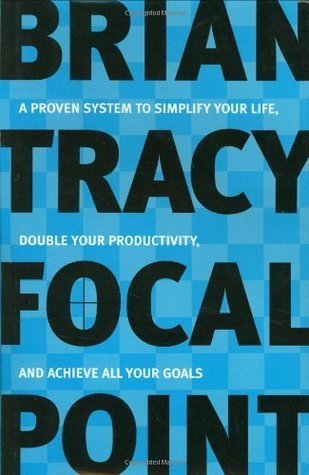
A practical guide to personal management furnishes a collection of the best ideas on how to develop focused goals and plans in seven key areas and addresses such questions as how to balance one's personal life and professional success, how to accelerate the accomplishment of goals, and how to gain control of one's time and one's life. Reprint.
Brian Tracy is Chairman and CEO of Brian Tracy International, a company specializing in the training and development of individuals and organizations.
He has consulted for more than 1,000 companies and addressed more than 5,000,000 people in 5,000 talks and seminars throughout the US, Canada and 55 other countries worldwide. As a Keynote speaker and seminar leader, he addresses more than 250,000 people each year.
Brian has studied, researched, written and spoken for 30 years in the fields of economics, history, business, philosophy and psychology. He is the top selling author of over 45 books that have been translated into dozens of languages.
He has written and produced more than 300 audio and video learning programs, including the worldwide, best-selling Psychology of Achievement, which has been translated into more than 20 languages.
He speaks to corporate and public audiences on the subjects of Personal and Professional Development, including the executives and staff of many of America's largest corporations. His exciting talks and seminars on Leadership, Selling, Self-Esteem, Goals, Strategy, Creativity and Success Psychology bring about immediate changes and long-term results.
Prior to founding his company, Brian Tracy International, Brian was the Chief Operating Officer of a $265 million dollar development company. He has had successful careers in sales and marketing, investments, real estate development and syndication, importation, distribution and management consulting. He has conducted high level consulting assignments with several billion-dollar plus corporations in strategic planning and organizational development.
He has traveled and worked in over 80 countries on six continents, and speaks four languages. Brian is happily married and has four children. He is active in community and national affairs, and is the President of three companies headquartered in San Diego, California.
His most popular training programs are centered around teaching authors how to write a book and helping public speakers create successful careers.
It starts out reading like a how to on using a Franklin Covey Planner, but then continues on. The whole book impressed me, but the following about 0.1% daily improvement really impressed me. Page 169 of Focal Point: If every day you do 0.1% better in performance and output, then over the course of a year you will have a 43% improvement. Of course, in real life 0.1% would be impossible to measure, it would be down in the noise, but I like the idea.
Brian Tracey recommends 1) getting up two hours earlier each day & spending the first hour reading in one’s specialty. Every day rewrite your goals. Every day do planning. Start the day by doing your most important task. Keep learning. At the end of the day ask yourself two questions:
What did I do right? What could I have done better?
---------- I am responsible Whatever you concentrate on grows.
Simplify; Concentrate on the 20% of the activities that produce 80% of the value. The grand SLAM formula. S stands for simplify L for Leverage your strengths & abilities, other people's knowledge; other people's energy; other people's energy; other people's money; other people's successes; other people's failure; other people's ideas; other people's contacts (or credibility) A for Accelerate M for multiply
Six Steps to doubling your Income and Doubling Your Time Off 1 Identify the few tasks that contribute the greatens value to your work 2 Identify the routine tasks and activities that consume so much time but contribute little or nothing to your long-term goals at work 3 Use the Grand Slam formula 4 Take at least one full day each week off work during which you spend time exclusively on your personal pursuits. (no employment related work) 5 Once you are comfortable... expand your time off to two days, a full weekend, every week. Schedule a three-day vacation every three months, and eventually every two months. 6 Start today to pay closer attention to the things you do.
"You are where you are and what you are because of yourself and nothing else. Nature is neutral. Nature doesn't care. IF you do what other successful people do, you will enjoy he same rewards and results as they do.. And if you don't, you won't." (p 58)
"Today, we call it the law of cause and effect. In biblical terms, it is the law of sowing and reaping. Sir Isaac Newton called it the law of action and reaction. This is the great law of Wester civilization. It underlies more than 2000 years of advances in science, medicine, technology, and business." (p59-60)
"You can be, have, or do anything you want in life if you simply find out how other people achieved it before you and then do the same thing yourself. ... if you do what other successful people do, you'll eventually get the same results they are getting. It is entirely up to you." (p 60)
So, Keith: What are other successful people doing?
As I continue reading in the book Focal Point, I am impressed that I should be doing these exercises on a regular basis. I am also impressed that these are not new things. These are the same exercises that I have had recommended to me before. Brian Tracy comments that when he got into sales he "searched out and applied every bit of information on sales methods and techniques that I could learn from other successful salespeople. And they worked. in no time at al, I was among the top salespeople in my organization." (p 61)
When I went into real estate development, I read more than twenty books on the subject, including... " (p 61)
Often when I explain this cause-and-effect principle, people dismiss it as being too simplistic to apply to their own situations, but the most powerful principles are almost always the simplest. That is why greater success and achievement are possible for almost everyone. (p 61)
"Thoughts are causes and conditions are effects. (p 61)
The key is asking the right questions.
————————————
Now, in 2021, 18 years after first reading it, I ask myself: Have I improved 0.1% per day? I have to say: 1. I can’t tell because human performance is highly variable from day to day. 2. I can’t tell because human performance is notoriously difficult to measure. 3. I don’t think I am 711 times more productive than I was 18 years ago. See the following table for the results of the equation: Result = 1.01^(365*Years)
Years 	 Result
1 		1.44
5		 6
10		 38
15		 238
18		 711
20		 1475
It’s a captivating concept, but real life has 1. A lot of bumps and turns that change our trajectory immensely. 2. Could we really measure it? 3. Perhaps it was the wrong goal in the first place. What really matters? (See Stephen R. Covey)
Mostly marketing for a professional coaching service and mediocre at best, the majority of this book is composed of passages poorly paraphrasing ideas from more well-known management gurus (e.g. Drucker, Covey, Christensen, etc.). Unfortunately, Tracy fails to communicate these ideas as compellingly as the people who first brought them to popular recognition. He also regularly fails to give them credit. In between, most of the page real estate is filled by bland, repetitive, self-help-style exhortations to "be your best self" and "identify the one thing that can improve your life today." Perhaps about 20% of the book will actually be informative to anyone who's made even a passing foray into the fields of time and personal management.
Not as good as his "How to Master Time" or "Eat Your Frog" books, but time spent with Brian Tracy is never, ever wasted. His 4 Re-engineering Principles (Simplify, Leverage, Accelerate, and Multiply) are quite helpful, and designed to help you maximize your actions at whatever point in the day you are.
The pandemic changed me. 2020 put me to the test and I came out a vastly different person than who I was on Jan 1st. Lockdown gave me time to sit quietly and stew with my inner demons (and boy these suckers can be nasty) which prompted me to sign up for not one, but TWO Tony Robbins 4 day seminars.
One of the main and most positive takeaways from my time drinking Mr. Robbins´ kool-aid, as my partner put it, was my new book a week habit. I have read over 70 books since the COVID outbreak began. Not bragging, just stating a fact. Ok, maybe bragging just a little.
About 70% of those books have been self development, self improvement, productivity books and the like. FOCAL Point by Brian Tracy is another one of those personal growth books. Anyone who has ever read more than 2 self improvement books knows that they ALL follow the same formula and give basically the same recommendations: 1. Write down your goals 2. Implement good habits, get rid of bad habits 3. Network 4. Manage your time 5. Wake up at the crack of dawn 6. Journal 7. Improve 0.10% each day 8. Compound interest is king 9. Save 10% of your income 10. Fitness and Nutrition are Key 11. Get 7-8 hours sleep 12. Give of yourself to society
Most ALL quote Viktor Frankl, Marcus Aurelius, Warren Buffet, Ray Dalio, etc.
FOCAL Point is no different, and then again it IS. I believe that it´s Mr. Tracy´s writing and delivery that matched my personal learning style because I reacted to the information in this book like it was the first time I ever heard any of it. I already “KNEW” of the importance of writing down your short, mid and long term goals, but now I UNDERSTAND WHY it is so important. I “KNEW” I had to improve the quality of time I spent with my family but now I know HOW to do it. I could go on and on with the AHA moments.
In writing this, I have come to the conclusion that if a person wants to improve, they have to constantly read the self help books, take the seminars, listen to the growth podcasts. The information must be heard repeatedly ad nauseam for it to penetrate and reprogram the brain and the way of thinking. This is why it doesn´t matter if the self help books all sound the same; they hit you in different ways because of where you are in your life at the moment you read them.
Like every self improvement book, I INSTANTLY want to share it with everybody and insist that they “HAVE TO READ THIS”. Nevertheless it all depends on each person´s personal journey. If you are new to the self growth path, then FOCAL Point is a good place to start.
Great book devoured over a short flight and utilizing Brian's accelerated learning / reading techniques. Focal point repeats a lot of the same of what Brian says in his other books and audits, but then again, the right stuff is worth repeating against and again and it's sinking in as it makes great sense and is very useable. Lots of tips on how to get you moving in the right direction and focusing on the things that matter.
In "Focal Point: Simplify Life, Double Productivity, Achieve Your Goals," Brian Tracy uses a powerful analogy from a nuclear power plant to illustrate the importance of focusing on the critical areas of your life. Just as the plant's efficiency was restored by pinpointing and addressing a specific problem, your success and happiness depend on identifying and concentrating on the key activities that yield the greatest benefits. This concept, referred to as the focal point principle, is central to achieving exceptional efficiency and success in a world filled with opportunities and competition.
Transforming your work and personal life involves applying a strategic focus on high-value tasks. Tracy shares the story of an insurance executive who, by following this approach, significantly improved his productivity and work-life balance. By concentrating on top clients and eliminating less productive activities, he increased his income and enjoyed more family time. The key takeaway is that your productivity and results matter more than the number of hours you work. Focusing on the top 20 percent of tasks that generate the most value and delegating or minimizing the rest can lead to higher productivity in less time.
To achieve double the income and double the time off, concentrate on activities that add the most value to your work. This principle aligns with the law of increasing returns, which suggests that focusing on high-value tasks improves efficiency and productivity. Implementing Tracy's grand SLAM formula – Simplification, Leveraging, Acceleration, and Multiplication – can help you achieve these goals. Simplify by eliminating low-value activities, leverage other people's resources, accelerate your efforts to meet needs promptly, and multiply your results through collaboration.
Clear objectives are crucial for increasing efficiency. Thomas Edison believed that unwavering focus on a single problem is essential for success. To ensure superior performance, define your objectives clearly, evaluate your approach, identify assumptions, and have backup plans. Clarity in your goals is vital, and using the ABCDE method can help prioritize tasks effectively. By focusing on key activities, avoiding distractions, and developing a sense of urgency, you can boost your productivity.
Simplifying your life can also lead to greater success. Tracy introduces the seven Rs of simplification: Rethink, Reevaluate, Reorganize, Restructure, Re-engineer, Reinvent, and Regain control. By identifying core values and aligning your actions with them, you can create a vision for your ideal future. Simplifying your workspace, decluttering your environment, and practicing daily solitude are practical steps to simplify your life and increase productivity.
In the modern dynamic work environment, professional success requires continuous adaptation and improvement. Clarifying your values and aligning your actions with them is essential for fulfillment and reduced stress. Developing a clear vision of your ideal business or career, setting specific goals, and regularly assessing progress can help you thrive. Specialization, upgrading skills, and cultivating productive habits are key to staying competitive and achieving success.
In terms of personal relationships, Tracy emphasizes the importance of prioritizing family and loved ones. Reflecting on your values regarding relationships and living consistently with them fosters harmony and contentment. Setting clear goals for your family life and engaging in activities that strengthen relationships are essential steps. Prioritizing relationships over work, managing time efficiently, and creating lasting memories contribute to a balanced and fulfilling life.
In conclusion, "Focal Point" by Brian Tracy provides valuable insights on achieving greater success and work-life balance by focusing on high-value activities and optimizing productivity. By identifying and prioritizing tasks that generate the most value, and applying the grand SLAM formula, you can accomplish more in less time and enjoy a more balanced personal life. Aligning your actions with your core values, nurturing personal relationships, and continuously improving your skills and efficiency are crucial for holistic success. Regular assessment and adjustment of your approach ensure continued growth and fulfillment in all areas of your life.
Another fantastic book by Bryan Tracy. Everyone seeking great achievement should read this.
Focal point Do more of good things Less of bad things Stop doing certain things altogether
Every man unlocked potential one particular channel
Key question 🙋♂️ Knowing what I know now would I have taken this up again today?
Double your income Double your time off
Double your value Double your income
Focus on highest value activities
Accept responsibility for your life You are self employed no matter what
Observing a behavior will improve it for the better. Identify behaviors biggest rewards in shortest period of time.
Better we become at little things to achieve more.
Good habits hard to develop but easy to live with. Bad habits easy to develop but hard to live with
Simplify your life. Zero based thinking Is there anything knowing what I now know that I would not get into? Activity, relationship, product.
Leverage 1. Other peoples knowledge. Books mags mentors coaches 2. Other peoples energy contractors employees 3. Other peoples money 4. Other peoples successes 5. Other peoples failures. Learn from. 6. Other peoples ideas. The more you read. 7. Other peoples contacts and credibility. Introductions.
1 full day off each week personal pursuits. Then full weekend. Take vacations to recharge
Do tasks of high value & Delay Delegate Discontinue other tasks
How can i go about achieving same result. Must be absolutely clear on desired outcome. Flexibility strongest quality for 21st century. Get ego out of way whats right is whats most important.
Measurable Achievable Time bound
Every 1 minute planning saves 10 min in execution!!! Powerful❤️
Abcde method A1 a2 usable too Consequences for task incompleteness
Task categories Important but not urgent tasks Urgent but not important tasks
When you work work all the time you work Work faster Work on higher value activities Work on thibgs your better at Bunch tasks together similar ones Work hour earlier and later
Singleminded one thing all day long Value yourself highly Value your life highly = Value your time highly Think in 10-15min blocks
Steps add complexity Reduce number of steps One person all steps Second person double check
Whats the reality - Jack Welch Tasks Do all at once Outsource to specialists Delegate Eliminate Simplify for speed
Reinvent yourself every year
Write down Values Vision Goals
If I only had 6 months to live how would I change my life?
Learn to say no to demand for activities not consistent with life goals.
Unclutter life desk closet Only one task on desk in front of you Create periods of silence in your life. No tv radio etc Practice solitude 30-60min daily.
If you do same thing successful people do you will eventually get same result they are getting.
Successful think of what they want of most of the time
Common quality of great leaders is they have vision. Think of how to make it real in present.
Vision of your ideal future Think about your future what you want where you will be Idealization imagine
We overestimate what we can do in 1 year but underestimate 5 yrs - peter drucker
Be excellent at what you do. A little better each day.
I want a fun fulfilling proud career. Where I lead and work with Great people I’m working with. Excellent friends and family relationships. Impactful fulfilling community work. A comfortable home, limitless life choices. Growing daily to be better in all areas of my life learning etc.
Ask how to achieve.
Work singleminded on one task until complete
Think of solutions To earn more add more value Invest 3% of income in your knowledge Take seminar even if far or out of area.
Most successful people read 2-3 hrs each day.
Move fast when opportunity presents itself
Who can my customer be if … Project forward 3-5 years and what skills of excellence do you need?
Why have i not achieved this goal already?
How would $10 million tax free change my life today?
Rate 1-10 1. Business career how to be at top of field 2. Family personal relationships balanced 3. Money investments financial independence 4. Health fitness well being 5. Personal growth development key knowledge skills 6. Social community legacy 7. Spiritual development inner peace. Realize full potential as human being.
5 careers completely different industries
Ideal future What is ideal job career look like? What will daily tasks look like? What type of people will I be working with? What will level of responsibility? What will colleagues and coworkers think and say when thinking talking about me?
Measure of standard of performance Annual earnings Increase in pay Promotions in last 2 years Percentile ranking in field
What core competencies do i need to develop
Area of excellence Concentration Segmentation what customers
Punctuality Good time management Discipline Task completion Thoughtfulness Single minded concentration
Act as if you already have habit you desire
What is one activity daily i can do? What high value activities?
Chp 8 Family mission stmt Are we properly insured? No speaking on Weekends
Save 50% of income increases Add more value and you will be rewarded more
Pay yourself 1st Ideal weight 7-8 hrs of sleep Mini vacations 2-3 days monthly if possible 2-3 weeks vacations per year 1 full day off from work each week
10 personal dev goals in 3-5 yrs Choose 1 make most difference Set schedule Books for that goal
What knowledge skills do i need to master to be best in my field?
1000% improvements by daily improvement
Successful people have a mindset of legacy and destiny in common. To create and leave something great behind.
Community involvement 10% of my time. My time is more valuable than my money.
Spiritual development Peace of mind how good you fee about myself and my world.
1. Satisfied and content inside 2. Follow intuition inner voice. Do and say things are exactly right for you. Follow inner voice guidance and direction. 3. The more we listen to our inner the louder the voice gets. Practice solitude. After 30 min ideas and insights will flow. 4. Follow the Golden rule 5. Live your life in harmony with personal values 6. Clarify spiritual vision 7. Solitude, church, less fortunate volunteering, 8. Trust the universe. Everything has a blessing. Every challenging has a valuable lesson from the universe. 9. Living in truth with yourself and everyone around you.
If everyone was like me in my world, country, family, business, etc how would it be?
Outer world reflects inner Forget past Everything hard before its easy. Only as free as your options Every problem has a lesson or opportunity. Learn as much as possible The only limit is the one you impose on yourself.
Anything bad enough and willing to persist long enough. Nothing can stop you.
This entire review has been hidden because of spoilers.
Wow this book was the perfect book to bring on beach vacation lol
Probably one of the best self-reflective books I've ever read.
Improve every aspect of your life, maybe some areas are strong while others are weak. YOLO so fix the weak aspects of your life. Financial, relationships, health, spiritual, mindful, etc.
Brian Tracy asks specific thought provoking questions to get you on track to where you want to be headed and what you gotta do to get there.
I got a lot of key take aways to improve my life from reading this book. Definitely a great book to read every few years.
WIP - Need to have a think about this going into FY25
Also - “No success in public life can compensate for failure in the home” (Your happiness depends on the relationships you build. Success isn’t solely about professional achievements but also about the quality of your personal life and relationships.)
Notes: - By focusing on the right activity at the right time, you can achieve exceptional efficiency and success. - To double your income and double your time off, recognize that your productivity and results matter more than the number of hours you work. - when you focus on high-value activities your efficiency improves - Implementing what the author calls the grand slam formula will also help you achieve these goals. The formula consists of Simplification, Leveraging, Acceleration, and Multiplication, or SLAM for short. Simplify by eliminating low-value activities. Leverage other people’s knowledge, energy, money, successes, failures, ideas, and contacts to boost your effectiveness. Accelerate by acting quickly to meet the needs of others. And, Multiply your efforts by collaborating with complementary skilled individuals to achieve greater outcomes than you could alone. - First, define your objective clearly to set a solid foundation. Next, evaluate whether your approach is the best possible method, remaining open to better alternatives. Then, identify any assumptions you’re making about the market, people’s actions, or future events. Consider the implications if these assumptions prove incorrect, and finally, think about alternative strategies if your key assumptions are wrong. Being prepared with backup plans can save you from setbacks. - To help you in your daily tasks, use the ABCDE method. Classify your tasks by importance: A tasks are crucial and have significant consequences, so complete these first. B tasks are important but less critical than A tasks, so only work on these after all A tasks are done. C tasks are nice to do but have no significant impact, and should be focused on only after A and B tasks are completed. D tasks should be delegated to others to free up your time, while E tasks can be eliminated as they have no real impact. - Start by clearing your workspace of clutter, keeping only one task in front of you at a time. Dispose of outdated or unnecessary reading materials that no longer hold value. Embrace periods of silence by leaving off radios and televisions, allowing your mind to relax. Declutter your car, closets, and garage, getting rid of anything unnecessary. Practice daily solitude, giving yourself time to reflect and relax. Finally, take immediate action to simplify your life, starting with small, manageable steps. - (US Stat) studies show that the average modern worker will have 14 full-time jobs and five different careers over their lifetime
Needs more thinking: - Rethink to evaluate if there’s a better way to approach your tasks whenever you feel overwhelmed. Then Reevaluate your situation regularly with new information, focusing on current realities instead of past assumptions. Next, Reorganize your workspace, schedule, and priorities to increase efficiency. Fourth, Restructure to focus on your high-value activities and eliminate those that don’t contribute significantly. This way, you channel more of your time and resources into the top activities that generate the most significant results. - Re-engineer your work to consolidate tasks, delegate, and eliminate unnecessary steps, always looking for newer, better methods to accomplish your goals more efficiently. And sixth, Reinvent yourself periodically to ensure you stay adaptable in the face of change. Think about your values and vision. Set new goals that align with your current circumstances and aspirations. And finally, Regain control by setting new goals and taking charge of your time and decisions, ensuring they align with your values. - Next, develop a clear vision of your ideal business five years from now. Imagine your business thriving, with clear goals and a mission that reflects your values. Write down specific, measurable objectives and create a plan to achieve them. Regularly assess your progress with performance benchmarks. Focus on specialization, setting yourself apart with high-quality work, and identifying key customer segments to serve with excellence. Continually upgrade your knowledge and skills to stay competitive, and cultivate habits that enhance productivity and effectiveness, such as punctuality and disciplined time management.
Fantastic! I was called-out on so many bad habits as I went through this book. The 80/20 rule is explained in fantastic detail. I honestly feel that if more marriages used these principals to prioritize and make lists of most important to less important and act on it with precision, there'd be a lot less divorce or marital contention in the world. I realize this book was not meant for 'marriage counseling' but the topics covered therein are the very issues that cause frustration in my own marital relationship. I highly recommend this book for anyone wanting to increase productivity, to excel in any area, to reduce waste and eliminate moments of slothfulness... and maybe even to save a marriage. ;)
“achieving greater success and work-life balance involves focusing on high-value activities and optimizing your productivity. By identifying and prioritizing the tasks that generate the most value and minimizing or delegating the rest, you can accomplish more in less time. Continuously improving your skills and efficiency further enhances your productivity. Applying the Grand Slam formula—simplification, leveraging, acceleration, and multiplication—leads to increased effectiveness.”
This entire review has been hidden because of spoilers.
جميل جدا ، أكثر من رائع .. بسّط لي أمورا كثيرة وقرأته منذ أكثر من سنة ومازلت إلى الآن أنعم بفائده وأستحضر معلوماته القيمة المفيدة. Very very good book, more than good .. Actually GREAT book. Makes life and issues simpler and easier , I read it more than 1 year ago , and i still can revise every single word from it and still use the Magic from it. i recommend it to everybody.
Es un MUST en toda persona que busque su desarrollo personal, profesional, familiar y espiritual. Sin duda un libro que vale la pena leer varias veces. Aprendí una variedad de tacticas para crear el futuro que quiero pero sobretodo comprender que todo depende y comienza cuando nos hacemos RESPONSABLES de quien somos hoy y de en quien vamos a convertirnos.
Great book. To be honest, if you're into self-development and have read a few books in the genre, the ideas presented aren't groundbreaking or unheard of. But I really liked how these fundamental and foundational ideas are presented in such a digestible and simple way.
There’s some really great insights in this book. I highlighted a lot and made a lot of mental notes of things to change/apply to my life. Of course, since it’s a self-help book there are some humanistic ideas to weed through and I was not a fan of the chapter on spiritual excellence (because it really wasn’t coming from a Christian perspective at all). But it’s a secular book so that’s to be expected.
Here are some key takeaways from "Focal Point" by Brian Tracy :
1. Focus on What Matters Most: Instead of trying to do everything, figure out the few things that make the biggest impact in your life or work, and put your energy there. It’s about doing more of what really counts.
2. Use the 80/20 Rule: Remember that 80% of your results come from 20% of your efforts. Identify those high-impact tasks and prioritize them, while cutting back on stuff that doesn’t move the needle.
3. Set Clear Priorities: Don’t just go after what feels urgent—make sure you're spending time on tasks that actually get you closer to your long-term goals.
4. Keep It Simple: Life gets easier when you cut out unnecessary tasks and distractions. Focus on what truly matters, and let go of the rest.
5. Always Keep Learning: Make self-improvement a habit. When you keep getting better, you’ll be able to reach your goals faster and handle challenges more effectively.
6. Play to Your Strengths: Do more of what you’re good at and enjoy. It’s easier to excel when you focus on your natural talents.
7. Master Your Time: Plan your day around your most important tasks and avoid time-wasting activities. Time management is key to doubling your productivity.
8. Regular Check-Ins: Take time every now and then to review your goals and progress. Adjust your plans if needed to stay on track with what’s most important.
The book is all about simplifying, focusing, and constantly improving to get the best results without burning out.
Aunque ya he leído varios libros de Brian Tracy este me atrapó la atención y me llamó a la acción desde el principio. Tiene genialidad, experiencia y un lenguaje persuasivo que encandila y hace que motive a actuar. Su propia experiencia personal de desarrollo acaba siendo uno de los mejores motivadores, en una versión estructurada y estratégica para lograr metas y un valor personal que es lo más importante en todo el desarrollo de una meta.
Brian Tracy wins again! I was family with a lot of what was in this book, mainly because of watching/following him for years. It was nice to find a place where much of his greatness and what I need is in one place.
I may have to read this book every December/January as it is very powerful in focus on what I want to become, regardless of where I have been.
Nothing in this book is novel. In fact, from all the books I've read on the topic, all the principles existed for a very long time. However, Brian Tracy does a great job telling you exactly what to do, step by step, instead of just presenting the theories and leaving the rest to the reader.
Muy buen libro, al terminar el libro uno puede reflexionar y seleccionar los puntos en los que uno pierde el tiempo con más facilidad. Ayuda a eliminar dichos espacios y a cómo mejorar de forma práctica el uso del tiempo y los recursos.
الكتاب مفيد كغالبية كتب براين تريسي.. الكتاب يركز علي أن تهتم بالامور المهمه ذات القيمة العالية وتعطى لها الاولوية لانها ستحقق 80% من نجاحاتك.. الكتاب به العديد من المواضيع المهمة باسلوب سهل وسلس ونصائح مفيده.
(in southern slang voice) this one's a 'skimmer'...took me some right purdy notes though...reckon you might find a fancier mr. brian tracy title elsewhere
First of all, I'm listening to the audiobook which sounds like it was recorded on an iPhone in a bathroom.
The actual content is rough. The author claims that by truly focusing on your tasks that you will be able to double your income and double your time off. That is a pretty bold statement to make to people that are truly not in control of that. I do believe there is some control that I have that can make me an attractive employee anywhere, but I can't just go up to my boss and say that because I'm super focused I deserve to have 6 weeks of PTO instead of 3.
Another thing that bothers me is the idea of avoiding people to get work done. I had a similar beef with the 4-hour Work Week book. Basically treat your peers like they don't exist or aren't worth your time and you will get back hours of time each week to be more productive. That may actually be true, but I don't know many people that want to live that way nor do I want to know them.
The last thing about this book I will say is that I feel like the author throws out random percentages to make his theories sound good. Since I have been listening to the audiobook I don't know if he is including references to these claims, but even still they seem to come out of left field. It's things like, "Going to work 1 hour earlier and staying 1 hour later will increase your productivity by 80%." And then he moves on like it's nothing. Meantime I'm wondering how he pulled that number out of his hat.
Achieving greater success and work-life balance involves focusing on high-value activities and optimizing your productivity. By identifying and prioritizing the tasks that generate the most value and minimizing or delegating the rest, you can accomplish more in less time. Continuously improving your skills and efficiency further enhances your productivity. Applying the Grand Slam formula—simplification, leveraging, acceleration, and multiplication—leads to increased effectiveness. Simplify your workload by eliminating low-value activities, leverage others' knowledge and resources, accelerate efforts to meet needs promptly, and multiply results through collaboration. These principles not only improve your professional productivity but also contribute to a more balanced and fulfilling personal life by allowing more time for family and personal interests. Remember to align your actions with your core values and nurture personal relationships. Success isn't solely about professional achievements but also about the quality of your personal life and relationships. Managing your time effectively and prioritizing personal relationships over work commitments will lead to more holistic and satisfying success. Regularly assess your progress and make necessary adjustments to ensure continued growth and fulfillment in all areas of your life.
Very early on in my career a great mentor of mine preached from this book frequently. Until recently, I never bothered to read it. I’m glad I did as I found a number of interesting approaches and techniques that I will explore in the coming weeks and months. My only complaint with this book is that Mr. Tracy seems to focus too much on financial rewards and compensation.
From the perspective of a millennial, this isn’t a main incentive. Sure, we want to be able to support our families, advance our careers, and have comfortable lives just like any prior generation. However, we are not interested in making money simply for the sake of making money. The frequent notes to doubling one’s income are interesting, but not terribly motivating.
This single complaint should not serve as a detractor for any fellow millennials interested in the book. More to perhaps add a note of caution that outdated forms of motivation seem emphasized over others. To Mr. Tracy’s credit he does focus to some degree on intrinsic motivation such as ones impact to society.
This book presents a method to achieve all of your personal and professional goals.
In business, it has been said that 80 percent of your revenue comes from 20 percent of your customers (or daily work tasks). Find your 20 percent and concentrate on them. Delegate to others, outsource or eliminate everything else. Everyone has work tasks that are urgent and important. Others are not urgent and not important. There are a lot of tasks that are somewhere in the middle. Concentrate on the urgent and important tasks. Eliminate the not urgent and not important tasks. Delegate or outsource all those tasks that are in the middle.
Imagine your perfect life, whether it involves your career, family, health or financial situation. How do you get from here to there? You are the only one who can change your life. You need to take a deep breath, focus on "it," whatever it is, and resolve to do at least one thing to get you closer to it, every day.
Even if you don't reach the level of "perfect," even if your situation improves by only a few percent, this book will have done its job. It is very easy to understand, and is highly recommended for people from all walks of life.