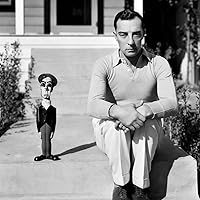
'If you're the sort of guy who raids the refrigerators of silent kitchens at three o'clock in the morning, you can only write accordingly.
That's who I am.'
Hear the Wind Sing and Pinball, 1973 are Haruki Murakami's earliest novels. They follow the fortunes of the narrator and his friend, known only by his nickname, the Rat. In Hear the Wind Sing the narrator is home from college on his summer break. He spends his time drinking beer and smoking in J's Bar with the Rat, listening to the radio, thinking about writing and the women he has slept with, and pursuing a relationship with a girl with nine fingers.
Three years later, in Pinball, 1973, he has moved to Tokyo to work as a translator and live with indistinguishable twin girls, but the Rat has remained behind, despite his efforts to leave both the town and his girlfriend. The narrator finds himself haunted by memories of his own doomed relationship but also, more bizarrely, by his short-lived obsession with playing pinball in J's Bar. This sends him on a quest to find the exact model of pinball machine he had enjoyed playing years the three-flipper Spaceship.
These stories put together, create what I would describe as a meditation on time. Chock full of Murakami’s trademark wacky, individualistic characters and made smooth by spurts of eloquent and wistful prose. — HEAR THE WIND SING-
Unsurprisingly, Murakami never changes, even his first novella is so undoubtedly recognisable as his particular writing style. This was a beautiful, yet overwhelmingly simple, story. Panoramic and fragmentary, moving through characters, stories and perspectives; masterfully experimental.
I wouldn’t say this was as great as some of his later work like ‘Kafka on the shore’ and ‘The wind-up-bird chronicle.” Of all his work (that i have read), I would say it most resembles ‘after dark’. It is carefree and moves seamlessly through memories, past and present whilst taking place in a fleeting period of time.
God, I just love Murakami. I genuinely believe there’s nothing in his entire bibliography that could dissapoint me. There’s just such a magical, calming feeling I get whilst reading his writing.
Here were some of my favourite quotes from this section-
“if you’re the sort of guy who raids the refrigerators of silent kitchens at three o’clock in the morning, you can only write accordingly. That’s who I am.”
“all things pass. none of us can manage to hold on to anything. In that way we live our lives.”
—
PINBALL, 1973
The character of the rat stood out to me in this half, so unique and devastating and human. His longing for the past and search for fulfilment really resonated with me.
I definitely preferred the first half- this novel was a lot darker and explored loneliness and dislocation which I love, but I think the beautiful thing about Murakami writing is his ability to tie the melancholic and the ethereal into one, and I felt that was less present in Pinball.
These books I do think should be read together, because they tie in so well, pinball feels like a slightly less developed second half/continuation of wind. Nevertheless, I loved this and I love Murakami.
Some memorable prose for me-
“But everything had passed with the flow of time. At an almost unbelievable pace. What had once been a violent, panting flood of emotion had suddenly withdrawn, leaving behind a heap of what felt like meaningless old dreams.”
“Face the music, he told himself. You’re the one who burned the bridges. You’re the one who plastered the walls and sealed yourself inside right?”
“Like flies suspended in resin, the machines were frozen in time. Seventy-eight deaths, seventy-eight silences.”
“When you stripped something down layer by layer, what remained in the end?…. Pride?…..It seemed that no one could live without pride. If that was alone had left, though, it was too dark. Way too dark.”
From now on, I vowed, when my horse was exhausted, my sword broken, and my armor rusty, I would lay myself down in a meadow of green foxtail and listen to the wind. I would follow the path I should follow wherever it took me, whether that be the bottom of a reservoir or a chicken plant's refrigerated warehouse.
Man, Murakami is something special. Just when you think you've got a handle on his weird, quirky universe, he throws you for a loop and leaves you pondering life. So, I just finished this book and its classic Murakami: surreal, deep, and loaded with those bizarre moments that make you question everything.
These are two novellas—"Hear the Wind Sing" and "Pinball, 1973"—that set the stage for Murakami's later, more famous works. They're like the warm-up act before the main show but still packed with enough punch to leave you reeling.
The first one, "Hear the Wind Sing," is all about this guy who's drifting through life in a haze of booze and jazz, trying to make sense of his past and his place in the world. There's this quote that hits hard: "There’s no such thing as perfect writing, just like there’s no such thing as perfect despair." It’s like Murakami’s way of saying life’s messy, and that’s okay.
Then there's "Pinball, 1973." It's weird, nostalgic, and somehow haunting. The protagonist is obsessed with pinball machines, of all things, and it becomes this crazy metaphor for his search for meaning. This line stuck with me: "Memories warm you up from the inside. But they also tear you apart." It’s Murakami at his best—simple words that cut deep.
The human interactions in these stories are raw and real. The characters are flawed, lost, and just trying to get by, like the rest of us. It's that authenticity that hooks you. You feel their loneliness, their confusion, and their fleeting moments of clarity.
So yeah, I’m giving this one a solid 4 stars. It’s not his best work, but it’s a damn good glimpse into the mind of a literary genius in the making
Split in to two different ‘books’ Wind / Pinball. Wind follows two young boys who spend the majority of their time drinking and exaggerating about different women they know, Pinball follows the same two boys into their mid-ish 20’s. One as a semi successful Translator in Tokyo and the other, still stuck in the half-drunken haze of lazing around in the same town they grew up in. A big feature of Murakami’s writing is philosophising over the depressiveness of modern society by contrasting two characters against one another, characters whose likeness first structures the plot and eventually becomes too weak to sustain it. In Wind / Pinball this trope is executed very well.
The misogynistic flare to Murakami’s writing receive a lot of criticism, part of it is probably him just being a misogynist , part of that is because he is so talented at positioning himself inside the mindset of his characters ( who are often young men) . The first 100 pages showcases this well, It’s like experiencing an author really in his element, showing off seamlessly through prose, the narration is just managed really really well. ‘Pinball’ is just excellent too. Murakami’s reflections on the depressing mundanity of everyday life (a topic he never shys away from) are beautifully presented here.
I read Wild Sheep Chase before these two and im glad I did. This book gives more of a backstory, but feels like less of an adventure with less "magical" properties.
I liked learning the backstory of our protagonist, The Rat and J, but I don't think murakami's writing/ storytelling was as developed yet. Still a good read which I enjoyed.
This entire review has been hidden because of spoilers.
Loved Hear the Wind Sing. Pinball, 1973 less so though. Was kinda more of the same but less inspired.
Both stories are aimless but the first felt more poignant and the narrator’s dynamic with Rat was enjoyable. Whereas in Pinball’s separated storylines, I didn’t really feel like either of them developed that much. That said, there isn’t much development in Wind but it’s all rather beautiful, funny and poignant that it didn’t really matter to me (also it’s short).
Pinball lacks a strong relationship to latch onto. I love loneliness but everything’s maybe a little bit too isolated to the point that I felt a little isolated too. I couldn’t really attach myself to anything.