The Natural Genesis is based on Massey's study of hieroglyphic inscriptions, bone-caves, and cuneiform tablets of ancient Egypt. The findings from Massey's years of dedicated research are carefully documented here and encompass such broad areas as religion and the occult, etomology, astrology, and mythology, as well as exploring such fascinating topics as Christian religious symbolism and the origins of verbal communication. As Massey unravels the mysteries of our ancient origins he moves us closer to understanding our contemporary existence.
Gerald Massey was an English poet and writer on Spiritualism and Ancient Egypt. Although now largely overlooked, during the mid-Victorian era Massey was considered a significant poet, both in Britain, where he achieved the distinction of being awarded a civil list pension, and in North America, where he was published widely in both books and periodicals. He wrote poetry which was favorably noticed by established poets such as Browning and Tennyson. He was born in abject poverty in England and earned a living by working in a factory from the age of eight. He was almost entirely self-taught; yet, he was able to write and lecture about several subjects with tremendous erudition and authority. Despite his lack of formal education, Massey could read several languages. In his later years he published four large volumes in which he tried to trace the origin of language, symbols, myths, and religions. The work was reminiscent of Godfrey Higgins (1772-1833). His final product was not well received during his lifetime, the idea of Africa as the birthplace of mankind being quite unacceptable in Victorian England. Thus A Book of the Beginnings (1881) and his other texts were largely ignored or ridiculed until later archaeological discoveries provided more solid evidence in support of Massey's themes.
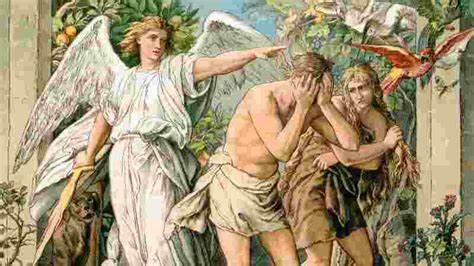
"The “Fall in Heaven” was an Egyptian mythos previous to its being turned into a Hebrew history of man in the garden of earth."
"It is with mythology as with language. In vain we look for the lost likeness of language simply in the structure of a thousand languages. The genius of languages has been at work for countless years to diversify and divaricate in structure."
"The symbol is the true Tower of Babel and point of dispersion in language. The symbolic extends beyond the written or the spoken language of any people now extant."
This is massive. (Not that I agree with all of Massey's views)
Regardless of the stylistic and logical problems, the unrelenting torrent of fact beating upon facts, this is still one of the most rewarding books I have ever read.