

What do you think?
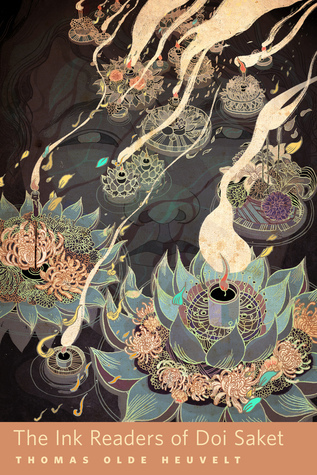
The Ink Readers of Doi Saket
People send their dreams and wishes floating down the Mae Ping River with the hope that those dreams will be captured, read and come true. It is a surprise what some wish for and why. One can never know what's inside someone's heart - what they really truly want, and those dreams sometimes reveal our true selves.At the Publisher's request, this title is being sold without Digital Rights Management Software (DRM) applied.
37 pages, Kindle Edition
First published April 24, 2013
About the author
Thomas Olde Heuvelt
53 books3,228 followersThomas Olde Heuvelt (1983) is the international bestselling author of HEX. The much-praised novel was published in over twenty-five countries around the world and is currently in development for TV by Gary Dauberman. Olde Heuvelt, whose last name in Dutch dialect means “Old Hill,” was the first ever translated author to win a Hugo Award for his short story "The Day the World Turned Upside Down".
His new novel ECHO will be out with Nightfire Books in the US and Hodder & Stoughton on February 8, 2022. International publication of his novel ORACLE, which topped all the bestseller charts in The Netherlands in March '21, will follow soon thereafter.
Thomas lives in The Netherlands and the south of France and is an avid mountaineer.
Praise for HEX:
“This is totally, brilliantly original.” —Stephen King
“Creepy and gripping and original.” ―George R.R. Martin
“Spielbergian in the way Olde Heuvelt shows supernatural goings-on in the midst of everyday life... It’s a fabulous, unforgettable conceit and Olde Heuvelt makes the most of it.” ―The Guardian
His new novel ECHO will be out with Nightfire Books in the US and Hodder & Stoughton on February 8, 2022. International publication of his novel ORACLE, which topped all the bestseller charts in The Netherlands in March '21, will follow soon thereafter.
Thomas lives in The Netherlands and the south of France and is an avid mountaineer.
Praise for HEX:
“This is totally, brilliantly original.” —Stephen King
“Creepy and gripping and original.” ―George R.R. Martin
“Spielbergian in the way Olde Heuvelt shows supernatural goings-on in the midst of everyday life... It’s a fabulous, unforgettable conceit and Olde Heuvelt makes the most of it.” ―The Guardian
Ratings & Reviews
Friends & Following
Create a free account to discover what your friends think of this book!
Community Reviews
Displaying 1 - 30 of 76 reviews

April 7, 2021
In his frenzy, Uan had forgotten all about the general consensus around the ancient fertility symbol. The adulterous rice peeler Somchai had once cheated on her husband with three neighbors and a shopkeeper from a nearby village after she had been spotted on the phallic altar, touching herself and wrapped in nothing but silk ribbons. As a penalty, Somchai was buried waist deep in the rice field so that her excess fertility could seep into the crops, and it was decided that the bewitched phallus was never to be touched again, and was only to be greeted by passersby with a brief nod of the head, something that was ardently copied by the villagers and which consequently led to an abundance of oral sex. (There were rumors that the stone was not in fact bewitched at all, but that lustful Somchai suffered from some type of obsessive exhibitionism. Nonsense, of course.)
LGM!
this story was okay, which is pretty much how i felt about this author’s other free tor short (You Know How the Story Goes), and his novel (Hex), which got an extra star from me for the sheer whackadooishness of its ending.
this one is set, inexplicably, in thailand, and is a strange tonal mishmash of melancholy, humor, and eroticism. at its core, there lurks a really great story about wishes, manufactured miracles and coincidence, but the tongue-in-cheek humor of it watered down its emotional impact and made it read more silly than affecting.
it’s also frontloaded with NINE footnotes translating/explaining the meaning of various characters’ names, a distraction which is abandoned a few paragraphs in, making the reader’s entry into the story a very ragged journey instead of a hook to the mouth.
i’m not sure whether to award or deduct points to the story for forever searing into my brain the image of a dragonfly ejaculating, but either way, it’s now a part of me.


read it for yourself here:
https://www.tor.com/2013/04/24/the-in...
 come to my blog!
July 4, 2014
A strange little story, whimsical and tragic and comic all at once. Doi Saket is a tiny Thai village that benefits from the annual Loi Krathong festival, in which people from Chiang Mai and all over northern Thailand send wishes downriver in the form of little floating lanterns. The villagers of Doi Saket have begun collecting the money and other gifts included with these lanterns, believing that they are granting the wishes written therein.
It turns out that the "wish-granting" is a conspiracy among some corrupt monks, but that's not the point of the story. Rather, it's more like a "butterfly effect" story - one thing causes another thing to happen which triggers another series of events, and after being treated to the wishes and aspirations of everyone mentioned by name, we see karma come due for everyone in some fashion or another.
Is it fantasy? Well, some things happen that could hardly be explained by anything short of supernatural intervention, and in fact, a goddess does briefly appear.
The plot winds and meanders, like the river it is centered on. The images and sounds of the Thai village are easily imagined; the people are practical, vulgar, high-minded or depressed, kind or venial, like any assortment of villagers, all wishing for something, and the punchline is how those wishes are granted.
It turns out that the "wish-granting" is a conspiracy among some corrupt monks, but that's not the point of the story. Rather, it's more like a "butterfly effect" story - one thing causes another thing to happen which triggers another series of events, and after being treated to the wishes and aspirations of everyone mentioned by name, we see karma come due for everyone in some fashion or another.
Is it fantasy? Well, some things happen that could hardly be explained by anything short of supernatural intervention, and in fact, a goddess does briefly appear.
The plot winds and meanders, like the river it is centered on. The images and sounds of the Thai village are easily imagined; the people are practical, vulgar, high-minded or depressed, kind or venial, like any assortment of villagers, all wishing for something, and the punchline is how those wishes are granted.

December 15, 2016
#11 short story read in personal short story challenge. Found on tor.com.
Weird, kind of funny, kind of sad, odd little story that takes place in a Thai village.
The cover art is beautiful (same artist who created the image for Ann Aguirre's Foundation, found on the same website.)
Weird, kind of funny, kind of sad, odd little story that takes place in a Thai village.
The cover art is beautiful (same artist who created the image for Ann Aguirre's Foundation, found on the same website.)

April 8, 2014
An irreverent tale of a festival of wishes; and what may or may not happen to make those wishes come true. It had some good elements, but overall I didn't find the Thai setting convincing, and the tone felt like a mainstream writer trying his hand at a fantastic tale. (From his bio, it doesn't seem that he does write mainstream fiction; but that was my impression.) Mostly, I think his particular brand of satirical humor just isn't for me - it probably will be more to others' taste.
Edit: 12/11/14
Re-read for my book club, and I liked it better on a second reading. (maybe I was just more in the mood...) The author is clearly inspired by a certain style of Asian folk tale (it reminded me of some traditional Japanese stories I've read), but has updated the format for a modern age, pointing out both the venal foibles and the potential transcendence of humanity.
Edit: 12/11/14
Re-read for my book club, and I liked it better on a second reading. (maybe I was just more in the mood...) The author is clearly inspired by a certain style of Asian folk tale (it reminded me of some traditional Japanese stories I've read), but has updated the format for a modern age, pointing out both the venal foibles and the potential transcendence of humanity.

March 23, 2017
This a rather beautiful little fable. It is meandering, it is a wish, it is a butterfly. There is beauty here.

August 8, 2022
Okaaayy... that was weird. Good weird or bad weird? I can't decide. It's alright for a freebie found on the Tor website though. Maybe it would have been better if it was set in Thailand and written by a Thai author.

July 26, 2014
No. Just... no. This barely feels like a story at all, just bits and pieces spliced together with unnecessarily frequent and repetitive phrases and adjectives that feel - as a writer myself, albeit not one who does it to earn money - very much like the writer's trying to eke out enough words to reach a minimum word count. It feels clumsy, awkward and forced.
I also have to wonder why the author chose to set the story in Thai culture when he himself is apparently Dutch. That, too, feels like something of an excuse to use a certain kind of style. The story is more convoluted than it needs to be for its length, and feels overly contrived.
On top of this, there seem to be unnecessarily sexist and (somewhat less frequently) ableist undertones sprinkled throughout. I'm not sure if the author is trying to portray that as being part of the culture he attempts to write here, but either way I found those references quite uncomfortable.
1 star - maybe 1.5, but rounded down to 1 anyway. I will definitely not be voting for this one in its Hugo nomination category, and I have to wonder how it got in at all... sorry, fans!
I also have to wonder why the author chose to set the story in Thai culture when he himself is apparently Dutch. That, too, feels like something of an excuse to use a certain kind of style. The story is more convoluted than it needs to be for its length, and feels overly contrived.
On top of this, there seem to be unnecessarily sexist and (somewhat less frequently) ableist undertones sprinkled throughout. I'm not sure if the author is trying to portray that as being part of the culture he attempts to write here, but either way I found those references quite uncomfortable.
1 star - maybe 1.5, but rounded down to 1 anyway. I will definitely not be voting for this one in its Hugo nomination category, and I have to wonder how it got in at all... sorry, fans!

June 28, 2014
The Ink Readers of Doi Saket is a fable-like story about wishes that takes place in Thailand. This is typically a story that would mesh very well with me, especially given the high quality of the writing, but in all honesty, I had a hard time connecting with it. Perhaps this is due to the fact that the story seems to wander around a lot in the beginning, before getting more focused in the end. Or, it could have been that I found all of the footnotes distracting. Either way, I just didn't click with this one, making it my least favorite of the short stories nominated for the Hugo Awards this year. It's well written, but not for me (Hugo Reading)

September 2, 2018
This was a pretty good short story about a wish-granting festival where the villagers go to retreive them on the riverbank and a young boy who stands his ground against a angry tiger. Want to read more? Read on and find out for yourself.
You can read this short story here at this website now: https://www.tor.com/2013/04/24/the-in...
You can read this short story here at this website now: https://www.tor.com/2013/04/24/the-in...

April 11, 2017
A charming and beautiful short about wishes, similar in tone to the films of Jeunet/Caro. Whimsical and, at points, melancholy, this portrait of a community focused on granting wishes and the strange ways this happens will probably leave you with a smile.

December 28, 2015
I am a Thai reader accustomed to Northern norms and so much intrigued by this short story because it's about Northern Thai folklore set place in a small village on Doi Saket, Chiang Mai written by a completely foreign writer.
The story happened on Loi Kra Tong festival days where people in the faraway village, called themselves 'the Ink Readers' (what the fuck does it mean?) had purposes to collect Kratongs floating in the downriver, and looked into the wishes granted by people, or in the short story, literally "every one" in Chiang Mai in order to achieve what has been written in a small paper folded in the Lotus leaves.
After that, the story is spiraling down into the deeper details in granting all wishes which actually results in the corrupted mind of the soul, especially the monks. In the whole picture, this story is alluded to the false(?) Northern Thai mythology. I never heard that Pra Mae Kong Ka whose originality is Hinduism, not Buddhism, gets drown by humans. And to redeem their guilt, people have to float Kra Tong on the day she dies. More over, it contains Exoticism to enchant the elements of supernatural in the exotic place (but PLEASE, Doi Saket is a tourist attraction! there's no such a mystery for anything about rural people living in the mountain making the sacred ritual and called themselves anything but the Ink Reader) and to make the story vivid and alienate the reader from the actual event of the real people.
Two stars for
1) A well-written prose. I appreciate the writer who masters English even it's not their first language.
2) The religion criticism. There's a scene when a boy asks a monk the question about their traditional ritual, with the third person narrative, the monk is consumed by greed. He usually explains things in the religious view just to keep everything "flow and simple", like the river. He thinks no one literally questions any action and consequence regards to their belief. Besides what they are told to do, nothing matters. The writer at least knows something about the subversion in Thai culture.
The story happened on Loi Kra Tong festival days where people in the faraway village, called themselves 'the Ink Readers' (what the fuck does it mean?) had purposes to collect Kratongs floating in the downriver, and looked into the wishes granted by people, or in the short story, literally "every one" in Chiang Mai in order to achieve what has been written in a small paper folded in the Lotus leaves.
After that, the story is spiraling down into the deeper details in granting all wishes which actually results in the corrupted mind of the soul, especially the monks. In the whole picture, this story is alluded to the false(?) Northern Thai mythology. I never heard that Pra Mae Kong Ka whose originality is Hinduism, not Buddhism, gets drown by humans. And to redeem their guilt, people have to float Kra Tong on the day she dies. More over, it contains Exoticism to enchant the elements of supernatural in the exotic place (but PLEASE, Doi Saket is a tourist attraction! there's no such a mystery for anything about rural people living in the mountain making the sacred ritual and called themselves anything but the Ink Reader) and to make the story vivid and alienate the reader from the actual event of the real people.
Two stars for
1) A well-written prose. I appreciate the writer who masters English even it's not their first language.
2) The religion criticism. There's a scene when a boy asks a monk the question about their traditional ritual, with the third person narrative, the monk is consumed by greed. He usually explains things in the religious view just to keep everything "flow and simple", like the river. He thinks no one literally questions any action and consequence regards to their belief. Besides what they are told to do, nothing matters. The writer at least knows something about the subversion in Thai culture.

April 23, 2015
This one was lost on me.

February 16, 2017
Story was Ok, a bit pieced-together feeling like some shorts tend to be, but it lacked that extra something that usually grabs you in these. Liked the cover art more than the story.
November 7, 2023
This short story of how wishes can be read and come to fruition, also aligns the greed and purity of those that that are to be blessed with this gift and the ultimate chain of events when their paths cross.

October 12, 2018
A cute short story about wishes. They are granted in a wave of accidents and flukes and coincidence and it all starts with death.

November 27, 2025
When your prayers come true, how much better will your life become?
A story about faith, belief and misplaced trust.
A story about faith, belief and misplaced trust.

February 20, 2017
I wanted to like this, it had potential but I couldn't get past the way it was written. The prose is pretty, but it's non-linear...where is the pretty prose going?

September 9, 2014
So, this story is something different. And, for some reason, it's a Hugo nominee, too.
Near the end of the Mae Ping River in Thailand, a town plays a special role in an annual ritual that runs river long. Villagers will put their wishes in floating down river in paper boats and hope that they will be answered. In Doi Saket, the villagers will be led to read those wishes.
Told scattered and piece meal in the voice of an omniscient, native story teller, the disparate pieces come together to create a coherent whole. The reader can expect a twist, some loss, but also, a happy ending. The good guy is redeemed, and the bad guy gets it.
But still, something different is here, and I think it's in the voice. Thomas Olde Heuvelt has written an interesting story, and with an interesting voice, but still...it's just kind of odd. In some respect, it may be due to my expectations, and I think if I read this as a fable rather than as science fiction or fantasy, I might have enjoyed it differently. But Huevelt can't seem to make up his mind. Maybe that's okay. But it kept me from enjoying it more.
Near the end of the Mae Ping River in Thailand, a town plays a special role in an annual ritual that runs river long. Villagers will put their wishes in floating down river in paper boats and hope that they will be answered. In Doi Saket, the villagers will be led to read those wishes.
Told scattered and piece meal in the voice of an omniscient, native story teller, the disparate pieces come together to create a coherent whole. The reader can expect a twist, some loss, but also, a happy ending. The good guy is redeemed, and the bad guy gets it.
But still, something different is here, and I think it's in the voice. Thomas Olde Heuvelt has written an interesting story, and with an interesting voice, but still...it's just kind of odd. In some respect, it may be due to my expectations, and I think if I read this as a fable rather than as science fiction or fantasy, I might have enjoyed it differently. But Huevelt can't seem to make up his mind. Maybe that's okay. But it kept me from enjoying it more.

April 22, 2014
I read this story because it was nominated for the Hugo Award. The fantasy elements could have been eliminated and the story would still have worked. It is a tale of the interactions and seeming coincidences that we all experience. The prose is fluid. One distraction, though, is that the author footnotes the meanings of most of the Thai names in the story, which I thought was unnecessary. Overall, a sweet little story.

June 1, 2014
A Hugo nominated short based on the Thai festival of Loi Krathong. On the full moon of the 12th month, the Thai people launch their krathong, as well as a wish, on a river or other body of water. A look at just how far some local religious leaders will go to keep the idea of divine intervention intact.

November 7, 2013
Very uplifting story about wishes, consequences, connections, and coincidences. I enjoyed this much more than his Hugo-nominated story "The Boy Who Cast No Shadow."

July 11, 2014
My favourite of the short stories on this year's Hugo shortlist, not that that is saying a lot.

June 10, 2016
Strange but interesting little bit of fantasy.

July 8, 2017
What a disappointment! After reading HEX, I thought I had found a new wonderful writer and was eager to read any of his other works. Unfortunately this short story totally missed the mark for me. I think I get the purpose of this story?????? Everyone has wishes of something better (yes even Tangmoo) and the desires either come true or not. If they come true, the person credits that their wish came true because of the rituals of Loi Krathong. When in reality many of the wishes come true because of fate, coincidence or hard work. It is an interesting concept of how human nature attaches more meaning or spiritual meaning to everyday events. And also how the monks use this superstition to their advantage.
But the story is choppy, filled with all kinds of superfluous and random thoughts. Really didn't enjoy it at all. 👎
But the story is choppy, filled with all kinds of superfluous and random thoughts. Really didn't enjoy it at all. 👎

October 21, 2025
2.5 out of 5.
I love Thomas Olde Heuvelt's work. Hex is fantastic, Oracle is one of my all time favorite novels and You Know How The Story Goes is fantastic. Echo is really good as well.
But this, yeah, this was really not my cup of tea.
This felt a lot like as if Olde Heuvelt read some Clive Barker, took a Duolingo Class on Thai and went on a little trip to Thailand, and then pieced it all togheter into this.
The story wasn't that interesting, none of the characters stood out and while the world building and enviroment for the short story worked really well, I still felt like I really didn't get much out of this.
This is one for the Olde Heuvelt completionists.
I love Thomas Olde Heuvelt's work. Hex is fantastic, Oracle is one of my all time favorite novels and You Know How The Story Goes is fantastic. Echo is really good as well.
But this, yeah, this was really not my cup of tea.
This felt a lot like as if Olde Heuvelt read some Clive Barker, took a Duolingo Class on Thai and went on a little trip to Thailand, and then pieced it all togheter into this.
The story wasn't that interesting, none of the characters stood out and while the world building and enviroment for the short story worked really well, I still felt like I really didn't get much out of this.
This is one for the Olde Heuvelt completionists.

May 11, 2019
I saw this was Hugo nominated for its category. It's a beautifully written short story of a Korean village during a festival of lights that contain within the lantern the wishes of the owner. A corrupt group of monks at the nearby temple have taken to profiting off the festival however. The story meanders slowly like the river within it, and ultimately karma has the last word.
May 19, 2019
It was an accidental purchase from a book fair but I was so amazed. It could be because I didn't read much from Netherlands authors but it was so good still.

June 22, 2019
I liked this much more than the other Heuvelt story I read, but I don't know if I could articulate why.

August 1, 2019
I wasn't a huge fan of this one. The concept is cool but the execution great

August 19, 2022
I found this very confusing to follow.
Displaying 1 - 30 of 76 reviews