

What do you think?
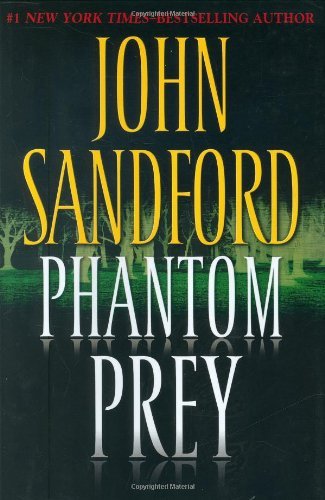
Lucas Davenport #18
Phantom Prey
A widow comes home to her large house in a wealthy Minneapolis suburb to find blood on the walls. But no body and her college-age daughter missing. She's always known that her daughter ran with a bad bunch. What did she call them — Goths? Freaks is more like it, running around with all that makeup and black clothing, listening to that awful music, so attracted to death. And now this.
But the police can't find her daughter, alive or dead, and she panics. There's someone she knows, a surgeon named Weather Davenport, whose husband is a big deal with the police, and she implores Weather to get her husband directly involved. Lucas comes on-board only reluctantly — but then when a second Goth is slashed to death, he starts working it hard. The clues don't seem to add up. And then there's the young Goth who keeps appearing and disappearing. Who is she? Where does she come from and, where does she vanish to?
Most important, why does Lucas have the sneaking suspicion that there is something else going on here, something very bad indeed?
But the police can't find her daughter, alive or dead, and she panics. There's someone she knows, a surgeon named Weather Davenport, whose husband is a big deal with the police, and she implores Weather to get her husband directly involved. Lucas comes on-board only reluctantly — but then when a second Goth is slashed to death, he starts working it hard. The clues don't seem to add up. And then there's the young Goth who keeps appearing and disappearing. Who is she? Where does she come from and, where does she vanish to?
Most important, why does Lucas have the sneaking suspicion that there is something else going on here, something very bad indeed?
384 pages, Hardcover
First published May 6, 2008
About the author
John Sandford
263 books9,969 followersJohn Sandford is the pen name of John Roswell Camp, a Pulitzer Prize-winning journalist and bestselling author known for his gripping thrillers and popular crime series. After earning degrees in history, literature, and journalism from the University of Iowa, Camp began his writing career as a reporter, first at The Miami Herald and later at The Saint Paul Pioneer Press, where he earned critical acclaim for in-depth series on Native American communities and American farm life. His work won him the Pulitzer Prize for Feature Writing in 1986.
In 1989, Camp transitioned into fiction, publishing two novels: The Fool's Run under his real name and Rules of Prey under the pseudonym John Sandford. The latter launched the long-running “Prey” series, starring Lucas Davenport, a sharp, fearless investigator navigating politically sensitive crimes across Minnesota and beyond. The series grew to include spin-offs and crossovers, notably featuring characters like Virgil Flowers, a laid-back BCA agent with a sharp wit, and Letty Davenport, Lucas's equally determined daughter, who stars in her own series starting in 2022.
Sandford’s books have consistently appeared on the New York Times bestseller list, with over two dozen debuting at number one. Known for his dynamic storytelling, fast pacing, and keen attention to detail, Sandford combines his journalistic roots with a gift for character-driven narratives. He remains an avid reader and outdoorsman, and continues to write compelling fiction that resonates with readers who enjoy intelligent thrillers grounded in realism and driven by memorable protagonists.
In 1989, Camp transitioned into fiction, publishing two novels: The Fool's Run under his real name and Rules of Prey under the pseudonym John Sandford. The latter launched the long-running “Prey” series, starring Lucas Davenport, a sharp, fearless investigator navigating politically sensitive crimes across Minnesota and beyond. The series grew to include spin-offs and crossovers, notably featuring characters like Virgil Flowers, a laid-back BCA agent with a sharp wit, and Letty Davenport, Lucas's equally determined daughter, who stars in her own series starting in 2022.
Sandford’s books have consistently appeared on the New York Times bestseller list, with over two dozen debuting at number one. Known for his dynamic storytelling, fast pacing, and keen attention to detail, Sandford combines his journalistic roots with a gift for character-driven narratives. He remains an avid reader and outdoorsman, and continues to write compelling fiction that resonates with readers who enjoy intelligent thrillers grounded in realism and driven by memorable protagonists.
Ratings & Reviews
Friends & Following
Create a free account to discover what your friends think of this book!
Community Reviews
Displaying 1 - 30 of 1,063 reviews

October 17, 2021
3.5 Fangs
As an invested reader of the Lucas Davenport series, I couldn't stop myself from listening to the next book. I can't believe we're up to #18 and getting closer to #33! Maybe in one more year, I'll be caught up?
Anyway, what's new for Lucas in Phantom Prey?
Weather, Lucas's wife, has asked him to help investigate the disappearance of Alyssa Austin's daughter, Frances. Alyssa is an acquaintance of Weather and she wants Lucas to help find her.
Frances Austin had it all. She had the money and the freedom to do whatever she wanted with it. Then, she went missing. Alyssa knows something bad has happened to her. When Lucas offered to look around, she welcomes Lucas's help.
Lucas for his part is also in the middle of another investigation. As the head of the Minnesota Bureau of Criminal Apprehension, Lucas is always trying to put out some fires. This time a coke dealer, Siggy, who escaped capture might be coming back for his wife Heather and Lucas and his team have spent weeks surveilling her to catch him when he comes back to see her.
Although busy with this, Lucas becomes interested in Frances's disappearance. He knows he is getting too close when someone tries to eliminate him.
I do love Lucas, Dell, and company. I do miss the older crowd too. They made a great team. There was always a lot of humor mixed with the suspense which was missing a little bit in this one.
I don't think Phantom Prey was as captivating as some others in this series, partly because the killer was not a very interesting one. The other part that bothered me is the constant idea of the killer thinking: why don't I kill the head of the investigation, meaning Lucas. It just seems overplayed.
Cliffhanger: No
3.5/5 Fangs
MrsLeif's Two Fangs About It | Facebook | Twitter | Instagram
As an invested reader of the Lucas Davenport series, I couldn't stop myself from listening to the next book. I can't believe we're up to #18 and getting closer to #33! Maybe in one more year, I'll be caught up?
Anyway, what's new for Lucas in Phantom Prey?
Weather, Lucas's wife, has asked him to help investigate the disappearance of Alyssa Austin's daughter, Frances. Alyssa is an acquaintance of Weather and she wants Lucas to help find her.
Frances Austin had it all. She had the money and the freedom to do whatever she wanted with it. Then, she went missing. Alyssa knows something bad has happened to her. When Lucas offered to look around, she welcomes Lucas's help.
Lucas for his part is also in the middle of another investigation. As the head of the Minnesota Bureau of Criminal Apprehension, Lucas is always trying to put out some fires. This time a coke dealer, Siggy, who escaped capture might be coming back for his wife Heather and Lucas and his team have spent weeks surveilling her to catch him when he comes back to see her.
Although busy with this, Lucas becomes interested in Frances's disappearance. He knows he is getting too close when someone tries to eliminate him.
I do love Lucas, Dell, and company. I do miss the older crowd too. They made a great team. There was always a lot of humor mixed with the suspense which was missing a little bit in this one.
I don't think Phantom Prey was as captivating as some others in this series, partly because the killer was not a very interesting one. The other part that bothered me is the constant idea of the killer thinking: why don't I kill the head of the investigation, meaning Lucas. It just seems overplayed.
Cliffhanger: No
3.5/5 Fangs
MrsLeif's Two Fangs About It | Facebook | Twitter | Instagram

July 6, 2008
Lucas Davenport goes goth.
Alyssa Austin is a wealthy widow that returns home to find a bloodstain on her wall and that her adult daughter Francis has vanished. With no body and no leads, the police can’t do much with the case. After a friend of Francis is murdered by a mysterious goth woman known only as Fairy, Alyssa turns to her friend Weather for help.
Weather just so happens to be married to Lucas Davenport, one of the top cops with Minnesota’s Bureau of Criminal Apprehension as well as being the governor’s chief rat catcher. Weather pushes Lucas to look into it both as a favor to her friend and to get him out of his annual post-winter funk. Lucas starts reluctantly at his wife’s nagging, but soon finds himself intrigued by the mystery of Francis’s disappearance.
As Lucas starts talking to people in the Minneapolis goth community, he's also running an extended stake-out on the pregnant girlfriend of a dangerous Lithuanian gangster who skipped town in case he comes back for her. Lucas also has to deal with a mountain of political bullshit due to the upcoming Republican National Convention.
I’ve sung John Sandford’s praises in plenty of reviews here on Goodreads, and I don’t have much to add to them. He’s several notches above the typical thriller hacks who own the best seller lists because he creates intriguing stories with characters you can relate to and he routinely builds momentum and suspense to the point where a reader may find themselves on their feet instead of in their chair because the tension won‘t allow them to sit still.
One thing that caught my eye here was the way Sandford portrays Davenport’s attitude about his job. It's a thriller cliché to have the hero horrified and burned out by the crimes they investigate, yet they continue to do it because only they have the knowledge and skill to stop the killer, etc. etc. Lucas isn’t like that. He enjoys his work both for the mental aspect of figuring things out and the adrenaline rush of throwing on a bulletproof vest and crashing through a door. While he’s flirted with a clinical depression at times, a genuine mystery to solve can snap him out of it like in this book where his wife is tired of him moping around after a long dull winter and basically kicks him in the ass to get him revved up again. He’s not cold or immune to the suffering of others, but he can ration out his empathy so that he’s not consumed by it.
I also realized I’m probably not giving Sandford enough credit in the writing department. He was a Pulitzer Prize winning print journalist and sometimes his plain prose hides genuine cleverness. Like this:
“Lucas slurped the coffee, which tasted sort of brown, like a cross between real coffee and the paper sack it came in.”
This is another highly entertaining entry in the Prey series. It’s not quite up to the recent level that Sandford has hit with the crazily good Buried Prey or the Virgil Flowers story in Bad Blood, but it’s a great example of how Sandford thrillers stand out from the pack.
Next: Lucas vs. the Republicans in Wicked Prey.
Alyssa Austin is a wealthy widow that returns home to find a bloodstain on her wall and that her adult daughter Francis has vanished. With no body and no leads, the police can’t do much with the case. After a friend of Francis is murdered by a mysterious goth woman known only as Fairy, Alyssa turns to her friend Weather for help.
Weather just so happens to be married to Lucas Davenport, one of the top cops with Minnesota’s Bureau of Criminal Apprehension as well as being the governor’s chief rat catcher. Weather pushes Lucas to look into it both as a favor to her friend and to get him out of his annual post-winter funk. Lucas starts reluctantly at his wife’s nagging, but soon finds himself intrigued by the mystery of Francis’s disappearance.
As Lucas starts talking to people in the Minneapolis goth community, he's also running an extended stake-out on the pregnant girlfriend of a dangerous Lithuanian gangster who skipped town in case he comes back for her. Lucas also has to deal with a mountain of political bullshit due to the upcoming Republican National Convention.
I’ve sung John Sandford’s praises in plenty of reviews here on Goodreads, and I don’t have much to add to them. He’s several notches above the typical thriller hacks who own the best seller lists because he creates intriguing stories with characters you can relate to and he routinely builds momentum and suspense to the point where a reader may find themselves on their feet instead of in their chair because the tension won‘t allow them to sit still.
One thing that caught my eye here was the way Sandford portrays Davenport’s attitude about his job. It's a thriller cliché to have the hero horrified and burned out by the crimes they investigate, yet they continue to do it because only they have the knowledge and skill to stop the killer, etc. etc. Lucas isn’t like that. He enjoys his work both for the mental aspect of figuring things out and the adrenaline rush of throwing on a bulletproof vest and crashing through a door. While he’s flirted with a clinical depression at times, a genuine mystery to solve can snap him out of it like in this book where his wife is tired of him moping around after a long dull winter and basically kicks him in the ass to get him revved up again. He’s not cold or immune to the suffering of others, but he can ration out his empathy so that he’s not consumed by it.
I also realized I’m probably not giving Sandford enough credit in the writing department. He was a Pulitzer Prize winning print journalist and sometimes his plain prose hides genuine cleverness. Like this:
“Lucas slurped the coffee, which tasted sort of brown, like a cross between real coffee and the paper sack it came in.”
This is another highly entertaining entry in the Prey series. It’s not quite up to the recent level that Sandford has hit with the crazily good Buried Prey or the Virgil Flowers story in Bad Blood, but it’s a great example of how Sandford thrillers stand out from the pack.
Next: Lucas vs. the Republicans in Wicked Prey.

July 2, 2019
I’m a huge fan of Sandford’s Lucas Davenport series. But this book was not nearly as good as most. I found it confusing, poorly thought out, with less humor. That’s not to say it’s bad, it’s just much weaker than his typical work.
Everyone is allowed a one off. I’ve read the books that follow this in the series and have enjoyed all of them. In fact, not sure why or how I had missed this one before. Guess I should have left well enough alone.

March 23, 2010
When a widow named Alyssa Austin arrives home one afternoon, she discovers that the home security system has been disarmed. She retrieves her .38 Smith & Wesson from the glove compartment of her Mercedes and gingerly makes her way into the house. Neither her daughter, Frances, nor their housekeeper, Helen, is home, and when Alyssa flips on the lights in the kitchen she discovers blood stains on the wall that someone has tried unsuccessfully to clean away.
Helen, the housekeeper, eventually shows up; Frances, the daughter, does not. The police discover that the blood is Frances's type and she is officially listed as a missing person. But there was clearly a lot of blood and the assumption is that she is probably dead.
Alyssa is a wealthy and politically-connected woman. Among her friends is Weather Karkinnen, the wife of Lucas Davenport who, in turn, is head of the Minnesota Bureau of Criminal Apprehension. Alyssa reaches out to Weather who appeals to Lucas to look into the case. At the moment, Lucas has nothing major on his plate. He's on the hunt for a drug dealer, but this mostly involves hanging around a stakeout with Del Capslock, watching the drug dealer's sexy naked wife parade around their apartment.
Lucas tears himself away from this difficult duty to investigate the disappearance and possible murder of Frances Austin. He discovers that the young woman was into the Twin Cities Goth scene, and as he begins to probe into the case, a couple more Goths who were in Frances's circle are also murdered. Before long, all hell is breaking loose and Davenport is up to his neck in danger and trouble.
This is a very good read, although I don't think it's among the best of the Prey series. There's a lot of psychological mumbo-jumbo going on here, and the villain is not as interesting as many of Sandford's others. Still, there's a lot of action and great humor along the way and, as always, it's fun to watch Davenport and his team work the case. Shrake and Jenkins are in particularly good form, and no fan of the series will want to miss this one.
Helen, the housekeeper, eventually shows up; Frances, the daughter, does not. The police discover that the blood is Frances's type and she is officially listed as a missing person. But there was clearly a lot of blood and the assumption is that she is probably dead.
Alyssa is a wealthy and politically-connected woman. Among her friends is Weather Karkinnen, the wife of Lucas Davenport who, in turn, is head of the Minnesota Bureau of Criminal Apprehension. Alyssa reaches out to Weather who appeals to Lucas to look into the case. At the moment, Lucas has nothing major on his plate. He's on the hunt for a drug dealer, but this mostly involves hanging around a stakeout with Del Capslock, watching the drug dealer's sexy naked wife parade around their apartment.
Lucas tears himself away from this difficult duty to investigate the disappearance and possible murder of Frances Austin. He discovers that the young woman was into the Twin Cities Goth scene, and as he begins to probe into the case, a couple more Goths who were in Frances's circle are also murdered. Before long, all hell is breaking loose and Davenport is up to his neck in danger and trouble.
This is a very good read, although I don't think it's among the best of the Prey series. There's a lot of psychological mumbo-jumbo going on here, and the villain is not as interesting as many of Sandford's others. Still, there's a lot of action and great humor along the way and, as always, it's fun to watch Davenport and his team work the case. Shrake and Jenkins are in particularly good form, and no fan of the series will want to miss this one.

January 1, 2020
[Read Dec 2019; Reviewed Feb 2023]
This is the first time John Sandford has cheated. Maybe. True, early in the novel a possibility is eliminated and a little more than halfway through the book it turns out to be so. But did he cheat? Really? Even earlier in the book he makes it clear this is not going to be your typical Lucas Davenport novel. When discussing a friend of his wife, a woman he considers weird, Lucas comments: “Alyssa believes her daughter was killed because her Pluto was in her House of Donald Duck. Because of the stars and the moon. That we can find her if we hire the appropriate psychic.” Later, when interviewing her, these words cause him to think of an old joke involving cartoon characters. She reads his mind and throws the punch line back at him in an ironic way. There was no way she could have known what he was thinking. In the hands of bad writer, you would groan. With a polished professional with a track record of excellence, it is still jolting. Message received. There’s going to be something a little off with this one.
The Alyssa in the quote above is Alyssa Austin, who opens Phantom Prey by coming home to find what turns out to be her daughter’s blood coating a hallway. But no body. And a month later, still no Francis Austin. But at this point Lucas is not the only one involved. As is standard with John Sandford we spend at least half the novel with the villain. Labelled the Fairy by the Goth community of which Francis was also a part, she and her lover Loren are seeking murderous vengeance on those they believe to be responsible for the death of Francis.
Thanks to a subplot involving the stakeout of the wife of Minnesota's biggest cocaine dealer, and Lucas's involvement in the investigation of the fairy's victims, Sandford delivers what we have come to expect: Character interaction, suspense, and humor. Those initial feelings that something is not quite normal become relegated to the subliminal.
Until the “cheat.” It changes the perspective on everything that follows. And gives new meaning to things previously thought unimportant. In a way this fits in with the Prey series. While there usually must be a level of internal consistency for a series to work, Sandford has also attempted to make each entry unique within his established framework. Until now the most obvious example--at least to me--was Easy Prey, where the cops get everything wrong and yet still find their way to the solution. Phantom Prey trumps that. Its only real fault comes when Sandford reaches the point where it’s time to start bringing the story to a close. There are always certain clichés available for accomplishing this, and Sandford chooses to go this way. Not only is it unoriginal, it is unoriginal to him; he has done exactly this before. Events no longer feel like the next natural progression in the story. The reader can see the author’s hand at work.
But once you accept this minor blemish, it doesn’t take long to get pulled into the current. The same skill that has brought us to this point is still in full effect. It’s a major part of why John Sandford has been so successful. Any mistake or misstep can be easily glossed over by his ability to keep the reader engrossed and entertained.
It's certainly why I keep coming back.
This is the first time John Sandford has cheated. Maybe. True, early in the novel a possibility is eliminated and a little more than halfway through the book it turns out to be so. But did he cheat? Really? Even earlier in the book he makes it clear this is not going to be your typical Lucas Davenport novel. When discussing a friend of his wife, a woman he considers weird, Lucas comments: “Alyssa believes her daughter was killed because her Pluto was in her House of Donald Duck. Because of the stars and the moon. That we can find her if we hire the appropriate psychic.” Later, when interviewing her, these words cause him to think of an old joke involving cartoon characters. She reads his mind and throws the punch line back at him in an ironic way. There was no way she could have known what he was thinking. In the hands of bad writer, you would groan. With a polished professional with a track record of excellence, it is still jolting. Message received. There’s going to be something a little off with this one.
The Alyssa in the quote above is Alyssa Austin, who opens Phantom Prey by coming home to find what turns out to be her daughter’s blood coating a hallway. But no body. And a month later, still no Francis Austin. But at this point Lucas is not the only one involved. As is standard with John Sandford we spend at least half the novel with the villain. Labelled the Fairy by the Goth community of which Francis was also a part, she and her lover Loren are seeking murderous vengeance on those they believe to be responsible for the death of Francis.
Thanks to a subplot involving the stakeout of the wife of Minnesota's biggest cocaine dealer, and Lucas's involvement in the investigation of the fairy's victims, Sandford delivers what we have come to expect: Character interaction, suspense, and humor. Those initial feelings that something is not quite normal become relegated to the subliminal.
Until the “cheat.” It changes the perspective on everything that follows. And gives new meaning to things previously thought unimportant. In a way this fits in with the Prey series. While there usually must be a level of internal consistency for a series to work, Sandford has also attempted to make each entry unique within his established framework. Until now the most obvious example--at least to me--was Easy Prey, where the cops get everything wrong and yet still find their way to the solution. Phantom Prey trumps that. Its only real fault comes when Sandford reaches the point where it’s time to start bringing the story to a close. There are always certain clichés available for accomplishing this, and Sandford chooses to go this way. Not only is it unoriginal, it is unoriginal to him; he has done exactly this before. Events no longer feel like the next natural progression in the story. The reader can see the author’s hand at work.
But once you accept this minor blemish, it doesn’t take long to get pulled into the current. The same skill that has brought us to this point is still in full effect. It’s a major part of why John Sandford has been so successful. Any mistake or misstep can be easily glossed over by his ability to keep the reader engrossed and entertained.
It's certainly why I keep coming back.
January 5, 2024
3 Stars. I guess the Goths don't do it for me. Whatever, this is not my favourite Davenport. All of Sandford's Lucas Davenports are good, but that sub-culture never interested me. Am I being superficial in my assessment that people dressed in black and fascinated with death are not explainable in any rational way? Right or wrong, to me the Goth thing was a spinoff of the 1975 movie musical, Rocky Horror Picture Show. From that year, Jaws is the one I recall best. Davenport has been with the Minnesota Bureau of Criminal Apprehension for some time. His wife Weather persuades a reluctant Lucas to review the case of a friend of hers, Alyssa Austin, a wealthy widow whose daughter Frances is missing. She thinks the police are doing nothing about the fact that traces of blood were found in her kitchen. Frances is part of the Goth culture and soon an acquaintance at a Goth bar is found murdered. It escalates. A Goth fairy has been seen at more than one crime scene. Another factor comes into play: people with multiple personalities, not my cup of tea. The novel seemed slower than most for the first half - and then it picked up. Best I just move on. (Ja2024/No2025)

March 16, 2026
This is the first book by John Sanford that has ever landed in my DNF pile. While the first half of the book was very interesting with Lucas Davenport investigating the Goth community to find the murderer of a young woman…things went off the rails about halfway through the story. At that point, one of the central characters seemed to go insane with a split personality…to the point that she believes she can talk to ghosts on the other side of her mirror.
This was definitely the most absurd plot line that I have ever encountered in any of the well-written series by the author. In any event, I’m guessing that the great Babe Ruth struck out at least once during his career….which means that even the talented John Sanford is entitled to write one thoroughly ridiculous stinker of a novel.
This was definitely the most absurd plot line that I have ever encountered in any of the well-written series by the author. In any event, I’m guessing that the great Babe Ruth struck out at least once during his career….which means that even the talented John Sanford is entitled to write one thoroughly ridiculous stinker of a novel.

May 30, 2010
What do a coke dealer named Siggy and a Goth couple called Fairy and Loren have in common……only the fact that they are being pursued by a cop named Lucas Davenport and that they all appear in John Sanford’s novel PHANTOM PREY. I have read many of the prey books and enjoyed them but the entire concept of this book is akin to viewing an episode of the Ghost Whisperer with Melinda visiting SHUTTER ISLAND. On top of that, the secondary story of Siggy and his exhibitionist spouse was dull, dull, dull and added absolutely zero to the story.
For this reader, PHANTOM PREY was less a thrilling excursion through the valley of a fine police procedural and more a bumpy ride through the jungle of schizophrenia. In general the entire plot of the novel was as thin as a slice of prosciutto but not nearly as appetizing.
For this reader, PHANTOM PREY was less a thrilling excursion through the valley of a fine police procedural and more a bumpy ride through the jungle of schizophrenia. In general the entire plot of the novel was as thin as a slice of prosciutto but not nearly as appetizing.

October 25, 2019
Not one of the best entries in this wonderful, wonderful series—but it still clears the four stars mark because even a less-than-gold Davenport novel is still something to breathe for. I will say there were a few twists in here that should have been obvious but were mind-blowing because I’m slow and Sandford is an expert in lulling you to sleep with interesting-but-mundane everyday life before blowing it the fuck up.

December 25, 2023
Not as bad as I had heard. I didn’t mind the supernatural aspect of it…..it was more psychological, really. A solid 4 stars. Ending was a little weak. Definitely not one of the better Prey books, but I’d recommend it.

September 2, 2018
A very good mystery for at least one murder all the way through plus a side gig that lends quite a bit of humor for a while. Still, not one of his best. The murderer never really rang true to me, although it was engrossing & I quite liked the twists at the end. Very well narrated again, although I'm glad Fairy didn't have too many lines. What an annoying voice! Well distinguished, though.
I should go on to read Heat Lightning, the 2d Virgil Flowers now, but I'm still on hold waiting for the library copy & have been since early August. I'm next in line for it, but that could be 3 weeks. I'm not waiting. I have the next Prey book.
I should go on to read Heat Lightning, the 2d Virgil Flowers now, but I'm still on hold waiting for the library copy & have been since early August. I'm next in line for it, but that could be 3 weeks. I'm not waiting. I have the next Prey book.

June 28, 2020
This is one of the weirder Prey books and I'm not sure if it is just me but it packed the humor I've come to expect. That being said it is a Lucas Davenport book so it's still worth the read.
Lucas is asked by his wife to look into the disappearance of her daughter. Reluctant at first Lucas soon finds himself hip dip in the case and enjoying himself. I was about five minutes quicker than Davenport in figuring things out, that was quite the twist.
The side story with Del and the chase of Ziggey were some of my favorite parts of the book. I am quote the Del fan.
While not up to the usual standard still a worthwhile read in the Prey series.
Lucas is asked by his wife to look into the disappearance of her daughter. Reluctant at first Lucas soon finds himself hip dip in the case and enjoying himself. I was about five minutes quicker than Davenport in figuring things out, that was quite the twist.
The side story with Del and the chase of Ziggey were some of my favorite parts of the book. I am quote the Del fan.
While not up to the usual standard still a worthwhile read in the Prey series.

May 18, 2008
The latest installment in the Lucas Davenport series. Excellent plot and pacing. Sandford just never misses. His writing is sharp and clean and fast-paced. He always has kind of a "double" plot---the main story and then a side story of another case Lucas is working on. In this book, both stories are exciting and interesting.
The main plot has a nice sinister, otherworldly edge to it, which I haven't seen in this series before. Sandford took a little Stephen King and put it in one character's head. :)
A very wealthy woman's daughter is missing and presumably murdered. Then some of the missing girl's "Goth" friends get murdered, and Lucas has to figure out how it's connected.
Meanwhile, in the subplot, Lucas and Del are monitoring the activities of the wife of an escaped Lithuanian criminal, "Siggy". They spy on her apartment to see who visits her and try to figure out when Siggy will be sneaking back to see his wife and child.
I was close to giving this book five stars, but the ending was a little weak. Not bad, just not strong. It had a sort of "to be continued..." feel to it, which is okay for a series, but it should also stand on its own.
The main plot has a nice sinister, otherworldly edge to it, which I haven't seen in this series before. Sandford took a little Stephen King and put it in one character's head. :)
A very wealthy woman's daughter is missing and presumably murdered. Then some of the missing girl's "Goth" friends get murdered, and Lucas has to figure out how it's connected.
Meanwhile, in the subplot, Lucas and Del are monitoring the activities of the wife of an escaped Lithuanian criminal, "Siggy". They spy on her apartment to see who visits her and try to figure out when Siggy will be sneaking back to see his wife and child.
I was close to giving this book five stars, but the ending was a little weak. Not bad, just not strong. It had a sort of "to be continued..." feel to it, which is okay for a series, but it should also stand on its own.

May 7, 2008
Back when I was a little punk rock girl, I used to cringe whenever I saw punk rockers depicted in books or on film, because it was inevitably horrifying and wrong. Maybe that's why I cringed at the whole Goth thing this book had going. It was sort of like listening to your grandparents attempt to be hip by using slang words they read in Time magazine.
Horrifying wrongness aside, I also found the villains to be rather boring, and the book dragged whenever it switched to their POV. A miss for this series, sad to say.
Horrifying wrongness aside, I also found the villains to be rather boring, and the book dragged whenever it switched to their POV. A miss for this series, sad to say.

March 25, 2016
A goth ferry and her split personality is not among Sanford's best "Prey" stories. 4 of 10 stars

April 24, 2020
Book # 18 in the Prey series opens when a wealthy widow named Alyssa Austin arrives home to discover that the home security system has been disarmed. She quickly fetches a gun from the glove compartment of her car and enters the house. (I immediately silently yelled in my head - "No! Don't go in. Call the police.) Alyssa discovers blood stains on a wall and that neither her daughter nor her housekeeper are home. Eventually the latter woman shows up but the daughter remains missing, and unfortunately the blood is her type. Because there seemed to have been a lot of blood they assume that she is dead.
The victim is a friend of Weather Karkinnen and so Davenport gets involved. He quickly discovers that she was into the Goth scene and he finds himself (typically) in danger while submerged in a culture he doesn't really understand.
This volume is full of action, some good humor and great work by Davenport and team.
The victim is a friend of Weather Karkinnen and so Davenport gets involved. He quickly discovers that she was into the Goth scene and he finds himself (typically) in danger while submerged in a culture he doesn't really understand.
This volume is full of action, some good humor and great work by Davenport and team.

July 18, 2022
I've read a few of the books in this series, four I think prior to this one, but it's been a while since I read one and I didn't have a real firm grasp of the Lucas Davenport story. I remembered that he was from Minnesota and that he was a detective in a crime detection state agency there. And that was about it. So I came to Phantom Prey with no particular pre-conceived expectations.
In this one, Alyssa, a woman friend of Weather, Davenport's wife, arrives home to find that her home security system had been disarmed and there are bloodstains on the wall of her kitchen. She expected her daughter, Frances, and her housekeeper, Helen, to be there, but the house is empty. There's no clue where the two have gone or where they might be. The housekeeper does finally show up but Frances remains missing.
The other thing is that there was a lot of blood in the kitchen and testing reveals that it is Frances' type. The case becomes a missing person investigation but there is an underlying belief that she is probably dead. The police seem to be making no progress on the case, so Alyssa contacts her friend Weather and requests that she ask her husband to get involved in the investigation. Lucas doesn't have much on his plate at the moment and probably welcomes the distraction of a hot case.
The action of the book is set in the early 2000s and Lucas learns that Frances was heavily into the Goth scene in the Twin Cities which was apparently very active at that time. He's only just begun his investigation when two of the Goths who were a part of Frances' circle of friends are murdered. This, of course, increases fears that if she is not already dead she may soon be and adds an extra element of urgency to Davenport's inquiries.
I seem to remember that the other books in the Davenport series that I have read featured a good bit of humor and that was the case with this one as well. This was the eighteenth in the series so Sandford obviously had his formula well established by the time the book was published in 2008. There are now a surprising thirty-two books in this series, plus the writer has at least a couple of other series going all of which simply boggles my mind. How does a writer come up with that many different ideas? I guess that the answer may be that they are not "different" ideas; they are simply a new set of characters and situations set within that same formula and all the writer has to do is fill in the blanks. Sounds easy, doesn't it? But it probably isn't.
In this one, Alyssa, a woman friend of Weather, Davenport's wife, arrives home to find that her home security system had been disarmed and there are bloodstains on the wall of her kitchen. She expected her daughter, Frances, and her housekeeper, Helen, to be there, but the house is empty. There's no clue where the two have gone or where they might be. The housekeeper does finally show up but Frances remains missing.
The other thing is that there was a lot of blood in the kitchen and testing reveals that it is Frances' type. The case becomes a missing person investigation but there is an underlying belief that she is probably dead. The police seem to be making no progress on the case, so Alyssa contacts her friend Weather and requests that she ask her husband to get involved in the investigation. Lucas doesn't have much on his plate at the moment and probably welcomes the distraction of a hot case.
The action of the book is set in the early 2000s and Lucas learns that Frances was heavily into the Goth scene in the Twin Cities which was apparently very active at that time. He's only just begun his investigation when two of the Goths who were a part of Frances' circle of friends are murdered. This, of course, increases fears that if she is not already dead she may soon be and adds an extra element of urgency to Davenport's inquiries.
I seem to remember that the other books in the Davenport series that I have read featured a good bit of humor and that was the case with this one as well. This was the eighteenth in the series so Sandford obviously had his formula well established by the time the book was published in 2008. There are now a surprising thirty-two books in this series, plus the writer has at least a couple of other series going all of which simply boggles my mind. How does a writer come up with that many different ideas? I guess that the answer may be that they are not "different" ideas; they are simply a new set of characters and situations set within that same formula and all the writer has to do is fill in the blanks. Sounds easy, doesn't it? But it probably isn't.

October 28, 2023
This is the 18th novel in John Sandford's "Lucas Davenport" series.
Different and thoroughly enjoyable!
Different and thoroughly enjoyable!

April 25, 2023
Only the second book (I believe) in this series that I rated less than 5/5. It’s for a single reason that I can’t share without spoilers. However, I think it’s safe to say that, as a clinical psychologist, I found the inclusion of certain ideas to be highly unrealistic, which relates to a larger ongoing debate in my field. It’s a storyline that’s been fashionable to use because most people not in the clinical psych field misunderstand the research data. Anyway, I loved Lucas Davenport and colleagues, per usual. I also really love Weather and how she is not just “the wife” but a fleshed out active participant in most of the books.

January 18, 2019
The "goth" murders have been done before. I kept thinking I have read this book but I haven't so it has to be another murder mystery by another author...Shit happens. BUT boy oh boy :) "nimrod" brought back lotsa funny memories both as a town in Minnesota and calling people that. What a hoot!

August 10, 2026
3.75
I really liked the vibe of this book, just the classic police detective that hangs out at night, alone, who eats out at a diner. If only we could hear music through reading, then Jazz music, I think, is perfect with Lucas Davenport.
While I loved the smooth pacing of it at the beginning, I felt like it dragged somewhere in the middle. And I didn’t really like the supernatural thingy that John Sandford added with Alyssa Austin. Or maybe he was trying to go for it the psychological way, but I think it wasn’t explored like that as much as I would have liked. Then it picks up on the last 60 or more pages. The suspense, the action, the revelation at the denouement was great.
Nonetheless, I think that this was a good book, especially since this was the vibe that I was really looking for. Looking forward to reading more of John Sandford’s Prey novels!

June 4, 2012
Still movin' through Sanford's "Prey" series with this one, No. 18 - and I'm still saying they keep getting better even though (or rather because) some things stay the same. Like many of the others, for instance, this one has Minneapolis detective Lucas Davenport assigned to work two cases simultaneously, with the possibility that they'll overlap at some point (or not). And like the others, readers learn who the culprits are before Davenport "gets it," so there's the fun of watching him unravel the mystery.
Here, the primary action centers around the disappearance and almost certain murder of the wealthy daughter of an even more wealthy widow, giving Davenport and his friends a peek at the world of Goths. Since my familiarity with the Goth movement is limited to the heavy black eyeliner, black skinny jeans and black-on-the-bottom, bright red-on-top hair my 14-year-old granddaughter lived in for about a year, it held my interest.
Sanford's sense of humor - sometimes a little offbeat - is more evident here, and that's one of the things I think is improving as the series moves along. There's one here, for example, that's sure to be to Wisconsin what John Denver's "I spent a week here one day" was to Toledo, Ohio (I won't repeat it in public, but I was still chuckling at least six chapters later). Developing his funny streak serves Sandford well for his Virgil Flowers series, too - one reason, I'm sure, that I like that series a little better than this one. Hey, I get it - I've been to Toledo!
Here, the primary action centers around the disappearance and almost certain murder of the wealthy daughter of an even more wealthy widow, giving Davenport and his friends a peek at the world of Goths. Since my familiarity with the Goth movement is limited to the heavy black eyeliner, black skinny jeans and black-on-the-bottom, bright red-on-top hair my 14-year-old granddaughter lived in for about a year, it held my interest.
Sanford's sense of humor - sometimes a little offbeat - is more evident here, and that's one of the things I think is improving as the series moves along. There's one here, for example, that's sure to be to Wisconsin what John Denver's "I spent a week here one day" was to Toledo, Ohio (I won't repeat it in public, but I was still chuckling at least six chapters later). Developing his funny streak serves Sandford well for his Virgil Flowers series, too - one reason, I'm sure, that I like that series a little better than this one. Hey, I get it - I've been to Toledo!

June 8, 2020
I've been on a good streak with Lucas Davenport novels, but sadly Phantom Prey was a miss. I didn't enjoy the and overall the novel just felt off to me.
I also didn't understand the side story of Siggy and Heather. I haven't read all of the novels in the series, so I'm not sure if they were in a previous novel and this was the conclusion to their story. But I found that they weren't needed at all and it felt that Sanford was just adding in pages.
I also didn't understand the side story of Siggy and Heather. I haven't read all of the novels in the series, so I'm not sure if they were in a previous novel and this was the conclusion to their story. But I found that they weren't needed at all and it felt that Sanford was just adding in pages.

March 6, 2023
A fairly by-the-numbers entry in the series, made excellent by Sandford’s writing and great characters. In terms of which aspect of modern life gets investigated via a procedural novel, this time around it’s the turn of the Goth subculture. It’s fairly basic, but Sandford makes the keen observation that it is a way of life influenced more by literature than by music, something a lot of writers misunderstand. There’s also a lot of twists and turns in the plotting and a couple of fun subplots involving a side case and the supporting characters.

October 25, 2014
After a wealthy widow comes home to a blood splattered house and a missing daughter she calls on the police. When no trace, alive or dead, is found of the daughter can be found, the asks Weather Davenport to prevail on her police detective husband to take up the case. A young Goth keeps appearing and disappearing.

November 11, 2008
I gave up half way through this one. Same old stuff, with little new character development. I just didn't care how he managed to solve the mystery. I must be really impatient, as I usually fall into familiar characters and books, but not this one.

April 4, 2009
I've read most of Sandford's "Prey" years going back to my college days, and he is really hit or miss with me. This one was 100% miss. Bad story, bad language, shallow characters and obvious plot. That's a recipe for disaster, my friend.

February 19, 2014
What can I say, "I'm hooked on Sanford!" And after years of reading this series, I've made it a 2014 goal to finish, not only his Prey series, but all of his other series as well. And read some Jeffrey Deaver, James Patterson and more James Lee Burke (burp -- but his novels are so filling).

September 26, 2021
3.5 rounded up to 4 stars.
Not my favourite book in the Prey series, a bit too out there with the "woowoo" stuff, apparitions, people/images coming out of mirrors - not my cup of tea, but enough of Lucas and his cohorts to make it interesting with gun fights, etc.
Not my favourite book in the Prey series, a bit too out there with the "woowoo" stuff, apparitions, people/images coming out of mirrors - not my cup of tea, but enough of Lucas and his cohorts to make it interesting with gun fights, etc.

June 16, 2023
John Sandford is one of my favorite authors but this one was not one of his better outings. The characters are still as interesting and likeable as always, I just didn't like the story as much as usual. Saying more, though, would give too much away so I'll just say that it was good but not great.
Displaying 1 - 30 of 1,063 reviews