When Among Crows is swift and striking, drawing from the deep well of Slavic folklore and asking if redemption and atonement can be found in embracing what we most fear.
We bear the sword, and we bear the pain of the sword.
Pain is Dymitr’s calling. His family is one in a long line of hunters who sacrifice their souls to slay monsters. Now he’s tasked with a deadly find the legendary witch Baba Jaga. To reach her, Dymitr must ally with the ones he’s sworn to kill.
Pain is Ala’s inheritance. A fear-eating zmora with little left to lose, Ala awaits death from the curse she carries. When Dymitr offers her a cure in exchange for her help, she has no choice but to agree.
Together they must fight against time and the wrath of the Chicago underworld. But Dymitr’s secrets—and his true motives—may be the thing that actually destroys them.
Veronica Roth is the New York Times best-selling author of Seek the Traitor's Son (coming 5.12.26), When Among Crows, Arch-Conspirator, Poster Girl, Chosen Ones, the Carve the Mark series, and the Divergent series. She lives in Chicago, Illinois with her husband and dog.
i could give a lot of reasons i wanted to read this, but the top one was always going to be "look at that gold detailing on the cover."
unfortunately it turns out it's orange, and that this book is not really for me.
i love short books, but that's because i typically read literary fiction, and books about the ennui in the life of a woman in her 30s don't normally need extra pages to clear up any confusion.
this, about polish magic in chicago featuring a romance, a movie theater showing alien as a cover, climactic, action-packed sequences like a guy trying to pick a flower, and musical mythical creatures, probably could've used some.
but it wasn't a bad time.
bottom line: i don't really know what happened in this book, but i might've liked it.
‘How did you carry it without being able to bear it?’
Early on in Veronica Roth’s Among the Crows, an old Chicago movie house that only plays double feature horror films is revealed to be operated by creatures of Polish myth who feast on human fears. This is the sort of devilishly delightful atmosphere Roth brings to life in her new urban fantasy where the old world meets the new one in shadowy corners of Chicago populated by Slavic stryga, leshy, banshees, rusalka, zmory and more. As someone also of Polish descent lurking around the lakeshores of Lake Michigan, I had to dive into this succinct yet fully realized story that grapples with questions of pain, sacrifice, family heritage and honor in a world just next to our own where the old magic thrives. We follow Dimytr, who has traveled from Poland to seek an audience with the powerful witch of legend, Baba Jaga, offering the cursed Ala a cure for her torments if she can bring him to the witch. But in a world where magic can kill more swiftly than heal and the knights of the Holy Order are always on the hunt to exterminate those beyond human, loyalties will be tested while lives hang in balance. Veronica Roth crafts a fascinating and dynamic world full of danger, curses and quests in Among the Crows as we examine generational trauma and the pains we carry.
'When among crows, you must caw as one.'
I have a bit of a soft spot for Veronica Roth and I’m always rooting for her. I find she excels at creating complex and intriguing worlds, though I’ve often felt the execution falls flat right at the end. Such was the case with the Divergent trilogy, or the recent Arch-Conspirator which was a rather engaging sci-fi retelling of Sophocles’s Antigone with concepts like soul storage but the narrative came down in a tailspin for a crash landing. But I really respect her originality, find she can write quite vivid scenes that fill your mind with wonder, and love that she understands that novellas can be a perfect length to not overstay a story’s welcome and that sometimes less is more with world building that allows the readers imagination to co-create if you point them in the right direction. So seeing Roth try her hand at Polish mythology set in modern Chicago had me quite excited and I have to say, she nails it here. In a short span she is able to construct a rather marvelous and magical urban fantasy world and give us empathetic characters to move about in it. Personally I love a story that works like how poet Charles Simic described how he found his favorite poems to be like a bank robbery: ‘ you get in, get attention, get the goods and get out fast.’ And Roth does this well, even throwing some major twists in along the way but sticking the landing with spectacle and grace.
‘Eternity is long. Time enough for hearts to soften.’
I really enjoy the characters here and the story rotates through the perspectives of Dimytr, Ala and Niko. It threads their stories in a way that enhances each and gives us hints of backstory that serves the narrative well by doing a great deal of development in a short space. But also we see a lot of characters that are ‘caught between two worlds’ in a variety of ways. Ala is not human but ‘gentle enough in spirit to live among mortals but fierce enough to endure their cruelty,’ which also makes her feel alienated as her family curse was misunderstood as mental illness by humans. But beyond that we see characters who have strong accents and feel no longer part of Poland yet not fully American, or they are not quite magical yet not fully human, or they cannot fully invest in the present or the future still reeling from the scars of the past. These scars come in many forms, such as a curse that functions on many levels, one of which being a metaphor for generational trauma, or references to things like a characters small pox vaccine scar or the political turmoil and regime changes in Poland throughout the 20th century that show history leaves scars on all those it touches.
‘Men always mean harm. The question is, when?’
The burdens and pain born by these characters define them in many ways yet it is how they choose to carry on that truly matters. The curse that is central to the story shows how that burden can be carried down generationally, but we also see how the horrible deeds of the past are also felt as a great weight by those who have inherited that legacy as well. This works particularly well blended with a a folklore that was largely pushed aside by Christianity in a country that, due to imperial repression and economic crisis even before the upheavals of WWII and Soviet occupation, saw a sizable population emigrate to the United States to settle primarily in New York, Chicago and Detroit (the latter being where my own family arrived), and we see the legacy of the past working in new ways in the new world. In short, these characters are all learning to live among the crows.
'That kind of sacrifice creates a debt, and there’s nothing magic likes better than the great hollow of a debt.'
Baba Jaga (while you typically see it spelled “Yaga,” Polish spelling tends towards Jaga hence Roth’s use of it here) is likely the most familiar element of Polish folklore here and has a position of great power in the Chicago underworld. Those who deal with her must make payment in the form of sacrifice which ushers us into a realm of investigation on pain and how pain can be not only a punishment but a price. It makes me think of that Full Metal Alchemist series where magic worked on the concept of equivalent exchange. This is not only for the mythical creatures, however, but also the Holy Order who hunts them must divide their soul and keep one half in their sword, a price paid in pain for power. Now return this to the ideas of history and legacy and we see a long legacy of power gained through the pain of others and one might understand why those of ancient myth who trade their own pain for gain would frown upon the world of humans.
Among the Crows is a fast but fascinating and fun read and I’m pleased to say that Veronica Roth manages to uphold her world building through her execution here. There’s a lot of whimsicality I love, such as the flower that ‘unravels most curses but it can only be touched by mortal hands,’ meaning those who need it can’t obtain it but those who obtain it likely have no use for it (this becomes an essential part of the ideas on trust and if the aid of another is truly selfless or earnest), or objects that will kill those who touch them but without it one will die. The puzzles and paradoxes are fun, the urban fantasy is exciting, and we even get a brief queer romance that will make you say “aww.” Roth pulls a big twist near the end that I worried would bring about the collapse of the novel but she really lands it here. Plus we have Slavic folklore in Chicago, how can you not love that. A worthwhile read full of magic. Dziękuję za przeczytanie.
I usually don't star rate books but I loved this one so much I'm going to give it all the stars. A novella that harbors inside it a wonderfully fleshed out world of Slavic myth living just under the surface of modern Chicago. (yay Urban Fantasy!) Batting way above its average in character development and emotional intimacy, this is a story about a man looking for redemption even when it bleeds him, even when he doesn't deserve it. And about the people, the monsters, who have every reason to hate him but end up doing something quite different. There are moments of terror and adventure and violence. There are also moments of quiet intimacy. Just goes to show you can do a lot of work in a very small number of pages and still tell a satisfying story. 5/5 would return to this world and these characters in a heartbeat.
I received a free ARC which in no way impacted my honest review.
4.25 ⭐️ WOW this was really fantastic and before I say anything else I want to say that you should totally go into this book without reading the synopsis because it gives you just a bit too much information in my opinion. Anyway…
What a great novella. Slavic folklore among the modern, urban streets of Chicago. A quest - both physical and internal - themes of displacement and loss and Christian imperialism, a marrying of the mythical and mundane that I find so compelling about urban fantasy (a stryzgon, a zmora, and a mysterious mortal cruising through modern Chicago in a beat up cloth-top jeep), more stuff I typed out and then deleted because as mentioned above I think this is one best gone into with not too much info, especially given how short it is. There’s just a lot in here that worked for me.
I do feel like the character relationships were perhaps just on the cusp of being completely satisfyingly fleshed out, likely due to the length, but it didn’t impact my enjoyment of the story much.
A modern day fairytale. I really enjoyed this.
[ARC provided to me by the publisher for free under no obligation]
When Among Crows by Veronica Roth is a tale of the quest to remove a curse, of new friendship growing despite differences, mixed in with repentance and vengeance.
The story of the quest was fast paced and drew me in, along with Roth's beautiful writing, to soon be invested in the characters Dymitr, Ala, Niko and their secrets. The goal to find Baba Yaga needs them to open up about their past and the character arcs, especially Dymitr, were interesting.
I did wish the book had better world-building however. I kept wondering about the magic system, and the folklore behind it, whenever it was performed on page and this detracted from the reading experience for me. I might have liked this more as a full-length novel with more details.
We bear the sword, and we bear the pain of the sword.
🌟🌟🌟
The rating for this book is 3.25 stars rounded down to 3 stars as I wished the book had more world-building.
[3/4 star for the premise and the whole book; One star for the characters; 3/4 star for the story; 1/4 star for the world-building; Half a star for the writing - 3.25 stars in total.]
Enthralling. I had mentally filed Roth under 'hugely-popular-YA-Authors-but-not-for-me' and promptly forgot about her. Then she changed the game by putting out this novella about older people (well, somewhat older, as they are in their early 20s). I found it an engrossing, quick read, one that reminded me of Ilona Andrews' novellas. (So yes, recommended). It begins with a leshy on guard duty, and Dymitr, who has come to harvest a flower. I was immediately captivated. (Not everyone, of course, will be familiar with stories of leshy, but you read enough folk tales or watch enough Supernatural, eventually you will run into one). The story settles down into Dymitr's head as he embarks on his mission and reflects on his history. "Dymitr’s father told him that Chicago was a city ruled by monsters, and all those monsters were women—strzyga, zmora, and llorona, each a legend of wronged women, sinful women, mysterious women. Tragic and powerful figures, all, not to be underestimated."
Except it doesn't. Eventually it drops into Niko's, and then Ala's head. I'm not entirely sure why; it was working so well from Dymitr's viewpoint. I suspect this might play a role in why many readers felt the world-building was 'light,' because three different perspectives from three different backgrounds is an awfully big challenge and Roth does not stick the mark in differentiating them. And this, though I didn't mean talk about it quite yet, is my strongest criticism. I had to remind myself a couple of times which perspective I was reading, or I was jolted into re-orientation when a character noted something about Dymitr. All the narratives are third-person, but it is far too similar between Dymitr and two others. I'd argue that staying in Dymitr's head would have been preferable, as he could have offered the reader insights and commentary into the others' histories that they would have taken for granted. “Weird vibes coming from both of you,” Ala comments, and she realizes she’s just like her mother, unable to bear other people’s pretending. “Contrary to what you’ve been told, acknowledging it doesn’t make it less awkward,” Niko says briskly."
That said, I really liked it anyway. I enjoyed the plot, I loved the characters interacting in different way with their generational and ethnic culture. The Chicago setting felt legitimate, although not the starring character, and the old folk-tales were brought to life in a delightfully threatening way. And the emotion--verklempt! I thought it well-developed in the lead. The only part I didn't love--and, again, young adult--is the way the leads all immediately gravitated to each other. If it weren't for the similar narrative voices and the insta-friendship, it would have been an easy five stars. As it is, it's a solid four.
Sequel out in September, and I am so down for it (note to self: start stalking Netgalley for an ARC). “Everyone always wants something,” she says. “I am not a person to them, I am simply the one who can bring their desires to bear."
This is another book that elicited mixed feelings from me. I entered reading it with high expectations, and while I cannot say it profoundly disappointed me, I do feel it ultimately let me down in certain aspects. Did I enjoy reading this? To some extent, yes, but to other parts, no.
Let's first discuss the plot, because it was genuinely interesting and the worldbuilding was incredibly intriguing. I believe the story would have benefited greatly from being longer, as there was so much potential that remained unexplored. The variety of creatures and the depth of lore made me pause my reading several times just to look up additional information online and learn more about them. The plot itself was relatively straightforward, and I guess most of the twists before they revealed themselves, yet I still found some enjoyment in the overall storyline.
Moving on to the characters:
First, Niko — he was my favorite character and the one I had the fewest issues with. He was exactly as I expected, and I appreciated the limited but meaningful glimpses we got of his personality.
Next is Ala, whom I liked enough, although I didn't feel a strong emotional connection to her. She was more developed than Niko, which makes sense given her role as a more prominent protagonist, but she still didn't evoke much in terms of feelings from me. Her character felt somewhat flat despite her more detailed portrayal.
Then there is Dymitr, and I have to admit I had significant problems with him. I find it difficult to tolerate characters who drown themselves in self-pity, especially those who believe that the only way to atone for their perceived sins is through death — I simply can't stand this type of character. There were moments when I liked him, but those were outweighed by moments when I was tempted to slap him for his behavior. His actions towards the end of the story made me roll my eyes because they felt so clichéd and predictable.
Regarding the romance, I suppose it was somewhat pleasant. It did feel rushed, no doubt, but I was still able to sense some chemistry between Niko and Dymitr, which made me feel a little charmed by their interactions, especially toward the conclusion of the story.
As for the relationship between Dymitr and Ala, I found it to be quite strange and rather bland. I couldn't genuinely feel the love they had for each other, whether as siblings or friends. Their interactions seemed even more hurried and superficial than the romance, and it failed to leave a lasting impression on me. Nevertheless, there were some nice moments shared between them.
In conclusion, I would say this book was okay — nothing truly remarkable but also nothing terrible. I just couldn't fully connect with the story or the characters. I do plan to read the second installment because I've heard that the character development and relationships improved and I’m curious to see how it unfolds.
I was really excited to find a story inspired by Polish folklore, but it turned out that me being a native Pole was the biggest inconvenience here.
The names of characters were mostly Russian, not really appearing in Polish culture (unless we count Dymitr Samozwaniec a legitimate Polish person? (we don't)). The Polish phrases looked like they were written in English and then translated word for word by Google. And "zmora" being used as some kind of DnD race, as if it doesn't simply mean "boogeyman"? Just no.
Honestly, it looked like the author didn't even bother reading Wiki pages on the topic. Pure bastardisation of the Polish folklore 💀
First of all, I would like to thank Edelweiss and Tor Books for the opportunity to read and review this ARC.
"We bear the sword, and we bear the pain of the sword."
✨❤️🔥I AM OBSESSED!! THIS WAS OUTSTANDING!! HOW AM I SUPPOSED TO READ ANYTHING ELSE WHEN ALL I WANT TO DO IS SIT IN THIS GLORIOUS VIBE FOREVER?❤️🔥✨
⚜️I am in LOVE with this folkloric urban fantasy featuring a penitent MC who gives Jardani Jovonovich meets John Constantine! Everything about this book was PERFECT FOR ME, and I must say that for my first Veronica Roth, this was a stunning knockout!
🏹I loved the multifaceted and atmospheric cityscape and its supernatural denizens we get to discover and explore throughout this novella. Chicago...but more.
I could not get enough of this mortals-living-side by side-with-the-otherworldly vibe! The worldbuilding was so well done that I now find myself looking for ghouls in my city's bricks.🎭
❤️🩹Dymitr and Niko and Ala's stories were all so immersive, poignant and breathtakingly raw at times! These characters have my whole heart! The world was wild and supernatural; a panoply of toothy snapping jaws and claws! There were tender moments of intimacy and palpable yearning, and the narrative was chef's kiss compelling and visceral. And my gawd the lore was fascinating to me and leapt right off the page, hallucinogenic bright and wretchedly dark at the same time! I am a monster for this book!
✨❤️🔥I WANT THIS BOOK IN MY BRAIN FOREVER AND EVER! Thank you, Director Baba Jaga!❤️🔥✨
💖I thought this novella was brilliant! Roth fed my imagination, and every flex of her narrative had me hungering for more! I leaned in and was rewarded with a spectacular reading experience! YMMV.
🌟Supremely happy to have this gorgeousness in my brain, and I am beside myself looking forward to more of Roth's adult SFF, because I am sure it will all be unapologetically stunning and a battalion of gold star winners for me!
I had no idea where to set my expectations for this book, and initially picked it up with equal amounts of interest and skepticism. But I never would have guessed it would have blown me away the way it did.
Following an unlikely crew of three very different characters who carry three different family burdens, WHEN AMONG CROWS is a gorgeous and captivating urban fantasy tale about regret, repentance, and responsibility.
I was prepared for an action-packed folkloric urban fantasy. But I was not prepared for the deep commentary in this book about immigration, cultural ties, and Christian imperialism. And I was even less prepared for Roth to tackle all of these elements with such nuance and tact while creating a blossoming and tender achillean romance and found family amidst the cast of utterly lovable characters.
I almost want to say I wish it was longer, but not because it needed to be (arguably one of the best paced novellas I’ve ever read), but just because I fell so in love with these characters and this world and would read a whole series of this.
If you are a fan of political and folklore-heavy narratives like THE WOLF AND THE WOODSMAN, and want that type of story in the length of a novella, I highly recommend WHEN AMONG CROWS.
Thank you to the publisher for sending me an ARC of this book in exchange for an honest review!
CW: blood & gore, body horror, violence, grief, self-inflicted harm (for sacrifice), religious guilt, death of mother (past), death of father (past), alcohol consumption
When Among Crows delivers a dark, emotional urban fantasy story packed with folklore. As this is such a short novella, I HIGHLY recommend going into this knowing as little as possible. I am going to keep this review on the short side to avoid giving anything away.
Roth creates a modern fairytale on the urban streets of Chicago, weaving Slavic folklore into the very foundation of this city. I loved seeing how the different mythical beings were included in the story. In this world, Roth explores culture, identity, immigration, belonging, and Christian imperialism. Every page of this story packs a punch.
When Among Crows follows an unlikely cast of characters on a 36-hour impossible quest. I loved every member of this little found family. The pacing of the quest really suited the novella format. I do wish the story had had a bit more time to build the character relationships.
Easily one of the best novellas I have ever read. I am excited to explore more of Veronica Roth’s adult fantasy work.
Second read: Nov 2025 When I first read this novella my only real complaint was that I wanted more and guess what! THE UNIVERSE (and Mrs Roth) HEARD MY PLEAS AND PROVIDED A SEQUEL AND IT IS 100 PAGES LONGER THAT THE FIRST ONE AND I CAN READ IT NOW! ✨✨.
I still loved this on reread, the world is still vibrant, the magic and world building unique and I still loved Dymitr, Niko and Ala (I know the romance between Dymitr and Niko was a bit of a collection of generous crumbs BUT I LOVED EVERY ONE OF THOSE CRUMBS). Honestly I am going to bump it up to a 5 star cause now with two reads where I loved both of them, it feels well earned.
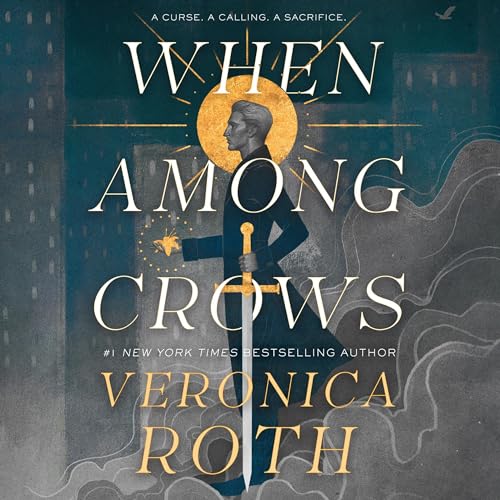
The cover artist, Eleonor Piteira remains one of the most talented cover artists ever as far as I am concerned. I wanna just frame all her work
First read: Nov 2024 This is one of those instances where, as much as I enjoyed this novella (and I did really love it) I can’t avoid the taste of missed potential and in fact it’s because I loved it so much that I feel the loss of that potential so keenly. This really had all the makings to be a great full length novel, or even beginning of a larger world, and I think would have benefited from the extra breathing space.
I enjoyed the Slavic folklore, the more unique creatures and magical world building (the Witcher 3 makes up a significant portion of my knowledge of Slavic folklore so I always appreciate more time with new creatures). The characters, character arcs, setting and quest were all great, but all these facets of this story had so much more potential for a degree of depth that I think would have made for something special here.
I feel like if I hadn’t recently seen that there are plans now for a sequel this would have bothered me a lot more. As it is, I will eagerly await a continuation of Dymitr, Niko and Ala’s story together. I feel like this isn’t broadly discussed enough either but this is a queer story for people who representation is important in their reads.
Also this cover is gorgeous and the artist is a favourite of mine and I have gotten a physical copy just so I can stare at it.
I can't shake the feeling that this book would have been so much better if it were a full-length novel and not a 160-page novella. The Slavic mythology in a modern setting was very much to my liking, but there was just no time to develop any of the characters and the plot moved lightning fast up to the point where it just felt messy.
the urban fantasy x folklore was serving. but I needed this to be like 400 more pages so I could really connect with the story. honestly, this concept as a duology or trilogy would’ve slayed.
Alright, let's break this down in simple terms! So, you know how in a good story, the characters are like puzzle pieces, fitting together in all sorts of interesting ways? Well, in this book, the characters are like a whole jigsaw puzzle of personalities!
First off, we've got Dymitir, a guy who's carrying around a load of guilt like it's his favorite accessory. You can practically feel his struggles jumping off the page! Then there's Ala and Nico, two newbies to the crew who bring their own spark to the mix.
Now, here's the scoop: while the book lays the groundwork for some serious found-family vibes, it's like the author hit the gas pedal before fully revving up that engine. But hey, we can totally imagine these characters becoming one big, dysfunctional, but lovable family in the end!
And let's not forget about the plot—it's like taking a trip down a dark and twisty rabbit hole into the paranormal underworld of Chicago. Picture a road trip meets quest to win favor from Baba Jaga, the mythical creature. Sounds wild, right? That's because it is!
The action keeps you on your toes, the twists make you go "Whoa, didn't see that coming!" and the Slavic folklore woven throughout? Totally fascinating stuff!
Now, here's the kicker: while most of the ride is smooth sailing, there are a couple of bumps in the road. Some moments felt a bit forced, and others didn't quite hit the mark for me.
But overall, it's a wild ride that's definitely worth hopping on! Big thanks to Netgalley and Macmillan Audio for letting me take this adventure and share my thoughts. So, grab your headphones and get ready to dive into this fantastical world—you won't regret it!
Gentle enough in spirit to live among mortals but fierce enough to endure their cruelty.
I absolutely adored this novella! It's filled to the brim with creatures and monsters from folklore, primarily Polish/Slavic folklore, and it feels so magical. In such a short time, Roth manages to immerse you in this hidden world and makes you care so deeply about all the characters within it. It's a brilliant concept executed perfectly.
I loved every single character so incredibly much. Dymitr is such a fascinating character written with such heart. I always found it awe-inspiring how skillfully Roth was able to weave in elements of the characters' pasts into the present day story. It was masterfully done so that I instantly became attached to them and understood their every motivation. Ala and Niko were also amazing characters, they all played off of each other phenomenally well. I wanted to spend so much more time with all of them!
I adored how folklore was woven into the very bones of this story. I loved the different types of connection the characters had with the folklore of themselves, it was such an intriguing way to explore heritage and a foreign motherland. I could tell, with every word, the passion Roth brought to this story.
Eternity is long. Time enough for hearts to soften.
You definitely won't want to miss out on this book! It's a magical whirlwind, it's a story of family and identity, it's a desperate, bloody clawing for redemption. I'm always astounded at authors' skills when I come across such incredible novellas. It's a wholly different level of expertise when you can tell such an emotional and moving story in such few pages.
3.5 stars ★ i picked this up because it was relatively short, so believe me, i see how ironic it is when i say it needed to be longer.
it gave very much leigh bardugo / ve schwab vibes which, if you know me, you know that i LOVE. i love complex characters and complicated dynamics and the exploration of these things (along with notable themes that promise to stick with you). dymitr, ala, and niko were compelling characters with intricate pasts, whose impacts were clear in the way they acted. seeing their growth, the way the trio came together despite significant differences, was (for lack of a better word) beautiful to read.
with that being said, i feel like we only knew the characters at about a 3 foot depth in a 6 foot deep pool. everything we learn about their pasts is really concise, not necessarily rushed, but certainly not explored the way i think it needed to be. i could’ve been feeling soul-crushing things for them, but alas, was not quite to that extent. the same goes for the lore – it’s based on slavic mythology if i’m not mistaken? so the information is quite literally at the author’s fingertips, and i just feel like it wasn’t ever truly dove into. no, it wasn’t confusing or left out, but again, there could’ve – and should’ve – been more information and deeper exploration of the lore.
this is a great, quick (albeit, too quick) read, with memorable characters and captivating writing. i’m hooked, and absolutely looking forward to the sequel, but it is a bit of a let down that this didn’t quite live up to the potential that it could have had.
── .✦ pre-read just reading something to hold me over until i go out this weekend and buy accomplice to the villain honestly 🙂↔️
I'll admit, despite obviously knowing the author, and having read all (most?) of her books, this was a cover request more than anything else. And, second admission, even though that opening line of the synopsis sounded delicious, I didn't expect to love (or like..) this considering the last few reads have been (in my opinion) middling at best.
But actually.. it was; delicious, I mean. Also, fun? Complex? The perfect amount of emo? Interesting AF? I had such a good time with this and I'm so mad it's not a full length story or a series except it felt perfectly paced, and just the right amount of plot and character work, that I'm also not mad about it. Not at all.
This is a fantasy surrounding Slavic lore built onto our world with creatures and the Knights who hunt them to protect the unaware humans around them and, even more than that, the choices we make and how we choose to define ourselves. And.. that's all I'm going to say. Mostly because anything more would ruin the fun and you should absolutely experience it for yourself.
Also, in hindsight, I love the cover even more the title is just perfection.
** I received an ARC from the publisher (thank you!) in exchange for an honest review. **
3.5⭐️ A paranormal urban fantasy set in modern-day Chicago. It was a short book, and there was a lot of info dumping, presumably to set up the series, but I was quite confused for the first half. Once it picked up speed (or I caught on/up), I was invested in the characters and the storyline. I think this author does atmosphere really well, and this was no exception. I really enjoyed the Polish immigrant story and the language elements. I read the physical book in tandem with the audio, and I would highly recommend audio for that reason. It is a found family story with three different narrators, and each is represented by a different narrator voice on audio. It was very well done.
This book really had it all: it was short, it was sweet, it had great characters, an interesting, perfectly paced plot, slavic folklore and the most pleasant writing ever. It was, quite literally, everything. It probably only missed a few more pages, because I’d have gladly kept reading.
If you don’t know what to read, please read this book – you’re not going to regret it.
Not a favourite because I like my books long, but close enough.




![Profile Image for s.penkevich [hiatus-will return-miss you all].](https://i.gr-assets.com/images/S/compressed.photo.goodreads.com/users/1735525095i/6431467._UX200_CR0,11,200,200_.jpg)