

What do you think?
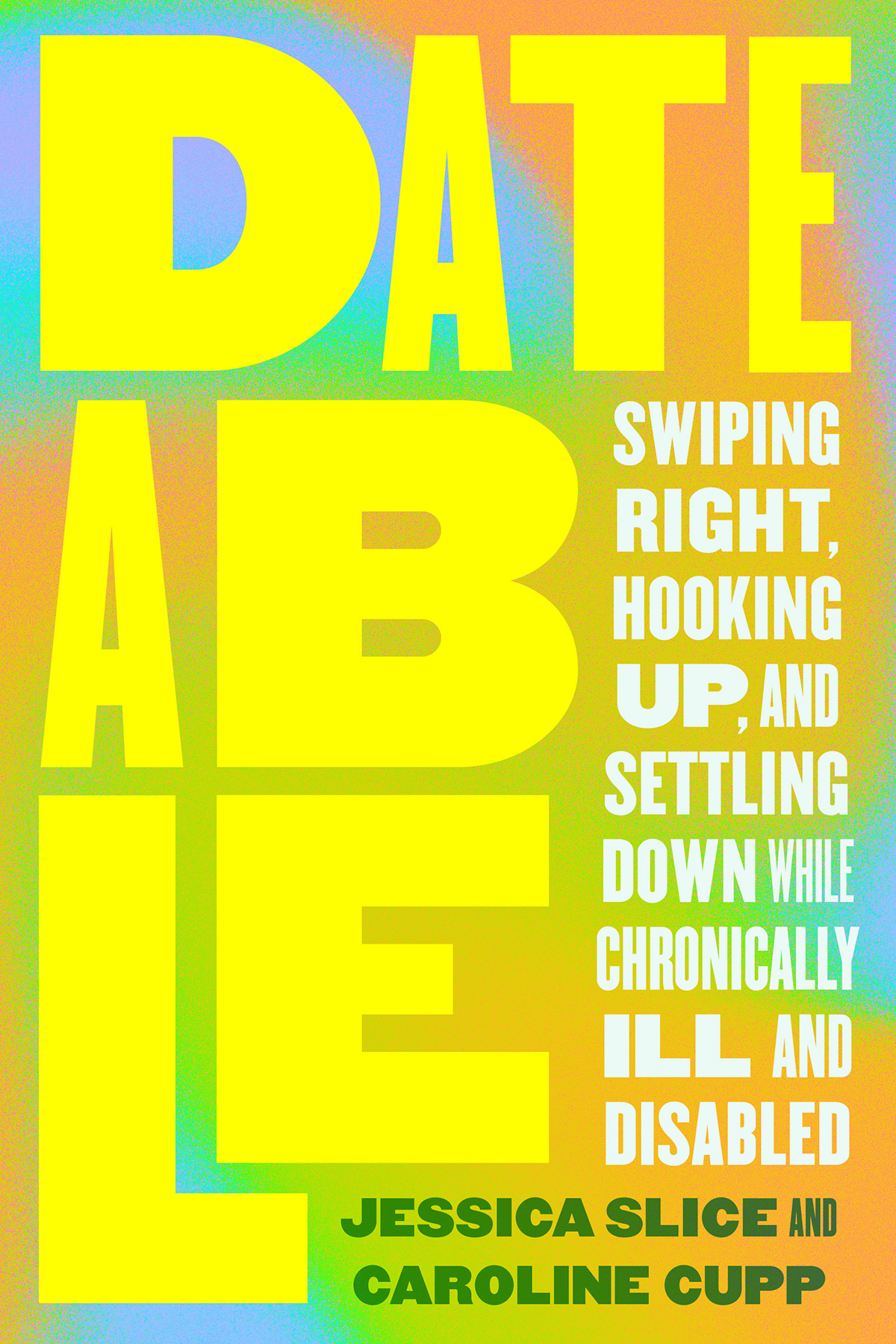
Dateable: Swiping Right, Hooking Up, and Settling Down While Chronically Ill and Disabled
A much-needed guide to dating--from apps to hooking up, sex, long-term relationships and more--from disabled essayist and author Jessica Slice and bioethicist Caroline Cupp. Disabled people date, have casual sex, marry, and parent. Yet our romantic lives are conspicuously absent from the media and cultural conversation. Sexual education does not typically address the specific information needed by disabled students. Mainstream dating apps fail to include disability as an aspect of one’s identity alongside race, ethnicity, gender identity, and sexual orientation. The few underutilized disability-focused apps are paternalistic and unappealing. Bestselling dating books do not address disability, and the few relationship books marketed to disabled people focus on the mechanics of sex rather than the complex interactions that create the conditions for it. In Dateable, disabled authors Jessica Slice Caroline Cupp team up to address the serious gap in the dating space. Dateable is the first book on disabled dating and relationships; it’s a dating guide made especially for disabled and chronically ill people, that also calls in nondisabled readers. Jessica and Caroline take on everything from rom-com representation and dating apps to sex and breakups with a strong narrative underpinning and down-to-earth advice. The book is as much a practical tool as it is an empowering guide.
288 pages, Paperback
Published July 9, 2024
Ratings & Reviews
Friends & Following
Create a free account to discover what your friends think of this book!
Community Reviews
Displaying 1 - 30 of 30 reviews
April 8, 2025
A really hopeful and validating read while still having a hard time processing my recent (ish lol, still feels raw) breakup. Slice and Cupp share their tales of their own journeys dating while disabled, evaluating potential partners, and settling down in love with their current husbands. They interview dozens of other disabled folks to include their perspectives on all the joys and challenges that come with being part of the disability community, particularly when navigating dating. The chapters each focused on a specific aspect of dating while disabled, like meeting up for the first time, making a profile and how to disclose disability on dating apps, queer and kinky disabled communities, caregiving, finances, breakups, etc.
This book challenged the core beliefs rooting in me during the last few years while my chronic health issues progress: I am a burden, my chronic illness is too much to put on anyone else, no one will want a girl who can’t have sex, I’m unreliable, my loved ones deserve a better friend, I deserve to be alone, I don’t matter if I can’t have kids.
There are so many parts from the book that made me feel seen and validated, but especially excited to get more involved in disability communities and organizing. I related to so many pieces of the stories told, particularly getting lost in the narrative that as a sick person, I should be lucky to have any relationship at all — I should accept any scraps because who wants to be with the disabled girl? My standards for a potential partner moving forward are so much higher after reading this book and seeing examples of disabled people in mutually fulfilling, loving, and caring partnerships where everyone’s needs are met. I want someone excited to love me, eager to take care of me on bad days, someone gentle, kind, and considerate who dreams of a future with me no matter what it will hold health-wise. I’m dreaming of feeling dateable again (someday not ready now LOL) and starting to believe I do deserve unconditional love, disabled or not.
A few quotes that resonated with me:
“Every time something didn’t work out, I thought it was my fault; if I could just erase my disability, everything would be OK.”
“To be equipped to manage the pain of a breakup, it's important that we enter relationships only after we have done the initial work of embracing our own worth and value. If we feel like a burden, we will accept less than we deserve.
When you are dating and disabled, it can feel like someone is doing you a favor by being in a relationship with you. And then, if that relationship ends, it's easy to wonder if anyone else will make that "sacrifice." If you take nothing else from this chapter, I want it to be this: those beliefs are societys conditioning and not based on truth. We internalize the ableism that we swim in, and it clouds our sense of self-worth. Society's power structure of bodies and minds is false, and the scaffolding is held up by fear.”
“I wish I had known that my partners were lucky to have me too.”
“Was I so worthless that any attention was good attention? Too many disabled people answer that question with a tragic ‘yes.’ We end up in relationships that are destructive because we internalize the message that we’re lucky to have someone willing to put up with us. Again, if you get nothing else from this book, please take this to heart: you deserve to be in relationships that make you feel valued, whole, and safe. Don’t ever settle for situations that make you feel awful about yourself.”
“Sure, “disabled” may be the best word for my body, but it wasn’t essentially true, at least in the way it was true for other people…I was still settling into my new body. I still thought of myself as a runner taking a long sabbatical.” 🥲
A note from the author’s (Slice) husband when asked about her decision to not disclose her disability to him, if he wishes she were honest so he could’ve chosen someone else. He told her “I don’t wish I had waited for someone else. I love you. There are things about your disability that make life difficult, yes, things I wish could be easier: go to Italy, no big deal. But I would rather not travel with you than travel with somebody else. You are beautiful and funny and wish and kind and relentless. I have learned a ton from you, and we laugh all the time, and we are compatible. You take care of me in ways that only you have and only you could…why would I wait for someone who can go to Italy but lacks all your wonderful qualities?
Being married to a disabled person is being married to a person. Maybe you know about their “health condition” upfront. That’s the main difference. The “perfect person” has “health conditions” too, or if they don’t, they will soon. Disabled people have needs. Non-disabled people have needs. Disabled people can be annoying. Non-disabled people can be annoying. Living with and loving someone presents them to you under a microscope, at a zoomed-in resolution that is unlike anything you can conceive of while swiping.
Loving you is loving a person. Your disability dictates how some of our abstract life gets concretized. But it is not A Different Thing.”
This book challenged the core beliefs rooting in me during the last few years while my chronic health issues progress: I am a burden, my chronic illness is too much to put on anyone else, no one will want a girl who can’t have sex, I’m unreliable, my loved ones deserve a better friend, I deserve to be alone, I don’t matter if I can’t have kids.
There are so many parts from the book that made me feel seen and validated, but especially excited to get more involved in disability communities and organizing. I related to so many pieces of the stories told, particularly getting lost in the narrative that as a sick person, I should be lucky to have any relationship at all — I should accept any scraps because who wants to be with the disabled girl? My standards for a potential partner moving forward are so much higher after reading this book and seeing examples of disabled people in mutually fulfilling, loving, and caring partnerships where everyone’s needs are met. I want someone excited to love me, eager to take care of me on bad days, someone gentle, kind, and considerate who dreams of a future with me no matter what it will hold health-wise. I’m dreaming of feeling dateable again (someday not ready now LOL) and starting to believe I do deserve unconditional love, disabled or not.
A few quotes that resonated with me:
“Every time something didn’t work out, I thought it was my fault; if I could just erase my disability, everything would be OK.”
“To be equipped to manage the pain of a breakup, it's important that we enter relationships only after we have done the initial work of embracing our own worth and value. If we feel like a burden, we will accept less than we deserve.
When you are dating and disabled, it can feel like someone is doing you a favor by being in a relationship with you. And then, if that relationship ends, it's easy to wonder if anyone else will make that "sacrifice." If you take nothing else from this chapter, I want it to be this: those beliefs are societys conditioning and not based on truth. We internalize the ableism that we swim in, and it clouds our sense of self-worth. Society's power structure of bodies and minds is false, and the scaffolding is held up by fear.”
“I wish I had known that my partners were lucky to have me too.”
“Was I so worthless that any attention was good attention? Too many disabled people answer that question with a tragic ‘yes.’ We end up in relationships that are destructive because we internalize the message that we’re lucky to have someone willing to put up with us. Again, if you get nothing else from this book, please take this to heart: you deserve to be in relationships that make you feel valued, whole, and safe. Don’t ever settle for situations that make you feel awful about yourself.”
“Sure, “disabled” may be the best word for my body, but it wasn’t essentially true, at least in the way it was true for other people…I was still settling into my new body. I still thought of myself as a runner taking a long sabbatical.” 🥲
A note from the author’s (Slice) husband when asked about her decision to not disclose her disability to him, if he wishes she were honest so he could’ve chosen someone else. He told her “I don’t wish I had waited for someone else. I love you. There are things about your disability that make life difficult, yes, things I wish could be easier: go to Italy, no big deal. But I would rather not travel with you than travel with somebody else. You are beautiful and funny and wish and kind and relentless. I have learned a ton from you, and we laugh all the time, and we are compatible. You take care of me in ways that only you have and only you could…why would I wait for someone who can go to Italy but lacks all your wonderful qualities?
Being married to a disabled person is being married to a person. Maybe you know about their “health condition” upfront. That’s the main difference. The “perfect person” has “health conditions” too, or if they don’t, they will soon. Disabled people have needs. Non-disabled people have needs. Disabled people can be annoying. Non-disabled people can be annoying. Living with and loving someone presents them to you under a microscope, at a zoomed-in resolution that is unlike anything you can conceive of while swiping.
Loving you is loving a person. Your disability dictates how some of our abstract life gets concretized. But it is not A Different Thing.”
July 20, 2024
A very important book to continue and spark more conversations about disabled rights and how society is built to fail people with disabilities.
May 22, 2024
This book provides an interesting perspective on the world of dating as a disabled individual. Some things that everyone may consider in dating suddenly become more complex, challenges not normally thought of have to be overcome, and all the while not only is the world not build to accommodate people, ableism, whether conscious or subconscious, poses an additional challenge to the world.
I’m glad the authors took the time to research and write about this subject. They presented the information in a really easy to understand way. The book is a good read for anyone regardless of whether the reader is disabled.
I’m glad the authors took the time to research and write about this subject. They presented the information in a really easy to understand way. The book is a good read for anyone regardless of whether the reader is disabled.
Read
December 6, 2024Dnf @ 15%
July 16, 2025
Round up to 4.5 stars. The world needs more books like this.
April 5, 2024
"We intended this book to be a guide and a source of connection, but what it turned into, for us, is a celebration. Disabled love is thoughtful, honest, and brilliant. Immersing ourselves in that world has been a privilege. We hope you found some practical advice in these chapters, and, more importantly, we hope you realized that you aren't alone."
With those concluding words, the authors summarize what Dateable is all about. It explores the world of dating while disabled, covering topics relevant to the beginnings of a relationship or periods of casual dating (dating, apps, breaking up, safety) and topics relevant to longer-term relationships (caregiving, finances). Along the way, the reader is given insights into not only the dating while disabled journey but the joys and challenges of living with a disability. The authors write based on their own experiences and those of the many people they interviewed. They write with knowledge, compassion, inclusion, and humor. Their bottom line that they return to again and again is to affirm the value of people living disabilities (which could be a book all by itself.) Along the way, they also honor the stories that were shared with them and provide encouragement to those who already have to work harder to navigate the world to navigate the complicated and tricky world of dating and relationships. Great read for those who are looking for this advice and guide, and for the non-disabled who can learn a lot from the experiences of the disabled.
With those concluding words, the authors summarize what Dateable is all about. It explores the world of dating while disabled, covering topics relevant to the beginnings of a relationship or periods of casual dating (dating, apps, breaking up, safety) and topics relevant to longer-term relationships (caregiving, finances). Along the way, the reader is given insights into not only the dating while disabled journey but the joys and challenges of living with a disability. The authors write based on their own experiences and those of the many people they interviewed. They write with knowledge, compassion, inclusion, and humor. Their bottom line that they return to again and again is to affirm the value of people living disabilities (which could be a book all by itself.) Along the way, they also honor the stories that were shared with them and provide encouragement to those who already have to work harder to navigate the world to navigate the complicated and tricky world of dating and relationships. Great read for those who are looking for this advice and guide, and for the non-disabled who can learn a lot from the experiences of the disabled.
May 31, 2025
The chapters about money and also queer culture had some particularly interesting points. “The Marriage Penalty,” for example, explains how current laws make marriage a financially impossible choice because access to critical caregiving services would be lost and social security payments would be further reduced. Given the current headlines about Medicaid cuts and health care, the more perspectives you can include around this topic the better.
January 25, 2026
I thought this book was overall very good. It covered a lot of topics and I really appreciated having both authors give their perspectives. My one critique is because it covered so much, it couldn’t go into any topic in depth. I kind of wish the book had been a little longer. But overall this book was an impactful read that showed me I’m not alone in my experiences navigating dating as a disabled person.
June 17, 2024
Interesting book on tips for dating with disabilities.
July 26, 2024
A very important guide in a scarce genre. Easy to read while giving imperative live saving and life improving tips to those living and loving with disabilities.
August 19, 2024
I love Dateable!
As the introduction to the Dateable shares so beautifully, the book combines the authors’ stories, stories of people who were interviewed, reflections on research and nuggets of advice to help broaden perspectives from so many angles. Dateable covers so many topics that influence dynamics of disabled dating and are not often discussed including disabled representation in broader culture, supporting pleasure and sexual activity, addressing the realities of violence, navigating caregiving, and accessing marriage as well as finances. Dateable takes a broad perspective on disability to include people with many types of physical, cognitive, and chronic health conditions and considers how disability intersects with other aspects of identity (race, ethnicity, sexual orientation, gender identity, et cetera). The book is filled with personal stories that make reading feel like connecting with a friend (or a community of friends). The authors offer a wealth of practical tips for so many aspects of relationships at different stages. While no book can cover everything, I love that Dateable considers so many aspects of disability experience including relationships with family as well as personal, cultural and communal biases. I appreciate so much about this book, and Dateable includes so many resources throughout different chapters as well as at the end of the book for further learning.
Dateable is a definite recommendation for people in the sexuality education world who support improving equity for people with disabilities and who want a more comprehensive perspective of disabled experiences. Dateable is a great tool that also provides great tools for people to broaden their perspectives on disability and open up really important conversations.
As the introduction to the Dateable shares so beautifully, the book combines the authors’ stories, stories of people who were interviewed, reflections on research and nuggets of advice to help broaden perspectives from so many angles. Dateable covers so many topics that influence dynamics of disabled dating and are not often discussed including disabled representation in broader culture, supporting pleasure and sexual activity, addressing the realities of violence, navigating caregiving, and accessing marriage as well as finances. Dateable takes a broad perspective on disability to include people with many types of physical, cognitive, and chronic health conditions and considers how disability intersects with other aspects of identity (race, ethnicity, sexual orientation, gender identity, et cetera). The book is filled with personal stories that make reading feel like connecting with a friend (or a community of friends). The authors offer a wealth of practical tips for so many aspects of relationships at different stages. While no book can cover everything, I love that Dateable considers so many aspects of disability experience including relationships with family as well as personal, cultural and communal biases. I appreciate so much about this book, and Dateable includes so many resources throughout different chapters as well as at the end of the book for further learning.
Dateable is a definite recommendation for people in the sexuality education world who support improving equity for people with disabilities and who want a more comprehensive perspective of disabled experiences. Dateable is a great tool that also provides great tools for people to broaden their perspectives on disability and open up really important conversations.
Did Not Finish
July 6, 2026Ok I got truly 3/4 of the way through this book but powering through the last few chapters wasn’t in me — but it’s not because I didn’t like it! This book is very helpful and touches on a lot of different subjects that could probably get their own book. It is basically a dating/relationship guidebook or manual and would not necessarily have to be read in order. I think you could totally just read chapters that interest you. It also contains a lot of interesting resources. The last few chapters just didn’t really feel super relevant to me and I lost interest, but I would recommend it overall — just be aware it’s not like a novel or collection of essays or something. The writing could be improved upon, but it is very accessible.
December 8, 2024
I really liked how it talks about a lot of different aspects of dating while ill or disabled. It’s detailed on thoughts and subjects. I really liked a lot how they constantly relate everything to non disabled and say how life and relationships are messy anyways and we can all relate. It was really helpful to explain some of the legalities too so some of us not yet legally declared can decide if this is the right way or not. They also have a ton of great resources for people to check out. It’s good to expose some stereotypes and myths and get people to understand that disabled or not we are all the same.
September 23, 2024
I normally don't leave worded reviews on books but.... This book should be read by everyone at some point In your life. Even if you are not disabled or chronically ill. This book is so informative, inclusive, and incredible. As a disabled, chronically ill autoimmune (hidradenitis supparativa), demisexual male this book was just the thing I needed to listen to on a slow Sunday. Granted I'm closer (practically non disabled) to being non disabled than I was 8 years ago. This still hits and covers everything one could imagine. Also the anecdotes were just perfect!!!

November 13, 2025
Highly relatable and almost gave me a sense of relief- I’m not alone in the frustrations and challenges I experience in trying to date as a disabled person. I also appreciated the research and variety of perspectives within the book- I was a little wary, with the authors being two women, that it would be too far removed from my experiences as a disabled man. But with a multitude of interviews and quotes, this book manages to cover all identities- gender, sexuality, interabled, and much more. Very insightful reading.

February 8, 2026
A really good guide to dating with a disability. It made me realize, my disability was not that bad compared to what some people deal with. I feel like I am in this territory of almost-not having a disability, but if you see me typing or trying to cut bread, you’ll know the truth. In these last few years, I have gotten to know my current self better, and become more confident occupying my current body. I feel like I am getting ready to go out on dates again.
December 3, 2024
Very insightful. Gained a lot of practical knowledge and advice for dating. Validated some dating experiences. Made me think about my reaction to others. Some topics were a bit awkward to listen to at the office, but they mentioned that in the forward.
December 8, 2024
I found this book an empowering resource that addresses the unique challenges faced by disabled and chronically ill individuals in the dating world.
The authors, bring us their personal experiences and extensive research and offer practical advice and heartfelt encouragement.
The authors, bring us their personal experiences and extensive research and offer practical advice and heartfelt encouragement.

May 20, 2026
DNF very early because the author literally told me to go read something else first lol I really want to get back to this though because I found the introduction very compelling, just can't have it clogging up my currently reading list.

June 16, 2024
✍🏽🏆✍🏽🏆✍🏽🏆
This entire review has been hidden because of spoilers.
October 7, 2024
Candid and timely! Excellent read.
October 11, 2024
This is a great book about disabled people date, have casual sex, marry, & parent.
December 14, 2024
Easy to read, informative, and full of stories
January 11, 2025
a must read for disabled and currently not disabled people alike.

March 8, 2025
Insightful!
April 6, 2025
Informative guide on the nuances and challenges of dating or in a disabled or interabled relationship. It touches on finances, relationship norms, consent, discrimination, healthcare, etc.

April 19, 2025
Very well written and informative. Grateful to the authors for their candor and courage
March 30, 2025
this book offered a good outline for navigating romantic relationships as a disabled person. the safety chapter is one that i think should be required reading for everyone. the chapter about breakups was an important read for me because a lot of my personal anxiety around relationships involves that stage. i also really appreciated the resources in the appendix for further reading/watching.
i felt the focus of this book was people with physical disabilities and neurodivergence, which makes sense because that's the point of view through which the authors move through the world. but people with "invisible illnesses" experience disability, accessibility, and ableism differently than those with visible disabilities. as someone with a chronic illness, i was hoping to walk away with more advice from people sharing my experience, and i'm not sure that this book provided that for me.
although the chronic illness rep in the conversation here was a bit lacking, i still feel like this is a valuable read for anyone coming of age or entering the dating scene with a disability, especially with the rise of long covid (whether you recognize that's what you have or not). 25% of the population has a disability and most people become disabled if they live long enough, so everyone would benefit from reading this book.
i felt the focus of this book was people with physical disabilities and neurodivergence, which makes sense because that's the point of view through which the authors move through the world. but people with "invisible illnesses" experience disability, accessibility, and ableism differently than those with visible disabilities. as someone with a chronic illness, i was hoping to walk away with more advice from people sharing my experience, and i'm not sure that this book provided that for me.
although the chronic illness rep in the conversation here was a bit lacking, i still feel like this is a valuable read for anyone coming of age or entering the dating scene with a disability, especially with the rise of long covid (whether you recognize that's what you have or not). 25% of the population has a disability and most people become disabled if they live long enough, so everyone would benefit from reading this book.
April 29, 2024
this was an amazing read. while it informs the reader of the challenges that can come with dating while disabled, it helps to provide a plethora of solutions and tips. i love the range of people they interviewed and also the range of topics and communities. i learned a lot about how the disability community intersects with so many others and also how to navigate those communities if interested. i appreciate the amount of resources provided and i love that throughout the book, it is a consistent reminder and affirmation that you are worthy and loved and you deserve to have the life that you want.
i would highly recommend this book for anybody - whether youre disabled or chronically ill or able bodied. it is informative and expands your worldview in many aspects.
i would highly recommend this book for anybody - whether youre disabled or chronically ill or able bodied. it is informative and expands your worldview in many aspects.
July 14, 2024
This book is such a gift—I’m not exaggerating when I say I think about it nearly every day. This book touches on so many important subjects that I wish were more commonly discussed within the disabled community. I will be recommending and thinking about this one for a very long time!
Displaying 1 - 30 of 30 reviews