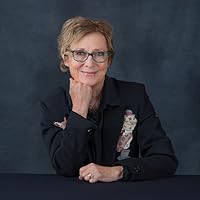
Descended from a line of Quakers and sea captains, Nora Waln was born to parents Thomas Lincoln and Lillian Waln. During childhood, she developed a fond interest of Chinese culture after learning of a family friendship with the Lin family resulting from trading in the early 1800’s. In 1919, she began attending Swarthmore College, a liberal arts college founded by Quakers, near Philadelphia. While studying at Swarthmore, Waln was contacted by two members of the Lin family, who were traveling in the United States. They invited her to visit at their Hopei Province homestead in China. During her junior year at Swarthmore, World War I broke out and Waln left school, before graduating.
In 1920, Waln set sail for China. Upon arrival she was taken in by the Lin family as a “daughter of affection.” Waln ended up living in the Lin house for 12 years and subsequently developed the idea for her memoir House of Exile. The family was considered “exiles” of the Canton Lin homestead because a Lin had been ordered by Kublai Khan, the Mongol Emperor from 1260 to 1294, to help work with the Grand Canal in Hopei.
While living in China, Waln met George Edward Osland-Hill, an English Foreign Service Officer whom she called “Ted.” They were married in Shanghai at the Cathedral for the Church of England in 1922. In 1933, Waln’s House of Exile was published with much esteemed praise. The 12 year memoir of her time spent in China as the adopted “daughter of affection” gave readers an inside look at Chinese culture and customs, such as the “Farmers Calendar,” in addition to the nation’s political and public hardships. Waln had been the first foreigner inside of the Lin home since its founding 650 years prior. The 1933 bestseller not only unobtrusively captured the view of daily life in the Lin household, but also reflected Waln’s insider view of the overthrow of the Manchu dynasty.
Waln’s husband retired from the service and became interested in studying music, so in June 1934, the family relocated to Germany. They arrived only two days before the “Blood Purge of 1934. From the very start of Waln’s time in Germany, she experienced much of Hitler’s Nazi movement. She felt compelled to recount her experiences and began working on her next book. Waln and her husband stayed in Germany until 1938, after which they traveled back to Osland-Hill’s native England. In 1939, Waln published Reaching for the Stars, an account of her time spent in Germany. In the book Waln shared her very optimistic view that the people of Germany would not allow Hitler’s National Socialism to last. She based her beliefs on Chinese political theory, following the notion that such an educated people would revolt after the realization of the dangerous communism in the works. By the end of World War II, however, Waln was less certain as so many of those who were strongly against the Nazis had been killed. Reaching for the Stars was a bestseller in the United States and was reissued in 1994 under the title The Approaching Storm: One Woman’s Story of Germany 1934-1938.
In 1940, Waln was granted an honorary degree of Master of Arts form Swarthmore College. Waln traveled a great deal throughout the 1940’s, seeing Asia, Europe, and the Americas. After the war, she lectured across the United States, all of the proceeds went to war relief funding. In 1946, Waln became the European Administrator for the Kappa Kappa Gamma fund for Refugee Children.
Waln contributed articles as Tokyo correspondent for the Saturday Evening Post from 1947 to 1951. She also contributed to Atlantic Monthly as a correspondent from Germany and Scandinavia, after which she freelanced. Waln was one of the few journalists to report from China and Mongolia. In 1958, Waln’s husband passed away. She spent her last three years residing near Malaga in Southern Spain.
I first read this book as a teenager in the Readers' Digest Condensed Books. For years I sought the entire book and finally found it as a reprint with an additional few chapters that were previously unpublished. The primary book is the experiences of American Nora Waln, a young woman brought up as a Quaker, and her interest in and visit to China during the post-monarchial years of the 1920s. Her life as a "daughter by affection" in an upper-class Chinese extended family are depicted as well as cultural observations of the Chinese are warm and affectionate. Her recordings of the national and political strife and turmoil before Communism was eventually adopted and China again closed to the world, are indicative of the uncertainty and distrust in people's attitudes towards friends and family. It would be very interesting to me to hear of the Chinese family's experiences during the closed China years and if they ever had contact with the Waln family again after China reopened.
I read it again this summer after having begun to study Mandarin Chinese, a desire of mine for many years. I was delighted to find that the Chinese words and names Waln used were more familiar to me in pronunciation if not in meaning.
The first half of this focuses on the domestic culture of a traditional Chinese family in the 1920s. The second half is a firsthand account of the extensive changes that were occurring in China during that time. Waln reports everything dispassionately, with minimal personal commentary, which is occasionally frustrating, since I’d like to know how she thinks about, say, someone’s blood dripping on her head during an armed robbery or the fact that an old Chinese man was executed for selling her two melons during an anti-Western boycott. She seems utterly fearless. I don’t know if she simply didn’t feel fearful or took action despite being afraid. Either way, it’s impressive.
Reading this, I learned a lot about China that I didn’t know before. I wouldn’t go so far as to say that this book clarified everything that I had previously found perplexing about Chinese culture, but it did help a little. I had no idea that the early 20th century was so disordered in China. I also gained a somewhat better understanding of the importance of family to Chinese culture. Waln was an odd and remarkable woman, and her book is interesting and informative.
Good rich detailed book on the inner workings of an upper-middle-class Chinese household in the 20s. Then carries us elsewhere as author gets married, and moves to where her writing takes her. Great in-depth look at Chinese culture, it's systems, government and geography, through the 20s and into the 30s. Her telling feels a little removed, although she says she's following her passion. She mentions the great accolades she got as a journalist -all true - so it felt a bit disconnected as I wasn't getting that from her book. The rather large section on the politics was difficult to follow. There were new groups and new names all the time and she felt no need to explain them. The Chinese people, their family set-up, the seasons and farming, architecture and clothing, are unique and interesting, and involving for those reasons.
Fascinating story, beautifully told, of an American young woman who goes to live as an "adopted daughter" with a Chinese family in 1920. I loved the descriptions of Chinese fmaily life. The following descriptions of the pitfalls of the political situation in China were a little less engaging for me, but still an amazing story. I wish I knew what happened to all the people in the book.
if this was about travel and adventure i missed them both. It was a dull list of events related to her move rather than travels from America to China. I could not have cared less there was no oomph to the book at all
Not entirely sure how to rate this. I really enjoyed the first half, and then I got so bogged down and it took me so long to finish the second half that I don't remember much of anything about the second half except being bored.
Not the best memoir ever, but an interesting one, especially if you are interested in East Asia and have a little bit of background. I feel like this really needs some annotations. Unfortunately, it doesn't have any.
I'm disappointed that the followup was never written. Even though I think the story of her post-World War II experiences in China and Japan would have been more sad, it would have been worthwhile, I think. I wonder if this was the manuscript that she mentions working on at the home of Helen and Tom Lambert? (Helen Lambert was a war crimes prosecutor and her husband Tom was a war correspondent. They first came to my attention in The Women Who Wrote the War.)