

What do you think?

Chasing The Flame: Sergio Vieira de Mello and the Fight to Save the World
'Chasing the Flame' tells the life story of a remarkable man. Sergio Vieira de Mello was born in 1948, just as the post-World War II order was taking shape, and died in a terrorist attack on UN Headquarters in Iraq in 2003, just as the battle lines in the 21st century's great struggle were being drawn.
622 pages, Hardcover
First published February 14, 2008
About the author
Samantha Power
21 books1,066 followersSamantha Power is a Pulitzer Prize-winning journalist, writer, and academic. She is affiliated with the Carr Center for Human Rights Policy at Harvard University's Kennedy School, holding the position of Anna Lindh Professor of Practice of Global Leadership and Public Policy.
A graduate of Yale University and Harvard Law School, she moved to the United States from Ireland at the age of nine. From 1993 to 1996 she covered the wars in the former Yugoslavia as a reporter for the U.S. News and World Report, the Boston Globe, and The New Republic. In 2003, Power won the Pulitzer Prize for her work “A Problem from Hell”: America and the Age of Genocide. She has contributed reporting to the Atlantic Monthly, The New Yorker and The New York Review of Books. She spent 2005 to 2006 working in the office of Senator Barack Obama, then served as the Director of Multilateral Affairs at the National Security Council. She is currently the United States Ambassador to the United Nations in New York.
A graduate of Yale University and Harvard Law School, she moved to the United States from Ireland at the age of nine. From 1993 to 1996 she covered the wars in the former Yugoslavia as a reporter for the U.S. News and World Report, the Boston Globe, and The New Republic. In 2003, Power won the Pulitzer Prize for her work “A Problem from Hell”: America and the Age of Genocide. She has contributed reporting to the Atlantic Monthly, The New Yorker and The New York Review of Books. She spent 2005 to 2006 working in the office of Senator Barack Obama, then served as the Director of Multilateral Affairs at the National Security Council. She is currently the United States Ambassador to the United Nations in New York.
Ratings & Reviews
Friends & Following
Create a free account to discover what your friends think of this book!
Community Reviews
Displaying 1 - 30 of 181 reviews
April 16, 2014
"Hey Girl. What you readin? Why you cryin?" says the man sitting on the hood of his car to me.
"Just a book about the UN," I say as I walk briskly home.
When this book started, I could not control my eye-rolls. I have read a few books about aggrandized heroes who often forget that their being male allows them to act in ways that would be intolerable in the opposite sex. And, don't get me wrong- Sergio does this. Samantha Power does not shy away from his less savory side: the neglect of his children, his multiple trysts, and his very awkward "promotion" of women. That said, this book won me over a thousand times. It did not win me over bc I left it thinking "Sergio is the best!" What Samantha Power does, and is so extraordinary, is uses the life of the man to chart not only his changes, but the UN's changes, and where the UN and Sergio, sometimes separately and sometimes together, succeeded and failed.
Now, why did I cry? Well, not-so-spoiler alert: Sergio dies in Iraq. I knew this before I picked up the book, as he is a hero in Timor (they even have an award named after him). It also tells you that I think in the first line of the book. But then when you get to the tragedy of the suicide bomb that took the lives of 19 UN personnel, I couldn't help it. Power weaves together all stories of those there, from the US firefighter who couldn't help because he had 9/11 flashbacks to the fiancee of Sergio desperately trying to get soldiers' attentions. The twenty or so pages that describe the incident are utterly heartbreaking.
That said, this book is a GREAT read for anyone interested in the following:
1. Overviews of crises that the UN handled in the past 40 years, including Vietnamese "boat people," Cambodian elections, returning of refugees and genocidaires from the Congo to Rwanda, Bosnia, Kosovo, East Timor and Iraq.
2. People interested in the UN system
3. Anyone who cares about humanitarian efforts and/or human rights
4. Anyone who has worked abroad, or wants to work abroad
5. Americans
Ok, since that covers most of my five friends on Goodreads, that is my way of saying everybody should read it. Done.
"Just a book about the UN," I say as I walk briskly home.
When this book started, I could not control my eye-rolls. I have read a few books about aggrandized heroes who often forget that their being male allows them to act in ways that would be intolerable in the opposite sex. And, don't get me wrong- Sergio does this. Samantha Power does not shy away from his less savory side: the neglect of his children, his multiple trysts, and his very awkward "promotion" of women. That said, this book won me over a thousand times. It did not win me over bc I left it thinking "Sergio is the best!" What Samantha Power does, and is so extraordinary, is uses the life of the man to chart not only his changes, but the UN's changes, and where the UN and Sergio, sometimes separately and sometimes together, succeeded and failed.
Now, why did I cry? Well, not-so-spoiler alert: Sergio dies in Iraq. I knew this before I picked up the book, as he is a hero in Timor (they even have an award named after him). It also tells you that I think in the first line of the book. But then when you get to the tragedy of the suicide bomb that took the lives of 19 UN personnel, I couldn't help it. Power weaves together all stories of those there, from the US firefighter who couldn't help because he had 9/11 flashbacks to the fiancee of Sergio desperately trying to get soldiers' attentions. The twenty or so pages that describe the incident are utterly heartbreaking.
That said, this book is a GREAT read for anyone interested in the following:
1. Overviews of crises that the UN handled in the past 40 years, including Vietnamese "boat people," Cambodian elections, returning of refugees and genocidaires from the Congo to Rwanda, Bosnia, Kosovo, East Timor and Iraq.
2. People interested in the UN system
3. Anyone who cares about humanitarian efforts and/or human rights
4. Anyone who has worked abroad, or wants to work abroad
5. Americans
Ok, since that covers most of my five friends on Goodreads, that is my way of saying everybody should read it. Done.

June 22, 2012
This book had an extremely powerful impression on me. For one, the life of Sergio Vierea de Mello was an incredible study of philosophy in action and metamorphosis. His ideals for how the UN could be a force for good and positive change, could help people in times of need, could bring together forces that were opposed, and could solve the problems of a not particularly pleasant human civilization are on display. A complex man (who isn't?), his mission and passion for life and peace coupled with his incomparable skills make him a sorely missed presence in our international community today.
This is a must-read for anyone interested in the UN or who, like me, runs a Model UN club (these are not mutually exclusive). It gives meaning to the purpose of the UN in a way that is so hard to define, and equally weighs its strengths, weaknesses, and - ultimately - failings. The whole book felt like a slow-moving train wreck, with Viera de Mello's death s prominently reported, but still managed to outline what is in effect - at least for me - a new charter of ideals and functions for what is a vital institution and forum of and for the United Nations.
Vierea de Mello was chasing the flame, as the title suggests, but I would expect most people who read Samantha Powers' lucid, inexorable prose to see that the flame burns within us all - if we let it.
As a final note, I'd just like to point out that my impression of John Bolton, who was a recess appointment as us ambassador to the UN (why anyone would appoint someone who is anti-UN to the UN is beyond me) as a total asshole was totally vindicated. Well done Powers.

December 23, 2008
Another great book by Samantha Power. As she did with Raphael Lemkin in her first book, she brings the person of Sergio Vieira de Mello to life, while giving the history of an institution - in this book, the UN, while in her first book, the concept of genocide.
In the book we can follow the transformation of Vieira de Mello's approach toward his work as he deals with the facts on the ground in places such as Cambodia, Bosnia, Rwanda, Kosovo, East Timor, and finally Iraq. Power also points out the strengths and limitations of the UN in these contexts. Through these experiences, however, Vieira de Mello became an expert in post-conflict reconstruction, knowledge that he tried to bring to Iraq but which the Americans and British ignored to their own detriment.
The chapter on his death in the 2003 bombing attack on UN headquarters in Baghdad was particularly troubling to read. After giving his whole life to the UN, the institution failed him in his time of need. It was chilling to see how some of the UN staff picked up and continued the functions of the bureaucracy (i.e., phoning in reports to New York) even as he lay dying in the rubble. The only person with a sense of urgency was Larriera, his wife.
In the book we can follow the transformation of Vieira de Mello's approach toward his work as he deals with the facts on the ground in places such as Cambodia, Bosnia, Rwanda, Kosovo, East Timor, and finally Iraq. Power also points out the strengths and limitations of the UN in these contexts. Through these experiences, however, Vieira de Mello became an expert in post-conflict reconstruction, knowledge that he tried to bring to Iraq but which the Americans and British ignored to their own detriment.
The chapter on his death in the 2003 bombing attack on UN headquarters in Baghdad was particularly troubling to read. After giving his whole life to the UN, the institution failed him in his time of need. It was chilling to see how some of the UN staff picked up and continued the functions of the bureaucracy (i.e., phoning in reports to New York) even as he lay dying in the rubble. The only person with a sense of urgency was Larriera, his wife.

September 6, 2018
Wow, an effective/emotional way of absorbing the history of UN missions in Cambodia, Bosnia, East Timor, and Iraq through one life-story. Through the UN, Sergio Vieira de Mello worked his way from humanitarian coordinator to special envoy and discovered the tension of humanitarian aid versus human rights, might vs. right, and the U.S.' relationship to the UN.
S. Power claims that Sergio upheld the importance of dignity in his career. While Sergio clearly respected and inspired the people around him, and emphasized the pride and dignities of nations, I'm not sure if I caught a coherent vision of human dignity or the future of the international system. He modeled international leadership that wasn't afraid to transition to national leadership (East Timor).
S. Power claims that Sergio upheld the importance of dignity in his career. While Sergio clearly respected and inspired the people around him, and emphasized the pride and dignities of nations, I'm not sure if I caught a coherent vision of human dignity or the future of the international system. He modeled international leadership that wasn't afraid to transition to national leadership (East Timor).

March 27, 2016
Chasing the Flame examines the role of the UN in world politics through the life of Sergio Viera de Mello, a Brazilian-born official who spent his career in the UN. He started his career there working for the UNHCR in 1969. He served in Bangladesh, Lebanon, Rwanda, Cambodia, East Timor, the Balkans, and Iraq.
In 1982 when Israel invaded Lebanon in response to Palestinian attacks in northern Israel, Viera de Mello was serving as the senior political adviser to the UN interim force in Lebanon, located in the southern part of the country. The US, France and Italy sent a multinational force to northern Lebanon, where Yasser Arafat and the PLO were under siege. This force , which was separate from the UN peacekeeping mission, assisted Palestinian fighters in evacuating Beirut and protected Palestinian refugees living on the outskirts of the city. Western forces retreated on September 10.
A few days later the president of Lebanon was assassinated. Israeli-backed Christian militia attacked the Palestinian camps in retaliation, killing more than 700 refugees. In response to the massacres, US Marines were redeployed to Beirut. The Marines offered military backing to the Lebanese army. In October 1983 241 Marines were killed in a terrorist attack on the Marine barracks in Beirut, and by February 1984 Reagan decided to withdraw US forces rather than risk further attacks.
Donald Rumsfeld, who had served as Middle East envoy in Lebanon when the attacks happened, described in 2003 how the “lesson of Lebanon” had shaped his approach to terrorism. Withdrawal had been a mistake because it had shown extremists that “terrorism works.” The United States would have to go on the offensive against terrorists. Viera de Mello identified a different lesson from the attacks. He was convinced that the US had made a mistake in siding wit the Lebanese army. He had a new appreciation for the importance of UN neutrality in peacekeeping operations.
In 1993, Viera de Mello joined the UN peacekeeping force in Bosnia, whose mandate was to ensure conditions for peace talks, and security in three “safe areas.” He believed that a political solution was the responsibility of major powers and advocated UN neutrality. He opposed a NATO bombing campaign, arguing that unless NATO was willing to intervene with a ground force, the peacekeeping mission should not be asked to accept the risks that came from offensive air strikes. Power argues that the UN mission’s traditional approach to peacekeeping was not appropriate to the circumstances.
She shows how Viera de Mello later realized the limitations of that approach. When Serbia massacred the “safe area” of Srebrenica in July 1995, UN peacekeepers were removed from Serb territory to accommodate NATO air strikes, and this time Viera de Mello supported NATO’s intervention. When Serbia attacked the province of Kosovo, Viera de Mello gathered evidence of ethnic cleansing against the Kosovars. His findings drew greater media attention to the situation, and led to Milosevic’s indictment by the Hague, the first time a sitting head of state had ever been indicted by an international tribunal.
Viera de Mello worried about the precedent that the NATO intervention had set for unilateral intervention, but he was persuaded that the UN’s credibility would have suffered if there had been no intervention after Srebrenica. He came to see the UN’s intervention as illegal under the UN Charter but legitimate according to the UN’s ideals.
Vieira de Mello was sent to Baghdad in 2003 to lead the UN mission in Iraq. Like most UN officials, he had opposed the invasion. However, he thought that the UN could make a difference in the reconstruction of Iraq. He advocated a concrete timetable with an end date for the occupation. His mission was distrusted and marginalized by L. Paul Bremer’s Coalition Provisional Authority, but that did not prevent Al Qaeda in Iraq from making the United Nations one of its first civilian targets.
In her conclusion, Power writes that Viera de Mello’s insistence on “talking to everyone” sometimes led to lapses in judgment, as in Bosnia when he showed excessive deference to Serbian leaders Karadzic and Milosevic. The massacre in Srebrenica and the genocide in Rwanda convinced him to speak up more about matters of principle, although he continued to engage with perpetrators of atrocities when and extracted concessions when possible. In 2000 he embraced a new norm of intervention proposed by an independent commission: the international community’s “Responsibility to Protect” civilian populations against genocide and ethnic cleansing when governments proved unwilling. When he took up his position as UN High Commissioner for Human Rights, he had a greater appreciation of the role of human rights in world politics. To preserve global order, human rights standards would have to become more binding. During his time in Iraq he placed increasing importance on human rights as central to the country’s future.
Here is a good review at Corrente Wire
http://www.correntewire.com/book_revi...
In 1982 when Israel invaded Lebanon in response to Palestinian attacks in northern Israel, Viera de Mello was serving as the senior political adviser to the UN interim force in Lebanon, located in the southern part of the country. The US, France and Italy sent a multinational force to northern Lebanon, where Yasser Arafat and the PLO were under siege. This force , which was separate from the UN peacekeeping mission, assisted Palestinian fighters in evacuating Beirut and protected Palestinian refugees living on the outskirts of the city. Western forces retreated on September 10.
A few days later the president of Lebanon was assassinated. Israeli-backed Christian militia attacked the Palestinian camps in retaliation, killing more than 700 refugees. In response to the massacres, US Marines were redeployed to Beirut. The Marines offered military backing to the Lebanese army. In October 1983 241 Marines were killed in a terrorist attack on the Marine barracks in Beirut, and by February 1984 Reagan decided to withdraw US forces rather than risk further attacks.
Donald Rumsfeld, who had served as Middle East envoy in Lebanon when the attacks happened, described in 2003 how the “lesson of Lebanon” had shaped his approach to terrorism. Withdrawal had been a mistake because it had shown extremists that “terrorism works.” The United States would have to go on the offensive against terrorists. Viera de Mello identified a different lesson from the attacks. He was convinced that the US had made a mistake in siding wit the Lebanese army. He had a new appreciation for the importance of UN neutrality in peacekeeping operations.
In 1993, Viera de Mello joined the UN peacekeeping force in Bosnia, whose mandate was to ensure conditions for peace talks, and security in three “safe areas.” He believed that a political solution was the responsibility of major powers and advocated UN neutrality. He opposed a NATO bombing campaign, arguing that unless NATO was willing to intervene with a ground force, the peacekeeping mission should not be asked to accept the risks that came from offensive air strikes. Power argues that the UN mission’s traditional approach to peacekeeping was not appropriate to the circumstances.
She shows how Viera de Mello later realized the limitations of that approach. When Serbia massacred the “safe area” of Srebrenica in July 1995, UN peacekeepers were removed from Serb territory to accommodate NATO air strikes, and this time Viera de Mello supported NATO’s intervention. When Serbia attacked the province of Kosovo, Viera de Mello gathered evidence of ethnic cleansing against the Kosovars. His findings drew greater media attention to the situation, and led to Milosevic’s indictment by the Hague, the first time a sitting head of state had ever been indicted by an international tribunal.
Viera de Mello worried about the precedent that the NATO intervention had set for unilateral intervention, but he was persuaded that the UN’s credibility would have suffered if there had been no intervention after Srebrenica. He came to see the UN’s intervention as illegal under the UN Charter but legitimate according to the UN’s ideals.
Vieira de Mello was sent to Baghdad in 2003 to lead the UN mission in Iraq. Like most UN officials, he had opposed the invasion. However, he thought that the UN could make a difference in the reconstruction of Iraq. He advocated a concrete timetable with an end date for the occupation. His mission was distrusted and marginalized by L. Paul Bremer’s Coalition Provisional Authority, but that did not prevent Al Qaeda in Iraq from making the United Nations one of its first civilian targets.
In her conclusion, Power writes that Viera de Mello’s insistence on “talking to everyone” sometimes led to lapses in judgment, as in Bosnia when he showed excessive deference to Serbian leaders Karadzic and Milosevic. The massacre in Srebrenica and the genocide in Rwanda convinced him to speak up more about matters of principle, although he continued to engage with perpetrators of atrocities when and extracted concessions when possible. In 2000 he embraced a new norm of intervention proposed by an independent commission: the international community’s “Responsibility to Protect” civilian populations against genocide and ethnic cleansing when governments proved unwilling. When he took up his position as UN High Commissioner for Human Rights, he had a greater appreciation of the role of human rights in world politics. To preserve global order, human rights standards would have to become more binding. During his time in Iraq he placed increasing importance on human rights as central to the country’s future.
Here is a good review at Corrente Wire
http://www.correntewire.com/book_revi...
July 19, 2021
"He (Sergio) has become a great prima donna and cry-baby, and I think he should be sent back to the High Commissioner for Refugees as soon as possible," - Brian Urqahart, founding United Nations (UN) member (in-book quote).
Author Samantha Powers provides a compelling and even-handed biography of the life of Sérgio Vieira de Mello, a legendary UN figure whom best exemplifies the organisation's inherent contradiction since its inception in 1945. An entity created "to save succeeding generations from the scourge of war," but helmed by member states who have grown accustomed to it.
Powers takes the reader on a journey in the shoes of a UN field officer by retelling the life of Sérgio in excruciating detail - from the refugee camps in Bangladesh to the military offices in Lebanon. From dining with war criminals in the former Yugoslavia, to building an entire nation in East Timor. The biography serves as an excellent credit to the work of international civil servants who often operate in harsh field conditions for the purpose of improving people's lives.
Author Samantha Powers provides a compelling and even-handed biography of the life of Sérgio Vieira de Mello, a legendary UN figure whom best exemplifies the organisation's inherent contradiction since its inception in 1945. An entity created "to save succeeding generations from the scourge of war," but helmed by member states who have grown accustomed to it.
Powers takes the reader on a journey in the shoes of a UN field officer by retelling the life of Sérgio in excruciating detail - from the refugee camps in Bangladesh to the military offices in Lebanon. From dining with war criminals in the former Yugoslavia, to building an entire nation in East Timor. The biography serves as an excellent credit to the work of international civil servants who often operate in harsh field conditions for the purpose of improving people's lives.

December 25, 2013
Whenever I read a book, there are different aspects that contribute to the rating and the reception of the book, including the technical skills, the author's style, and the content/subject matter.
In relation to this book, the content/subject matter far outweighs all other factors. I was introduced to Sergio Vieira de Mello in the Spring of 2012 in a presentation in my peace studies senior seminar class, and he has fascinated me ever since. You can say I have a celebrity crush on him; he's one of my role models, definitely. This man has dedicated his life to the UN in hopes of changing the world, increasing peace and bettering security for people everywhere. I admit that I cried reading the events of his last day, which is international news; the ten year anniversary was last year in August. How different the UN, and even the world, would be if he was still alive!
That being said, I gave this book five stars because I admire Sergio so much; there can be no wrong in portraying this man, with his human fallacies and his superhuman charisma. It is written in a journalistic manner, almost like a report in a chronological order with an element of storytelling embedded into it. It's also a very educational read about humanitarian aid, human rights, and navigating international organizations (diplomacy). But one thing that makes me a bit skeptical is the resume of the author, Samantha Power. She's now the US ambassador to the UN - I don't know if that makes her biased against the US or the UN or neither, and if that's the case, what is she censoring? How appropriate it is that this is a diplomatic book about a diplomat and his skills in diplomacy. There's nothing controversial or damning in this book, just as Sergio Vieira de Mello would have approached it.
I would like to think I can relate to Sergio Vieira de Mello, who was described as someone with idealistic goals but had pragmatic means. I've always seen myself as a pragmatic idealist. Sometimes, too idealistic and therefore naive. Like Sergio, I know there are many imperfections and follies within organizations and the people of the organizations, but we must not let that hinder our goals and actions because if we do, we wouldn't get anything done. For example, he disliked the US' arrogance, but he knew that he had to work with them so he did just that because the US is a vital player in geopolitics.
I so wish I could have met him. You know that question that asks "If you could have dinner with one/three/five/x people, dead or alive, who would you dine with?" Well, he's definitely in my top five, maybe even three.
In relation to this book, the content/subject matter far outweighs all other factors. I was introduced to Sergio Vieira de Mello in the Spring of 2012 in a presentation in my peace studies senior seminar class, and he has fascinated me ever since. You can say I have a celebrity crush on him; he's one of my role models, definitely. This man has dedicated his life to the UN in hopes of changing the world, increasing peace and bettering security for people everywhere. I admit that I cried reading the events of his last day, which is international news; the ten year anniversary was last year in August. How different the UN, and even the world, would be if he was still alive!
That being said, I gave this book five stars because I admire Sergio so much; there can be no wrong in portraying this man, with his human fallacies and his superhuman charisma. It is written in a journalistic manner, almost like a report in a chronological order with an element of storytelling embedded into it. It's also a very educational read about humanitarian aid, human rights, and navigating international organizations (diplomacy). But one thing that makes me a bit skeptical is the resume of the author, Samantha Power. She's now the US ambassador to the UN - I don't know if that makes her biased against the US or the UN or neither, and if that's the case, what is she censoring? How appropriate it is that this is a diplomatic book about a diplomat and his skills in diplomacy. There's nothing controversial or damning in this book, just as Sergio Vieira de Mello would have approached it.
I would like to think I can relate to Sergio Vieira de Mello, who was described as someone with idealistic goals but had pragmatic means. I've always seen myself as a pragmatic idealist. Sometimes, too idealistic and therefore naive. Like Sergio, I know there are many imperfections and follies within organizations and the people of the organizations, but we must not let that hinder our goals and actions because if we do, we wouldn't get anything done. For example, he disliked the US' arrogance, but he knew that he had to work with them so he did just that because the US is a vital player in geopolitics.
I so wish I could have met him. You know that question that asks "If you could have dinner with one/three/five/x people, dead or alive, who would you dine with?" Well, he's definitely in my top five, maybe even three.

October 14, 2015
This book.."Chasing the Flame" is so well written...even-handed and honest ....that it becomes a tale that surrounds the reader to the point that when tearing oneself from the pages...a sense of dizziness occurs simply because of the realness of the moments which Samantha catches. Sure the first five chapters were boring...but suddenly the narrative grabs you and won't let go....I have read loads of Vietnam....Cambodia...Kosovo.....East Timor.....Rwanda....Iraq.....but what was missing Sam supplies...its the anecdotes the fill the missing parts.....the meaty part for me was when Sergio wants to meet the leaders of Pol Pot......because they took the same classes he took at the Sorbonne......what was different...what made them take the fork in the road and end up doing what they espoused....Much like the killers of Ruwanda who went to college in France.......one incongruity that Sam doesn't address is how when Sergio was trying to help the Cambodian refugees to get back to their lands he was replicating what the Pol Pot and Mao had done by bringing the folks back to the farming phase of the development of the alleged new society. Powers has written a searing book.....honestly written about this hero..Sergio.....I had had read her other book " A Problem from Hell".....but this book is her best.....I cannot overemphasize it importance in the scheme of things that have occurred or will occur. Its the kind of book that as you read it and walk away to take a breather the scenes stay with you........I had just finished reading Five Days at Memorial about The Effects of Katrina......and the recurrent theme of not being ready for the black swan event is so grounded into the minds psyche that the reader ends up having tremors physically....God....Sam has written such a good book...please read it.....if you don't do anything else this month....year....read it.........PLease Ronnie Houle RN BSN

June 11, 2017
Samantha Power has done her research, digging up minute details and providing a bit of analysis from her experience in this field. de Mello's life is assessed in great detail, often with the summary of his rebellious nature leading to great changes... or falling into UN disasters. I found the latter part of the book most interesting, as Power presents the big missions and how de Mello approached them and how successful the UN's involvement was considered. For those in the humanitarian field, this will be particularly interesting. For those outside of it, this may be eyeopening towards the difficult decisions and participation involved in a response.
February 1, 2015
Chorei a morte do Sérgio como quem chora a morte de um amigo.
Um livro essencial pra pensar o que a ONU precisa mudar (e o que o mundo precisa mudar) pra que funcione como se propôs a funcionar na sua criação.
Um livro essencial pra pensar o que a ONU precisa mudar (e o que o mundo precisa mudar) pra que funcione como se propôs a funcionar na sua criação.

Did Not Finish
December 7, 2023I've been reading Chasing The Flame: Sergio Vieira de Mello and the Fight to Save the World by Samantha Power for about 6 months and I'm ready to admit that it's time to give up. I don't like quitting on a book but I've just found it too easy to put down. I liked Samantha Powers auto-biography very much and that's why I decided to pick this earlier book up.
There is no denying that it's well - written but I think I don't care enough about the subject of the biography, Sergio Viera de Mello enough to continue with it. de Mello was sent to many of the world's hot spots as one of the senior people in the UN's refugee organization, from Cambodia during the Khmer Rouge rule, to Bosnia, to Rwanda and other places. He died in 2003 in Iraq after a suicide bombing.
The subject of the UN and refugees is an important topic but it wasn't enough to keep me interested in this book. All I can say is that I'm sorry and maybe on another day when I'm in a different frame of mind, I might enjoy it more. Don't let this dissuade you from trying the book. Judge for yourself. (No Rating)
There is no denying that it's well - written but I think I don't care enough about the subject of the biography, Sergio Viera de Mello enough to continue with it. de Mello was sent to many of the world's hot spots as one of the senior people in the UN's refugee organization, from Cambodia during the Khmer Rouge rule, to Bosnia, to Rwanda and other places. He died in 2003 in Iraq after a suicide bombing.
The subject of the UN and refugees is an important topic but it wasn't enough to keep me interested in this book. All I can say is that I'm sorry and maybe on another day when I'm in a different frame of mind, I might enjoy it more. Don't let this dissuade you from trying the book. Judge for yourself. (No Rating)
July 30, 2020
Incredibly well-written, well-researched and heartwrenching biography of an exceptional diplomat who achieved more than was considered possible in abominable circumstances.

November 13, 2019
Sergio Vieira de Mello - (1948-2003) has been a Brazilian diplomat, humanitarian, scholar and United Nations High Commissioner for Human Rights. Samantha paints a densely worded picture, that attempts to skip no detail in conjuring up the reality of this remarkable human being. He seemed to have specialized in understanding how to get aid to dispossessed people. Humanitarian aid. And he brings legitimacy and weight to the charter of the United Nations, in bringing peace and healing conflict.
Through his person and projects, the reader accesses the United Nations - We witness with him, the many people who work in the UN, how they brave their way into conflict zones, that are horrifyingly fractured by war and genocide.
Sergio, interpreted the UN charter as a force of good. And he practiced extensively in unconventional ways, on how to use the flag of peace and neutrality to get humanitarian aid to the dispossessed. Bangladesh, Cambodia, Kosovo and East Timor. In East Timor, the United Nations gave him unbridled power to be the" Viceroy". Sergio a life long scholar of history, politics and philosophy, donned the role with nuance and complexity.
Samantha knits together this perspective, with skill... .Sergio harnessed his knowledge and expertise to dismantle the possibility of him mis-using power, and over the decades becomes the UN's exemplary steward.
In East Timor he learns the language and immerses himself in understanding the needs of the people of the region, with the minimum of fuss. In his role, he recognized he would have to restore water, electricity, homes, schools, a postal service, hospitals, law courts and finally ensure a free and fair election, to peacefully hand over the reins of the country to the people's choice, before he will be free to leave.
By the time he is assigned Iraq in 2003, the situation has changed. He is honored by the Secretary General of the United Nations, Kofi Annan as the United Nations High Commissioner for Human Rights, he oversees a small budget of about 66 million dollars. His reputation as the man who ensures that the occupying force (in this case the US) respects the charter of the United Nations as a peacekeeping force, makes SG Annan pick him to be his representative in Baghdad, i.e. once the Coalition forces led by the United States occupy Iraq.
Vieira de Mello in the course of 35 years of his career, had become a profound believer in the charter of the United Nations, President Bush of the United States has been a life long skeptic. The powerful nations in the UN Security Council, continually undermine the authority of the United Nations, refusing to sign onto treaties and charters that would regulate their field of action. It is during President Bush's tenure in the US and Kofi Annan's tenure as head of the UN, that Sergio meets that deadly force, that will undo his life.
Vieira de Mello had to find a space for the United Nations. The organization has been shoved around and marginalized, manipulated when needed... many of the employees were cozy office occupiers, risking little. How may the UN, gain the authority or legitimacy to govern nations to higher standards of conduct?
Samantha Power is an astute observer of this unique role Sergio, had begun to craft for himself and the United Nations, that would be tested in extraordinary ways, if he had become Secretary General. Her perspective, sympathy and compassion for this man's extraordinary effort, is palpable. She presents him, with his many contradictions. But never makes an overarching statement or thesis… The last chapter before the epilogue, perhaps is the one that lays out her thinking about Sergio's role in history. ((Diving into the depths of the details, that expressively articulates what a role like Sergio's would involve - felt often for me, like I was rifling through a primer or a code book… on "operations" in the field…) - this required stamina from me, and this would flag, now and then. Yet I must say... the last 200 pages, engaged me thoroughly and had my blood singing, literally.
Through his person and projects, the reader accesses the United Nations - We witness with him, the many people who work in the UN, how they brave their way into conflict zones, that are horrifyingly fractured by war and genocide.
Sergio, interpreted the UN charter as a force of good. And he practiced extensively in unconventional ways, on how to use the flag of peace and neutrality to get humanitarian aid to the dispossessed. Bangladesh, Cambodia, Kosovo and East Timor. In East Timor, the United Nations gave him unbridled power to be the" Viceroy". Sergio a life long scholar of history, politics and philosophy, donned the role with nuance and complexity.
Samantha knits together this perspective, with skill... .Sergio harnessed his knowledge and expertise to dismantle the possibility of him mis-using power, and over the decades becomes the UN's exemplary steward.
In East Timor he learns the language and immerses himself in understanding the needs of the people of the region, with the minimum of fuss. In his role, he recognized he would have to restore water, electricity, homes, schools, a postal service, hospitals, law courts and finally ensure a free and fair election, to peacefully hand over the reins of the country to the people's choice, before he will be free to leave.
By the time he is assigned Iraq in 2003, the situation has changed. He is honored by the Secretary General of the United Nations, Kofi Annan as the United Nations High Commissioner for Human Rights, he oversees a small budget of about 66 million dollars. His reputation as the man who ensures that the occupying force (in this case the US) respects the charter of the United Nations as a peacekeeping force, makes SG Annan pick him to be his representative in Baghdad, i.e. once the Coalition forces led by the United States occupy Iraq.
Vieira de Mello in the course of 35 years of his career, had become a profound believer in the charter of the United Nations, President Bush of the United States has been a life long skeptic. The powerful nations in the UN Security Council, continually undermine the authority of the United Nations, refusing to sign onto treaties and charters that would regulate their field of action. It is during President Bush's tenure in the US and Kofi Annan's tenure as head of the UN, that Sergio meets that deadly force, that will undo his life.
Vieira de Mello had to find a space for the United Nations. The organization has been shoved around and marginalized, manipulated when needed... many of the employees were cozy office occupiers, risking little. How may the UN, gain the authority or legitimacy to govern nations to higher standards of conduct?
Samantha Power is an astute observer of this unique role Sergio, had begun to craft for himself and the United Nations, that would be tested in extraordinary ways, if he had become Secretary General. Her perspective, sympathy and compassion for this man's extraordinary effort, is palpable. She presents him, with his many contradictions. But never makes an overarching statement or thesis… The last chapter before the epilogue, perhaps is the one that lays out her thinking about Sergio's role in history. ((Diving into the depths of the details, that expressively articulates what a role like Sergio's would involve - felt often for me, like I was rifling through a primer or a code book… on "operations" in the field…) - this required stamina from me, and this would flag, now and then. Yet I must say... the last 200 pages, engaged me thoroughly and had my blood singing, literally.

December 30, 2013
Chasing The Flame was one of the most depressing and tragic books I've ever read. Sergio Vieira de Mello dedicated his entire life to The United Nations, striving to improve the lives of millions of persecuted and impoverished people throughout the world. And Vieira de Mello didn't spend decades behind a desk in New York or Geneva like many other UN workers. He risked his life, time and time again, in some of the most war torn corners of the world. How many can say they gave personal hand to hand, man to man, right in the trenches, help to the people of Lebanon, Cambodia, Bosnia, Serbia, Kosovo,Rwanda, East Timor, Iraq ... ?
The book is depressing on many levels levels . Sergio had to fight tooth and nail for every accomplishment he was able to achieve in these countries. Firstly, of course, he had to deal with the sadistic despots who ruled these countries. But often, almost as frustrating; he had to deal with in-fighting within the U.N.. Not to mention the blatant incompetence of some of his fellow U.N. workers. Then of course, there was the lack of support from the most important and influential Member Countries when Vieira de Mello and the U.N. needed or requested it. Nowhere was this more evident than in Iraq. Remember of course, that the U.S.A. violated international law by waging war on Iraq without approval of the U.N. Security Council. Despite this, the U.N. did agree to enter Iraq and offer assistance to the "coalition" in an attempt to help rebuild a devastated Iraq. Vieira de Mello was chosen to head this U.N. mission and this final gut wrenching final chapter is when the book truly became tragic.
After a terrorist bomb destroyed The Canal Hotel which The U.N. was using for their headquarters , Veira de Mello lay alive, but trapped and unreachable, for several torturous hours before succumbing to his injuries. I'll end my review with 2 quotes from the book :
"As a result, while the U.S. military possessed state-of-the-art war-fighting equipment, from the time of the blasts at 4:28 p.m. to the time the rescue effort was terminated after dark, the most powerful military in the history of mankind was forced for rescue on brute force, a curtain rope, and a woman's handbag."
"But as his life seeped slowly out of him, there must have been a moment--hopefully not a long one-- when he realized he was every bit as helpless in his time of need as millions of victims had been before him. He died under the Canal Hotel's rubble -- buried beneath the weight of the United Nations itself."
The book is depressing on many levels levels . Sergio had to fight tooth and nail for every accomplishment he was able to achieve in these countries. Firstly, of course, he had to deal with the sadistic despots who ruled these countries. But often, almost as frustrating; he had to deal with in-fighting within the U.N.. Not to mention the blatant incompetence of some of his fellow U.N. workers. Then of course, there was the lack of support from the most important and influential Member Countries when Vieira de Mello and the U.N. needed or requested it. Nowhere was this more evident than in Iraq. Remember of course, that the U.S.A. violated international law by waging war on Iraq without approval of the U.N. Security Council. Despite this, the U.N. did agree to enter Iraq and offer assistance to the "coalition" in an attempt to help rebuild a devastated Iraq. Vieira de Mello was chosen to head this U.N. mission and this final gut wrenching final chapter is when the book truly became tragic.
After a terrorist bomb destroyed The Canal Hotel which The U.N. was using for their headquarters , Veira de Mello lay alive, but trapped and unreachable, for several torturous hours before succumbing to his injuries. I'll end my review with 2 quotes from the book :
"As a result, while the U.S. military possessed state-of-the-art war-fighting equipment, from the time of the blasts at 4:28 p.m. to the time the rescue effort was terminated after dark, the most powerful military in the history of mankind was forced for rescue on brute force, a curtain rope, and a woman's handbag."
"But as his life seeped slowly out of him, there must have been a moment--hopefully not a long one-- when he realized he was every bit as helpless in his time of need as millions of victims had been before him. He died under the Canal Hotel's rubble -- buried beneath the weight of the United Nations itself."

April 19, 2009
Sergio Vieira de Mello was undoubtedly an interesting person who drew a wide range of people (including Samantha Power) into his orbit over the years he worked for the UN in places like Kosovo, East Timor, and Iraq. I expected the book to embody more of the charisma and intelligence and warmth that the man must have had, to bring this larger-than-life figure right into the room with the reader. It mostly failed in that regard, feeling dry and academic, especially for the first half. It picks up considerably once he gets to East Timor, but still, perhaps because Power could not go to Vieira de Mello himself but had to rely on past interviews and the recollections of others, along with the usual documents, to research her story, it lacks his presence.
Power also claims that Vieira de Mello's personal growth as a representative of the UN can serve as a blueprint for future diplomacy and crisis management. I'm not totally convinced. The big lessons are things like "Legitimacy matters," and "Security is the first priority," which are definitely lessons Sergio learned but it also seems like even as he learned them, his ability to apply them was severely hampered by the politics of the Security Council and the bureaucracy of the rest of the UN. Will the countries on the Security Council overcome their individual obsessions long enough to learn these lessons in future crises? I'm not holding my breath.
Then, too, Vieira de Mello believed in engaging all parties, including terrorist leaders, warlords, and even the American government. Power understands that this often led him into morally compromised positions, or the appearance of such (which could be equally damaging), but claims that he learned this lesson, too, and became more outspoken throughout his career. He never got to finish his work in Iraq, so maybe we could have learned something there, but I don't see much guidance in his behavior as to how to engage the "bad guys" enough to keep them in the process and maybe make some improvements, while still knowing when and how to stand up to them, take sides, and even use force. I suppose there's no rulebook for this, but I think Power overstates her claim to have extracted principles from Vieira de Mello's career.
I got into the book, for sure, as it gave a nice peek into life in the field for UN officials, but I never quite got what the purpose of the book was, as it didn't seem complete as either biography or analysis.
Power also claims that Vieira de Mello's personal growth as a representative of the UN can serve as a blueprint for future diplomacy and crisis management. I'm not totally convinced. The big lessons are things like "Legitimacy matters," and "Security is the first priority," which are definitely lessons Sergio learned but it also seems like even as he learned them, his ability to apply them was severely hampered by the politics of the Security Council and the bureaucracy of the rest of the UN. Will the countries on the Security Council overcome their individual obsessions long enough to learn these lessons in future crises? I'm not holding my breath.
Then, too, Vieira de Mello believed in engaging all parties, including terrorist leaders, warlords, and even the American government. Power understands that this often led him into morally compromised positions, or the appearance of such (which could be equally damaging), but claims that he learned this lesson, too, and became more outspoken throughout his career. He never got to finish his work in Iraq, so maybe we could have learned something there, but I don't see much guidance in his behavior as to how to engage the "bad guys" enough to keep them in the process and maybe make some improvements, while still knowing when and how to stand up to them, take sides, and even use force. I suppose there's no rulebook for this, but I think Power overstates her claim to have extracted principles from Vieira de Mello's career.
I got into the book, for sure, as it gave a nice peek into life in the field for UN officials, but I never quite got what the purpose of the book was, as it didn't seem complete as either biography or analysis.

May 20, 2011
The first of the pre-gradschool books assigned on my summer reading list: this was an excellent choice. It provided tons of food for thought about the UN, the relationship between development and security, post-conflict transitions, the relationship between humanitarian efforts and human rights, and lots of other challenges of working in the international arena. It definitely changed my thinking in certain arenas.
I also learned a great deal about conflicts and regions I'd been sketchy on before: the Balkans, Rwanda, Cambodia, East Timor and more. I was dreading getting to the Iraq section of his career because I thought reliving the buildup to the war would just be an exercise in teeth gnashing, but it was actually hugely interesting. There's tons of detail and insight into all the missteps and factors that went into how badly the situation spiraled out of control, including a number of things that weren't known 'til years after the fact. Gripping in a grimly fascinating way.
I definitely didn't like always Sergio during the book -- he makes missteps large and small in both his professional and personal life, that at first I thought I was supposed to accept, before I realized that recognizing and learning from his screwups was a big part of the book's purpose.
The end is terribly intense and distressing. Even though you know what's coming, the reality of it was so much worse than I expected. It's taking me several days to shake off.
Highly recommended for anyone interested in the international arena. I couldn't stop talking about it the whole time I was reading it.
I also learned a great deal about conflicts and regions I'd been sketchy on before: the Balkans, Rwanda, Cambodia, East Timor and more. I was dreading getting to the Iraq section of his career because I thought reliving the buildup to the war would just be an exercise in teeth gnashing, but it was actually hugely interesting. There's tons of detail and insight into all the missteps and factors that went into how badly the situation spiraled out of control, including a number of things that weren't known 'til years after the fact. Gripping in a grimly fascinating way.
I definitely didn't like always Sergio during the book -- he makes missteps large and small in both his professional and personal life, that at first I thought I was supposed to accept, before I realized that recognizing and learning from his screwups was a big part of the book's purpose.
The end is terribly intense and distressing. Even though you know what's coming, the reality of it was so much worse than I expected. It's taking me several days to shake off.
Highly recommended for anyone interested in the international arena. I couldn't stop talking about it the whole time I was reading it.

May 7, 2020
A wonderfully researched biography, so rich in detail that I felt I was closely observing Sergio's life from the comfort of my window. I especially liked Samantha's epilogue, in which she so brilliantly summarized the teachings that Sergio left us. By reading this book, I grew in understanding about the UN, which Sergio so strongly identified with throughout this life, and the conflicts around the world. Along with Sergio, I became less naive about some of the "evils" of human nature and power/powerlessness of institutions. This is a thought-provoking book I should revisit in the future.

Read
January 7, 2009Read the STOP SMILING review of Chasing the Flame:
A few months ago, a friend invited me to brunch and I declined. My explanation: I needed to finish reading, for review, Samantha Power’s new 640-page biography of the late international diplomat Sergio Vieira de Mello.
“Sergio... who?” she asked. “You know,” I huffed, hoping she’d snap to recall: Of course! Vieira de Mello! The all-world geopolitical problem-solving badass! Instead, she said something about pancakes.
She must have had at least heard of him, I thought, so I prompted: “Assassinated United Nations High Commissioner for Human Rights? Special Representative of the Secretary General in Iraq? Killed in Baghdad in 2003? Truck bomb?”
Nothing.
Read the complete STOP SMILING review...
A few months ago, a friend invited me to brunch and I declined. My explanation: I needed to finish reading, for review, Samantha Power’s new 640-page biography of the late international diplomat Sergio Vieira de Mello.
“Sergio... who?” she asked. “You know,” I huffed, hoping she’d snap to recall: Of course! Vieira de Mello! The all-world geopolitical problem-solving badass! Instead, she said something about pancakes.
She must have had at least heard of him, I thought, so I prompted: “Assassinated United Nations High Commissioner for Human Rights? Special Representative of the Secretary General in Iraq? Killed in Baghdad in 2003? Truck bomb?”
Nothing.
Read the complete STOP SMILING review...

Read
February 5, 2009Samantha Power, a professor at Harvard, met Sergio Vieira de Mello when she was a journalist in Bosnia in 1994. Although he charmed her as he did everyone else, she has written a balanced biography of the flawed but dedicated and likable man. While Power impressed the critics with her research, she failed to convince all of them of her arguments. Several reviewers also noted that Power's writing, laden with detail and subtle layering, doesn't rise to the level of her Pulitzer Prize

July 14, 2018
Power’s book is simply not as driven by passion and zeal as “A Problem From Hell” was, but nonetheless, it’s a book by Powers so it’s a good one. One thing I appreciated about this book was the delving into the contradictions of Sergio’s personal life which he really had no issue being public with. His lack of integrity for the expense of pragmatism, and essentially hedonism, reminded me to be prepared to work out tough issues with such people in compassion and non-judgment.
August 29, 2018
all I can say.. I wish I could meet Sergio. He gave so much to UN and his story has been staying with me for the past few days. I was heartbroken and kept talking about it with some people. It’s unfortunate that many people do not know about Sergio.
I gave 4 stars because some chapters were a bit slow but we needed to know information on why Sergio made determinations on a couple of things because of the countries’ pasts.
I gave 4 stars because some chapters were a bit slow but we needed to know information on why Sergio made determinations on a couple of things because of the countries’ pasts.

February 8, 2020
A honest description of a brilliant man, his strenghts but also his weaknesses. A poor husband and father, vain to the top, but that wanted end changed the world and saved livres trough diplomacy, in some of the toughest conflicts that the world have seen.

January 23, 2021
A really excellent read. Vieira de Mello led a truly extraordinary life. The book takes us all over the world with Sergio, from Mozambique, to Cyprus, to Beirut, to Baghdad. For those interested in geopolitics, this book will help you understand the history of a several high profile conflicts, including the Bosnian genocide, Kosovo, and the fight for independence for East Timor. I also enjoyed learning more about the UN system, of which I previously had very little knowledge. The book carries a surprising emotional impact, and I found myself deeply moved by the tragedy that unfurls in the book's latter chapters. Samantha Power is an excellent writer, and I highly recommend one of her other books, "A Problem from Hell," which is tangentially related to a lot of the topics covered in this book.

June 5, 2021
An impressively researched book about a man whose blood flowed UN blue. After reading this biography I have nothing but an immense respect to Sergio Vieira de Mello--a humanitarian, peacemaker & a diplomatic genius.
..............
[When he realized he had miraculously survived the blast, he must have expected that professional soldiers from the most sophisticated military in history would find a way to extract him from the debris. But as his life seeped slowly out of him, there must have been a moment-hopefully not a long one-when he realized he was every bit as helpless in his time of need as millions of victims had been before him.] :(
..............
[When he realized he had miraculously survived the blast, he must have expected that professional soldiers from the most sophisticated military in history would find a way to extract him from the debris. But as his life seeped slowly out of him, there must have been a moment-hopefully not a long one-when he realized he was every bit as helpless in his time of need as millions of victims had been before him.] :(

February 10, 2025
There's something powerful about diving 700 pages deep into someone's life. In Chasing the Flame, Sergio Vieira de Mello's journey is not just his own—it mirrors the trajectory of the UN and global diplomacy. Like the UN, his path was marked by mistakes, hard-earned lessons, and evolving strategies, all culminating in a tragic ending amidst the rubble of a building, covered by the UN flag.

May 25, 2026
Why must the US destroy everything it touches? I know that’s not what the book is about, but I kept coming back to that point. A man devoted his entire life to the UN and helping humanity only to be met with resistance from the biggest powers in the world. I see we haven’t learned a damn thing.
May 5, 2025
More than a biography, Chasing the Flame offers both a profound meditation on leadership and a compelling journey through the currents of contemporary history.

September 29, 2023
Queria ter lido esse livro em 2013 e ter feito uma releitura agora em 2023. Informativo, franco, inquietante, muito bem escrito e pesquisado. Cinco estrelas é pouco. Nota mental: reler daqui a alguns anos.
January 7, 2026
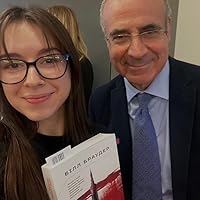
It was my last book of 2025. Because of its length and complexity, I ended up reading it in chunks over most of the year.
This book came at a relevant time in my life. UN agencies are highly present on the ground in Ukraine, while the UN Security Council remains blocked by russia’s veto. Reading it pushed me to reflect on Ukraine’s experience today: in many cases, grassroots organizations may appear more effective addressing the challenges of war than the UN, yet there are situations where the UN remains the only viable option, for example, the Black Sea Grain Initiative.
Samantha Power, former U.S. Ambassador to the UN, does not idealize the organization and is very open about its shortcomings, which is something I appreciated.
Through UN missions in Lebanon, Cambodia, Kosovo, East Timor, and Iraq, the book explores mediation, transitional administrations, humanitarian coordination, and post-conflict institution-building, while clearly showing how dependent these efforts are on the political will and real engagement of UN member states.
Following Sérgio Vieira de Mello’s path, it becomes genuinely difficult to part with him by the end, even though I wasn’t happy with some of his political decisions and life choices.
Gave the book 5 out of 5 largely because of how much I learned from it. That said, it is 600+ pages, and the level of detail can sometimes feel unnecessarily excessive or overwhelming — though this depth also helps to understand the processes from the inside.
This book came at a relevant time in my life. UN agencies are highly present on the ground in Ukraine, while the UN Security Council remains blocked by russia’s veto. Reading it pushed me to reflect on Ukraine’s experience today: in many cases, grassroots organizations may appear more effective addressing the challenges of war than the UN, yet there are situations where the UN remains the only viable option, for example, the Black Sea Grain Initiative.
Samantha Power, former U.S. Ambassador to the UN, does not idealize the organization and is very open about its shortcomings, which is something I appreciated.
Through UN missions in Lebanon, Cambodia, Kosovo, East Timor, and Iraq, the book explores mediation, transitional administrations, humanitarian coordination, and post-conflict institution-building, while clearly showing how dependent these efforts are on the political will and real engagement of UN member states.
Following Sérgio Vieira de Mello’s path, it becomes genuinely difficult to part with him by the end, even though I wasn’t happy with some of his political decisions and life choices.
Gave the book 5 out of 5 largely because of how much I learned from it. That said, it is 600+ pages, and the level of detail can sometimes feel unnecessarily excessive or overwhelming — though this depth also helps to understand the processes from the inside.

September 13, 2016
IQ "In the years ahead he would never view the United States as a trusted friend, but he would come to se it as a necessary partner. American policies were too often carried out arrogantly, he believed, and with an eye to domestic political audiences. Still, when it came to humanitarian affairs, peace keeping, and diplomacy, he knew that he and the UN needed U.S. money, leverage and leadership." 524
The view Power expresses on behalf of Sergio Vieira de Mello (SVdM) that I use for the opening quote is one that I agree with one small objection. Most countries base their foreign policy on the needs and wants of their domestic political audiences and those that don't tend to have that luxury because they are not a democracy. Thus while I find that equally frustrating as SVdM/Power do, it does seem to be the double edged sword that comes with a thriving democracy and not too high of a price to pay. but then again perhaps I am thinking too domestically, it's not a high price for me to pay as an American but for the good of the whole world it might be entirely too selfish. These jumbled thoughts are a direct product of CHASING THE FLAME which unflinchingly presents the life of a complicated diplomatic servant who gave up his life for a messy institution. Power also has a gift for recreating a scene, the last chapters of SVdM's death are heartbreaking. I could feel myself growing increasingly anxious with the characters, panic level rising as the pages seemed to move slower and slower while waiting to find out how Sergio fared. Of course we already knew the outcome but I'd never heard of SVdM before and was too young to remember his death so the exact details were murky for me and I wanted it that way to truly connect with the book in the moment. I held my breath the entire time and it was hard not to have angry tears at the ineptitude of the UN in Sergio's final moments, especially since he had spent his entire career with the UN and loved it so much, flaws and all.
There are many powerful (no pun intended) points that Power illustrates through Sergio's life and writings, even concepts that may seem basic but in their simplicity are probably not so obvious. Such as the necessity of having a strong police force when the UN entered a country, specifically native police officers. Usually this meant they needed to train them as the old cops were corrupt but Sergio and Power emphasize how much a difference a well trained police force makes by enforcing law and order so that the UN can concern itself with helping to govern. We also sympathetically watch Sergio grapple with the complexities and paradoxes of the UN. He wants to be principled and idealistic but of course that's not possible, especially in such an old and bureaucratic institution that is heavily dependent on member countries. "As a young man at UNHCR, Vieira de Mello had believed in pure humanitarian ideal. He had believed that aid agencies could and should perform apolitical lifesaving tasks, and that peacekeepers could and should remain impartial and avoid the use of force. But Bosnia & Rwanda had taught him that sometimes when UN humanitarians tried to be neutral, they abetted criminal acts" (218-219).
Power's ability to use the life and death of an extraordinary man to highlight the good and bad of the United Nations and the effects of international interventions is astounding. I was truly captivated while reading this book as it is incredibly well researched while managing to move along at a steady clip. Power leaves no stone unturned in Sergio's life and I hope everyone who goes to work for the UN gives this book a read.
The view Power expresses on behalf of Sergio Vieira de Mello (SVdM) that I use for the opening quote is one that I agree with one small objection. Most countries base their foreign policy on the needs and wants of their domestic political audiences and those that don't tend to have that luxury because they are not a democracy. Thus while I find that equally frustrating as SVdM/Power do, it does seem to be the double edged sword that comes with a thriving democracy and not too high of a price to pay. but then again perhaps I am thinking too domestically, it's not a high price for me to pay as an American but for the good of the whole world it might be entirely too selfish. These jumbled thoughts are a direct product of CHASING THE FLAME which unflinchingly presents the life of a complicated diplomatic servant who gave up his life for a messy institution. Power also has a gift for recreating a scene, the last chapters of SVdM's death are heartbreaking. I could feel myself growing increasingly anxious with the characters, panic level rising as the pages seemed to move slower and slower while waiting to find out how Sergio fared. Of course we already knew the outcome but I'd never heard of SVdM before and was too young to remember his death so the exact details were murky for me and I wanted it that way to truly connect with the book in the moment. I held my breath the entire time and it was hard not to have angry tears at the ineptitude of the UN in Sergio's final moments, especially since he had spent his entire career with the UN and loved it so much, flaws and all.
There are many powerful (no pun intended) points that Power illustrates through Sergio's life and writings, even concepts that may seem basic but in their simplicity are probably not so obvious. Such as the necessity of having a strong police force when the UN entered a country, specifically native police officers. Usually this meant they needed to train them as the old cops were corrupt but Sergio and Power emphasize how much a difference a well trained police force makes by enforcing law and order so that the UN can concern itself with helping to govern. We also sympathetically watch Sergio grapple with the complexities and paradoxes of the UN. He wants to be principled and idealistic but of course that's not possible, especially in such an old and bureaucratic institution that is heavily dependent on member countries. "As a young man at UNHCR, Vieira de Mello had believed in pure humanitarian ideal. He had believed that aid agencies could and should perform apolitical lifesaving tasks, and that peacekeepers could and should remain impartial and avoid the use of force. But Bosnia & Rwanda had taught him that sometimes when UN humanitarians tried to be neutral, they abetted criminal acts" (218-219).
Power's ability to use the life and death of an extraordinary man to highlight the good and bad of the United Nations and the effects of international interventions is astounding. I was truly captivated while reading this book as it is incredibly well researched while managing to move along at a steady clip. Power leaves no stone unturned in Sergio's life and I hope everyone who goes to work for the UN gives this book a read.
Displaying 1 - 30 of 181 reviews