To Ellen Dissanayake, the arts are biologically evolved propensities of human their fundamental features helped early humans adapt to their environment and reproduce themselves successfully over generations. In Art and Intimacy she argues for the joint evolutionary origin of art and intimacy, what we commonly call love. It all begins with the human trait of birthing immature and helpless infants. To ensure that mothers find their demanding babies worth caring for, humans evolved to be lovable and to attune themselves to others from the moment of birth. The ways in which mother and infant respond to each other are rhythmically patterned vocalizations and exaggerated face and body movements that Dissanayake calls rhythms and sensory modes. Rhythms and modes also give rise to the arts. Because humans are born predisposed to respond to and use rhythmic-modal signals, societies everywhere have elaborated them further as music, mime, dance, and display, in rituals which instill and reinforce valued cultural beliefs. Just as rhythms and modes coordinate and unify the mother-infant pair, in ceremonies they coordinate and unify members of a group. Today we humans live in environments very different from those of our ancestors. They used ceremonies (the arts) to address matters of serious concern, such as health, prosperity, and fecundity, that affected their survival. Now we tend to dismiss the arts, to see them as superfluous, only for an elite. But if we are biologically predisposed to participate in artlike behavior, then we actually need the arts. Even -- or perhaps especially -- in our fast-paced, sophisticated modern lives, the arts encourage us to show that we care about important things. Ellen Dissanayake is Visiting Scholar at the University of Washington and has recently held Distinguished Visiting Professorships in the College of Fine Arts at the University of Alberta, Edmonton, Canada, and at Ball State University, Muncie, Indiana. She has lectured and taught in a variety of settings, including the New School for Social Research in New York City, the National Arts School in Papua New Guinea, and the University of Edinburgh in Scotland. She is the author of Homo Where Art Comes From and What Is Art For?
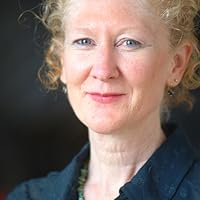
Ellen Dissanayake is an independent scholar, author, and lecturer whose writings about the arts synthesize many disciplines, including evolutionary biology, ethology, cognitive and developmental psychology, cultural and physical anthropology, cognitive archaeology, neuroscience, and the history, theory, and practice of the various arts. She is an Affiliate Professor in the School of Music at the University of Washington.
This book gets 3 stars for its fascinating subject and provocative, innovative perspective on the arts and human nature. It also gets 3 stars because it is rather redundant at times overly simplistic or presents "information" far too generalized to be still considered informative even if it may be true to some extent... and because it times she says things that are outright false and/or contradicts herself. Also she is a bit too insistent on her outline, which is not just because it is numbered necessarily scientific evidence. All that said, I do highly recommend reading or perusing this book, especially if you are an artist or work in the arts. This IS an important and controversial counterpoint...
This ambitious work is quotable and luscious in its effort to embrace a universal definition of art based on a mostly anthropolical approach. Focusing on the intimacy of humans in the most formative very first days and months of breast-fed life, then the lifelong elaborating the follows, stemming from innate modes and rhythms, Dissanayake asserts her worldview in a way that is most timely, suggesting that a world out of balance can be the result of not fulfilling these most basic human, and thereby societal, needs. I now have a notebook full of notes which I hope to draw from for the rest of my life with quotes I will use to advocate for the arts, bring solace to friends, and use in private moments to give me inspiration in ever more bleak times.
"In the temporal experience of art, as of love, we seem to travel through rooms or landscapes of ever changing shape in a charged, expanding present. In both we are immersed in longing, which wakens, anticipates, then swallows the space between significances where nothing is. Love and art sound intimacies, find harmony in deepest immediacy. And in talking or writing about both love and art, we recognize the inadequacies, and the edge of embarrassment, in our powers of description."
Dissanayake explores how art started from human intimacy, especially the bonds and little routines between mothers and infants. She shows how art helps people connect, and how early time with caregivers shapes how we relate to others later. Also successfully convinced me to be a boob rather than ass person.
a relación entre a arte e o amor -sobre todo o amor entendido dende a intimidade, nun sentido amplo- paréceme un tema interesante, máis considerando que ven dende unha base de paleoantropoloxía -canto desas obras de arte orixinarias no veñen dunha cuestión comunitaria, senón da relación privada entre dúas persoas-. agora, penso que os argumentos bioloxicistas e os esencialismos de xénero, sobre todo expostos na cuestión da maternidade, fan disto pouco máis que branqueamentos cursis de lóxicas cisheteropatriarcais.
Art, dancing and singing evolved in children so that mothers would love them more (and take care of them better ...)? I think this is absolute nonsense, and so narrow-minded.
Even if the idea wasn't absurd, it should be able to be conveyed in a paper, not a book. It is never concise, and the reader must peruse the whole book to get the whole, infinitesimally small idea. It is a waste of trees and people's time.
I would give this book no stars, but then it would seem I haven't read it.
Ellen Dissanayake's thesis, that art begins as rhythms and modes shared between infants and their families as soon as they are born, is well-exemplified here. She shows how human needs are met by involvement in religion and art, and points to the fact that artifacts from pre-history such as cave-paintings, are never symbolic, but probably were part of group ceremonies. While Dissanayake jumps to show that our current attitudes to art are dismissive, she does not really have a remedy.