Jump to ratings and reviews
Rate this book

Natura Morta: A Roman Novella

Rate this book
White peaches, red broom, pomegranates tumbling down the escalator steps: with these delicately rendered details, Josef Winkler’s Natura Morta begins. In Stazione Termini in Rome, Piccoletto, the beautiful black-haired boy whose long eyelashes graze his freckle-studded cheeks, steps onto the metro and heads toward his job at a fish stand in Piazza Vittorio Emanuele. The sights and sounds of the market, a mélange of teeming life amid the ever present avatars of death, is the backdrop for Winkler’s innovative prose, which unfolds in a series of haunting images and baroque, luxuriant digressions with pitch-perfect symmetry and intense visual clarity.

Reminiscent of the carnal vitality of Pasolini, and taking inspiration from the play between the sumptuous and fatal in the still lives of the late Renaissance, Natura Morta is a unique experiment in writing as stasis, culminating in the beatification of its protagonist. In awarding this book with the 2001 Alfred Döblin Prize, Günter Grass singled out Winkler’s commitment to the writer’s vocation and praised Natura Morta as a work of dense poetic rigor.

93 pages, Paperback

First published January 1, 2001

8 people are currently reading
288 people want to read

About the author

Josef Winkler

38 books31 followers
Josef Winkler is an Austrian author.

Ratings & Reviews

What do you think?
Rate this book

Friends & Following

Create a free account to discover what your friends think of this book!

Community Reviews

5 stars
78 (25%)
4 stars
82 (26%)
3 stars
76 (24%)
2 stars
49 (15%)
1 star
22 (7%)
Displaying 1 - 30 of 45 reviews
Profile Image for Justin Evans.
1,748 reviews1,141 followers
June 11, 2015
W. G. Sebald apparently described Winkler's work as monomaniacal, but whoever reported that saying to the world got it wrong. I've only read two of Winkler's books (compared to 4.5 of Sebald's) and I'm pretty sure that in fact it was Winkler describing Sebald, not the other way round. Or, at least, it should have been.

But, armed with that Sebald quote, I came into NM expecting something just like 'When the Time Comes,' a book about how we're all ultimately just bones for the bone broth pot. To be flippant, this one is more about the meat than the bones, and "meat" said in many ways: avian, bovine, porcine, piscine, amphibian (i.e., much of the book takes place in the market at Piazza Vittorio Emanuele), old man, teenage girl, teenage boy, young child, nun, edible, sexual, and above all, meat worthy to be worshiped (much of the book takes place in the vicinity of St Peter's).

Like 'When the Time Comes,' NM is formally interesting--it is a still life, inasmuch as it starts off simply describing person after person, object after object. But where a lesser writer would have stuck with the conceit, Winkler fairly quickly gives up on it, and starts building character, and even, in a small way, plot--because literature, for better or worse, involves time passing. The language is repetitive, in a Bernhardian (i.e., it provides rhythm) and a Gaddisian (i.e., quasi-Homeric motifs are used to alert the reader to the identity of the person in question, and the details involved are astonishing) way.

Also, this was surprisingly heart-breaking and beautiful, whereas 'When the Time Comes' was unsurprisingly bleak and depressing. I'm glad to know that, despite the fact that we're all just overgrown children playing with our dummies, Josef thinks life is more or less worth living. Even if it's only made worthwhile by the sight of a young man's testicles dangling out of his yellow shorts.
Profile Image for Evi *.
399 reviews309 followers
December 26, 2022
L'austriaco che conosce l'Italia e gli italiani meglio di un italiano.

Ci voleva uno scrittore della Carinzia e che scrive sull'Italia per giunta (ma che ne sa dell'Italia uno che viene dalla Carinzia, un austriacoooo?) che conosce addirittura i poteri emollienti del Labello (che tra i burri cacao non sente rivali) per farmi leggere uno dei libri migliori e originali che abbia mai incrociato.
Ritratti, come quadri di nature morte, con vista su uno dei mercati più pittoreschi di Roma, l'ex mercato di piazza Vittorio zona Stazione Termini, oggi nuovo mercato Esquilino.

Il mercato rimane, nell'iconografia, uno dei luoghi più vividi e pittoreschi dove si muove un concentrato di variabile colorita umanità.
Come la Vucciria di Palermo, o il centralissimo mercato del pesce di Catania o il Rialto di Venezia.
E dove, se non in un mercato rionale, l'umanità più popolana si concentra, corre, scorre, spinge, frega, vocifera, gesticola, urla, guarda, tocca, mostra, contratta, vende, compra, inganna, briga, sbriga?

Joseph Winkler concepisce una estetica del brutto e del ripugnante con le sue descrizioni, quasi al limite dello splatter, che suggeriscono la caducità implacabile dell'esistenza attraverso le cose che si corrompono e guastano.
Dove l'onnipresenza della morte è esibita su sanguinolenti banchi di macellai o su quelli gelatinosi e scivolosi delle pescherie con l'esposizione di cadaveri animali già guasti per il caldo, dove su una testa di pecora tranciata a metà con la mannaia, e dalle cavità oculari prive dei globi vola una mosca dai bagliori vivaci, sui banchi di frutta sfatta e molle in dolce decomposizione.
Per poi portarci, come al culmine di un quadro dove tutto converge, alla morte di Piccoletto che lavora al banco del pesce mentre sua mamma vende fichi su un panchetto.
Piccoletto che trabocca di vita e che spia in tralice le turiste straniere accaldate in piazza San Pietro, dalle lunghe ciglia nere che quasi gli sfiorano le guance disseminate di lentiggini, con i pantaloni corti da cui fuoriesce malizioso ma infantile un sesso di adolescente sempre infiammato.
Io l'ho preso in biblioteca, ma per chi lo desiderasse (nessuno), non fate come me perché questo è un libro che va posseduto, va aperto una pagina a caso per cominciare a srotolarne nella testa le immagini, come quando si osservano quelle meravigliose nature morte del '600, così fitte di minuzie e di piccoli dettagli, così iperrealistiche che ci viene il dubbio: ma la fotografia non verrà inventata più in là nei secoli?
Libro visivo in cui la descrizione trionfa sull'azione e, non a caso, vi è chi vorrebbe farne un film.
Libro che va compulsato, percorso avanti e indietro libro che va sbrindellato (cit.), come Il visconte di Bragelonne :-)))

Profile Image for Steve.
441 reviews587 followers
Read
June 11, 2015
This very curious text, written by the Austrian Josef Winkler (b. 1953), won the Alfred Döblin Prize, which itself is an outlier among the German literary prizes. "Natura morta" means still life, but it also means, literally, dead nature. I suspect that Winkler was thinking of both meanings when he chose the title of this novella. But instead of imagining flowers, vases and fruit as in the more commonly known still lifes, you should think of the less frequently encountered hunting still lifes or kitchen still lifes, which represent the relevant utensils and the associated dead animals, but revisited by Francis Bacon (the painter, not the philosopher).

An incorporeal eye (for the narrator is not a person, has no thoughts or judgments; it simply sees and sometimes hears) intently watches the people in the outdoor market in the Piazza Vittorio Emanuele II and in and around Saint Peter's cathedral in Rome (as well as in buses and subways linking them), and, one after the other, the people - their attire, their activity, their speech - are briefly described, dismissed and immediately replaced by another. Certain motifs appear: on the one hand, blood and dismembered body parts (primarily, but not solely animal in origin); on the other, teenagers' t-shirts, teenagers' wide-legged shorts revealing teenagers' underpants, teenagers' armpits - you get the drift. A third motif are decaying fruits and vegetables. Mixed in are the street vendors - gypsies, East European refugees, Africans, the occasional Asian - the minutely described cripples, beggars, drug addicts, mad men and priests, and the tourists - from everywhere there is money.

Winkler is definitely trying to make the reader uncomfortable. Although I don't terribly mind seeing the animal butchery which is usually antiseptically hidden from sight in my country, I admit to being made uncomfortable at watching a 13-14 year old girl spread her legs in public and play with the rubberized edge in the crotch of her panties, pulling it open and letting it snap shut, and again, and again... Just one example.

A few of the people are returned to, and at each return Winkler uses the same characteristic phrase to re-introduce them. For example, the (for lack of a better designation) central character, the simple minded, 16 year old son of a fig vendor, is described each time as having long, black eyelashes nearly reaching his cheeks and a silver crucifix at his neck. Little variations on these characteristic phrases are played as the text proceeds. This seems to be what one of the other reviewers is referring to when she suggests that this repetition and variation is a "recherche de mot". I doubt it. However, I certainly agree that these give a very particular rhythm to the text. This text is surely written with musical considerations in mind, and not simply the local, small scale sounds and structures; it reminds me of a large-scale symphonic movement by Bruckner or Mahler (both compatriots of Winkler).

In the midst of all of this human life and animal death the fig vendor's son is hit and killed by a firetruck hastening to a fire. Not unexpectedly, the bodily consequences of this collision are minutely described; somewhat unexpectedly, Winkler takes this opportunity to release a veritable tsunami of animal butchery. (You won't believe it unless you read it, I assure you.) The movement has reached its climax, and body parts are flying everywhere!

Up until the "tsunami", this text is life as it appears when one walks through a teeming market or into Saint Peter's plaza on a busy day, and one really sees . I appreciate the seeing. But it is a good thing to know there is so much more than is seen in this text.
Profile Image for M. Sarki.
Author 20 books239 followers
April 3, 2023
https://rogueliterarysociety.com/f/na...

Initially it must be noted that this Josef Winkler text reminds this reader of particularities similar to a film shot in long, still takes, at times moving in for a close-up of a somewhat remarkable occurrence, none of which would make the evening news but nonetheless important enough to encompass in total the first half of this very fine novella. Every scene focuses on some corner, bench, market kiosk, or alcove located in the vicinity of the park of Piazza San Vittorio. The main character is the fig vendor's son, Piccoletto, with the long black lashes who seems, as other Winkler characters are most often themselves wont to do, obsessed with his genitals and whether others are also noticing it too. Tiny inconsequential incidents occur simultaneously and often enough to resemble a compulsively detailed written report listing anything of note coming to the attention of the spectating author who seems to move about as if attached to the slowly swiveling camera that rolls along as an eavesdropping machine on its well-oiled and quiet dolly.

The sixteen-year-old fig vendor's son with the long black lashes, in a white Beatles T-shirt, stood in front of the streetcar just beside the conductor. When the teenager lifted his right hand to grab a handrail as the streetcar moved jerkily ahead, the young woman with the plastic bag of apricots & peaches glanced into his wooly armpit. Taking a step down in the doorway, squatting slightly, she bent forward, so that she could not only observe the boy's armpit but also smell his sweat.

The observer narrating these numerous events pays close attention to every detail imaginable within and throughout the vicinity of the park of Piazza San Vittorio. There are numerous characters coming and going, vendors and customers alike, and there is no lack it seems for something to say in noticing anything these occasions could deem remarkable on the page.

Near the entrance to the market bathrooms, Piccoletto pulled a splinter from the elbow of the alimentary owner's son and smeared his spit over his friend's wound.

And later, Piccoletto cuts his own head wide open on a fan blade rotating above the fish stall. His friend, the fish monger Principe, called Piccoletto a "bambino stupido" because of it. He continued waiting listlessly on customers the remainder of the day, head-stitched with bandaid, finally biting into a white peach while stroking his buttocks as a young, slim Chinese woman in peach-colored panty hose strolls past the fish stand.

When the now-doctored Piccoletto went to call his parents' house to report his injury, a girl in a skintight outfit stood in an open telephone booth stroking her genitals, which were visible through her tights, and told her listener she would be stepping off the train at nine in the evening at Stazione Centrale in Napoli. When she noticed that her aroused state had caught the eye of the young man with the bandaged forehead, she laughed & tugged several times at her yellow tights so he could better make out the swell of her labia.

Winkler certainly does love to play with himself and his characters. But what strikes me most of all in this text, even more than the obsession with sex, is the teeming life also engaged in the butchering of farm animals and fish, the hawking of these vendors' wares and their sales of bloodied flesh, the sweat and piss and blood of wounds to the head and otherwise. And then the almost spontaneous and accidental death of Piccoletto caught crossing the street in the rain in the commerce of procuring a daily pizza for his friend, the fat butcher, Frocio.

Frocio placed the point of the small, bloody filet knife with the curved blade against the belly of the fig vendor's son, pressed a ten thousand lire note into his hand and, pointing at the thick black cumulus cloud, ordered him — as everyday — to pick up a salami pizza at the nearby pizzeria for the fishmongers' midday meal.

And thus, in the pouring rain and speeding firetrucks our Piccoletto is no more, crushed and bloody broken, and the pages that follow describe in great detail the scrambling and stumbling fat Frocio as he carries the boy's limp body among the stalls and hanging carcasses of dead, or soon to be butchered flesh, and discarded heads of eels and fish, moldy peaches, yellow chicken's feet, flowers and eggs, scavenging rats and cats, and the butchers' blood-spattered aprons laid aside and behind the stands in the park of Piazza San Vittorio.

In the church where the requiem was read…sat Frocio, Principe, and countless other well-known faces from the market:...

It is true that the well-attended funeral service was vigilant in its mourning, and full of suffering for those who did survive his death. His fat friend Frocio, perhaps relying too much on heavy tranquilizers, wanders about in his short-sleeve shirt of blue and yellow butterflies aimlessly searching for a clod of fresh earth that should be discovered covering the newly dug grave of Piccoletto. And thus completes a novella written by none other than Josef Winkler which actually has, in fact and surprisingly, a beginning, middle, and an end. A novella rich in detail, exquisitely language-driven, and perhaps too real for most, but I would rather want us all to attempt, at least, to think otherwise. It is quite difficult to do justice to such a fine book as this is. Josef Winkler deserves a larger audience.
Profile Image for Proustitute (on hiatus).
264 reviews
August 19, 2014
Review published in Numéro Cinq: http://numerocinqmagazine.com/2014/02...

Until recently, Anglophone readers wanting to investigate the fiction of Austrian writer Josef Winkler faced only one option: the exacting and elliptical novel The Serf (1987/1997; trans. Michael Mitchell). Published in English by Ariadne Press, The Serf joined Winkler's Flowers for Jean Genet (1992/1997; trans. Michael Roloff), his biographical and readerly homage to the French writer Jean Genet, whose influence is felt throughout Winkler's own fiction, as the only works available in English.

But the reader requires an immersive education in Winkler before undertaking The Serf. And even Flowers for Jean Genet, while critical to comprehending Winkler's aesthetic—his queer appropriation of high camp, religious and perverse imagery; and his homoeroticism (I would suggest, from Ronald Firbank as well)—fails to give the reader a cogent glimpse into his creative output, an oeuvre for which Winkler has garnered many accolades including the Alfred Döblin Award in 2001, the Grand Austrian State Prize in 2007, and the Georg Büchner Prize in 2008.

Luckily, two additional fictions by Winkler were published in the past year by Contra Mundum, When the Time Comes (1998/2013) and Natura Morta: A Roman Novella (2001/2014), both translated assiduously by Adrian West, who, to use his own words (as applied to Winkler's prose), is able to render the painstaking "visual detail" and "attention to the musicality of phrases" found in the original German texts with a skill that honors Winkler's writing as a "writing-against."

Winkler eschews a traditional plot; instead, narrative fragments work together by means of repetition to complicate his vision of modern life. But single scenes can also be understood on their own terms, if one considers the images and their relation to the overall thematics of the text.

Subtitled A Roman Novella, Natura Morta is less a novella than a series of poetic vignettes, a succession of glimpses of life around the Piazza Vittorio Emanuele in Rome where various figures appear, disappear, and then reappear: people "festooned" with commodified and locally popular "colorful plastic pacifiers"; "two teenaged Moroccan rent boys"; and a man whose "eyelids and eyelashes [are] painted black with mascara" and who is taunted with the homophobic "Sida!" There are plenty of "bloody chicken heads and yellow chicken feet" in the marketplace juxtaposed with iconographic images like "a doll of the Christ child" parked in bowl surrounded by "dried pineapples, dates, and figs" and "the Virgin Mary ... look[ing] over the fingertips of her clasped hands toward a box of Mon Chéri chocolates." These images constitute a fixed yet fluid tableau, a natura morta, a still life echoing its literal translation: dead nature.

Winkler is primarily concerned with the fig vendor's son Piccoletto, "[a] black-haired boy, around sixteen years old, whose long eyelashes nearly grazed his freckle-studded cheeks." Piccoletto's function is to join the seemingly disparate images of the city and its inhabitants in a way that allows Winkler to explore the religious history of Rome, particularly as it deviates from contemporary vice and greed. "Sacred kitsch" litters the city; the text works by juxtaposing religious iconography and a marketplace saturated with "one crucified Lord after another," juxtapositions that in turn inform and reflect the distorted sexualities, the myriad "perversions" and vices paraded before the reader and the young, impressionable Piccoletto: from "[t]wo nuns ... lick[ing] the chocolate toes of an ice cream bar shaped like a child's foot" to Michelangelo's Pietà, "framed with bulletproof glass," an icon fetishized by "[a] toothless Pole" with the desire "to clasp the mother of God in her fingers."

Winkler's imagistic prose shows debts to the cinema. In one scene, Piccoletto spies a videocassette of "the film Sciuscià by Vittorio de Sica ... [a]top the apricots and white peaches" carried in a plastic bag by an anonymous woman on a streetcar. This mention of de Sica's first major work as a director—filmed in 1946 and translated in English as Shoeshine—reveals how images in Winkler function similarly to those in a neorealist film; not only do many of the series of images contain potent mixtures of the sacred and the profane, but they overvalue the image itself (in its repetition and in its recurrence) in ways also reminiscent of auteurs such as Michelangelo Antonioni.

Winkler has likened his authorial role to that of a human camera[2]: he would undoubtedly have had Antonioni's famous montage of images in mind—I am thinking of Antonioni's L'Eclisse (1962), with its stress on images as storytelling vehicles—when compiling his own scenes of natura morta. Consider the following two passages:
A dog on its hind legs with a protuberant member snapped over and over at the small crucifix hanging from the wrist of an exhausted woman leaning with her eyes closed against the wall. A kneeling girl bumped her forearm against the thigh of a young monk holding a clear plastic bag of freshly watered cherries.
And:
Aroused, staring into the girl's leg holes and sniffing at her map, the boy [Piccoletto] bit down on his tongue, coated in bits of fruit bar, then stopped as he became aware of the taste of blood filling his mouth and glanced self-consciously as the mincing red feet of the pigeons. Piccoletto stood, daubed his lip with a handkerchief, passed the city map of Rome to the girl with the words "Mille grazie!" and looked for the toilet.
Winkler wants us to regard a teenaged boy, who is always "playing with his sex," as a Christ for our times, in a world comprised of tourists, clergy, tradespeople, sex workers, and drug addicts. The fragmentary glimpses of city life in Natura Morta are refracted through the sexualized consciousness of Piccoletto whose observation of two other boys "gnawing on a fig, fresh and purple" is followed up immediately by "[t]he two boys huddl[ing] together, whispering and giggling, eyeing Piccoletto's broad buttocks."

Even more crucial to Winkler's sexual vision of modernity is Piccoletto's interest in soliciting both male and female gazes, and how he can arouse and also express sexual interest across the gulf of gender. Winkler's aesthetic construction of modern-day Rome conjoins sex and the city, forcing individuals to confront the past in a present whose greed, lusts, and sensual pleasures—e.g., "Frocio wrapped fistfuls of ice chips in tin foil, pressing them into the form of a phallus, held the cold fetish at his hips, and squeezed the ice chips out of the tin foil in front of the fig vendor's son, as though releasing kilos of ejaculate"—contrast with the iconographic and architectural reminders of latter days: "a stone phallus" in the Piazza San Vittorio the scene where an ambulance "pick[s] up a young drug addict, passed out and foaming at the mouth"; "the exit of the papal tombs" of Saint Peter's Cathedral "leaking blood in the filthy streets," streets littered with pages of the Cronaco vera, "in which tragedies from throughout Italy—illustrated with hearses, eyewitnesses, chesty women, and Mafiosi...—are reported every week."

In contrast with Natura Morta's portraits of city life, Winkler's When the Time Comes takes rural Austria as its focus (Winkler's native Carinthia). But like Natura Morta, When the Time Comes centers on a young boy whose intellectual and sexual maturation are influenced by his attempts to compile the stories of those who have come before him. In When the Time Comes, the storyteller is "the bone collector" Maximilian, whose "black bone stock ... smell[s] of decay" and yet, because it contains the bones of the dead, has within it a history to decipher, record, fathom. Maximilian is Winkler's anchor point; other characters' stories are woven into his "clay vessel" of bones, creating a portrait of life in rural Austria spanning generations.

The town's pastor has erected a terrifying painting representing God's judgment at the town center, an icon that oversees the lives and deaths of the townspeople in a "town built in the form of a cross." It depicts a man "who dragged a life-sized statue of Jesus through the forest before the Second World War and threw it over a waterfall," causing Jesus to lose both arms; the painting shows the man's retribution in life, since he "lost his own arms in Hitler's war," and after, in the fires of Hell. The often vindictive Old Testament God's relationship with his flock, one built on fear as much as veneration, is a paradigm that repeats at the secular and personal levels. One is never free from one's history, and even rewriting history, placing bones upon bones—as is the bone collector's iterative, inscriptive task—cannot pry the individual from his or her community and the repressive social and religious structures of the past.

Winkler inverts the famous "begat" passages in the book of Genesis, opening the sections of When the Time Comes with his characters' often tragicomic deaths rather than with their births; because of this, their lives seem to take on a more purposeful and even allegorical meaning. For example,
Willibald, who had worked for decades in the Heraklith factory on the other bank of the Drava, was dead from long cancer. His hands in the air and his pants around his ankles, he stepped out of the bathroom and called [to his wife]: Hilde! Hilde! Help me! then fell over and died on the spot.
"Death is my life's theme," Winkler has stated, and its presence—impending or otherwise—is felt on every page of When the Time Comes.

Most of the narrative in When the Time Comes, however, is taken up with the story of two boys, Jonathan and Leopold, names that allude to religious and popular examples of queerness—the first, a reference to Jonathan's homoerotic relationship with David in the book of Samuel, and the second recalling Leopold of the Leopold and Loeb murder scandal in 1920s Chicago. It is typical of Winkler to fuse extremes: love alongside fear, pleasure alongside pain, and loyalty alongside greed: in this case, Jonathan and Leopold achieve an extreme jouissance combining pleasure (mutual masturbation) with pain (autoerotic asphyxiation):
The two boys tied the two ends of rope behind their ears and jumped into the emptiness, weeping and embracing, a few meters from the armless Christ who had once been rescued from a stream bed by the priest and painter of prayer cards. ... With their tongues out, their sexes stiff, their semen-flecked pants dripping urine, Jonathan in pajamas and Leopold in his quicklime-splattered bricklayer's clothes, they hung in the barn of the parish house until they were found by Jonathan's sixteen-year-old cousin...
Neither the bone collector Maximilian nor the townspeople condemn the boys for their homosexuality; instead, the townspeople grumble about the senseless act itself, not its queer connotations ("those two idiots who did away with themselves together!" in "this godless village"), and Jonathan's mother Katharina grants her dead child unearthly powers, certain that he will return like the resurrected Christ to be again among his family. Whereas "[i]n death they were separable," the intermingling of "their tears, their urine, and their sperm" in life had rendered them inseparable: they can now be mourned as individuals, despite the fact that, curiously, "Leopold was buried in Jonathan's death mask."

W. G. Sebald notes that Winkler's use of repetition points to something personal in his work, an act of self-definition that requires sifting through and making sense of one's origins:
"Josef Winkler's entire, monomaniac oeuvre ... is actually an attempt to compensate for the experience of humiliation and moral violation by casting a malevolent eye on one's own origins." If repetition is the sole way to work through trauma, as Freud has suggested, the rural portraits in When the Time Comes suggest that trauma is as endemic to everyday life as is a kind of quiet joy, and the ways in which collective and personal traumas are eventually reconciled with one another are mediations intrinsically bound to the storyteller's sociocultural function.

Sebald's remarks on Winkler's work also point to a moral complicity that individuals need to recognize, one that carries the weight of the past and also points toward a future—though, just what that future constitutes is bleakly uncertain. The teleological aim of the future, as Winkler sees, points only toward death. Thus, the reader meets each character in When the Time Comes at the moment of his or her death, the narrative then working backward through the character's life. Winkler's vision privileges the figure of the artist as conduit between past origins and present traumas, interpreting "the flood of recollected images [as it] begins," but just what the artist or storyteller figure does with these "bones" is undefined, as is who will replace Maximilian when his own time comes.

Like Sebald and like his own Austrian compatriots Peter Handke, Elfriede Jelinek, and Thomas Bernhard, Winkler flags memory and history—collective and individual—as inescapable traps that affect present experience. Winkler is concerned with the individual's role in history, how it is necessary to acknowledge complicity with the past, and how one must grapple with the external forces of inhumanity, greed, and immorality and ultimately reconcile with that past. And yet, while it is essential to remember the stories of the dead, sadly, we erase all memory of them before we have had time to absorb all that they can offer us:
Tomorrow morning or the day after, they will scrape it [candlewax] off with a kitchen knife and sweep it up with the leftover flowers strewn about, then there will be no more traces of a dead man in the house, the mourning house will smell no more of rotten flowers, burnt spruce twigs, and wax candles.
Profile Image for Jose Carlos.
Author 16 books731 followers
January 11, 2018
REIVINDICACIÓN DEL ARTE DE NARRAR

Natura morta es un festival narrativo, una recuperación del goce por narrar, una reivindicación de esa descripción que muchos autores, presuntamente anclados en la posmodernidad, consideran una forma pasada de moda, sin interés, y que en la obra de Winkler se convierte en una fórmula primordial, ya que desde allí articula los sucesos del texto.
Espacio y tiempo, más que nunca, son las dos claves de la narración. Espacios variables, descritos con minuciosidad: el metro, la plaza del Vaticano, el interior de San Pedro, el tranvía, la tienda de souvenires, el hospital, el interior de la iglesia del velatorio, el cementerio y, por supuesto, el mercado. El mercado es el gran espacio del libro, lugar de vida, pero sobre todo, lugar de muerte. Todos los espacios, para Winkler, aunan esa dicotomía de vida-muerte, además de complementarse con un pesado y lóbrego elemento sexual, pero será el mercado un personaje propio en la novela, quizás el verdadero protagonista, descrito con olores y colores que demuestran la fina línea que separa la vida de la muerte y, como se verá al final del libro, metaforiza la miseria cotidiana de la tragedia.
El espacio se hace enorme en Winkler, al ser mostrado desde una puesta en escena multiperspectivista, incluyendo los puntos de vista de los transeúntes a las descripciones, pormenorizando los elementos que lo conforman, ampliando el ojo del narrador como con un gran angular que convierte al lector en una especie de voyeur que contempla la actividad cotidiana de Roma con unas gafas de tres dimensiones y que, a la par, lo introduce en las distancias más cortas, en un ejercicio, a la vez global y minimalista, donde se contempla todo tras una lupa de enormes aumentos, sin perdernos ni el menor detalle. El espacio así, aparece enorme y minúsculo a la vez, presentándonos Winkler, con ese tratamiento, un ejemplar rasgo de la posmodernidad en su obra.
El tiempo transcurre a la par que el espacio: se hace eterno para contarnos todo lo que puede suceder en unos segundos de febril actividad en el mercado y se empequeñece, y resulta fugaz, para relatarnos toda la enormidad que encierra el atropello de Piccoletto: apenas unas líneas para un suceso sobre el que gira la novela (la novela pivota sobre la muerte, siempre la muerte), para, después, agigantarse en la pormenorizada descripción de cómo Frozio lo traslada en brazos desde la calle hasta la parte trasera de uno de los puestos. El tiempo ha sido un suspiro en el desgraciado momento en el cual el camión de bomberos atropella al muchacho, quizás porque esa percepción, un suspiro antes de morir, sería la de Piccoletto. Pero el tiempo es eterno para Frozio, que experimenta así, con esa lentitud, toda la magnitud de su desgracia.
Natura morta es una novela de contrastes, en los colores, en los olores, en los espacios, novela de una morosidad engañosa, porque se recrea en el detalle (las cabezas de reses muertas, los hocicos que gotean de sangre, esos tiburoncillos de piel basta, las tripas de pescado), para presentarnos la realidad fugaz y veloz arrojada a la cara como un puñado de tierra, desde la perspectiva de un narrador frío y desapasionado que celebra la muerte con cierto automatismo, una voz de enorme modernidad, también de enorme, descomunal, calidad.

Luminoso y lóbrego, colorido y dolorido, como la sangre que gotea de las agallas de los pescados agonizantes sobre las tablas del mercado, de las piezas descuartizadas; áspero como las pieles de esos tiburoncillos. Un texto absolutamente revelador y genial. Todo un descubrimiento, un hallazgo de un mago literario imprescindible.
Profile Image for Ангеліна Іванченко.
244 reviews26 followers
March 23, 2023
Першу 1/3 книги я абсолютно не розуміла, нащо її видали. Але сталося все як в мемі: спочатку не зрозуміла, а потім як зрозуміла)
Німецький натуралізм про життя на римському базарі — специфічність книги дійсно зашкалює. Мені зайшло, бо я ловлю задоволення від того, що у нормальних людей викликає відразу.
Післясмак, наче я сиру з пліснявою під сухе біле вино з'їла
Profile Image for Jörg.
489 reviews53 followers
March 14, 2024
Natura Morta is Italian for still life which is a very apt description for what Winkler is doing in this novella. There is one central incident but even that is happening without any active participation of any character. None of the persons in this book is developed as a character. Their interactions are observed passively by a neutral narrator. Most of the descriptions are simple observation. The Roman market where most of the novella takes place. How the people look, how they are dressed, what they are doing as seen by a third person. All the small observations are puzzle pieces that together create an atmospheric picture, Natura Morta.

Winkler's writing has a mesmerizing quality, it's a poetry of the dirt. The merchants on the market sell entrails, heads of animals, frogs. Blood is everywhere. The fish at the stand stinks. The people are dirty, they have bad character traits, there's a skinhead, an older employee molests a younger colleague and brags about fucking transvestites. Gypsy whores populate the market. Winkler's intense and ribald descriptions are fortified by repeated violations of political correctness. Not only the whores are gypsy, the beggars are, too. Minors's genitals are described more than once, all types of body fluid from blood to sperm get their due.

I don't know anything about Winkler as a person. But in my opinion, the crossing of moral frontiers serve as a literary mean here, a successful at this. It isn't a coincidence that the blurb on the back praising the novella was written by Grass. The closest reading experience I had was his The Flounder.
Profile Image for Dasha.
17 reviews14 followers
April 17, 2016
Вінклерівська римська новела смакує, як засохла рана, коли відколупуєш від неї шершаву кров'яну шкірку і з цікавості кладеш її собі до рота. У ній ніби ще залишився солоний присмак, але більше твій язик дивує фактурність відмерлих решток - так само погляд чіпляється за натюрморти фламандських майстрів, ковзаючи по приголомшливих деталях вбрання продавчинь, скубаного пір'я, соковитих плодів. Вінклеру вдається це передати у прозі і більш того - провести нерв наповненого, спраглого життя через весь натовп і метушню італійського ринку.
March 25, 2016
In simple declarative sentences Winkler unleashes the forces of death, sexuality, hypocrisy and greed upon us. His narrator immediately draws us in with a reportoire of third person telling, showing the reader what is occurring through the description of objects and events. Each written in eloquence and gracefulness, a jeweler polishing a gem into its full luster, even when describing the gore and guts of a certain hell. By count this novella is ninety three pages but it is a large book. Winkler writes and I imagine thinks in metaphor. The stark images render themselves into the reader’s blood threatening not to be upended and vanish. The impact is heightened even more by the beauty of the writing style, sentence structure, novelistic skills of seeding and planting. The perfect relationship between profundity and simplicity. A voice so in command that it vanished within itself.

This is a one day in a life’s story. The protagonist is a sixteen year old boy with eyelashes so long they may touch his freckled cheeks. He-we-I listen to the constant hawking of goods while blood and viscera, entrails cover the floor of the stalls in the market in Rome. Children’s visions are blocked by pus filled eyes. Bodies reek of malnutrition and waste. The heads of animals blackened and bloodstained, bodies sliced open their innards decorated with sprigs of thyme are placed in blood smeared showcases. Each day while he works at a fish stand he is surrounded by the dinn of the constant cries of humanity seeking bits of coins and the solace of hope.Their lives reduced to haggling for survival. Some terribly committed crime unknown must have sent these people to this Dante precipice. What remains is the coy allure of sex and the resigned acceptance that they will continue. Also is the iconic fad of wearing a pacifier in varying colors.

Later he escapes boarding a subway train to the vatican where he tries to sell figs to the tourists while allowing us to see how this is another market not selling meats but images of the body of christ and all it portends. It is what it portends that raises the market value, while its hypocrisy is underlined by the behavior of the passing priests and nuns.

He must return to the blood of the market before the day is done, this day of horror but for him just another day in his life. This is Winkler’s artistry. The balancing of the two. His life and the reader’s. The balance of hope and death, life and death. He walks this tightrope with skill and care. We are not left at Dante’s doorstep with the promise of parody but find ourselves holding a gift of something new and fresh. A sprig?
Profile Image for ліда лісова.
362 reviews92 followers
August 22, 2023
якби "амелі" знімав девід кроненберг.

книга викликає відчуття схожі на ті, які викликає перегляд відосів, де давлять прищі чи "чорні цятки". тупо кайф, одним словом.

а якщо серйозно, то все трішки глибше, звісно.
і та — це все ж не естетика потворного (якщо ви виходили у своєму житті кудись далі сільпи). швидше гранично щира ода життю та смерті.

авторський стиль, безумовно, дуже особливий. переповнений деталями — візуальними, смисловими, запаховими і, що особиливо цінно, навіть тактильними. проте це не схоже на якесь графоманське письмо, переобтяжене інформаційним шумом. це дуже густо, насичено, концентровано і водночас гармонійно. насправді найближчий знайомий мені досвід, схожий на письмо вінклера, — споглядання картин босха (величезна композиція, що складається з великої множинності деталей).
Profile Image for Sirunmanug.
163 reviews8 followers
March 11, 2018
Josef Winkler’in anlatımı öyle detaylı öyle akıcı ki kitabı okurken acı bir ölümle sonuçlanan bir basit insanlık hikayesini hissetmekten çok izliyorsunuz.
Betimlemeler öyle güzel ki okurken her bir sahne her bir detay gözünüzde canlanıyor. Kitabın dili gözleri görmeyen birinin sözcüklerle görmesini sağlarmış gibi bir etki yaratıyor.
This entire review has been hidden because of spoilers.
Profile Image for Malte.
231 reviews4 followers
February 11, 2022
Günter Grass mochte dieses Buch, ich fand es langweilig und beleidigend - dabei dachte ich, ich würde es mögen, es spielt in Rom an der Piazza Vittorio, einem meiner Lieblingsorte in der Stadt, und ich hatte es in einer Liste queerer Bücher gefunden. Aber nein. Big fail.

Das Buch ist von 2001, aber liest sich, als wäre es aus den 50ern, sehr ausufernde Beschreibungen von Szenen, als sei es in literarisches Wimmelbild, alles aus einer allwissenden Perspektive, nur wenn es um Schwarze geht, werden sie einfach mit dem N-Wort bezeichnet (auch gern dann ohne Geschlecht, einfach nur das "N-Kind"), auch von Z-Wort-Bezeichnungen wimmelt es. Keine Ahnung, wie weit die Diskussion vor 20 Jahren war, ich jedenfalls wusste damals um die Problematik dieser Bezeichnungen, aber ich bin auch eine andere Generation als Josef Winkler (geboren 1953), zudem ist er Österreicher, deswegen wohl nennt er T-Shirts auch kontinuierlich "Leibchen", was zusätzlich gestelzt wirkt, ebenfalls wie die Verwendung der alten Rechtschreibung bei Wörtern mit "ss" oder "ß".

Ärgerliche Schnitzer beim Italienischen, die komplizierten Sachen stimmen zwar, aber Italiener*innen sagen nicht "mille grazie", das sagen nur Deutsche, sondern "grazie mille", und der Küstenort bei Rom heißt nicht "Ladislazoli" sondern "Ladispoli", "Circolare" nannte man die Tram 2001 nicht mehr, nie gehört. Und der Markt, auf dem das Buch spielt, existierte 2001 auch nicht mehr, geschlossen wegen hygienischer Mängel. Letzteres ist wahrscheinlich Pech für den Autor oder dieses Buch, oder alles spielt tatsächlich nicht im damaligen heute, sondern in den 50ern.

Und der Inhalt - don't know, es ist alles so sehr in einer literarischen Sprache geschrieben, gestelzt, ausgiebig beschrieben, auch Unwichtiges, Fans würden vielleicht sagen, das sind sprachliche Gemälde, aber dann schreibt er immer wieder, wie sich Jugendliche gegenseitig in die Hosenbeine gucken, welche Farbe ihre Unterwäsche hat und dass man Genitalien oder Schamhaare sieht. Wirkt auf mich wie Altherrenfantasien, versteckt in Literatur? Und der queere Inhalt besteht darin, dass ein älterer, dicker Fischhändler mit dem bezeichnenden Spitznamen "Frocio" (italienisch für "Schwuchtel", ein gängiges Schimpfwort) dem jugendlichen Lehrling mehrfach in die Hose fasst. Also nix Romanze, kein consent, sondern sexualisierte Gewalt, die aber auch einfach passiert. Tja, Schwuchteln greifen halt den Jungs gern in die Hose, so isses nun mal, sagt mir das Buch.

Eigentlich schlimm, dass ein renommierter Verlag wie Suhrkamp sowas im Jahr 2001 noch veröffentlicht hat und niemand dort zum Autor gesagt hat, hör mal, was willst du eigentlich damit sagen? Muss das alles sein? 1951 vielleicht, oder 1971, aber nicht 2001. .
Profile Image for Jonathan.
208 reviews71 followers
November 18, 2018
Natura Motura: A Roman Novella was first published in German in 1998 as Natura morta: Eine römische Novelle. This translation was published in 2014 by Contra Mundum Press and was translated by Adrian West.

'Natura Morta' means 'still life' in Italian or 'by death' in Latin — or at least according to Google Translate — both phrases are relevant to this novella. There is little plot, instead Winkler uses a succession of images or descriptive vignettes of daily life set around a modern-day Roman market-place and Saint Peter's Square. Winkler concentrates his highly cinematic eye on the mundane, such as advertisements or t-shirt messages, and the muckier aspects of life, such as filthy fingernails or offal discarded in the street. Instead of a plot we get recurring images and characters that help give the work some structure. The book is split into six parts with the first centering around a market-place. Winkler depicts the scenes in close-up, concentrating on specific details: we see gypsy girls selling underwear, people carrying meat in plastic shopping bags, butchers butchering sheeps' heads, the dirty fingernails of fishmongers etc. Here are a couple of examples from the first part:
A black-veiled nun, holding plastic bags full of cucumbers, apricots, and onions in one hand and pressing two tall blonde Barbie dolls wrapped in plastic to her breast with the other, stopped before the tomato vendor, whose vegetable knife hung from a lanyard around his neck, laid the dolls on a wooden crate, and asked for a few kilos of tomatoes on the vine.
Another gypsy girl — two gold upper teeth shone in the void of her harelip — lifted her right breast slightly and placed her nipple in the mouth of her child, whose eyelids were sealed shut with pus.
One of the characters we are introduced to is Piccoletto, a sixteen-year-old son of a fig vendor, who works at the Damino fish-stand in the market-place. Whenever Piccoletto appears in the narrative it is mentioned that he has 'long black eyelashes nearly grazing his cheeks'.

The second part takes place in Saint Peter's Square. Piccoletto is sitting around watching the girls nearby whilst we, via the narrator, watch him closely, intimately, concentrating on the spittle on his lips as he drinks some water or on his testicles seen through the leg-hole of his shorts. There are people selling plastic Jesuses, tourists, children, policemen all passing in front of Winkler's lens. Here's a description of a man from this section.
A little humpbacked man with a waxen face, his cadaverous skin covered in black blotches, crossed himself and kissed the black fingertips of his emaciated hand, while a group of nodding bishops dressed in red, wiping the sweat from their chins with kerchiefs embroidered with yellow mitres, walked past him through Saint Peter's Square. His eyelids and eyelashes were painted black with mascara, his eyes were yellowish and blood-spotted, his sparse hair was dyed black, his moustache flecked with gray. Wheezing, he pulled his mouth open and closed and grasped his throat with a hand covered in golden rings.
Although we have this onslaught of descriptive text, little plot developments do begin to occur, and they are sometimes a bit sinister. A ten-year-old girl had been ogling Piccoletto's testicles earlier on this section and at the end we are told that he leaves the square accompanied by the girl; we have no idea who she is or whether they are related or know each other or where her parents are.

N.b. I reveal in this paragraph a significant detail of one of the characters. if you don't wish to find out then you may wish to skip to the next paragraph.
The narrative returns to the market-place and the images of butchered meat, offal, gypsy-girls selling underwear, babies with pus-encrusted eyes, neo-Nazis, Moroccan rent boys, nuns with Barbie dolls, rotting fish. Unexpectedly Piccoletto gets hit by a fire-engine and dies, his distraught employer brings his body into the shop, whilst Winkler's descriptions of the event is merged in with the continuing descriptions of other events; Piccoletto's body is described in the same, meticulous, dispassionate manner as the meat that was being butchered and sold. The recurring description of Piccoletto's eyelashes continues, only now they are those of a dead boy:
The long, damp eyelash hairs of his open left eye grazed his eyebrow, the long, blood-caked eyelash hairs of his closed right eye grazed his freckle-dotted cheek.
This short novella will not be to everyone's taste; the squeamish may wish to avoid it, as will die-hard fans of plot-driven novels, but if you liked the quotes above and like the sound of a novella with descriptive prose and a cinematic feel then you might just enjoy this book.
Profile Image for Tom.
56 reviews8 followers
May 7, 2021
Winkler katapultiert uns in dieser Novelle in das Herz eines römischen Marktes und schafft es dabei, die Anfangsszene der Verfilmung von Süskinds "Parfum" noch zu übertreffen:
"Ein Macellaio auf der Piazza Vittorio, der über seine rechte Hand einen weißen Chirurgenhandschuh gestreift hatte, an seiner Linken zwei breite Goldringe und am Handgelenk eine goldene Uhr trug, brach den bereits mit einem Hackbeil gespalteten, enthäuteten Kopf eines Schafs auseinander, nahm das Gehirn aus dem Schädel und legte beide Gehirnteile sorgfältig nebeneinander auf ein rosarotes Fettpapier mit Wasserzeichen." Dieser detaillierte, explizite, und dennoch anonymisierte Stil zieht sich durch das ganze Buch. Weitere Zitate möchte ich an dieser Stelle ersparen.

Dass sich der Autor für die italienische Schreibweise des Stilllebens entscheidet kommt nicht von ungefähr: denn hier ist nichts still. Das pulsierende Herz des Marktes ergründet sich eben aus der Interaktion von Leben und Tod. Es braucht den Tod zum Leben. Die Figuren der Novelle bewegen sich nicht nur in einem Massaker an geschlachteten Tieren, sondern handeln auch mit diesem; der Tod der einen ist letztlich Lebensgrundlage der anderen.

Wie vielschichtig das kurze Werke ist lässt sich an den scheinbar nebensächlichen Beschreibungen von Passanten erkennen. So werden Homosexualität und der Umgang mit HIV immer wieder, wenn auch nur subtil, thematisiert. Und auch der kleine Piccoletto, "der lange, fast seine mit Sommersprossen übersäten Wangen berührende Wimpern hatte", scheint keinen Unterschied zwischen Männlein und Weiblein zu machen. In seiner unbekümmerten lebensbejahenden Art wird die Hauptfigur Piccolettos zum Inbegriff des römischen Marktes; dass gerade er ein solch tragisches Moment durchfährt mag als Kritik an der Abhärtung gegenüber dem Tod interpretiert werden.

Wenn ich die Lektüre auch über weite Strecken durch die exakten Beobachtungen der Schlachtungen als unangenehm und abstoßend empfand, so kann ich das Winklers Novelle dennoch nur empfehlen. Es lässt einen schließlich über den eigenen Konsum von Tierprodukten nachdenken und verdeutlicht die Vergänglichkeit des Lebens
Profile Image for michal k-c.
906 reviews122 followers
October 2, 2024
Winkler's dense tableaus bring the medium into close communion with the subject — something i can't say for a lot of contemporary fiction. I was reminded of two things: favourably, Straub-Huillet's History Lessons, which finds the ruins of ancient Rome represented in the modernity of the contemporary cityscape; and unfavourably, Handke's late-style eurocentric racism, in that we are supposed to be disoriented by the sheer quantity of different languages and accents we encounter in the marketplace. Was Rome not always a global city? If anything, does this persistence not suggest the opposite (that modern Rome isn't just the ruins of a once great empire etc etc.)? It's all handled skillfully enough and this isn't the only element of the novella, but it is one that caught my eye given the fact that Winkler and Handke both are from the same small Austrian city, as though to suggest some kind of celestial kinship in the aim of their prose.
Profile Image for Ali G.
693 reviews19 followers
Read
April 12, 2022
I can’t rate this because I actually do not know how to feel. Reading some reviews explaining natura mortar can translate to still life makes sense. It’s the first book I read that feels voyeuristic, & watching all these grotesque scenes unfold in a market while we just watch.

Might rate after I think on this one.
Profile Image for Ronald Morton.
408 reviews210 followers
January 26, 2017
Natura Morta - the physical book object itself, not the text of the Novella (as in, this is in the opening pages: basically “blurbs” you would typically find recommending a book) – opens with a quote from Edmund White:
Natura Morta catalogues a day among vendors in Rome — & then, bubbling up out of this perfectly rendered setting, a young boy loses his life. A natura morta is both a still life and a dead bit of nature, and this hypnotic novel explores both sides of the expression."
Truthfully, that pretty well encapsulates the novella – it’s well written, well captured, but I didn’t really get more out of it than what’s presented there in that quote. The publisher’s blurb on the back praises it’s “poetic rigor” but the majority of the first half of the text is given over to descriptions of dead animals (butcher’s stall), or disembodied descriptions of shopper’s body parts. The second half – after the accident – is better, but never really struck a chord with me.
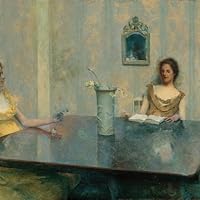
This didn’t do much for me – but I will note that this is the only book from Contra Mundum that I would say that for, as their stuff typically is excellent. So maybe this just wasn’t for me.
Profile Image for Mariana Gevak.
166 reviews13 followers
June 23, 2016
"Натюра морта " Вінклера як жива картина, кадр з кінофільму, гімн життю ,щоденному його перебігу.
Автор справжній майстер деталей. У когось іншого така кількість подробиць лише б дратувала,у Вінклера ж все відбувається так органічно,звично і соковито,що читаючи відчуваєш запах італійського ринку,чуєш у вухах гул тисячного натовпу, карбуєш у пам'яті кожну деталь,кожен жест, потрошиш разом з продавцями курей і вибираєш з покупцями персики,хоч тобі й зовсім цього не хочеться.
Profile Image for Dmytro Shyian.
124 reviews1 follower
December 23, 2021
Вкрай деталізована та насичена щонайменшими подробицями літературна подорож. Рим Вінклера пахне тухлою рибою, потом та сечею. Його населяють мілкі, малопривабливі люди-комахи з мурашиними проблемами та потребами. Стиль написання нагадує про картини Брейгеля-Старшого. Часом бридко, але завжди невідворотно прекрасно.
Profile Image for Ольга.
63 reviews2 followers
April 8, 2021
Коли починаєш читати, виникає думка: "Навіщо таке пишуть?"- та заглиблюючись у розповідь, розумієш, що автор хотів передати через детальні і відверто неприємні описи нашу буденність... Те, що ми воліли б ніколи не помічати навколо. Мабуть, це - своєрідна ода життю. Дуже своєрідна, як на мене...
Profile Image for  cr1m3s.
39 reviews
November 9, 2023
Пошуки чогось огидного привели до цієї книги. В якийсь момент студентського життя Паланіка перестало вистачати для шоку і нагнітання розпаду. Ця книга чудово справилась з покладеними завданнями. Шукати щось огидне перехотілось, як і читати.
Profile Image for Julio Genao.
Author 9 books2,192 followers
Want to read
January 8, 2014

Oh fuck I am stricken by wantings
Profile Image for lizzie.
96 reviews9 followers
January 11, 2023
Імʼя Йозефа Вінклера добре відоме на європейський літературній сцені, хоча пересічному українцю, я думаю, нічого не скаже. Австрієць - дуже поважний і шанований сучасний автор, який має у своєму арсеналі вже 14 опублікованих книжок і 13(!) літературних призів, включаючи найпочесніші премії Австрії та Німеччини. Natura Morta - це одна з двох книг Йозефа Вінклера, перекладена українською мово��.

Презентована у 2015 році самим автором в Національному Художньому Музеї, ця книга не буде схожа ні на що прочитане вами до цього. Вона не містить в собі конфлікту чи навіть, як такого, сюжету. Натомість вона дозволяє читачу сповільнитися і порозглядати життя навколо, проживаючи один день базару на П’яца Віторіо Емануеле в Римі.

Неймовірно детально, художньо та майже гротескно описує автор продавців мʼяса та риби, циганок та їх дітей, торговців лимонами та солодощами і простих покупців, які присутні в цей спекотний день на римському базарі. Яскраві зображення мертвих тварин, перебільшена (або ні?) антисанітарія, безпардонність жебраків і загальна атмосфера нагадують середньовічний живопис, той самий натюрморт фламандського майстра. Читаючи цю книгу, ви відчуваєте себе присутнім там, в Римі, ви сидите біля ятки торговців рибою і споглядаєте перехожих. Майстерно описує автор не тільки візуальні картинки, але і запахи, звуки, тілесні почуття. Він пише відсторонено, не аналізуючи, а просто переповідаючи картини, яке вихоплює око. Ось мʼясник з тільки но відрубаною козячою головою, ось брудна циганка, що намагається продати свій товар торговцям на рибній ятці, ось рибні трібухи, які викидають прямо обабіч дороги…

Автор показує своє вміння володіти письмовим словом, по суті малюючи перед нами картину, мотив якої скидається на праці Босха чи Караччі.

З усім тим, в книзі присутній такий собі протагоніст - син торговки інжиром, з чорними віями, що дістають до самих щік, зі срібним розпʼяттям на шиї, на прізвисько Піколетто. Читач проводить з ним першу половину дня на базарі, але потім план різко змінюється, і ми вже бачимо Піколетто біля собору Святого Петра. Автор малює перед нами місцевий, непричесаний люд, божевільних жебраків, калік, напівроздягнених туристів, і власне самого Піколетто, який відпочиває на площі. При видимій відсутності подій, в цій частині книги Вінклер спромігся показати саме життя: молодість, тілесність, пристрасть.

Взагалі життя та смерть - це центральний мотив книги. Опис мертвих тварин з вилупленими очима перемішується з описом молодої, ніжної плоті Піколетто, хтивості його та хтивості до нього.

Кінцівка і відсторонено описані події, які трапляються з юнаком, не можуть залишити читача беземоційним. Останні сцени, те, як автор описує світ та людей в своїй божевільній привабливості нагадує роботи Девіда Лінча. Доповнюється майстерність автора чудовим перекладом українською мовою.

Доречі, цікавий факт - одна з книг Вінклера, “Вивезена” - це інтервʼю українки, яка під час Другої світової війни потрапляє до нацистської Німеччини. Це друга книга, перекладена українською мовою.

Вивезена: Нєточка Ілляшенко розповідає про своє українське дитинство
Profile Image for Mariia.
38 reviews
April 22, 2023
Натюрморт( Nature morte— дослівно — мертва природа) — різновид [малярства], що зображає зірвані плоди, квіти, спійману рибу та здобич мисливців, пізніше додались предмети, з часом букети [квітів]], композиції [овочів], [фруктів], посуд тощо.

Римський базар на П’яцца Вітторіо Емануеле та його зовсім неправильний живий натюрморт. Це могла би бути цікава книга для мене, але вона чогось не зачепила взагалі. Назва повністю підходить під стиль автора, він ніби мазками малює події на ринку і як між собою взаємодіють герої. На перший погляд усі продавці між собою не пов’язані, але то ту, то там виникають якісь дрібні тропки, котрі пов’язують між собою героїв. В цій книзі ніби і є цілісний сюжет, але він випадає, а частий фокус на геніталіях якось дивно впливає на відчуття після читання

Не моя книга, але я би прочитала інші книги автора
14 reviews
January 19, 2026
Концентрований, поетичний, натуралістичний текст. Назва пояснює суть твору - опис навколишнього, а дія допомагає лише розширити панораму. Дуже детальний опис запахів, доторків, відчуттів, що моментально занурює в атмосферу літнього ринку. Подобається як разом із сюжетом змінюється темопритм тексту - від повільного і задушливого на початку, динамічного і вологого в кульмінації до сумного і спустошеного наприкінці.
356 reviews
July 25, 2020
Ein kleines Meisterwerk und eine große Entdeckung für mich. Josef Winkler umfängt alle unsere Sinne mit der Macht seiner Sprache, der Gewalt seiner Bilder, den Assoziationen die er elegant, ja mühelos hervorruft. Ein fließender Reigen an Beobachtungsfetzen lässt den Leser eintauchen in einen wilden Strudel des Werdens und Vergehens. Überwältigend.
Profile Image for Drrk.
50 reviews19 followers
January 27, 2022
It felt like he was treading a lot of the same ground as Friedhof der bitteren Orangen / Graveyard of Bitter Oranges, but it was less interesting due to the hyper-objective, roving camera style of writing. There's no hint of a narrator and the effect is more poetic than anything else. Still, Winkler is potent and deserves to be read.
Profile Image for Lidiia Marinat.
60 reviews4 followers
June 19, 2025
Враження, що автор гуляв по вокзалу / ринку та площам Рима і описував все, що бачить. Якомога об'єктивніше. І як висновок вийшов рухомий натюрморт, з запахами і звуками, споглядаючи який, відчуваєш минучість всього, і рослин, і тварин, і людей.
Рекомендую виділити 2 години і отримати новий досвід споглядання та сприйняття.
Displaying 1 - 30 of 45 reviews

Can't find what you're looking for?

Get help and learn more about the design.