In his first collection, Greener Pastures, Michael Wehunt introduced the world to his singular voice--a poetic, resonant force of darkness and unique terrors. He returns with The Inconsolables, a chilling selection of stories sure to brighten this star of literary horror.
Inside, meet masterfully rendered characters who grapple with desires as powerful and personal as the monsters that stalk them from the edges of perception.
A man revisits a childhood game of pretend in "Vampire Fiction."
A found-footage collaboration turns nightmarish in "The Pine Arch Collection," which links to "October Film Haunt: Under the House" from Greener Pastures.
In "An Ending (Ascent)," Wehunt steps beyond horror in a devastating near-future elegy for living and dying in a changing world.
Readers have waited for years to discover which cracks between the everyday and the extraordinary Wehunt would explore next. His latest collection offers ten resounding, haunting, terrifying answers.
The Inconsolables is fully illustrated by acclaimed artist Trevor Henderson.
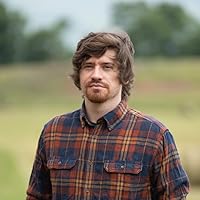
MICHAEL WEHUNT has been a finalist for multiple Shirley Jackson Awards and was shortlisted for the International Association for the Fantastic in the Arts' Crawford Award. In Spain, his stories have garnered nominations for the Premio Ignotus and Premio Amaltea, winning the latter. He haunts the woods outside Atlanta with his partner and their dog. Together, they hold the horrors at bay. Find him in the digital trees at www.michaelwehunt.com.
I've been mulling this book over for about a week now. I've been pressed for time lately and haven't been able to post a review yet. Now I'm wondering if I can even write a review that does this book justice.
With themes of grief and depression, with dying marriages and saved dogs, this collection delves into some of the darkest areas of the human psyche. I don't have time to write up each story, but I am going to mention a few of my favorites.
HOLOOW: A strange tale about a woman whose health is declining and what she sees from her seat by the window. For whatever reason, this tale made me think of my mom, who recently passed from Alzheimer's. This story got to me, people.
CARING FOR A STRANGE DOG (METAPHORES): As this tale unfolded, little bits of my heart were eaten away. The reasons for rescuing this dog and for what happens later just broke me. (Sense a pattern here yet?)
THE PINE ARCH COLLECTION: HELL YEAH! Since this story had ties to a story from Wehunt's previous collection GREENER PASTURES, I went back and read that one first. These are "found footage" types of stories and I was down for it. Both of these tales were unbelievably creepy and I want more from Pine Arch!
THE TIRED SOUNDS, A WAKE: One word for you: MIMES. This tale is really about a dying marriage at the 25th anniversary mark. But those damn mimes! The opening scene in this is in a public bathroom, and even though I was sitting outside on a beautiful and hot sunny day, I had CHILLS. What happens in a long marriage, when suddenly the tables are turned and one becomes way more successful than the other? Read this and see one possible outcome.
A HEART ARRHYTHMIA CREEPING INTO A DARK ROOM: A very strange short story about the author, (this author), suffering from writer's block, worried about what his editor will say, (the real editior), and that's all I can share with you. The meta aspect jacked this up to another level and I had some suspicions that most of this was true.
AN ENDING (ASCENT): A Science Fiction Story! This tale proves to me that Michael Wehunt can write in an genre. His skill is undeniable and I loved this.
All the stories here were beyond good. Micheal Wehunt has yet to disappoint with his work. It's deep, dark, weird and unsettling. There is no doubt that Wehunt has the writing chops to tackle whatever subject he wants. He will infuse that subject with darkness and come at it stealthily, sneaking around the corners of your brain until POW! He blows you away.
THE INCONSOLABLES gets my highest recommendation. Go get it!
*I'm going to be needing some more Pine Arch stories, stat!*
It is a rare talent for an author to be able to perfectly balance the weird elements in their writing with the mundane; to scatter into what is deceivingly like our lives that which decisively is unlike it, and to do so just to the right degree. This is a delicate craft, and it's one Michael Wehunt masters in his latest short story collection The Inconsolables.
The title already implies it: All Wehunt's characters are in a state of uneasiness, they are looking for comfort and for solace, whether by reviving childhood interests after a separation, by adopting a stray dog after the death of a child, in hypochondriasis, or whether it's about a married couple who simultaneously reaches the midlife crisis, or a woman, lead by a crooked and scary cupid, confronting in a room all the men who have sexually assaulted her throughout her life, or the last man on Earth who will die, because he was born thirty-seven days before the dealine for immortality in a new world where it has been invented. They all seek to alleviate their pain. They carry sorrow with them, they are haunted, relatable in their confrontation with the weird and with their own monsters and demons. Their horror is highly introspective.
"Michael Wehunt is one of my favorite, trusted guides navigating stories of grief and loss, sadness and regret. My reader’s heart left standing in Greener Pastures so eager to welcome that unique, familiar voice ushering me toward a new strange path twisting through Wehunt’s garden of eerie, weird, beautiful things—The Inconsolables; what a gift."
**Full review coming to LitReactor June 2023**
VAMPIRE FICTION HOLOOW CARING FOR A STRAY DOG (METAPHORS) THE PINE ARCH COLLECTION THE TIRED SOUNDS. A WAKE A HEART ARRHYTHMIA CREEPING INTO A DARK ROOM THE TEETH OF AMERICA IT TAKES SLOW SIPS IS THERE HUMAN KINDNESS STILL IN THE WORLD? AN ENDING (ASCENT)
Another excellent collection from Michael Wehunt, following Greener Pastures, which I read a couple of years ago. This one started out strong then tapered off a little for me, but still an above-average collection of horror tales. My favorites included the stories "Vampire Fiction," "Caring for a Stray Dog," and "The Pine Arch Collection," which is tied to a story from Greener Pastures and which is a found footage style tale that was truly creepy. I really hope the novel that Wehunt has forthcoming deals with Pine Arch Research. I'll be first in line to pick that up.
Back in 2018, I had the immense pleasure of reading Michael Wehunt’s PHENOMENAL collection, ‘Greener Pastures.’ Then, to my utter surprise, the following year, Michael reached out to see if I’d like to read a copy of his charity novella, ‘Everything Is Beautiful and Nothing Bad Can Ever Happen Here.’ I absolutely said yes.
Fast forward to early 2023, and we get the announcement of Michael releasing a new collection through Bad Hand Books and even before I learned Trevor Henderson would be contributing artwork to each story, I smashed the preorder button. I couldn’t wait to get my hands on this.
And the funny thing is – I was and still am completely turned off with short story collections and anthologies. I’m burned out on them. It seems everyone has one out or coming out (and I type this with a completely ironic smile, knowing I’m currently putting together a two-volume compilation of my short fiction!) and over the last however many years, I’ve read hundreds of them.
But… Wehunt is different. Wehunt writes the ‘every man’ stories. The bits and pieces of normal life that get flipped upside down and ground through a meat-grinder. Of all the short fiction masters out there, Wehunt is the rare author who writes fictional stories that feel like non-fiction. As though every single piece he puts forth COULD happen and just might, if you read it.
Now, I know we see a lot of ridiculous adjectives thrown around in blurbs – from authors and reviewers alike – to try to entice readers to read whatever it is they are blurbing – but Wehunt’s work is just what those blurbs say. It is compulsive. It is off-putting. And it must be read.
What I liked: Entering into this collection is like revisiting an old friend, but a friend who has slightly changed since you last saw them. They’ve grown a bit more grizzled, a bit more anxious and they often dart their eyes around the room with the expectation that something else is there.
In ‘Greener Pastures,’ Wehunt consistently controlled the narrative in each story, dragging the reader along. In this collection, some of the stories feel a bit looser, a bit more frazzled, as though the string holding it all together has started to come loose – unspool – at one end, but we’re unsure of which end that is.
The first story gives the reader an idea of what they’re in for. ‘Vampire Fiction,’ is as unsettling (and upsetting) as you can get – before reading the rest of the collection that is – where we follow a husband (granted one who has seen odd things outside of his window his entire life) desperately wanting to do what he can to reunite with his wife and child. There’s a number of layers at play here, which in this case, Wehunt makes sure to tease out as the story goes along. This one felt like a much longer story than it is, simply because of Michael’s ability to do so much with so little. A paragraph as a chapter. A page as a section. When the ending arrives, even if you’ve figured it out beforehand, it hits your heart like a ten ton hammer.
‘Holoow’ is a strange story. We get a wonderfully, quirky character with Claudette, but nothing is what it seems and when that is embedded in a story told through Wehunt’s eyes, it creates a sort of chaotic-depression throughout.
‘Caring for a Stray Dog (Metaphors)’ is a rare story in the Wehunt pantheon, in that it has some genuine, heartwarming moments. Of course, this is bookended with some truly horrible news, some real-life topicality throughout, but with the character Kent, you’ll immediately grasp onto the sorrow that permeates his every move and follow along as he navigates his world.
‘The Pine Arch Collection’ sees Wehunt return to the world of found-footage story telling and for those who loved what he did with that in ‘Greener Pastures,’ I can already see those smiles on your faces. This one ramps up really quickly and gives us perhaps the biggest chills within the entire collection. Perhaps.
‘The Tired Sounds, A Wake.’ Wow. What a story. What starts out as a tale of a husband and wife falling away from each other, while trying to stay together – especially as they look to celebrate their 25th wedding anniversary – turns into a ‘making a deal with the Devil,’ type scenario. It was also a unique take on when communication breaks down and one of the partnership begins to experience success in the arts.
‘A Heart Arrhythmia Creeping into a Dark Room’ was, at first, a bit of an odd duck with the meta aspects, but worked really well overall. It also speaks to the internal anxiety every writer experiences when a deadline looms and the creative juices won’t flow.
‘The Teeth of America’ showcases (much like ‘Everything Is Beautiful and Nothing Bad Can Ever Happen Here’ did) Wehunt’s socio-political leanings overtly. It was really well done and speaks to the unhinged wtf-ness a lot of non-America’s experience with every piece of news that comes out of that country.
‘It Takes Slow Sips’ was the perfect follow-up story to ‘The Teeth of America,’ and with the tie-in to ‘The Pine Arch Collection’ it’ll make readers very happy. What won’t is the undertones of ‘incel’ throughout and the reality that a growing movement of feverish indoctrination is continuing to occur with so many disillusioned young males.
‘Is There Human Kindness Still in the World?’ The title along made me gulp going into this story and as it slowly morphs from a woman losing the love of her life, to looking for something that meant so much to them, to transforming her grief into horrendous acts, spoke really well to just how complex and layered humans are.
‘An Ending (Ascent)’ might very well be the perfect closer to this collection and will potentially throw some people off with its very heavy sci-fi leanings, but it was a wonderful story and shows Wehunt’s ability to keep his readers wrapped around his pen, no matter the subject matter.
Every single story throughout this was a textual marvel. From how the characters were developed, to how the grief and dread was introduced and the volumes of each was turned up or down as things went on, these stories showcase just how phenomenal of a writer Wehunt is.
What I didn’t like: The reality is, I loved every single story within this. Even with me being burned out on short blasts of creations, AND actively looking for a reason to hurry up and move on, I simply couldn’t. But, that was me. Others may dislike how Wehunt delivers his political takes through subplots and some may dislike a sci-fi story within a horror collection. While none of that applied to me here, it may very well be what we see in coming reviews and why this collection isn’t a universally 5-star rated release.
Why you should buy this: It’s not very often that you get a bone fide classic released that you know will be a classic for the rest of time and will be showcased and studied by lovers of the short fiction craft in your active reading lifetime. It’s even more rare for one author to release two of those collections – and with ‘Greener Pastures’ and ‘The Inconsolables,’ Michael Wehunt has done just that. There are very few authors out there creating stories as innocent on the surface while being as devastating below as Wehunt is. This is a must read and one that will be discussed and raved about for years to come.
Si por algo destaca la colección de relatos que nos presenta Michael Wehunt es por querer presentarnos una serie de historias en donde las emociones actúan como hilo conductor de todos los miedos que se nos presentan. Por encima de los horrores que recorren sus páginas, empapadas de ese aire de lo extraño que empapa cada una de las propuestas. Por encima de la presencia de vampiros, monstruosas criaturas o seres sobrenaturales que se deslizan a través de las palabras para atormentar a sus protagonistas. En los relatos de Wehunt lo que destaca es la desesperación y la incredulidad que atormenta a los personajes, que tratan de encontrar sentido a la vida a la que se tienen que enfrentar, incapaces de asimilar los cambios que les ha llevado a sentirse por completo seres inconsolables. De ahí que en la gran mayoría de las historias que nos encontramos estén narradas desde el punto de vista de seres destrozados, de personas que se enfrentan al duelo o que se ven desplazados de la seguridad que les proporcionaba las paredes de su hogar. Personajes incapaces de seguir adelante, atrapados por el lastre de tener que reiniciar su camino sin saber la dirección que deberían tomar. Por eso, relatos tan maravillosos como Una ficción vampírica, con el que se inicia esta colección de relatos, nos mete de lleno en cabeza de un personaje que ve como su matrimonio se desvanece. Para ello trata de encontrar algún tipo de confort recordando los miedos que le atenazaban en la infancia, también marcada por un hecho dramático, y que los afrontaba imaginando que le acechaban los vampiros. También nos encontramos el fracaso matrimonial en la devastadora Sonidos Manidos, El Velatorio en donde la separación de la pareja se ve atormentada por la presencia de unos mimos que incitan a los protagonistas a vivir alejados de aquello que les impide ser ellos mismos. Relatos muy reflexivos, llenos de angustia, donde lo de menos es si la imaginación de sus protagonistas les está haciendo ver lo que no quieren ver. Por otro lado, la desesperación emerge en aquellos relatos donde la muerte funciona como detonante de la historía, bien por su cercanía como por el devastador duelo que acarrean las muertes sin explicación. En Fatuo vemos como la parca se contonea cerca de una anciana que comprueba el deterioro físico al que le ha llevado una enfermedad terminal. Mientras tanto, Cuidar de un perro callejero (Metáforas), es devastador en su intento de exponer lo que supone seguir adelante cuando la muerte se ha llevado a tu ser más querido. Por otro lado, en Sigue habiendo bondad en el mundo, lo sobrenatural parece querer ayudar a su protagonista, dándole fuerzas para seguir adelante ante un mundo real mucho más terrorífico que las apariciones que se le presentan. Relatos que duelen, que invitan a la reflexión y que, como el relato nombrado, utilizan la metáfora para exponer la falta de consuelo que atenaza a sus personajes. También hay coqueteos con el horror más convencional, como ese juego meta narrativo que es La recopilación de Pine Arch, donde se produce una curiosa unión del subgénero cinematográfico al que pertenecen las películas de metraje encontrado con la narración de una historia escrita de manera epistolar y que, por qué no decirlo, consigue aterrar al lector por su contundencia. O con esas Dentelladas de Norteamérica en las que el horror rural se entremezcla con ciertas pinceladas terroríficas más cercanas al horror corporal, sirviendo al autor para criticar con dureza los extremismos que crecen a diario. También aparecen varias historias que nos llevan de lleno a los miedos que el propio autor ha ido experimentando a lo largo de su vida, las cuales nos hablan de sus coqueteos con la enfermedad cardiaca, en esa Arritmia se filtra por una sala oscura. O ese Final (Ascención) en donde el propio autor reflexiona acerca de lo narrado, las emociones y la necesidad de seguir adelante pese a todo, en un desenlace con cierto aire optimista para la recopilación. En definitiva, las historias que nos presenta Wehunt reflejan el terror que se encuentra en lo cotidiano, en aquello que puede pasar desapercibido a aquellos que no se han tropezado en sus vidas con los cambios inesperados. Relatos cargados de un aire de fragilidad que te llevan a empatizar con sus personajes ante los horrores a los que se tienen que enfrentar.
I liked but didn't love the Greener Pastures collection and the first story in this collection made me think that maybe Wehunt just wasn't for me. Holoow picked up intensity somewhat but then the collection took off with Caring for a Stray Dog(Metaphors) and the rest of the stories were fantastic.
The Pine Arch Collection The Tired Sounds, A Wake It Takes Slow Sips Is There Human Kindness Still In The World An Ending (Ascent)
They had turned me into glass, a window I could only look through, and did little more than wrap the ache and hide it like a telltale heart. -An Ending (Ascent)
A pretty good collection overall, but I was a bit disappointed. 5* for the first half of the book, and 3* for the second. I couldn't get into the stories that laid on the modern sociopolitical commentary extra thick, as I tend to read fiction to escape that neverending deluge of mind-numbing bilge that has taken to infesting every facet of life in the real world anymore. I will say Wehunt's writing, as usual, is excellent throughout. I highly recommend Greener Pastures instead to anyone who hasn't read it.
Either I have the emotional range of a goldfish or Wehunt characters all feel feels way too hard. Weird Lit linked by the theme of people being so miserable that it breaks reality. Try it if you're having an emo bender, or alternatively if you hate emos and want to see a lot of them crash and burn.
I had the privilege of receiving an ARC for Michael Wehunt’s newest collection “The Inconsolables” and being the procrastinating piece of shit I am, I only recently got around to reading this beautiful collection. Michael’s stories don’t really feel like fiction, despite the speculative elements happening to the characters. His stories feel experienced, lived through, and the characters feel like people he might’ve known in a past life. Themes of loss and trauma resonate on a visceral level through all these tales, whether it be mourning for a relationship on life support, or grieving for a child who was taken away much too soon. This grief often acts as a vehicle for all sorts of strange and harrowing manifestations that his characters must work through, and god, do they feel human.
Maybe it’s because of my fragile emotional state recently while reading this, maybe it’s because so many of these threads of grief and loss resonate with me at a time when im confronted with death and am forced to reconcile with its implications, but some of these stories damn near drove me to tears. And I am not an emotional man.
Wehunt’s stories balance tragedy and the uncanny so well I had to take a breather between each story because of how heavy the emotions are. It’s hard to nail down the favorites, but if had to choose, “Vampire fiction” because of how delightfully meta it was, “Holoow” which reminded me so much of my deceased grandmother and has very strong Ramsey Campbell vibes, and “Caring For A Stray Dog (Metaphors)” which is the one that almost had me tearing up. “A heart Arrythmia Creeping Into A Dark Room” gets a special mention here because it was my first experience with Wehunt’s fiction, having read it in a previous anthology. Having heart issues and the occasional palpitation induced panic attacks, this story was about as physical a blow as one could hope to get with just words, and it was so powerfully written it made me go out and buy his first collection immediately. All in all, this is a 5/5 collection, which is VERY rare for me to handout, because collections can be so hit or miss. An incredible second collection.
Ever since I devoured his debut, Greener Pastures, Michael's fiction has been a huge influence and a North Star for my own work. There are very few authors I would say this about: when I hear Wehunt has a new book coming out, it's an automatic buy. I don't even have to read the synopsis. Not even in Stephen King do I have that much trust.
Wehunt fans (Wehunters?) like myself have been anxious for a new story collection from him for years (which is saying something for me, as generally speaking I don't read many short story collections). Greener Pastures was published in 2016—not a full decade, but it's felt like it. But at long last, it's here, and it was worth the wait. The Inconsolables does not disappoint.
I haven't read his complete bibliography (I don't have the budget or bandwidth to purchase and consume the stacks of anthologies and magazines he's been published in). But I've "wehunted" all the books he's the sole author of, including the limited-run novella published by Dim Shores, "The Tired Sounds, A Wake," of which only 200 copies were printed in 2017. Long since sold out, anyone who was too slow in slurping that little morsel up can now read it in this collection.
Wehunt's prose is lyrical without becoming saccharine, thick with metaphor and atmosphere and a strong connection to the natural world, something I appreciate both as a reader and a writer doing my best to capture my own rural landscape with my stories. His characters are deeply flawed or hurt, often struggling with grief and pain; the tangible horrors they encounter symbolically mirror their inner demons. Nobody does it better.
Torn between a 4 and a 5 here, which means it wasn't a full 5 for me, but I hate the 5 star rating system. Many stories were worthy of the full 5 stars. Wehunt can write, man. Some just didn't hit at quite the same level for me, but none were bad! Two of his collections in my library and they're both absolutely great. Looking forward to the novel in progress!
I was extremely excited for this book. Not just because Michael Wehunt is a fantastic author, but because he is also a cool guy. Also, it's Bad Hand Publishing, so it's going to be awesome regardless.
Before I extol the prose and stories, allow me to give props to Trevor Henderson, the artist for this collection. The art has Scary Stories to Tell in the Dark vibes for a new generation. Henderson's art compliments Wehunt's stories perfectly. Also, a few of them jumpscared me when I turned the page.
As for Wehunt: I don't think I've ever read anyone with such tight and crisp prose. If I was an editor, I'd be abashed at the fact I couldn't strike out or move anything. Apart from that, Wehunt excels at writing prose both macabre and heartfelt at once. There is no one, I think, who can craft monsters and metaphors like he can. I'm perpetually in awe of him.
I loved all the stories, but if I had to choose my favorites (in no particular order): "The Pine Arch Collection," "Vampire Fiction," "The Tired Sounds, A Wake," and "A Heart Arrhythmia Creeping into a Dark Room."
After reading Wehunt’s Greener Pastures (which I loved) I was eager to get my hands on his new collection. The Inconsolables did not disappoint. Though it’s somewhat different in feel and range from GP, these stories haunted me long after reading them.
Wehunt is a master of dissecting grief and the loss of love. Most of his characters are broken people, stuck in the fractures of their past, struggling to make sense of their pain. It’s in these psychic cracks where the uncanny seeps into the work, and never in the way the reader expects. Wehunt never opts for cheap scares or easy answers. Nor does he guarantee catharsis. It’s this masterful braiding of suffering with the supernatural that makes these stories hit on a gut level.
The Inconsolables is honest, stylistically bold, and, yes, often deeply moving horror, written by a singular, literary voice. Alongside writers like Evenson, Files, Barron and Ballingrud, Wehunt continues to be one of the most innovative and fascinating writers of contemporary horror fiction.
(This review is an abridged version of the full review on my blog) (Review copy from publisher for review consideration)
Michael Wehunt is the kind of writer who is so immensely good and so incredibly unique, writing in a league of his own, that it makes writing book reviews of his work next to impossible. How does a reviewer, even as a fellow wordsmith and scribe, begin to try to capture the inner complexities and gravity of Wehunt’s work that make him so damn good? A once-in-a-lifetime kind of writer who deserves to occupy the same place of reverence of a Laird Barron or Nathan Ballingrud.
One of the ways I’ve tried to capture the breadth of Wehunt’s work is to say that he has both the shadows of Faulkner mingled with the ghosts of Flannery O’Connor haunt his work. The introduction by John Langan brings comparisons of Wehunt’s brilliant work to Cheever, Updike, Raymond Carver, and others who have shaped the American literary cannon with a distinctive power that is easy to recognize but almost impossible to embody. Wehunt is, at the end of the day, his own writer, “and a damned fine one at that,” according to Langan.
Wehunt is also a virtuoso of Southern Gothic, and definitely of quiet horror that sneaks up on the reader, then suddenly scratches claws down our faces when we least expect it. As with “Greener Pastures,” the author’s first short story collection, this new offering, “The Inconsolables” features a stellar gathering of his most recent best works. Although the scares in Wehunt’s stories are not of supernatural entities like werewolves or vampires gone awry, he does actually have a story here called “Vampire Fiction,” which I thought was cool because it isn’t a straightforward tale. None of his works are, really. He writes of hidden family horrors, of terrible secrets gone awry, and so much more.
Wehunt's rural settings take the ordinary and make them very memorable somehow, which is not an easy thing to do. Throughout this collection, Wehunt demonstrates again that he is one of those artists who makes his craft look easy, but that is agonizingly painstaking and one feels his dedication to each story; the intentionality behind each tale. While fans of "Greener Pastures" will be happy to read even more of Wehunt's short fiction, this new collection is a distinct entity of its own and should be on the TBR pile of every horror fan. Wehunt's exquisite artistry deserves all the praises shouted from every rooftop.
Great stuff. This was my first time reading Wehunt. I am not disappointed. The collection contains a lot of diverse stories and are all fantastically written. If you've been on the fence about Wehunt, jump off it and grab this collection.
It’s difficult to talk about this book without mentioning that I think that Wehunt’s first collection of short stories, Greener Pastures is a masterpiece. So, I fear that I might be unfairly comparing these two releases.
This book isn’t Greener Pastures. But, there is a relief knowing that it isn’t trying to be either. This is less about horror scenarios and more about human stories with unsettling aspects. These aren’t Twilight Zone episodes or built for chills. His characters are scarred and seeking direction more. Plus, it feels clear to me that Wehunt is working through many of his feelings about the attitudes of the south that rose into the public light during the last administration.
It’s safe to say that Wehunt is still a damn fine writer. When he’s on, his stories just anxiously buzz underneath a thick coating of despondency. When he’s not, he gets a little precious (Vampire Fiction and A Heart Arrhythmia Creeping Into a Dark Room). Unfortunately Vampire Fiction is the lead story so my hope is that other people either like it more than me or muscle through it.
I loved so many of these stories; especially Caring For a Stray Dog (Metaphors), Is There Human Kindness Still in the World, The Teeth of America, and An Ending (Ascent).
In his first collection he made a banger found footage short story called October Film Haunt: Under the House. He rightly got great feedback around it and in this he created something of a connected world through some of these stories. Other than the aforementioned Vampire Fiction, that was loosely tied in, I really enjoyed where he is going with these media pieces.
I’m champing at the bit to explore even more of Wehunt’s work sometime in the future. I selfishly hope that I won’t have to wait long.
“Take this moment to listen for your heartbeat, slow your breathing until you hear something behind you, crawling closer along the carpet or floorboards or blanket of pine needles.”
Michael Wehunt in this dark collection delivers on horrors originating from personal monsters and those that stalk the edges of perception.
What Wehunt does well is to expose those cracks between the everyday life and the unusual world we find ourselves in. Boundaries are pushed before chilling discoveries are made.
I loved the strangeness of the author’s previous collection Greener Pastures. The Inconsolables takes a deep dive into more than just the strange but something terrifying and dark.
Each story is memorable for messed up reasons and some feature similar traits and elements. One story features a pretend childhood game, a found footage collaboration that turns into a nightmare and a troubling look into the new meaning of living and dying in a changing world.
Beautifully written, but far more sad and depressing than scary. Maybe that's true horror, but it's not my cup of tea. I come to horror for an escape, not to have my heart pummeled to mush with stories about the ends of relationships and other too real, too relatable, but also just depressingly mundane situations.
Los relatos finales son mejores que los iniciales, pero en general diría que la colección es buena. El tema es que no son lo que yo me imagino como un relato. La mayoría tienen más bien estructura de novelas, y no lo digo solo por su duración (aunque hay uno que es directamente una novelette, y que es inmisericordemente longevo), que es si acaso ligeramente mayor al promedio, sino porque la trama avanza valiéndose de una repetición constante y de una evolución episódica. No estamos siendo testigos de un suceso excitante y/o sus eventuales consecuencias, más bien de una lenta sucesión de pequeñas y recurrentes aproximaciones de un potencial suceso, que puede o no llegar al final.
Me explico con una torpe comparación: Si un “relato” (o mi idea de uno) es un infarto fulminante, una novela es una larga lucha con una enfermedad cardiovascular. En esta colección básicamente todos los relatos son lo segundo, y la ejecución no me terminó de convencer, sobre todo entre más largos son.
Me viene a la mente el legendario y genial cuento de Cortázar, ‘CASA TOMADA’ en el que, seguramente a base de un arduo trabajo de reescribir y perfeccionar, nos queda un ejercicio narrativo bastante inquietante que no te da ninguna respuesta. Y concedo que es un ejemplo extremo de lo que digo, pero en ese caso la parquedad de las descripciones sirven para enfatizar la idea principal del cuento, todo lo que se hace es por su propio bien, y el resto de relatos de ese libro siguen derroteros similares. Cortázar sigue sus instintos (que a menudo detesto) y el resultado es magnífico. Aquí este proceso de re-escritura se utiliza para añadir, y, al menos yo, lo he sentido artificial. Es agregar detalles por agregarlos, porque una historia con más cosas es más interesante y porque unos personajes con más características son mejores. Disque. Así dicen en la escuela, me imagino. Yo pienso que cada historia te pide ciertas técnicas y el autor las terminó ignorando porque se sentía más cómodo.
No quiero sonar tan negativo, insisto en que varios de estos relatos son buenos y que insistir que esto es a pesar de las fijaciones de su autor sería despreciar lo que por otro lado es un buen trabajo. Cada quien tendrá sus gustos y aunque lo amargo de mi decepción sea predominante en este momento, veo muchísimo potencial aquí, y mentiría si dijera que no he disfrutado el libro (salvo la larguísima novelette a la que ya me he referido).
Time for another bit of accountability— today we’re apologizing to Michael Wehunt and Doug Murano, as Bad Hand Books sent me an e-copy of this and unfortunately the bizarre nature of my work schedule in the past few months also engulfed this. Doug, Michael, I’m sorry. I hope I do this justice
I’ve tried and failed to write this intro over and over again.
It’s not because it’s particularly difficult to describe The Inconsolables by Michael Wehunt, a collection of stories centered around grief, loss, and simply the spaces in ourselves where something is missing. No, the difficulty here is recommending a book, going “if you have ever had the unique experience of being in the same place these stories describe, this book will fuck you up. But you should definitely read it.”
You should definitely read it. Wehunt navigates the horrifying spaces of grief, loss, and depression in a disturbingly genuine way, pairing them with images out of nightmares that perfectly match the idea of something clawing its way into your empty spaces to live. Despite all this, a lot of the stories end up feeling hopeful, or at least end on a note of enough ambiguity that the anguish and dread don’t feel relentless. It’s a collection that perfectly manages the balance of dread, mild optimism, despair, and some truly disturbing, imaginative visions.
The Inconsolables is a book that demands you let it in.
More, as always, below
“Roots only go into the Earth, not away from it.”
There’s an overarching sense of loss and absence to the stories in The Inconsolables. The protagonists have all lost something, are all missing something, and it’s felt. These range from simple losses like an author suffering from writer’s block, to grief at the loss of a loved one, to the horrifying knowledge that everyone you love (hell, everyone in the world) will live on past your death in “An Ending (Ascent).” There’s a component of depression and trauma that everyone knows but no one really talks about, the idea that when you’re changed by something awful happening you can feel the missing piece, that you’d do anything, even awful things, to feel whole again. The Inconsolables is one of the very few books that strikes that tone perfectly.
It’s that sense of the empty space where something left or something’s supposed to be that drives people into odd ritualistic behaviors (“Vampire Fiction,” “Is There Human KIndness Still In The World?”), underscores their motivation to perform unspeakable acts (“The Teeth of America,” “It Takes Small Sips”), and most of all, allows the horrors of The Inconsolables in. The book’s nature abhors a vacuum, and it’s in those places something is missing or something is lost that the long-limbed nightmares, unusual creatures, or murder cults find their way into the protagonists’ hearts. It’s explored in all its myriad forms, from grief over the loss of a loved one to a greater loss of purpose and self-sabotaging ideas.
That loss even extends to the atmosphere of the stories, a kind of unusual quiet that haunts. Not in the sense of lingering dread or lasting images (though there are plenty of those) but in the sense that even in that loneliness, that emptiness, that sense of something missing, there is something still there. In some cases, simply a weight that cannot be moved. In others, something waiting to be let in, looking for a way into that empty space, whether invited or no. Wehunt infuses his stories with a kind of “heavy quiet,” the kind of quiet where there’s no sound, but there’s a presence, something there either waiting to be let in, or waiting to announce itself. When it finally does, it’s terrifying.
Wehunt has a gift for images, whether that’s a flock of mimes like ravens on the roof of a mysterious building, the most grotesque amalgamation of bodies since “In The Hills, The Cities,” or the monsters the recurring shadowy art collective Pine Arch Research Group (“The Pine Arch Collection,” “It Takes Small Sips”) send to torment their victims via digital media. Even without the unnerving black-and-white images provided for the collection by Trevor Henderson (mine didn’t come with these, which was a crying goddamn shame), the twisted, inexplicable, and nightmarish nature of Wehunt’s images are a perfect balance, something stretching and thrusting itself into the empty space in the protagonists’ hearts.
This might all sound like a harrowing experience (and it is at times), but there’s a genuine note that creeps into the stories as The Inconsolables moves along. None of them have exactly happy endings, and it’s better for it, as those would feel grotesque and false against the book’s exploration of darker emotions. But many of the stories end on a note of continuance, of the stories’ central characters able to move on, maybe damaged, but alive. Aware. It’s a message that doesn’t always come through in horror, that the light at the end of the tunnel might be a faint one. Horror endings a fair amount of the time tend to be binary— either catharsis or not, escape or not, positive or negative. The Inconsolables recognizes that this isn’t the case, that it’s rendered a lot more times in shades of gray, good and ill. Not only does it stop the stories from being relentless without dulling the emotional impact, it also gives them a strong element of truth missing in other explorations of these emotions and ideas.
The Inconsolables feels like an easy thing to recommend, a book that wrestles with complex emotions and gives them the treatment they deserve while delivering scares and twisted monsters that perfectly match the moods and discussions present. A collection that haunts and lingers in your brain, the long arms of its horrors stretching across your imagination whenever things are quiet or lonely enough. It’s a recommendation that comes with a caveat. Wehunt is excellent at bringing across feelings of lingering dread, loneliness, and grief. If that doesn’t sound like something you can handle, well, you’re missing out, but it’s understandable.
For everyone else, pick this up immediately. Wehunt’s dropped one of the best collections I’ve read this year, and it’s a brilliant collection full of things waiting just out of view.
Wehunt has such a unique voice in horror with only two collections under his belt. His short fiction is immaculately crafted; my favorite story here is probably The Tired Sounds, A Wake. Thematically resonant and utterly haunting. A lot of these stories have sat with me for a long time after reading them.
A truly brilliant collection of stories running the gamut of emotions. There's no frilly schlock here, just genuine horror and heart in equal measure. I've never related to a collection as strongly as this. Wehunt is tapping into some universal magic, and I can't wait to read more.