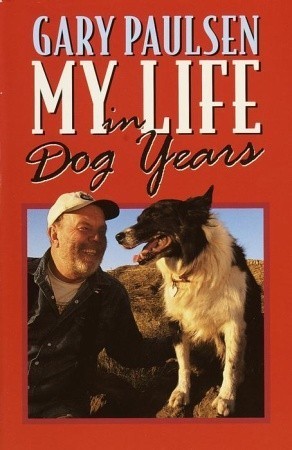
For all his superb cultural, wilderness, and humor fiction, this is Gary Paulsen in his element: telling his own true stories about living among wild and domesticated animals. He's a treasure trove of extraordinary experiences, from his childhood overseas to the physical abuse he suffered at the hands of his alcoholic parents, which forced him to leave home at age fourteen and join a carnival. Paulsen did a stint in the military, ran a team of sled dogs in the Iditarod, lived in a houseboat, lived in Alaska, lived in New Mexico, and those are only a few of the happenings that informed his award-winning youth literature. When Gary Paulsen writes about his experiences, readers are in for a kaleidoscopic show of passion, danger, love, wisdom, and foolishness, everything one hopes for from a dramatically atypical life. His stories about animals tend to be his best, lessons he learned from wild creatures and his own pets, and we find a bit of both in My Life in Dog Years. The master of the genre puts us in his shoes during several eras of his exciting life, giving us the chance to know and love his dogs as though they were ours. Whether you've owned a dog or not, you won't forget the feeling of being friends with one after this.
Gary Paulsen states in the Dedication that his sled dogs won't be in this book. He's written their stories elsewhere—Puppies, Dogs, and Blue Northers: Reflections on Being Raised by a Pack of Sled Dogs and Woodsong being two of his masterpieces—and My Life in Dog Years is about other dogs that were special to Paulsen. However, he can't resist making the Dedication about Cookie, the magnificent sled dog at the heart of Puppies, Dogs, and Blue Northers. He relates an incident from January 1980 when he was out with his dogs in extreme subzero temperatures and he fell through thin ice into deep water. Cookie saw him go down and rallied the dogs to pull Paulsen back to the surface by the rope he grabbed as he fell through. He fended off hypothermia and miraculously survived, but if not for Cookie, none of his three Newbery Honor books (Dogsong, Hatchet, and The Winter Room) would have been written. Neither would The Island, The Haymeadow, The Rifle, or a dozen other iconic works. Cookie's heroic act powerfully resonates because of the way it's framed, as saving a writing career that has touched way more people than Cookie could have realized. It's an auspicious start to My Life in Dog Years; I know it gave me chills.
Moving to the Philippines in the 1940s was a culture shock for seven-year-old Gary Paulsen. His father was stationed there with the army, but his parents allowed him to adopt a dog. He chose a black puppy with a white circle on one side, and named her Snowball. Even back then, Paulsen spent hardly any time at home. He walked with Snowball through demilitarized neighborhoods, learning the world's harsh realities at a tender age. They met destitute people in the streets and smuggled them food from home, listening to their stories of how World War II had affected them. Once when Paulsen got too close to a venomous snake poised to sink its fangs in him, Snowball snatched the red serpent in her jaws and calmly snapped its neck, saving Paulsen's life. When the boy's parents couldn't or wouldn't be there for him, Snowball was as much mother as friend, rarely parting ways with him even momentarily. The Paulsens took great pains to arrange for Snowball to go with them when they returned to America, so attached was the boy to his pet. A startling tragedy prevented that from happening, but Snowball was Paulsen's first dog, and the emotions of their friendship and its sudden end were as raw as ever for him when he penned this book in the late 1990s. When you care for someone to that degree, it never fades away.
By the time Paulsen was a few years older, his parents had slipped into habitual drunkenness. He spent more time away from home, hunting with his .22 rifle in the woods of Twin Forks, Minnesota. Hunting was a solitary occupation until the night he met a big black Labrador also wandering alone. The dog's tag said his name was Ike, but no owner was in sight. Paulsen and Ike became nightly hunting buddies, though Paulsen was the less adept partner. The Labrador could retrieve a downed duck anywhere it dropped, which came in handy. Paulsen felt compelled to make excuses to Ike whenever he missed a shot, a comical situation that endears their friendship even more to the reader. One night Ike didn't show up for their regular romp in the woods, and Paulsen never saw him again. He found out thirty years later what became of Ike, a wonderful epilogue that will give most people chills for the second or third time in this book. The Ike chapter is one of my favorites.
With an increasingly dark home life as he grew into a teen, Paulsen took to the streets almost full-time. He slept by the furnace in the basement of his family's apartment building. To earn money for his basic needs, Paulsen set pins at a bowling alley, a bloody job described in detail in other books by the author. The worst part of street life was the groups of older teens who robbed loner kids. They'd beat Paulsen up to take what little money he made at the bowling alley, and he couldn't rely on the police for support. Then one day he found a ragtag, snarling street dog under the stairs whom he fed part of his hamburger, more to avoid being attacked than out of kindness. Dirk, as he came to call the dog, didn't forget Paulsen's gesture. Following the tired teen hoping for more food, Dirk waylaid a group of thugs who hassled Paulsen, driving them away from their target. Dirk went home with Paulsen and curled up beside the basement furnace next to him, though he bristled at any physical affection. Paulsen's problem of getting robbed went away now that he had a companion who was "as close to having a live nuclear weapon as you can get." Dirk shielded Paulsen from danger until summer, when they both went to work on a farm. Paulsen didn't have Dirk long after that, but what a nice parting of ways they had, an upbeat end to a story about a boy saved by a guardian angel with fur and four feet. We might not get as close to the Dirks in our lives as we do with others, but we appreciate them.
Working farms as Paulsen did, it's no surprise he knew many collies. They were all smart and loyal, but the one recalled in this book was named Rex. That dog took his job seriously, gently herding cows, chickens, and other animals where they were supposed to go without ever being taught. Rex never rested without thinking about what he should do next. Many humans could take their cues from his work ethic, a dog whose predominant desire was to serve. In the next story, Paulsen is a grown man living in the Colorado mountains with his wife Ruth Wright Paulsen, who illustrates the chapter headings for this book. Paulsen allowed himself to be suckered into adopting a Great Dane named Caesar whose master was leaving the U.S. mainland. Forty-one inches tall at the front shoulder with a cavernous maw that Paulsen's head fit inside, Caesar could wreck the house just by moving too briskly. After his owner left and the dog mourned with scary intensity for almost a week, eating nothing and drinking only enough to stay alive, the adventure began when Caesar decided he was ready to rejoin the living. His escapades with deliverymen, Paulsen's cat Arnie, and children dressed up for Halloween are funny, but nothing tops the day Paulsen brought Caesar to a softball game and picnic in a town close by. The monster-sized dog was a big hit with the other attendees until he escaped Paulsen's car and sidled up to a small child reaching out a hot dog to feed him. Caesar always went crazy for hot dogs, losing all self-control. The day turns out well, a warm memory of a galumph of a dog who spent an afternoon winning the affection of local children. It's another keeper in Paulsen's scrapbook of the dogs he's loved.
Appealing again to Paulsen's weakness for unwanted canines, a blue-eyed little boy sold him a half-Lab puppy for five dollars. Paulsen named it Fred after a friend who passed away not long before, and Fred soon demonstrated a knack for causing damage equal to Caesar's. Fourteen inches tall at maturity, Fred wasn't large. An enthusiastic eater, he made friends with the Paulsen pig (named Pig), and they enjoyed gorging together from Pig's trough. Paulsen fed them as many scraps as they could want, but eventually Pig got wise that Paulsen was holding out on him, and knocked over the fence to chow down on the garden. Paulsen put up an electrified fence, but he underestimated Fred's desire to visit Pig for lunch. There was a quick, savage war between Fred and the fence, a war Fred wasn't about to lose no matter how painful it became. The results are recorded in these pages as tribute to a funny little dog who loved his vittles.
Entering the Iditarod race with his sled dogs was possible only because of the support and generosity of Paulsen's friends and neighbors. On his way to Alaska, Paulsen was invited for dinner with a woman who didn't want to keep a certain dog she found, and into Paulsen's life came a canine of decidedly zany persuasion. He could never anticipate Quincy's next move, and the dog turned out to be possibly the smartest Paulsen ever knew. The little ball of fur and teeth would hop onto the floor of the car when they drove, to smell animals outside. Then he could decide if they were worth barking about. Quincy evolved to become Mrs. Paulsen's dog, and his most remarkable act was in defense of her. Wilderness living meant dealing with scavengers who pillaged the Paulsens' garden, including bears, but rarely did they approach humans aggressively. That changed one day when a bear charged at Paulsen's wife as she tended the garden. Her life would have been in jeopardy if Quincy hadn't pounced, biting at the bear until Mrs. Paulsen could get to her feet. That tiny cyclone of righteous indignation may have saved her, and deserved a place of honor in this collection.
My Life in Dog Years concludes with Josh, the Border collie Paulsen had when he wrote this book. Could an animal be so resourceful, so smart, so giving of himself without being a person? Paulsen believes Josh is as much a person as any human. Josh came to Paulsen from a woman who didn't want him. He wasn't well-behaved, she said, but Paulsen was glad to accept her burden. Like Quincy, Josh learned at a torrid pace, even complexities of life in the wild that it took Paulsen a while to pick up on. He anticipated Paulsen's needs and wants with unfailing accuracy, as anecdotes demonstrate over and over. Paulsen would never forget riding horses in the Bighorn Mountains with his loyal Border collie running beside him. Giving up dogsledding because of his own heart condition was hard on Paulsen, but horses salved that wound, and riding them with Josh was a pleasure. Josh was old when this book was written, but the mental picture of him leading the way for the horses would remain with Paulsen forever, and is captured lovingly as the parting scene for this book. Life is a wondrous journey, made by the people we love and the company we keep.
Some Gary Paulsen memoirs are more emotional or obviously wise than My Life in Dog Years. The philosophical content of Woodsong is incredible, thoughts I've ruminated on for years after reading the book. You don't get that from My Life in Dog Years in the same way, quotes that stand out as amazing messengers of truth about the human condition, but at least one overarching idea lingers with me. The people who change our life often do so in very different ways. We may adore them instantly, or despise each other at first but grow close over time. Some we're never friends with at all, but they serve an indispensable function to us nonetheless. We express our feelings openly to some friends, and are reserved with others. We don't completely understand our relationships while we have them, and that's the case with Paulsen and the dogs highlighted in this book. His experiences are meaningful to us because we recognize that even when a loved one is gone that doesn't mean their influence over us is diminished. It lives on because they helped shape who we are. My Life in Dog Years is an uncanny reminder of the wonder and complexity of what we add to one another. If your relationships are as rewarding as Paulsen's with his dogs over the years, it's a life worth celebrating.