

What do you think?

Turning Points in Ancient History
Pox Romana: The Plague That Shook the Roman World
A wide-ranging and dramatic account of the Antonine plague, the mysterious disease that struck the Roman Empire at its pinnacle
In the middle of the second century AD, Rome was at its prosperous and powerful apex. The emperor Marcus Aurelius reigned over a vast territory that stretched from Britain to Egypt. The Roman-made peace, or Pax Romana, seemed to be permanent. Then, apparently out of nowhere, a sudden sickness struck the legions and laid waste to cities, including Rome itself. This fast-spreading disease, now known as the Antonine plague, may have been history’s first pandemic. Soon after its arrival, the Empire began its downward trajectory toward decline and fall. In Pox Romana, historian Colin Elliott offers a comprehensive, wide-ranging account of this pivotal moment in Roman history.
Did a single disease—its origins and diagnosis still a mystery—bring Rome to its knees? Carefully examining all the available evidence, Elliott shows that Rome’s problems were more insidious. Years before the pandemic, the thin veneer of Roman peace and prosperity had begun to the economy was sluggish, the military found itself bogged down in the Balkans and the Middle East, food insecurity led to riots and mass migration, and persecution of Christians intensified. The pandemic exposed the crumbling foundations of a doomed Empire. Arguing that the disease was both cause and effect of Rome’s fall, Elliott describes the plague’s “preexisting conditions” (Rome’s multiple economic, social, and environmental susceptibilities); recounts the history of the outbreak itself through the experiences of physician, victim, and political operator; and explores postpandemic crises. The pandemic’s most transformative power, Elliott suggests, may have been its lingering presence as a threat both real and perceived.
In the middle of the second century AD, Rome was at its prosperous and powerful apex. The emperor Marcus Aurelius reigned over a vast territory that stretched from Britain to Egypt. The Roman-made peace, or Pax Romana, seemed to be permanent. Then, apparently out of nowhere, a sudden sickness struck the legions and laid waste to cities, including Rome itself. This fast-spreading disease, now known as the Antonine plague, may have been history’s first pandemic. Soon after its arrival, the Empire began its downward trajectory toward decline and fall. In Pox Romana, historian Colin Elliott offers a comprehensive, wide-ranging account of this pivotal moment in Roman history.
Did a single disease—its origins and diagnosis still a mystery—bring Rome to its knees? Carefully examining all the available evidence, Elliott shows that Rome’s problems were more insidious. Years before the pandemic, the thin veneer of Roman peace and prosperity had begun to the economy was sluggish, the military found itself bogged down in the Balkans and the Middle East, food insecurity led to riots and mass migration, and persecution of Christians intensified. The pandemic exposed the crumbling foundations of a doomed Empire. Arguing that the disease was both cause and effect of Rome’s fall, Elliott describes the plague’s “preexisting conditions” (Rome’s multiple economic, social, and environmental susceptibilities); recounts the history of the outbreak itself through the experiences of physician, victim, and political operator; and explores postpandemic crises. The pandemic’s most transformative power, Elliott suggests, may have been its lingering presence as a threat both real and perceived.
320 pages, Kindle Edition
First published January 23, 2024
Ratings & Reviews
Friends & Following
Create a free account to discover what your friends think of this book!
Community Reviews
Displaying 1 - 30 of 115 reviews

March 5, 2024
A mighty empire at the peak of its' power, the center of an increasingly interconnected world, suddenly crumbles under the combined weight of an erratic and idiotic ruler, the blowback from decades of unrealistic policy, and a sudden pandemic. It's not America 2020, it's Rome AD 165, and though the parallels are perhaps somewhat stretched, there's still a lot of valuable lessons, and a good ancient medical and economic mystery around the Antonine Plague.
Rome in 160 was at the height of the Pax Romana, a century and a half of expansion and peace since Augustus turned the Republic into the Empire. The empire was ruled by Marcus Aurelius and Lucius Verus, adopted brothers who seemed uncommonly able to split the duties and benefits of the Imperium.
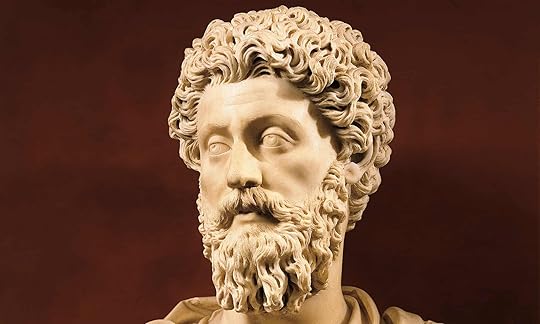
Marcus Aurelius. Be suspicious of dudes with this as their profile pic
Elliott spends plenty of time setting the stage, and makes a convincing argument that the Pax Romana was more of a gilded age than a golden age. While the imperial core was peaceful and prosperous, that prosperity did not reach to the masses of urban poor, who either slept rough or in crude and unsafe tenement apartments. Sanitation was poor, despite investment in aqueducts and sewers. Administration was ad hoc, the semi-private affairs of local elites and imperial delegates, who lacked training, data, and resources to react to crises. And crucially, the grain supply in Rome was dependent on Egyptian harvests, and the Nile floods had been either too little or too much for decades prior. So in 165, when victorious soldiers returning from Parthia came back with an unknown disease, it was a more fragile empire than appearances suggest that took the blow.
And the disease is truly unknown. Elliott makes a convincing case for an orthopox virus, like smallpox but not modern smallpox, though measles is another common suggestion. Despite being associated with the great physician Galen, descriptions of symptoms is vague, including fever, rashes, and then in fatal cases bloody coughs and stools. How many people died is another unknown, with ranges between 1 million and over 25 million. For such a massive event, there is little direct evidence.
Yet the indirect evidence is compelling, including tangled mass graves in cities corresponding to the dates of the plague. Census records show declines across the period, as cities shrunk and entire towns disappeared. Mines and quarries ceased production, coinage was debased, the military had trouble recruiting for wars and peacekeeping against raiders, and conflict between orthodox Pagans and early Christians who refused to perform public sacrifices to appease the gods is recorded.
Though Elliott argues for a deathcount at the lower end of the range, he makes a case that the plague really did a number on the Roman economy, and more explicitly, the Roman political system. Commodus, who succeeded Marcus Aurelian, was a clown rather than a stoic, and his assassination triggered ongoing political stability on the basis that whoever could best bribe the army deserved to rule. The Crisis of 3rd century was clearly set up by the plague.
I will note that one thing that seems amiss is when Elliott draws more direct connection between the Antonine Plague and COVID-19, which is set in a very orthodox Chicago school economic framework. Roman macro-economics were surely bad, but it seems unfair to fault them for not reading Hayek. Similarly, the failures of pre-germ theory divine intervention have little bearing on evidence-informed public health measures. But I will say that while Elliott and I likely have significant differences in perspective over the recent pandemic, he is a gentleman and a scholar, so I'll avoid concluding this review with a rant.
After all, we probably don't spend enough time thinking about Rome.
Rome in 160 was at the height of the Pax Romana, a century and a half of expansion and peace since Augustus turned the Republic into the Empire. The empire was ruled by Marcus Aurelius and Lucius Verus, adopted brothers who seemed uncommonly able to split the duties and benefits of the Imperium.
Marcus Aurelius. Be suspicious of dudes with this as their profile pic
Elliott spends plenty of time setting the stage, and makes a convincing argument that the Pax Romana was more of a gilded age than a golden age. While the imperial core was peaceful and prosperous, that prosperity did not reach to the masses of urban poor, who either slept rough or in crude and unsafe tenement apartments. Sanitation was poor, despite investment in aqueducts and sewers. Administration was ad hoc, the semi-private affairs of local elites and imperial delegates, who lacked training, data, and resources to react to crises. And crucially, the grain supply in Rome was dependent on Egyptian harvests, and the Nile floods had been either too little or too much for decades prior. So in 165, when victorious soldiers returning from Parthia came back with an unknown disease, it was a more fragile empire than appearances suggest that took the blow.
And the disease is truly unknown. Elliott makes a convincing case for an orthopox virus, like smallpox but not modern smallpox, though measles is another common suggestion. Despite being associated with the great physician Galen, descriptions of symptoms is vague, including fever, rashes, and then in fatal cases bloody coughs and stools. How many people died is another unknown, with ranges between 1 million and over 25 million. For such a massive event, there is little direct evidence.
Yet the indirect evidence is compelling, including tangled mass graves in cities corresponding to the dates of the plague. Census records show declines across the period, as cities shrunk and entire towns disappeared. Mines and quarries ceased production, coinage was debased, the military had trouble recruiting for wars and peacekeeping against raiders, and conflict between orthodox Pagans and early Christians who refused to perform public sacrifices to appease the gods is recorded.
Though Elliott argues for a deathcount at the lower end of the range, he makes a case that the plague really did a number on the Roman economy, and more explicitly, the Roman political system. Commodus, who succeeded Marcus Aurelian, was a clown rather than a stoic, and his assassination triggered ongoing political stability on the basis that whoever could best bribe the army deserved to rule. The Crisis of 3rd century was clearly set up by the plague.
I will note that one thing that seems amiss is when Elliott draws more direct connection between the Antonine Plague and COVID-19, which is set in a very orthodox Chicago school economic framework. Roman macro-economics were surely bad, but it seems unfair to fault them for not reading Hayek. Similarly, the failures of pre-germ theory divine intervention have little bearing on evidence-informed public health measures. But I will say that while Elliott and I likely have significant differences in perspective over the recent pandemic, he is a gentleman and a scholar, so I'll avoid concluding this review with a rant.
After all, we probably don't spend enough time thinking about Rome.
February 1, 2024
I got a pre-release galley of this from the publisher.
This is well-researched exploration of one of history's most mysterious and devastating pandemics. This book does a deep dive into the Antonine Plague, which struck the Roman Empire at its height and ultimately contributed to its decline. The author skillfully weaves together historical accounts, archaeological evidence, and modern medical understanding to create a vivid picture of the plague's impact on the Roman world. He strikes a great balance between scholarly rigor and engaging storytelling.
In addition to its compelling narrative, Pox Romana also provides valuable insights into the social, political, and economic consequences of the Antonine Plague. Elliott explores how the pandemic affected various aspects of Roman life, from the military to the economy, and how it contributed to the eventual decline of the empire.
This is well-researched exploration of one of history's most mysterious and devastating pandemics. This book does a deep dive into the Antonine Plague, which struck the Roman Empire at its height and ultimately contributed to its decline. The author skillfully weaves together historical accounts, archaeological evidence, and modern medical understanding to create a vivid picture of the plague's impact on the Roman world. He strikes a great balance between scholarly rigor and engaging storytelling.
In addition to its compelling narrative, Pox Romana also provides valuable insights into the social, political, and economic consequences of the Antonine Plague. Elliott explores how the pandemic affected various aspects of Roman life, from the military to the economy, and how it contributed to the eventual decline of the empire.
![Profile Image for Amanda [Novel Addiction].](https://i.gr-assets.com/images/S/compressed.photo.goodreads.com/users/1415744673i/4886503._UX200_CR0,36,200,200_.jpg)
February 12, 2024
I was sick with covid that turned into pneumonia, so I figured this was the perfect book to listen to while I was stuck in bed, miserable. A worthwhile listen for those that are interested in Roman history.
November 18, 2024
I was so excited to read this (disease + ancient Rome, does it get any better?) but unfortunately it kind of fell flat for me. The author is an economic historian, and while I respect economic history as a discipline it is not for me, and I got kind of weird pro Christian and pro capitalist vibes. Part of the problem I think is also that I know too much about ancient Rome to enjoy popular media about it without a significant suspension of disbelief. I disagreed with his takes on a lot of the evidence, especially around rural life, which made it harder to just read and enjoy. It was very well researched and a really interesting topic though.

September 20, 2026
An interesting and informative interdisciplinary re-examination of the Antonine Plague that killed millions and it's role (among many other factors) in the disintegration of the Pax Romana..
'Pox Romana' is a re-examination of the Antonine Plague (c. 165–190 CE), challenging the traditional narrative that a single, devastating pandemic single-handedly triggered the end of the Pax Romana or "Roman Peace". Elliott makes use of interdisciplinary environmental, economic, social, migratory, political, and epidemiology research to argue that the Pax Romana was a frail institution already suffering from systemic flaws and vulnerabilities years before this mystery pathogen arrived. These factors included economic stagnation, protracted and wide spread military campaigns, climate deterioration, high density urban populations, unsanitary urban conditions, food insecurity exacerbated by state-controlled grain systems and deteriorating climate leading to malnutrition, social unrest and mass migration.
The arrival of a wide-spread pestilence added fuel to the fire, impacting socioeconomic factors (e.g. significant demographic decrease, drop in silver mining/coin production, famine, rising military pay, increasing wealth inequality) and, as suggested by Elliot, had a profound psychological impact on the plague affected populations. To ancient peoples disease was linked to divine wrath, and needed to be appeased. When this didn't stop the plague or the deaths, widespread spiritual anxiety was the result. This lead to the rise defensive magic rituals, intensified persecution of minority groups like Christians, but also lead to the quest of new religions (and the rise of Christianity).
Surprisingly enough (to me at least), the mysterious pathogen responsible for the Antonine Plague has still not been definitively identified. The latest research points to an extinct orthopoxvirus variant that is distinct from modern smallpox.
Not a popular history book, but not overly scholarly either, I liked Elliot's writing style and pithy commentary. I found the book interesting, informative, well researched, and providing food for thought.
P.S.: I love the title "Pox Romana" as a play on "Pax Romana".

February 7, 2024
no doubt well researched, but from the standpoint of someone more interested in the macabre details of an ancient plague, this just didn’t scratch that itch. there was a major focus on lots of other factors, like the roman economy, agriculture, religion, government, etc, which was fine. but again, not quite what i’d hoped for. i did enjoy some of the political content, but it didn’t have that tone that makes politics seem like juicy gossip, so it still lacked in that department. listening to the audiobook was a bit of a chore, almost like reading a textbook :/ not fun! but educational!

July 3, 2024
I don’t know who asked for a book on the Antonine plague from an economist but there’s some weirdo out there that’s happy with it. Absolutely wild the asides about how free markets would have helped the Roman Empire weather the plague when *gestures towards the American economy during COVID*
Anyways, it was still pretty interesting but I’m definitely using this book as exhibit a when folks ask why I didn’t pursue a PhD in classics. I may be many things but I am never going to talk about how the ancient world needed more modern economic theory
Anyways, it was still pretty interesting but I’m definitely using this book as exhibit a when folks ask why I didn’t pursue a PhD in classics. I may be many things but I am never going to talk about how the ancient world needed more modern economic theory

February 4, 2026
Very well written non fiction! I’m already interested in pandemics, plagues, bugs in general so it wasn’t a stretch to pick this up. He walks you through the Antonine pandemic and a bit of light Roman history as you go. It’s fascinating to think about how the pandemic didn’t cause the demise of Rome but definitely could have been the extra weight to the ice that caused the break. The research that went into this was fascinating considering how few and far between any mentions of a pandemic were in what information we have from Rome. The part that stuck out to me was looking into end of military career plaques and awards and using that to compare a drop in military service completion (i.e increase in death). The information with Galen (famous doctor) was really interesting as well. It got a bit preachy from time to time so I took a ⭐️ away. But overall I recommend!

February 14, 2026
Pax Romana is a fascinating read. It’s very detailed while still being highly readable, and I always enjoy getting a deeper look into the everyday lives of ordinary Romans

March 3, 2024
Very interesting read about how the Roman Empire dealt with the Antonine plague. I liked how this author explores multiple scopes of the Roman Empire’s demise with context to the plague and though this book asserts an examination of the plague as a strong factor in the Roman Empire’s downfall, the author also provides evidence that ranges from letters and documentation of the socioeconomics, political turmoil, warfare, classism structure, etc in relation to the Antonine plague’s influence to the fall of the empire.
It’s important to note that this author is not wanting you to read this and believe that the Antonine plague was the sole reason for the Roman Empire’s collapse, but rather a consideration that dealt its blow at the right time and place to weaken an already fractured empire that once triumphed over many. I appreciate that the author does a great job at providing more evidence than just the plague, proving that the complexities to the collapse of the Roman Empire was multifaceted.
It’s important to note that this author is not wanting you to read this and believe that the Antonine plague was the sole reason for the Roman Empire’s collapse, but rather a consideration that dealt its blow at the right time and place to weaken an already fractured empire that once triumphed over many. I appreciate that the author does a great job at providing more evidence than just the plague, proving that the complexities to the collapse of the Roman Empire was multifaceted.

January 11, 2025
I “read” Pox Romana as an audiobook on my morning walks.
It’s an interesting look at the Antonine Plague, which rocked the Roman Empire from the mid-160s CE to the 190s (as Elliot interprets the evidence). It was but one of the many crises that afflicted the empire and brought the pax romana to an end, ushering in more than a century of political, economic and social upheavals.
It’s impossible to say what the plague was though the author believes (with others) that it was a variant of the pox. Not the more well known and infamous smallpox but a kissing cousin that wasn’t quite as lethal but was bad enough that its effects reverberated down through the decades into the 3rd century CE.
And it’s the latter that perforce Elliot discusses in the book. There’s almost no direct evidence of the plague but there’s plenty of indirect indications of disruption from a close reading of surviving texts and prosopography correlated with archeological, genetic and climatic clues.
Recommended.
It’s an interesting look at the Antonine Plague, which rocked the Roman Empire from the mid-160s CE to the 190s (as Elliot interprets the evidence). It was but one of the many crises that afflicted the empire and brought the pax romana to an end, ushering in more than a century of political, economic and social upheavals.
It’s impossible to say what the plague was though the author believes (with others) that it was a variant of the pox. Not the more well known and infamous smallpox but a kissing cousin that wasn’t quite as lethal but was bad enough that its effects reverberated down through the decades into the 3rd century CE.
And it’s the latter that perforce Elliot discusses in the book. There’s almost no direct evidence of the plague but there’s plenty of indirect indications of disruption from a close reading of surviving texts and prosopography correlated with archeological, genetic and climatic clues.
Recommended.

October 29, 2025
A fascinating theory, but rather dry and academic. Unfortunately there just isn't enough hard evidence here, and the author uses a great metaphor about trying to put together a puzzle with too many missing pieces.

July 6, 2026
i retained none of this

May 3, 2026
Pax Romana, more like POX- oh he beat me to it, never mind.

August 13, 2024
Really fascinating topic and definitely an interesting read in a similar vein to 1177 BC, in that you’ll spend most of it hearing how scattered archeological and textual evidence fit into the author’s broader argument.
With that said, I’m not sure I come away by the author’s core arguments about the impact of the plague or the overall vulnerability of the Roman system. I think he makes an interesting case on both but I come away feeling like it is truly one of those topics that we do not know enough about and indeed may never know enough about to feel certain enough to offer any one broad narrative.
Still a fun book though.
With that said, I’m not sure I come away by the author’s core arguments about the impact of the plague or the overall vulnerability of the Roman system. I think he makes an interesting case on both but I come away feeling like it is truly one of those topics that we do not know enough about and indeed may never know enough about to feel certain enough to offer any one broad narrative.
Still a fun book though.

February 19, 2024
Very interesting book and full of new info but audiobook narrator was pretty painful to listen to! I would pick up a physical copy.

February 16, 2026
This is far from a linear description of a pandemic (or “pestilence”, in the classical terminology). I don’t fault it at all for that, because what you get is a leisurely exploration of the Roman world in the second century.
One learns, for instance, about how essentially fragile were the institutions of governance. Or maybe not governance, but just institutions. Is how you get food an institution? Reading about how the Roman world got food sure makes you grateful for the modern world, if also it raises some uneasiness about how much our modern system resembles magic: that one can go to any number of clean, well-stocked cornucopias of food and buy fresh vegetables in winter. The Roman world was built largely on simple extortion: the peasant’s crop output was taxed. Hand it over, Sanchez.
Rome, and other large Roman cities, thus depended for their bread upon sullen peasant masses who were only too happy to pass off inferior stuff, if they could get away with it, or (worse) adulterate it with a bit of water to increase the weight. Spoilage by mold would come later, in Roman warehouses. This grain, then, was distributed by a system of patronage, whereby nobles got a share and that share supplied their household and anyone else they felt like supporting.
I believe this system of patronage wasn’t the only way of getting grain: one could also buy. But good luck with that if you were poor. And there were a lot of poor, people simply living in the streets. Bottom line was that, poor or wealthy, a Roman was never more than one bad harvest season away from famine. As are we all, still, but in the case of Rome, they depended very heavily and specifically on Egypt.
Another way of saying this is that Rome was running a command economy, rather than a market-driven one. The emperor decreed the price of grain. We have the Soviet Union to thank for modern illustrations of how and why that works poorly. In Rome’s case, you were allowed to pay money (at the fixed rate) instead of the grain you owed. In years of plenty, it would be to your advantage to hand over grain, but in drought years, you could hand over money and make out like a bandit on the open market: this was a loophole not closed for decades.
One learns about climate, and about how the Southern Oscillation (El Nino) ties back to Egyptian climate. Fascinating stuff: there were some very bad harvest years during the first century.
Why are we going into all these side topics? Because to understand the impact of the Antonine Plague from this distance in time, one is best to understand the social context into which a novel pathogen burst.
Novel pathogen? We really don’t know whether the plague of A.D.165 to 180 was smallpox, measles, or some other virus. Smallpox was the favorite theory until it was realized that the most virulent form of smallpox did not emerge until at least a thousand years later. And none of the Roman writers of the time referred to “bubos”, that characteristic feature of Bubonic Plague. Elliott mentions orthoreovirus as a possibility, but no one is really sure.
Speaking of those Roman writers – they were maddeningly vague about the plague’s symptoms. Galen, that famous physician, turns out to be quite the blowhard, much more interested in self-aggrandizement (“here’s how I cured this person” but not “what they were specifically showing as symptoms”) and other writers left even less relevant information while delivering (one suspects) hyperbolic accounts of their own sufferings and vast suffering in the Empire at large. Of course, being too voluble and specific about problems in the Empire could get you killed, so there’s that.
Elliott shows how the plague was a slow-moving disaster spanning decades, contributing uniquely to the decline of an Empire that was already fragile for other structural reasons. The book is slow-moving in its own way: careful and scholarly. Overall, a very agreeable experience.
One learns, for instance, about how essentially fragile were the institutions of governance. Or maybe not governance, but just institutions. Is how you get food an institution? Reading about how the Roman world got food sure makes you grateful for the modern world, if also it raises some uneasiness about how much our modern system resembles magic: that one can go to any number of clean, well-stocked cornucopias of food and buy fresh vegetables in winter. The Roman world was built largely on simple extortion: the peasant’s crop output was taxed. Hand it over, Sanchez.
Rome, and other large Roman cities, thus depended for their bread upon sullen peasant masses who were only too happy to pass off inferior stuff, if they could get away with it, or (worse) adulterate it with a bit of water to increase the weight. Spoilage by mold would come later, in Roman warehouses. This grain, then, was distributed by a system of patronage, whereby nobles got a share and that share supplied their household and anyone else they felt like supporting.
I believe this system of patronage wasn’t the only way of getting grain: one could also buy. But good luck with that if you were poor. And there were a lot of poor, people simply living in the streets. Bottom line was that, poor or wealthy, a Roman was never more than one bad harvest season away from famine. As are we all, still, but in the case of Rome, they depended very heavily and specifically on Egypt.
Another way of saying this is that Rome was running a command economy, rather than a market-driven one. The emperor decreed the price of grain. We have the Soviet Union to thank for modern illustrations of how and why that works poorly. In Rome’s case, you were allowed to pay money (at the fixed rate) instead of the grain you owed. In years of plenty, it would be to your advantage to hand over grain, but in drought years, you could hand over money and make out like a bandit on the open market: this was a loophole not closed for decades.
One learns about climate, and about how the Southern Oscillation (El Nino) ties back to Egyptian climate. Fascinating stuff: there were some very bad harvest years during the first century.
Why are we going into all these side topics? Because to understand the impact of the Antonine Plague from this distance in time, one is best to understand the social context into which a novel pathogen burst.
Novel pathogen? We really don’t know whether the plague of A.D.165 to 180 was smallpox, measles, or some other virus. Smallpox was the favorite theory until it was realized that the most virulent form of smallpox did not emerge until at least a thousand years later. And none of the Roman writers of the time referred to “bubos”, that characteristic feature of Bubonic Plague. Elliott mentions orthoreovirus as a possibility, but no one is really sure.
Speaking of those Roman writers – they were maddeningly vague about the plague’s symptoms. Galen, that famous physician, turns out to be quite the blowhard, much more interested in self-aggrandizement (“here’s how I cured this person” but not “what they were specifically showing as symptoms”) and other writers left even less relevant information while delivering (one suspects) hyperbolic accounts of their own sufferings and vast suffering in the Empire at large. Of course, being too voluble and specific about problems in the Empire could get you killed, so there’s that.
Elliott shows how the plague was a slow-moving disaster spanning decades, contributing uniquely to the decline of an Empire that was already fragile for other structural reasons. The book is slow-moving in its own way: careful and scholarly. Overall, a very agreeable experience.

May 24, 2025
Content warnings: pandemic, mass death
I was so excited about reading this, and for the most part I found it really interesting given how little is know about the Antonine Plague.
But I *do* wish there had been more emphasis on the social impact of the disease because this - perhaps unsurprisingly given that the author is an economic historian - focused very much on the impact of the disease economically on the Roman empire. And, like, FINE. But don't promise me a good plague-y time and then make me learn about money.
I was so excited about reading this, and for the most part I found it really interesting given how little is know about the Antonine Plague.
But I *do* wish there had been more emphasis on the social impact of the disease because this - perhaps unsurprisingly given that the author is an economic historian - focused very much on the impact of the disease economically on the Roman empire. And, like, FINE. But don't promise me a good plague-y time and then make me learn about money.

January 22, 2026
This book is in the weeds with details and I’m here for it. It may not be everyone’s cup of tea but I found the level of research interesting and the way the author explained her points were pretty clear. I enjoyed the cat and mouse of trying to figure out from the limited resources and the questions they asked in lieu of answers. The lack of evidence doesn’t mean there is no evidence- maybe we just haven’t found it.
All that to say this, humans are dumb and we will continue to be arrogant monkeys and catching the plague is gonna happen again.
All that to say this, humans are dumb and we will continue to be arrogant monkeys and catching the plague is gonna happen again.

May 28, 2025
Very interesting !
Enjoyed all the lil nuggets of info along the way (Roman emissaries in China for one!; the subsidised grain fleets to feed the eternal city for another).
Aware that sources are pretty poor, but I almost wish that a book about the Antonine Plague, well, spoke more about the Antonine Plague.
Enjoyed all the lil nuggets of info along the way (Roman emissaries in China for one!; the subsidised grain fleets to feed the eternal city for another).
Aware that sources are pretty poor, but I almost wish that a book about the Antonine Plague, well, spoke more about the Antonine Plague.

December 31, 2025
Elliott identifies the framework of evidence we have - primarily in the form of “proxies” - for the Antonine Plague of the late 2nd century. Comparisons to our experiences in 2020 are perhaps unavoidable, but I think the author crossed a line a few times in presenting his political outlook as superior and dismissing ancient Roman religions (except for Christianity).

September 4, 2024
4.5 stars. Review to come
September 11, 2025
This book was the first audiobook I have been able to finish as I often lose focus when listening.

July 27, 2026
Very readable, very informative. Made me want to find something about Commodus in particular.

March 15, 2024
Those who think about the Roman Empire often lack a deep understanding of its history. Marked by religious persecution, scapegoating, poverty, inequality and deeply rooted corruption, the Roman imperial system was far from perfect and its complexities challenge straightforward analysis. While this book proposes several speculative theories, of which many are difficult to be validated through archaeological or literary evidence, the author's audacious thesis and unique interpretations are truly noteworthy. It prompts reconsideration of the existence of Pax Romana, distorted by historical propaganda. The book's examination of Roman political upheavals and societal psychology offers valuable lessons relevant to modern pandemic management.

January 13, 2026
i found this to be a fairly multifaceted book, with a lot of coverage on the social and cultural factors that exacerbated the plague. it really helped to paint a zeitgeist of the pax romana era, so much that I don't mind the lack of discussion on the actual plague itself. there's definitely moments where you can see the author's own biases seep in though.

February 25, 2024
Thanks to Libro.FM for the ARC.
This was very interesting and not what I'd normally pick up. Pandemics are never just the virus or illness - layers of cultural, social, and economic norms are often behind why they spread so quickly and so far.
This was very interesting and not what I'd normally pick up. Pandemics are never just the virus or illness - layers of cultural, social, and economic norms are often behind why they spread so quickly and so far.
November 23, 2024
An interesting book but a slow read.

January 4, 2025
Good writing, and very good use of evidence

May 5, 2024
Pox Romana by Colin Elliott
Focusing on the Antonine Plague of 160s through potentially 190 AD, Pox Romana zeros in on a variety of issues that could have exacerbated the major wave that hit Rome in 165 under Marcus Aurelius and Lucius Verus.
This book was somewhat of challenge to get through as it reads a bit dry and more like an academic text book at many points. More than likely due to limited sources about the plague, the author seemingly said the same thing over and over just with different locations or years. Due to that, I am now fully knowledgeable on Nile optimal flood levels (15 cubits)!
I’m a bit of a nerd so did enjoy parts of it and like pieces of the economic and social aspects that Elliott highlights, however I don’t think I can recommend this books for others. There also seems to be an expectation that the reader has decent previous Roman history knowledge. Overall, I would have provided more praise if it was about half its size as I think around 125-150 pages could have covered all relevant aspects sufficiently.
Last note, if you find yourself interested in this book, 100% avoid the audio version. I started Pox on audio and almost gave up a chapter or so in as the book reader made the dry content seep even deeper into dullness.
Focusing on the Antonine Plague of 160s through potentially 190 AD, Pox Romana zeros in on a variety of issues that could have exacerbated the major wave that hit Rome in 165 under Marcus Aurelius and Lucius Verus.
This book was somewhat of challenge to get through as it reads a bit dry and more like an academic text book at many points. More than likely due to limited sources about the plague, the author seemingly said the same thing over and over just with different locations or years. Due to that, I am now fully knowledgeable on Nile optimal flood levels (15 cubits)!
I’m a bit of a nerd so did enjoy parts of it and like pieces of the economic and social aspects that Elliott highlights, however I don’t think I can recommend this books for others. There also seems to be an expectation that the reader has decent previous Roman history knowledge. Overall, I would have provided more praise if it was about half its size as I think around 125-150 pages could have covered all relevant aspects sufficiently.
Last note, if you find yourself interested in this book, 100% avoid the audio version. I started Pox on audio and almost gave up a chapter or so in as the book reader made the dry content seep even deeper into dullness.
Displaying 1 - 30 of 115 reviews