Η αριστουργηματική Κόλαση του Δάντη Αλιγκιέρι, το πρώτο μέρος της Θείας Κωμωδίας του και ορόσημο για την ιταλική και την παγκόσμια λογοτεχνία, εκδόθηκε για πρώτη φορά γύρω στο 1314. Όσο βαθιά όμως κι αν φτάνει η αλληγορική ιστορία της, η κεντρική ιδέα παραμένει απλή: με οδηγό του τον ποιητή Βιργίλιο, ο Δάντης καλείται να περάσει μέσα από τους εννέα κύκλους της Κόλασης για να ξαναβρεί την αγαπημένη του Βεατρίκη στον Παράδεισο.
Οι καταξιωμένοι Γάλλοι καλλιτέχνες Πολ και Γκαετάν Μπριζί αποδέχονται την πρόκληση να διατηρήσουν αναλλοίωτη τη δραματική ένταση και το αναπόδραστο θεματικό σκοτάδι, με τη σύμπτυξη του ποιητικού κειμένου στα χνάρια της μεγαλοφυΐας του Δάντη και μια επιβλητική ασπρόμαυρη εικονογράφηση που ισοδυναμεί με πραγματικό έργο τέχνης.
Το πνεύμα του Δάντη δεν προσβάλλεται από το τρομακτικό· αλλά μπορεί να δειχθεί ότι ποτέ δεν παύει να διακατέχεται από το Ύψιστο και κατά συνέπεια από το αληθινά ωραίο.
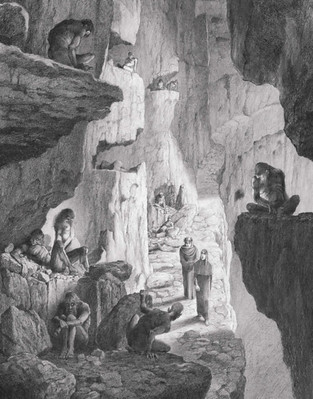
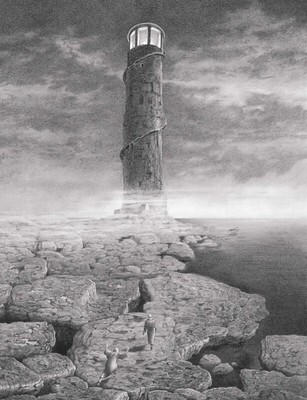
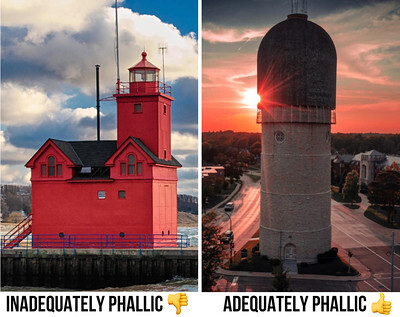
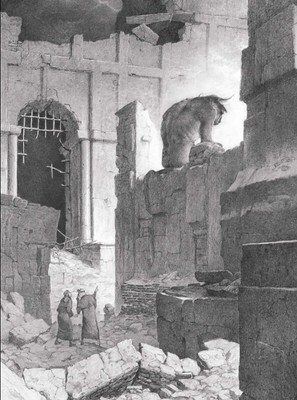
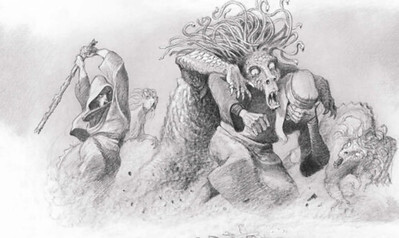
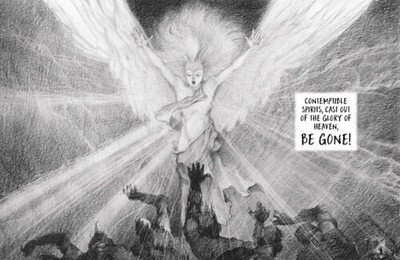
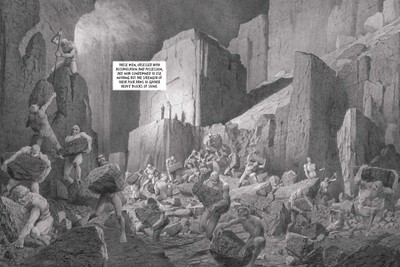
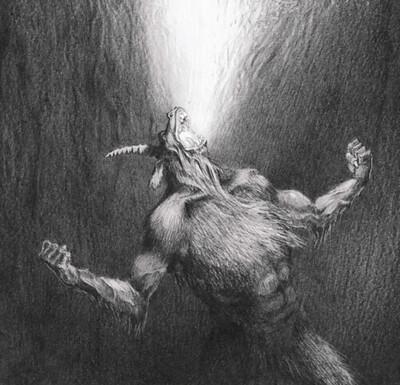
Welcome to Hell! Take a tour through eternal torment with Virgil as your guide in this gorgeously ghoulish graphic adaptation of Dante’s Inferno from French artist duo and former Disney animators Paul and Gaëtan Brizzi. This artist team that previously worked for Disney on projects such as The Hunchback of Notre Dame, Fantasia 2000, TailSpin, and—most importantly—the coming-of-age classic so very beloved by little kid me, A Goofy Movie, are here to dive into the pits of the damned with some of the most eye-popping artwork you’ll see all year. All adaptations will inevitably take some liberties with the original work but for a visual journey with Virgil I daresay you can’t do better than this and it is a treat for both Dante fans and newcomers alike. Brace yourself, steel fast your courage and faith and if the stairs are tricky you can get Antaeus to lower you down but, by foot or by claw, let us descend… I may never shut up about how the people that brought us A Goofy Movie have just delivered such a hauntingly stupendous visual tour of hell. No shade to Sandro Botticelli who provided the OG illuminated manuscript artwork of Inferno but this is so devilishly delightful in its pencil art rendering. Just take a look at this: First, this lighthouse is exceptionally phallic and I applaud them. Having spent my college years hanging out on a balcony looking directly at the extraordinarily phallic Ypsilanti, Mi watertower I have to say that I find the Holland, Mi lighthouse that I live near now to be rather disappointing. Sure, there is a snowglobe of the lighthouse in the film Coraline but if you are a lighthouse named Big Red and are in no way phallic, whats the point. Here's a handy guide: But anyways, I love how lonesome yet haunting the artwork in this is, with a visual feeling of a panicked scream suppressed. It also occasionally reminds me of the artwork of Giovanni Battista Piranesi. This is certainly a feast for the eyes and each landscape hits hard: Speaking of hitting hard, the hardships and horrors of Inferno come across so well in this visual format and this would make a great companion piece for anyone reading the original tale (teacher gift idea hint hint). And you know what else hits hard? Virgil and the angels: Because sometimes you gotta deliver an ass kicking to the beasts This is such a visual extravaganza that brings you through the city of Dis—‘the great city of pain’—down into the trenches of Malebolge which ‘were a hell within Hell,’ and further still as all sorts of mythical beasts and kings and demons and damnation greet our travellers on the way to find Beatrice. There are far less call-outs to the specific individuals than the novel though a few such as Epicurous or the guy who came up with the Tower of Babel get a spotlight from our often rather jocular Virgil as Dante tries to not lose faith amidst all the sights of torment and toil. Fans of the original novel or those curious to check out the classic tale with fresh life breathed into it, the Brizzis’ graphic novel adaptation is a true treat. While it does make the story a bit light, it is such a visual masterpiece you'll hardly care. I love this art so much and this was a fun and wild ride.
I know, in their introduction Paul and Gaëtan Brizzi explicitly ask for leniency, and they specifically address the “connoisseurs” in doing so. And I understand that: converting Dante’s oeuvre into a purely visual story is almost an impossible task. And yet, …, and yet I really cannot reconcile myself with what they have made of it.
To begin with, there are the editorial interventions: they have drastically altered the story, conjuring up Beatrice at both the beginning and the end, at the end even in the role she only fulfills at the end of the second book in Dante’s actual work.
Even more important and disastrous is that they have turned the descent into hell into a confrontation with monsters. Not so much human monsters (such as Dante portrays in a figurative sense), but primarily animal ones. In that sense, this graphic novel has become a real freak show.
The consequence of this is that the tragic stories of the (human) inhabitants of hell have been almost entirely scrapped, and with them the ultimate hallmark of Dante’s journey through hell, namely his profound compassion (for most, certainly not for all). And finally, I also miss the poetic power of the written poem; with a few exceptions, the drawings of the Brizzi’s fail to translate that power visually. I fear that this book will make me even less inclined to turn to graphic novels in the future.
Art, 5* The two-tone artwork is superb: haunting, often beautiful, and occasionally amusing. It's not constrained to cells, like a traditional graphic novel, but there are too few words for a standard illustrated version.
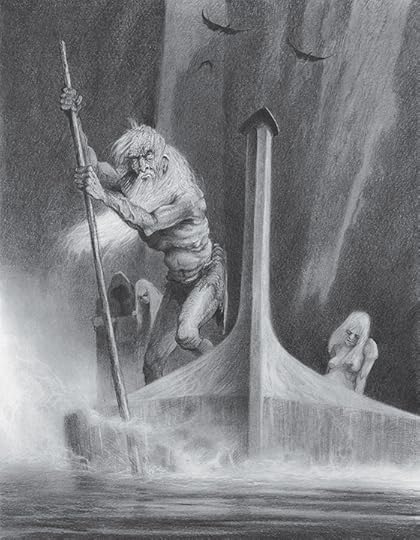
Image: Charon, the ferryman
For more illustrations, without the words, see the authors' website, HERE.
Words, 1* In their 'disclaimer' at the front, the 'authors' write of wanting to bring a difficult masterpiece to a wider audience: “to preserve the nobility of this masterpiece”. They have probably succeeded in the first, and if you only look at the artwork, maybe the second. But the words? Oh dear. Just awful.
The decayed and ancient grandeur of the underworld is not reflected in the prose. It is mostly painfully contemporary and colloquial (“yeah”), with an awkward, occasional archaicism dropped in (“perchance”), sometimes in consecutive sentences.
Disclaimer I've never found a graphic novel that works for me, as an adult (I enjoyed Rupert Bear as a child, and Asterix as a child and parent), so I may not have been the best audience for this.
An opportunistic purchase from my local bookshop. Why not dive into a 14th century narrative poem presented in graphic novel form? Given how unlikely it is that I would ever read this any other way, and how dire my lack of knowledge of any kind of mythology is, how could I resist?
The black and white pencil illustrations are absolutely gorgeous, and the story of Dante’s descent through the nine circles of hell, guided and accompanied by Virgil, is neatly and concisely told (the circles are Limbo, Lust, Gluttony, Greed, Wrath, Heresy, Violence, Fraud and Treachery, in case you’re interested).
I’m sure that most of the nuances were lost on me, and there are an interesting couple of pages of “disclaimer” at the front of the book where the authors outline their doubt at being able to represent such a complex and of-its-time work as a graphic novel. But for me, it was spot on.
If there's a definitive list of comic books that exemplify how adaptations should be done, this one deserves a top spot.
This is a textbook example of how to adapt a comic book. Despite being based on a 14th-century poem, it feels entirely modern, as it should. The adaptation brings the original work into the 21st century with updated language, tailored to the comic book format, and features jaw-dropping illustrations. Simply superb.
The illustrations aren't just comic book art; they are masterful works that could grace any museum. They are haunting and grotesque, perfectly depicting the harsh landscapes and environments that set the stage for this journey.
This adaptation is an excellent way for the younger generation to connect with this timeless story.
It's a great time to be alive. The Brizzi brothers, along with George Bess, have blessed us readers with amazing adaptations of old classics, with more to come.
فکر کنم تا الان دستکم ۱۵-۲۰تا اقتباس مستقیم و غیرمستقیم از کمدی الهی دانته رو خوندم/دیدم و تا الان، این گرافیک ناول با اختلاف زیادی "رقیق" شدهترین نمونهی اوناس. خود کمدی الهی چه زمانی که اومد، چه همین الان که هفت قرن گذشته ازش، نظراتش بعضا خیلی رادیکال میشن. از مرتد دونستن معتقدهای بقیهی ادیان تا کنایه به کلیسا و شاهان و قدیسها، همیشه یک بخشیش بوده که مردم ازش ناراضی باشن. برای من عادیه که توی تمام اقتباسها، مولف بیاد و یک بخشی که باهاش راحت نیست رو حذف کنه (همیشه میکنن)، اما این یکی کلا همهی چیزایی که ممکن بود یک نفر خوشش نیاد و بهش بربخوره رو کامل حذف کرده. کمدی الهی رو تبدیل کرده به یه کتاب کاملا بیخطر، مظلومانه و مهربون.
من در کل با اقتباس از آثار قدیمی خیلی اوکیم، حتی طرفدارشونم. اما شما مثلا به Over the Garden Wall نگاه کنین که یکی از غیرمستقیمترین و مفهومیترین اقتباسها رو از کمدی الهی داره. بازم اون روح اثر توی انیمیشن هم مشخصه، سیب اونقدر از درخت دور نیوفتاده. اما این گرافیک ناول اینقدر ترسیده از نشون دادن نوشتههای دانته که کلا ماهیتش رو هم عوض کرده، روند اتفاقات و طبقات جهنم اونی نیست که توی کتاب اصلی نوشته شده و در کل... یکم ناراحتم کرد. این چیزی که هست اونقدرم بد نیست، اما میتونست خیلی خیلی بهتر باشه.
در مورد چیزهای خوبش هم بخوام بگم، طراحیها خیلی قوین. همینطور که توی تصویرهای بالا میبینین اونقدر از کارهای گوستاو دوره دور نشده، اما تهش... خیلی ملایم شده. به نظرم برای کسی که کمدی الهی رو نخونده مناسب نیست، حتی به آشنا شدن باهاش کمکی نمیکنه چون اصلا اون چیزی که توی کتاب اصلیه اینجا نیست. اما برای مطالعهی تصویرسازی یا کسی که دوست داره اقتباسهای کمدی الهی رو ببینه و بخونه، چیز خوبیه و پیشنهادش میکنم.
Surely inspired by Doré’s wood engravings and Stradanus’ illustrations of Dante’s work, the artwork is great, especially impressive are the full page illustrations. But overall, it wasn’t really horrific enough: it didn’t give the feeling of entering hell. The story was surprisingly dull, so it felt like just a stroll through the circles of hell, with some minor problems along the way, all of which were quickly solved.
Mükemmel bir iş, mükemmel bir işçilik. Piyasaya çıktığından beri rafta duran, boyutundan dolayı elimin gitmediği kitabı dün akşam zevkten dört köşe olarak okudum.
Kitap, orijinal esere aşina olmayanlar ya da temel edebiyat/mitoloji bilgisine sahip olmayanlar için biraz fazla kavramsal olabilir. Epikuros kim? Diyojen cehennemde bile neyi arıyor? Kerberos'un olayı ne? Bunlara biraz daha vakıf olan okuyucu için daha büyük bir haz var kitapta. Ha bilmeyenler okumasın demiyorum. Ama okuduktan sonra nitelikli bir mitoloji araştırmasına ve kitabı tekrar okumaya hazır olmalı bu kişiler.
Bu kitap, pandemi sürecinde üretilmiş. İzlerken çok daha eski bir iş havası veriyor insana. Boyutu orijinalde ne bilmiyorum ama Karakarga'nın seçtiği baskı boyutu, çizimleri keyifle izlemek için mükemmel bir seçim. Kitabı alırken ve kitaplığıma sığdıramadığımda ettiğim tüm küfürleri yuttum. Çok kaliteli bir baskı tercihi yapılmış.
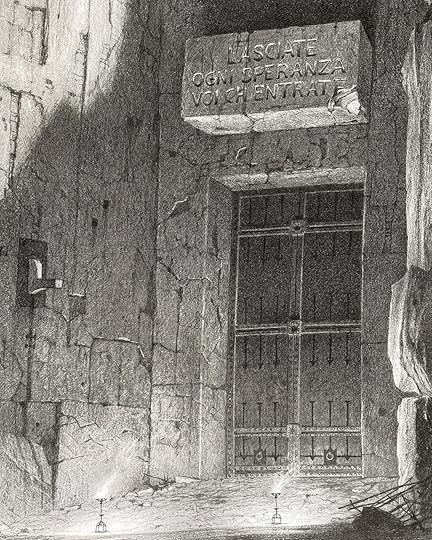
Baskıya dair tek eleştirim, cehennemin kapısında yazan o görkemli lafın ("Lasciate ogni speranza voi ch'entrate" / "Ey buradan içeri girenler, her türlü ümidi geride bırakın") Türkçeye çevrilmeyişine yönelik. Yukarıda bahsettiğim gibi, orijinal esere yabancı biri için çok havada kalan bir bölüm olabilir.
Velhasıl, çizimleri gravür olarak düşünüp büyük beklentilere girsem de beni fazlasıyla keyiflendiren, kitaplığımda çok özel bir yerde duracak (rafa zinhar sığmıyor.) bir kitap oldu. İlahi komedya orijinal metninin ama öncesinde ama sonrasında muhakkak okuyun, okutun.
Pela capacidade de adaptação dos autores, pelos desenhos, pela obra portentosa que acaba por ser, não podia levar menos de 5 estrelas. Um excelente livro ilustrado para se ter numa biblioteca pessoal, que valerá a pena ler e reler de tempos a tempos.
Guided by the poet Virgil, Dante crosses the nine circles of Hell to find his beloved, Beatrice, in Paradise. Along the way, he must recognize and reject each of the incarnations of sin. In each circle of Hell, Dante confronts both sinners and demons from Achilles, and Paris—whose loves were famously their downfall to the Greek Furies, Minotaur, and Medusa. Heretics like Epicurus, whose teachings claimed that the soul died with the body, are now forced to writhe in a flaming tomb for eternity. From the Philosophers Plato, Aristotle and Socrates who still search for an answer, to simpletons who betrayed their lovers for their own ego. The story draws heavily from ancient Greek myths and legends, featuring monsters, gods, historical and mythological kings, philosophers, queens, and hordes of the miserable, faceless damned, all culminating in a confrontation with Lucifer himself.
Paul and Gaëtan Brizzi have masterfully translated Dante’s dense literary classic into a graphic novel without distorting its essence. Their adaptation preserves the heart of Dante’s work, maintaining a taste for excess, dramatic tension, and the inevitable darkness of the subject matter. Literary aficionados will appreciate this decadent graphic novel, which remains true to its source material, while adults who grew up watching films like Disney’s Hunchback of Notre Dame—for which the Brizzi brothers animated sequences—will be swept up in this lushly illustrated adult fable (if not, it will definitely at least make you search the brothers' other work and involvement for sure, at least that's what I did).
The artwork in this graphic novel is breathtaking. Each panel could stand alone as a painting, with each depiction of sin being a single piece of art. The size of the book is fitting, as it allows the art to shine, making each page a visual feast. The illustrations are so captivating that readers will find themselves doing double takes, fully absorbing the details and beauty of each scene. The book made me wanna grab the pencil again and start drawing.
However, the transition between the various levels of Hell felt rushed at times. The depiction of each sin and level moved quickly, leaving a desire for more in-depth exploration and detail. While the adaptation could not feasibly include every detail from the original epic poem, it did leave me wanting more—more panels, more art, more information.
Despite this minor drawback, Dante’s Inferno by Brizzi brothers is a well-crafted and immersive adaptation. The journey through Dante’s torment and the vivid portrayal of each level of Hell is compelling. This graphic novel is well worth the read, and I look forward to revisiting it when the next book is released.
Note: The adaptation captures the essence of Dante’s work while making it accessible to a modern audience, ensuring that both the literary purist and the casual reader will find something to love for sure.
3.5* rounded up - The haunting, atmospheric artwork in this graphic novel reminded me of the 'Hell's Black and Starlight' exhibition at the Kupferstichkabinett in 2022 commemorating the 700th anniversary of the death of Dante Alighieri. The exhibition left a lasting impression that was reanimated by the monochromatic images of this graphic novel - so I'm not sure if it's the graphic novel itself that'so affecting or the memory of the exhibition. In any case, this journey through Dante's 9 circles of hell felt similar to a visit to a museum, stimulating contemplation and inspiring me to reread the original work to better fathom the depths of this interpretation. My main negative observation was that the grotesque was primarily represented through obese figures, which reflects the artists' bias and/or the societal lens through which the original work was viewed.
Красиві повноформатні ілюстрації нагадують ілюстрації Гюстава Доре, але їм не вистачає динаміки та епічності, як у геніального майстра. Власне, якщо докулупатись, то пекло в авторів скоріше схоже на безлюдну пустелю із поодинокими почварами, які всі на одне лице. Порівняно із оригінальним текстом- суцільна пустка. До самого текстового наповнення також багато питань- це наче адаптація для дітей 8+.
This graphic novel adaptation of Dante's Inferno has its merits.
The artwork is really nice and I enjoyed the black and white pencil-look style.
From what I know, the story follows the original well and the designs are inventive and well imagined.
Unfortunately, it was really hard to follow the story because of the text. The narrative text was in capitals and was legible but any speech was written in a font that was really hard to read and at times I just gave up reading particular bits of text which ruined the overall experience and as such I can't rate this any higher than 3 stars, the stars given for the layout and illustrations which I enjoyed.
Hopefully this might get an edit to make the text better, in which case I would recommend it. Unfortunately in it's current form it will have limited appeal and enjoyment.
İlahi Komedya'nın detay ve kişi bolluğundan arındırılmış ama yine de cehennemin katlarının amacına ve içindeki kişilere daha bir yoğunlaşılsın isterdim. Her şeye rağmen öyle çizimler var ki hayran olmamak elde değil.
When I finished up Ciardi's version of Dante's Inferno, I was curious about this graphic comic adaption. Truly, the visuals are stunning - especially the full page spreads. I would rate it PG for the female nudes sprinkled here and there.
As the authors stated in their disclaimer, this is an overly simplified version of the story, but, nevertheless, I enjoyed the rich imagery throughout.
Bu kitap küçük basılamazdı. İyi ki böyle devasa basılmış. Kitabı görünce insanın gözü doyuyor. Nefis. O çarpıcı kapak, ciltli kocaman baskı, tam bir bibliyofil avcısı. Sayfaları keyifle çevirdikçe görkeme dair duygularım pekişiyor. Kara kalem mi bu? Eski gravürleri de andırıyor. Gözlere şenlik!
Dante’nin İlahi Komedyası ile enikonu tanışmam Matthew Pearl’ün “Dante Kulübü” (2003) isimli polisiye romanına dayanıyor. Romanın kendisinden çok İlahi Komedya ve Cehennem’den etkilendiğimi hatırlıyorum. Esere dair bilgilerim o dönem merakla okuduklarıma ve sair popüler kültür değinilerine dayanıyor. Henüz özgün eseri okumuş değilim. Ama bu uyarlamayı okumaktan hayli keyif aldım. Klasik bir metni, klasik ve etkileyici şekilde uyarlanmasından teşekkül bu kitabı görsel sanat ve edebiyat sevenlere öneriyorum.
This graphic version of Dante’s Inferno is a perfect alternative for a person with low literary literacy like me who cannot enjoy poetry in general. In the past, my several attempts to read “The Divine Comedy “failed miserably. When I came across this graphic novel adaptation, I immediately picked it up.
This graphic novel is an absolute delight to read, and the artwork is phenomenal. The illustrators successfully emulated Gustave Dore’s romanticism style engraving to evoke the dark mood needed for this book.
I really wish the authors would come out with other two books “Purgatory” and “Paradiso” from The divine comedy trilogy.
I highly recommend this book equally for people who have and haven’t read Dante’s work.
The art is impressive, but the haste turns this amazing book almost in a pointless passing through in a bad place, hardly even mentioning the levels and what sort of sins are punished. Only once are we regaled with a condemned’s story. I understand repeating the whole poem would be impossible and immense, but more explanations WERE necessary, even as to who the (few mentioned) characters were.
next time I listen to hozier’s unreal unearth maybe I’ll get more of the references….
in all seriousness, Dante’s inferno has always been one of those novels that just been out of my reach, but this graphic novel was stunning, and captured the essence of Dante without making you feel stupid.
Adaptations can be difficult to create in a space already dominated by the author, but this version of Dante's Inferno was a fantastic addition to the classic space. It was interesting, the art was perfect for the time period and the style, and it was clean and easy to follow. The author's note did remind us that some parts were removed for the sake of space and time - but that would just guide the reader to another adaptation or the original classic story which is fantastic. It's basically an easily digestible version of the original to guide people through the tale. In short, it will hopefully make people feel a lot more confident about reading the original or other classics. I'm hoping these creators will tackle further books. Paradise Lost would be perfect for their style and it would be interesting to see how they would adapt it. My only gripe with this book was the font. If it is being released as an epub or other versions digitally, the font is very hard to read on a smaller screen. I've read plenty of graphic novels/manga on my phone, and the bold fonts and italicised narration left it pixelised and hard to read. I could only imagine how much more difficult it might be on a smaller screen or kindle. I received this copy free from Netgalley in exchange for an honest review.
I was inspired to pick this up b/c I just finished the romantasy The Songbird & the Heart of Stone, which definitely has a strong Inferno inspiration. Since I was too intimidated to pick up the actual Dante, I started with this graphic novel adaptation instead. While this means I cannot comment on authors' adaptation to the original source, I found the black/white images really beautiful and totally applicable to the storyline. Maybe I'll try the actual Inferno in 2025??
Este es el libro que me traje de mi viaje a Florencia. Sin desmerecer los grabados de Gustave Doré para la Divina Comedia, las ilustraciones a lápiz de esta breve adaptación del inframundo dantesco son más que espectaculares. Los hermanos Paul y Gaëtan Brizzi construyen un gran espectáculo visual con su adaptación del Infierno de Dante. Si bien los textos de las cartelas y los diálogos no poseen la misma elocuencia ni la profundidad poética de los versos del florentino, esta versión resulta más accesible y facilita la comprensión de la obra original. Mi único lamento es no haberlo podido encontrar/comprar en italiano.
Paul and Gaëtan Brizzi's adaptation of Dante Alighieri's Inferno is faithful to the spirit of the original work, whilst also depicting the Nine Circles with breathtaking beauty. Rendered in its entirety using graphite pencils, the Brizzi twins capture the full scope of Dante's descent into Hell to find his beloved Beatrice. Guided through the gates and each circle by the poet Virgil, Dante encounters the various denizens of Hell, meeting sinners and demons alike. Historical figures are seen in passing, along with numerous mythological figures. Though the Brizzi's only sparingly use Alighieri's original words, the individual scenes are mostly left intact. The epic scope of their artwork is truly what brings Inferno to life, and makes this one comic adaptation worth checking out.
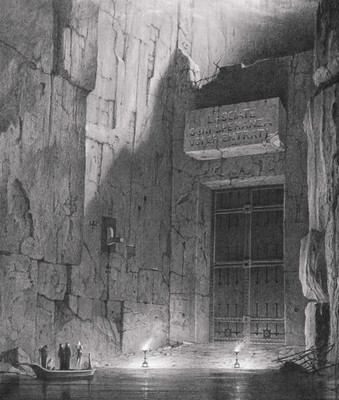
Where the Brizzi's artwork truly shines is with their sense of scale. Dante and Virgil are often dwarfed in their lengthy journey, either by grandiose structures, mighty cliffs or overbearing demonic figures. Their artwork is rendered to be semi-realistic, almost photographic in moments, but this just serves to compound the extravagance of the story. Architecture is key to the visual storytelling in their adaptation of Inferno, with numerous sequences reminding me of François Schuiten's artwork in The Tower, which in turn was an homage to the many designs of Italian architect Giovanni Battista Piranesi. The towering spires and mountain cliffs play such a substantial role in highlighting Dante's insignificance in the face of these biblical entities, that it's hard to not pause at marvel at the compositions. Take for instance, the entry way to Hell itself in the earliest portion of the story:
Paul and Gaëtan Brizzi deliver a true visual spectacle with their adaptation of Inferno. The story doesn't contain the same eloquent poetic depth of the original, but with respect to the scope, it is just as grandiose. It's gripping and mesmerizing work, and perhaps one of the best looking comics in recent years.
Inledde året med denna klassiker. Och vilken banger! Älskar att de gjort precis det som var målet. En bilderbok som är en serie som är en bilderbok, för vuxna. Den berättar historien om än lite lätt men tillräckligt för att få en korrekt känsla för boken. Jag har ingen aning om syftet med original berättelsen, det känns som att den skulle vara pro kristendomen.. men så här i efterhand känns den mer som ett sätt att visa hur tokig den är. Läs, begrunda och fascineras. Och upplys mig om slutet, jag har för mig att boken inte alls slutar såhär..
Çizimler o kadar hoş ve kaliteli ki, hemen üstlerinde yer alan yazılar estetik açıdan basit kalıyor.
Konuşma balonları/kutuları hiç olmasa da, sözel ifadeler sayfa alt kısmında genel olarak verilse daha hoş olurdu. (Dante ve Vergilius bu şekilde yola düştüler, Vergilius göklerin istencinin yanlarında olduğunu söyleyerek Dante'yi rahatlattı vb.)
Eirin fant tilfeldigvis denne på biblioteket i perioden jeg gjenleste Dantes verker. Kul grafisk novelle med Inferno som utgangspunkt. Jeg synes personlig den løsrev seg litt vel mye fra originalen, men jeg forstår at det hadde vært vanskelig å skulle være tro til kildematerialet. Fine og atmosfæriske illustrasjoner.
I read this because I found it at the new Porter Square Books and I only recently learned that Over the Garden wall is based on Dante's Inferno. The art was so good!



![Profile Image for s.penkevich [hiatus-will return-miss you all].](https://i.gr-assets.com/images/S/compressed.photo.goodreads.com/users/1735525095i/6431467._UX200_CR0,11,200,200_.jpg)