Jump to ratings and reviews
Rate this book

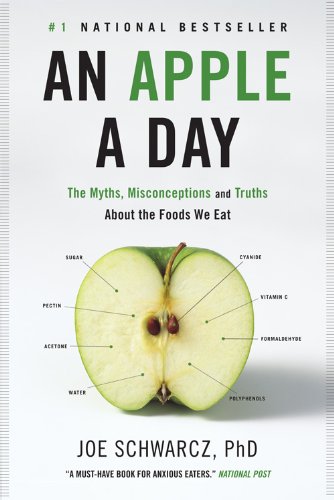
An Apple A Day: The Myths, Misconceptions and Truths About the Foods We Eat

Rate this book

Eat salmon. It’s full of good omega-3 fats. Don’t eat salmon. It’s full of PCBs and mercury. Eat more veggies. They’re full of good antioxidants. Don’t eat more veggies. The pesticides will give you cancer.

Forget your dinner jacket and put on your lab coat: you have to be a nutritional scientist these days before you sit down to eat -- which is why we need Dr. Joe Schwarcz, the expert who’s famous for connecting chemistry to everyday life. In An Apple a Day, he’s taken his thorough knowledge of food chemistry, applied it to today’s top food fears, trends and questions, and leavened it with his trademark lighthearted approach. The result is both an entertaining revelation of the miracles of science happening in our bodies every time we bite into a morsel of food, and a telling exploration of the myths, claims and misconceptions surrounding our obsession with diets, nutrition and weight.

Looking first at how food affects our health, Dr. Joe examines what’s in tomatoes, soy and broccoli that can keep us healthy and how the hundreds of compounds in a single food react when they hit our bodies. Then he investigates how we manipulate our food supply, delving into the science of food additives and what benefits we might realize from adding bacteria to certain foods. He clears up the confusion about contaminants, examining everything from pesticide residues, remnants of antibiotics, the dreaded trans fats and chemicals that may leach from cookware. And he takes a studied look at the science of calories and weighs in on popular diets.

An Apple a Day is a must-read book for anyone who looks forward to digesting the truth about what we eat.

384 pages, Kindle Edition

First published December 6, 2007

41 people are currently reading
521 people want to read

About the author

Joe Schwarcz

52 books109 followers
Dr. Joe Schwarcz holds a PhD in chemistry and is host of the radio program The Dr. Joe Show, directo of McGill University's Office for Science & Society and the author of fourteen bestselling books. Well known for his informative and entertaining lectures, Dr. Schwarcz has received numerous awards for teaching and deciphering science for the public.

Ratings & Reviews

What do you think?
Rate this book

Friends & Following

Create a free account to discover what your friends think of this book!

Community Reviews

5 stars
75 (17%)
4 stars
156 (37%)
3 stars
140 (33%)
2 stars
38 (9%)
1 star
8 (1%)
Displaying 1 - 30 of 51 reviews
Profile Image for Sesana.
6,261 reviews330 followers
October 1, 2011
Ever get frustrated by the news reports that will tell you one day that chocolate is good for you and the next day that it's bad? You'd either really enjoy this book, for actually explaining why something can be both good and bad, or get frustrated because you just want a clear answer, damn it! Sadly, there are no clear answers, at least not yet, and probably never will be.

Schwarcz has divided his book into four rather broad sections. The first is about raw food products (fruts, vegetables, grains, meat, etc.) and what properties are inherent in them. The second is about things that are intentionally added to food, like preservatives or food dyes. The third is about things that are unintentionally added, like fertilizers and pesticides. And the fourth is for just plain nonsense.

So, what are you likely to get out of this book? So much depends on what you bring to it. You'll either be comforted that things are not as bad as news reports can make them seem, or get paranoid because you'll feel like you can't trust anything.

One very interesting thing is how something is determined to be a carcinogen. If a substance can be found to cause cancer in any animal, at any dose, however large, it's a carcinogen. What does this mean for humans? Depends. Some of these carcinogens would have to be ingested in quantities that humans are unlikely to ever encounter. The one overwhelming message I got from this little piece of information, and from the book in general, is that you really need to do your own research.

The one issue I had with the book is that it can get repetitive. It almost reads as though it were originally a series of columns elsewhere, because many of the smaller sections repeat information. But the underlying information is interesting enough, and presented well enough, that I maintained interest throughout.
Profile Image for Nei.
196 reviews17 followers
August 28, 2023
We talk about banning a substance that in theory may have some adverse effect, while we allow the sale of cigarettes, which are known to kill millions annually.

This could be the summary of the author’s beliefs regarding the chemicals added by the food industry in our ultra processed foods nowadays, only for the purpose of enriching corporations even more. One doesn’t need to worry about monosodium glutamate, corn syrup, artificial sweeteners or flavours, nitrites, sulphites or modified food, as long as it is consumed within the daily intake amounts prescribed by governmental agencies. Forget about lobbying and its influence on these governmental agencies. I suspect that the author is somehow incentivised by the food industry, therefore, will not recommend the book.

2⭐️ as the first part of the book lists natural chemicals occurring in fruits and vegetables and their positive health influence if consumed. Most of it is probably known, but good to have them listed.
Profile Image for Lindsay.
106 reviews20 followers
October 20, 2010
I didn't read far, but the time I spent on this was a waste. I took it straight back to the library when Mr. Schwarcz claimed that the jury is still out on aspartame. I appreciate his efforts to be even handed on controversial issues, but he was neither hot nor cold on anything, wouldn't take a stand, and often gave equal weight to studies no matter the source of funding. Skip this and read Food Matters.
Profile Image for Sunil.
1,037 reviews151 followers
January 16, 2012
Because Dr. Schwarcz is a chemist, he focuses on the actual chemical substances that have effects within our bodies. The book is divided into four parts. The first and longest part deals with natural substances found in the foods we eat. The second part deals with artificial substances and genetic modifications. The third part deals with contaminants. And the fourth and shortest part—surprising, given the title—attacks spurious health and nutrition claims.

The chapters are very short, most of them only three or four pages long, and each one is written to stand alone, which leads to a lot of repetition of basic concepts and key facts. This is both annoying and effective since it reinforces ideas like the fact that we needn't worry about carcinogens in our coffee since they're in such small amounts and, besides, there are carcinogens in practically everything we eat. Over and over, Schwarcz hammers home several important points.

Eat your fruits and vegetables, for starters. He discusses specific nutrients and beneficial chemicals (lycopene, anthocyanins, carotenoids) they contain that are best ingested along with the hundreds of other chemicals the foods contain. Whole grains are also good, as are some spices like turmeric and cinnamon. Time and time again, he pooh-poohs the general practice of simply taking supplements, citing studies that showed that the supplements provided no benefit. Well, sometimes. Sometimes the supplements are beneficial in specific populations—usually in patients with a condition to begin with, not healthy patients seeking preventive medicine. Vitamin D supplements, though, are ones he recommends, since the recommended daily dose of vitamin D is much higher than one would get from diet alone.

Schwarcz backs up his recommendations with science. Although he provides interesting anecdotal data, he always follows it up with data from trials and interprets the results for the reader. He points out numerous times that claims of a substance's benefit or harm are frequently made based on results in animal trials. And in these trials, the animals are often given doses hundreds or even thousands greater than are actually found in the foods themselves, making the claims relatively meaningless. For instance, in one study, rats were fed an artificial sweetener, and they developed bladder cancer. The amount they got, however, was equivalent to a human drinking 350 diet sodas a day. He examines the amounts of various substances found in foods and compares which are better sources of vitamins and nutrients. He also points out that you only get the benefit of these nutrients if you make them a regular part of your diet. Eating an apple once every couple weeks isn't the same as eating one a day.

Dr. Schwarcz clearly has it out for self-proclaimed health gurus with questionable degrees and calls out several by name to debunk their crazy claims. He also rebukes several activist groups who crusade against foods with one substance of questionable health risk among dozens of other substances with proven health benefits. As he says frequently, there are natural "toxins" and pesticides in the fruits and vegetables we eat already, and no one seems to get up in arms about those. He does acknowledge when the issues are hazy, however. Even though he's obviously biased toward scientists and their fancy "clinical trials" and "evidence" and "data," he notes when the activists do actually have some science on their side.

The tone is somewhat lighthearted, but not consistently. Schwarcz's attempts at humor or a cute punchline frequently fall flat or seem out of place or non sequitur. That said, it's extremely readable, and he doesn't let the text get bogged down in polysyllabic words and confusing biochemistry, focusing on the high-level concepts. The chapters are of varying quality; some seemed very superficial and didn't address issues I expected to read about. I also felt that, since the chapters were meant to stand alone, there wasn't a consistent sense of structure or organization throughout.

Overall, however, it's a very good overview of the things we put in our bodies and what they do to us, what we can do to stay healthier, and what we really don't need to be worried about, sensationalistic headlines be damned. I learned a lot, and I was especially interested to read about the results of all the trials. We rarely hear about food-related trials and what the results actually mean, only what the media spews out. Even more interesting were the studies of trials, searching the aggregate data for potential health benefits or safety risks. But besides all that, you've got to love all the food history trivia! Like did you know that spinach actually has very low iron content, and the reason the creator of Popeye believed spinach was high in iron was because in the eighteen hundreds, researchers screwed up a decimal and the result was propagated for decades? And that pretty much all artificial sweeteners were discovered by accident? And that the word "canola" comes from a combination of Canada, oil, and low acid?

I haven't read any other books on nutrition, so I don't know how this one compares. I thought it was pretty good, but not as amazing and enlightening as I was hoping for from the title. It did make me think more about what I eat. Even though I obviously knew I should eat more fruits and vegetables and oats and fish and whatnot, it really helps to know why, specifically. Now I know what actual health benefits I can reap from diversifying my diet!
Profile Image for Kara.
37 reviews1 follower
August 2, 2016
I like this one! It is backed up by actual scientific evidence, which is a nice change. The author presents both sides of a nutritional issue in an objective matter, which doesn't happen often in these types of books. There is a lot of scientific content in here, but it is presented in a way that non-nutrition majors can understand. He somehow managed to add a bit of humour in too! I thought each nutritional issue was covered well enough in an appropriate amount of pages to give the reader a general sense of the topic. More than anything, the author presented a main point of nutrition that as a dietetics student I learn a lot about - that there are many ways of looking at a nutritional topic and not all of them are black and white. And above all the controversy surrounding food, try to eat real food and don't worry your life away thinking about it too hard :P.
Profile Image for Ranya.
28 reviews6 followers
January 8, 2012
I have mixed feelings about his one. It's very informative and I believe that you should be totally aware of the food and liquid you ingest but the author seemed to undermine all the risks in the industrial chemicals that continuously seep into our nutrition (albeit in very small quantities). His point being that all food and nutrition have harmful chemicals anyway. Other than that if you're already convinced you need to eat right (fruits and vegetables and greens and healthy oils) more than anything to reduce the risk of cancer and heart disease, then the book won
69 reviews87 followers
September 28, 2016
Bazı sahiden de faydalı bilgiler bulundurmakla birlikte çoğu kez yazar/doktor "aydınlatmaktan" ziyade kafa karıştıracak, tartışma alevlendirecek birbirine zıt teorileri ve deneyleri sıralıyor, kendi şahsi düşüncesini okurdan gizliyor (ya da kendisi de çekimser kalıyor) ve kitap boyunca sık sık kendini tekrarlıyor. Kaç kez daha aynı cümleyi okumamız gerekiyor? Bazı bölümler fazlasıyla uzun ve sıkmaya başlıyor; tatlandırıcılarla ilgili bölümler gibi. Bazı bölümler ise fazlasıyla kısa ve eksik duruyor. Velhasıl, "It was OK," diyerek 2/5 yıldız veriyorum. Bana soracak olursanız, mutlaka okunması gerekmiyor.
Profile Image for Trent.
Author 10 books12 followers
June 21, 2018
What I learned: We are not mice or rats; stop using them as a comparison. Dosage is important; chemicals are in EVERYTHING. Artificial sweeteners won't kill or harm you, no matter what internet BS you read. There is no "miracle" food or beverage. Detox diets are a myth; we naturally detox with our liver and kidneys. In the end, we all react differently to food based on where we live, genetics, sex, and age. Believe in the doctors with actual pHDs & peer reviewed scientific literature, and not internet whack-jobs.
Great studies in this book, good tackling of myths and misconceptions, and a nice education on real food science.
658 reviews32 followers
September 8, 2009
This book consists of 4-6 page discussions of everyday questions we have about the foods we eat. He covers topics that you often hear about, but don't know exactly what to believe -- vitamin supplementation, fluoride treatment of water, trans fats and HNE, nitrites, goji juice, alkaline diets, detox diets, milk consumption and cancer, etc. It's ideal for bathroom reading as you can easily finish a section in one sitting. With my interest in nutrition, pharmacology, toxicology, and communicating science to the public, I found this book enthralling.
Profile Image for Beckett.
31 reviews2 followers
October 13, 2013
This was a ridiculous book in some ways. He is a chemist "debunking" every health food claim. I read the whole thing cover to cover though I did not agree with a lot of the stuff he said. He tells the reader that GMO's are fine, pesticides are not a problem, and is really an advocate for the big pharma and big factory food industries.
124 reviews2 followers
February 9, 2022
I had a hard time deciding how to rate this book - I was wavering between a 3 and a 4. I would recommend it to a friend, but there were a few downsides that I thought were significant. Overall, I think this book might be best as reference material for particular issues that one is interested in. Since Joe Schwarcz intentionally set up the book that way, making each chapter suitable for stand-alone reading, I settled on four stars.

What I liked:
This book is packed with interesting facts about particular food components. If you're interested in lycopene, or artificial sweeteners, or genetically modified food, or a myriad of other food topics, you'll find a chapter discussing the issue, generally providing a balanced perspective with the pros and cons discussed. Although some reviewers disliked Schwarcz's unwillingness to take a black-and-white stand, I really appreciated his acknowledgement that there's still a lot we don't know. A lot of misinformation out there comes from people jumping to conclusions with minimal evidence. He points out that dose is really important in determining risk, and goes into a lot of detail about safe levels of potentially harmful food components.

The problems:
Schwarcz references studies constantly throughout the book, but he doesn't include an appendix with more details about the studies. This seems like a huge oversight to me! Don't just say, "A Japanese study found..." - give me a footnote or appendix telling me how to find that information. Don't make me take your word for it!

Schwarcz likes to throw in comments at the end of his discussion that he doesn't back up with scientific references at all. For example, he keeps talking about avoiding "processed foods," but I didn't see anything in the book explaining what he means by that or specifically why we should avoid them. I don't think this will bother most readers, because it's generally accepted nutritional dogma, but given the topic of this book, it seems to be crying out for more detail! "Processed" is so vague and general. Schwarcz is obviously in favor of some processing, like pasteurization. I would like to see more information about this topic, especially because it's mentioned so frequently.

Along the same lines, the last chapter of the book really bugged me. It felt like it was veering sharply into opinion. For example, "Start most days with oats, flax, and berries." Huh? Although oats, flax, and berries are great foods, how did they get elevated to "start most days" status? There's no explanation. What if I prefer to start my day with a salad or sandwich or smoothie? How is that inferior? After making the point throughout the book that variety is important, now we're supposed to eat the same breakfast most of the time? I notice that Schwarcz has written a book called "Let Them Eat Flax". While I'm not at all opposed to flax, this sounds like he's veering into "superfood" territory, despite being more reasonable about that throughout the rest of the book.

I thought Schwarcz was biased about sodium, but he admitted that some experts disagree with him, which makes it better. He explains his point of view and reasoning, so at least I have enough information to identify how he and I disagree (which wasn't the case with the flax issue).

Schwarcz really dislikes some particular people whom he feels are spreading misinformation and lies about food. He devotes an entire chapter (although his chapters are short) to attacking a few specific people. I was a little uncomfortable with that chapter's deviation from the general tone of the book. It's not what I was looking to read, although I'm sure some people will find it interesting.

Overall, I found this book interesting and enjoyed reading it. I learned quite a bit, although it doesn't go into depth on any particular topic (and the lack of cited sources makes it hard to do follow-up research). I'd recommend it for the lay person who's wondering what all the fuss is about when it comes to food fads and fears. But, sorry Joe, I'm not going to start eating flax every morning.
170 reviews1 follower
July 22, 2018
It did shed to light some interesting facts like how soy is fine and artificial sugar isn't as bad as people have made it seem. There are so wonder foods which I'm glad it addressed. However, it fails to take into account environmental problems some of the food we eat take part in. Like farmed salmon - horrible for the environment. Also would have liked the book to have a list of references at the end.
Profile Image for Brittany.
124 reviews2 followers
August 26, 2019
Although it wasn’t super easy to read (perhaps a bit dull), I feel it’s an important book. It changed my viewpoint on some issues when I first read it many years ago. It’s difficult to find a health/food book that is unbiased, but as a chemist, I think this author does a great job of examining the evidence instead of basing his opinions on emotion. I believe he is correct on his main point: the dose makes the poison.
Profile Image for Emily Gray.
81 reviews13 followers
August 22, 2023
Yes it was interesting. No I don't remember what I learned. There were parts that I thought were very interesting at the time, but in general it is a very dry read.

If someone had a keen interest in foods and wanted to learn a quick overview I would recommend it, but it isn't a book I would give to everyone.
Profile Image for Bianco Vecino.
12 reviews1 follower
August 11, 2021
Good book with a lot of information about certain foods, their properties and benefits to the human body. There are plenty of sections to choose from when reading this book which means you do not have to read from the beginning. Overall, it's a good read.
Profile Image for Fred Ayres.
328 reviews8 followers
January 1, 2021
For those of us who are already health conscious, this book is completely unnecessary. But for others, the nearly 400 pages of boring prose and statistics might be eye-opening.
3 reviews
July 25, 2024
Lots of interesting facts, but more information than needed that became too repetitive.
Profile Image for Amy.
3,726 reviews95 followers
November 19, 2009
The inside cover says that this is "A must-read book for the organic-obsessed, the diet-depressed, and the everyday food lover, who wants to separate nutritional sense from nonsense". I put myself in the very last category.

This is an engrossing look at the myths, misconceptions and truths about the food and chemicals that we put into our body on a regular basis. For those who think they are eating a 100% organic diet with no bad chemicals .. you will be unpleasantly surprised by what author, Joe Schwarcz (PhD) has to say.

There are four parts to this book: Naturally Occurring Substances in Our Food Supply, Manipulating Our Food Supply, Contaminants in Our Food Supply, Tough to Swallow.

I have to say that I still don't know whether I should eat some of the things that I do. For example, I am a huge milk drinker (mostly 1% or skim). You would think that milk would fail to stir up a debate ... WRONG!

In one corner is the Physician's Committee for Responsible Medicine (PCRM), the Anti-Dairy Coalition, and PETA. They maintain that milk is a deadly poison and that cow's milk is for calves.

In the opposite corner, you have the Dairy Association and various independent researchers who claim that drinking milk contributes significantly to good health.

You can choose either side to believe. Yes, the Dairy Association looks out for milk producers ... While the anti-milk groups use their issue to further their animal rights and vegetarian agendas.

Then you get the health issues:

Milk contributes to heart disease, stroke, breast cancer, prostate cancer, ovarian cancer, diabetes, allergies, stomach cramps, diarrhea, autism, mucus production and bone fractures!

Flip a coin: milk reduces heart disease, breast cancer, colorectal cancer and of course, bone fractures. It all depends on who you listen to.

There's more to this chapter, but you get the gist. Some of this stuff is just crazy.

The chapter that talks about pesticides asks "Would a pesticide-free world be better?" The answer: For people who have to handle the pesticides, yes. For the consumer, no. Reasons: Yields would be significantly reduced, the year-round availability of fresh produce would be limited and public health would be compromised.

The chapter on "Benzene in Beverages" is fascinating. Soft drinks expose us to this chemical, but there are other sources ... a hamburger has 4 micrograms, but this is only 1/10th the amount inhaled from a cigarette. A BANANA can harbor up to 20 micrograms. Still, when all exposures are added up, we are well below the levels that have been linked with leukemia.

Substances Leaching from Plastics -- this chapter was very informative. There are lots of myths and misconceptions about cooking food (using plastic) in the microwave.

Kosher Food Hype -- Sorry folks! Kosher does not = healthy!

The Myth of Detox -- Read the book!

Eat that! Don't eat that! Schwarcz doesn't tell you what to do -- he just lays out the facts. Basically, you're damned if you do and damned if you don't. It's all in who you believe!

Profile Image for Deb.
349 reviews89 followers
March 11, 2012
*Phew and whew*

"Phew! That was a lot to digest, wasn't it?"

Those are the words author Joe Schwarcz uses at the conclusion of his book which is jam-packed with the latest data, debates, and drama about the foods (and chemicals therein) we eat. His book is indeed a full-course meal...and then some.

First, he leads us through a tour of naturally occurring substances in our food supply, including flax, fiber, omega-3 fats, antioxidants, flavanols, vitamins, and minerals. Next, he presents the most controversial issues related to the manipulation of our food supply: fortifying with iron and fluoride; sweetening with natural and artificial sweeteners; manipulating genes in our food; and preserving with sulphites, viruses, and radiation. Then, he takes us up close and personal with the contaminants in our food supply, including pesticides, hormones, BPA, PCBs, and dioxins. And, finally, Joe leads us through the nutritional hype surrounding some of the latest nutritional fads such as goji juice, detoxing, DHEA, and green tea.

It's likely your head will be spinning after consuming all the nutritional chemistry, controversy and and commentary that Joe serves up. (And, to answer his question above: yes, it is a lot to digest!) He does do an impressive job in guiding us through the maze of myths, misconceptions and truths about the foods we eat, but--as food science is rarely a conclusive one--be prepared to be confused at times. Fortunately, Joe offers relief at the end of the book, to help us digest it all:
"There is more to life than worrying about every morsel of food we put into our mouths. What matters is the overall diet...When you carefully scrutinize the scientific studies that are being rolled out almost on a daily basis, most amount to no more than tinkering with the basic nutritional principles we have tried to lay down: eat mostly foods based on vegetables, fruits, whole grains, and low-fat dairy products, and don't overeat."

Whew.
Profile Image for Borna Safai.
38 reviews7 followers
September 28, 2015
"Eat this. Don't eat that. This is dangerous. That will give you cancer." How many times have we heard amazing advice about this type of food, that type of vegetable or another type of grain? And how much of it is really true? Each chapter of An Apple a Day by Joe Schwarcz looks at some food, supplement or molecule and the truth behind it. He also looks at a whole bunch of these dietary recommendations and suggestions, and dispels a bunch of myths on what we should and shouldn't eat.

Schwarcz refers to a wide range of scientific, peer-reviewed studies on both fruits and other additives and their conclusions, and there's a lot to take from it. He also looks at some more questionable suggestions by people with some questionable backgrounds and credentials, and although it gets to be a bit of badmouthing at times, it's still some good debunking of what they're proclaiming as the latest miracle drug or cure.

What's the conclusion of it all? Eat properly and healthy, avoid processed foods. While I wish there had been a bit more analysis on the recommendations and what could be done (it's just the last chapter), there's still a lot to take away from it. Easy read, short chapters, and good amount of information to take away from it. Read it!
Profile Image for Ed.
364 reviews
February 2, 2009
Reading this book is like groggily veering your automobile onto the rumble strip along the interstate. Bumpa-bumpa-bumpa-bumpa. By which I mean to say that although each chapter addresses a different nutrient, or additive, or vitamin, or food product, certain things all start to sound the same. Namely, this study shows this, but this study shows that, so consume in moderation, and all is well. Anyone who follows the news knows how nutritional headlines are often basic or sensational, but by the end of the article you are informed of the limitations of the study, and the future study needed, and that you should maintain a wide, balanced diet. Just this morning on the radio it was announced that tilapia, a common enough type of fish, contains a high level of bad fat, whereas the party line has always been fish=good, fish fat=good (in moderation), but pay attention it might not all be, watch out for that tilapia. So get out there and eat healthy, kiddos! The final concluding ending little chapter sums up the best advice about healthy eating anyone could ask for, IMHO, H being humble rather than honest, although I honestly believe it to be so.
Author 1 book15 followers
December 28, 2016
Dr. Joe Schwarcz Günde Bir Elma kitabıyla beslenme ile ilgili bütün düşüncelerinizi sorgulamayı garanti ediyor. Doğanın içine dalıp tıpkı bir Sherlock Holmes gibi bütün bitkilerin gizemlerini bulup çıkartıyor. Üstelik bütün bunları yaparken tarafsız kalmayı da başarıyor. Ne ilaç endüstrisini yerden yere vuruyor ne de tamamen aktivist bir yaklaşım sergiliyor. Bir bilim insanından bekleneni yapıyor; sadece eldeki verilere dayanarak yiyeceklerin ve kimyasal bileşenlerin olası yarar ver zararlarını dile getiriyor. Kitap muazzam bir literatür taramasının sonucunda yazılmış. Merak ettiğim pek çok sorunun cevabını ve fazlasını Günde Bir Elma kitabında buldum diyebilirim.

Brezilya’nın kuzeyindeki Belem şehrinde neden hiç Alzheimer hastalığı görülmez?

Yararlı ve zararlı kolesterol bilmecesini nasıl çözeriz?

Plastiklerden yiyeceklere karışan maddeler, mikrodalgada yemek pişirme, Monosodyum Glutamatın (MSG) etkileri ve günlük hayatta karşımıza çıkan pek çok konu Dr. Schwarcz tarafından ele alınmış.
Profile Image for Evrim.
54 reviews
February 27, 2020
Keyifli bir okuma. Bu tip konulara ilgi duyuyorsanız ve bilgi kirliliğinden şikayet ediyorsanız günümüz araştırmalarını az çok toparlamış, her konu başlığında özet bilgilere ulaşabileceğiniz bir kitap.
Yazarın kimyager olması, her besin, bileşik konusunda kimyasal yorum ve analizleri basit bir dille anlatmasını sağlamış.
Yine de her konuya değinme kaygısı, bazı konuları çok üstünkörü geçmesi sonucuna ulaşmış. Örneğin piyasadaki binlerce tarımsal kimyasalların tümünün insan sağlığına etkisini beş sayfada hızlıca anlatıp bir de sonuca ulaşabilmiş.
Diğer bir eleştiri ise referanslarına gelsin. Üçyüz küsür sayfalık bir kitapta bilimsel yazıları ve araştırmaları derleyip bir sonuç çıkaran ödüllü bir kimyagerin koca bir kitapta tek bir referans göstermemesi çok garip. Bana güvenin gerisini merak etmeyin üslubunu çok yakıştıramadım, çünkü anlattığı araştırma ve yayınlarını ve durmadan bahsedip durduğu meta analizlerin hiçbirine ulaşma şansı vermemiş biz okuyuculara. Bu da bende güven eksikliğine yol açtı.
Profile Image for Gail Park.
Author 6 books13 followers
May 11, 2009
So, eat cinnamon and flaxseed daily to reduce cholesterol, blood sugar and triglcerides (my total cholesterol came down 32 points after 10 days); reduce caloric intake and eats lots of tomatoes/tomato products (it's the lycopene); grapefruit reduces cholesterol, but can't be eaten if you are on statins...so get off statins and use grapefruit instead! Grapefruit doesn't cause nerve damage...; Soluble fiber in oats and barley reduce cholesterol and blood pressure, but not if you get it from oat bran cookies...; a cup of beans/day reduces the likelihood of suffering a heart attack by almost 40% (if you soak them and drain them before cooking they are less gaseous); cabbage strengthens bones and fights breast cancer (stir-fry it, don't boil it!);eat green spinach, yellow corn and orange squash to see better.
Bottom line: eat the rainbow, go for whole foods, eat less. oh yeah, and eat an apple a day.
Profile Image for Ahmet GOCMEN.
56 reviews
June 17, 2021
McGill Üniversitesinde Bilim ve Toplum Kürsüsünü yöneten Dr. Joe Schwarcz'ın kaleminden çıkmış eser adı ve ilk bölümleri dikkate alındığında ilk bakışta hangi doğal gıdanın ne faydaları olduğunu anlatıyormuş gibi görünüyor. Dediğim gibi ilk bölümde hakikaten de bunlardan bahsedilmiş ancak bir farkla ki yorumlarda herhangi bir gıda hakkında mucizelere yer yok. Aslında ne doğal gıdaların mucize ne de gıda katkılarının zehir olmadığını anlatmaya çalışmış. Mümkün olduğunca dengeli beslenme üzerinde duran yazar bazı mucize şarlatanlarının da gerçekte ne olduğundan bahsetmiş. Bende oluşturduğu sağlık etkisi: Evet mümkün mertebe doğal ve dengeli beslenme ama ara sıra da nefsin hoşuna giden ve damak zevkine hitap eden lezzetlerden de mahrum kalmama. Hayat bütün bunlara dikkat etmeye değecek kadar uzun değil. Amiyane tabirle "çok da şaapmamak lazım..." :)
Profile Image for Cory.
97 reviews11 followers
March 10, 2016
So grateful to the great Joe Schwarcz for this compendium of knowledge. Dr. Joe has scanned the peer-reviewed literature (which could be a bit of a snoozer for us laypeople, never mind that we likely couldn't interpret it well anyway) and puts together the info in a rollicking fashion. In the first part of most chapters, I was thinking "Oh yeah, I'm totally on board with Study X" then by the end, after both sides are presented, I think "Oops, at least now I know better that Study Y & Z are far more credible."
Ignore the reviews that whine about GMOs or whatever I-Hate-bandwagon someone is on. I certainly trust Dr. Joe far more than most internet sites or fear-mongers. Science on, people!!
Profile Image for Louis.
194 reviews23 followers
March 3, 2009
I really enjoyed reading this book.He is a local university professor (McGill in Montreal).He takes a look at many of today's food headlines and breaks them down using chemistry. Each chapter of 4-6 pages takes on subjects such artificial sweeteners,hormones in food,PCB's and a myriad of other subjects.

Short chapters make it easy to put down or pick up whenver you have a few extra minutes.

For those who enjoy the book or subject, he hosts an excellent radio program every Sunday afternoon and can be heard at CJAD.com.

I will definitely look into picking some of his other titles.
Profile Image for Alexis.
Author 7 books146 followers
May 4, 2008
This book should be read by everyone who eats. Joe Schwarz explains and outlines myths and misperceptions about food using science and chemistry. The book is easy to follow and written in a conversational and personable tone.

It's scientific, but a really easy read.

Fish is okay in small quantities, everyone should take Vitamin D, spinach isn't a large source of iron, and detoxing is not necessary.

I'll definitely be checking out his other books.
Displaying 1 - 30 of 51 reviews

Can't find what you're looking for?

Get help and learn more about the design.