Jump to ratings and reviews
Rate this book

14

Rate this book
Cinq hommes sont partis à la guerre, une femme attend le retour de deux d’entre eux. Reste à savoir s’ils vont revenir. Quand. Et dans quel état.

112 pages, Paperback

First published October 4, 2012

64 people are currently reading
1334 people want to read

About the author

Jean Echenoz

56 books236 followers
Jean Echenoz is a prominent French novelist, many of whose works have been translated into English, among them Chopin’s Move (1989), Big Blondes (1995), and most recently Ravel (2008) and Running (2009).

Ratings & Reviews

What do you think?
Rate this book

Friends & Following

Create a free account to discover what your friends think of this book!

Community Reviews

5 stars
387 (15%)
4 stars
993 (39%)
3 stars
795 (31%)
2 stars
267 (10%)
1 star
75 (2%)
Displaying 1 - 30 of 345 reviews
Profile Image for Vit Babenco.
1,784 reviews5,792 followers
March 25, 2023
It is a hot Sunday in August… Anthime is on the bicycle trip in the hills… Suddenly he hears the bells start tolling in the town…
The tocsin, given the world situation at the time, could mean only one thing: mobilization. Like everyone else but not taking the idea very seriously, Anthime had been rather expecting this, although he would never have imagined it happening on a Saturday. He listened quietly for less than a minute to the bells solemnly jostling one another, then straightened his bike and pushed off again, coasting all the way down the hill before turning toward home.

There is a big crowd… The mood is almost festive… In a fortnight everything will be over… Farewells are cheerful…
It’s not over… Anthime finds himself in his first battle…
The artillery having come to the company’s aid too late in their advance, the troop had been unable to gain the advantage all day, constantly moving forward only to retreat right away. Finally, at dusk, with a last effort they managed to drive the enemy back beyond the woods with a bayonet charge: Anthime saw – thought he saw – men stabbing other men right before his eyes, then firing their weapons to retrieve the blades from the flesh via the recoil. Clutching his rifle, he himself now felt ready to stab, impale, transfix the slightest obstacle, the bodies of men, of animals, tree trunks, whatever might present itself: a fleeting state of mind yet absolute, blind, excluding all others, but in the event the opportunity never arose.

No mercy… No quarter… Soldiers run… Soldiers fall… Soldiers die… Bullets, shells, bombs, gas… Death is all around… Horror…
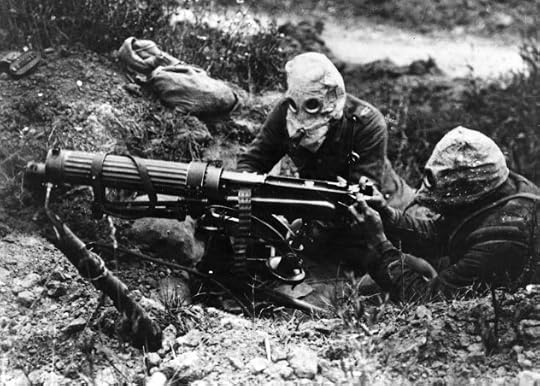
As the smoke and dust gradually cleared from the trench, a kind of quiet returned, even though other massive detonations still sounded solemnly all around but at a distance, as if in an echo. Those who’d been spared stood up fairly spattered with bits of military flesh, dirt-crusted scraps rats were already snatching off them and fighting over among the bodily remains here and there: a head without its lower jaw, a hand wearing its wedding ring, a single foot in its boot, an eye.
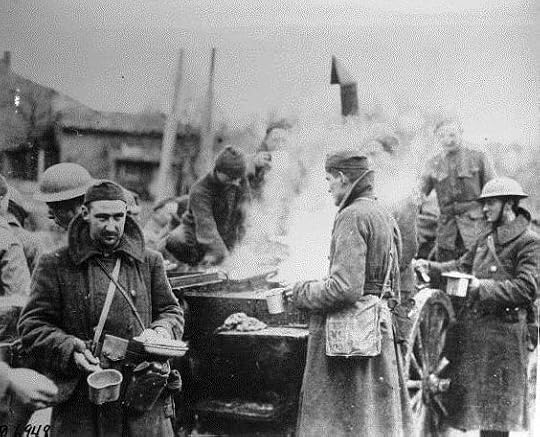
War isn’t a firework… War is a deadly drudge…
Profile Image for Helga.
1,387 reviews483 followers
May 4, 2025
Danger is everywhere, overhead from the planes and incoming shells, facing you from the enemy artillery, and even from below.

This heartbreakingly ironic and dispassionate but sincere and poignant story, begins with the outbreak of the First World War and follows five young men who head for the front believing the war would be a short one.

We see the horrific events of the war through their eyes and experience their initial hope and enthusiasm and their later despair, dejection and suffering through their first-hand experiences.

An excerpt:

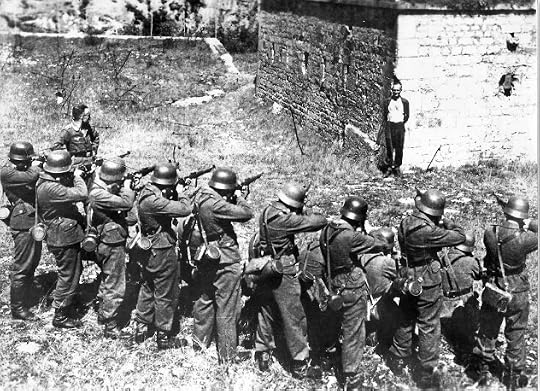
"Well, you don’t get out of this war like that. It’s simple: you’re trapped. The enemy is in front of you, the rats and lice are with you, and behind you are the gendarmes. Since the only solution is to become an invalid, you’re reduced to waiting for that “good wound”, the one you wind up longing for, your guaranteed ticket home but there’s a problem: it doesn’t depend on you. So that wonder-working wound, some men tried to acquire it on their own without attracting too much attention, by shooting themselves in the hand, for example, but they usually failed and were confronted with their misdeed, tried, and shot for treason. Mowed down by your own side rather than asphyxiated, burned to a crisp, or shredded by gas, flamethrowers, or shells—that could be a choice. But there was also blowing your own head off, with a toe on the trigger and the rifle barrel in your mouth, a way of getting out like any other—that could be a choice too."

Profile Image for Fionnuala.
887 reviews
Read
January 25, 2015
I kept thinking in images as I read this short book by Jean Echenoz. The images I saw in my mind's eye were mostly war scenes since this book is about WWI but they weren’t horrific, they weren't filled with bombed out wastelands, desperation or misery. No, the images I saw had the delicate outline of resigned figures in uniform, marching, eating, resting, or the elegant silhouettes of relatives left behind in some idyllic town, its church spire outlined against a clear sky. All the images had the warm glow of evening suffusing everything with a surprising calm.

There wasn’t much depth of field to my images. No, everything was conveyed in outlines: recruitment, food, equipment, action, individual destinies, all itemised and recorded but not lingered over, merely lightly sketched - this is after all a short book. In fact, the images conveyed by the writing were not unlike illustrations for a children’s book about the war, if such a thing could possibly exist.

But comparing Echenoz's book to an illustrated dictionary of the war is a terrible presumption on my part. And yet at times it did seem as if Echenoz had examined the archives of the period and selected certain themes which he then explained in very brief chapters: equipment, military procedure.
tactics, uniforms,

Where the book departs from any resemblance to an illustrated dictionary for children is when Echenoz sketches in the various destinies of the five original comrades (two of whom were rivals for the love of one woman) who set out from their peaceful village on the same day to join the army. But even when describing their individual destinies, Echenoz still seems to be ticking boxes:
So, yes, an alphabet of disaster. But beautifully written.
Profile Image for TBV (on hiatus).
307 reviews70 followers
August 2, 2019
Jean Echenoz is not a verbose author; with few words he conveys much. In this slim novella which weighs in at 130 pages (including copious notes) he says a great deal about WWI. About the high hopes and expectations as 'green' French recruits first set out for the Front in 1914, almost as if they were embarking on an exciting adventure. About how they were going to celebrate in triumph in Berlin in a matter of weeks. And then the stark reality of war, the Great War. Where reality almost becomes unreal, and men react like automatons. Many authors have written about all of this in many books, but author Echenoz knocks one on the head with his sparse language, his very few words. At times his words seem bland or even callous, but they shock all the same. Absurdity, incongruity and irony are all hallmarks of his craft.
#
P.S. Read the interesting notes!
#
Kudos to Linda Coverdale for the translation. I'd have preferred to read this in the original French, but that is not always an option for me as foreign language books are not necessarily readily available.
Profile Image for Roberto.
627 reviews1 follower
August 14, 2018

Riso al salto

Come si può pensare, nel 2012, di scrivere un libro sulla prima guerra mondiale? Come si può evitare di cadere nel già detto, nei cliché sulla sporcizia, sui topi, sulle trincee (terribili certo, ma sicuramente già efficacemente descritti in centinaia di saggi, romanzi, documentari e film)?

Semplicemente cambiando la prospettiva. Sintesi (un centinaio di pagine), frasi brevi (semplicità), lessico (un vocabolario incredibile questo Echenoz!), descrizioni minimali (essenzialità), pochi personaggi (la storia vista dal punto di vista dei singoli). Invece di ripetere le cose che tutti conosciamo, lo scrittore semplicemente le richiama senza descriverle. Tutto diventa quindi immediato, efficace, visibile, chiaro. E doloroso, ovviamente.

Bello, quindi. Mi sono però domandato, alla fine: il punto di vista differente mi ha mostrato qualcosa di diverso, di sconosciuto, di non visto prima, di non noto? No.
Ecco.
Profile Image for Hakan.
830 reviews633 followers
October 29, 2015
Savaşın acımasızlığı, yıkıcılığı, insan ve doğa üzerinde yarattığı etkisi böylesine kısa bir kitapta ancak bu kadar çarpıcı bir şekilde anlatılabilirdi herhalde... Echenoz, kendisine has minimalist üslubuyla yine çok etkileyici. Siperlerdeki cehennem atmosferi çok duru ama gayet vurucu bir şekilde verilmiş. Birinci Dünya Savaşının patlak vermesinden bir hafta önce huzurlu bir kır ortamında başlayan kitap, savaşın sona ermesinden hemen sonra bir otel odasında, biraz da umut verici bir sonla tamamlanıyor. Savaş, özellikle de Birinci Dünya Savaşı hakkında bir roman okumak istiyorsanız, bu kısa başyapıtı öneririm.
Profile Image for Roger Brunyate.
946 reviews741 followers
July 15, 2018
 
A disarmingly simple novella of the Great War

At only 109 pages (plus the copious and very informative notes by the translator Linda Coverdale), Jean Echenoz' novella might seem too slight to cover even the last months of 1914, when France entered a war expected to last only a few weeks, let alone to deny its title by going all the way to the armistice in 1918. But its almost casual brevity is the secret of its power. Echenoz describes the explosion of shells in the French trenches with much the same objective simplicity as he pictures the new recruits parading on that sunny August Sunday in their town square. Deaths in the air, deaths underground, an execution for desertion—all take their place in a procession of events large and small; they are just things that happen.

Echenoz begins with a striking image (apparently borrowed from Victor Hugo). Out cycling on a hilltop in the Vendée region, the protagonist, a young man named Anthime, sees what he takes to be lights flashing from the tops of all the village belfries; he is too far to hear the sound of the bells signaling mobilization, but he sees their metal catching the sunlight. The book follows Anthime, a slightly older young man named Charles (who it seems is in love with the same girl), and four friends the same age, who are sent together to the Ardennes, where they march for days until a German ambush takes them all by surprise. Eventually, we shall hear what happens to each of them, as well as the girl whom the boys leave at home, but Echenoz follows none of the normal rules about shaping a narrative to build to a climax. But then war does not obey the rules of fiction either; the deaths, wounds, and miraculous survivals happen when they happen, without concern for art.

And yet Echenoz' artlessness is high art of its own. I have read countless novels of WW1, most recently two others from the French perspective: Fear by Gabriel Chevalier (himself a survivor) and the recent Au revoir là-haut by Pierre Lemaître. Despite its small scope, I found this novella by Echenoz at least as powerful as either of those. But I think only because I had read so many larger books first. There is a particular elegance with which Echenoz touches briefly on almost all the major themes of war literature and then moves on. But it helps to know the facts already. In addition to her fluid translation (this is the first Echenoz I have read in English), Linda Coverdale's notes are very welcome. But the novel would be even better for readers who do not need them.
Profile Image for Constantinos Capetanakis.
128 reviews50 followers
January 9, 2022
Κλασικός Echenoz στην γραφή, από τις πλέον περιεκτικές, γεμάτη νοήματα και εικόνες που άλλοι θέλουν τόμους για να αποτυπώσουν, ειρωνεία και ακρίβεια καυστική. Όλα αποτυπώνονται με ελάχιστες πινελιές, ανεπαίσθητα υπονοούμενα και ωμές περιγραφές. Και δίπλα σε αυτά η φύση σε αντιδιαστολή με τον πόλεμο. Ακόμα πιο λιτό από όσο συνηθίζει ο συγγραφέας , διαβάζεται απνευστί μέσα σε λίγες ώρες και έχει την αξία του. Όπως όλα του ανεξαιρέτως τα βιβλία.
Profile Image for nettebuecherkiste.
684 reviews178 followers
March 3, 2016
An der französischen Westküste, 1914. Anthime ist mit dem Fahrrad unterwegs, als die Glocken zu läuten beginnen: Es ist Krieg. Schon am nächsten Tag werden er, sein Bruder Charles und weitere Kameraden in der Kaserne eingekleidet und sie marschieren los Richtung Ardennen. Was Anthime und Charles noch nicht wissen: Charles’ Freundin Blanche bleibt schwanger zurück.

Iris Radisch nannte den 2012 erschienenen Roman von Jean Echenoz “Eines der allerbesten Bücher zum Ersten Weltkrieg” (Umschlagstext). Was Echenoz mit diesem Buch tatsächlich gelungen ist, ist eine zusammengefasste Schilderung des Erlebens des 1. Weltkrieges aus Soldatensicht auf literarischem Niveau. Einschließlich eindrücklicher Beschreibungen des Grauens, das in den Schützengräben auf die Soldaten wartete. Die Augenwischerei, die Absurditäten des Krieges, die traumgleiche Wahrnehmung der Kampfabläufe, all dies kann Echenoz dem Leser meisterhaft vermitteln.

Was das Buch meiner Meinung nach nicht bieten kann, ist eine tatsächlich fesselnde Geschichte dreier junger Menschen, denn die Charaktere bleiben flach, nur Anthimes Innenleben wird wirklich angekratzt, aber auch nicht in dem Maße, dass eine wirkliche Beziehung zu ihm als Charakter aufgebaut werden kann. Dies ist sicherlich auch der geringen Seitenzahl geschuldet, normalerweise würde ich in einer Geschichte dieses Umfangs eher eine Kurzgeschichte oder Novelle sehen, das passt jedoch nicht dazu, dass mehrere Jahre abgedeckt werden.

Sicherlich hat der Autor sich etwas dabei gedacht, den Roman so kurz zu fassen, meine Vermutung ist, dass er die oben geschilderten Kriegserfahrung ins Zentrum des Geschehens rücken wollte, ohne dass sie von zu starken Charakteren oder einer spannenden Geschichte überlagert werden. Das ist ihm sicher gelungen, es lässt den Leser am Ende des Buches jedoch ein wenig unbefriedigt zurück.
Profile Image for Cansu Kargı.
121 reviews72 followers
December 7, 2024
Bu kadar vurucu ve derin anlatı ile savaş anlatmak yazarlık başarısı. Savaşın psikolojik etkilerini ve ardında söylenmeyeni de oldukça net ifade eden bir novella.
Profile Image for Paul Ataua.
2,194 reviews289 followers
January 4, 2020
I really don't know how to respond to '14'. I started it and finished it, yet could not, and still cannot fathom why people have given it such good reviews. It did nothing for me. I sat with it open on the final page and wondered if I had missed something, but had no desire to relive those lost minutes trying to find that something.
Profile Image for Banu Yıldıran Genç.
Author 2 books1,423 followers
September 9, 2017
kısacık bir novella'da savaşın korkunçluğunu, öncesini ve sonrasını o kadar iyi bir biçimde aktarmış ki echenoz.
hiç duygusal olmayan, hatta duygusuz bir biçimde, "biz" diyerek anlatan, kim olduğunu bilemediğimiz bir anlatıcı var. bu anlatıcı her yerde, savaşın içinde, dışında, insanların beyninde... sanki her şeyi o yapıyor. savaşı çıkaran da o sanki, gencecik çocukların bir iki ayda geri dönerim yanılgısıyla gitmesini sağlayan da... birer birer hayatlarını kaybedenlerin sorumlusu da...
anthime, bu kısacık metinde devleşen bir anti-kahraman, savaştan şans eseri kurtulan bir gazi.
echenoz'lara devam edeceğim.
Profile Image for Bogdan.
134 reviews83 followers
Read
June 16, 2025
Comme mon ami Serge me l'a suggéré, ce livre est impeccable. 14 est une œuvre limpide, dépurée de tout maniérisme romanesque superflu, même de psychologie ou d'épique, ce qui est vraiment remarquable pour un roman qui traite de la Première Guerre mondiale. Il est bien coupé, comme pour le montage d'un film fait avec des phrases d'une économie et d'une précision visuelle, qui montrent le plus avec le minimum narratif. Un film se projette mieux sur un écran blanc, et Echenoz a également su limiter l'usage d'encre jusqu'à seulement cerner les pages, les rendant ainsi impeccablement blanches. Là, des métonymes minces projettent de grandes ombres: un sac à dos trop plein peut contenir aussi la Grande Guerre, un uniforme étroit - la condition humaine; un bras amputé peut faire des gestes que nous comprenons sans les voir, et qui nous touchent.
Profile Image for Mustafa Şahin.
454 reviews106 followers
February 6, 2016
Adam altmış sayfada Birinci Dünya Savaşı'nı anlatmış, hem sosyal hem de psikolojik olarak. Vay arkadaş... Az ama öz yazmış, çok iyi!
Profile Image for Stephen Durrant.
674 reviews169 followers
December 22, 2012
Jean Echenoz, one of France's most talented and versatile writers, here tackles a formidable topic: the First World War, which has already inspired a small library of great literature. He succeeds at his task, somewhat surprisingly, without relying upon either historical breadth or psychological depth. "14" has an extremely small cast of characters--essentially five young men recruited together and one young woman "left behind." All these are portrayed strictly from the outside. For example, one of the recruits is unjustly accused of desertion and is executed without any direct indication of how he feels about this horrifying process. The narrative focus not only avoids direct psychological penetration but also stays largely upon minutiae--lice, rats consuming bits of human flesh, jewelry one soldier makes from shell casings, containers of urine catapulted into enemy trenches, etc. Echenoz's genius, in this and other novels, is the way his complex, elegant prose so often dissolves into humor, here very dark humor. With "14," he has taken a well-worn subject and presented it in a fresh, powerful, and deeply disturbing way. It fully deserves to be added to the list of great World War I novels. I should note in conclusion that Echenoz's French is much more difficult than Gaude or Dicker, reviewed previously, and was a real "stretch" for this reader. Fortunately, he is one of those few contemporary French writers regularly translated into English.
Profile Image for Ourania Topa.
172 reviews45 followers
September 7, 2020
Με ύφος αποστασιοποιημένο και ειρωνικό ο Εσνόζ γράφει μερικές συγκλονιστικές σελίδες για τον Α' παγκόσμιο πόλεμο, ξεκινώντας από την ημέρα της επιστράτευσης στη Γαλλία στις αρχές Αυγούστου του 1914 (βλ. π.χ. την καταπληκτική σκηνή με την μπάντα που παίζει την Μασσαλιώτιδα εν μέσω της μάχης!!!). Η ειρωνεία διαπερνά και τη σχέση των βασικών προσώπων, κυρίως του τριγώνου Αντίμ-Σαρλ- Μπλάνς, αλλά και την πρόσληψη του αρχόμενου πολέμου από τους απλούς ανθρώπους: φανφάρες και ενθουσιασμός για έναν πόλεμο που υποτίθεται ότι θα κρατούσε λίγες εβδομάδες, αλλά για τον οποίον κανείς - από τους υψηλόβαθμους αξιωματούχους του πολέμου μέχρι τον άμαχο πληθυσμό - δεν ήταν προετοιμασμένος... Όλα αυτά σε 100 σελίδες! Μέγιστο προσόν! Έως και 4,5 αστέρια!
Profile Image for Gerhard.
357 reviews30 followers
August 11, 2023
Eine sanfte Geschichte während des Ersten Weltkriegs, die den Krieg als solches nur am Rand berührt, fast eine Entspannung zu meiner sonstigen laufenden Lektüre
Profile Image for Arash.
254 reviews112 followers
May 24, 2023
_

آری، تیرباران شدن به دست خودی‌ها به‌جای دچار شدن به خفگی، زغال ‌شدن و تجزیه ‌شدن بر اثر گازهای شیمیایی دشمن، شعله‌افکن‌ها یا گلوله‌های توپ آن‌ها: حق انتخاب برایت محفوظ بود. اما راه دیگری هم وجود داشت و آن عبارت بود از تیرباران ‌کردن خود: شستِ پا را روی ماشه می‌گذاشتی و دهانه‌ی توپ را به ‌طرف دهانت نشانه می‌رفتی. این هم روشی بود در میان روش‌های بی‌شمار موجود.
_
کتاب سرگذشت چند دوست است که بی خبر از هیاهو تکاپوی جنگ، بدون هیچ پیش زمینه و آموزش مقدماتی به جنگ اعزام می شوند. مردم در روز اعزام برای آنها جشن و پایکوبی راه می اندازند و همه شاد و خوشحال و امیدوار که جنگ به پانزده روز نرسیده به پایان برسد.
در ادامه با سردرگمی و پیاده روی های بی هدف این سربازان مواجه می شویم که نقبی است به جنگ که کاملا بی هدف و واهی و تباه کننده است. سوء استفاده افرادی برای سود بیشتر در بهبوهه جنگ.
معشوقه یکی ازین افراد بنا بر نفوذی که داشت، محبوبش را از نیروی زمینی به نیروی هوایی منتقل می کند و او در اولین پروازش به شکل بسیار پیش پا افتاده ای سقوط می کند و کشته می شود.
افراد یکی یکی از بین می روند و سربازانی که با شور و هیجان و خوشحالی به جنگ رفته بودند حالا در پی راهی برای مجروخیت می گردند تا از ادامه جنگ معاف شوند. خیلیها دست به خودزنی و خودکشی های ناموفق می زنند که درنهایت کارشان به دادگاه نظامی و جوخه اعدام می رسد و از این امر رضایت خاطر دارن چون مرگ به دست افراد خودی را به مرگ به دست دشمن و آن هم به شکل فجیع و غیر منتظره ترجیح میدهند.
کتاب داستان کوتاهی است از جنگی بزرگ، تقابل تباهی جنگ و مرگ و زندگی. در انتهای کتاب شاهد تولد نوزادی هستیم، پایانی کلیشه ای برای یک روایت نسبتا خوب.
Profile Image for Romain.
934 reviews58 followers
June 6, 2020
D’habitude je ne cite pas les quatrièmes de couverture, mais là je ne peux pas résister.

> Cinq hommes sont partis à la guerre, une femme attend le retour de deux d’entre eux. Reste à savoir s’ils vont revenir. Quand. Et dans quel état.

Jean Echenoz va bien aux éditions de Minuit et vice-versa. Ainsi le contenant ressemble au contenu: sobre, épuré et élégant. Si vous voulez vous convaincre du lien qui existe entre l’écrivain et cette maison, lisez Jérôme, l’hommage qu’il a rendu à Jérôme Lindon qui en fut l’emblématique directeur.

Nous avons célébré il y a peu le centenaire de la Première Guerre mondiale et, sur les tables des libraires, se sont empilés les pavés consacrés à cette douloureuse période. Il faut dire que le sujet est poignant et peut aussi se prêter au romanesque. Echenoz apporte sa pierre à l’édifice petite par la taille et grande par le talent, tout en discrétion à l’image de son titre réduit à sa plus simple expression 14.

Je l’ai déjà dit, mais je le répète car c’est flagrant dans ce livre – mais aussi parce que j’aime bien – Echenoz produit du concentré de littérature. Tout est là, mais rien n’est en trop. Il travaille pour atteindre la perfection et comme le disait Antoine de Saint-Exupéry.

> Il semble que la perfection soit atteinte non quand il n’y a plus rien à ajouter, mais quand il n’y a plus rien à retrancher.

Le style est sobre et original à l’image de son facétieux narrateur tour à tour empreint de compassion ou d’ironie. En à peine une centaine de pages Jean Echenoz nous livre un concentré de guerre, ou un concentré de roman tout court, agréable à lire, prenant, poignant, sans pathos. Ne perdez pas de temps, allez à l’essentiel, lisez 14.

Également publié sur mon blog.
Profile Image for George K..
2,759 reviews372 followers
September 5, 2016
Το βιβλίο μου είχε κινήσει την προσοχή από την πρώτη στιγμή που κυκλοφόρησε στα ελληνικά από τις εκδόσεις Ίκαρος, αλλά η τιμή του μου είχε φανεί αρκετά τσιμπημένη για το μέγεθος του βιβλίου, οπότε άφησα στην άκρη για αρκετό καιρό την πιθανότητα αγοράς του. Όμως το βρήκα σήμερα με γερή έκπτωση, είπα "δεν πάει στο διάολο", και έτσι το αγόρασα. Και, πραγματικά, χαίρομαι πάρα πολύ που το έκανα, μιας και απόλαυσα κάθε ξεχωριστή σελίδα, κάθε ξεχωριστή πρόταση.

Η νουβέλα αυτή ασχολείται με τον Α' Παγκόσμιο Πόλεμο στην Γαλλία. Πέντε νέοι, μεταξύ εκατοντάδων χιλιάδων άλλων, αφήνουν την ησυχία και την μονοτονία του χωριού τους, και πάνε να πολεμήσουν στα χαρακώματα και τα λασπωμένα χωράφια. Δυο από αυτούς τους νέους αφήνουν πίσω τους μια κοπέλα. Ο βασικός πρωταγωνιστής, ονόματι Αντίμ, ζει την παράνοια του πολέμου, όπως πολλοί άλλοι άνδρες. Μέσες-άκρες αυτά. Το θέμα δεν είναι η ιστορία αυτή καθαυτή, αλλά ο απίστευτος τρόπος εξιστόρησης του Εσνόζ. Μιλάμε δεν υπάρχει η γραφή του τύπου. Έντονη ειρωνεία και μαύρο-πικρό χιούμορ, σκωπτική διάθεση, απίθανες περιγραφές των πεδίων μάχης, που φέρνουν στιγμές ευθυμίας αλλά και λύπης ταυτόχρονα. Θα πρέπει να διαβάσετε το βιβλίο για να καταλάβετε τι εννοώ.

Αυτή ήταν η πρώτη μου επαφή με το έργο του Εσνόζ και μόνο θετικά λόγια μπορώ να πω. Μιλάμε για μια από τις καλύτερες νουβέλες για τον πόλεμο που μπορεί να διαβάσει κανείς στα ελληνικά. Πρόκειται για ένα γλυκόπικρο έργο, γραμμένο με ιδιαίτερο και ξεχωριστό τρόπο. Προσωπικά λάτρεψα και την παραμικρή λεπτομέρεια. Μέσα σε εκατό σελίδες ο τύπος χώρεσε τόσα πολλά πράγματα. Το μόνο σίγουρο είναι ότι θα υπάρξει και συνέχεια με τον συγγραφέα, μιας και θα αγοράσω τουλάχιστον δυο-τρία βιβλία του ακόμα.

Υ.Γ. Θα μπορούσα να του βάλω και πέντε αστεράκια, ίσως όμως έτσι να αδικούσα κάποια άλλα βιβλία. Όπως και να'χει, είναι ένα καταπληκτικό βιβλίο.
Profile Image for Sotiris Karaiskos.
1,223 reviews124 followers
August 29, 2019
A small novel that concentrates in a few pages the experience of the First World War. Going straight into the subject, the author presents the war from various angles, from the rear to frontline soldiers, with a prose full of interesting metaphors that manages to say many things in a few words. This condensation does not in any way limit the description of the details of the Warfare and military life, but on the other it limits the greater depth to the facts and characters, though in a simple way the author manages to put us in their place. Even so, I liked the book as the knowledge I gained about the First World War somehow filled the gaps, if it were much biger my appreciation would be proportionally higher.

Ένα μικρό μυθιστόρημα που συμπυκνώνει μέσα σε ελάχιστες σελίδες την εμπειρία του πρώτου Παγκοσμίου Πολέμου. Μπαίνοντας κατευθείαν στο θέμα ο συγγραφέας παρουσιάζει τον πόλεμο από διάφορες μεριές, από τα μετόπισθεν μέχρι τους στρατιώτες της πρώτης γραμμής, με μία γραφή γεμάτη ενδιαφέρουσες μεταφορές που καταφέρνει να πει πολλά πράγματα με ελάχιστες λέξεις. Αυτή η συμπύκνωση δεν περιορίζει καθόλου την περιγραφή των λεπτομερειών της Πολεμικής αναμέτρησης και της στρατιωτικής ζωής, από την άλλη, όμως, περιορίζει τη μεγαλύτερη εμβάθυνση στα γεγονότα και στους χαρακτήρες, αν και με έναν λιτό τρόπο ο συγγραφέας καταφέρνει να μας βάλει λίγο στη θέση τους. Ακόμα και έτσι το βιβλίο μου άρεσε καθώς οι γνώσεις που έχω αποκτήσει τελευταία για τον πρώτο Παγκόσμιο Πόλεμο κάπως καλύπτουν τα κενά, αν ήταν αρκετά μεγαλύτερο η εκτίμησή μου θα ήταν αναλόγως μεγαλύτερη.
Profile Image for Jan.
1,058 reviews68 followers
January 2, 2023
The novel ‘14’ by Jean Echenoz is a valid report of a war invalide. Valid because of the density of the message. 'Invalide' goes not only for the main character, but all the more for the circumstances: the naivety with which the men are sent into war, the unpreparedness of those youngsters, the painful proven manoeuvre for Charles to put him high up in the air, the fate of the soldiers, invalide is the material from the factory and last but not least: what about the future perspective of Anthime, because of his physical condition …
This is quite another approach of World War I compared to the novel Heldenangst/ La Peur/ Fear by Gabriel Chevallier: https://www.goodreads.com/book/show/1..., which I liked even more. JM
Profile Image for Rafael.
156 reviews40 followers
January 6, 2014
Desgarradora novela corta que en pocas páginas describe la primera del 14. A cien años de esta fecha muestra la locura que soportan los soldados, cuando combatían cuerpo a cuerpo y las ballonetas, y los gases, el sufrimiento de piojos, ratas que comían los ojos de los cadáveres.
La amistad de los amigos, la joven embarazada que nunca su hija verá a su padre, los mutilados y entre ellos el personaje que regresa amputado, la industria de la guerra. Maldita la guerra que sega la vida.
Novela que recomiendo leer de un sola sentada.
Profile Image for Elina.
510 reviews
May 27, 2016
Ένα πολύ διαφορετικό βιβλίο που μέσα στις λίγες σελίδες του περιγράφει γεγονότα του πρώτου παγκοσμίου πολέμου. Ο τρόπος που περιγράφονται είναι τελείως λιτός, στεγνός από φιοριτούρες αλλά γεμάτος κινούμενες εικόνες. Όλο το σκηνικό στηνόταν στο μυαλό μου την ώρα που το διάβαζα. Τα αστεράκια είναι 3,5 γιατί με έριξε πολύ ψυχολογικά σε μια φάση που δεν ήθελα να πάω παρακάτω. Κατα τ' άλλα αξίζει μιας ευκαιρίας.
Profile Image for Kurtlu.
178 reviews37 followers
June 18, 2017
okuduğum 3. echenoz kitabı da yazarın dilini sevdiğime dair inancımı sarsmadı. fakat bu sefer farklı bir şey vardı. kitabın paralel kurgusu içinde anlatıcı her yerdeydi. yani ana kahramanların hikayelerini 3. tekil şahış olarak anlatırken birden kendisini de katarak 1. çoğula geçiş yapıyordu. aynı anda hem cephede, hem de bahse konu savaşa katılan askerlerin savaştan önce yaşadıkları kasabada. bu anlatımı eğlenceli hale getirirken biraz da yapaylaştırmış. böyle olduğu için 1 yıldızını kırdım, ama aslında bugüne kadar yazılanlar arasında sıradanlıktan uzak bir 1. dünya savaşı romanıydı. echenoz'u tereddütsüz tavsiye ediyorum.
Profile Image for Stef Smulders.
Author 77 books119 followers
May 28, 2017
Not a very special short novel with a rather simple WWI story, told almost like a fairytail or tragicomedy. One would think there is material enough here to write a fullgrown novel. What did the writer intend to do? Write a lighthearted version of the terrible happenings in which due to the irony of fate Anthime takes the position in life of his elder, previously unattainable brother?
Profile Image for Jim Coughenour.
Author 4 books227 followers
July 29, 2016
I keep hoping for another novel from Echenoz that I'll enjoy as much as I'm Gone but three novels on, that hasn't happened. I was curious about 1914 (published in French as 14 as it also happens to be his 14th novel, or so I read somewhere). I'm in the midst of what will probably be a year-long reading project of fat histories of World War I. These are an exceptional crop of books, as illuminated by R.J.W. Evans's recent essay in the NYRB – but I was ready for a breather.

There's already a trove of novels about the WWI – my favorite being Pat Barker's Regeneration trilogy. (For English writers, it seems to have been the most literary war ever.) Echenoz knows this, knows everything, so much so that you wonder why he bothered to write this slight novel about five young men who go off to war and suffer the consequences. At one point a certain resignation pops to the surface:
All this has been described a thousand times, so perhaps it's not worthwhile to linger any longer over that sordid, stinking opera. And perhaps there's not much point either in comparing the war to an opera, especially since no one cares a lot about opera, even if war is operatically grandiose, exaggerated, excessive, full of longueurs, makes a great deal of noise and is often, in the end, rather boring.
Indeed. While this book is too short for longueurs – I read it one sitting – it is (despite a few fine passages) completely incidental. Its most interesting aspect is the set of endnotes provided by Linda Coverdale, the translator.
Profile Image for Alejandro.
135 reviews13 followers
May 26, 2023
Novela cortita, de la que se ha escrito mucho. Aún así, atrapa por lo bien escrita que está.
Unos amigos que pensaban que en 2 semanas volverian del frente.
Lo fácil que es entrar en la guerra, y si logras salir de ella, lo que te dejas.

"Pero no se abandona una guerra así como así. No hay vuelta de hoja, está uno atrapado: el enemigo delante, las ratas y los piojos encima, y detrás los gendarmes. La única solución es dejar de ser útil para el servicio"

7/10
Displaying 1 - 30 of 345 reviews

Can't find what you're looking for?

Get help and learn more about the design.