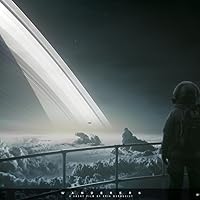
For twenty-five years following the Voyager mission, scientists speculated about Saturn's largest moon, a mysterious orb clouded in orange haze. Finally, in 2005, the Cassini-Huygens probe successfully parachuted down through Titan's atmosphere, all the while transmitting images and data. In the early 1980s, when the two Voyager spacecraft skimmed past Titan, Saturn's largest moon, they transmitted back enticing images of a mysterious world concealed in a seemingly impenetrable orange haze. Titan Unveiled is one of the first general interest books to reveal the startling new discoveries that have been made since the arrival of the Cassini-Huygens mission to Saturn and Titan. Ralph Lorenz and Jacqueline Mitton take readers behind the scenes of this mission. Launched in 1997, Cassini entered orbit around Saturn in summer 2004. Its formidable payload included the Huygens probe, which successfully parachuted down through Titan's atmosphere in early 2005, all the while transmitting images and data--and scientists were startled by what they saw. One of those researchers was Lorenz, who gives an insider's account of the scientific community's first close encounter with an alien landscape of liquid methane seas and turbulent orange skies. Amid the challenges and frayed nerves, new discoveries are made, including methane monsoons, equatorial sand seas, and Titan's polar hood. Lorenz and Mitton describe Titan as a world strikingly like Earth and tell how Titan may hold clues to the origins of life on our own planet and possibly to its presence on others. Generously illustrated with many stunning images, Titan Unveiled is essential reading for anyone interested in space exploration, planetary science, or astronomy. A new afterword brings readers up to date on Cassini's ongoing exploration of Titan, describing the many new discoveries made since 2006.
If you want to know what the Cassini/Huygens mission discovered about Titan -- which is what I was looking for -- you will be disappointed by this book. It does provide a few nuggets of information regarding Saturn's largest moon -- dunes of organic sand, ethane lakes in the polar regions, highlands rumpled by deep canyons, complex hydrocarbons in the atmosphere. But to find descriptions of Titan itself, you have to dig through a lot of details about instrument design, data analysis, and the personal experiences of the authors. This is much more a book about the process of scientific investigation than about the results.
This book really gives you a play by play of the mission as it unfolded, it also references some potential missions and extensions for the future. It is not a "new frontier, hypothetical" type book. The book is more technical and gives even so much as wind patterns and atmospheric pressures and so forth for the great moon of Saturn. It is more interested in data presentation than story telling, which honestly I appreciated and enjoyed quite a bit.
This is a good book for science nerds. It is written at a college level, with many scientific terms, so this book is not written for a general audience. However, if you’re a science nerd who’s interested in learning all you can about Saturn’s moon Titan, you won’t be disappointed. This book is jam-packed with lots of detailed information about Titan, as well as a thorough overview of the Cassini-Huygens mission from its inception to the date of this book’s publication (2009 for the paperback edition). That brings me to one final drawback of this book, its publication date. The hardcover edition is now almost two decades old, and while I think this book has aged well so far, it will inevitably become dated in the decades to come.
So, if you’re looking for a concise overview of Titan written for the general public, I recommend you look elsewhere. But if you’re a science nerd who enjoys reading detailed information about Titan, then this just might be the right book for you.
Very accessible popular science book on Titan, Saturn’s largest moon, the second largest moon in the solar system, and the only moon in our solar system with a substantial atmosphere and with stable bodies of liquid present on its surface (and also the only body in the solar system aside from Earth with a nitrogen dense atmosphere). Written by Jacqueline Mitton and Ralph Lorenz, the latter a planetary scientist and engineer at the Johns Hopkins University Applied Physics Laboratory and who worked extensively on the Cassini mission to Saturn (more specifically its Huygens lander to Titan), even designing one of the instruments to be used on the lander, the book is at times as much history and day-to-day chronicle of the mission, how the spacecraft and the lander were operated, how things were discovered, the changing nature of the interpretation of the findings, and experiments and ground-based telescope observations on Earth used to supplement the findings. As some reviewers noted, there is a lot of process to the book, showing exactly how data was collected and analyzed, challenges and opportunities presented by the mission whether from the performance of parts to the unexpected nature of conditions once Cassini reached Saturn, and how interpretation of the data drove the design of successive orbits of Cassini near Titan and the use of particular instruments.
The star of the book though is always Titan and every time a particular aspect of the Cassini or Huygens missions were discussed, the authors always came back to what was found and what it meant. Titan is fascinating world, at 5,150 km across 50 percent larger than our own Moon, 6 percent larger than Mercury, an extraordinary world covered in a “thick and visually impenetrable blanket of haze,” with an atmosphere both denser than Earth’s and thanks to Titan’s lower gravity extends farther out into space.
A world of considerable mystery before the arrival of Cassini on July 1 2004, it was really interesting to read how the mission revealed a great many details on Titan’s atmospheric composition, its complex mix of organic compounds, its climate and weather patterns including cloud formation and precipitation, its geographic features such as Xanadu, an Australia-sized area of hills and chasms on Titan’s equator, whether or not cryovolcanism occurs on Titan, the existence of extensive dune fields and what they say about Titan’s climate, and the search for surface bodies of liquid methane on Titan. The latter was especially interesting to me, as not only were they not immediately apparent when Cassini arrived at Saturn as some had predicted (as no specular reflections were initially observed) and the process of determining if they even existed was well-told, but it was clear from the book it was still early days of understanding their formation, structure, distribution, depth, size, and what they reveal about Titan’s geology and climate. The book (I have the updated paperback edition) was written in 2009 and so I looked online, many of the details later determined about such bodies as Ligeia Mare and Kraken Mare simply weren’t known yet, though their existence and overall size and shape were.
The book is far from dry and interspersed with sections on the engineering aspects of Cassini and Huygens and the planetary science of Titan (and occasionally Saturn and its moons, with Enceladus getting a nice bit of coverage), the author included “Ralph’s Log,” which detailed interesting events in his life as they related to the overall mission, such as experiments he performed at the Mars Wind Tunnel at NASA’s Ames Research Center in California to his interaction with the new media to his study of terrestrial analogues to geologic features on Titan, all very personable and a few times working in pop culture references and what a day in life of a planetary scientist and engineer was like.
Extensive black and white illustrations throughout, a section of color plates, a further reading section, and a thorough index are included. I wish the book was updated with later findings of the mission and went to the end of the Cassini mission in 2017 and it was a little bittersweet to read some of the author’s optimistic ideas about future missions to Titan that have not yet come to pass but he thought might. I did look online and saw that Ralph Lorenz is the Mission Architect of Dragonfly, a probe capable of flight and hopefully will be launched to Titan in 2027.
Titan, the largest moon, of Saturn is an intriguing object in the Solar System. At 5150 km across, it is 50% bigger than Earth's moon and 6% bigger than Mercury. It revolves around Saturn at about 20 Saturn radii, every 30 years. A tilt of 27 degrees results in seasons.
Titan's atmosphere is 80% nitrogen, with methane at less than 5%. The surface pressure is 1.5 bar. A haze forms high in the atmosphere where sunlight breaks up the methane to produce organic materials. While water would be rock solid, methane is able to evaporate, condense into clouds, and fall as droplets of rain.
The authors detail early knowledge of Titan gained from the Galileo and Voyager spacecraft. The various techniques used with Earth based telescopes, many based on occulation of distant stars, are particularly interesting as they provided a better understanding of Titan's atmosphere.
The Cassini spacecraft which reached Saturn in 2004, and the Huygens probe sent to the moon's surface, greatly increased our understanding of Titan.
The author includes much detail on the logistics of the research promgram. "Beyond the cultural differences within Europe and between Europe and the United States, another cultural divide must be overcome on a project like this - namely, that between scientists and engineers. Although both are technical disciplines, they have very different styles. Engineers are more team-oriented, used to the hierarchical organization of engineering organizations. Scientists are more often prone to prima donna behavior but sometimes less constrained in how they work."
Cassini's encounter with Jupiter provided thousands of images of the planet that were not available from the Galileo spacecraft due to an antenna failure.
The author's main work revolved around the Huygens penetrometer. When it hit, the data showed that the ground was a material somewhat like sand, but damp with methane. The impact released a variety of heavier compounds including ethane, carbon dioxide and possibly benzene.
Some of the results were surprising in that they were not in accordance with preliminary models. The low abundance of organic gases such as ethane in the lower atmosphere indicated some unknown loss process. The presence of haze all the way to the ground was not anticipated at all.
Large longitudinal "sand" (chemical composition unknown) dunes exist in the equatorial regions. Being 100 m. tall, there appears to be tens of thousands of cubic kilometres of "sand".
Observations of the moon Enceladus have revealed plumes shooting out from the south pole. They are largely water vapour with little ammonia, and may be responsible for the faint cloud of water vapor surrounding Saturn.
Images of Xanadu showed rugged terrain with dramatic channels of up to 200 km in length.
Titan is the first world to be mapped optically and with radar, and at the same time studied with a probe, the resulting topographical data allowing insight into its fluvial and glaciological processes.
Many apparent lakes without drainage channels have been detected towards the poles, consistent with a steady ethane-rich drizzle.
The author proposes that future explorations could include a balloon that would drift over Titan providing images and a variety of measurements. It turns out that C14 is probably produced in the atmosphere of Titan at a rate four times that of Earth and would likely allow determination of the age of landscape features.
I read this book in hardcover checked out from the local library. I enjoyed the book overall. It was published in 2008, and per the text its writing was being completed in mid-2006, or about two years after the Cassini space probe arrived at Saturn and released the Huygens lander to parachute down onto Saturn's moon Titan. When the book was being sent to press, another 11 years remained in the Cassini probe's mission (it was deliberately deorbited and crashed into Saturn in 2017), so presumably much much more was learned about the moon Titan via close flybys in those subsequent years. This book is not so much about what was learned about the moon Titan in those first 2 years, but given its publication timing it was mainly concentrated on the history of scientific examination and discovery on Titan prior to Cassini's arrival, the design of the Cassini probe and Huygens lander, the launch and operation of the spacecraft, and the Huygens landing event. Many more years of crunching the numbers on the data the lander sent back and making conclusions lay in the future as the book went to press. Alas, I have looked for a more recent book on the moon Titan that gives a more up to date picture of what has been learned about this interesting place, but I can't find one. Doubtless there are hundreds of thousands (or perhaps millions) of pages of information on Titan available in various scientific journals and publications, but I was hoping to find a "popular" science book that summarizes all this knowledge into a single product written for the masses. Maybe it's out there and I haven't found it yet. Even though this book didn't exactly satisfy my curiosity on the topic of what's been learned about Titan, it was still quite the interesting read and gets four out of five stars.
This book has a lot of great information for anyone wanting to learn more about the Huygen's probe mission to Titan. However, it is not a popular science book for the lay audience.
I terms of content around half the book is dedicated to the history of the Cassini mission, and the second half is an brief account of all the scientific discoveries the probe had made up until the time of writing. The book is several years out of date at this point, but it still gives a nice window into the history of the mission, and what people thought as things were still evolving.
The writing is very accessible, and the author has put in personal asides in the form of Ralph's Log which are basically anecdotes from the mission that help keep you involved, but there is just too much assumed knowledge. When complex topics are explained, it felt more like a reminder to someone who already knew the topic than trying to explain from first principals and there are far too many initialisations to fight against. You don't need an in depth knowledge of planetary science to understand this book, but the average person picking it up is going to find themselves hopelessly lost.
Lorenz & Mitton use their insiders’ view to take you through the basics of the Cassini-Huygens mission to Titan and give you a preview of the mission extensions that went until 2017, when Cassini was crash-landed (NASA says “deorbited”) on Saturn to avoid contaminating the moon’s surface.
Like most people, I want to know about the experience of being on Titan. I want something like a Brian Cox BBC special, with plenty of nice visuals of Titan’s sky, clouds, methane rains, rivers and lakes, and its varied rocky terrain. Everyone says it is so earth-like.
The book is well illustrated with images from the mission, but is only 10% about being on Titan, with the remaining content addressing technical aspects of the planning, mechanics, and politics of the mission and, primarily, a geeky account of the scientific instruments that it deployed.
Engineers would love this book, I should think. For me it was okay, but I wasn’t wild about it. The best I can manage now, is to give myself a long-overdue re-read of Kurt Vonnegut’s The Sirens of Titan, which I aim to pick up next.
Cassini–Huygens: "Titan Unveiled: Saturn's Mysterious Moon Explored" by Ralph Lorenz, Jacqueline Mitton
Money is simply our current (rather poor) way of allocating resources. The resources used for a mission like Cassini would have very little impact on any of the things you mentioned. But as with all scientific research, the potential benefits in the future are unknown but potentially huge. The time spent dicking about with (then) pointless concepts like quantum mechanics in the early 20th century laid the foundations for our modern world - without it the transistor would not have been invented. Scientific endeavours like this or like CERN have the potential to pay off beyond anyone's wildest dreams.
An inside view of the Titan related projects on the Cassini mission, relatively easy to understand for the non-specialist... Titan is a planet sized moon with lakes of frozen methane, weather, mountains, dunes, and very possibly a huge underground ocean of water-ammonia. I like thinking about Titan especially when I want to be alone... even Mars seems too warm and crowded by comparison, but this book is as much about the different instruments on Cassini and Huygens and the people who designed and built them and whether or not they worked as expected than it is about a huge, far-away frozen ball of hydrocarbons. I was hoping more for the latter, you know, like an atlas with the "here be dragons" for the bits they haven't mapped yet, but the stories about the mission and Ralph Lorenz's media appearances are cool. Well, I think, now that I've read this, my nerd-cred is at 100%. Ben out.
An interesting deep dive into the complexities of space missions. I enjoyed seeing the process play out and learning about how the mission developed and their knowledge about Titan grew over time. While I came into this book expecting simply an exploratory look into Titan, I ended up enjoying the anecdotes that brought the Cassini-Huygens mission to life.
As another reviewer mentioned, I fear that the publication date will soon make this book irrelevant unless you are keen about the specifics of the Cassini probe and Huygens rover--an interesting story in their own right.
Overall, for a space nut like me it wasn't a slog to get through and I enjoyed some of the behind the scenes looks as well as learning about how our knowledge of Titan has expanded from the Voyager missions in 1980/1981 to Cassini/Huygens. Can't wait to see what we learn with Dragonfly!
This book provides a nice overview of the Cassini mission, the Huygens probe, and the associated scientific process and results in an approachable but not condescending or "dumbed-down" manner. A basic understanding of physics is probably necessary to enjoy some of the more technical descriptions/explanations. The interspersed "Ralph's Log" anecdotes provide a human and often humorous break from the technical explanations.
I have been into space for years. I like tech heavy detail heavy books. I ❤️ NASA. This author work(ed/s) on - Insight(Mars lander) - Cassini-Hugyens(Saturn orbiter and Titan probe mission, crashed into Saturn in 2017) and more... I believe that for his PHD project, he made an instrument that was on the Titan probe named Cassini. This book is a great book that taught me more about the mission. I really liked the book.
It's dense, it's at times frustrating in how much it focuses on process over findings, but the author warns you about this going in. I'd say that's fair enough, and ultimately it did give me the information I was interested in.
It takes a lot of talent to make a topic that interesting so unbelievably boring. I'm used to dry science books, but this is one of the worst-written books I've ever read.
Ralph Lorenz writes Titan Unveiled: Saturn's Mysterious Moon Explored with zero romantic illusions about power, exposing how quickly morals get traded away the second institutional leverage is on the line.
There's a terrible irony associated with being a student of physics: The vast majority of casual science reading is either coloring books for preschoolers or graduate-level textbooks.
This is just one reason that Titan Unveiled is exceptional. It's delightfully conversational and sufficiently technical but not too inside-baseball that you need an aerospace engineering degree to follow along. If ever it was appropriate to make this analogy, planetary scientists call this the Goldilocks Zone.
When I turned the page to see that there was an afterword in this book, I shouted, "Ooh, a bonus chapter!" I really enjoyed it cover to cover and I was sad to see it end.
Really interesting look at what goes into space exploration on this scale, what we're capable of as a species when it comes to figuring out tough problems, and just how difficult it is to image other worlds. A lot of this book is rather technical but if you're interested in how missions like this get "off the ground" you'll appreciate the jargon. I learned a lot about Titan, an amazingly earth-like world in many weird ways, and would love to see more books like this for a popular audience.
A good book about the Cassini mission, particularly the Huygens probe portion of the mission. A little dry for the average reader due to the technical information, but if that doesn't bother you there's lots of behind the scenes information on how a space mission unfolds.
While I got this book in order to learn more about Titan, the story of Cassini Huygens journey and mission around Saturn, and especially Titan, was quite facinating. However, it didn't tell me much about the moon Titan that I didn't already know, which was a bit disappointing
It's dense. It's technical. Neither of which are things I mind for this type of thing, but it's def not a "popular science" type book and not easy to parse if you're not looking for a dense, technical book.