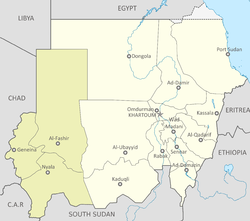
Lisa arrives in Sudan full of determination to use her skills as a nurse to do something to ease the plight of the hundreds of thousands of people caught up in the civil war raging through Darfur. She is working with Medecins Sans Frontieres, the international organisation that sends health workers to the most desperate places in the world. The six months she spends on the mission will be the toughest of her life but will teach her some fundamental truths about what people are capable of, both good and bad, and about herself. Lisa describes treating children with machete wounds, babies dying of chronic dehydration, girls giving birth at the age of 13 and old women too traumatised to carry on living. Her relationships with her Sudanese colleagues are treasured and described in fascinating detail. The book is exquisitely written, without sentiment but with a powerful and moving determination to show the suffering of the people of Darfur and to bear witness to their remarkable courage in the face of the most appalling situation. This is the book to help us all understand the human story behind the newspaper headlines.
So heart crushingly tragic. A year in the life of a medical volunteer in Darfur, Sudan. Lisa struggles a lot with the bigger picture (what's the point? What can we really change?) but brings so much by telling the small stories of individuals. Would have loved a tiny bit of geo-political perspective sprinkled through the narrative, but otherwise this is a raw, beautiful, horrible, hopeless and hopeful capsule of time.
Too self centered and weepy for my liking. I was hoping to learn more about darfur and its people's but found the book way too focused on Lisa's struggles to cope with her experience ( though to be fair it was perfectly understandable) but just doesn't make for a good or interesting read. The book would have benefitted greatly from a good editor, it was very repetitive!
This was a seriously eye opener. The pain and struggle of some people's lives is heartbreaking and it was shown consistently throughout this outstanding book.
If ever there was a sense of purpose in my life, it was Darfur and the work that I could do. Small steps and small successes. That was all I could claim and I wanted to keep going. I wanted to try. (332)
Blaker says this sort of thing more than once, and it's not that I don't believe her: I believe that she's committed to (and good at) her work as a nurse with Médecins Sans Frontières, that she wants, wholeheartedly, to make a difference, that on many levels the uncertainty and fear and trauma of working in Darfur was worth it to her.
But -- despite protestations of hope -- this is not a hopeful book, nor a happy one. There are only so many people Blaker and the rest of the MSF team can treat and only so many they can save. She's sad and overwhelmed and sometimes terrified. She's angry at incompetence (real or perceived), frustrated by power plays, wracked with guilt when she has water and her patients don't.
It does not sound as though Blaker was happy in Sudan -- more simply overwhelmed and feeling as though she'd never be able to do enough. I can't criticise her for that; it sounds like hard, hard work. But I wonder what her other MSF assignments had been like in comparison (she writes very little of her time outside Darfur), and I would have liked to see the focus turn further outwards, further from her struggle to accept the situation.
An African mother doesn't grieve less because she does it often. I've heard people say, 'It's different there,' when they hear of death and dying in Africa. They say, 'Those people are used to death and for them it's natural.' Stand listening to a crying mother as she holds her dead child in her arms and tell me if you really believe that. They cry and grieve and ache inside and the aching never goes. The difference is they have no choice without the care we take for granted. Their children die and they can only watch. So they lift the body, tie it to their backs with a colourful sheet and carry another baby home to bury in the sand.
I have read many books in my life and this was the one that had me in tears for much of the book. It should be mandatory reading for all Australian MPs. Also required reading for all the Australians who, when faced with refugees say, "We should take care of our own street people first." I care about street people too, and humanity is not governed by country, colour of one's skin, religion or any other factor. Where there is a need, our hearts need to respond. Lisa French Blaker has illustrated that very clearly. Bless her.
Working for MSF and working in Darfur at the moment (2 years after Lisa's experience), I found her writing self-centered, tear jerking and self pitying and absolutely ego centric and de-meaning to the rest of the MSF expatriates.
I felt upset reading about the story, even though some parts of the book reflect the situation then and even now in Darfur, she has to deal with her own problems before writing a book.
This book is an honest and moving account of one woman's experience providing emergency medical care in a disaster setting. Along with describing the human suffering and injustices she witnessed, she also truthfully recounts her own harsh realities of working with an international aid organization in a war-torn region.




 Imported from tablet: