

What do you think?
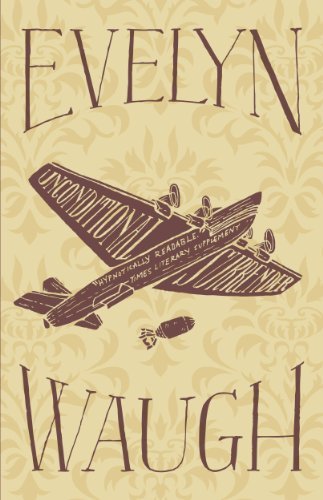
Sword of Honour #3
Unconditional Surrender
By 1941, after serving in North Africa and Crete, Guy Crouchback has lost his Halberdier idealism. A desk job in London gives him the chance of reconciliation with his former wife. Then, in Yugoslavia, as a liaison officer with the partisans, Crouch becomes finally and fully aware of the futility of a war he once saw in terms of honor.
Unconditional Surrender is the third novel in Waugh's brilliant Sword of Honor trilogy recording the tumultuous wartime adventures of Guy Crouchback ("the finest work of fiction in English to emerge from World War II" -Atlantic Monthly), which also comprises Men at Arms and Officers and Gentlemen.
Unconditional Surrender is the third novel in Waugh's brilliant Sword of Honor trilogy recording the tumultuous wartime adventures of Guy Crouchback ("the finest work of fiction in English to emerge from World War II" -Atlantic Monthly), which also comprises Men at Arms and Officers and Gentlemen.
320 pages, Kindle Edition
First published January 1, 1961
About the author
Evelyn Waugh
325 books3,133 followersEvelyn Waugh's father Arthur was a noted editor and publisher. His only sibling Alec also became a writer of note. In fact, his book “The Loom of Youth” (1917) a novel about his old boarding school Sherborne caused Evelyn to be expelled from there and placed at Lancing College. He said of his time there, “…the whole of English education when I was brought up was to produce prose writers; it was all we were taught, really.” He went on to Hertford College, Oxford, where he read History. When asked if he took up any sports there he quipped, “I drank for Hertford.”
In 1924 Waugh left Oxford without taking his degree. After inglorious stints as a school teacher (he was dismissed for trying to seduce a school matron and/or inebriation), an apprentice cabinet maker and journalist, he wrote and had published his first novel, “Decline and Fall” in 1928.
In 1928 he married Evelyn Gardiner. She proved unfaithful, and the marriage ended in divorce in 1930. Waugh would derive parts of “A Handful of Dust” from this unhappy time. His second marriage to Audrey Herbert lasted the rest of his life and begat seven children. It was during this time that he converted to Catholicism.
During the thirties Waugh produced one gem after another. From this decade come: “Vile Bodies” (1930), “Black Mischief” (1932), the incomparable “A Handful of Dust” (1934) and “Scoop” (1938). After the Second World War he published what is for many his masterpiece, “Brideshead Revisited,” in which his Catholicism took centre stage. “The Loved One” a scathing satire of the American death industry followed in 1947. After publishing his “Sword of Honour Trilogy” about his experiences in World War II - “Men at Arms” (1952), “Officers and Gentlemen” (1955), “Unconditional Surrender" (1961) - his career was seen to be on the wane. In fact, “Basil Seal Rides Again” (1963) - his last published novel - received little critical or commercial attention.
Evelyn Waugh, considered by many to be the greatest satirical novelist of his day, died on 10 April 1966 at the age of 62.
See http://en.wikipedia.org/wiki/Evelyn_W...
In 1924 Waugh left Oxford without taking his degree. After inglorious stints as a school teacher (he was dismissed for trying to seduce a school matron and/or inebriation), an apprentice cabinet maker and journalist, he wrote and had published his first novel, “Decline and Fall” in 1928.
In 1928 he married Evelyn Gardiner. She proved unfaithful, and the marriage ended in divorce in 1930. Waugh would derive parts of “A Handful of Dust” from this unhappy time. His second marriage to Audrey Herbert lasted the rest of his life and begat seven children. It was during this time that he converted to Catholicism.
During the thirties Waugh produced one gem after another. From this decade come: “Vile Bodies” (1930), “Black Mischief” (1932), the incomparable “A Handful of Dust” (1934) and “Scoop” (1938). After the Second World War he published what is for many his masterpiece, “Brideshead Revisited,” in which his Catholicism took centre stage. “The Loved One” a scathing satire of the American death industry followed in 1947. After publishing his “Sword of Honour Trilogy” about his experiences in World War II - “Men at Arms” (1952), “Officers and Gentlemen” (1955), “Unconditional Surrender" (1961) - his career was seen to be on the wane. In fact, “Basil Seal Rides Again” (1963) - his last published novel - received little critical or commercial attention.
Evelyn Waugh, considered by many to be the greatest satirical novelist of his day, died on 10 April 1966 at the age of 62.
See http://en.wikipedia.org/wiki/Evelyn_W...
Ratings & Reviews
Friends & Following
Create a free account to discover what your friends think of this book!
Community Reviews
Displaying 1 - 30 of 145 reviews

August 22, 2020
NÉ VINCITORI NÉ VINTI

Adesso il nemico era uno, enorme, odioso, senza maschera. Era l’Età Moderna in armi. Qualunque fosse il risultato, c’era posto per lui in quella guerra.
Comincia così questo romanzo che ho letto tre volte.
Il lui che ha un posto nella guerra è Guy Crouchback, il protagonista di questa trilogia di romanzi intitolata Sword of Honour, più di mille pagine complessive, di cui queste sono le più belle, ma sono tutte una buona lettura.
La guerra è quella del 1939–1945, la Seconda Guerra Mondiale. Quella che gli inglesi vinsero portando a casa quella che si potrebbe definire una vittoria di Pirro: perché, per quanto vincitori sul campo, si ritrovarono senza l’impero, rimpiccioliti, con ben altro status e ruolo mondiale. Il testimone passava ai cugini americani, quelli a stelle-e-strisce.

La guerra è ormai in corso da qualche anno, Guy è a Londra mentre vorrebbe essere al fronte, o se non altro, più vicino all’azione, dove poter essere più utile al suo paese. La sua ex moglie Virginia rimane incinta del suo parrucchiere, ma pensa di abortire. Intanto Guy viene spedito a un corso di addestramento per paracadutisti dove si fa male e finisce in ospedale. Per uscire da lì, dove si sente recluso oltre che inutile, chiede l’intervento di un amico.
Suo padre è morto e Guy eredita tanto quanto basta per consentirsi un esistenza agiata ora che ha compiuto quaranta anni. Virginia, adesso che l’ex marito è diventato più che benestante, fa marcia indietro, va spesso a trovarlo, e finiscono con lo sposarsi una seconda volta. A questo punto, non occorre più abortire, un padre disposto a riconoscere il nascituro c’è.

La cupola della Cattedrale di St. Paul fotografata il 7 giugno 1941 durante i bombardamenti nazisti.
La ragione per la quale i comandi sembrano refrattari a utilizzare Guy è che lo sospettano di simpatie pro Asse dato che prima della guerra abitava in Italia. Ciò nonostante, alla fine la sua caparbietà vince, e Guy viene mandato in missione in Jugoslavia.
A Londra una bomba distrugge la casa e uccide sua moglie Virginia e il vecchio caro zio Peregrine: ma risparmia il neonato, Gervase, che provvidenzialmente è in campagna con la sorella di Guy.
Nei Balcani Guy fa amicizia con una comunità di ebrei alla quale riesce a far arrivare approvvigionamenti dagli USA. A fine missione, quando torna a casa, apprende che molti di quegli ebrei sono stati ammazzati dai partigiani comunisti proprio perché amici di un inglese.
La storia si conclude con Guy che si sposa di nuovo, un’altra figlia di famiglia cattolica, proprio come Virginia.
Si incontrano di nuovo personaggi già noti: il cognato di Guy, Box-Bender; Tommy Blackhouse, vecchio rivale in amore; il generale Ritchie-Hook, alle prese con un'altra delle sue folli e inutili imprese eroiche; Ludovic che comanda l’addestramento di paracadutisti ed è paranoico quando Guy arriva perché erano entrambi a Creta da dove Ludovic scappò disertando dopo aver ucciso due uomini.

Questa celebre foto è attribuita ad Alfred Eisenstaedt, ma pare sia basata su foto precedente di Victor Jorgensen.
Tirando le somme l’esperienza militare di Guy è ben poca cosa nonostante sia durata anni e lo abbia portato più volte all’estero (Africa del nord, Creta, Balcani): nessun combattimento, né contro i nazisti, né contro i comunisti, né pro la sua nazione. Essenzialmente anni di incarichi inutili e burocratici, in linea con la demente follia della guerra. E all’insegna di un motto mai pronunciato: ogni cosa seria è affrontata con leggerezza e ogni cosa leggera con gravità.
Anche se certo non si può dire che Waugh fosse pacifista o antimilitarista, aveva compreso sia la portata millenaria di quella guerra (la fine dell’Inghilterra felix, di un mondo e un’epoca) sia la sua assurda follia: la guerra non porta né onore né gloria, muove e coinvolge masse a tutto scapito del singolo individuo (l’eterno individualismo inglese di cui Waugh fu ottimo rappresentante). Di conseguenza, resa incondizionata.
Rispetto ai primi due capitoli/romanzi della trilogia, questo è intriso di maggior malinconia, di amarezza, di una maggiore consapevolezza antieroica, e io l’ho trovato maggiormente struggente. Pur ritrovando l’ironia lieve e sottile tipica di Waugh, che a volte sa farsi caustica.

Una statua della serie scolpita da Seward Johnson e battezzata “Unconditional Surrender – Resa Incondizionata”: una è a New York, un’altra a Pearl Harbor, una a Hamilton, New Jersey, e una quarta in Normandia.
Adesso il nemico era uno, enorme, odioso, senza maschera. Era l’Età Moderna in armi. Qualunque fosse il risultato, c’era posto per lui in quella guerra.
Comincia così questo romanzo che ho letto tre volte.
Il lui che ha un posto nella guerra è Guy Crouchback, il protagonista di questa trilogia di romanzi intitolata Sword of Honour, più di mille pagine complessive, di cui queste sono le più belle, ma sono tutte una buona lettura.
La guerra è quella del 1939–1945, la Seconda Guerra Mondiale. Quella che gli inglesi vinsero portando a casa quella che si potrebbe definire una vittoria di Pirro: perché, per quanto vincitori sul campo, si ritrovarono senza l’impero, rimpiccioliti, con ben altro status e ruolo mondiale. Il testimone passava ai cugini americani, quelli a stelle-e-strisce.
La guerra è ormai in corso da qualche anno, Guy è a Londra mentre vorrebbe essere al fronte, o se non altro, più vicino all’azione, dove poter essere più utile al suo paese. La sua ex moglie Virginia rimane incinta del suo parrucchiere, ma pensa di abortire. Intanto Guy viene spedito a un corso di addestramento per paracadutisti dove si fa male e finisce in ospedale. Per uscire da lì, dove si sente recluso oltre che inutile, chiede l’intervento di un amico.
Suo padre è morto e Guy eredita tanto quanto basta per consentirsi un esistenza agiata ora che ha compiuto quaranta anni. Virginia, adesso che l’ex marito è diventato più che benestante, fa marcia indietro, va spesso a trovarlo, e finiscono con lo sposarsi una seconda volta. A questo punto, non occorre più abortire, un padre disposto a riconoscere il nascituro c’è.
La cupola della Cattedrale di St. Paul fotografata il 7 giugno 1941 durante i bombardamenti nazisti.
La ragione per la quale i comandi sembrano refrattari a utilizzare Guy è che lo sospettano di simpatie pro Asse dato che prima della guerra abitava in Italia. Ciò nonostante, alla fine la sua caparbietà vince, e Guy viene mandato in missione in Jugoslavia.
A Londra una bomba distrugge la casa e uccide sua moglie Virginia e il vecchio caro zio Peregrine: ma risparmia il neonato, Gervase, che provvidenzialmente è in campagna con la sorella di Guy.
Nei Balcani Guy fa amicizia con una comunità di ebrei alla quale riesce a far arrivare approvvigionamenti dagli USA. A fine missione, quando torna a casa, apprende che molti di quegli ebrei sono stati ammazzati dai partigiani comunisti proprio perché amici di un inglese.
La storia si conclude con Guy che si sposa di nuovo, un’altra figlia di famiglia cattolica, proprio come Virginia.
Si incontrano di nuovo personaggi già noti: il cognato di Guy, Box-Bender; Tommy Blackhouse, vecchio rivale in amore; il generale Ritchie-Hook, alle prese con un'altra delle sue folli e inutili imprese eroiche; Ludovic che comanda l’addestramento di paracadutisti ed è paranoico quando Guy arriva perché erano entrambi a Creta da dove Ludovic scappò disertando dopo aver ucciso due uomini.
Questa celebre foto è attribuita ad Alfred Eisenstaedt, ma pare sia basata su foto precedente di Victor Jorgensen.
Tirando le somme l’esperienza militare di Guy è ben poca cosa nonostante sia durata anni e lo abbia portato più volte all’estero (Africa del nord, Creta, Balcani): nessun combattimento, né contro i nazisti, né contro i comunisti, né pro la sua nazione. Essenzialmente anni di incarichi inutili e burocratici, in linea con la demente follia della guerra. E all’insegna di un motto mai pronunciato: ogni cosa seria è affrontata con leggerezza e ogni cosa leggera con gravità.
Anche se certo non si può dire che Waugh fosse pacifista o antimilitarista, aveva compreso sia la portata millenaria di quella guerra (la fine dell’Inghilterra felix, di un mondo e un’epoca) sia la sua assurda follia: la guerra non porta né onore né gloria, muove e coinvolge masse a tutto scapito del singolo individuo (l’eterno individualismo inglese di cui Waugh fu ottimo rappresentante). Di conseguenza, resa incondizionata.
Rispetto ai primi due capitoli/romanzi della trilogia, questo è intriso di maggior malinconia, di amarezza, di una maggiore consapevolezza antieroica, e io l’ho trovato maggiormente struggente. Pur ritrovando l’ironia lieve e sottile tipica di Waugh, che a volte sa farsi caustica.
Una statua della serie scolpita da Seward Johnson e battezzata “Unconditional Surrender – Resa Incondizionata”: una è a New York, un’altra a Pearl Harbor, una a Hamilton, New Jersey, e una quarta in Normandia.

May 10, 2021
This trilogy is the first work of Waugh after Brideshead Revisited that I finished--I've tried a few others but lost the thread. I'm not sure why I stuck with this one, to be honest, beyond the trustworthiness of a friend who recommended it. The rhythm of this novel (all three, really) is of long stretches of dogged narration of wartime life for the British punctuated by incisive conversations, or even single lines of prose that give one pause. They are often hilarious. Some examples:
Or his description of the bewildering memos composed by German intelligence on the death wish of an aging soldier:
Or a passing reference to the ancient city of Alexandria as that "ancient asparagus bed of theological absurdity."
And, when Guy's ex-wife Virginia wants to know why the Crouchbacks seem to lack libido:
Or after confessing his suicidal tendencies to an Italian priest before deployment on secret assignment:
Or even a reference to one of his other stories Scott-King's Modern Europe in the introduction, referring to parents who want their schools to fit their boys to get by in the modern world:
Everyone else I know has bailed out on this trilogy out of boredom, but those bon mots seemed to me to be worth the continued digging. And along the way, I discovered some characters I became genuinely interested in: Guy's ex-wife Virginia, the inexplicable Apthorpe, the elder Mr. Crouchback, Trimmer the chameleon, Uncle Peregrine the eccentric bachelor, and not least Guy himself. Guy is most interesting when his sincere desire to do some good creates real hardships for others, and makes the final pages appear to be something of a tragedy, in the classic sense of the word--belied, of course, by the final words of the epilogue. Maybe it's my years of service in a grand institution whose execution is often at odds with its stated ideals that creates some sympathy for Guy.
Waugh is a tough author to decipher sometimes, and were it not for the third novel's summary of the first two, I would have missed out on some pretty significant plot points. All things considered, though, I have created a new shelf for this book: The Ache. Waugh's writing is shot through with adumbrations of earthly happiness poisoned by disappointment, which are both the occasions of and the results of transcendence--not so much of hope, but simply awareness.
Quantitative judgments do not apply.
"Guy briefly fell asleep. Then Ivor said, 'Guy, what would you do if you were challenged to a duel?'
'Laugh.'
'Yes, of course.'
'What made you think of that now?'
'I was thinking about honour. It's a thing that changes, doesn't it? I mean, a hundred and fifty years ago we would have had to fight if challenged. Now we'd laugh. There must have been a time a hundred years or so ago when it was rather an awkward question.'
'Yes. Moral theologians were never able to stop duelling--it took democracy to do that.'
Or his description of the bewildering memos composed by German intelligence on the death wish of an aging soldier:
"The single-handed attack on a fortified position by a British major-general, attended in one account by a small boy, in another by a midget, had no precedent in Clausewitz."
Or a passing reference to the ancient city of Alexandria as that "ancient asparagus bed of theological absurdity."
And, when Guy's ex-wife Virginia wants to know why the Crouchbacks seem to lack libido:
"I don't know about the others. With me I think, perhaps, it's because I associate it with love. And I don't love any more."
Or after confessing his suicidal tendencies to an Italian priest before deployment on secret assignment:
After the absolution he said: 'Are you a foreigner?'
'Yes.'
'Can you spare a few cigarettes?'
Or even a reference to one of his other stories Scott-King's Modern Europe in the introduction, referring to parents who want their schools to fit their boys to get by in the modern world:
It would be very wicked indeed to do anything to fit a boy for the modern world.
Everyone else I know has bailed out on this trilogy out of boredom, but those bon mots seemed to me to be worth the continued digging. And along the way, I discovered some characters I became genuinely interested in: Guy's ex-wife Virginia, the inexplicable Apthorpe, the elder Mr. Crouchback, Trimmer the chameleon, Uncle Peregrine the eccentric bachelor, and not least Guy himself. Guy is most interesting when his sincere desire to do some good creates real hardships for others, and makes the final pages appear to be something of a tragedy, in the classic sense of the word--belied, of course, by the final words of the epilogue. Maybe it's my years of service in a grand institution whose execution is often at odds with its stated ideals that creates some sympathy for Guy.
Waugh is a tough author to decipher sometimes, and were it not for the third novel's summary of the first two, I would have missed out on some pretty significant plot points. All things considered, though, I have created a new shelf for this book: The Ache. Waugh's writing is shot through with adumbrations of earthly happiness poisoned by disappointment, which are both the occasions of and the results of transcendence--not so much of hope, but simply awareness.
Quantitative judgments do not apply.

May 21, 2023
Відверто кажучи, мені трохи дивно, що про трилогію "Клинок честі" Івліна Во не пишуть, не обговорюють, не згадують зараз на кожному кроці.
Коли я читав кожну з трьох частин, то щоразу ловив себе на думках про те, як сильно досвід Ґая Краучбека – сорокарічного офіцера британської армії під час Другої світової війни – нагадує мені мої власні вже майже п'ятнадцять місяців тієї чи іншої участі в захисті України від російської агресії.
Можливо пригоди Краучбека не надто популярні, бо вони відверто не героїчні. Ґай битв не уникає, але й особливої можливості потрапити в гущавину подій теж не має. Легко стати героями тим, хто загинув. Більше ніхто не згадає, якими вони могли бути нестерпними за життя, натомість живим залишається на згадку почуття провини до кінця їхніх днів.
Заключна книга трилогії – "Беззастережна капітуляція" – вийшла понад п'ятнадцять років після закінчення війни і залишає по собі дещо меланхолійний післясмак. Якщо озирнутися на неї поглядом центрального персонажа, то вона дуже трагічна, адже Гай Краучбек втрачає тут декількох дуже близьких йому людей. Але проживає він ці свої втрати напрочуд стійко.
Особисто для мене одним із найяскравіших моментів "Беззастережної капітуляції" стали розповіді про те, як німці атакують Лондон крилатими ракетами "Фау". Коли вони проносяться над містом, жителі Лондона прислухаються до звуку моторів і моляться, щоби ракети не вибухали взагалі або ж падали в безлюдних місцях. Читати про це особливо пікантно зранку після того, як пів ночі провів у калідорі, прислухаючись до близьких виходів зенітних ракет і далекого стрекотання ЗУ-шок, здригаючись від вибухів разом із вікнами.
Івлін Во писав ці романи у світі, де саме планувався кінець історії, нацистів судили і страчували, а головним гаслом багатьох прийдешніх поколінь в контексті Другої світової стало "ніколи знову".
Сьогодні я дочитував книгу в обставинах, які перекреслили всі вісім десятиліть розбудови світової безпеки, де історія не просто існує – ми бачимо її поступ на власні очі, відчуваємо її хід в крові та кістках. Українці помирають, бо сподівалися, що якось воно буде, бо цивілізований світ прагнув законсервуватися в комфорті, бо русня – не люди.
Цікаво, як назва "Беззастережна капітуляція" дисонує з офіційними результатами Другої світової, адже союзники перемогли. Але для Ґая Краучбека "капітуляція" відбулася на рівні моралі та етики, честі та гідності. Цьому сприяло тотальне розчарування у війні та значною мірою – в політиці, яку провадила цивілізована частина Антигітлерівської коаліції.
Коли я читав кожну з трьох частин, то щоразу ловив себе на думках про те, як сильно досвід Ґая Краучбека – сорокарічного офіцера британської армії під час Другої світової війни – нагадує мені мої власні вже майже п'ятнадцять місяців тієї чи іншої участі в захисті України від російської агресії.
Можливо пригоди Краучбека не надто популярні, бо вони відверто не героїчні. Ґай битв не уникає, але й особливої можливості потрапити в гущавину подій теж не має. Легко стати героями тим, хто загинув. Більше ніхто не згадає, якими вони могли бути нестерпними за життя, натомість живим залишається на згадку почуття провини до кінця їхніх днів.
Заключна книга трилогії – "Беззастережна капітуляція" – вийшла понад п'ятнадцять років після закінчення війни і залишає по собі дещо меланхолійний післясмак. Якщо озирнутися на неї поглядом центрального персонажа, то вона дуже трагічна, адже Гай Краучбек втрачає тут декількох дуже близьких йому людей. Але проживає він ці свої втрати напрочуд стійко.
Особисто для мене одним із найяскравіших моментів "Беззастережної капітуляції" стали розповіді про те, як німці атакують Лондон крилатими ракетами "Фау". Коли вони проносяться над містом, жителі Лондона прислухаються до звуку моторів і моляться, щоби ракети не вибухали взагалі або ж падали в безлюдних місцях. Читати про це особливо пікантно зранку після того, як пів ночі провів у калідорі, прислухаючись до близьких виходів зенітних ракет і далекого стрекотання ЗУ-шок, здригаючись від вибухів разом із вікнами.
Івлін Во писав ці романи у світі, де саме планувався кінець історії, нацистів судили і страчували, а головним гаслом багатьох прийдешніх поколінь в контексті Другої світової стало "ніколи знову".
Сьогодні я дочитував книгу в обставинах, які перекреслили всі вісім десятиліть розбудови світової безпеки, де історія не просто існує – ми бачимо її поступ на власні очі, відчуваємо її хід в крові та кістках. Українці помирають, бо сподівалися, що якось воно буде, бо цивілізований світ прагнув законсервуватися в комфорті, бо русня – не люди.
Цікаво, як назва "Беззастережна капітуляція" дисонує з офіційними результатами Другої світової, адже союзники перемогли. Але для Ґая Краучбека "капітуляція" відбулася на рівні моралі та етики, честі та гідності. Цьому сприяло тотальне розчарування у війні та значною мірою – в політиці, яку провадила цивілізована частина Антигітлерівської коаліції.

March 17, 2009
Part 3 of Sword of Honour.
Back to form (like part 1): a better balance (for my taste) between army and civilian storylines, but still plenty of eccentric characters, some shady secrets and lots of amusing bureaucratic inefficiency (the "intelligence" officers who consistently misinterpret Guy's connections and flag him as dubious are rather like a comic riff of Kafka), sprinkled with thoughts of faith, loyalty and doubt in terms of religion, relationships, nationality and class.
I feared the ending was going to be too obvious and tidy, but I need not have worried: it was more interesting that I'd feared.
My (brief) reviews of the other two in the trilogy:
1 Men at Arms
and
2 Officers and Gentlemen
Back to form (like part 1): a better balance (for my taste) between army and civilian storylines, but still plenty of eccentric characters, some shady secrets and lots of amusing bureaucratic inefficiency (the "intelligence" officers who consistently misinterpret Guy's connections and flag him as dubious are rather like a comic riff of Kafka), sprinkled with thoughts of faith, loyalty and doubt in terms of religion, relationships, nationality and class.
I feared the ending was going to be too obvious and tidy, but I need not have worried: it was more interesting that I'd feared.
My (brief) reviews of the other two in the trilogy:
1 Men at Arms
and
2 Officers and Gentlemen

September 20, 2025
Once again, middle-aged soldier Guy Crouchback is back in England, trying to get himself assigned to a meaningful post at the tail end of World War II. His ex-wife Virginia is pregnant with another man’s child and is plotting to remarry him. Guy learns to parachute and then gets sent to Yugoslavia. While there are a few zany bits and plenty of Waugh’s trademark bureaucracy and ineptitude, this volume on the whole has a pretty somber tone.
To fully understand it, I had to do a little reading about the Lateran Treaty. This was an agreement that created Vatican City and gave Mousolini’s government control of the former Papal States. In the prologue to the novel, Guy remarks to his father that the Catholic Church should have just laid low for a while, then reclaimed its power once the war was over. Later Guy’s father writes to him:
The theme of saving one soul recurs throughout the novel and is tied to Guy’s realization that fighting in the war won’t give his life meaning — or let him escape it. Because he’s doing it for himself, it’s not a true sacrifice. When he marries Viriginia because she has no one else or fights to help a group of displaced Jews despite the trouble it gets him into, he gets no earthly reward, but wins back some of his self respect. There’s a great passage near the end spoken by one of the Italian Jews that must sum up Waugh’s own conclusions about war:
To fully understand it, I had to do a little reading about the Lateran Treaty. This was an agreement that created Vatican City and gave Mousolini’s government control of the former Papal States. In the prologue to the novel, Guy remarks to his father that the Catholic Church should have just laid low for a while, then reclaimed its power once the war was over. Later Guy’s father writes to him:
When you spoke of the Lateran Treaty did you consider how many souls may have been reconciled and have died at peace as a result of it? How many children may have been brought up in the faith who might have lived in ignorance. Quantitative judgements don’t apply. If only one soul was saved that is full compensation for any loss of “face.”
The theme of saving one soul recurs throughout the novel and is tied to Guy’s realization that fighting in the war won’t give his life meaning — or let him escape it. Because he’s doing it for himself, it’s not a true sacrifice. When he marries Viriginia because she has no one else or fights to help a group of displaced Jews despite the trouble it gets him into, he gets no earthly reward, but wins back some of his self respect. There’s a great passage near the end spoken by one of the Italian Jews that must sum up Waugh’s own conclusions about war:
”Is there any place that is free from evil? It is too simple to say that only the Nazis wanted war. These Communists wanted it too. It was the only way in which they could come to power. Many of my people wanted it, to be revenged on the Germans, to hasten the creation of the national state. It seems to be that there was a will to war, a death wish, everywhere. Even good men thought their private honor would be satisfied by war. They could assert their manhood by killing and being killed. They would accept hardships in recompense for having been selfish and lazy. Danger justified privilege. I knew Italians — not very many perhaps — who felt this. Were there none in England?”
“God forgive me,” said Guy. “I was one of them.”

August 18, 2022
The book was a great end to the trilogy. The portrayal of decline in the aristocracy especially with a world war in the picture makes it feel like a continuation of some of Proust’s ideas. And one character writes a long, meandering, barely coherent novel and then buys a castello and I can’t help feeling that Waugh (who was not a fan) was taking a potshot at James Joyce. Maybe not but I had fun thinking about it!

June 23, 2012
This final volume in the Swords of Honour trilogy, sees Guy Crouchback back in England. After two years training the new brigade of Halberdiers, he suffers the blow of being too old to be taken into battle. Again, Guy's war turns into a waiting game, involving chance and mis-chance as he is chosen by the new Electronic Personnel Selector for special employment, only to have old security issues and a chance encounter with Ludovic, now a Major in the intelligence corps with literary aspirations, divert his steps from the intended journey.
The three books in this trilogy are not meant to be read alone. The characters and stories within the various novels interweave and interlink, so this book will make little sense without reading the previous two. A lot of the characters here we have met before - including Guy's ex-wife Virginia, who thinks she has escaped Trimmer and then discovers life is no longer as easy as it once was. By this novel, many of the characters are tired, dispirited and expected glory has been replaced by realistic expectations and political disquiet about the end of the war. Through all these novels, Guy maintains his central core of belief and goodness. He had hoped to change the war, but he does manage to change a life. This really is a stunning trilogy and I cannot recommend it highly enough. If you do decide to give it a try, and I hope you do, then please read the books in order. The first is Men at Arms (Penguin Modern Classics) and the second Officers and Gentlemen (Penguin Modern Classics). Alternatively, all three volumes are available in Sword of Honour (Penguin Modern Classics).
The three books in this trilogy are not meant to be read alone. The characters and stories within the various novels interweave and interlink, so this book will make little sense without reading the previous two. A lot of the characters here we have met before - including Guy's ex-wife Virginia, who thinks she has escaped Trimmer and then discovers life is no longer as easy as it once was. By this novel, many of the characters are tired, dispirited and expected glory has been replaced by realistic expectations and political disquiet about the end of the war. Through all these novels, Guy maintains his central core of belief and goodness. He had hoped to change the war, but he does manage to change a life. This really is a stunning trilogy and I cannot recommend it highly enough. If you do decide to give it a try, and I hope you do, then please read the books in order. The first is Men at Arms (Penguin Modern Classics) and the second Officers and Gentlemen (Penguin Modern Classics). Alternatively, all three volumes are available in Sword of Honour (Penguin Modern Classics).

October 25, 2021
The generally bleak tone of the first two volumes ramps up a notch in the third. There are some bright moments among the tragedy and farce, but in general the register moves between melancholy, despair and detached exasperation. I don’t know how closely Waugh stuck to his own wartime experiences in writing this trilogy. It feels like an authentic insight into a particular stratum of the British class system in the mid-twentieth century about which many have written, but few as well as Evelyn Waugh.
August 2, 2025
Unconditional Surrender by Evelyn Waugh, author of Vile Bodies http://realini.blogspot.com/2020/12/v... and ten other Magnum opera
10 out of 10
Evelyn Waugh was one of the greatest writers in the history of the world, able to write sublime comedy – a list might be provided at the end, with the works that have elated this reader, but let us just mention Scoop http://realini.blogspot.com/2018/07/s... Decline and Fall, The Loved One, Black Mischief – and drama, such as the divine Brideshead Revisited.
Unconditional Surrender is a war story, like the other great novels – Men at Arms http://realini.blogspot.com/2022/04/m... and Put Out More Flags – and Guy Crouchback is the main character, perhaps not the usual hero, the Superman we are used with these days.
In fact, his nickname now is ‘Uncle’, reflecting his age, which is now forty, and with that, he gets refused for various positions in the army, indeed, he trains with a unit and he is told at the end that they are sorry, they are going to see action soon, but cannot take him along, because he is ‘too old now’.
They cannot risk him being injured and compromising the mission, and we could be so happy now that ‘sixty is the new forty’ or is it the new thirty, with advancement in medicine, technology, we are getting to the stage described by marvelous Yuval Harari, one of the most influential thinkers of this century, in his quintessential Homo Deus, A Brief History of Tomorrow http://realini.blogspot.com/2022/02/h... where we find about how people will get to live forever…well, not exactly that, but life expectancy will rise to incredible levels
Guy Crouchback will be processed by a machine which seems to have elements of the computer, though it had not been designed by the famous Superhero and tragic figure, Alan Turing, who has been pushed to commit suicide, by the awful policies of his time on homosexuality, and the result when they search for someone with some training on parachute jumping and knowledge of Italian, the card has his name on it…
When he is tested by a superior officer, he talks fast and the other does not understand, thinking it might be Sicilian, but it is not, it is just that the comprehension and the Italian of the superior is limited, perhaps non extant…
Incidentally, reading a previous part from this trilogy, I was extremely amused by reading ‘escarpate la mucca’ which seems to mean the cow has escaped and liking this too much, I have named one of the tomcats out there in the garden Imucca – they are not ours intentionally, it is just that their mother came to look for food, then brought the whole litter, and now we have Imucca (which actually comes from Immanuel Kant, his initial denomination, and Mucca, combining the two) Ezigbo - from Things Fall Apart http://realini.blogspot.com/2022/04/t... - Okwo from the same magnum opus, Orzabal from Tears For Fears and Signac, one of my favorite pointillists…
Guy will end up in former Yugoslavia, in Croatia, where he will operate as a sort of liaison officer with the partisans, a bunch of very unruly, somewhat treacherous fighters, who claimed to be all for the alliance with the British, only to cheat, lie to Winston Churchill when he meets the famous Josip Broz Tito, and the side with the Soviets and put up some strange maneuvers for the visiting American general…
The latter was coming to see for himself the prowess, fighting capability of the partisans – reputed and known to fight with other conationals, indeed, at times, they fought more with their own side than with the Germans…for the Nazis, they would launch some guerilla attack and then flee, and generally, they avoided contact with the Germans – and for this special visit, which would decide if the Americans help them, and to what extent, they in fact had prepared an attack on a small unit, so small that there had been voices saying that an attack with two brigades on such an insignificant opponent would look bad…
As it is, it does not work well, for the Germans do show up, in just two vehicles, but this is enough to derail a lot of the planned operation…anyway, Guy has a very tense, conflictual relationship with the partisans, who are mefiant, unlikeable, paranoid, self-interested, brutal, and cruel – though there is admiration for the amount of resilience they showed, their young girls refuse anesthetic and show a super human tolerance to pain and dedication to the cause – and when our hero tries to help some Jewish people that come for help, there is a serious brouhaha, and the officials complain, they refuse support
Meanwhile, we have Virginia, the ex-wife in legal terms, although for the Catholic Church, there is no such thing as divorce, and for them, marriage is forever, unless there is an extraordinary annulment or evidently, death, and she is in trouble now, for she has no money and she is furthermore pregnant and the baby is obviously not Guy’s.
She tries to have an abortion, but she has no money, the first doctor she is asking for help is appalled, then she has a name, but there is nobody at the address and finally, she has to find a husband, that is the conclusion reached and she sees Guy again, who is not in love with her anymore, but he is so sensitive to the problem at hand, as to be considered a fool or idiot by others, maybe he is crazy to tolerate the situation.
But as he explains, there is a martyr attitude, a saintly take on the fate of the future child, who has no chance, nobody to help him or the mother, and he is the last chance and he will marry Virginia, take care of her…when he is told that this is World War they have around, the superhero is correct in stating there is nothing he can do about the millions in pain, but he can do something about this baby….what a sublime thing to do
http://realini.blogspot.com/2022/02/u... try this at home, and then read about the revolution
http://realini.blogspot.com/2022/03/r...
10 out of 10
Evelyn Waugh was one of the greatest writers in the history of the world, able to write sublime comedy – a list might be provided at the end, with the works that have elated this reader, but let us just mention Scoop http://realini.blogspot.com/2018/07/s... Decline and Fall, The Loved One, Black Mischief – and drama, such as the divine Brideshead Revisited.
Unconditional Surrender is a war story, like the other great novels – Men at Arms http://realini.blogspot.com/2022/04/m... and Put Out More Flags – and Guy Crouchback is the main character, perhaps not the usual hero, the Superman we are used with these days.
In fact, his nickname now is ‘Uncle’, reflecting his age, which is now forty, and with that, he gets refused for various positions in the army, indeed, he trains with a unit and he is told at the end that they are sorry, they are going to see action soon, but cannot take him along, because he is ‘too old now’.
They cannot risk him being injured and compromising the mission, and we could be so happy now that ‘sixty is the new forty’ or is it the new thirty, with advancement in medicine, technology, we are getting to the stage described by marvelous Yuval Harari, one of the most influential thinkers of this century, in his quintessential Homo Deus, A Brief History of Tomorrow http://realini.blogspot.com/2022/02/h... where we find about how people will get to live forever…well, not exactly that, but life expectancy will rise to incredible levels
Guy Crouchback will be processed by a machine which seems to have elements of the computer, though it had not been designed by the famous Superhero and tragic figure, Alan Turing, who has been pushed to commit suicide, by the awful policies of his time on homosexuality, and the result when they search for someone with some training on parachute jumping and knowledge of Italian, the card has his name on it…
When he is tested by a superior officer, he talks fast and the other does not understand, thinking it might be Sicilian, but it is not, it is just that the comprehension and the Italian of the superior is limited, perhaps non extant…
Incidentally, reading a previous part from this trilogy, I was extremely amused by reading ‘escarpate la mucca’ which seems to mean the cow has escaped and liking this too much, I have named one of the tomcats out there in the garden Imucca – they are not ours intentionally, it is just that their mother came to look for food, then brought the whole litter, and now we have Imucca (which actually comes from Immanuel Kant, his initial denomination, and Mucca, combining the two) Ezigbo - from Things Fall Apart http://realini.blogspot.com/2022/04/t... - Okwo from the same magnum opus, Orzabal from Tears For Fears and Signac, one of my favorite pointillists…
Guy will end up in former Yugoslavia, in Croatia, where he will operate as a sort of liaison officer with the partisans, a bunch of very unruly, somewhat treacherous fighters, who claimed to be all for the alliance with the British, only to cheat, lie to Winston Churchill when he meets the famous Josip Broz Tito, and the side with the Soviets and put up some strange maneuvers for the visiting American general…
The latter was coming to see for himself the prowess, fighting capability of the partisans – reputed and known to fight with other conationals, indeed, at times, they fought more with their own side than with the Germans…for the Nazis, they would launch some guerilla attack and then flee, and generally, they avoided contact with the Germans – and for this special visit, which would decide if the Americans help them, and to what extent, they in fact had prepared an attack on a small unit, so small that there had been voices saying that an attack with two brigades on such an insignificant opponent would look bad…
As it is, it does not work well, for the Germans do show up, in just two vehicles, but this is enough to derail a lot of the planned operation…anyway, Guy has a very tense, conflictual relationship with the partisans, who are mefiant, unlikeable, paranoid, self-interested, brutal, and cruel – though there is admiration for the amount of resilience they showed, their young girls refuse anesthetic and show a super human tolerance to pain and dedication to the cause – and when our hero tries to help some Jewish people that come for help, there is a serious brouhaha, and the officials complain, they refuse support
Meanwhile, we have Virginia, the ex-wife in legal terms, although for the Catholic Church, there is no such thing as divorce, and for them, marriage is forever, unless there is an extraordinary annulment or evidently, death, and she is in trouble now, for she has no money and she is furthermore pregnant and the baby is obviously not Guy’s.
She tries to have an abortion, but she has no money, the first doctor she is asking for help is appalled, then she has a name, but there is nobody at the address and finally, she has to find a husband, that is the conclusion reached and she sees Guy again, who is not in love with her anymore, but he is so sensitive to the problem at hand, as to be considered a fool or idiot by others, maybe he is crazy to tolerate the situation.
But as he explains, there is a martyr attitude, a saintly take on the fate of the future child, who has no chance, nobody to help him or the mother, and he is the last chance and he will marry Virginia, take care of her…when he is told that this is World War they have around, the superhero is correct in stating there is nothing he can do about the millions in pain, but he can do something about this baby….what a sublime thing to do
http://realini.blogspot.com/2022/02/u... try this at home, and then read about the revolution
http://realini.blogspot.com/2022/03/r...

March 18, 2023
An interesting, engaging third novel in Waugh’s excellent ‘Sword of Honor’ trilogy, recording the wartime adventures of Guy Crouchback, following on from ‘Men at Arms’ and ‘Officers and Gentlemen’. A desk job in London allows Guy to reconcile with his former wife, Virginia. Guy is posted to Yugoslavia as a liaison officer with the partisans. He comes to see the futility of a war he once saw in terms of honour.
I enjoyed this trilogy and I am glad I read the books in order of publication. A very worthwhile reading experience and highly recommended.
A must read for Evelyn Waugh fans.
The trilogy follows Waugh’s own wartime experiences.
This book was first published in 1961.
I enjoyed this trilogy and I am glad I read the books in order of publication. A very worthwhile reading experience and highly recommended.
A must read for Evelyn Waugh fans.
The trilogy follows Waugh’s own wartime experiences.
This book was first published in 1961.

December 8, 2025
3,5 ⭐️
Досі без героїзації Івлін Во іронічно, абсурдно й фатально розказує про завершення Другої світової.
Дуже багато корелює з українськими реаліями, для нас це, на жаль, неабияк близько і зрозуміло.
Та якщо комусь це може бути невеличкою терапією і полегшенням нинішніх переживань, мені було якось не смішно (припускаю, що на це й розрахунок) і нудно – занадто вже багато «такого» в нашому житті.
Припускаю, що до 22ого і десь в перший рік повномасштабки сподобалося б більше, коли ще був потяг до рефлексій на теми справедливості, воєн, перемоги і боротьби
Досі без героїзації Івлін Во іронічно, абсурдно й фатально розказує про завершення Другої світової.
Дуже багато корелює з українськими реаліями, для нас це, на жаль, неабияк близько і зрозуміло.
Та якщо комусь це може бути невеличкою терапією і полегшенням нинішніх переживань, мені було якось не смішно (припускаю, що на це й розрахунок) і нудно – занадто вже багато «такого» в нашому житті.
Припускаю, що до 22ого і десь в перший рік повномасштабки сподобалося б більше, коли ще був потяг до рефлексій на теми справедливості, воєн, перемоги і боротьби

October 29, 2019
‘Unconditional Surrender’ is a biting satire on the English class system and how the ruling class and their sense of entitlement, even when the country is plunged into a global conflict, can chart a course through the bureaucracy to smooth their way into the far less dangerous and more comfortable theatres of war.
Despite his apathy and general lethargy, born out of financial failure in business and marital failure, Guy Crouchback is still an all round 'good egg' and his fellow undergraduates from university and his old school chums will always rally round when things go wrong for him. Basically he is a good chap, much misunderstood, and unaccountably suffers from pangs of deep seated guilt over his failed marriage. Although it was the flighty Virginia, who had been shamefully unfaithful, and caused him huge social embarrassment, he can forgive her as he believes he is responsible. He had lacked the passion and the wherewithal. He is not enamoured in the ways of the flesh, and eschews sexual pleasure, and so realises he was in large part responsible for his wife’s sexual frustration and desperation. So the novel explore the workings of an individual conscience and how loss of faith imperils a devout Roman Catholic to oblivion.
In his mid thirties, and older than many volunteering, Guy Crouchback joins the army, hoping to see military action. The ‘old school tie’ ensures he will be posted to a unit with fellow sons of landed gentry, and they are transferred about Britain, without any real purpose, and without gaining much expertise in fighting, before being posted overseas. Numerous hilarious passages then chart both the absurdity of war and the slow but sure death of a ruling caste and its obsolete ethos.
Throughout the novel the writer is a detached and critical observer, illustrating the bizarre incompetence of some antagonistic characters, all without exception ill-suited for command. At times bordering one the farcical, with shades of PG Wodehouse, Evelyn Waugh creates his own world, with a cheerful irreverence with World War Two.
The 'Sword of Honour' Trilogy is a scathing indictment of the armed forces and its officer class and their self obsession and other worldliness. Humour and horror are set, side by side, and tragedy follows, but all within a kind of literary insouciance.
Mesmerising.
Despite his apathy and general lethargy, born out of financial failure in business and marital failure, Guy Crouchback is still an all round 'good egg' and his fellow undergraduates from university and his old school chums will always rally round when things go wrong for him. Basically he is a good chap, much misunderstood, and unaccountably suffers from pangs of deep seated guilt over his failed marriage. Although it was the flighty Virginia, who had been shamefully unfaithful, and caused him huge social embarrassment, he can forgive her as he believes he is responsible. He had lacked the passion and the wherewithal. He is not enamoured in the ways of the flesh, and eschews sexual pleasure, and so realises he was in large part responsible for his wife’s sexual frustration and desperation. So the novel explore the workings of an individual conscience and how loss of faith imperils a devout Roman Catholic to oblivion.
In his mid thirties, and older than many volunteering, Guy Crouchback joins the army, hoping to see military action. The ‘old school tie’ ensures he will be posted to a unit with fellow sons of landed gentry, and they are transferred about Britain, without any real purpose, and without gaining much expertise in fighting, before being posted overseas. Numerous hilarious passages then chart both the absurdity of war and the slow but sure death of a ruling caste and its obsolete ethos.
Throughout the novel the writer is a detached and critical observer, illustrating the bizarre incompetence of some antagonistic characters, all without exception ill-suited for command. At times bordering one the farcical, with shades of PG Wodehouse, Evelyn Waugh creates his own world, with a cheerful irreverence with World War Two.
The 'Sword of Honour' Trilogy is a scathing indictment of the armed forces and its officer class and their self obsession and other worldliness. Humour and horror are set, side by side, and tragedy follows, but all within a kind of literary insouciance.
Mesmerising.
November 14, 2025
Unconditional Surrender by Evelyn Waugh, author of Vile Bodies http://realini.blogspot.com/2020/12/v... and ten other Magnum opera
10 out of 10
Evelyn Waugh was one of the greatest writers in the history of the world, able to write sublime comedy – a list might be provided at the end, with the works that have elated this reader, but let us just mention Scoop http://realini.blogspot.com/2018/07/s... Decline and Fall, The Loved One, Black Mischief – and drama, such as the divine Brideshead Revisited.
Unconditional Surrender is a war story, like the other great novels – Men at Arms http://realini.blogspot.com/2022/04/m... and Put Out More Flags – and Guy Crouchback is the main character, perhaps not the usual hero, the Superman we are used with these days.
In fact, his nickname now is ‘Uncle’, reflecting his age, which is now forty, and with that, he gets refused for various positions in the army, indeed, he trains with a unit and he is told at the end that they are sorry, they are going to see action soon, but cannot take him along, because he is ‘too old now’.
They cannot risk him being injured and compromising the mission, and we could be so happy now that ‘sixty is the new forty’ or is it the new thirty, with advancement in medicine, technology, we are getting to the stage described by marvelous Yuval Harari, one of the most influential thinkers of this century, in his quintessential Homo Deus, A Brief History of Tomorrow http://realini.blogspot.com/2022/02/h... where we find about how people will get to live forever…well, not exactly that, but life expectancy will rise to incredible levels
Guy Crouchback will be processed by a machine which seems to have elements of the computer, though it had not been designed by the famous Superhero and tragic figure, Alan Turing, who has been pushed to commit suicide, by the awful policies of his time on homosexuality, and the result when they search for someone with some training on parachute jumping and knowledge of Italian, the card has his name on it…
When he is tested by a superior officer, he talks fast and the other does not understand, thinking it might be Sicilian, but it is not, it is just that the comprehension and the Italian of the superior is limited, perhaps non extant…
Incidentally, reading a previous part from this trilogy, I was extremely amused by reading ‘escarpate la mucca’ which seems to mean the cow has escaped and liking this too much, I have named one of the tomcats out there in the garden Imucca – they are not ours intentionally, it is just that their mother came to look for food, then brought the whole litter, and now we have Imucca (which actually comes from Immanuel Kant, his initial denomination, and Mucca, combining the two) Ezigbo - from Things Fall Apart http://realini.blogspot.com/2022/04/t... - Okwo from the same magnum opus, Orzabal from Tears For Fears and Signac, one of my favorite pointillists…
Guy will end up in former Yugoslavia, in Croatia, where he will operate as a sort of liaison officer with the partisans, a bunch of very unruly, somewhat treacherous fighters, who claimed to be all for the alliance with the British, only to cheat, lie to Winston Churchill when he meets the famous Josip Broz Tito, and the side with the Soviets and put up some strange maneuvers for the visiting American general…
The latter was coming to see for himself the prowess, fighting capability of the partisans – reputed and known to fight with other conationals, indeed, at times, they fought more with their own side than with the Germans…for the Nazis, they would launch some guerilla attack and then flee, and generally, they avoided contact with the Germans – and for this special visit, which would decide if the Americans help them, and to what extent, they in fact had prepared an attack on a small unit, so small that there had been voices saying that an attack with two brigades on such an insignificant opponent would look bad…
As it is, it does not work well, for the Germans do show up, in just two vehicles, but this is enough to derail a lot of the planned operation…anyway, Guy has a very tense, conflictual relationship with the partisans, who are mefiant, unlikeable, paranoid, self-interested, brutal, and cruel – though there is admiration for the amount of resilience they showed, their young girls refuse anesthetic and show a super human tolerance to pain and dedication to the cause – and when our hero tries to help some Jewish people that come for help, there is a serious brouhaha, and the officials complain, they refuse support
Meanwhile, we have Virginia, the ex-wife in legal terms, although for the Catholic Church, there is no such thing as divorce, and for them, marriage is forever, unless there is an extraordinary annulment or evidently, death, and she is in trouble now, for she has no money and she is furthermore pregnant and the baby is obviously not Guy’s.
She tries to have an abortion, but she has no money, the first doctor she is asking for help is appalled, then she has a name, but there is nobody at the address and finally, she has to find a husband, that is the conclusion reached and she sees Guy again, who is not in love with her anymore, but he is so sensitive to the problem at hand, as to be considered a fool or idiot by others, maybe he is crazy to tolerate the situation.
But as he explains, there is a martyr attitude, a saintly take on the fate of the future child, who has no chance, nobody to help him or the mother, and he is the last chance and he will marry Virginia, take care of her…when he is told that this is World War they have around, the superhero is correct in stating there is nothing he can do about the millions in pain, but he can do something about this baby….what a sublime thing to do
http://realini.blogspot.com/2022/02/u... try this at home, and then read about the revolution
http://realini.blogspot.com/2022/03/r...
10 out of 10
Evelyn Waugh was one of the greatest writers in the history of the world, able to write sublime comedy – a list might be provided at the end, with the works that have elated this reader, but let us just mention Scoop http://realini.blogspot.com/2018/07/s... Decline and Fall, The Loved One, Black Mischief – and drama, such as the divine Brideshead Revisited.
Unconditional Surrender is a war story, like the other great novels – Men at Arms http://realini.blogspot.com/2022/04/m... and Put Out More Flags – and Guy Crouchback is the main character, perhaps not the usual hero, the Superman we are used with these days.
In fact, his nickname now is ‘Uncle’, reflecting his age, which is now forty, and with that, he gets refused for various positions in the army, indeed, he trains with a unit and he is told at the end that they are sorry, they are going to see action soon, but cannot take him along, because he is ‘too old now’.
They cannot risk him being injured and compromising the mission, and we could be so happy now that ‘sixty is the new forty’ or is it the new thirty, with advancement in medicine, technology, we are getting to the stage described by marvelous Yuval Harari, one of the most influential thinkers of this century, in his quintessential Homo Deus, A Brief History of Tomorrow http://realini.blogspot.com/2022/02/h... where we find about how people will get to live forever…well, not exactly that, but life expectancy will rise to incredible levels
Guy Crouchback will be processed by a machine which seems to have elements of the computer, though it had not been designed by the famous Superhero and tragic figure, Alan Turing, who has been pushed to commit suicide, by the awful policies of his time on homosexuality, and the result when they search for someone with some training on parachute jumping and knowledge of Italian, the card has his name on it…
When he is tested by a superior officer, he talks fast and the other does not understand, thinking it might be Sicilian, but it is not, it is just that the comprehension and the Italian of the superior is limited, perhaps non extant…
Incidentally, reading a previous part from this trilogy, I was extremely amused by reading ‘escarpate la mucca’ which seems to mean the cow has escaped and liking this too much, I have named one of the tomcats out there in the garden Imucca – they are not ours intentionally, it is just that their mother came to look for food, then brought the whole litter, and now we have Imucca (which actually comes from Immanuel Kant, his initial denomination, and Mucca, combining the two) Ezigbo - from Things Fall Apart http://realini.blogspot.com/2022/04/t... - Okwo from the same magnum opus, Orzabal from Tears For Fears and Signac, one of my favorite pointillists…
Guy will end up in former Yugoslavia, in Croatia, where he will operate as a sort of liaison officer with the partisans, a bunch of very unruly, somewhat treacherous fighters, who claimed to be all for the alliance with the British, only to cheat, lie to Winston Churchill when he meets the famous Josip Broz Tito, and the side with the Soviets and put up some strange maneuvers for the visiting American general…
The latter was coming to see for himself the prowess, fighting capability of the partisans – reputed and known to fight with other conationals, indeed, at times, they fought more with their own side than with the Germans…for the Nazis, they would launch some guerilla attack and then flee, and generally, they avoided contact with the Germans – and for this special visit, which would decide if the Americans help them, and to what extent, they in fact had prepared an attack on a small unit, so small that there had been voices saying that an attack with two brigades on such an insignificant opponent would look bad…
As it is, it does not work well, for the Germans do show up, in just two vehicles, but this is enough to derail a lot of the planned operation…anyway, Guy has a very tense, conflictual relationship with the partisans, who are mefiant, unlikeable, paranoid, self-interested, brutal, and cruel – though there is admiration for the amount of resilience they showed, their young girls refuse anesthetic and show a super human tolerance to pain and dedication to the cause – and when our hero tries to help some Jewish people that come for help, there is a serious brouhaha, and the officials complain, they refuse support
Meanwhile, we have Virginia, the ex-wife in legal terms, although for the Catholic Church, there is no such thing as divorce, and for them, marriage is forever, unless there is an extraordinary annulment or evidently, death, and she is in trouble now, for she has no money and she is furthermore pregnant and the baby is obviously not Guy’s.
She tries to have an abortion, but she has no money, the first doctor she is asking for help is appalled, then she has a name, but there is nobody at the address and finally, she has to find a husband, that is the conclusion reached and she sees Guy again, who is not in love with her anymore, but he is so sensitive to the problem at hand, as to be considered a fool or idiot by others, maybe he is crazy to tolerate the situation.
But as he explains, there is a martyr attitude, a saintly take on the fate of the future child, who has no chance, nobody to help him or the mother, and he is the last chance and he will marry Virginia, take care of her…when he is told that this is World War they have around, the superhero is correct in stating there is nothing he can do about the millions in pain, but he can do something about this baby….what a sublime thing to do
http://realini.blogspot.com/2022/02/u... try this at home, and then read about the revolution
http://realini.blogspot.com/2022/03/r...

September 15, 2014
“The End of the Battle” by Evelyn Waugh (originally published 1961, and book three of what became his Sword of Honour trilogy) continues the tale of Englishman Guy Crouchback, temporary officer, showcasing his part in representing Great Britain during World War II. Once again, threads to Heller’s “Catch 22” and Hooker’s “MASH” are easy connections because of the witty, absurd, and tragic events Crouchback faces.
In this third book of the trilogy, Crouchback is again in training…here learning how to jump out of airplanes and become a paratrooper…and once again there is little real fighting for the temporary officer corps. Our hero moves from London proper to training in the countryside, and after a lull waiting for deployment is sent to the Balkans as a liaison officer. Throughout Waugh amuses with examples of the absurdities of military life. The storyline remains strong until the end.
Throughout what totals roughly 1,000 pages over three books, we sometimes feel that we are reading about a life stuck in a Seinfeld show…which had once been described as a “a show about nothing”. The war years flow by, Crouchback is in England often enough for us to follow his life back home, his deployments are varied but seemingly never under fire, and we see only hints of the atrocities we know are at work in the background. And during all this Waugh writes with a droll humor…if the reader is open to that sensation in a war setting.
Once again the tale is written in classic British stiff-upper-lip prose. It is at once both funny and tragic, and an excellent read.
In this third book of the trilogy, Crouchback is again in training…here learning how to jump out of airplanes and become a paratrooper…and once again there is little real fighting for the temporary officer corps. Our hero moves from London proper to training in the countryside, and after a lull waiting for deployment is sent to the Balkans as a liaison officer. Throughout Waugh amuses with examples of the absurdities of military life. The storyline remains strong until the end.
Throughout what totals roughly 1,000 pages over three books, we sometimes feel that we are reading about a life stuck in a Seinfeld show…which had once been described as a “a show about nothing”. The war years flow by, Crouchback is in England often enough for us to follow his life back home, his deployments are varied but seemingly never under fire, and we see only hints of the atrocities we know are at work in the background. And during all this Waugh writes with a droll humor…if the reader is open to that sensation in a war setting.
Once again the tale is written in classic British stiff-upper-lip prose. It is at once both funny and tragic, and an excellent read.

March 21, 2019
An excellent conclusion to the trilogy. Guy Crouchback has returned to England and twiddling his thumbs. Unexpectedly he finds himself training to parachute and act as a partisan liaison. His wife Virginia returns, Uncle Peregrine takes him in while he recovers from a knee injury. Then Guy finds himself in Yugoslavia. The satire is brilliant and believable! A bit sad in parts but I liked the ending.

September 9, 2020
ENGLISH: In the end of the trilogy, Evelyn Waugh continues with his scathing treatment of the British management of the Second World War. Most of it takes place in England, a little in Italy, and the last four chapters in Croatia, where we can see the fiasco of the British diplomatic service in Tito's Yugoslavia.
For me, the most interesting part of this book is in Part Two (especially chapter 7), which tells about the reconciliation of the protagonist, Guy Crouchback, and his wife Virginia. Uncle Peregrine has his most important participation in this section, and leaves us with the feeling that he'd been a lovable character, if he had received more attention.
ESPAÑOL: Al final de la trilogía, Evelyn Waugh continúa describiendo mordazmente la gestión británica de la Segunda Guerra Mundial. La mayor parte tiene lugar en Inglaterra, un poco en Italia, y los últimos cuatro capítulos en Croacia, donde asistimos al fiasco del servicio diplomático británico en la Yugoslavia de Tito.
Para mí, la parte más interesante de este libro es la segunda parte (especialmente el capítulo 7), donde se habla de la reconciliación del protagonista, Guy Crouchback, con su esposa Virginia. El tío Peregrine participa de forma importante en esta sección, dejándonos con la sensación de que, si hubiera recibido más atención, habría sido un personaje encantador.
For me, the most interesting part of this book is in Part Two (especially chapter 7), which tells about the reconciliation of the protagonist, Guy Crouchback, and his wife Virginia. Uncle Peregrine has his most important participation in this section, and leaves us with the feeling that he'd been a lovable character, if he had received more attention.
ESPAÑOL: Al final de la trilogía, Evelyn Waugh continúa describiendo mordazmente la gestión británica de la Segunda Guerra Mundial. La mayor parte tiene lugar en Inglaterra, un poco en Italia, y los últimos cuatro capítulos en Croacia, donde asistimos al fiasco del servicio diplomático británico en la Yugoslavia de Tito.
Para mí, la parte más interesante de este libro es la segunda parte (especialmente el capítulo 7), donde se habla de la reconciliación del protagonista, Guy Crouchback, con su esposa Virginia. El tío Peregrine participa de forma importante en esta sección, dejándonos con la sensación de que, si hubiera recibido más atención, habría sido un personaje encantador.

September 1, 2013
So herewith ends Waugh’s strange and rather wonderful trilogy. This third volume is something of a remix, with a lot of echoes of the first. Guy spends a period again invalided out with an inglorious knee injury; Ludovic’s mental disintegration parallels Apthorpe’s in Men at Arms; Ritchie-Hook makes a brief valedictory reappearance, reprising his “human target” party trick from Men at Arms to tragic effect. We even get some kind of resolution to the situation between Guy and his tragically mismatched, superannuated-flapper ex-wife Virginia, left suspended after Guy’s ill-conceived attempt at rapprochement in Men at Arms.
There are also continuities with Officers and Gentlemen. As there, we get some kind of marginal brush with the “real” war, to vary the endless shuffling from non-combatant outfit to non-combatant outfit that is Guy’s fate for so much of the last two volumes. This time, he is posted to Yugoslavia to liaise with Tito’s partisans, a military alliance Guy, and his creator, find cynical and distasteful. As in the previous volumes, Guy’s war experiences closely shadows Waugh’s, though he can’t be considered a self-portrait in any straightforward sense (I was amused to read in the introduction to my—Penguin Classics—edition that Waugh’s superior during his officer training judged it unwise to let him lead men into battle because he was so disliked that those he was leading would probably have taken the opportunity to shoot him).
There are two novelties in Unconditional Surrender with respect to the earlier volumes. One is that we begin to get the first stirrings of a moral lesson amid all the abrasive ironies. It goes something like this (though with a Catholic inflection): accept that life is meaningless and absurd, and just attempt to do what very limited good you can, even though you may well be laughed at for it. Which seems perfectly fine as an ethos.
The other novelty is a certain amount of literary self-consciousness; using the pretext of Ludovic’s literary ambitions, Waugh embarks on some sardonic reflections on British literary culture in his day. This isn’t especially interesting per se—he is fighting long-forgotten battles here, against long-forgotten literary figures (Cyril Connolly, anyone?)—but it did set me thinking about the rather curious, parodic way Waugh uses grand literary subtexts in this trilogy. I kept seeing allusions to Dante in the first volume (I’m sure it’s not a coincidence that, at thirty-five, Guy is the same age as Dante when he plunges into his dark wood at the start of the Inferno). There’s also an allusion to Ludovic as Macbeth at the beginning of Unconditional Surrender, and an offhand comparison of Virginia (now surnamed Troy, for her third, American husband) to Helen of Troy. I felt that Waugh was invoking these models as a stick with which to beat the modern, anti-heroic world, in a manner reminiscent of Eliot’s The Wasteland, to which he alludes ironically at one point in this third volume—though obviously one can hardly imagine two works more different in poetics and tone.
It’s precisely because it prompts this kind of thought that I think Waugh’s trilogy is something of a masterpiece, though a very odd one. There’s a great deal going on in it, both on the surface and beneath it (what’s with the erotic tension between Guy and Ludovic, by the way, picked up on by the intriguing figure of Frank de Souza?) These unresolved hints of depth, combined with its unquestionable value as testimony, its sporadic hilariousness, and its odd and distinctive shifts in tone between comic and tragic, make for an extremely memorable read.
There are also continuities with Officers and Gentlemen. As there, we get some kind of marginal brush with the “real” war, to vary the endless shuffling from non-combatant outfit to non-combatant outfit that is Guy’s fate for so much of the last two volumes. This time, he is posted to Yugoslavia to liaise with Tito’s partisans, a military alliance Guy, and his creator, find cynical and distasteful. As in the previous volumes, Guy’s war experiences closely shadows Waugh’s, though he can’t be considered a self-portrait in any straightforward sense (I was amused to read in the introduction to my—Penguin Classics—edition that Waugh’s superior during his officer training judged it unwise to let him lead men into battle because he was so disliked that those he was leading would probably have taken the opportunity to shoot him).
There are two novelties in Unconditional Surrender with respect to the earlier volumes. One is that we begin to get the first stirrings of a moral lesson amid all the abrasive ironies. It goes something like this (though with a Catholic inflection): accept that life is meaningless and absurd, and just attempt to do what very limited good you can, even though you may well be laughed at for it. Which seems perfectly fine as an ethos.
The other novelty is a certain amount of literary self-consciousness; using the pretext of Ludovic’s literary ambitions, Waugh embarks on some sardonic reflections on British literary culture in his day. This isn’t especially interesting per se—he is fighting long-forgotten battles here, against long-forgotten literary figures (Cyril Connolly, anyone?)—but it did set me thinking about the rather curious, parodic way Waugh uses grand literary subtexts in this trilogy. I kept seeing allusions to Dante in the first volume (I’m sure it’s not a coincidence that, at thirty-five, Guy is the same age as Dante when he plunges into his dark wood at the start of the Inferno). There’s also an allusion to Ludovic as Macbeth at the beginning of Unconditional Surrender, and an offhand comparison of Virginia (now surnamed Troy, for her third, American husband) to Helen of Troy. I felt that Waugh was invoking these models as a stick with which to beat the modern, anti-heroic world, in a manner reminiscent of Eliot’s The Wasteland, to which he alludes ironically at one point in this third volume—though obviously one can hardly imagine two works more different in poetics and tone.
It’s precisely because it prompts this kind of thought that I think Waugh’s trilogy is something of a masterpiece, though a very odd one. There’s a great deal going on in it, both on the surface and beneath it (what’s with the erotic tension between Guy and Ludovic, by the way, picked up on by the intriguing figure of Frank de Souza?) These unresolved hints of depth, combined with its unquestionable value as testimony, its sporadic hilariousness, and its odd and distinctive shifts in tone between comic and tragic, make for an extremely memorable read.

not-for-me
April 18, 2020***********************'
*Brideshead Revisited 4 stars
*Decline and Fall 3 stars
*A Handful of Dust 2 stars
The Sword of Honour Trilogy
or
*Men at Arms 3 stars
*Officers and Gentlemen currently reading
*Unconditional Surrender TBR
*Scoop TBR
*Brideshead Revisited 4 stars
*Decline and Fall 3 stars
*A Handful of Dust 2 stars
The Sword of Honour Trilogy
or
*Men at Arms 3 stars
*Officers and Gentlemen currently reading
*Unconditional Surrender TBR
*Scoop TBR

August 6, 2022
Meh...
I read this eleven years ago (06-Aug-2011). I barely remember it now. What I do remember is a sense of disappointment. Having heard Evelyn Waugh's name forever, and having heard him praised as one of the most humorous English authors, I was expecting more. It was fun, not a waste of time to read, But it was only a little fun. I see other reviewers compare him to PG Wodehouse. Not even close, in my opinion!
Blog review.
I read this eleven years ago (06-Aug-2011). I barely remember it now. What I do remember is a sense of disappointment. Having heard Evelyn Waugh's name forever, and having heard him praised as one of the most humorous English authors, I was expecting more. It was fun, not a waste of time to read, But it was only a little fun. I see other reviewers compare him to PG Wodehouse. Not even close, in my opinion!
Blog review.

October 12, 2017
Excellent. Heartbreaking. A great conclusion to the Sword of Honour trilogy, that completes Guy Crouchback’s six-year crusade with irony and tremendous pathos. The pitiful state of Eastern Europe as the Soviets manipulate and murder their way into postwar power is particularly well depicted through Guy, as an English observer powerless to change anything. Hope to read through in print sometime soon.

June 16, 2020
Unconditional Surrender by Evelyn Waugh is the third and final book in the Sword of Honour trilogy. The book follows Guy Crouchback and his friends and family as he continues his efforts to make a contribution to the British war effort during WWII.
Guy is basically an unemployed soldier, deemed too old to be given an active military mission. He finds himself buried at HOO OO headquarters (don't ask, I'm still not sure), sort of a catch all group that looks at odd ball plans for fighting the Nazis, even a voodoo master. He finds himself wandering, spending time with his lovely, gentle father, who will finally pass away. We also meet characters from the other books, Ludovic, a strange individual, who now is in charge of a parachute training facility for 'guests' who will drop behind enemy lines; Victoria, Guy's ex-wife who has gone through a couple of others and finds herself in an awkward position, etc.
Guy finally gets a mission, through some sort of automated placement system and will go to the parachute training company, then to Italy and finally to the campaign against the Nazis in Yugoslavia. The story is gently told. Guy, known as Uncle because of his age, has questioned his Catholic faith, has wanted to contribute. He's not what I'd call an aggressive man but he's not afraid of action. There are some nice scenes with his father, there are nice scenes with Virginia. Do I feel the story to be profound, no, not necessarily, but it's an easy, excellent, thoughtful read. I enjoyed this trilogy and Waugh's writing style. (4 stars)
Guy is basically an unemployed soldier, deemed too old to be given an active military mission. He finds himself buried at HOO OO headquarters (don't ask, I'm still not sure), sort of a catch all group that looks at odd ball plans for fighting the Nazis, even a voodoo master. He finds himself wandering, spending time with his lovely, gentle father, who will finally pass away. We also meet characters from the other books, Ludovic, a strange individual, who now is in charge of a parachute training facility for 'guests' who will drop behind enemy lines; Victoria, Guy's ex-wife who has gone through a couple of others and finds herself in an awkward position, etc.
Guy finally gets a mission, through some sort of automated placement system and will go to the parachute training company, then to Italy and finally to the campaign against the Nazis in Yugoslavia. The story is gently told. Guy, known as Uncle because of his age, has questioned his Catholic faith, has wanted to contribute. He's not what I'd call an aggressive man but he's not afraid of action. There are some nice scenes with his father, there are nice scenes with Virginia. Do I feel the story to be profound, no, not necessarily, but it's an easy, excellent, thoughtful read. I enjoyed this trilogy and Waugh's writing style. (4 stars)
October 30, 2020
4
a bit better than book 2 but all in all i think that reading only book 1 is sufficient for this series... Its not that it is bad it just drags on a bit with more of the same...
a bit better than book 2 but all in all i think that reading only book 1 is sufficient for this series... Its not that it is bad it just drags on a bit with more of the same...
November 17, 2024
It has been so many years since I read this, so a chance to reacquaint myself with Guy was welcome.
After some of the dross that I have been reading lately, this shines like a diamond, but that does Waugh a disservice.
In any company Sword of Honour is a masterpiece.
After some of the dross that I have been reading lately, this shines like a diamond, but that does Waugh a disservice.
In any company Sword of Honour is a masterpiece.

November 19, 2024
3.5 ⭐️
May 17, 2026
Waugh is such a brilliant writer. Brideshead has long been one of my favorite novels, and I found his war trilogy, of which this title is the third, profoundly moving. "Quantitative judgements don't apply". I listened to all three books--Simon Prebble reads them beautifully.

April 15, 2018
i took this book on a trip not knowing it was third in a trilogy. all i can say is start from the beginning.

April 17, 2026
Third in his Sword of Honour trilogy, and published as The End of the Battle in North America, for some reason. Guy is back in England, and ends up at a training school learning to parachute. The increasingly cracked Ludovic, Commandant of the school, is sure that Guy has the dirt on him from their previous exploits in Crete, and goes to absurd lengths to avoid meeting him. Guy in truth is totally in the dark, and in fact it needs a summary of the first two volumes to clarify what exactly happened to Hound and the unnamed Sapper. I'm still not sure if that is deliberate ambiguity or sloppy editing. From there Guy manages to get posted to Bari and then Yugoslavia, but not before becoming ensnared by the now pregnant Virginia. Guy's splendid father dies, and we meet his younger brother, the comically absurd bachelor Peregrine.
An old Jewish woman, a "displaced person" in Croatia gives a good summary of what we might call the "message" of the whole trilogy.
“Is there any place that is free from evil? It is too simple to say that only the Nazis wanted war. These Communists wanted it too. It was the only way in which they could come to power. Many of my people wanted it, to be revenged on the Germans, to hasten the creation of the national state. It seems to me there was a will to war, a death wish, everywhere. Even good men thought their private honour would be satisfied by war. They could assert their manhood by killing and being killed. They would accept hardships in recompense for having been selfish and lazy. Danger justified privilege. I knew Italians—not very many perhaps—who felt this. Were there none in England?”
“God forgive me,” said Guy. “I was one of them.”
An old Jewish woman, a "displaced person" in Croatia gives a good summary of what we might call the "message" of the whole trilogy.
“Is there any place that is free from evil? It is too simple to say that only the Nazis wanted war. These Communists wanted it too. It was the only way in which they could come to power. Many of my people wanted it, to be revenged on the Germans, to hasten the creation of the national state. It seems to me there was a will to war, a death wish, everywhere. Even good men thought their private honour would be satisfied by war. They could assert their manhood by killing and being killed. They would accept hardships in recompense for having been selfish and lazy. Danger justified privilege. I knew Italians—not very many perhaps—who felt this. Were there none in England?”
“God forgive me,” said Guy. “I was one of them.”

November 5, 2018
As much as I like to read, I find that I am not really one of these people that savors a good sentence or a well-turned phrase. I should take more time to slowly enjoy the things that I read, but I don’t. It’s different with Waugh though. Waugh’s books are one of those rare times when I will read a paragraph or a section over and over again, because they’re just so well put together. He’s one of those writers who truly has mastered the sense of “less is more” and often he is able to weave in so many different things happening and ideas with just a few lines of dialogue.
The Sword of Honour trilogy is excellent. Easily my favorite novel, if I can count all three as one. I read it every year for personal reasons, but its just simply an excellent novel If one of the key conceits of the novel is seeing a character change through the course of action, then there are few better examples like this. It doesn’t quite have the dramatic change in character that we see in something like Crime and Punishment, but in the character of Guy Crouchback, we have a man trying to believe in something in the face of deep disappointment. In the end, he does find purpose and contentment…but it isn’t exactly a happy go lucky, alls well that ends well type of ending.
I definitely noticed a few things that hadn’t quite stood out as much before. Guy’s penchant for being confused with other people, and the obvious thematic elements that this hints at. The fact that Virginia, while she doesn’t have the faith, has joy in her life, the one thing that Guy is missing, even if he does have the faith and tries to live a life of virtue. He has no joy, and that is what brings him down.
I sometimes give the third novel in this trilogy short shrift, somewhat because it is the volume that I’ve read less frequently (while I try to read the whole trilogy every fall, I haven’t finished every year), and it definitely doesn’t start as smoothly as the first two novels, especially the first, but End of the Battle, or Unconditional Surrender, really does hold up along with the other two books. Great book, even if the “plot” of it is a little less discernible compared to the other two. Regardless, no one quite does funny and sad at the same time like Waugh. I hadn’t planned on it, but I’m contemplating doing a read through of all of Waugh’s novels again, something that I haven’t done in over ten years.
The Sword of Honour trilogy is excellent. Easily my favorite novel, if I can count all three as one. I read it every year for personal reasons, but its just simply an excellent novel If one of the key conceits of the novel is seeing a character change through the course of action, then there are few better examples like this. It doesn’t quite have the dramatic change in character that we see in something like Crime and Punishment, but in the character of Guy Crouchback, we have a man trying to believe in something in the face of deep disappointment. In the end, he does find purpose and contentment…but it isn’t exactly a happy go lucky, alls well that ends well type of ending.
I definitely noticed a few things that hadn’t quite stood out as much before. Guy’s penchant for being confused with other people, and the obvious thematic elements that this hints at. The fact that Virginia, while she doesn’t have the faith, has joy in her life, the one thing that Guy is missing, even if he does have the faith and tries to live a life of virtue. He has no joy, and that is what brings him down.
I sometimes give the third novel in this trilogy short shrift, somewhat because it is the volume that I’ve read less frequently (while I try to read the whole trilogy every fall, I haven’t finished every year), and it definitely doesn’t start as smoothly as the first two novels, especially the first, but End of the Battle, or Unconditional Surrender, really does hold up along with the other two books. Great book, even if the “plot” of it is a little less discernible compared to the other two. Regardless, no one quite does funny and sad at the same time like Waugh. I hadn’t planned on it, but I’m contemplating doing a read through of all of Waugh’s novels again, something that I haven’t done in over ten years.

December 4, 2013
Unconditional Surrender (aka The End of the Battle 1961) is the last volume of the Sword of Honor trilogy by Evelyn Waugh. It is also something of a return to form, since I found the second volume, Officers and Gentlemen, less compelling than the first, Men At War. In this volume, guy Crouchback has been declared too old to see action and is sent for special employment, only to have old security issues and a chance encounter with former Halberdier Ludovic, now a Major in the intelligence corps who is slowly losing it much like Agathorpe in the first volume: "In my experience the more responsible posts in the army are largely filled by certifiable lunatics. They don't cause any more trouble than the sane ones." Guy ends up on assignment in Yugoslavia where he encounters the usual eccentric characters, some shady secrets and lots of amusing bureaucratic inefficiency, The "intelligence" officers consistently misinterpret Guy's connections and flag him as dubious are rather comic, sprinkled with thoughts of faith, loyalty and doubt in terms of religion, relationships, nationality and class. Some of the more serious aspects come into play here as Guy tries to deal with the situation of displaced persons, Jews who have been brought to Yugoslavia to work by the Nazis. This aspect reflects the postwar realities than ian Buruma discussed in his recent, excellent book on 1945, Year Zero. Several other story lines from previous novels are given closure such as the relationship between Guy and his ex-wife Virgina. The epilogue ends with a picture of Guy's life as satisfying and contented. This trilogy can be seen as the British comedic counterpart to Joseph Heller's excellent WWII comic novel Catch 22.
January 4, 2025
After the energy of Officers and Gentlemen , I am afraid Unconditional Surrender was something of a disappointment. It rather feels as though its primary focus was on closing the story’s various strands. It does this quite well, although I found myself still rather mystified by Ludovic’s odd behaviour.
There is a continuation of the British bumbling incompetence and of the injustices of Guy’s fate. When Ludovic starts behaving very oddly, and it is, indeed, oddly, one of his underlings wonders about the protocol for reporting the suspected derangement of a senior officer. Ludovic talks of wanting a dog to love, and then sings: “Father won’t buy me a bow-wow”. The underling receives the reply, “In my experience the more responsible posts in the army are largely filled by certifiable lunatics. They don’t cause any more trouble than the sane ones.’”
I mentioned in my review of Officers and Gentlemen that there were similarities between it and Joseph Heller’s later Catch 22 . There are several instances in Unconditional Surrender that could be considered classic catch 22 situations. Guy is taken to the Emergency Ward of the aerodrome when he injures his knee on a training parachute jump. He asks for his clothes but the orderly is a conscientious objector and can’t help or can’t be bothered; only a mysterious “Admin” can authorize that; Guy wants to phone the parachute school but only Admin can use the phone. So he asks to see Admin but Admin only comes in once a week.
The characters in Unconditional Surrender exemplify a variety of attitudes to war, few of them likely to expedite victory.
• “‘Shocking news from the eastern front. The Bolshevists are advancing again. Germans don’t seem able to stop them. I’d sooner see the Japanese in Europe – at least they have a king and some sort of religion. If one can believe the papers we are actually helping the Bolshevists.’”
• “Sir Ralph Brompton had been schooled in the old diplomatic service to evade irksome duties and to achieve power by insinuating himself into places where, strictly, he had no business. In the looser organisation of total war he was able to trip from office to office and committee to committee.”
• “The Brigadier was in ruminative mood. He had eaten largely; other pleasures lay ahead. ‘War,’ he said. ‘When I was at Sandhurst no one talked about war. We learned about it, of course – a school subject like Latin or geography; something to write exam papers about. No bearing on life. I went into the army because I liked horses, and I’ve got a couple of gongs and a game leg and all I want is quiet. Not peace , mind. There’s nothing wrong with war except the fighting. I don’t mind betting that after five years of peace we shall all look back on Bari as the best days of our life.’”
One of Evelyn Waugh’s great talents is creating outrageous satirical characters. He insisted that no character he created had a real-life parallel. This is likely true but, allowing for a little mixing and a little folding and a little interfusing, I suspect that a lot of the characterisation comes out of direct observation.
“When the Lieutenant spoke of Peregrine Crouchback as ‘interesting’ he was making a unique judgement. A man of many interests certainly, well read, widely travelled, minutely informed in many recondite subjects, a discerning collector of bibelots; a man handsomely apparelled and adorned when he did duty at the papal court; a man nevertheless assiduously avoided even by those who shared his interests. He exemplified the indefinable numbness which Guy recognised intermittently in himself; the saturnine strain which in Ivo had swollen to madness, terror of which haunted Box-Bender when he studied his son’s letters from prison-camp.”
Once again, Guy Crouchback is the protagonist, and he is a lot subtler creation than virtually anyone else in the book, with no striking flaws or eccentricities or weirdness.
Mind you, some of his actions are…unusual. He eventually re-establishes his partnership with Virginia – having never believed, as a Catholic, in the possibility of divorce. But his reasons for resumption of the marriage are unusual: “‘Knights errant,’ he said, ‘used to go out looking for noble deeds. I don’t think I’ve ever in my life done a single, positively unselfish action. I certainly haven’t gone out of my way to find opportunities. Here was something most unwelcome, put into my hands; something which I believe the Americans describe as “beyond the call of duty”; not the normal behaviour of an officer and a gentleman; something they’ll laugh about in Bellamy’s.’” He is doing it for the soul of the baby. Then, when Virginia dies, he re-marries, as he is now free to do according to Catholicism: “‘First sensible thing he’s ever done. Domenica Plessington, Eloise’s girl. Eloise looked after the baby when Guy was abroad. Domenica got very fond of it. A marriage was the obvious thing. I think Eloise deserves some credit in arranging it. Now they’ve two boys of their own. When Domenica isn’t having babies she manages the home farm at Broome. They’ve settled in the agent’s house. They aren’t at all badly off. Angela’s uncle Peregrine left his little bit to the child.’”
Not only “the first sensible thing”, but presumably just about the first conventional action of his romantic life.
Especially towards the end of the book, the satire changes from the lampooning humour of Officers and Gentlemen to a more bleak, derisory tone. A lot of this relates to the “crowd of mixed race Jews” he encounters in Croatia. The episodes with these people highlight the inability of some entities to assist refugees, and the hostility of other entities towards them. The net result is that there is ultimately no change to their pitiful circumstances regardless of how much they are bundled from place to place. There is no levity to the satire here; it is just a highlighting of error, folly, official uninterest, and prejudice, and the impact of these on the real world occupied by certain unfortunate people. “‘ I can’t see the point of their being here,’ said the Commandant. ‘We feed them and doctor them and house them. That’s all we can do. No one wants them. The Zionists are only interested in the young. I suppose they’ll just sit here till they die.’”
Unconditional Surrender is certainly very readable, as all Evelyn Waugh’s books are, and there are moments of effectively savage satire, some of the species that evokes laughter, some of the species that does not, but both types serve satire’s purpose of making us see how ridiculous mankind’s behaviour often is.
There is a continuation of the British bumbling incompetence and of the injustices of Guy’s fate. When Ludovic starts behaving very oddly, and it is, indeed, oddly, one of his underlings wonders about the protocol for reporting the suspected derangement of a senior officer. Ludovic talks of wanting a dog to love, and then sings: “Father won’t buy me a bow-wow”. The underling receives the reply, “In my experience the more responsible posts in the army are largely filled by certifiable lunatics. They don’t cause any more trouble than the sane ones.’”
I mentioned in my review of Officers and Gentlemen that there were similarities between it and Joseph Heller’s later Catch 22 . There are several instances in Unconditional Surrender that could be considered classic catch 22 situations. Guy is taken to the Emergency Ward of the aerodrome when he injures his knee on a training parachute jump. He asks for his clothes but the orderly is a conscientious objector and can’t help or can’t be bothered; only a mysterious “Admin” can authorize that; Guy wants to phone the parachute school but only Admin can use the phone. So he asks to see Admin but Admin only comes in once a week.
The characters in Unconditional Surrender exemplify a variety of attitudes to war, few of them likely to expedite victory.
• “‘Shocking news from the eastern front. The Bolshevists are advancing again. Germans don’t seem able to stop them. I’d sooner see the Japanese in Europe – at least they have a king and some sort of religion. If one can believe the papers we are actually helping the Bolshevists.’”
• “Sir Ralph Brompton had been schooled in the old diplomatic service to evade irksome duties and to achieve power by insinuating himself into places where, strictly, he had no business. In the looser organisation of total war he was able to trip from office to office and committee to committee.”
• “The Brigadier was in ruminative mood. He had eaten largely; other pleasures lay ahead. ‘War,’ he said. ‘When I was at Sandhurst no one talked about war. We learned about it, of course – a school subject like Latin or geography; something to write exam papers about. No bearing on life. I went into the army because I liked horses, and I’ve got a couple of gongs and a game leg and all I want is quiet. Not peace , mind. There’s nothing wrong with war except the fighting. I don’t mind betting that after five years of peace we shall all look back on Bari as the best days of our life.’”
One of Evelyn Waugh’s great talents is creating outrageous satirical characters. He insisted that no character he created had a real-life parallel. This is likely true but, allowing for a little mixing and a little folding and a little interfusing, I suspect that a lot of the characterisation comes out of direct observation.
“When the Lieutenant spoke of Peregrine Crouchback as ‘interesting’ he was making a unique judgement. A man of many interests certainly, well read, widely travelled, minutely informed in many recondite subjects, a discerning collector of bibelots; a man handsomely apparelled and adorned when he did duty at the papal court; a man nevertheless assiduously avoided even by those who shared his interests. He exemplified the indefinable numbness which Guy recognised intermittently in himself; the saturnine strain which in Ivo had swollen to madness, terror of which haunted Box-Bender when he studied his son’s letters from prison-camp.”
Once again, Guy Crouchback is the protagonist, and he is a lot subtler creation than virtually anyone else in the book, with no striking flaws or eccentricities or weirdness.
Mind you, some of his actions are…unusual. He eventually re-establishes his partnership with Virginia – having never believed, as a Catholic, in the possibility of divorce. But his reasons for resumption of the marriage are unusual: “‘Knights errant,’ he said, ‘used to go out looking for noble deeds. I don’t think I’ve ever in my life done a single, positively unselfish action. I certainly haven’t gone out of my way to find opportunities. Here was something most unwelcome, put into my hands; something which I believe the Americans describe as “beyond the call of duty”; not the normal behaviour of an officer and a gentleman; something they’ll laugh about in Bellamy’s.’” He is doing it for the soul of the baby. Then, when Virginia dies, he re-marries, as he is now free to do according to Catholicism: “‘First sensible thing he’s ever done. Domenica Plessington, Eloise’s girl. Eloise looked after the baby when Guy was abroad. Domenica got very fond of it. A marriage was the obvious thing. I think Eloise deserves some credit in arranging it. Now they’ve two boys of their own. When Domenica isn’t having babies she manages the home farm at Broome. They’ve settled in the agent’s house. They aren’t at all badly off. Angela’s uncle Peregrine left his little bit to the child.’”
Not only “the first sensible thing”, but presumably just about the first conventional action of his romantic life.
Especially towards the end of the book, the satire changes from the lampooning humour of Officers and Gentlemen to a more bleak, derisory tone. A lot of this relates to the “crowd of mixed race Jews” he encounters in Croatia. The episodes with these people highlight the inability of some entities to assist refugees, and the hostility of other entities towards them. The net result is that there is ultimately no change to their pitiful circumstances regardless of how much they are bundled from place to place. There is no levity to the satire here; it is just a highlighting of error, folly, official uninterest, and prejudice, and the impact of these on the real world occupied by certain unfortunate people. “‘ I can’t see the point of their being here,’ said the Commandant. ‘We feed them and doctor them and house them. That’s all we can do. No one wants them. The Zionists are only interested in the young. I suppose they’ll just sit here till they die.’”
Unconditional Surrender is certainly very readable, as all Evelyn Waugh’s books are, and there are moments of effectively savage satire, some of the species that evokes laughter, some of the species that does not, but both types serve satire’s purpose of making us see how ridiculous mankind’s behaviour often is.
Displaying 1 - 30 of 145 reviews