Work of the principal of the Romantic movement of England received constant critical attacks from the periodicals of the day during his short life. He nevertheless posthumously immensely influenced poets, such as Alfred Tennyson. Elaborate word choice and sensual imagery characterize poetry, including a series of odes, masterpieces of Keats among the most popular poems in English literature. Most celebrated letters of Keats expound on his aesthetic theory of "negative capability."
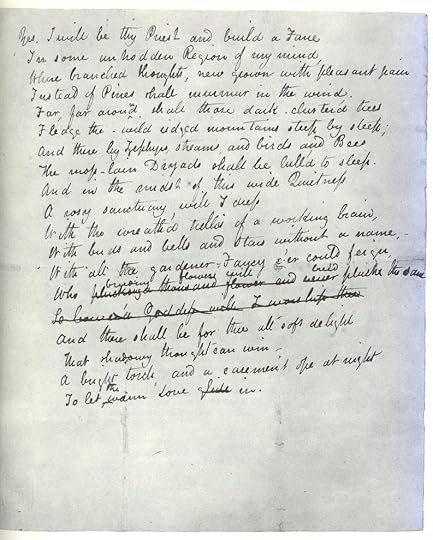
The chief idea of the poem is the subject of invocation. Psyche, the beloved of Eros of Cupid, did not enjoy the rituals and worship of the older gods. Keats proposes to remedy this by worshipping Psyche himself and building her a temple in his mind. His thought and feelings will serve as incense, flowers and other trappings required for worship.
Psyche will find a fitting sanctuary in no way mediocre to that of other gods and goddesses. He will keep a torch burning, and a window open in the temple of his mind so that Cupid may enter the sacred temple to meet his beloved, Psyche.
The myth of Psyche provides the poet with a context to work out the substance of the poetry as he would like it to be. He nostaIgically remembers the hellenic days when the subject of poetry was the mystery of and exploration of human nature. That is missing now and he promises to Psyche to create poetry which will rejoice human love indistinguishable from Nature.
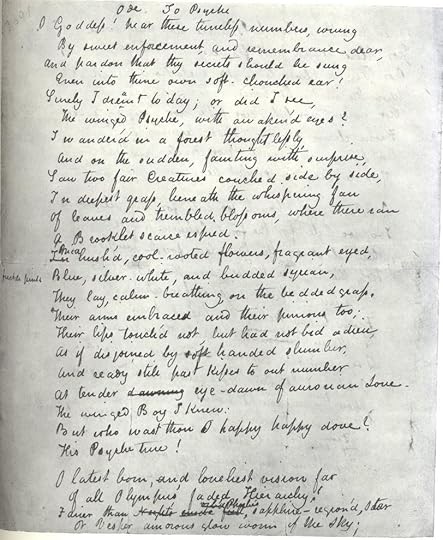
The poem is outstanding for its delicate feeling for nature principally in the two stanzas in which the mystic lovers, Psyche and Cupid, are shown couched side by side:
"In deepest grass beneath the whisp'ring roof Of leaves and trembled blossoms where there ran A brooklet......"
Every beauty that flowers have-scent, form, stillness, coolness, colouring is summed up in
'Mid hush'd, coolrooted flowers fragrent-eyed Blue, silver-white and budded Tyrian.'
Nature here appeals to every sense. We find here the quintessence of all that makes the beauty of flowers nourishing and uplifting. Here is the feast of sensuous beauty, Nature's exquisiteness and the variability of colours.
The poem is also remarkable for its sexual imagery, e.g.,
"Their arm embraced, and their pinions too Their lips touch'd not but had not bade adieu."