In the last two years of his life, the Sicilian aristocrat Giuseppe Tomasi di Lampedusa, in addition to his internationally celebrated novel, The Leopard, also composed three shorter pieces of fiction that confirm and expand our picture of his brilliant late-blooming talent.
In the parable-like Joy and the Law, a mediocre clerk in receipt of an unexpected supplement to his Christmas bonus (an awkwardly outsize version of the traditional panettone) finds his visions of domestic bliss upset by unwritten rules of honor and obligation.
At the heart of the collection stands The Siren and its redoubtable hero, Professor La Ciura, the only Hellenist scholar to claim firsthand experience of ancient Greek—from the mouth of the beautiful half-human sea creature he loved in his youth.
The volume closes with the last piece of writing completed by the author, The Blind Kittens, a story originally conceived as the first chapter of a follow-up to The Leopard, a novel that would have traced the post-unification emergence of a new agrarian ruling class in Sicily, coarser than its predecessor but equally blind to the inexorable march of change.
This elegant new translation of Lampedusa’s complete short fiction, the first by a single hand, updates and corrects previously available English versions.
Tomasi was born in Palermo to Giulio Maria Tomasi, Prince of Lampedusa and Duke of Palma di Montechiaro, and Beatrice Mastrogiovanni Tasca Filangieri di Cutò. He became an only child after the death (from diphtheria) of his sister. He was very close to his mother, a strong personality who influenced him a great deal, especially because his father was rather cold and detached. As a child he studied in their grand house in Palermo with a tutor (including the subjects of literature and English), with his mother (who taught him French), and with a grandmother who read him the novels of Emilio Salgari. In the little theater of the house in Santa Margherita di Belice, where he spent long vacations, he first saw a performance of Shakespeare's Hamlet, performed by a company of travelling players. His cousin was Fulco di Verdura.
Strana sorte quella di questo insolito scrittore che si avvicina alla narrativa alla fine di una vita non particolarmente lunga: morto sessantunenne, iniziò a scrivere seriamente intorno ai sessanta anni – nel giro di un paio d’anni produsse sia il suo capolavoro, Il gattopardo, sia questi tre racconti. Tutto qui.
E niente fu pubblicato finché era vivo: il romanzo uscì postumo l’anno dopo la sua morte, 1958, vincendo il Premio Strega, vendendo centomila copie entro quel natale e diventando uno dei best seller italiani nel mondo. Questi tre racconti furono pubblicati invece qualche anno dopo, nel 1961. Giuseppe Tomasi di Lampedusa passò la vita a leggere e solo piuttosto tardi capì che la sua vera vocazione era la scrittura. O se non altro, che tutte le sue letture potevano trasformarsi in scrittura creativa.
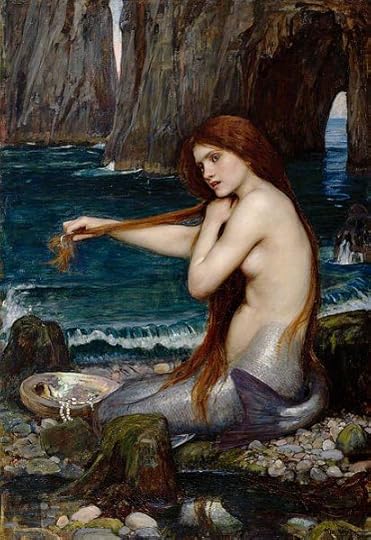
John William Waterhouse: La Sirena. 1901. Royal Academy of Arts, Londra.
Per quanto interessanti e gradevoli, per quanto confermino la mano di talento, non sono certo paragonabili per qualità e impatto al romanzo. Sono tre, e il primo, “Il mattino di un mezzadro”, si muove come trama sul sentiero tracciato dal romanzo: famiglia di antica nobiltà e famiglia borghese in ascesa: gli uomini nuovi sono famelici, gretti, ambiziosi, ignoranti – gli aristocratici, portatori di valori tradizione cultura, sono incapaci di stare al passo col tempo, di arginare l’espandersi dei parvenu. Volendo, si potrebbe considerarlo un sequel del romanzo.
Poi ce n’è uno breve breve, “La gioia e la legge”, umoristico, non di grande sostanza, dove il protagonista è un impiegato che anticipa Fantozzi di un decennio, il quale riceve in dono a natale un mega panettone.
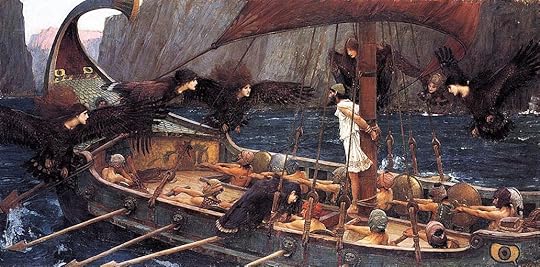
John William Waterhouse: Ulisse e le Sirene. 1891.
E poi c’è il terzo, “La sirena” (oppure “Lighea”, che pare fosse il titolo originale), il più lungo, una novella che contiene due racconti incastrati: la cornice nella quale due siciliani, uno giovane di nobili natali trasferito a Torino per lavorare in qualità di redattore a “La Stampa” conosce uno anziano, un senatore professore di greco ormai in pensione. Fanno amicizia per caso e l’anziano racconta al nuovo giovane amico una sua vacanza sulla costa di Augusta di quando era giovane e stava preparando il concorso per una cattedra.
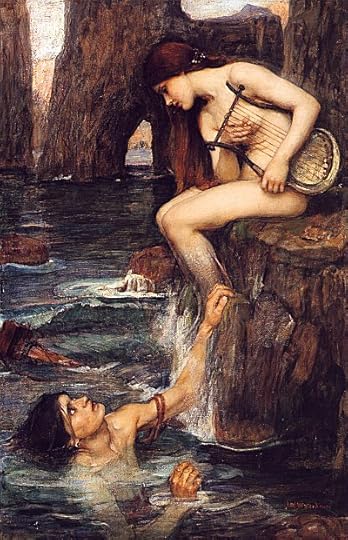
John William Waterhouse: La Sirena. 1900 circa.
In quei giorni di “studio matto e disperatissimo”, riceve la visita più insolita: quella di una sirena, la Lighea del titolo originale. La creatura metà donna e metà pesce gli dice: Sono Lighea, son figlia di Calliope. Non credere alle favole inventate su di noi: non uccidiamo nessuno, amiamo soltanto. Seguono venti giorni di amore ed estasi sessuale con la creatura che fa conoscere al professore, all’epoca giovane come il suo ascoltatore, l’amore e la bellezza. A tal punto che per il resto della sua vita non potendo ripetere quell’esperienza, ha preferito astenersi, rinunciare. Malinconia, un mondo che scompare, uno nuovo che appare e nel quale si fatica a riconoscersi, odori colori e suoni di una terra che nel romanzo capolavoro esplode.
Luca Zingaretti legge “La Sirena”.
Nell’edizione è raccolto anche un breve scritto autobiografico, “I luoghi della mia prima infanzia”. Per quanto interessanti e gradevoli non reggono certo il confronto con il celebre romanzo. Un po’ come Svevo che per quanto scrisse non riuscì mai a eguagliare il suo capolavoro dedicato a Zeno.
Statua a grandezza naturale dello scrittore Giuseppe Tomasi di Lampedusa situata in Piazza Matteotti a Santa Margherita Belice.
Many of my favourite books have grumpy, misogynistic male protagonists, with inflated egos, who I would not want to befriend in real life (John Banville is masterful at writing them, for instance, Alex Cleave in Ancient Light, which I reviewed HERE).
But while most of The Short Story Club waxed lyrical about the writing/translation of this story (published in 1958 and set in 1938), it created a nasty taste in my mouth, which lingered, despite their enthusiasm and insights.
Paolo Corbèra is a young Sicilian journalist, who has at least a couple of disposable “tarts” at any one time. He’s feeling sorry for himself because two have just disposed of him, when he meets a venerable Sicilian, Rosario La Ciura. Over a few weeks, and too many pages, they develop a friendship of sorts, mostly in a café alternately described as Limbo and Hades. There are also numerous metaphorical mentions of ghosts, phantoms, and apparitions.
Eventually (more than two-thirds in), the old man recounts the story of the title: as a young man, he fell in love/lust with a mermaid who wanted him to live with her people. Thereafter, no woman could ever compare. Or maybe he’s gay. I didn’t care.
It ends with musings about the toll of impending war, but the unasked question is whether it is better to have had one great passion and then lived a solitary life ever after, or to play the field for ephemeral pleasure.
Corbèra’s demeaning treatment of women (the most recent two were “usefully complementary”, so he overlooked the poor spelling of one), and the very crude way the professor talks about sex, repulsed me - perhaps because it was never countered (rather my objecting to the words themselves).
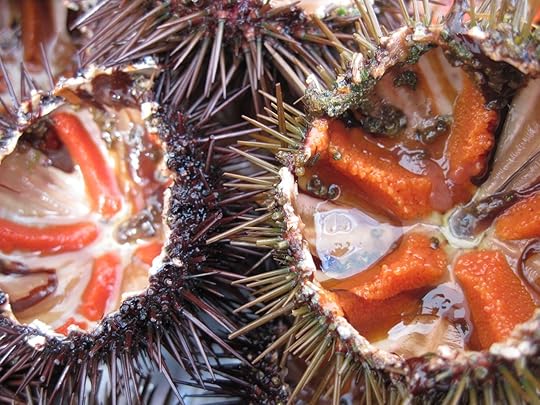
Image: “Sea urchins… they're the best thing you have down there, those blood-red cartilages, those images of female organs, tasting of salt and seaweed.” (Source and recipe)
See instead
Back in November, we read Oscar Wilde’s The Fisherman and His Soul, which was far better. See my review HERE.
Quando una cosa è perfetta c’è poco da dire e La sirena contenuta nella raccolta per me è il paradigma del racconto. Un gioiello. Il grande rammarico perché questo autore ha lasciato così poco concentrando la sua produzione letteraria nell’arco di pochi anni, prima della prematura morte.
Pagine pervase dall’amore per la Sicilia ritratta limpidamente nelle sue variazioni di luce, di profumi e di colori e con quella vena polemica ininterrotta, e continuata nella sua opera maggiore, sull’indolenza dei suoi abitanti.
3★ "In the late autumn of that year, 1938, I had a bad fit of the spleen. I was living in Turin at the time, and my tart No. 1, while groping about in my pockets for an odd fifty-lire note as I slept, had also found a letter from tart No. 2, which in spite of spelling mistakes left no doubts about the nature of our relationship."
I have to say this was an intriguing first sentence. I was pleased that at least tart No. 1 took off wearing Paolo's favourite black cashmere sweater.
He decides to spend his evenings in his local café after work, as a good place to kill time, tartless, as it were.
"For this period of retirement I could have found no place more suitable than the café in Via Po where I began spending every free moment alone and always went in the evening after my work on the paper. It was a kind of Hades peopled by bloodless shades of lieutenant-colonels, magistrates, and professors. These insubstantial apparitions would play draughts or dominoes, immersed in a light dimmed, during the day, by arcades and clouds, and at night by huge green shades on the chandeliers; no voices were ever raised lest too loud a sound disturb their tenuous woof. A most suitable Limbo."
He becomes fascinated with an old man sitting nearby who reads the papers and spits in disgust (and disgustingly) at what he reads. The staff tell Paolo the man is Senator Rosario La Ciura. Even Paolo knows this man's name and looks him up at work in the pre-prepared obituary notices for famous people.
As they talk, and Paolo's told him about his tartless state, the man informs him he has never touched a woman. But… then he goes on to recount his past lust/love affair with a mermaid.
The professor is certainly memorable, but this doesn't feel to me as if it adds anything to the usual myths and legends of mermaids and sirens and fishermen.
Il racconto La Sirena è considerato un gioiello, tanto da essere stato pubblicato singolarmente. Ci sta, condivido. Ma I ricordi di giovinezza mi hanno incantata e mi sono gustata con tutti i sensi il sontuoso palazzo di via Lampedusa, le stanze, il mobilio, i quadri; ma anche l’amata e irraggiungibile tenuta di Santa Margherita Belice con i suoi feudi e l’enorme casa con le sue trecento stanze, la biblioteca, l’orto e i giardini. Persino la detestata Torretta mi sono gustata, con quella facciata da tomba gentilizia e la vasca per la raccolta delle deiezioni di tutto il paese, ma con una terrazza “che dominava la vallata, una di quelle tristi vallate siciliane, disarmoniche e pelate, che in fondo in fondo lasciano sempre vedere un piccolo straccetto di azzurrissimo mare”. E mi sono gustata anche le ricche scampagnate della nobile famiglia con carrozze, muli, cuochi e timballo di maccheroni ai tartufi nell’assolata campagna, profumata di origano e nepitella. Bello, da leggere e gustare assolutamente!
Questa raccolta di quattro racconti mostrano l'altra faccia di Giuseppe Tomasi di Lampedusa [1896-1957] divenuto famoso post mortem con la pubblicazione del suo unico romanzo "Il Gattopardo" (1958).
Quattro racconti e quattro facce della sicilianità in cui rifulge il racconto "La Sirena" o "Ligeia" che mescola abilmente razionalità e mito con grazia e delicatezza insuperabili, "Ricordi d'Infanzia" sparge a tratti echi del suo famoso romanzo, "I Gattini Ciechi" racconta fatti e leggende di memoria verghiana e pirandelliana, "La Gioia e la legge" una commediola agrodolce della Sicilia cittadina.
Quattro racconti lontani dal fervore risorgimentale de "Il Gattopardo", forse per l'autore semplici esercizi di scrittura e creatività, ma non per questo disprezzabili.
During his lifetime, Giuseppe Tomasi di Lampedusa never received the recognition he deserved as a writer. He died of lung cancer on July 23, 1957, before his novel, Il Gattopardo (The Leopard), was published in 1958 and then went on to win the Strega Prize in 1959. "The Professor and the Siren" is Lampedusa's final work. Written in January, 1957, just months before Lampedusa's death, it tells the story of an aging Hellenist professor (Rosario La Ciura), who we find spitting "out of disgust" while reading contemporary magazines in a dingy Turin café, still haunted by his first and only experience with love fifty years earlier, a summertime tryst with a mermaid named "Lighea, daughter of Calliope." Much like reading The Leopard, I did not want this story to reach its surprising, bittersweet ending. Also included in this collection of three newly-translated tales is Lampedusa's short story, "Joy and the Law," and the first chapter of his unfinished novel, "The Blind Kittens," conceived as the sequel to The Leopard. Recommended for anyone who enjoys the pleasures of reading.
This is a charming retelling of the siren myth. A young man, Paolo, meets an older retired professor of the classics, Rosario, in a favorite cafe. Rosario surrounds himself with books and objects from the Ancient Greek culture.
Rosario tells Paolo about his twenty day love affair with a mermaid when he was a young man. It started when he was studying Greek in a boat off the eastern side of Sicily. The siren who approached him was Lighea, the daughter of Calliope, who said, "Do not believe in the tales invented about us; we kill none, we only love."
This short work is a beautiful, magical story. I read the translation by Archibald Colquhoun in the anthology Black Water 2: More Tales of the Fantastic with the Short Story Club.
Anche le prose incompiute di Tomasi di Lampedusa, i bozzetti rifinitissimi che descrivono le tenute in cui trascorse la propria infanzia, i racconti alla Cechov, l'incipit di un secondo romanzo che avrebbe dovuto dar luogo a un ciclo siciliano di cui 'Il gattopardo' sarebbe stato il capofila....tutto appare più denso, corposo e cesellato della maggior parte di tanti prosivendoli e prosinvendole in cui mi sono imbattuta di recente. E poi c'è 'La sirena', una delle prose brevi del Novecento che ho amato di più e su cui torno ciclicamente. Le descrizioni, in particolare, erigono templi attorno al lettore: altro che computer grafica. Anche l'incompiutezza, mi sembra, può essere una virtù: accende la luce dell'immaginazione e delle 'maraviglia' in tempi per altri aspetti assai bui.
venendo dalla saga degli Uzeda sono rimasta nell'isola che unica ha quel mare... "il mare: il mare di Sicilia è il più colorito, il più aromatico di quanti ne abbia visti". E Tomasi di Lampedusa racconta in modo superbo "la Sicilia eterna, di quella delle cose di natura, del profumo di rosmarino dei Nebrodi, del gusto del miele di Melilli, dell'ondeggiare delle messi in una giornata ventosa di Maggio come si vede da Enna, delle soliudini intorno a Siracusa, delle raffiche di profumo riversate, si dice, su Palermo dagli agrumeti durante certi tramonti di Giugno". Me li sono sentiti in bocca e nel naso, tutti questi gusti, e profumi. E che personaggio il Senatore Rosario la Ciura. Rapita io dalla lettura, come lui dalla sua sirena.
The Professor and the Siren is a fantastic story in a prosaic frame that easily earns five stars. The story reminds me of Fellini's best films. Despite being more fantastic, it captures the same sweet despair that pervades Giuseppe di Lampedusa's only novel, The Leopard.
Aside to Renata Adler: Ms. Adler, you could learn so much from Lampedusa about demonstrating the despair that comes from being wealthy while still daily contending with death, decay, time and the general complaints of the human condition. The Leopard made me feel excessively happy and sad often in the same moment. The leonine protagonist watches helplessly as his aristocracy declines into dust, and the ride is joyous, beautiful and sad. Ms. Adler, your work makes me think of time I was listening to some young turk at law school complain that his dad was the worst, because his dad bought him the wrong Benz, and how this was a serious problem staining his existence.
Joy and the Law is what the back cover blurb terms a "parable," despite having no discernible lesson (though perhaps one muddy principle that Lampedusa completely imagines). Joy and the Law is embarrassing. It is the tale of an impoverished, overworked accountant who receives the gift of a fruit cake. Lampedusa, who was Sicilian royalty, was no doubt amusing himself by imagining what being poor and cash-strapped but still proud must be like. Clearly, Lampedusa thought ethical, saccharine poverty was romantique, and wanted to brush abstractly against these imagined constraints within the safety of fiction. This story did remind me of a better, more ironic sitcom treatment of the same material (i.e. a rich guy fantasizing about genteel poverty): Party Down, Season 2, Episode 1. In this episode, a Marylin Manson proxy fixates on the backstage catering staff at one of his concerts. He bribes them to switch roles with him, so he can be a regular joe at a sad joe job, and he loves how bleak and rough it is. That episode is worthwhile. Joy and the Law is not worthwhile and brings down the average quality of this slight collection. Mercifully, the "parable" is short and easily forgotten.
Blind Kittens garners roughly four stars. It has the nuance and mechanics of The Leopard, and was supposed to be the first chapter of Lampedusa's second novel. Unfortunately, Lampedusa died a few months after completing this chapter. There is only the suggestion of the heft and beauty of the novel that will never be.
All told, this is a slight but worthwhile collection of Lampedusa's scant published work. Though I would recommend reading The Leopard first.
Lampedusa'nın Siren kitabı, sadece üç öyküden oluşan bir eser gibi görünse de, aslında derin bir kişisel hesaplaşma ve geçmişle bağların izini süren bir anlatı. Kitabın başındaki uzun çocukluk anıları ve yazarın kendi hayatına dair gözlemler, bu öykülerin alt metnini besleyen unsurlar olarak öne çıkıyor.
Lampedusa, aristokrat kökeninden gelen bir melankoliyle, kaybolan dünyalara duyduğu özlemi anlatırken, bir yandan da değişen zamanın karşısında nasıl sıkışıp kaldığını ortaya koyuyor. Bu eserde hem yazarın kişisel dünyası hem de toplumsal yapının çöküşü iç içe geçmiş halde.
Siren, Kör Kedi Yavruları, Sevinç ve Yasa öyküleri, farklı perspektiflerden ele alınan benzer temaları işliyor. Özellikle Siren öyküsü, kitabın en dikkat çekici bölümü olarak yazarın iç dünyasındaki yalnızlığı ve kaybolmuşluğu mitolojik bir figür üzerinden aktarıyor. Paolo’nun Siren’in büyüsüne kapılması, aslında Lampedusa’nın geçmişin cazibesiyle baş edemeyen ruh halini simgeliyor. Mitolojik anlatı, insanın gerçeklerden kaçışını ve kendi arzularının peşinden sürüklenişini derin bir melankoliyle harmanlıyor.
Kör Kedi Yavruları öyküsü ise, adından da anlaşılacağı gibi, körlük ve savunmasızlık imgeleriyle dolu. Lampedusa burada, kontrol edemediğimiz değişimlerin insanı nasıl savunmasız bıraktığını sembolize ediyor. Terk edilen kör yavrular, hayatın sert gerçeklerini hatırlatırken, yazarın kendi yaşamında gözlemlediği aristokrat sınıfın çözülüşüne de bir gönderme yapıyor.
Son öykü olan Sevinç ve Yasa ise, hayatın döngüselliğini ele alıyor. Yazar, sevincin ve yasın iç içe geçtiği, hayatın bir yanda kutlanıp diğer yanda kayıplarla dolu olduğu bir zıtlık dünyasını resmediyor. Bu öyküde, Lampedusa’nın hayatındaki kişisel kayıplar ve yaşadığı derin üzüntüler, evrensel bir insanlık deneyimiyle buluşuyor. Hayatın geçiciliği ve kayıpların kaçınılmazlığı bu öykünün özünde yer alıyor.
La Sirena is one of the best short stories that I've ever read. Too tired and jetlagged to do this justice, but in these various fragments, as in Il Gattopardo, Lampedusa gives us his special insight (heartbreakingly accurate and relevant even today) into Sicily and Sicilianita'. And what a way with words - hard to imagine that all the publishers turned him down during his life time. One of those writers whose death seems like an enormous loss in terms of what could have been produced. But read La Sirena, by all means, in whichever language you can. Having just come back from my annual trip to those ancient shores, all I can say is that the Sicilian sea and sun just might make you a believer.
“Os Contos de Giuseppe Tomasi di Lampedusa” que a editorial D. Quixote deu à estampa, em boa hora em 2017, compila quatro histórias escritas pelo autor siciliano que se celebrizou com a publicação de “O Leopardo”, obra imortalizada pela adaptação cinematográfica de Luchino Visconti,e que foram pblicdas nos dois últimos anos da sua vida, ou seja, entre 1955 e 1957.
O conto que mais gostei, aquele que falou à minha sensibilidade foi “A Sereia”. É uma história belíssima, carregada de magia, poesia, encanto e possui todos os atributos que enformam os grandes escritores, os notáveis romancistas de todos os tempos.
Não ficamos indiferentes à sua pujança narrativa e até diria, sem cometer o erro de cair nas excentricidades do exagero, que consiste num momento literário único em que nos é fácil transportar para aquela praia em Augusta, algures no litoral oriental siciliano, para onde o erudito em filologia grega, o senador Rosario La Ciura se evadira para a preparação de um concurso para uma cátedra universitária de literatura grega na Universidade de Pavia. Que personalidade interessante!
Conhecemo-lo graças à construção inicial da narrativa personificada por um possível alter-ego de Lampedusa, Paolo Corbera conterrâneo de La Ciura que também nascera em Palermo, essa cidade idilicamente solarenga, jornalista de profissão e, como já é tradição no país augusto, homem de vários e diferentes amores, solitário, factor que decorre da característica agora mencionada: “Em doze horas, perdera duas raparigas, utilmente complementares entre si (…) o meu sicilianíssimo amor-próprio estava humilhado; tinha sido ferido; e decidi abandonar durante algum tempo, o mundo e as suas pompas”. Os diálogos que trava com Rosario La Ciura que conheceu num bar lúgubre em Turim, são absolutamente fantásticos! Este último, em relação às questões amorosas, possui uma clarividência que só podemos encontrar em quem, neste tema, teve a oportunidade de viver algo muito, muito especial! Agora, passados cinquenta anos, partilha conosco. E, de facto, consiste num episódio insólito, inimaginável, até pouco credível aquilo que confidencia ao amigo e, indiretamente, com o público … no entanto, sendo fantasia, sonho ou sendo fruto de um momento de alucinação, a história toca-nos profundamente, muito por força da extraordinária composição que Lampedusa, na sua capacidade criativa, constrói.
Os outros contos também são interessantes mas “A Sereia”, merece o lugar de “prima dona” nesta compilação.
sirena: ipotetico animale marino dice un "brutale" dizionario. e gli inglesi distinguono tra mermaid (che è un incrocio tra una donna e un pesce) e siren (che è una incrocio tra una donna e un pesce, ma è soprattutto una tentazione). il prodigio di fronte a cui si trova il protagonista di questo racconto di Tomasi di Lampedusa è quello raccontato dal professore Rosario La Ciuria, grecista di chiara fama. Tutto il racconto ci prepara in qualche modo al suo disvelamento, a questo miracolo (la cena con i ricci, le citazioni greche e la grecità in generale, il tono e non mi ricordo cos'altro): l'incontro anni prima del professore con un'incantevole sirena e la sua storia d'amore, fino a un epilogo drammatico. L'acqua torbida del delirio (da leggere come incantesimo) in cui è sprofondato il professore ha le stigmate del potere malefico delle ninfe più che quello incantatorio delle sirene, e qui pensiamo che in fondo Tomasi di Lampedusa abbia le idee confuse in materia di zoologia fantastica. Il racconto ha avuto molta fortuna e un largo consenso popolare. Infatti, sono vere più che mai le parole di Schopenhauer: per la grande massa gli unici argomenti comprensibili sono i miracoli. Per questo tutti i fondatori di religioni ne fanno, per accreditare il loro contenuto. di certo, viene sempre un'epoca in cui i miracoli sortiscono l'effetto opposto, e anziché comprovare una verità, la rendono puerile: i teologi infatti non sanno come interpretarli, in quale chiave, e sovente infatti se ne sbarazzano («miraculum sigillum mendacii»). sarebbe banale però ridurre un racconto come quello di Tomasi di Lampedusa, su cui ci fanno tesi di laurea, alla sua pura fantasticheria, trasformandolo in un proto-fantasy. sovraccarico di mitologia, Tomasi di Lampedusa trasforma Rosario La Curcia in un novello Hylas, e l'abbraccio della ninfa metamorfizzata che ha stordito la mente del professore ha ancora il potere di spingerlo, farlo sprofondare, come dice calasso, nelle acque mentali del delirio d'amore.
"Bucuria şi Legea" se desfăşoară pe un fundal verist (varianta italiană a naturalismului şi realismului) şi prezintă -dintr-un ochi critic, dar detaşat- o zi din viaţa unui mic funcţionar de la începutul ascensiunii capitalismului extrem. *Ceea ce i-a făcut pe comuniştii români să publice proza a fost tocmai această aversiune -realistă- faţă de stratificarea socială capitalistă.
"Dimineaţă unui arendaş" este o poveste fără un fir epic consistent, neputând fi structurată pe momentele subiectului. Deşi reperele spaţio-temporale sunt date cu precizie realistă (Sicilia, 1901), acestea au rolul de a fixa subiectul operei, acţiunea în cadrul istoriei: critica adusă moşierilor sicilieni, mijloacele scârnave prin care s-au îmbogăţit şi prejudecatie în care se complac.
"Locurile copilăriei mele" mi-a displăcut profund. Parcă n-ar fi scris-o Lampedusa. Atâta fast, comportament simandicos (peiorativ)... nu! Se vede intenţia de a copia (leit!) tehnica proustiană. În schimb, nu prea i-a ieşit: fie pentru că a descris neverosimil copilăria, fie pentru că rigiditatea cu care a ţinut să-l copieze pe Proust a dat greş (la Proust e o artă specifică). Pierdere de timp. Nu ştiu cum a "îndrăznit" să scrie asta, căci nu se vede nici măcar o urmă de critică la adresa societăţii din care făcea parte. Sau... faptul de a ne fi născut nobili, ne justifică cumva?!
....al dondolio leggero della barca nella quale restavo lunghe ore, ogni libro sembrava non più un ostacolo da superare ma anzi una chiave che mi aprisse il passaggio ad un mondo del quale avevo già sotto agli occhi uno degli aspetti più maliosi...
.....e, a dir vero, il sole, la solitudine, le notti passate sotto il roteare delle stelle, il silenzio, lo scarso nutrimento, lo studio remoti, tessevano attorno a me come una incantazione che mi predisponeva al prodigio...
Sono Lighea, sono figlia di Calliope. Non credere alle favole inventate su di noi: non uccidiamo nessuno, amiamo soltanto...
....Sasà', mi chiamava....
...mai un istante ebbi il sospetto che mi si raccontasse delle frottole e chiunque, il più scettico, fosse stato presente avrebbe avvertito la verità più sicura nel tono del vecchio.
"El profesor y la sirena" es un relato hermoso. También disfruté de "Los lugares de mi primera infancia". Es muy interesante cómo arma sus recuerdos a través de la alternancia entre espacios abiertos y cerrados, pero todos con ese color local de Sicilia.
In the last two years of his life, di Lampedusa wrote not only The Leopard, which I recently read, but also three shorter pieces of fiction. In The Professor and the Siren, an elderly, world-renowned professor of Hellenism shares with a young journalist an encounter with a siren in his youth—a meditation on love, loss, death, learning, and culture, this story was absolutely outstanding. In Joy and the Law, an impoverished accountant receives a pannetone as part of an end-of-the-year bonus, which his wife makes him give away to return a favor. Finally, The Blind Kittens, which was originally conceived as the first chapter of a follow-up to The Leopard, offers a sketch of the land-amassing activity of a Sicilian family and the effect this has on the declining local aristocracy. It is such a shame that di Lampedusa began to write only so late in his life, and that he passed away before he could realize all of his projects—you feel that he had so much more in him.
Aparent, microromanul are aspecte de factură fantastică. În fapt, el exprimă realitatea subiectivă dusă până la paroxism a unui spirit detaşat de contemporaneitate (un eminent profesor de limbi clasice). Se constituie, de asemenea, o antiteză între iubirea comună şi iubirea de geniu, cea din urmă fiind o erotică plăsmuire a intelectului.
Giuseppe Tomasi di Lampedusa'nın çocukluk anıları ile başlayan bu kitapta, bu anı bölümünden ayrı 3 öykü daha yer alıyor - ki zaten bunlardan en bilineni olan Siren de kitaba ismini vermiş. Her bir metne eşlik eden detaylı dipnot ve sonnotlar da mevcut. Üzerinde oldukça detaylı çalışılmış bir metin olduğunu söylemeden edemeyeceğim.
Her bölümün başında Gioacchino Lanza Tomasi tarafından kaleme alınan girişler ile öykülerde bizi neyin beklediği ve de bu öykülerin Lampedusa'nın hayatı ile ilişkisi üzerinde durulmuş. Arka kapak yazısında bu durum şöyle açıklanmış: "... anı ile anlatının, bireysel tarih ile toplumsal belleğin iç içe geçtiği". Bu o kadar doğru ki! Kitabı okurken Sicilyalı aristokrat bir ailenin içine dahil olup günlük yaşantılarına, özel günlerine ve daha bir çok şeye dair bilgi edinirken, bunların yazarın öyküleri üzerindeki gölgelerini ve ışıklarını takip edebiliyoruz.
Kitapta en beğendiğim öykü Siren oldu. Yazarın anılarını okurken de büyük keyif aldım. Öte yandan, sonnot yerine acaba bütün notlar dipnot olarak mı dizgiye alınmalıydı diye düşünmeden de edemedim. Bu şekilde metin sonuna eklenen açıklamalar olduğunda çok merak ettiğim bir şey yoksa ne yazık ki hepsini tek tek açıp bakma isteği içine giremiyorum. Halbuki çok ciddi bir emek söz konusu. Bu nedenle de, bu emeğin göz önünde olması ve satırları takip ederken okura kolaylık olması açısından metne dipnot şekilde eklenmesinin daha iyi olabileceği fikrindeyim (ama tabii bu tamamen bir okur olarak fikrim).
A charming trio of short stories from the underrated Sicilian novelist. The title story, about a Hellenophilic senator who once loved a mermaid, is delightful. I love how this character keeps a spittoon handy to express his distaste for the human race, just so many “future carcasses.”
“Joy and the Law” is a Dickensian Christmas fable, in which a lowly clerk gets a fifteen-pound panettone, “that reliably mediocre mixture of flour, sugar, egg powder, and raisins,” as a bonus from work but decides to give it away instead.
The final story, “Blind Kittens,” rather washed over me, but I still enjoyed the gossipy dialogue. (I might have benefitted from a bit more information about Sicily in the last half of the nineteenth century and first half of the twentieth; the introduction by Marina Warner was missing in my Edelweiss download.)
This collection of short fiction was first published in 1961, but is available now as a new translation from NYRB Classics. The English rendering is splendid, with memorable lines like this one: “Into the dim room slipped the sultriness of a September seared, baked, and steeped.”
Now I will surely have to read Lampedusa’s historical novel, The Leopard.
Of the the three stories in this slim collection, the first, the title story, is a masterpiece. A story within a story about a scholar in ancient Greek having a love affair with a mermaid, it is a nearly perfect work of fiction. The second, Joy and the Law, is an intricate but too brief and nearly too maudlin character portrait of a poor accountant.
The final story, The Blind Kittens, was to be the first chapter of a follow-on novel to The Leopard. There is a hint at the quality of the would be novel, and it is considerable, but left as we are with this one fragment all I can say is too bad he died before he could finish it. There's a lesson to all you would-be novelists: get writing!
It's unusual for me to read a book in a couple of days, but I did with this one. It's short, but the elegant prose from Lampedusa, author of The Leopard, is pure delight and makes this hard to put down. The title story reads like folklore. It's easily my favorite here, despite its fantasy. The other two are more naturalistic. The final one is especially interesting because it's described in blurbs as the first chapter to a sequel to The Leopard, and does deal with Sicily's landed gentry.