Many people today desire a simple life that is closely connected to land, whether it be gardening, farming, or ranching. There is a spiritual draw to a non-consumeristic lifestyle that places God, the family, and the home at the center of all activity. This “agrarian conversion” has led many families to seek out rural communities and leave behind the suburban life.
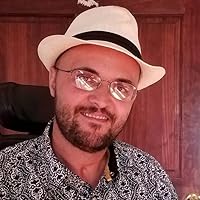
Over ten years ago two Catholic friends, Jason M. Craig and Thomas D Van Horn, experienced a similar agrarian conversion inspired by past Catholic land-movements and a growing desire to work with their wives and children, going deeper than just “supporting” them financially. Both began a journey, perhaps with a tad too much romanticism, toward land-based life on farms. All these years later, the two have been tempered by the unyielding realities of land and limitations, and have gained significant insights into the reasons, challenges, and possibilities of homesteading and farming. Van Horn operates a commercial bee operation and Craig operates a microdairy while working remotely for a Catholic apostolate. Both, however, now have extensive experience in general homesteading, niche-marketing of farm products, and trying to order their households around an agricultural life.In The Liturgy of the Cultivating a Catholic Homestead, authors Jason Craig and Thomas Van Horn present the practicalities and theological aspects behind the desire for a productive, holy home. Our current culture understands economy in efficient consumeristic terms, but our Catholic Faith tells us different. The productive homestead is the center of economic life and the family is at the center of the homestead. This book aims at bringing the stories from their experience into a presentation and proposal of homesteading as a way of life, considering the principles (why?) and the practicalities (how?).
Now that that’s out of the way, down to the brass tacks.
Very thoughtful book, good things to take to prayer within it as the errors the writers point out in society are applicable to the individual person (e.g. am I merely plugged in with my community or rooted in it), and some very practical advice throughout for those desiring or interested in living a more examined and measured life.
My one contention is a line right before the appendix. “We are attempting to rebuild the great achievement of Christendom, which is the Catholic village.” Uhhh no? The achievement of Christendom was the salvation of souls in through the particular means that the Lord desired to use for that time. And now we are in a different age. The writers miss out on a massive opportunity to encourage the reader to a prayerful conversation with Jesus on how he desires to save their soul, the souls of their family members, and of their immediate community. Trying to propose exactly how the most souls will be saved through the physical means of residential living arrangements by going backwards in time is a waste… of time.
I thought this book was interesting. I think it did an okay job of explaining both the pros and the cons of this lifestyle, as well as giving examples of ways to ease into it. I thought it did get a bit boring and repetitive toward the end but I enjoyed reading through the appendix about the different livestock and gardens. If anything it made me way more interested in potentially having bees and an orchard on our farm someday.
This book was definitely more than I bargained for, in a good way. Although I know there are many different books about owning a farm or cultivating a homestead, this one offers the Catholic lens.
Furthermore, it offers it in a way that is written through experience. There is both the pretty and the ugly, which brings a more realistic take to the endeavor.
I, and many people I know, Catholic or otherwise, have this sort of utopic view about homesteading. And I have to say that this book tempers that dream a bit. Not discouraging it, but rather setting up real expectations and proper planning considerations.
It also affords a variety of options in regards to the "type" of homesteading, coupled with pros and cons.
All in all, I would recommend this book to anyone who has this dreamlike view of homesteading, and would like to dive deeper into that reality. I definitely am considering downsizing my homesteading plans to a more hobbylike venture.
Primarily a theology of homesteading for Catholics, although there is quite a bit of practical advice as well. Interesting from a theological/philosophical perspective as well as from a learning/hobbyist perspective on how to get into homesteading. If you have read agrarian related works from Chesterton, Belloc, Wendell Berry, and others you may already be familiar with many of the underlying arguments made, although the book does the unique job of tying all of these writers together while providing some more hand-on and practical advice.
I thought this book was great! The authors included tons of practical information on various scales of farming and gardening, while relating everything back to Catholicism and family life.
Absolutely incredible book. Only book I've found that addresses the Philosophy of homesteading, especially from a Catholic perspective. I'd highly recommend to anyone even slightly interested in either philosophy or homesteading.
The Liturgy of the Land was a fascinating proposition: get back on the farm. Growing up in the suburbs of Houston, the agricultural vocation has always been very beyond me. Jason Craig makes a great case as to why it is truly beneficial for us to return to our anthropological roots. Benefits include health, human development, intentional community, a unification between work and family life, growth in virtue, and greater love and dependence in God. I found myself fairly convinced. While I do not know if the homestead is where God would call my theoretical family and I, I did have a newfound desire to incorporate a greater involvement of the 'natural' in my daily life. I will say, I actually found myself less convinced of the movement to the land by the end of the book than I was at the start. I think Craig came out swinging with strong philosophical and theological reasons for his position, but slowly uncovered the flaws with the plan throughout the book. Other than that, I really enjoyed the pictures :)
This is a really great read. Rooted in sound philosophy and applied with practical tips, Liturgy of the Land is a guidebook for those seeking the escape of one enslaved from the cage of the modernist malaise into a life of freedom and connectedness.
A good introduction to the home economy, why it's good for the family, and thus, the soul. The book even contains an overview of various homesteading ventures, their ease of access, and potential output. Overall, very informative and not a long read.