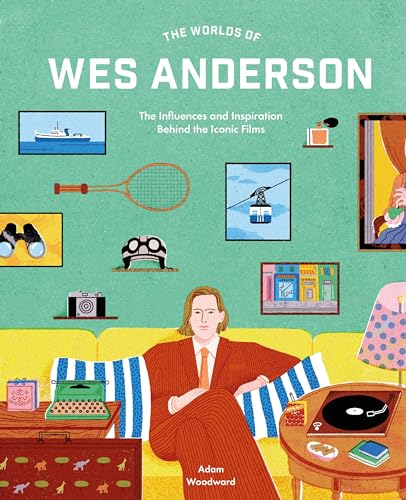
In each of his films, Wes Anderson builds entire worlds that fans tend to feel somehow really should exist. Discover the rich veins of inspiration that he weaves into this unique magic. Anderson’s colorful and richly structured style is universally admired – but how has he managed to create such an enigmatic visual signature? Like many key creatives, he’s found inspiration in a huge host of varied influences. From Hitchcock and Spielberg, to Truffaut and Varda, there are countless filmic homages and references scattered throughout Anderson’s filmography, while his cultural anchor points also go deep beyond film, and into the worlds of art and literature. Evocations of place and time also underpin his work, from mid-century Paris in The French Dispatch, to grand pre-war Europe in The Grand Budapest Hotel, while cultural institutions – such as Jacques Cousteau and The New Yorker magazine – are other touchstones. For Wes Anderson fans and cinephiles alike, uncover the fascinating creative process of one of the world’s most revered filmmakers.
Wonderful book about the influences of Wes Anderson, putting in perspective Anderson's point of views and references. If you have seen any of Anderson's films, you know nothing is in a frame by chance, everything is deliberate. And this is why he is a master, because it all makes sense and can be analysed. Personally, I am not a movie fanatic, so I do not have the vast historical knowledge of professionals. I like films, but I love all art forms and as such it's hard for me to have specialised knowledge. I love the theatrical aesthetics, the stunted external display of emotions contrasting with explosive internal turmoil, I love the dandy precious look like old-fashioned candy boxes, but most of all I love the huge empathy in all of Anderson's films, and I can tell it goes way beyond my superficial knowledge of the French Nouvelle Vague (which I personally hate) and stunning Japanese classic cinema (which I greatly enjoy, but only know the cannons). This book opens up a great number of doors for you to decode and appreciate even more the work of Wes Anderson. It will also probably add a good number of movies to your to-see-list if you are a curious person. I know that I am now dying to discover Satyajit Ray, an Indian director I knew nothing about, that Darjeeling Limited gave homage to. A book for all the fans, and for cinema enthusiasts.
Barring Fantastic Mr. Fox and the sublime Grand Budapest Hotel, I find Wes Anderson's films to be mannered to the point that they are damn near unwatchable; however, I cannot deny his visual style stands out in the sea of dreck Hollywood mass produces each year. The Worlds of Wes Anderson gives a glimpse at the myriad works of art he draws on to create his films, and shows the director utilizing a long-established visual language to tell his tales.
Recommended mostly for hard-core Anderson fans, but casual viewers of his films will also find much of interest in this book.
I appreciate many Wes Anderson movies, especially for their look. This was a fun exploration of his movies. What I liked the most were the many, many stills from movies Anderson says provided inspiration, along-side stills from his movies. If you're a fan of Anderson or are interested in the movie-making process, I think you'll enjoy this book.
My thanks to NetGalley and the publisher Quarto Publishing Group – White Lion for an advance copy of this new book that looks at the films of Wes Anderson, a filmmaker with a particular set of skills, and the art that shaped and defined the movies that he has created.
The word influence seems to draw a little bit of shade when used today. As most people of a certain age do, I blame the Internet and the rise of Social Influencers. I recently saw a cook, who talks of the high life in video discussing how great her food was with Dole pineapple, and how she used it as a mixer in her drinks with fellow influencers. That's not an influencer, that's a huckster. In creative terms, at least to me, an influence is something a person comes across that makes a lasting effect on their lives, their thinking and art. Star Wars at age 7 gave me a strong love of science fiction, science, movies and more. The Simpsons influenced the way I look at comedy, and how to draw on past work. I would like to say my essays writings were influenced by Joan Didion, and John McPhee, both who I adore, but my writing always seems like an ad on Craigslist selling a broken washing machine. Influence is not theft, though better writers are supposed to steal according to T.S. Eliot. But to understand an artist, is to find out who they draw from, and in turn learn from them. That happens to me all the time. And this book on the director and writer Wes Anderson has introduced me to a whole new world of movie makers, writers, artists, creators and much more. The Worlds of Wes Anderson: The Influences and Inspiration Behind the Iconic Films by editor at large for Little White Lies Magazine Adam Woodward is a look at oeuvre of this movie maker, and goes into depth on the many works and ideas that Anderson has drawn on to enrich his movie palette.
The book is broken into themed chapters with some examples being Youth in Revolt, Family Values Colour and Composition, and of course Life and Death. The chapters are broken down by subject. Say a section on the Kinks music, or the artist Mark Rothko, or even the Scorsese movie Mean Streets. The book is lavishly illustrated and mixes moments from Anderson's life, how he might have come across say the movie The 400 Blows, and what movie it might have influenced, or the themes that might appear in a variety of films. There are of course a lot of film references, but books and magazines, especially The New Yorker make an appearance. What I found must interesting was after reading and thinking about what I had read, was that I had a whole new appreciation for the films I have seen.
The book is set up like a larger sized issue of the magazine Little White Lies, a film magazine that I have enjoyed for years. The colors the set up, the illustrations, really are quite similar. And I enjoyed that as Little White Lies is a great magazine, and Adam Woodward really knows how to convey film onto the page. Not just a book about Anderson, this is mini-course on film history and what to look for. Even if one is not a fan of Anderson, there is a lot to be gained from this book. Fans will quite enjoy it, the references, the little things that Woodward points out that might be missed, but upon reading suddenly open up scenes a lot more. Woodward goes into color, the sets, and especially the music. Why these songs work, and why songs did not. Woodward has done an incredible job researching for this book, and I can't imagine how many times he had to watch these movies.
A wonderful gift not only for the Wes Anderson fan, but a movie fan. Woodward is a very good writer, and his discussion about film makes one want to put down the book and start watching things. As I said a bit like a film school in book form. I look forward to more books by Woodward, and of course more films by Anderson.
Going into this book, I wasn’t sure if I was going to be the intended audience. I’m what could be considered a “casual fan” of Wes Anderson. I have seen maybe half of his major films, and I am not a film buff, but I do enjoy his work and was interested to learn more. I was quite pleasantly surprised by this, and I think this book will have broad appeal for serious fans and people like me alike!
I thought the layout and imagery had a lot of aesthetic appeal, and I really loved the multitude of side by side comparisons of stills from Anderson’s films with the influences discussed in the essays.
I also appreciated the general format of the book. There are themed chapters, each divided into four parts that the author calls “mini essays”. And because the author never intended for this to be an exhaustive analysis of every reference in every film, the book never gets weighed down by unnecessary detail. It keeps everything digestible, especially for someone like me who, as I mentioned, isn’t already well versed on this subject. I also liked that it wasn’t organized linearly or by film, and instead thematically. It allowed for broader analysis and I think it made everything more interesting. Topics covered range from more specific influences on Anderson’s process (e.g., specific filmmakers/creators) to broader cultural movements (e.g., changes to television in the 50s or the British Invasion).
I’m walking away with a lot of movies, books, and media I want to consume next, and a greater appreciation for the Wes Anderson movies I have already seen. (There’s even a recommended viewing list in the back!) I would recommend this for even the casual fan of Anderon’s films, or even to give as a gift to a fan you know.
*Thank you to NetGalley and Quarto Publishing Group - White Lion for the complimentary eARC for the purpose of providing an honest review!*
As a huge Wes Anderson fan, I had a lot of fun reading this book.
Each chapter focusses on a different theme of Anderson's films and contains four parts, and then every part is about a different creator and how they inspired the director. Most of them are other directors and their films. But there are also painters and musicians.
The author did a lot of research for this book; everything is described in great detail. You can clearly see his passion and love for films. At the moments I felt like some connections were not as big as he claimed, but a lot of them were supported by quotes.
The only real minus is that some parts had just too much information: the inspirations listed one after the other with no longer explanation. This is definitely a book that you want to read slowly or even go through one part at a time to really benefit from the knowledge.
I love that all the films mentioned in the book are listed together. It saved me from creating my own list of things I should watch to really appreciate Wes Anderson.
Thank you to Netgalley for providing me with a digital copy of this book.
This book is very detailed, and sites Wes Anderson's films within the broader cinematic history, rather that dissecting each of the films. It's beautifully illustrated and laid out. The book (as advertised) focusses on Wes Anderson's influences. It surprised me by not focussing more on Wes Anderson the person or his films. Because I only had an electronic copy I had to read it on my phone, and it suffered for that. I can see myself lounging, in a carefully coloured room, on a striped sofa, flipping through the hardback, smoking and being mannered. Maybe I've also been influenced by Wes Anderson.
I love Wes Anderson films! Can watch them multiple times and always find something new. After reading this book, I now realize that my understanding of his films was entirely lacking in it's depth. Wow! I had no idea of the hidden layers and hidden meanings contained in each film. The man is an absolute genius filmmaker! Easy to read, fun to read, amazing to read book. Especially relevant to serious Anderson followers. Now I cannot wait to rewatch all of his films and see if I can observe some of the things that the author has pointed out! Bravo!
I finally realized why Wes Anderson movies resonated with me, we like them same movies. Many of the films that influenced the work of Wes Anderson, I’d previously watched. I had no idea how many references to these movies were reflected in his. This book makes me want to go back and rewatch them. I finished the book in two days because it was so engaging. I even told my daughter, who is also a Wes Anderson fan, about it.
It’s an interesting dive into the world of Wes Anderson. Book is divided into 9 chapters and depicting major themes and aspects of Andreson’s movies. What was really fascinating to me the real comparison with a huge list of other movies, directors, artists and even photographers. Diving deep into the book helps to unlock the true nature amd inspirations behind phenomenal storytelling and visual aspects of Wes Anderson.
As a devoted Anderson fan I enjoyed this tome enormously. I'd picked up references here and there and enjoyed watching his films closely to see what they would bring forth. Having the techniques explained was terrific. I have Asteroid City, Moonrise Kingdom and Fantastic Mr Fox recorded already but I now have to go buy Grand Budapest Hotel and The French Dispatch too. Keep 'em coming, Wes.
The Worlds of Wes Anderson is a guide to Wes Anderson's films. From where they were inspired to the creativity required to create these, this guide is filled with stories, photos and anecdotes leading to the creation of his iconic films.
This book pairs Wes Anderson’s films with their artistic counterparts—the inspirations, influences, and origins drawn from across the arts—offering rich detail and an even deeper visual depth.
Wes Anderson is truly a phenomenon, with a unique artistic style that’s impossible to overlook. Once you’ve experienced one of his films, it stays with you forever. His distinct style, those colors, the attention to detail... I don’t know anyone who could remain indifferent. Time to dive into Anderson’s world!
Despite my high hopes and expectations, I can't give this book a glowing review. The reason is simple—the font used for the text made the reading experience unpleasant for me. It felt as though the flow of the text was disrupted. Yes, this book is more of a 'coffee table' book, but as a fan (and I imagine most dedicated fans would agree), I wanted to engage with the content beyond just looking at the pictures. No matter what I tried, reading felt like a struggle, and I found myself constantly delaying it. Normally, I don’t nitpick about fonts, but in this case, it seriously affected my enjoyment. I wish the font had been something easier and softer on the eyes.
That said, if we set the font aside and focus on the content, it was an interesting read. The author analyzes Anderson’s various artistic works (films), helping the reader understand his signature style, distinctive elements, and where certain influences originate. There’s a lot to think about, explore, and discover. The book is packed with images, so there’s plenty to look at too. While I haven’t seen all of Anderson’s films (or even heard of some), as I dove into the factors highlighted in the book, I quickly began noticing the similarities and his 'signature' style—almost like a textbook! 😊
Overall, this is a nice, comprehensive book for Wes Anderson fans. There’s plenty of intriguing material, though I personally would have liked to learn a bit more about Wes himself.
Thank you so much, NetGalley and Quarto Publishing Group, for this fantastic reading experience and for the ARC copy!