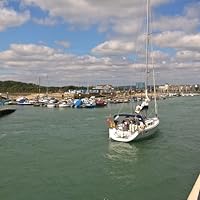
Al 69-lea volum din seria Maigret a editurii Polirom.
Octave Fallut, capitanul vasului de pescuit Ocean, este gasit mort intr-un bazin al portului Fecamp. Maigret afla de caz de la un vechi prieten, care il roaga sa dovedeasca nevinovatia telegrafistului Le Clinche, deja arestat. Destul de repede, comisarul descopera ca la bordul vasului se aflase si o femeie cu ocazia ultimei expeditii: vreme de trei luni, capitanul si-a ascuns amanta, Adcle, in cabina sa. In ciuda vigilentei lui Fallut, tanarul Le Clinche a avut la randul sau o relatie cu Adcle, dar, din lipsa de probe, acesta este eliberat. Cum insa cazul ramane ambiguu, Maigret incearca sa reconstituie evenimentele din timpul expeditiei de pescuit si afla ca nu numai Le Clinche stia de prezenta lui Adcle pe vas...
Georges Joseph Christian Simenon (1903 – 1989) was a Belgian writer. A prolific author who published nearly 500 novels and numerous short works, Simenon is best known as the creator of the fictional detective Jules Maigret. Although he never resided in Belgium after 1922, he remained a Belgian citizen throughout his life.
Simenon was one of the most prolific writers of the twentieth century, capable of writing 60 to 80 pages per day. His oeuvre includes nearly 200 novels, over 150 novellas, several autobiographical works, numerous articles, and scores of pulp novels written under more than two dozen pseudonyms. Altogether, about 550 million copies of his works have been printed.
He is best known, however, for his 75 novels and 28 short stories featuring Commissaire Maigret. The first novel in the series, Pietr-le-Letton, appeared in 1931; the last one, Maigret et M. Charles, was published in 1972. The Maigret novels were translated into all major languages and several of them were turned into films and radio plays. Two television series (1960-63 and 1992-93) have been made in Great Britain.
During his "American" period, Simenon reached the height of his creative powers, and several novels of those years were inspired by the context in which they were written (Trois chambres à Manhattan (1946), Maigret à New York (1947), Maigret se fâche (1947)).
Simenon also wrote a large number of "psychological novels", such as La neige était sale (1948) or Le fils (1957), as well as several autobiographical works, in particular Je me souviens (1945), Pedigree (1948), Mémoires intimes (1981).
In 1966, Simenon was given the MWA's highest honor, the Grand Master Award.
In 2005 he was nominated for the title of De Grootste Belg (The Greatest Belgian). In the Flemish version he ended 77th place. In the Walloon version he ended 10th place.
Close to 5 stars, but not close enough. Review to follow tomorrow!
Over the last couple of days since I finished this ( I still don't seem to have a got everything back together yet), I have been thinking about this book and whether my initial 4 star rating was a bit harsh. It is a thoroughly enjoyable book with Maigret at his imperious best. The story centres on Maigret changing his family holiday to a French northern sea port instead of the normal southern Alsace sunshine he and his wife enjoy. The reason, well he is asked by an old friend to investigate the murder of a sea captain and see whether the young man accused of his murder is in fact guilty. In the end Maigret muscles in on the fishing scene and although not officially investigating the murder sits in on various interviews in the local police station. His investigations reveal a whole new avenue that could have an impact on the case. Who did the murder sea Captain and in the end the big question is why ? These Maigret novels are large bite sized morsels of magical mystery, and I'm just sorry that it has taken me 59 years to find Simenon. I hope to have time to read however many there are at the ongoing rate of one per month. So is it 5 stars ? Hmm, I am very tempted to move it up to 5 as it was a truly good read. I will continue to ponder.
A murdered captain, a woman hiding in the captain's cabin, the ship's cabin boy washed overboard, a bad catch, an unlucky ship, hatred on board and strife on land. Inspector Maigret is meant to be on holiday at the seaside with his wife.
Three months at sea! When the ship got back, Captain Fallut had written his will, in which he stated his intention to put an end to his life. An hour after they’d berthed, he’d been strangled and dumped in the harbor. And Madame Bernard, his landlady, was left grieving because now there would be no marriage of two ideally suited people. The chief mechanic shouted at his wife. The girl called Adèle defied an unknown man, but ran off with him the moment Maigret held a picture of herself scribbled on in red ink under her nose. And in his prison cell the wireless operator Le Clinche in a foul temper.
With all the facts Inspector Maigret recreates the true start of the voyage and is able to solve the crime. But we have to wait for the last chapter.
Very enjoyable. Maigret opts to look into a case of murder for an school connection and persuades Mrs Maigret to change their holiday plans and stay in a fishing town called Quimper.
Once there Maigret is able to review the circumstances of the trawler captain's death in the harbour after a long voyage to catch cod near Newfoundland. The case centres around a young telegraphist/wireless operator who is the prime suspect, but mystery surrounds motive and the sighting of a third person.
With Maigret's useful fastidiousness and deductive powers the reader follows the discussions, interviews and events to a conclusion where events and people are not always as they seem.
Once again, I enjoy Simenon's description of life in 1920s/30s France, especially here with the life on and around an ocean-going trawler in port landing cod [with an attached murder, of course]. The Grand Banks Cafe was first published in French in 1931.
A call from a former schoolmate-turned-teacher sends Chief Inspector Maigret to investigate the murder of Captain Octave Fallut in the Norman fishing port of Fécamp soon after his ship, a cod-fishing vessel called the Océan returns after three months fishing off the Grand Banks in Canada’s Newfoundland.
The ship’s wireless operator, Pierre La Clinche, has been arrested for the murder. La Clinche’s loyal fiancée, Marie Léonnec, tries to get La Clinche to talk to Maigret but La Clinche either prevaricates or says nothing. The just-completed voyage had been cursed from the beginning, with the death of the cabin boy. The many accidents, the meager catch and incredibly odd decisions by the mercurial Captain Fallut caused the superstitious sailors to blame the Evil Eye, and half of them refuse to ever set sail with the Océan again. Like La Clinche, the sailors know more than they’re telling. So how will Maigret get to the bottom of Captain Fallut’s death?
Like so many Maigret novels, The Grand Banks Café comes to a bittersweet ending, one that makes you ask, “If only…” at several different points in the novel. I never saw the denouement coming, but, when it did, everything made perfect sense. And, reader, you can decide whether the ending was happy — or not.
I was fortunate enough to listen to the Audible version of The Grand Banks Café, and, with Gareth Armstrong once again narrating in this ninth novel in this long-running series, I could picture Michael Gambon, the quintessential Maigret, on the hunt. Highly recommended.
Sono tornato a leggere un Maigret dopo un po' di tempo e ho pescato (è il caso di dirlo, trattandosi di racconto "marinaresco") una gemma. Un delitto maturato in una cittadina portuale del nord porta il Commissario a fare l'ennesima vacanza di lavoro fuori porta, con Signora Maigret al seguito, su richiesta di un amico d'infanzia. Il quadro è squallido, uomini distrutti da un lavoro durissimo e malpagato, che affogano nel bere i malumori di una pesca andata male e finita peggio, con un mozzo morto durante la navigazione e il capitano, nientemeno, finito in acqua nel porto con il collo spezzato. Il sospettato è insolito, un giovane telegrafista al primo imbarco, finito in un gorgo torbido assai che vede ovviamente di mezzo un'avvenente signora, attorno alla quale girano troppi pretendenti.
Simenon in queste atmosfere gavazzava, forse perchè le città di mare belghe e quelle del nord della Francia si somigliano e le conosceva bene, forse perchè le passioni torbide, lo squallore illuminato qui e là da inaspettati lampi di dignità e umanità sono il suo materiale preferito. Qui, come nei suoi lavori migliori, non c'è un personaggio di troppo, non uno che non sia al suo posto, insostituibile anche solo in quella riga, in quello scambio di battute.
Uno di quei Maigret che avrei voluto fosse un romanzone di 400 pagine, invece delle solite 200 d'ordinanza.
[NdA: il titolo è stato tradotto con Google, io non parlo il francese, scusa pardon]
Maigret has received a letter from an old friend in Fécamp (Normandy) asking for help for a former pupil of his, Pierre Le Clinche, who has been arrested for the murder of a ship's captain. Once there, Maigret makes his way to the Grand Banks Cafe, where he finds the crew of the recently-returned Océan, whose captain had been found floating in the harbor later after the ship had docked. He learns that the "evil eye" had been cast over the ship even before it had sailed -- a sailor had broken a leg while waving goodbye to his wife, the ship's boy was "washed overboard by a wave," the captain had seemingly gone mad, along with other disasters, including rotting cod. Maigret gets nothing else out of any of the sailors, however; he is told only that it might not be a bad idea to "chercher la femme," which, without spoiling anything here, turns out be sound advice. It seems that other than picking up a couple of scattered clues here and there, Maigret is stumped -- no one even remotely involved with the case, including Le Clinche, will say anything. The only thing the Inspector knows is that the case "has the mark of rage on it."
The answers, when they come, are put together slowly; once again, the focus is more on the "why" of it all rather than the who, one of the key characteristics of a Maigret novel, or at least of those I've read so far. As with all of these books, Simenon, via his detective, ventures into the often dark territory of human nature and psychology to arrive at his conclusion. This time around the "why" is a true jaw dropper, and once the answer is revealed, the question to be asked here centers around the nature of guilt. This one is well worth your time; don't breeze through it even though it's a scant 153 pages.
I very much enjoyed this one, a good little mystery and memorable characters. I am beginning to notice a theme in these books of women with large breasts being amongst the investigations and causing many a man to lose his head haha.
I would rate this one for as 4.5/5, rounded down as I can't half star a rating.
Goodness the characters in all Maigret novels are all so flawed. Out of the novels I have read so far this one I enjoyed the most. Perhaps because of its setting and this time his wife makes an appearance. I loved her mentioning to him on his return one night that he smelled of perfume. But not in a suspicious way.
A cursed ship, a Captain found dead, a dead cabin boy, rotting fish, superstitious fishermen and throw in a femme fatale and you have a great story.
The plot is a good one and towards the end of the book quite easy to solve. However, unlike many modern crime stories the ending is a bit of a surprise.
Maestro di atmosfere, Simenon con pochi tratti di penna riesce a comunicare odori ,colori ,luoghi ma soprattutto stati d’animo e in questa storia Lo stato d’animo per eccellenza è la rabbia: onnipresente pervicace e contagiosa.
L’aura che pervade l’ambientazione è misteriosa ed enigmatica , sulla trama aleggia un’aria cupa di tragedia che solo le passioni più focose possono innescare. Un maigret più noir del solito.
This story drew me in right away and I was loath to be parted from it. I marveled at Maigret's long-suffering wife who agrees to forego the annual family vacation to spend a week at the ocean where he will investigate a case and she will be mostly left to her own devices. It's a complicated case and a truly fascinating one.
Quotes that drew me in:
Regarding the fiancée who is devastated when her beloved is arrested on a murder charge: "Maigret was moved, for she was doing her level best to make her words sound positive and convincing, though inside she was utterly devastated."
The case involves a crew aboard a fishing vessel. Maigret walked on board the vessel and spied a light glowing from an open hatchway. "He leaned over it. Warm air blew up into his face, a combined smell of doss-house, canteen and fish market." When I read this I was keen to seek any clues.
I loved this description: "The boat hardly moved. Just a gentle motion, like a chest breathing."
Simenon manages to make even ordinary actions interesting: "Outside, [Maigret] filled his lungs with sea air and knocked ash out of his pipe."
I loved the genuine affection Maigret has for wife, and she for him: "The kiss he placed on the forehead of his drowsy wife was solemn and sincere."
"They embroidered on this theme, not out of conviction, but because they had to say something."
Watching someone squirming with utter discomfort "was fascinating, like being present at a dissection."
Maigret has seen men cry over the length of his career however there was something that particularly moved him in this case. "Perhaps it was the silence, the stillness of his whole body. The only signs of life it gave were those rolling, liquid pearls. The rest was dead."
This made me chuckle, as I never turn down the offer of a cup of tea: "He was insistent. Is it not a form of politeness to make people drink when they don't want to?"
Maigret at the Docks Review of the Penguin Classics paperback (June 2014) of a new translation* by David Coward of the French language original Au rendez-vous des Terre-Neuvas (1931)
The Grand Banks Café was somewhat disappointing as it had a rather predictable motive and solution of the culprit who murders a fishing ship's captain when the boat has returned to port after three months at sea off the banks of Newfoundland, Canada. There was also a lot of tiresome moralizing and mythologizing about women and boats which reads as completely antiquated in the present day. Maigret is of course up to his usual cantankerous antics when he is called in by a friend to assist his former student who has been arrested for the crime. Anyway, this ends my survey of the first dozen Maigrets which I've read over the past several weeks.
I'm going to continue with several of Simenon's romans durs (hard novels), his nickname for his non-Maigret books, which seem to generally be more of the noir fiction genre.
In the continuing confusion for completists, this is Maigret #8 in the recent Penguin Classics series of new translations (2013-2019) of the Inspector Maigret novels and short stories, but it is Maigret #9 in the previous standard Maigret Series Listopia as listed on Goodreads.
Trivia and Links * Some earlier English translations have given the title as Maigret Answers a Plea or The Sailors' Rendezvous.
There is some background and a plot description (spoilers obviously) provided about The Grand Banks Café at Maigret of the Month.
The Grand Banks Café has been adapted in 3 different television versions, in English (once), in Dutch (once) and French (once). Information and links about the various adaptations are available at French Wikipedia.
Esta es sólo la segunda novela de Simenon que leo pero confirma mi impresión anterior: un escritor que ha sido capaz de despojar el oficio de novelista hasta lo esencial. Ni una palabra de más, ni una descripción innecesaria, ni un revoloteo retórico. Nada. Concentrado de alma humana en estado puro. En esta novela Maigret investiga un caso de persecución de la luz verde, como Scott Fitzgerald en el Gran Gatsby. Un capitán de barco y un telegrafista tratan de escapar al estrecho horizonte de posibilidades en el que ellos mismos se han encerrado. Las consecuencias son nefastas para uno y dudosas para el otro. Huelga decir que ninguno de los dos alcanza la luz verde y que, en cualquier caso no era luz sino espejismo, y no muy bueno. Maigret, resuelve el caso para su propia satisfacción. No estoy seguro de que Simenon haya hecho otro tanto: deja de celebrar a la verdadera heroina del caso: Marie, la prometida del telegrafista, a quien con escrúpulo pequeño-burgués condena por ser hija de escrupuloso comerciante pequeño-burgués ignorando sus enormes cualidades y es incapaz de identificar la felicidad allá donde se encuentra: en ver jugar a tu hijo con una peonza. O si. Quizá si, y por eso lo de Simenon es un enigma y un tesoro.
The Grand Banks Cafe (Maigret, #9) by Georges Simenon.
There something about Maigret that I find so special...so unique. He's a detective a top notch Inspector and well respected as such. Maigret's method of deduction goes unseen by those around him and that's what I find so appealing. Maigret's receives a letter from Jorissen a friend from school days asking for help in finding a former pupil of his innocent of the crime of murder. The letter goes on to explain that this crime took place after a 3 month fishing trip for cod aboard the Ocean a trawler. The Captain was found murdered after a mysteriously trying voyage that left the crew perplexed and without excuse as to why their catch was lacking to say the least. The world of Maigret is one I've entered from afar several times and was never disappointed.
Simenon è un maestro nel creare atmosfere: con poche secche frasi riesce a rendere e trasmettere ambienti, sensazioni, emozioni. Soprattutto emozioni. Quella che domina in questa indagine di Maigret è una passione intensa, accesa, generata da desideri incontrollabili e istinti carnali: un sentimento logorante, veemente, capace di spingere ad atti estremi. La vicenda si svolge a Fécamp, piccola località balneare francese, dove il commissario si reca per indagare sulla morte del capitano di un peschereccio, avvenuta al rientro dopo una battuta di pesca, e di cui è accusato il telegrafista di bordo. Niente è come sembra, e il commissario, ancora una volta, dovrà ricorrere alle sue doti di indagatore e conoscitore delle umane debolezze e passioni, più che a quelle del convenzionale detective di polizia, per risovere il caso. Ne viene fuori un romanzo dalle atmosfere cupe, dalla tensione crescente, e dal finale amaro. La parte investigativa risente di alcuni punti deboli, ma non è certamente quella per cui vale la pena leggere Maigret.
Perhaps the best Maigret novel I've read. Now I want to go back to some that I read longer ago to see if I missed something. A mystery about what occurred aboard a fishing boat that led to its captain being murdered upon his return to France. Maigret doesn't do much deducting, he merely gathers the details of events and waits for one of the silent sailors to crack. I very much enjoyed Mme Maigret who quietly added a whole other dimension to the story. What Simenon does so well in the eighth Maigret book is create believable characters in an atmosphere reeking of suppressed emotion, salt, sea, and rotting cod. For American readers a "doss-house" is a flophouse. Also one of the odors.
Another early Maigret from the prolific pen of Georges Simenon dating back to his initial writings from 1931 when this much loved creation first was published. Set at the port of Fecamp and centred around a Cafe patronised by the crew of the fishing vessel Ocean. This is another lone investigation, away from Paris, where Maigret is more observer in his role. It is similar in design to another book written at this time, A Crime in Holland. In this particular story we learn a good deal about the perils of fishing; the superstitions of the men who worked these boats and the tensions on board at sea for 3 long months. Above all we learn more about the star of these books. His detective methods in the thirties where even criminals were part of a class system and Maigret can read signs from behaviour and interactions, discerning guilt from non verbal communication as much as the answers given by his questioning. It is a fascinating insight into France and police work from this era, long before many of the modern CSI type of solutions could be determined. This is a unfathomable crime which Maigret investigates thoroughly by questioning, observing the major players and seeping in a sense of time and place. The local police are content to feel no solution could be reached; they recognise the world of seafarers remains a mystery to the police as they close ranks. Maigret finds truth and natural justice of more value than the letter the law. A great little story reminding the reader of the dangers of deep sea fishing and the latent criminal tendencies in the general public which have the potential to allow evil to surface. Simenon poses the question "Whose is the guilt?"
We have in ‘The Grand Banks Café’ a curiously passionless story about incredible, passionate love. It’s the case with all whodunits that we’re focussing on the aftermath, the detective is tracking down things that went before. So we’re told about a great passion here – a proper amour fou – and yet filtered through the doughy presence of Inspector Maigret, it all becomes quite pedestrian. Apparently it was disorientating, enveloping, consuming passion – but we never really get a sense of it, it’s always at one step remove, and that does make for an oddly disconcerting read.
Here we have Maigret as freelance advisor, aiding a different police force in the investigation of a sea captain’s murder. So dissimilar is this to the earlier set-ups that one has to wonder whether Simenon was thinking of making him a private detective. After all, it was a career path that worked for Poirot.
This is the most female-centric of the books I’ve read so far, with three major female characters. Unquestionably, one of them is your standard detective story cliché of a femme fatale, but the others are sensible, determined women with a core something like steel. Particularly Mrs Maigret, who makes her presence felt here in a way she hasn’t before. I have to say I’m impressed. She’s cool-headed, intuitive and empathetic, with a delicacy of touch that’s to be admired. I can see why the good Inspector married her.
Un’ inchiesta non ufficiale, lontana dalla sua Parigi, coinvolge il nostro Maigret, più solitario e “arrabbiato” del solito, in compagnia della moglie nella stazione balneare di Fécamp, un paesino marittimo che si affaccia sulla Manica.
Una storia misteriosa e torbida è avvenuta a bordo del peschereccio Océan, culminando con l’omicidio del suo capitano di cui è accusato il giovane telegrafista di bordo, Pierre.
Simenon ci fa respirare l’aria di mare e gli odori forti del porto e della pesca del merluzzo, raccontando come Maigret ricostruisca, con grande abilità ed intuizione, le squallide vicende e le articolate dinamiche degli eventi.
Le passioni, gli istinti, le debolezze umane sono descritte con poche parole, poche ma sufficienti per assistere, dietro le quinte, al dramma che si consuma nel teatro della vita dei protagonisti in cui scorrono ossessioni, gelosie e passioni violente.
Due figure femminili, Marie ed Adèle, diametralmente opposte per esperienze ed ideali, come anche per aspetto fisico, sono le vere protagoniste del racconto che si concluderà malinconicamente con un finale amaro.
Un bel romanzo scritto nel 1931 che si legge benissimo ancora oggi, con tutta la suspense ed il fascino di una storia che indaga sull’animo umano al di là dei delitti.
Dopo una pausa di due mesi riprendo con piacere a leggere una nuova indagine del commissario Maigret e sono soddisfatto della scelta. Alla sua nona indagine il nostro commissario si trova in vacanza con sua moglie in Normandia su invito di un suo amico che vuol far scagionare un giovanotto di sua conoscenza dall’accusa di aver ucciso il capitano del peschereccio sul quale ha appena viaggiato. Come suo modo Maigret inizia ad indagare conoscendo man mano i vari personaggi che popolano la locanda di fronte al porto e dove ci farà respirare l'aria salmastra dell'oceano Atlantico e il puzzo dei merluzzi appena pescati. Troviamo un Maigret più cupo e solitario del solito e da solo riuscirà (e terrà per sé) la soluzione al delitto. Interessanti le due figure femminili che l'autore ci pennella, una opposta all'altra. Una storia che potrebbe annoiare vista la quasi completa mancanza di azione, ma ricca di spunti psicologici. A me è piaciuto, Simenon continua a stupirmi e certamente a conquistarmi.
Indagare l’animo umano, al di là di ogni crimine, è prerogativa di Simenon, specialmente quando lo fa calandosi nei panni del suo Maigret. È quel che succede a Fècamp, piccola località balneare sulla costa atlantica, dove ufficialmente il commissario si reca per una vacanza con la moglie, ma ufficiosamente per indagare - dietro richiesta di un amico - sulla morte del capitano del peschereccio Océan avvenuta durante la sosta nel porto per scaricare il pescato. Del delitto è accusato il giovane telegrafista della nave. Ancora una volta troviamo un porto e un locale frequentato dai marinai ed è palese la loro diffidenza nei confronti di colui che non è del posto. Un evento tragico ha segnato fin dall’inizio il viaggio del peschereccio stravolgendo l’equilibrio e il lavoro di tutto l’equipaggio. Un’atmosfera cupa, omertosa, che sfocia nella tragedia una volta giunti in porto. Inoltre, la presenza di una donna in grado di suscitare passione, gelosia, ossessione, rende ancora più fosco il dramma, soprattutto se la si confronta con l’altra figura femminile in campo, una ragazza giovane, timida e riservata ma alquanto determinata a conoscere la verità, in difesa del suo fidanzato.
Il commissario giunge pian piano alla soluzione del caso, ma non la rende nota alla gendarmeria del posto; è una conclusione amara, in cui la grande umanità di Maigret gioca, una volta di più, un ruolo determinante.
Very early (1931), but flawless — with a fascinating description of Maigret’s intuitive method — and not just described, but actually “shown”. A great starting point for those looking to work their way through the corpus.
non è il miglior Maigret, questo è certo. Ci sono alcune strane disattenzioni, un tramonto che arriva improvvisamente (in Normandia, in piena estate) poco dopo le quattro del pomeriggio; personaggi che una riga prima sono intimiditi o sottomessi ed una riga dopo sono furibondi o spavaldi. L'impressione è che l'autore sia andato un po' di fretta (d'altronde nella sua vita ha scritto qualcosa come centocinquanta libri, beato lui e beati noi che li leggiamo). Ma ugualmente ci sono pennellate geniali che definiscono in due righe lo stato d'animo dei personaggi: così la visita alla prigione della fidanzata di un arrestato ("Anche la ragazza non riusciva a dare sfogo alla sua emozione. Era come una scena venuta male, forse per via di quell'ambiente spoglio e ostile"); la serenità di un rapporto coniugale ben riuscito ("Dormi bene!" disse Maigret tirandosi la coperta fino al mento. Si era già addormentata. E il bacio che le diede in fronte fu profondamente vero); ed il disprezzo, forse eccessivo ma stranamente comprensibile, che Simenon ha sempre manifestato per i borghesi perbene ("Si avvertiva troppo l'atmosfera della bottega di Quimper, le discussioni di prima della partenza, i pettegolezzi dei vicini"). Quindi, alla fine è un ottimo libro anche questo.
"Everyone has had a sight of the same adventure come his way at least once in his life! . . . We cry hot tears, we shout, we rage! Then, a couple of weeks later, you look at Marie Léonnec and you wonder how on earth you could have fallen for someone like Adèle." While unofficially investigating the murder of a ship's captain (Octave Fallut) in The Grand Banks Café (originally published as Au rendez-vous des Terre-Neuvas in 1931), Inspector Maigret encounters a femme fatale (Adèle), a "woman who was young, attractive, desirable, but whose vulgarity gave her an aura of danger." Georges Simenon's ninth Maigret mystery is everything one would expect in a Maigret page turner, and is recommended for anyone who has a taste for French pulp noir.
Baljós, sötét, de nagyon hangulatos kötet, amire rányomja bélyegét a sokat emlegetett tengerész-átok... Maigret-ék meg persze nem tudnak nyaralni... :) Kicsit kevés volt most az italozás, ejnye!
The Grand Banks Café is the 9th book in the Inspector Maigret French mystery series by Belgian author, Georges Simenon. Inspector Maigret and his patient wife, Madame Maigret are preparing for their summer holiday in Alsace. Unfortunately for the good lady, just as they are preparing, Maigret gets a letter from an old school chum, now a teacher, asking for his help. A young man of his acquaintance, 'the finest young man' has been arrested on suspicion of the murder of his fishing boat captain. So guess what. Vacation plans are changed and the Maigret's head off to the coast.
Maigret is not officially involved in the investigation but because he is a high ranking police officer, he's always accepted by the locals. So the premise. The fishing boat had just returned from a 'jinxed' trip to the Grand Banks to fish for cod. One sailor had broken his leg just as they were heading out. The cabin boy was washed over board during the journey. The Captain locked himself in his cabin for most of the voyage. There was friction between him and the wireless operator (the boy mentioned in the letter from Maigret's friend). They fished in an area that was not normally fished. The cod was salted incorrectly so it wasn't in good shape. And on return to the town, the Captain was murdered. (So an ill-fated voyage)
Maigret is thrust into this situation. The sailors are very distrustful of the law. But in his cranky manner, Maigret always finds out something. He's never intimidated. It turns out that the Captain had smuggled a woman on board. He was besotted with her; jealous, aroused. The wireless operator seems to have found out and even though he was engaged, he had relations with the woman. (Maybe)
So Maigret continues to wander around, gathering information, fending off angry sailors, trying to help the fiance of the young wireless operator and dealing with the 'woman'. It's a darkish story. Not a lot happens.... well, relatively, anyway. But as always, Simenon develops his characters effectively. He makes the case interesting. It's nice to see Mme Maigret more, even though her role is more peripheral. Just a nice, short, enjoyable read with a reasonably satisfying outcome. (3.5 stars)
Maigret gives up his holiday at the request of a friend, to help a young woman whose fiancé has been accused of murder. The dead man was captain of a ship which has just returned to France after three months at sea on a voyage where everything went wrong - a sailor broke his leg, the young cabin boy was swept overboard, the catch was spoiled due to a lack of salt - and now the wireless operator has been accused of his murder. Maigret needs to break the silence around events to prove Pierre’s innocence.
These books are wonderfully atmospheric, with every detail carefully chosen to intensify the tension. The sailors who frequent the Grand Banks café are quarrelsome but fiercely loyal, the port is shabby and grim with grey skies and salt spray stinging the eyes, and the picture Maigret begins to build of life on board the ship is dark and stifling with anger and mistrust. This powerful writing envelops the reader with its unsettling intrigue.
Overall this was a dark tale, but on the lighter side it was nice to see a greater contribution from Madame Maigret who accepts the disruption of her holiday with equanimity. I’m also amazed how Maigret manages to ‘bump into’ characters from his cases many years later, including in Paris, where he appears to know everybody - but it is a good way of showing how tragic events leave their traces on those affected. Great piece of writing.
This isn't typical Maigret. He's not in Paris and he doesn't have any of his usual investigators working with him. In fact, he's not actually on duty, rather looking into a murder for a long ago friend. Maigret and his wife were planning on a week's vacation in Alsace with her family. She is convinced they should go to west, to the shore.
The Captain of a fishing trawler was found floating near his ship after it docked. He didn't drown, but instead was strangled before having been thrown in the water. The wireless operator has been held. Of course, Maigret works until he knows the truth.
This is a wonderful series. When I realized I had this and only 1 more on hand, I quickly added a few more to my wish list. This title was in a bundle and it would be wonderful if I happened upon another such. In the meantime, I couldn't put this one down, so it must be 4-stars. Well, yes, but I admit I might be a bit generous today.
Todos esos elementos que le encantan al escritor están presentes, por supuesto una muerte, un puerto, un barco y un pueblo.
Como siempre el inspector Maigret logra despojar a personas convencionales de sus disfraces para dejar al descubierto sus demonios, pasiones y traumas.
Construye un ambiente enrarecido, asfixiante, donde los personajes en lugar de personas parecen peces boqueando, asfixiándose ante esa amenaza que parece en cualquier momento hará naufragar su vida para siempre.
Aunque me pareció correcto, no tiene la complejidad de otras de sus obras.
Penguin is publishing the entire series of Maigret novels and when I received a bookmark listing some of them I quickly ordered The Grand Banks Cafe thinking (stupidly) as it turned out that this would be a very interesting setting somewhere in Paris. Well the Grand Banks Cafe is not in Paris but in Fecamp in Normandy (and the setting does turn out to be interesting). When a good friend asks Maigret to investigate the death of Captain Fallut and the arrest of the radio officer, Maigret takes his wife along and that’s a plus for me as I really like the interaction between the two. Here he is at the Grand Banks Cafe. “Maigret sat down in a free corner, on the bench seat. He was surrounded by noise and activity. There were men standing, men sitting, glasses on the marble-topped tables. All were sailors.” Maigret soon finds out it is an ill-fated voyage and not just because of the death, soon after arriving ashore, of the Captain. There are a lot of interesting characters in this novel and Maigret quietly weaves his way through them all. And then there is the photograph: “It was indeed a photo, a picture of a woman. But the face was completely hidden, scribbled all over in red ink. Someone had tried to obliterate the head, someone very angry. The pen had bitten into the paper. there were so many criss-crossed lines that not a single square millimetre had been left visible.” Here he is with Madame Maigret. He has just come back from interviewing a suspected prostitute and Madame Maigret is concerned about the fiancee of the suspected killer. “She’s very sweet! Did you know she’s already got her trousseau together? All hand-embroidered...Find out anything new? You smell of perfume...” No doubt lingering traces of Adele’s overpowering scent which had clung to him. A scent as common as cheap wine in cheap bistros which had, on board the trawler and for months on end, mingled with the rank smell of cod while men prowled round a cabin, as determined and pugnacious as dogs. “Sleep well!” he said, pulling the blanket up to his chin. The kiss he placed on the forehead of his drowsy wife was solemn and sincere.” Another world. Oh to have a Maigret to solve all our mysteries.
Great, but ultimately a bit simplistic. Young seaman is engaged to pleasant gal back home. Crusty captain is also expected to marry plain lady from the home port- but ... the captain falls for a ravishing floozy who is all the ultimate in cheap feminine attraction- loud, boorish, obvious but beckoning. She uses her charms with the captain hoping for a better life and he stows her (secretly) on board the fishing boat (to be out to sea for 4 months). A boy notices the sneaking and taunts the captain and the boy is accidentally killed. The young naïve seaman has seen this and ultimately investigates the stashed away woman and guess what? He, too, is taken by the eternal feminine ... drawn irresistibly to her cheap charms. Of course he is disgusted with himself afterwards (though he is still drawn to her). Captain is killed and that is what brings Maigret in who has to figure it out rather sl0wly- and "all because of a woman" - which is pretty much the theme of the book. Ok, fine- but really I think he overdoes the cheap charms a bit...
This entire review has been hidden because of spoilers.