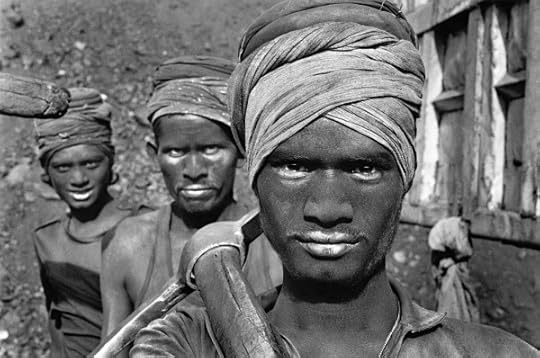
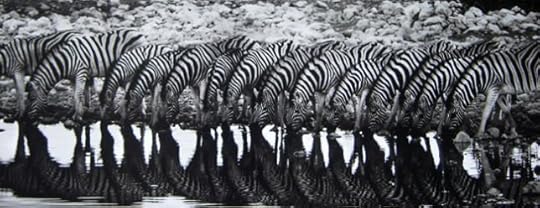
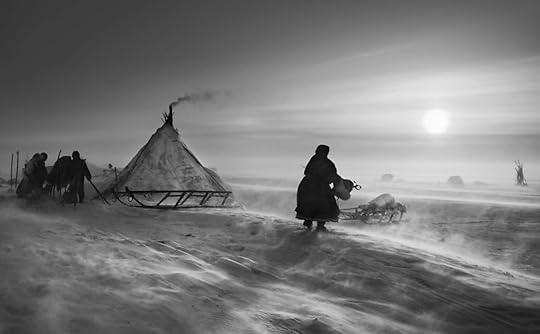
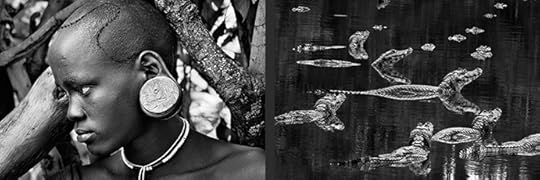
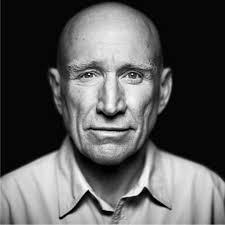
Nato e cresciuto in una fattoria del Brasile lontano dalla civiltà e senza televisione, Salgado nutre un profondo rispetto e amore per la natura ed è particolarmente sensibile al modo in cui gli esseri umani vengono condizionati dalle loro (spesso devastanti) condizioni socio-economiche. Tra le numerosissime opere che Salgado ha realizzato nel corso della sua prestigiosa carriera, spiccano tre grandi progetti di lungo periodo: Workers (1993), che documenta le vite invisibili dei braccianti di tutto il mondo, Migrations (2000), un tributo alle migrazioni di massa causate dalla carestia, dai disastri naturali, dal degrado ambientale e dalla pressione demografica, e questa nuova opera, Genesis, il risultato di una spedizione durata otto anni alla scoperta di montagne, deserti, oceani, animali e popolazioni che, si sono finora sottratti al contatto con la cosiddetta società civile - una terra e una vita incontaminate.
Sebastião Ribeiro Salgado Júnior was a Brazilian social documentary photographer and photojournalist. He traveled in over 120 countries for his photographic projects. Most of these have appeared in numerous press publications and books. Touring exhibitions of his work have been presented throughout the world. Salgado was a UNICEF Goodwill Ambassador. He was awarded the W. Eugene Smith Memorial Fund Grant in 1982, Foreign Honorary Membership of the American Academy of Arts and Sciences in 1992; and the Royal Photographic Society's Centenary Medal and Honorary Fellowship (HonFRPS) in 1993. He was a member of the Académie des Beaux-Arts at the Institut de France since April 2016.
An absolutely stunning, big, heavy book full of black and white photographs.
Making over 32 trips over 8 years to various places around the world, through the extremes of hot and cold temperatures, and in some instances danger, Sebastiao Selgado has taken photos of people, animals and places that most people have never seen.
The photos are exquisite, showing his mastery of the camera as well as his love of the planet Earth and the people and creatures that inhabit it. Salgado reminds us "We must preserve what exists." For a glimpse inside the Genesis project - http://www.youtube.com/watch?v=nHJWgQxTous
My one annoyance with the book is that single photos are spread over two pages ruining the viewing experience. It does not allow justice to be done to the photos. However I know that the book would be almost twice as big and heavy if the photos were made to fit one to a single page.
If I recall correctly, I rarely read photobooks. This time, however, I had the opportunity to read a work by Sebastião Salgado titled Genesis. The project aims to portray parts of the Earth that still resemble the world at the beginning of creation—hence the title “Genesis,” a reference to the first book of the Old Testament.
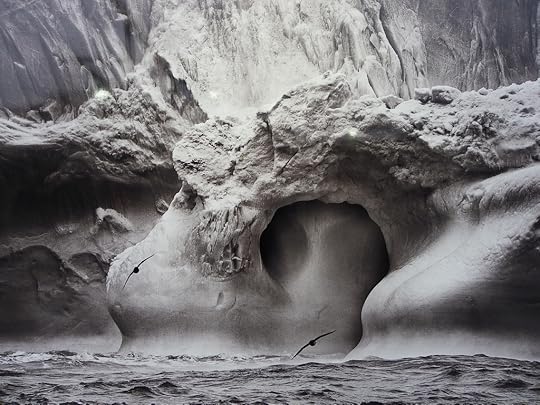
Overall, it was a unique and enjoyable experience to observe these black-and-white photographs of nature and indigenous communities. The images span a wide range of remote regions, from West Papua and Papua New Guinea to Africa and the Amazon, and from Ethiopia to the far northern landscapes of Arctic.
I'm probably biased from the stunning exhibition now in Milan, where the quality of Salgado's black and white photographs is off the chart; but this book is a really good quality collection of the Genesis project, even if the dramatic contrast of the photos got a bit lost in the prints, and I really don't approve the choice to print on double pages "cutting" them in half. Highly recommended to photo lovers.
En ja we zijn hier terug met nog een fotoboek, waarschijnlijk de laatste van 2025 en tevens mijn 13de fotografieboek van dit jaar. Die tel ik leuk mee met mijn challenge omdat ik er evenveel tijd overdoe dan met mijn gewone boeken. Ik las/bekeek deze keer een boek uit 2013 uitgegeven door Tashen. Het kreeg de titel Genesis en de fotograaf is Sebastiäo Salgado. De goede man verliet deze wereld in mei van dit jaar maar liet een oeuvre na om u tegen te zeggen. Geboren in Brazilië, maar na de staatsgreep van 1964 verzetten ze zich tegen de dictatuur om dan in 1969 het land te verlaten en via Parijs in Londen terecht te komen. Ik was er 21 toen ik voor de eerste keer een fototoestel hanteerde maar Salgado was er reeds 27. Qua werk probeerde hij met Workers de arbeidsveranderingen in beeld te brengen, waarbij het mijnwerkers, theeplukkers en andere handarbeiders in beeld bracht. Zo deed hij nog andere reportagewerk ook maar in 2013 kwam dus Genesis uit. Een boek waar hij acht jaar aan gewerkt heeft, veel gereisd, veel gefotografeerd. En om alles plezant te maken schakelde hij halverwege over van rolletjes op digitale fotografie. Met dit boek wou hij gewoon de schoonheid van onze aarde in beeld brengen. Iets waar we onbedachtzaam mee omgaan. Schoonheid die in vele landen al reeds goed geminderd is. Maar hij bracht ook stammen in beeld die diep in het oerwoud leven en nog niet bezoedeld waren met de moderne tijden. Hij bracht ijsbergen , dieren en mensen in beeld. Alle foto’s in dit boek zijn uitgewerkt in zwart-wit en redelijk groot afgebeeld. Dit was perfect mogelijk omdat de foto’s zelf geen tekst bevatten. Maar ze spreken genoeg met wat er afgebeeld wordt. De uitleg van de foto’s vond ik wel achteraan het boek. Maar ergens weet je wat er gaat komen want elk hoofdstuk wordt voorafgegaan met een uitleg geschreven door Salgado zijn vrouw Lélia. Zij was de sterke vrouw die haar man bijstond bij dit project. Dit is mijn eerste boek van Salgado maar ik ben wel fan van zijn werk. De keuze voor zwart-wit kwam logisch over op mij. Bij kleurenfoto’s ben ik soms zo afgeleid door de kleuren dat ik niet altijd alles zie wat er op de foto staat, terwijl zwart-wit die afleiding niet heeft. Of ik de enigste ben die dit heeft geen idee . Iedereen bekijkt fotografie op een andere manier, iedereen benaderd een onderwerp op zijn eigen manier. De manier hoe Salgado de natuur en dergelijke in beeld brengt spreekt me enorm aan. Er zullen zeker nog fotoboeken van deze man de revue passeren, hopelijk zijn ze wel niet allemaal van het formaat als Genesis. Dit boek is groot en dik. Vasthouden om te lezen zat er niet in, plat op tafel.
There are not many books of photographs that are truly important in a larger, social context, but I think that Sebastião Salgado’s Genesis is one such book. Aesthetically, philosophically, and even technically, this is not a perfect book, but, so far, it is this century’s most important collection of photographs. [...]
If visual ode to the planet, a love letter of sorts, is what Salgado wanted to create, he has succeeded. That is why his book is beautiful, but it is not why it’s important. Its importance is that Salgado has presented us with a visual record of Earth that we don’t often see – a majestic place that is a home to all of us. And now that this book is in front of us, we have to ask ourselves: “Is all this worth rethinking the path we are on?” Now, because Salgado has made this book, we have to make a choice.
My introduction to Sebastio's work was his Genesis exhibit at the Royal Ontario Museum. The beauty of his B&W images can almost be overwhelming and I've been a huge admirer of his work ever since.
The beauty of this book is that you can linger on the images, take them in smaller bites, knowing that with 500 pages of images, there will be lots to entice you the next day, and the one after that. There are no filler images, each is an amazing piece of photography in an amazing environment, almost all being places that I will have neither the strength & ability to get to!!
What a fascinating world that exists in Sebastiao's book.
I highly recommend that you try and explore it through his images.
Sorprendente, meraviglioso, inenarrabile. Un volume magnifico, preziosa l'edizione, curata, un regalo generoso e apprezzatissimo. Intenso, vivo, denso... io proprio non so come comunicarvelo... e ho avuto persino la sfacciata fortuna di godere della mostra dal vivo... Una gioia immensa, un incanto continuo, senza fiato sospesa nella meraviglia. :) Si capisce che adoro questo volume? XD
A photographic project of remarkable scale and significance.
PS : If you happen to live anywhere near an actual exhibition of "Genesis", you should check that out (I personally haven't). If that is not the case, this book is a very good alternative way of experiencing the work.
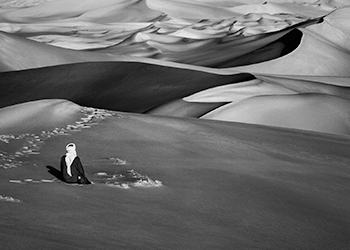
The photographs are varied and stunning. Each individual 5-10 page section could easily be turned into a complete book on its own, but the choice to combine all of these journeys and photographs under one umbrella produces such a clean narrative of Sebastiao Salgado's exploration of the natural world and his plea for conservationism environmentalism (Of course I'm sure each section has been turned into a separate book one way or another). The environmental portraits are great but of particular note are the landscape photos are actually breathtaking. Whenever Salgado gets the chance to show patterns and scale is when the book really shines. Some of the wildlife pictures of individual animals are fairly run-of-the-mill - I could pull up a lot of amateur wildlife photographers with work as good ore better - but they do fit into the overall Genesis narrative and I would consider them less important parts of the book anyways. Overall, it's hard not to look at Salgado's work and his sense of conservationism and think of Ansel Adams, just with a more modern and global perspective.
(As an aside, for comparison there's a photographer I follow on Instagram who basically is just trying to be Ansel Adams. He's got the Stetson hat and the big tripod and the giant 8x10 field camera and does "N+whatever developing" and in truth his photos are really good! And it's completely unfair to compare this random guy to one of the greats in Salgado but I think reading Genesis really underscores the value of pushing the envelope and going places (oftentimes quite literally) where people have not gone before. Photography is meant to tell a story. Otherwise what is the point of dedicating so much time to emulating Adams other than to show off your fancy equipment?)
The one criticism I have of this book is that I didn't know there was a small version and a big version! I bought the cheap 15 dollar version and I was thinking that it was way too small to appreciate the scale and immense detail in all of the pictures...and then I realized there's a much larger 100 dollar version. So I'll have to check that out when I get the chance because these photos are worth it.
The photographs in this book, the real stars of the show, are fantastic beyond words. In addition, the build quality of the book is excellent. The binding is not glued, but sewn and the pages are coated with a film of plastic that not only protects them but makes the photographs stand out even more. Despite the fact that the photographs are the center of the book, the text, despite its very simple nature (i.e., descriptions of what is in the photographs, comments on the author’s traveling there, etc.) supplements well those photographs. All and all, an excellent coffee table book as well as work of art. Five stars.
The only recommendation that this reviewer has for those considering purchasing the smallest edition of this book is that they consider spending a little more money and purchase a larger edition of this work. A larger edition would not only provide larger pictures and large text fonts (the one critique this reviewer has of this particular edition is that the fonts are microscopic) that would provide for a more impressive book.
Beautiful pictures of places that men have not changed yet. The earth as it should be. It is also interesting to read about some of the difficulties Salgado and his team had in getting to some of these places.
My only problem was to place indigenous peoples under the same concept. They have culture and they affect the world around them. Of course they do it in a different scale and nature as compared to capitalist modern societies, but still, they are not “natural”, just different. They may show that it is possible to do things differently, they may represent lifestyles under threat, but they are not Adam and Eve, they are not in Paradise, their life is hard and they pay a heavy price to keep their traditional ways.
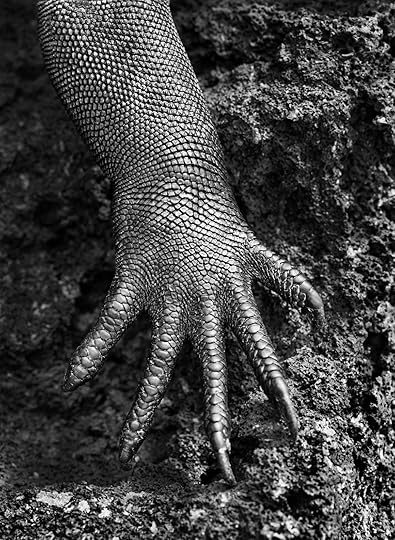
The book basically has 3 kinds of pictures: people, landscapes and animals. And I prefer them in that order. The pictures of these ancient tribes from all over the world are wonderful and I am so interested by everything I see and the information supplied. The landscapes are shot beautifully but I don't really care that much. They mostly don't look that unique, in my opinion? The rainforest in Madagascar looks like the rainforest in New Guinea. Sometimes they are unique, like the baobabs or Bryce Canyon, but these exceptions. The animal pictures straight up look like holiday photos. Usually quite bland compositions and not really adding much to the story of the book.
I recently rewatched Baraka and this kind of gave me the same vibe which was wonderful.
This entire review has been hidden because of spoilers.
Con este libro sentí que era un explorador más junto con el fotógrafo Sebastiao. Me gusta que el lenguaje sea sencillo y aunque no hay esfuerzo para imaginar los lugares con las fascinantes fotografías yo estaba ahí.
¡Qué calidad de fotografías! Es impresionante la cantidad de viajes realizados (32) a diferentes lugares del mundo y con climas extremos en muchos.
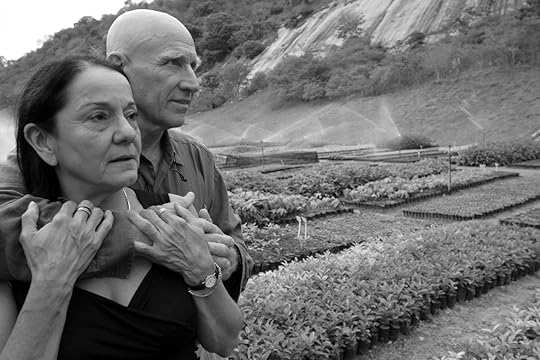
Este libro fue un conjunto de "coincidencias" y admiro el trabajo de Sebastiao porque justo hace unos años ví la noticia sobre él y su esposa (sin saber que él era el autor del libro) donde reforestaron una finca de él en Brasil de más de 600 hectáreas.
One of the best books ever made about a photography immersed in nature and cultures. Not from an anthropologist nor a biologist perspective, but from one of the best photographers of the last half century.
Finally managed to read it, and what a pleasurable adventure to the eyes of the imaginative mind, who wanders freely for an hour from text and footnotes to marvellous black and white photographs.
El texto a veces parece prometer algo que no llega, y describe lugares y personas que no siempre llegamos a ver en las fotografías. En ese sentido, a ratos parece excesivo cuando podría simplemente dejar que hablen las imágenes, dado que no son más que descripciones enciclopédicas y no reflexiones propias del autor.
Las imágenes, por supuesto, son increíbles, aunque su agrupación por ubicación geográfica no es necesariamente la más interesante.
Amazing. If you focus too much on his absolute technical ability, you may feel like throwing your camera away but, in the end, it would be something like stopping playing sax after having listened to Coltrane. Anyway, apart from his exceptional ability, Salgado is a master in letting you fall in love with his work and, obviously, with Nature
I consider Sebastiao Salgado and Ansel Adams the true masters of landscape photography. As a professional landscape photographer myself, I often come back to their books to find inspiration, and every time I notice and learn something new. Genesis is a timeless work of art. Every photographer, landscape or not, should have this book to their collection.
It is hard to condense a lifetime of exploration into a single book with a few dozens of images, but this book provides an interesting overview of how wide, far and deep Sebastião travelled to. Also made me feel proud to know that each book plants a seed so in some very, very small way, I have contributed to implement his dream of the forest recovery in Amazonia.
In praise of nature from the greatest. A tiny note for Salgado lovers: If you watch his biographical documentary movie, The Salt of the Earth, Genesis will most certainly gain a more special meaning in your heart.
Acho que não há melhor forma de definir esse livro do que usando a definição da Nanci: LIVRO SUPERLATIVO! Sebastião Salgado e sua obra são um patrimônio, um presente para a humanidade definitivamente... Será que os demais livros dele seguem essa mesma estrutura e organização de imagens e textos?
Kirjalliset ansiot eivät erikoiset, koska tekstiä on vain siteeksi. Mutta valokuvakirjahan tämä onkin - ja kulttuuriteos. Aivan valtavan upea siinä. Mielelläni olisin nähnyt vastaavat myös värikuvina.