When the Captain find us stowaways and give us the choice between join the island or join the crew, all of us to a man cry island! island! So he put us ashore with a few provisions and a trypot and sail away.
After escaping from the Norfolk Island penal colony on a whaling ship, Bloodworth and his three fellow convicts are left on a remote southern island by a captain who promises to pick them up in a year's time.
It will be many years before they see another ship.
Durign that time four men, with nothing in common but a desire to escape and a need to survive, live together in cramped and freezing isolation. Slangam believes hard work will see them though, Toper puts his faith in the divine, Gargantua leans on his learning and Bloodworth watched – both his fellow felons and the inhospitable environment.
Based on the true story of four convicts who spent more than nine years on the Snares Islands in the early years of the nineteenth century, Charlotte Randall's latest novel is a riveting, intelligent and powerful work of fiction.
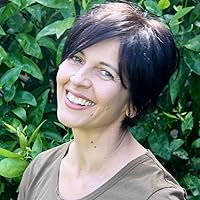
Charlotte Randall is the award-winning author of five novels. Her first, Dead Sea Fruit, won the South East Asian/South Pacific section of the Commonwealth Writers' Prize for best first book and the Reed Fiction Award in 1995. Her much-praised second novel, The Curative, was join runner-up for the Deutz Medal for fiction at the 2001 Montana New Zealand Book Awards. What Happen Then, Mr Bones? (2004) and The Crocus Hour (2008) were finalists for the same award. Randall was born and raised in Dunedin, New Zealand and now lives in Christchurch with her husband and children.
What would you do if you were marooned? Even if you had the skills and resources to feed, shelter and clothe yourself, how would you stay sane? What is the difference between surviving and living?
Charlotte Randall’s latest novel, The Bright Side of my Condition, is a New Zealand Robinson Crusoe tale that takes a sharply intelligent look at these and other questions that cut to the heart of the human condition. Four men – nicknamed Bloodworth, Toper, Slangam and Gargantua – are left on a tiny sub-antarctic island by the captain of a sealing ship, who promises to pick them up in a year. We know from the foreword that he doesn’t, and that this is a matter of historical record: four escaped convicts really were deposited on one of the Snares Islands in the early nineteenth century, and really did survive there for many years.
Randall chooses to tell the tale in Bloodworth’s voice, using phonetic spelling and unconventional grammar: yair, wud, follered, heared, more nicer, them other two. It takes a bit of getting used to but it does work, bringing us inside the head of this man from another time and culture. Disinclined to give himself purpose through hard work, like Slangam, Bloodworth’s way of coping with his situation is to physically and emotionally distance himself from his fellows in order to observe and to think.
The drama and drive of the novel stem from Bloodworth’s psychological development, as he tries on different philosophies for size: immanence, predestination versus free will, meditation, the elimination of the self, scientific observation, escape from reality through hallucination, questioning god and the nature of hell, withdrawal from society: “‘Happy living things!’ I disdain him. ‘If yer went out there and looked, yer wud see killing and dying everywhere.’ ‘The world is beautiful,’ say Toper in a strangle tone. ‘So it is,’ I agree at once. ‘But living ain’t.’”
Finally, Bloodworth reaches the acceptance summarised in the quote from Robinson Crusoe at the beginning of the book: “I learn’d to look more upon the bright side of my condition and less upon the dark side, and to consider what I enjoy’d rather than what I wanted; and this gave me sometimes such secret comforts that I cannot express them.”
This is a novel of ideas and character rather than action and plot. I found it gripping and read it all in one sitting, drawn in by Bloodworth’s realisation that our own minds can be our worst prisons, and his struggle to find a way of thinking (and thus being) that will make the best of his situation. The final part of the book was my favourite, when the story suddenly and beautifully takes flight into magic realism, giving the dramatic final events an almost holy glow.
Randall is an assured and seasoned novelist, and this is a subtle and complex drama, compulsively drawn along by the tantalising possibility of a sail on the horizon. Highly recommended.
New Zealand author Charlotte Randall is the author of seven novels, and she is not afraid to take risks in her writing. In this, her latest novel, she has created a limited world inhabited by just four characters, and it works brilliantly…
The title, The Bright Side of My Condition, comes from the quotation from The Life and Strange Surprizing Adventures of Robinson Crusoe which introduces the book:
I learn’d to look more upon the bright side of my condition and less upon the dark side, and to consider I enjoy’d rather than what I wanted; and this gave me sometimes such secret comforts that I cannot express them.
Like Daniel Defoe’s original, The Bright Side of My Condition is confessional in style and it brings us a sincere narrator intent on conveying a rich moral truth. It’s based on the true 19th century story of four convicts stranded for ten years on the remote Snares Islands (south of the South Island of New Zealand), and it explores the human condition in extremis. What happens when four men, with nothing in common but their fate, are thrown into dependence on one another for survival? Like Lord of the Flies, this novel raises the question: can man create a new kind of society when the opportunity arises? what kind of leadership and government will emerge?
These existential issues emerge in due course, but from the outset, The Bright Side of My Condition is a fascinating book, and compulsive reading.
I am always on the look out for strong New Zealand authors; and when I discovered this Historical Fiction by Charlotte Randall it leapt off the shelf and glued to my hand. Set in the early 1900's four convicts escape Norfolk Island Prison by stowing away on a sealing ship, only to end up marooned on a cold, bitter yet peculiarly beautiful island for nearly a decade. It has a 'Lord of the Flies'/ 'Robbinson Crusoe' vibe. Four different men with shady and tragic pasts. One nick named 'Fatty' (for obvious reasons) is educated and a born Thespian. He enjoys quoting long poems to his other felons, leaving them somewhat baffled and confused. 'Bloodworth' - a self confessed lazy bones who finds beauty in raw unrefined nature is an unreliable narrator and quite difficult to follow due to the colloquial language, especially towards the end of the book. Toper a God fearing man (who refuses to leave the campsite for years because of the demons and 'moon snakes' in the woods) adds a bit of dry humour. Lastly we have, (my favourite character) 'Slangam'. The only practical one who is also a slave-driving workaholic that keeps the others in line and therefore automatically becomes the leader of their little tribe. A great read, even if the ending was a tad strange.
I loved this story. Many times I laughed out loud at these four hapless felons. Each comes across very strongly as a distinct personality and with his own quaint, deep inner fear. The internal growth of the point-of-view character, Bloodworth, is absorbing. The English as she is thunk and spoke by a nineteen-century ruffian slowed my reading a bit but it is done very well and adds a lot of character and fun. The ending involves some longer passages and a changed tone to the story but it is satisfying.
Superb. It's based on four convicts who escaped Norfolk Island in 1800 and were stranded on The Snares for 10 years. Small, cold island - ahhh. The story of their survival, their relationship with each other and with themselves. It's fascinating, humourous and often really moving. Only criticism is the last few chapters but still good enough for a 5.
I loved this book. I could just hear the narrator in his own voice. Fascinating to read it was a true story, and while the author's imagination ran riot from that base it was a great read. I laughed out loud, and really enjoyed his observations of his fellow humans and humanity in general.
Refreshing. Great messages throughout of making the most of what you have, appreciating the small things, accepting what life throws at you and finding a way to survive.
I didn't love the ending, but since it was written in the first person I can see why it had to be written that way to complete the story.
This entire review has been hidden because of spoilers.
It had some compelling themes about freedom and the human condition, as well as being interesting from an historical perspective. It wasn't quite gripping enough to say I loved it, but I did finish it. First book club read.
Engrossing from start to finish. The dynamic between the escaped convicts as they live together on a deserted island for a decade could not be more tense. The tension never lifts. And the ending shocked me. A must-read.
Disturbing. Perhaps the author tries too hard to get the jargon, historical context and her own ideas across. I was puzzled about the supposed date - some confusion over references to actual historical occurrences. Certainly readable.
Four convicts who escape from a Norfolk Island prison at the start of the nineteenth century and somehow find themselves cast away on a sub-Antarctic island south of New Zealand. The island itself seems a paradise for seals, penguins and a host of birdlife, yet for the convicts and their meagre bag of potatoes, it feels more like hell.
The novel itself explores subsequent years, during which time alliances form and relationships fracture. The central narrative voice is that of a self-confessed lazy thief, who describes events and the ebb and flow of relationships with the others: a brutal self-appointed leader, a naïve God-fearing Irishman and brash and opinionated gentleman turned crook.
In a very convincing way, we journey with our narrator as he explores the concepts of good and evil, heaven and hell, hubris and bliss, nature and society, crime and punishment. Moreover, in the absence of anything else, the act of watching the penguins evolves into a philosophical tool, becoming for him a symbol of something bigger, connecting all living things.
This is a brilliant read, one of the very best novels I have read in a while. It is quite a trick to conjure up the kind of voices found within, that sound so utterly authentic to the time, character and place, and yet also capture a very real sense of the trials of humanity and nature.
An evocative and painfully raw portrayal of the lives of four convicts who escaped from the Norfolk Island penal colony early in the 19th century and stowed away on a ship. On finding them, the captain dumped them on one of the Snares Islands, 200 miles south of NZ, saying he would come back for them in a year and wanted them to provide him with plenty of sealskins. The story is narrated by "Bloodworth", a seemingly intelligent prisoner who chafes at the leadership assumed by "Slangam", a rough, slavedriving convict who's convinced they must all work 24 hours a day to survive the bitterly cold winters, freezing winds and tough conditions on the island. Bloodworth's language is a mixture of cockney and an English dialect redolent of that now spoken in the American south. Some readers may find it difficult to penetrate, but after a while it has its own rhythm. This story is one worth telling, encapsulating the relationships among the convicts, gradually deteriorating as the story progresses, Bloodworth's fascination with the penguins and seals and their behaviour and the dismal horror the convicts face with their knowledge that the captain is not coming back for them.
I think it will take me a while to make up my mind so I am erring on the cautious in my evaluation. I very much liked the ending and the disembodied state of it which I thought was highly effective. I thought the Crusoe-style scenario was good, and although the working class language was at times hard going I thought it was OK. The moral flaw in Bloodworth's character raises some deep issues, it is challenging to put the novel in his voice and yet have his flaws critical to the story. The later psychological failure made more sense. In some ways this strongly reminded me of Lord of the Flies by William Golding especially in the decision to kill Bloodworthy. Cannot find any details of the alleged historical roots of the book.
Loved it until the end. Seemed a silly and pointless way to conclude, especially given the fact the book is based on real events, which I think ended otherwise. that aside, this is beautiful writing and a profound meditation on what gets us through: each character clings to something, whether it's poetry, religion, hard work or finding meaning in the beauty and rhythms of nature. The latter seems to come off best, as a way to live, but could also see you flung over a cliff. I loved the narrative voice and the details of subsistence living.
Charlotte Randall is an underrated New Zealand writer - this book, The Bright Side of my Condition is a fine piece of historically based fiction with a cast of quirky convicts. The characters survive in a grim environment through shear cunning and a desperation to survive. Written in believable and engaging voices - it made me go back and read Hokitika Town - the original New Zealand novel about Hokitika - and another Charlotte Randall book that I recommend.
The way the characters speak to each other in this book is completely satisfying. The reader is constantly drawn in to the characters, the period, the setting and circumstances by the perfection of the way the author has used the interactions between four men to tell this simple and monumental story.
This book was a challenge as I started to read it with its colloquial language to further develop the characters. Once I had adjusted, it certainly helped to more realistically present the four men.
I found the setting, the characters and how they coped, believable but the restrictions of the island and the boredom of their lives did creep into the story.
I was disappointed with this book, as I so loved Hokitika Town. The phonetic use of language was not necessary in my view. Perhaps Charlotte can hear the voices of her characters so distinctly that she feels she needs to write it down in this way. The situation was unusual, but it was not riveting and the ending was confusing.
Loved it! At first it seemed like a well written historical novel. But it turned into much more than that as Bloodworth became a true contemplative (in my view!). The insights into life, personality and the deeper levels seen through the eyes of one willing to take the time to "really look" were marvelous!
I would walk over glass to read Charlotte Randall's writing. The characters only had a certain amount of square metres to move around on this island for years and years, but for the narrator there was always somewhere else to go - within. And I was taken there.
I really loved the presume of this book but I just couldn't get my head around the language. It IS wonderful I just don't think I was in the right space to read it!
I wasn't enamoured with the ending, but loved the rest of it. I think it's one of those books that will stay with me, and Bloodworth's voice will continue to pop into my head from time to time.
Interesting. The ending went on a bit too long, but characters are engaging. Shows how we have a society whether we mean to or not. The dialect must have been a bitch to write.