

What do you think?

American Spy: My Secret History in the CIA, Watergate and Beyond
Startling revelations from the OSS, the CIA, and the Nixon White house Think you know everything there is to know about the OSS, the Cold War, the CIA, and Watergate? Think again. In American Spy , one of the key figures in postwar international and political espionage tells all. Former OSS and CIA operative and White House staffer E. Howard Hunt takes you into the covert designs of Presidents Eisenhower, Kennedy, Johnson, and Nixon:
352 pages, Hardcover
First published February 1, 2007
About the author
E. Howard Hunt
87 books34 followersE. Howard Hunt was an American intelligence officer and writer. Hunt served for many years as a CIA officer. Hunt, with G. Gordon Liddy and others, was one of the Nixon White House "plumbers" — a secret team of operatives charged with fixing "leaks." Hunt, along with Liddy, engineered the first Watergate burglary, and other undercover operations for Nixon. In the ensuing Watergate Scandal, Hunt was convicted of burglary, conspiracy and wiretapping, eventually serving 33 months in prison.
He published over eighty books wrote under the pseudonyms Robert Dietrich, Gordon Davis and David St. John
From Wikipedia.
He published over eighty books wrote under the pseudonyms Robert Dietrich, Gordon Davis and David St. John
From Wikipedia.
Ratings & Reviews
Friends & Following
Create a free account to discover what your friends think of this book!
Community Reviews
Displaying 1 - 18 of 18 reviews

November 24, 2009
E. Howard Hunt made a career out of lying, subterfuge, cover-ups, and toppling democratically-elected leaders, so who knows how much of this book is lies and self-serving crap? For the most part, he talks more about how certain CIA programs worked rather than his actual part in it, and I'm sure in addition to portraying himself in a better light than history has, he wasn't allowed to reveal plenty of things as well.
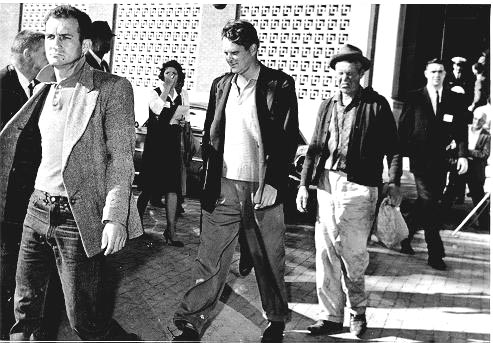
Hunt spends about thirty pages or so denying any role in JFK's assassination; conspiracy theorists over the years have pointed to the "three bums" photograph taken in Dallas shortly after JFK was killed and noted the striking similarities to Hunt, Frank Sturgis, and Charles Harrelson. In fact, Hunt denies he ever met Sturgis until 1972. Also, the United States House Select Committee on Assassinations (HSCA) reportedly possessed a 1966 CIA memo stating "Some day we will have to explain Hunt's presence in Dallas on November 22, 1963." Hunt successfully sued several newspapers and magazines that linked him to the assassination, but then a Rolling Stone article published in April 2007 - The Last Confessions of E. Howard Hunt - strongly indicated he knew more about the assassination than he had let on for the past forty years.
Of course Hunt spends the bulk of the book discussing the events leading up to and beyond Watergate, which until his death in January of 2007 caused him to feel nothing but bitterness and betrayal. Hunt felt he was obeying direct orders from superiors, and fell on his sword for them afterward, lying and covering up for perennial bastards John Mitchell, John Dean, and Richard Nixon, who led him to believe pardons and money would be granted and then left him to sit on his ass in prison. Hunt served the second-longest term of any Watergate conspirator, behind G. Gordon Liddy - who, according to American Spy, is a crazier sonofabitch than you ever thought (and came out of this mess smelling like a rose).
Three stars for an entertaining, absorbing read with plenty of dirt on some scumbag people, but no more because I'm not at all convinced of the veracity of the thing.
Hunt spends about thirty pages or so denying any role in JFK's assassination; conspiracy theorists over the years have pointed to the "three bums" photograph taken in Dallas shortly after JFK was killed and noted the striking similarities to Hunt, Frank Sturgis, and Charles Harrelson. In fact, Hunt denies he ever met Sturgis until 1972. Also, the United States House Select Committee on Assassinations (HSCA) reportedly possessed a 1966 CIA memo stating "Some day we will have to explain Hunt's presence in Dallas on November 22, 1963." Hunt successfully sued several newspapers and magazines that linked him to the assassination, but then a Rolling Stone article published in April 2007 - The Last Confessions of E. Howard Hunt - strongly indicated he knew more about the assassination than he had let on for the past forty years.
Of course Hunt spends the bulk of the book discussing the events leading up to and beyond Watergate, which until his death in January of 2007 caused him to feel nothing but bitterness and betrayal. Hunt felt he was obeying direct orders from superiors, and fell on his sword for them afterward, lying and covering up for perennial bastards John Mitchell, John Dean, and Richard Nixon, who led him to believe pardons and money would be granted and then left him to sit on his ass in prison. Hunt served the second-longest term of any Watergate conspirator, behind G. Gordon Liddy - who, according to American Spy, is a crazier sonofabitch than you ever thought (and came out of this mess smelling like a rose).
Three stars for an entertaining, absorbing read with plenty of dirt on some scumbag people, but no more because I'm not at all convinced of the veracity of the thing.
June 17, 2015
Did you know most CIA people are Ivy League graduates? Yep, they do a little para-trooping, a little propagandizing, then become a general or a cabinet secretary or something other important person. You just don't have the connections to get in if you got educated at Wayneville State U or someplace like that. But I'm not bitter. I don't want to be in the CIA. I couldn't take the tension of flying over the Himalayas into strange lands (as the plane coughs and lurches from lack of oxygen), wondering if my contact might murder me and figuring out how to turn Latin Americans against their current dictator.
The book bogs down a bit in the middle.
Then the author gets involved in Watergate. Since he was a novelist as well as a spy, his story skillfully unfolded as he met G. Gordon Liddy, embarking on White House-assigned projects that may have been legally questionable, but felt perfectly normal to a CIA man who once organized the Bay of Pigs operation.
Then, as Watergate commences and builds in increments, he portrays small moments when he can feel that he's in a little bit of trouble, nothing big, he can clear it up soon. Then the trouble feels a little bigger, but he still doesn't get the whole picture. Then a reporter from the Washington Post calls and he's like, "Wait a minute. Why is this so interesting to you?" The sense of "Uh-oh" just grows.
The book bogs down a bit in the middle.
Then the author gets involved in Watergate. Since he was a novelist as well as a spy, his story skillfully unfolded as he met G. Gordon Liddy, embarking on White House-assigned projects that may have been legally questionable, but felt perfectly normal to a CIA man who once organized the Bay of Pigs operation.
Then, as Watergate commences and builds in increments, he portrays small moments when he can feel that he's in a little bit of trouble, nothing big, he can clear it up soon. Then the trouble feels a little bigger, but he still doesn't get the whole picture. Then a reporter from the Washington Post calls and he's like, "Wait a minute. Why is this so interesting to you?" The sense of "Uh-oh" just grows.
May 25, 2007
Okay, this is not a good book. It is not even a "good" book. Howard Hunt spent much of his life writing pulp thrillers, and it shows.
The rest of his time, however, was spent in the OSS, the CIA, and Nixon's plumbers. He was a lifelong cold-warrior and this autobiography--Bay of Pigs, pre-Mao China, Guatemala, Watergate, Kennedy assassination, G. Gordon Liddy, William F. Buckley--may as well have been subtitled "disasters in American foreign (and domestic) policy." (I am not a Kennedy assassination enthusiast, but if you are, you will no doubt wish to get all Talmudic on its ass.)
Look, I'm not saying everything in this book is true. Presumably most of it is not, but that is, of course, part of the fun. The other, perhaps larger part is Hunt himself. He does his sanctimonious, self-aggrandizing, faux modest best to paint himself the tragic hero, but as you might expect from a Watergate burglar, he's not half as clever as he thinks. Shades of the real Hunt, his tunnel-vision and contempt for democracy, appear throughout.
The rest of his time, however, was spent in the OSS, the CIA, and Nixon's plumbers. He was a lifelong cold-warrior and this autobiography--Bay of Pigs, pre-Mao China, Guatemala, Watergate, Kennedy assassination, G. Gordon Liddy, William F. Buckley--may as well have been subtitled "disasters in American foreign (and domestic) policy." (I am not a Kennedy assassination enthusiast, but if you are, you will no doubt wish to get all Talmudic on its ass.)
Look, I'm not saying everything in this book is true. Presumably most of it is not, but that is, of course, part of the fun. The other, perhaps larger part is Hunt himself. He does his sanctimonious, self-aggrandizing, faux modest best to paint himself the tragic hero, but as you might expect from a Watergate burglar, he's not half as clever as he thinks. Shades of the real Hunt, his tunnel-vision and contempt for democracy, appear throughout.

January 15, 2012
Now dead, Hunt is best known for his involvement in the Watergate break-in. The book is a bio but how much did he exagerate? It's difficult to know what actually happened. When describing certain techniques of spycraft, I felt he was showing off instead getting an inside scoop.
I don't recall any new insights into Watergate.
Finally, for someone who went to Brown and published several novels, the proses seemed stilted. Loads of typos.
I don't recall any new insights into Watergate.
Finally, for someone who went to Brown and published several novels, the proses seemed stilted. Loads of typos.

September 25, 2023
For those of us who have executed the last 300 meters of American foreign policy, E. Howard Hunt’s memoir, “American Spy,” is an intriguing look at his role in the events which consumed American postwar policymakers. Hunt was an Ivy League graduate, OSS China hand during the final stages of World War II, a competent novelist, and an efficient spymaster who found himself at the center of many of the major American covert operations of his time. Due to Hunt’s involvement in the Watergate fiasco, few view the author with objectivity. To look at Hunt, is to view a man through a prism; naturally, the resultant distortion is inextricably linked to the political orientation of the viewer.
Following WWII, Hunt, a Guggenheim fellow, found his way to the CIA. Hunt orchestrated covert operations in Latin America, Europe, and the Far East. His reputation for efficacy soared following his crucial role in deposing Guatemala’s left leaning Arbenz Regime, and led to his appointment as political-action chief for Operation Zapata, the project to unseat Fidel Castro. Hunt never recovered, "psychologically or operationally," from the Bay of Pigs disaster. Transferred into the company’s sketchy Domestic Operations Division, Hunt engaged in several initiatives including writing “Give Us This Day,” a history of the Bay of Pigs invasion, and drafting several spy novels under assumed names.
In 1971, Nixon strategist Charles Colson hired Hunt to spy on Nixon's perceived enemies. Hunt teamed with unhinged former FBI agent, G. Gordon Liddy, and hired a bevy of anti-Castro Cubans with long CIA connections to engage in political chicanery. On June 17, 1972, D.C. police caught Hunt's operatives breaking into the Democratic National Committee headquarters in Washington’s Watergate hotel. The rest is history.
In the ordeal that followed, Hunt lost nearly everything. His wife, Dorothy, died in a plane crash carrying $10,000 of unmarked bills, and a newly purchased $250,000 life insurance policy. The White House abandoned him. The press attacked him. His two eldest children disavowed him. He remained a "good soldier," he perjured himself about White House links to Watergate until he realized that Nixon was indifferent to his fate. Only then did he tell the truth.
Did Hunt play a role in the Kennedy assassination? Perhaps. Did Hunt consider the assassination of media figures? Perhaps. But, Hunt did nothing that “The Company” is not engaged in today. This is an important book.
Following WWII, Hunt, a Guggenheim fellow, found his way to the CIA. Hunt orchestrated covert operations in Latin America, Europe, and the Far East. His reputation for efficacy soared following his crucial role in deposing Guatemala’s left leaning Arbenz Regime, and led to his appointment as political-action chief for Operation Zapata, the project to unseat Fidel Castro. Hunt never recovered, "psychologically or operationally," from the Bay of Pigs disaster. Transferred into the company’s sketchy Domestic Operations Division, Hunt engaged in several initiatives including writing “Give Us This Day,” a history of the Bay of Pigs invasion, and drafting several spy novels under assumed names.
In 1971, Nixon strategist Charles Colson hired Hunt to spy on Nixon's perceived enemies. Hunt teamed with unhinged former FBI agent, G. Gordon Liddy, and hired a bevy of anti-Castro Cubans with long CIA connections to engage in political chicanery. On June 17, 1972, D.C. police caught Hunt's operatives breaking into the Democratic National Committee headquarters in Washington’s Watergate hotel. The rest is history.
In the ordeal that followed, Hunt lost nearly everything. His wife, Dorothy, died in a plane crash carrying $10,000 of unmarked bills, and a newly purchased $250,000 life insurance policy. The White House abandoned him. The press attacked him. His two eldest children disavowed him. He remained a "good soldier," he perjured himself about White House links to Watergate until he realized that Nixon was indifferent to his fate. Only then did he tell the truth.
Did Hunt play a role in the Kennedy assassination? Perhaps. Did Hunt consider the assassination of media figures? Perhaps. But, Hunt did nothing that “The Company” is not engaged in today. This is an important book.
November 21, 2016
Whatever the "truth" is in this book written by a known liar and manipulator, one reason seems to be the minimizing of E. Howard Hunt's culpability. The schemes and activities used by him and his associates (the reason I read the book), are somewhat interesting, but Hunt seems to be a hallow, unfeeling man with no regard for anyone but himself. Maybe he wanted to try and justify his behavior, or settle old scores?
July 21, 2021
I knew only as much about Howard Hunt as is normally covered in the dozens of Nixon/ Watergate books I've read and knew the details of the numerous operations and proposed plans that most accounts have recorded.
This book was not only a revelation about even more details about the Dr. Fielding and DNC break-ins but Hunt's background and Bay of Pigs involvement.
I actually grew to really like the man and respect his lifetime of service.
This book was not only a revelation about even more details about the Dr. Fielding and DNC break-ins but Hunt's background and Bay of Pigs involvement.
I actually grew to really like the man and respect his lifetime of service.
July 11, 2017
With all that's happening in the nation, I thought it would be interesting to revisit the Watergate fiasco from an insider's view. But first you have to get through Hunt's interminable foreign service jobs. He makes spying seem the most boring job in the world. And everyone around him was a dunce or a dupe. His endless self-aggrandizement put me off. I didn't make it to Watergate.
December 14, 2021
I skipped to th eJFK Chapter - denial denial denial, Hunt knows all the conspiracist theories about him and denys any and all knowledge of the JFK assasination. If you are looking for some insight into those events you won't find it here. Hunt extolls the findings of the Warren Commission who "Did a good job of getting to the bottom of things"

June 26, 2023
Compelling but I can't tell how truthful it is.
July 28, 2025
Good, I was hoping for more secret stories though.
Currently Reading
December 12, 2016E. Howard Hunts re accounting of his history is a insightful, knowledgeable, and interesting read. Hunts experiences range from operations in Europe, involvement in the bay of pigs invasion, to the saga of the watergate scandal. Hunt provides a previously unseen point of view in everything he was involved in. He meets many historical figures and tells there personality so we can put a face to these historical figures. Hunt writes in a reminiscent almost nostalgic fashion. One of the more interesting parts is his involvement, or lack of involvement in the Kennedy assassination. Many government and I would insist claimed that he was there and he took part in the assassination but he stood for trial and was proven not guilty to any involvement with the assassination. This leads to much speculation by theorists and his involvement and it. He is very self aware of the many conspiracy theories that's around him. In fact he even mentions in the book that this will make great fodder for the conspiracy theorists. Hunt provides audio tape transcripts, hand written notes,and official document in the book. This Provides a step back from his recounting of the events and let's a more official hand guide the pen.
Read
April 11, 2008I couldn't rate it because it was fascinating, and at the same time complete bullshit. I really wish there was a biography of him because he's an interesting character and this book definitely doesn't tell the half of it.
January 24, 2011
Very interesting read. I was interested in learning about the CIA in the 20th century and had no idea about the author's involvement in Watergate. It is especially interesting since it is still suspect whether the author was personally involved in the Kennedy assassination.
September 21, 2012
Inside view of our intelligence and covert activities which has affected and effected United States history in the 20th century. Do not believe what is reported in the news media. Things are not always as they seem!
January 26, 2017
Like all autobiographies that his his side of the story. Reading about Watergate again was like reliving history. The one thing I learned was that the DNC had moved most of the office to Miami for the convention so there was very little to be gained by breaking into the offices.

October 3, 2007
Just read it.
August 30, 2008
If you like real-life spy accounts, read this book. Howard Hunt's personal account of the Bay of Pigs disaster, his involvement in the Watergate break-in and other adventures. I loved this book.
Displaying 1 - 18 of 18 reviews