

What do you think?

The Charwoman's Daughter
"The Charwoman's Daughter is the strange wistful story of sixteen-year-old Mary, the only child of her fiercely protective, widowed mother.... Mary and her mother live in a one-room tenement flat that is home to the rituals of their bitter love. By day her mother cleans the houses of the Dublin rich, while Mary makes observations as she walks through the city. The imaginitive richness of her insight makes the city come alive as a place that is both strange and wonderful, remote yet friendly. It is this sense of discovery and the bittersweet richness it brings with it that makes this such an unusual but compelling Dublin novel."
--Dr. Patricia McManus, 1001 Books You Must Read Before You Die
--Dr. Patricia McManus, 1001 Books You Must Read Before You Die
136 pages, Hardcover
First published January 1, 1912
About the author
James Stephens
441 books47 followersJames Stephens was an Irish novelist and poet. James' mother worked in the home of the Collins family of Dublin and was adopted by them. He attended school with his adopted brothers Thomas and Richard (Tom and Dick) before graduating as a solicitor's clerk. They competed and won several athletic competitions despite James' slight stature (he stood 4'10" in his socks). He was known affectionately as 'Tiny Tim'. He was much enthralled by tales of military valour of his adoptive family and would have been a soldier except for his height. By the early 1900s James was increasingly inclined to socialism and the Irish language (he could speak and write Irish) and by 1912 was a dedicated Irish Republican. He was a close friend of the 1916 leader Thomas MacDonagh, who was then editor of "The Irish Review", manager of the Irish Theatre and deputy headmaster in St Enda's, the radical bilingual Montessori school run by PH Pearse, and spent most with MacDonagh in 1911. His growing nationalism brought a schism with his adopted family.
James Stephens produced many retellings of Irish myths and fairy tales. His retellings are marked by a rare combination of humour and lyricism (Deirdre, and Irish Fairy Tales are often especially praised). He also wrote several original novels (Crock of Gold, Etched in Moonlight, Demi-Gods) based loosely on Irish fairy tales. "Crock of Gold," in particular, achieved enduring popularity and was reprinted frequently throughout the author's lifetime.
Stephens began his career as a poet with the tutelage of "Æ" (George William Russell). His first book of poems, "Insurrections," was published in 1909. His last book, "Kings and the Moon" (1938), was also a volume of verse.
During the 1930s, Stephens had some acquaintance with James Joyce, who mistakenly believed that they shared a birthday. Joyce, who was concerned with his ability to finish what later became Finnegans Wake, proposed that Stephens assist him, with the authorship credited to JJ & S (James Joyce & Stephens, also a pun for the popular Irish whiskey made by John Jameson & Sons). The plan, however, was never implemented, as Joyce was able to complete the work on his own.
During the last decade of his life, Stephens found a new audience through a series of broadcasts on the BBC.
James Stephens produced many retellings of Irish myths and fairy tales. His retellings are marked by a rare combination of humour and lyricism (Deirdre, and Irish Fairy Tales are often especially praised). He also wrote several original novels (Crock of Gold, Etched in Moonlight, Demi-Gods) based loosely on Irish fairy tales. "Crock of Gold," in particular, achieved enduring popularity and was reprinted frequently throughout the author's lifetime.
Stephens began his career as a poet with the tutelage of "Æ" (George William Russell). His first book of poems, "Insurrections," was published in 1909. His last book, "Kings and the Moon" (1938), was also a volume of verse.
During the 1930s, Stephens had some acquaintance with James Joyce, who mistakenly believed that they shared a birthday. Joyce, who was concerned with his ability to finish what later became Finnegans Wake, proposed that Stephens assist him, with the authorship credited to JJ & S (James Joyce & Stephens, also a pun for the popular Irish whiskey made by John Jameson & Sons). The plan, however, was never implemented, as Joyce was able to complete the work on his own.
During the last decade of his life, Stephens found a new audience through a series of broadcasts on the BBC.
Ratings & Reviews
Friends & Following
Create a free account to discover what your friends think of this book!
Community Reviews
Displaying 1 - 30 of 49 reviews

August 28, 2020
Ha pasado por mis manos sin pena ni gloria: no pasa el corte. Y no digo que la ternura, el humor o la crítica social de una época no tengan su puntito, pero igual que no digo esto, sí digo que ese puntito es en este caso pequeñito y que además es incapaz de tapar otros defectos entre los que no es el menor ese final tan deslavazado, tan avercomodemoniosmequitoestanoveladeencima que seguramente atormentó al autor.

June 23, 2017
Click here to watch a video review of this book on my channel, From Beginning to Bookend.
Sixteen-year-old Mary Makebelieve resides in the slums of Dublin with her mother, who works as a charwoman cleaning the homes of the wealthy. All her life, Mary has lived in a small room with a cracked ceiling, mildew-spotted walls, and one grime-covered window. She and her mother dream of a better life, often imagining for themselves alternate lives filled with riches and splendor. The only way Mary can improve her circumstances in real life is to secure a good marriage, but how one goes about finding a husband is something beyond Mary’s comprehension.
[Mary] did not yet understand the basic necessity that drives the male to the female. Sex was not yet to her physiological distinction, it was only a differentiation of clothing, a matter of whiskers or no whiskers: but she had begun to take a new and peculiar interest in men.
Stephens paints a stark portrait of a life lived in squalor, often contrasting the soot-covered city and cramped confines of the Malebelieves’ small apartment with resplendent descriptions that showcase the wonder and openness of nature.
In these passages one can walk for a long time without meeting a person, or lie on the grass in the shadow of a tree and watch the sunlight beating down on the green fields and shimmering between the trees. There is a deep silence to be found here, very strange and beautiful to one fresh from the city, and it is strange also to look about in the broad sunshine and see no person at all, and no movement, saving the roll and folding of the grass, the slow swinging of the branches of the trees, or the noiseless flight of the bee, a butterfly, or a bird.
Mary’s complicated encounters with men lend themselves to revelatory moments about relationships, moments that the author capitalizes on by injecting the narrative with words of wisdom – many of which have a timeless quality (despite the book having been first published in 1912).
Love and hate are equally magnetic and compelling, and each, being supernormal, drags us willingly or woefully in its wake, until at last our blind persistency is either routed or appeased, and we advance our lauds or gnash our teeth as the occasion bids us.
In her quest to secure an advantageous marriage, Mary’s convictions are tested. A choice befalls her – one that could change her future forever – and, resolute in her beliefs, she makes an unorthodox decision, one that speaks volumes about the life she dares to envision for herself.
With eloquent prose and universal insights, The Charwoman’s Daughter brings to life two characters who rely on imaginative language and daydreaming to endure the reality of their difficult circumstances.
Sixteen-year-old Mary Makebelieve resides in the slums of Dublin with her mother, who works as a charwoman cleaning the homes of the wealthy. All her life, Mary has lived in a small room with a cracked ceiling, mildew-spotted walls, and one grime-covered window. She and her mother dream of a better life, often imagining for themselves alternate lives filled with riches and splendor. The only way Mary can improve her circumstances in real life is to secure a good marriage, but how one goes about finding a husband is something beyond Mary’s comprehension.
[Mary] did not yet understand the basic necessity that drives the male to the female. Sex was not yet to her physiological distinction, it was only a differentiation of clothing, a matter of whiskers or no whiskers: but she had begun to take a new and peculiar interest in men.
Stephens paints a stark portrait of a life lived in squalor, often contrasting the soot-covered city and cramped confines of the Malebelieves’ small apartment with resplendent descriptions that showcase the wonder and openness of nature.
In these passages one can walk for a long time without meeting a person, or lie on the grass in the shadow of a tree and watch the sunlight beating down on the green fields and shimmering between the trees. There is a deep silence to be found here, very strange and beautiful to one fresh from the city, and it is strange also to look about in the broad sunshine and see no person at all, and no movement, saving the roll and folding of the grass, the slow swinging of the branches of the trees, or the noiseless flight of the bee, a butterfly, or a bird.
Mary’s complicated encounters with men lend themselves to revelatory moments about relationships, moments that the author capitalizes on by injecting the narrative with words of wisdom – many of which have a timeless quality (despite the book having been first published in 1912).
Love and hate are equally magnetic and compelling, and each, being supernormal, drags us willingly or woefully in its wake, until at last our blind persistency is either routed or appeased, and we advance our lauds or gnash our teeth as the occasion bids us.
In her quest to secure an advantageous marriage, Mary’s convictions are tested. A choice befalls her – one that could change her future forever – and, resolute in her beliefs, she makes an unorthodox decision, one that speaks volumes about the life she dares to envision for herself.
With eloquent prose and universal insights, The Charwoman’s Daughter brings to life two characters who rely on imaginative language and daydreaming to endure the reality of their difficult circumstances.

April 16, 2015
One of the most peculiar novels I have read, half curdled cutesy sentiment, half meticulous exposure of the way poor people lived in Dublin in the 1910s and half a bizarre series of pompous semidemiphilosophical ramblings about life and love and men and women and cats and dogs and little pink sugar mice. Three halves, you see.
The two main characters are Mary Makebelieve and Mrs Makebelieve - believe it! - and none of the other characters have names, except one. That’s enough to set your teeth on edge straight off the bat. But we don't just read a novel to find out the characters' names. No.
James Stephens does have an arresting way with words at times. Discussing why Mrs Makebelieve has had quite so many different charwoman jobs he explains:
On [her employers] attempting (as they always termed it) to put her in her proper place, she would discuss their appearance and morals with such power that they at once dismissed her from their employment and incited their husbands to assault her.
So 16 year old sweet lovely Mary lives in a crummy single room in a tenement with her mother. Mary is what we here in Britain call a NEET –not in education, employment, or training. (The government here is at war with NEETS.) Whilst her dear old ma skivvies away, Mary walks the streets (literally, not metaphorically). And comes into the purview of a big policeman. Who strikes up an acquaintance. He is not named, naturally, but his size is expounded upon at length. Mary cannot get over his size :
Her vocabulary could not furnish her with the qualifying word, or rather epithet – for his bigness. Horrible was suggested and retained, but her instinct clamoured that there was a fat, oozy word somewhere which would have brought comfort to her brains and her hands and feet.
Yeah, you think that’s a bit odd? Try this. On the problems of a woman trying to find work :
The number of women who are prepared to make ten million shirts for a penny is already far in excess of the demand, and so, except by a severe undercutting, such as a contract to make twenty million shirts for a halfpenny, work of this description is very difficult to obtain.
Almost Dickensian. Mr Stephens spends a lot of time on the delineation of Mrs Makebelieve’s moral universe. Here she expatiates upon the what is expected of a man within his own household:
A great many people believed, and she herself believed, that it was not desirable a man or boy should conform too rigidly to household rules. She had observed that the comfort of a home was lost to many men if they were expected to take their boots off when they came into the house, or to hang their hats up in a special place. The women of a household, being so constantly indoors, find it easy and businesslike to obey the small rules which comprise household legislation… A man, she held, bowed to quite sufficient discipline during his working hours, and his home should be free from every vexatious restraint and wherein he might enjoy as wide a liberty as was good for him.
Our author also imbues his big policeman with disturbing attitudes. This is he after Mary has given him the elbow :
He would gladly have beaten her into submission, for what right has a slip of a girl to withstand the advances of a man and a policemen? That is a crooked spirit demanding to be straightened with a truncheon : but as we cannot decently beat a girl until she is married to us, he had to relinquish that dear idea.
Well, I think that this is all to be taken as satire of course, but that kind of stuff, plus the vaporising waffling ethereal rambling never-use-one-word-where-a-bucketful-will-do meditations on life and the universe which wrap the non-story around like jungle vines so it's hard to make out that a story is actually being told make this only intermittently weirdly entertaining, like watching a man juggle six porcupines illuminated only by flashes of lightning.
Two final points – a tip of the hat to the 1001 Books guide, where I found this title. It shows they like to unearth oddities as well as bashing us over the head with Ian bloody McEwan and JM bloody Coetzee.
And – a hip of the hop to General Books LLC of Memphis, Tenn who specialise in reprinting old stuff like this. They use OCR software and they make an elegant apology right there on page one about the typos you are bound to find. (They weren’t especially annoying). The format they end up with is more like a pamphlet than a book but hey, we will cock no snook.
Rating : a slightly bewildered what-just-happened 2.5 stars
The two main characters are Mary Makebelieve and Mrs Makebelieve - believe it! - and none of the other characters have names, except one. That’s enough to set your teeth on edge straight off the bat. But we don't just read a novel to find out the characters' names. No.
James Stephens does have an arresting way with words at times. Discussing why Mrs Makebelieve has had quite so many different charwoman jobs he explains:
On [her employers] attempting (as they always termed it) to put her in her proper place, she would discuss their appearance and morals with such power that they at once dismissed her from their employment and incited their husbands to assault her.
So 16 year old sweet lovely Mary lives in a crummy single room in a tenement with her mother. Mary is what we here in Britain call a NEET –not in education, employment, or training. (The government here is at war with NEETS.) Whilst her dear old ma skivvies away, Mary walks the streets (literally, not metaphorically). And comes into the purview of a big policeman. Who strikes up an acquaintance. He is not named, naturally, but his size is expounded upon at length. Mary cannot get over his size :
Her vocabulary could not furnish her with the qualifying word, or rather epithet – for his bigness. Horrible was suggested and retained, but her instinct clamoured that there was a fat, oozy word somewhere which would have brought comfort to her brains and her hands and feet.
Yeah, you think that’s a bit odd? Try this. On the problems of a woman trying to find work :
The number of women who are prepared to make ten million shirts for a penny is already far in excess of the demand, and so, except by a severe undercutting, such as a contract to make twenty million shirts for a halfpenny, work of this description is very difficult to obtain.
Almost Dickensian. Mr Stephens spends a lot of time on the delineation of Mrs Makebelieve’s moral universe. Here she expatiates upon the what is expected of a man within his own household:
A great many people believed, and she herself believed, that it was not desirable a man or boy should conform too rigidly to household rules. She had observed that the comfort of a home was lost to many men if they were expected to take their boots off when they came into the house, or to hang their hats up in a special place. The women of a household, being so constantly indoors, find it easy and businesslike to obey the small rules which comprise household legislation… A man, she held, bowed to quite sufficient discipline during his working hours, and his home should be free from every vexatious restraint and wherein he might enjoy as wide a liberty as was good for him.
Our author also imbues his big policeman with disturbing attitudes. This is he after Mary has given him the elbow :
He would gladly have beaten her into submission, for what right has a slip of a girl to withstand the advances of a man and a policemen? That is a crooked spirit demanding to be straightened with a truncheon : but as we cannot decently beat a girl until she is married to us, he had to relinquish that dear idea.
Well, I think that this is all to be taken as satire of course, but that kind of stuff, plus the vaporising waffling ethereal rambling never-use-one-word-where-a-bucketful-will-do meditations on life and the universe which wrap the non-story around like jungle vines so it's hard to make out that a story is actually being told make this only intermittently weirdly entertaining, like watching a man juggle six porcupines illuminated only by flashes of lightning.
Two final points – a tip of the hat to the 1001 Books guide, where I found this title. It shows they like to unearth oddities as well as bashing us over the head with Ian bloody McEwan and JM bloody Coetzee.
And – a hip of the hop to General Books LLC of Memphis, Tenn who specialise in reprinting old stuff like this. They use OCR software and they make an elegant apology right there on page one about the typos you are bound to find. (They weren’t especially annoying). The format they end up with is more like a pamphlet than a book but hey, we will cock no snook.
Rating : a slightly bewildered what-just-happened 2.5 stars

August 28, 2020
3.5 stars. An engaging, wistful short novel about 16 year old Mary Makebelieve and her protective widowed mother, who cleans the houses of the Dublin rich. They live in a one room tenement flat and Mary is not required to work. Mary spends her days wandering the streets of Dublin. A police officer takes an interest in Mary and her mother becomes ill. These events add complications to Mary’s life.
First published in 1912.
First published in 1912.

February 23, 2010
I read this in school and remember loving it. Re-read it this week as research for my current project (which is set twenty or so years before this was written) I was nervous that it wouldn't live up to my warm memories, and so was delighted to find that I still love it!
This book is really a long, gentle love song to Dublin and its working poor, written by James Stephens who grew up in the tenements of the late 1800's, was orphaned at a young age and educated as a clerk. His use of language is beautiful ( as you might tell from the quotes) and his love of people evident. There is a real tenderness to his work, yet a great deal of honesty and an acute social bite.
A lovely, gentle, yet acute book. I love this writer's style.
I'm very interested to track down his short story 'hunger' which follows the same themes as 'Charwoman' but sounds darker indeed.
This book is really a long, gentle love song to Dublin and its working poor, written by James Stephens who grew up in the tenements of the late 1800's, was orphaned at a young age and educated as a clerk. His use of language is beautiful ( as you might tell from the quotes) and his love of people evident. There is a real tenderness to his work, yet a great deal of honesty and an acute social bite.
A lovely, gentle, yet acute book. I love this writer's style.
I'm very interested to track down his short story 'hunger' which follows the same themes as 'Charwoman' but sounds darker indeed.

November 30, 2018
Sometimes, my lists just throw the strangest books in my lap. Mostly, if I'm pulling from one of the many editions of 1001 Books to Read Before You Die, I get why they're on the list, whether or not I like them. (I'm around 20% done with that one.) This book, though, I am a little baffled by. It's not very long, and it feels like there's not a lot too it. As a look at poverty, it's no Ragged Trousered Philanthropists. As a slice of life in Dublin, it's no Ulysses. As a novel about the plight of women, it's...well, it's just a bit strange.
Note: The rest of this review has been withheld due to the changes in Goodreads policy and enforcement. You can read why I came to this decision here.
In the meantime, you can read the entire review at Smorgasbook
Note: The rest of this review has been withheld due to the changes in Goodreads policy and enforcement. You can read why I came to this decision here.
In the meantime, you can read the entire review at Smorgasbook

September 24, 2017
Первый роман Стивенза (1910) — обаятельный, но не такой сказочный, как последующие, напротив — он подчеркнуто реалистичный и «заостренный» на бедность и свободу Ирландии, ибо печатался в газете с продолжением, а сказка там растворена где-то глубже (даже если не считать очевидного сходства глав-героини с Белоснежкой, Златовлаской, а ее матери — с Золушкой). Волшебство — в самом голосе автора, располагающем, утешительном и вызывающем мгновенное доверие. Патрик Колум, который работал с ним вместе, пишет в предисловии 1917 года, что разговаривал Стивенз так же, как писал. Приятно получить подтверждение и доказательство тому, что сам, как казалось, понял из текста: Стивенз был очень хорошим человеком (хотя литературе это, как мы знаем, безразлично).
Ну а главное — «Мэри, Мэри» (более известная под своим экспортным названием «Дочь поденщицы») — великолепный дублинский роман, в котором город — такой же полноправный персонаж, как и люди, его населяющие.
Ну а главное — «Мэри, Мэри» (более известная под своим экспортным названием «Дочь поденщицы») — великолепный дублинский роман, в котором город — такой же полноправный персонаж, как и люди, его населяющие.
March 18, 2025
3.5 ⭐️
Things I’ve gathered:
- Misogyny is disgusting
- Entitled misogynistic men are disgusting
- Poverty sucks
- ACAB
All men don’t have names in this book, ig a way of highlighting the plight of women
Things I’ve gathered:
- Misogyny is disgusting
- Entitled misogynistic men are disgusting
- Poverty sucks
- ACAB
All men don’t have names in this book, ig a way of highlighting the plight of women

July 10, 2012
James Stephens, an Irish poet and novelist was reared in the slums of Dublin. He writes about the claustrophobia of the city, the small rooms the crowds and the loneliness but also of the liberation of the open streets. This is a story that is almost fairy tale like in quality. Mrs. Makebelieve (the charwoman and Mary’s mother) has to work as a Charwoman but she embraces her freedom and strongly believes that her “ship will sail in” and she will be rich someday. Mary is her only daughter and she is very protective. There is some very good things about this mother daughter relationship. She holds on to her daughter and maybe keeps her young but she also prepares her for her future marriage. Mary is nearing 16 or turns 16 during the story and she is just becoming aware of her body changing into a woman’s and she is also becoming aware of men. Stephen’s picture of Dublin (often described as a man’s town) is presented to the reader as both domestic and urban. This city comes alive in Mary’s eyes as she wanders through the city during the day while her mother is working. The author is known for his retelling of Irish myths and fairy tales. This felt like a retelling of Cinderella who worked like a charwoman for her stepmother only Mrs Makebelieve is quite proud and will be no one’s slave. A couple of quotes from the story that I liked and describe the Dublin and the second one demonstrates the lyrical quality of the words;
“She wanted to walk in the solitude which can only be found in crowded places.”
“Young girls dance by, each a giggle incarnate.”
“She wanted to walk in the solitude which can only be found in crowded places.”
“Young girls dance by, each a giggle incarnate.”

July 15, 2025
Qué agradable sorpresa esto que me encontré en un puesto de intercambio de libros callejero. Al parecer un clásico de la literatura irlandesa, publicado en 1912 pero sin traducción al español hasta esta de 2007, y que por lo que he visto ha pasado bastante desapercibido en nuestro país.
Después de los dos últimos fracasos, que no pude ni terminar, con este no habría podido dar más en el clavo: una novela corta, fácil de leer, en la que no pasa nada más que la vida.
Una adolescente y su madre viven justitas: cuando enferma dos días tienen que empeñar hasta la ropa, y su ocio consiste en ir a mirar los carteles del teatro. La madre limpia casas ajenas y la hija deambula por las calles y concreta el inicio de su interés por los hombres en un musculoso policía.
Bajo esta premisa el autor presenta, de forma ligera y divertida, un retrato de la miseria, un alegato antiautoritario y una defensa de la agencia de las mujeres nada desdeñable para un señor nacido en el sXIX.
La sinopsis oficial la describe acertadamente como una novela luminosa. Un soplo de aire fresco que se lee sonriendo (con alguna carcajada ocasional) y que discurre sin mucho sobresalto hacia su final feliz.
Después de los dos últimos fracasos, que no pude ni terminar, con este no habría podido dar más en el clavo: una novela corta, fácil de leer, en la que no pasa nada más que la vida.
Una adolescente y su madre viven justitas: cuando enferma dos días tienen que empeñar hasta la ropa, y su ocio consiste en ir a mirar los carteles del teatro. La madre limpia casas ajenas y la hija deambula por las calles y concreta el inicio de su interés por los hombres en un musculoso policía.
Bajo esta premisa el autor presenta, de forma ligera y divertida, un retrato de la miseria, un alegato antiautoritario y una defensa de la agencia de las mujeres nada desdeñable para un señor nacido en el sXIX.
La sinopsis oficial la describe acertadamente como una novela luminosa. Un soplo de aire fresco que se lee sonriendo (con alguna carcajada ocasional) y que discurre sin mucho sobresalto hacia su final feliz.

March 21, 2026
I picked up this novella on a whim in a charity shop in Galway while waiting for a lunch spot in the wonderful restaurant, Kai, next door. I thought it might be dull and dreary given its setting in the abject poverty of the early twentieth century tenements in Dublin. However, I found it the most charming and delightful read! For all the realism of her material conditions, it’s a sweet and tenderly observed coming-of-age story. The city and the times are richly evoked and there are wonderful descriptions, without it ever feeling overdone or wordy. I would recommend this charming story to anyone, particularly anyone from Dublin.

November 30, 2025
3.5⭐️
I picked this book up in a book store in Dublin. It’s a quick little coming of age story embedded with life lessons and philosophies.
I picked this book up in a book store in Dublin. It’s a quick little coming of age story embedded with life lessons and philosophies.

February 6, 2016
An unusual little book. A story of Dublin, it starts off being almost twee. I'm not 100% clear why this book is in the 1001 Books--but I have not read a lot of Irish lit, and certainly not of urban Irish lit. Per the text in 1001 Books, this is an unusual book about Dublin--it is female, it is poor, it is claustrophobic.
Teen Mary Makebelieve (really) lives with her charwoman mother in one room in a Dublin boardinghouse. While her mother goes out to work every day, Mary wanders the city, observing. She makes their meals and cleans their room, but does her first paying job when her mother is very ill (and she takes her place). A story of the poor in Dublin, who window shop for entertainment and pawn what they own when they are broke. Neighbors can be trusted to help out in times of need. Perhaps, even dreams can come true--if you let them.
A very quick read.
Teen Mary Makebelieve (really) lives with her charwoman mother in one room in a Dublin boardinghouse. While her mother goes out to work every day, Mary wanders the city, observing. She makes their meals and cleans their room, but does her first paying job when her mother is very ill (and she takes her place). A story of the poor in Dublin, who window shop for entertainment and pawn what they own when they are broke. Neighbors can be trusted to help out in times of need. Perhaps, even dreams can come true--if you let them.
A very quick read.

April 12, 2012
Mary Makebelieve is a sheltered young lady - sixteen years old.
Mary Makebelieve is very poor and lives in Dublin with her widowed mother.
Mary Makebelieve likes to listen to her mother's stories of what they would do if they were rich.
Mary Makebelieve does not keep secrets from her mother.
Mary Makebelieve meets a man. A grown man. A policeman.
Mary Makebelieve keeps secrets from her mother.
Mary Makebelieve is very poor and lives in Dublin with her widowed mother.
Mary Makebelieve likes to listen to her mother's stories of what they would do if they were rich.
Mary Makebelieve does not keep secrets from her mother.
Mary Makebelieve meets a man. A grown man. A policeman.
Mary Makebelieve keeps secrets from her mother.

March 15, 2012
At last a book on the 1001 list with a happy ending, worth a look for that alone. Not just that but this short little book has a small cast of characters, all essential to the plot and not just window dressing.
Wasn't a book that needed a great deal of minute study, just a couple of hours or so of my time.
Wasn't a book that needed a great deal of minute study, just a couple of hours or so of my time.

March 8, 2020
3.5 stars.
This is a strange little book. Whilst there is a dark undercurrent, the overall feeling is of joyfulness!
I loved the way Stephens can make one feel like they are in the story. The descriptions are well executed and the characters developed nicely.
I loved the ending.
This is a strange little book. Whilst there is a dark undercurrent, the overall feeling is of joyfulness!
I loved the way Stephens can make one feel like they are in the story. The descriptions are well executed and the characters developed nicely.
I loved the ending.

July 11, 2018
Seemed like a children's book. Read first several pages.

February 18, 2020
Noioso, per lo più, e lo stile di scrittura assolutamente poco scorrevole. Tre dialoghi in 160 pagine lo rendono pesante come un macigno. Ha cent'anni e si sentono tutti. Peccato.

December 30, 2022
It was OK, although I didn't find any humor in it. Maybe you have to be Irish to grasp it, or really poor or maybe I only read a niece, sweet story when there was much more about it.

March 19, 2023
The chairwoman’s daughter turns the Cinderella story on its head. Don’t mess with this mother & daughter! They refuse the know their “place!”

March 16, 2025
Maybe 3+, but I can't justify rounding up to 4 stars.
Better known as The Charwoman's Daughter in Ireland and the UK, but released as Mary, Mary in the USA, this book is part fairy-tale, part urban realism, and part bildungsroman. It doesn't necessarily blend them all expertly, but given that it was Stephens' first attempt at a novel, we can be forgiving. Stephens certainly shouts loudly the nature of fairy-tale, giving the family the last name "Makebelieve", and sure enough this mother and child living in a single room on the top floor of a Dublin tenement (where water has to be carried up in a pail from the ground floor) find their amusement and hope within the stories and fantasies and dreams they make up. And of course, it ends like a fairy-tale as well, . But I do like how it's also a tale of losing one's youth, when the dreams and fantasies slowly give way to the adult realities of life. Mrs. Makebelieve wisely reflects that all a parent can do is let them go their own path and hope that they make the right decisions given how you've raised them, and that the love and affection will grow instead of diminish. In fact, Stephens carefully ceases to use the full name "Mary Makebelieve", which until then had been the natural start to sentences describing her actions, at just about the halfway point in the book, before she reaches the O'Connor house to begin her first day ever working, as a charwoman filling in for her sick mother. From this day forward, she is really an adult and no longer needs the childish surname.
However, I also don't think it's very successful as a fairly-tale. Unlike Cinderella, to whom the contemporary Irish writer Padraic Colum compared Mary in a 1917 introduction to an American edition, Mary doesn't really do much to earn the eventual change in fortune. She hardly labors at all, having done a mere single day's work her entire life by the time she's 17. Yes, she does chores in her own apartment, but how much work is it to clean a single room, especially with her mother (the only other occupant) out all day working? She seems to spend the bulk of her days amusing herself, reading books from the free library, dreaming about fancy clothes, or wandering through the city people-watching and enjoying the sunshine in parks. And when her mother gets sick, Mary is hardly the dutiful daughter, putting her care second behind seeking the attentions of the policeman. Yet she manages to have not one, but two suitors, and winds up - even though the story itself hasn't succeeded in making the reader terribly sympathetic with her yet. I would have preferred that Stephens let the literary naturalism come more the forefront, and focus less on the daydreams and more on the existential worries of being poor. With the very brief mention of the rat-holes, one was left wondering whether there would be terror, or magical transmutation into horses to draw a pumpkin coach, but alas it was a single sentence before moving on.
This review was of the Standard Ebooks edition, which at the time of this writing was not yet added to the Goodreads database.
Better known as The Charwoman's Daughter in Ireland and the UK, but released as Mary, Mary in the USA, this book is part fairy-tale, part urban realism, and part bildungsroman. It doesn't necessarily blend them all expertly, but given that it was Stephens' first attempt at a novel, we can be forgiving. Stephens certainly shouts loudly the nature of fairy-tale, giving the family the last name "Makebelieve", and sure enough this mother and child living in a single room on the top floor of a Dublin tenement (where water has to be carried up in a pail from the ground floor) find their amusement and hope within the stories and fantasies and dreams they make up. And of course, it ends like a fairy-tale as well, . But I do like how it's also a tale of losing one's youth, when the dreams and fantasies slowly give way to the adult realities of life. Mrs. Makebelieve wisely reflects that all a parent can do is let them go their own path and hope that they make the right decisions given how you've raised them, and that the love and affection will grow instead of diminish. In fact, Stephens carefully ceases to use the full name "Mary Makebelieve", which until then had been the natural start to sentences describing her actions, at just about the halfway point in the book, before she reaches the O'Connor house to begin her first day ever working, as a charwoman filling in for her sick mother. From this day forward, she is really an adult and no longer needs the childish surname.
However, I also don't think it's very successful as a fairly-tale. Unlike Cinderella, to whom the contemporary Irish writer Padraic Colum compared Mary in a 1917 introduction to an American edition, Mary doesn't really do much to earn the eventual change in fortune. She hardly labors at all, having done a mere single day's work her entire life by the time she's 17. Yes, she does chores in her own apartment, but how much work is it to clean a single room, especially with her mother (the only other occupant) out all day working? She seems to spend the bulk of her days amusing herself, reading books from the free library, dreaming about fancy clothes, or wandering through the city people-watching and enjoying the sunshine in parks. And when her mother gets sick, Mary is hardly the dutiful daughter, putting her care second behind seeking the attentions of the policeman. Yet she manages to have not one, but two suitors, and winds up - even though the story itself hasn't succeeded in making the reader terribly sympathetic with her yet. I would have preferred that Stephens let the literary naturalism come more the forefront, and focus less on the daydreams and more on the existential worries of being poor. With the very brief mention of the rat-holes, one was left wondering whether there would be terror, or magical transmutation into horses to draw a pumpkin coach, but alas it was a single sentence before moving on.
This review was of the Standard Ebooks edition, which at the time of this writing was not yet added to the Goodreads database.

Read
March 20, 2025“‘When the sexual instinct is aroused, men and dogs and frogs and beetles, and such other creatures as are inside or outside of this catalogue, are very tenacious in the pursuit of their ambition. We can seldom get away from that which attracts or repels us. Love and hate are equally magnetic and compelling, and each, being supernormal, drags us willingly or woefully in its wake, until at last our blind persistency is either routed or appeased, and we advance our lauds or gnash our teeth as the occasion bids us.” (Chapter XXVIII).
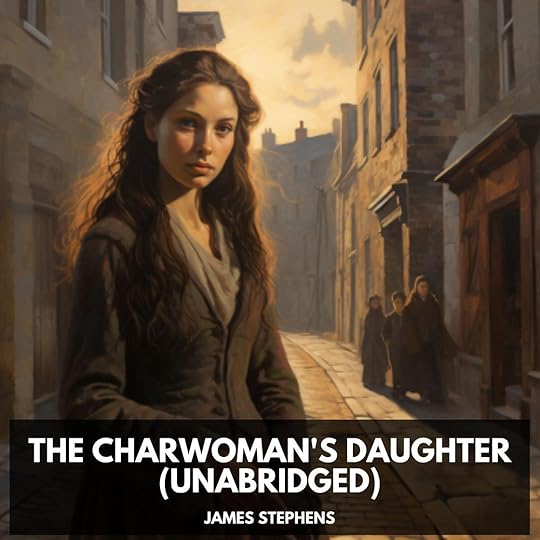
[Image: Book Cover]
I listened to The Charwoman’s Daughter over ten nights via the Sleepy Bookshelf podcast. As narrated by Elizabeth Grace, it made for a pleasant way to fall asleep.
***************************************************************************

[Image: The Sleepy Bookshelf logo]
Title: The Charwoman’s Daughter
Author(s): James Stephens (1880-1950)
Year: 1912
Genre: Fiction - Novel
Page count: 136 pages
Date(s) read: 2/24/25 - 3/19/25
Book 61 in 2025
***************************************************************************

February 17, 2023
The Charwoman's Daughter by James Stephens tells the story of sixteen-year-old Mary Makebelieve, who lives in the slums of Dublin with her mother, a charwoman who cleans the homes of the wealthy. Mary and her mother live in a small, dingy room with a cracked ceiling and mildewed walls. They dream of a better life, creating elaborate alternate lives. Unfortunately the only to improve her life is to marry well.
The descriptions of life in this place for those dealing with poverty are vivid and realistic. I was transported to the dirty dwelling, and the stark realities of Mary's life. We watch as she begins to form relationships with men, and worry about her naive nature. We find ourselves worry about her future, and hoping for her to find a better life without committing herself to a cruel or negligent man.
The book is quiet and introspective. It is the story of people and place and circumstance, rather than one of events. It is a simple story which I found resonant today despite the fact that it was written more than a century ago.
The descriptions of life in this place for those dealing with poverty are vivid and realistic. I was transported to the dirty dwelling, and the stark realities of Mary's life. We watch as she begins to form relationships with men, and worry about her naive nature. We find ourselves worry about her future, and hoping for her to find a better life without committing herself to a cruel or negligent man.
The book is quiet and introspective. It is the story of people and place and circumstance, rather than one of events. It is a simple story which I found resonant today despite the fact that it was written more than a century ago.

August 30, 2021
Mary Makebelief, a name that already hints at a comical subtlety, just fitting the overall light undertone of the book. Although poverty and low-status in the Irish society of the early 20th century was not a light backdrop by any means, Mary's imagination and wonderment, as well as her mother's bitterness-turned-laconic-jolly-indifference ('an imaginary penny for your thoughts') serve the hard backdrop as a side dish which could be taken sparingly by the reader's own discretion. The main dish is Mary Makebelief's discovery of the self and the male other, especially of the relationship and possibilities between those two. The budding romance in the imagination and its consequent emergence in the reality are cleverly portrayed by the author.
It was also well narrated on Librivox, where I enjoyed the audiobook version. :)
It was also well narrated on Librivox, where I enjoyed the audiobook version. :)

May 12, 2023
I really enjoyed this story, although at times I wondered if Mr. Stephens was getting paid by the word back in 1912!
I listened to a LibriVox audiobook read by Michele Fry. I think the timbre of her voice is something that a person with sensitive ears will either be ok with or not. At times it bothered me a little, other times- charming.
The book takes place in Dublin, Ireland right after the turn of the century; many children worked and school was optional.
A story from more than a century ago where the household consists of a single Mom and her daughter. There was no babysitter nor daycare so her child was left to her own devices. Somewhat different from the traditional model of family which much Victorian novels present.
I’m glad I read it and I won’t soon forget it. There are so many vivid pictures of a green city full of parks and open spaces for the public to enjoy.
I listened to a LibriVox audiobook read by Michele Fry. I think the timbre of her voice is something that a person with sensitive ears will either be ok with or not. At times it bothered me a little, other times- charming.
The book takes place in Dublin, Ireland right after the turn of the century; many children worked and school was optional.
A story from more than a century ago where the household consists of a single Mom and her daughter. There was no babysitter nor daycare so her child was left to her own devices. Somewhat different from the traditional model of family which much Victorian novels present.
I’m glad I read it and I won’t soon forget it. There are so many vivid pictures of a green city full of parks and open spaces for the public to enjoy.

Read
March 7, 2023~read for intro to irish literature course~
yes, i am including this in my reading log. i did not listen to the audiobook for over three hours straight on 2x speed without interruption to not do so.
also probably my most favorite reading for this class so far in the semester, which was a pleasant surprise. i’m really excited for the lecture tomorrow, as for once i actually feel on the same level as my classmates!!
will i talk about what i thought here? ….no. i did enjoy it, though. and loved the mother-daughter relationship depicted, which had a very interesting turn i wasn’t expecting halfway through.
and mrs. cafferty was my favorite character, which if you ever read this, probably isn’t anything new in the least because who wouldn’t like her??
yes, i am including this in my reading log. i did not listen to the audiobook for over three hours straight on 2x speed without interruption to not do so.
also probably my most favorite reading for this class so far in the semester, which was a pleasant surprise. i’m really excited for the lecture tomorrow, as for once i actually feel on the same level as my classmates!!
will i talk about what i thought here? ….no. i did enjoy it, though. and loved the mother-daughter relationship depicted, which had a very interesting turn i wasn’t expecting halfway through.
and mrs. cafferty was my favorite character, which if you ever read this, probably isn’t anything new in the least because who wouldn’t like her??

March 10, 2026
I've been trying to listen to this as an audiobook on Slumber. It's just weird, nothing much happens, but there's also no deep thoughts... Just kinda random describing of what she does every day. I stopped listening at the part where she's excitedly thinking about what it might feel like to get punched by different men?! And she asks her mother who then cries and she continues thinking about fists and getting punched? (For a moment I thought I had dozed off and missed the part where this becomes about boxing or something but no, just her DAYDREAMING. About getting hurt.)
Is she supposed to be a ghost or something?
If her mother is a frequently unemployed housemaid, surely the girl of 16 should be at work too?
Is she supposed to be a ghost or something?
If her mother is a frequently unemployed housemaid, surely the girl of 16 should be at work too?
This entire review has been hidden because of spoilers.

August 20, 2018
What a delight this turned out to be. The charwoman, up to her elbows in soap suds, is strangely compelling, and her fresh and innocent daughter all the more so. The creepy, lugubrious policeman with his mournful whiskers who courts her is horrible but fascinating. And just when you think you are being set up for an awful tragedy, you get a really enjoyable and life-affirming ending. This is a vanished Dublin brought vividly to life: I'd rather read this than anything by James Joyce.
December 25, 2024
Una madre y su hija, pobres, viven en un pequeño piso en Irlanda a principios del siglo XX. No hay mucho que contar del libro, que me pareció un poco insulso. Sólo me resultó curioso que en todo momento en mi cabeza las escenas eran actuales, lo que me hizo pensar que ser pobre no debe de ser muy diferente ahora de lo que era hace cien años.

May 7, 2025
A very interesting read. The prose is probing and precise. I couldn’t quite decide if I liked it or not. But I was very glad that Mary didn’t end up with the brute (you know who I mean). His inner mind was scary, but I think is par for the course (class snobbery). I did feel the love that her mother enveloped and in a way, protected her with come through.
This entire review has been hidden because of spoilers.
Displaying 1 - 30 of 49 reviews