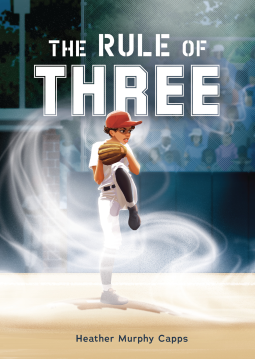
I read this with my son, who is 9 and plays travel baseball. I’ll insert his feedback at the end of this review, for other kids who might be interested in his take.
I’d originally sought this book out because my kid wanted to read more baseball books. We read the description together and thought it was right up his alley.
On a surface level, this book follows a biracial boy called Wyatt as he’s trying out for a travel baseball team. However three chapters in, it’s clear that what the story really is depicting is a series of micro (and some not so micro) aggressions Wyatt experiences daily from teammates, coaches, teachers and even friends, and the way that that results in repressed anger for him. Through a series of flashbacks, we learn that Wyatt’s father Dominic also began exhibiting this physical embodiment of repressed anger after experiencing a trauma (taken from the real event in 1985 of the bombing of a row house in Philidelphia, of John Africa’s MOVE group). The pair go to family therapy where they learn about epigenetics, and learn ways to diffuse their anger through a series of exercises that they go on to practice together.
The book raised important conversations, and to be clear these are continuing conversations in my household (we discuss racial equity frequently). I didn’t know about the bombing so after the Author’s note at the end of the book, I spent a while reading up on the real event.
Please be aware that if your child is at all sensitive, that Dominic flashes back on his childhood friend being killed in that bombing by police. While it was absolutely in place with the rest of the book, I did not go into this book, having read this description, thinking that it would be as violent as it was. Please use your judgement about how your kid will react.
If they’re able to read it, they’ll be rewarded with an exploration of how small affronts add up, an initial intro to the idea of epigenetics, a wonderful example of working through anger, a deeply supportive friendship for the main character that he actively works on, all wrapped up in a fun baseball exterior. There is a watershed moment when the coach of the team realizes that the racism Wyatt described is actually real, and the community pushes back on the loudest progenitors of that violence.
The story is moving and important— it sparked good conversations and my kid came away from it with a deeper empathy around micro aggressions and a better idea of how to stand up for his own teammates and friends. I recommend that this book be read together with your kid, almost regardless of age, so you can help them through those difficult pieces and be available to process it with them.
An insert from my 9 year old, travel baseball playing kid, with whom I buddy read this book:
"This book was really fun to read. I thought the baseball was a little odd sometimes (like when the bases are loaded with two outs and Wyatt and his dad are yelling that the play is at home, when really the play would be at any base. If Asher was in right field, he'd normally try to make the play at first or second, but not third or home), but in general I think the book was really good. I didn't like Asher, but I really liked the friendship between Wyatt and Dallas. I'm not really a big fan of the smoke element. It's a cool plot but it just felt odd to me. I just wish we were talking about Wyatt's anger in a different way. It was really cool to have the flashbacks throughout the book, because it helped me understand Wyatt's dad a lot more. I learned about epigenetics and what happened at the MOVE house in 1985 from this book. I like history a lot, so that was cool. I think people who like baseball, sports, and are interested in learning more about microaggressions would enjoy this book."
Thank you to Netgalley for the advance copy and the opportunity to discuss these important topics with my kid.