Jump to ratings and reviews
Rate this book

Filhos da Palestina

Rate this book
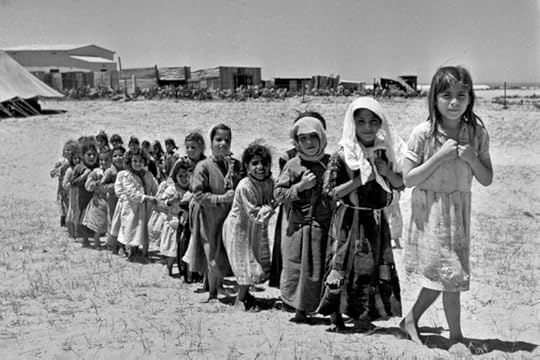
“Política e literatura”, Ghassan Kanafani disse uma vez, “são coisas inseparáveis.” Fadl al-Naqib refletiu que Kanafani “escreveu a história palestina, depois foi escrito por ela.” Suas narrativas oferecem uma janela para a experiência palestina sob o conflito que vitimou o povo do Oriente Médio durante a maior parte do século XX.

248 pages, Paperback

First published January 1, 1984

103 people are currently reading
5407 people want to read

About the author

Ghassan Kanafani

96 books2,138 followers
Ghassan Kanafani (Arabic: غسان كنفاني‎‎)

Ghassan Kanafani was a Palestinian journalist, fiction writer, and a spokesman for the Popular Front for the Liberation of Palestine (PFLP). Kanafani died at the age of 36, assassinated by car bomb in Beirut, By the Israeli Mossad

Ghassan Fayiz Kanafani was born in Acre in Palestine (then under the British mandate) in 1936. His father was a lawyer, and sent Ghassan to a French missionary school in Jaffa. During the 1948 Arab-Israeli War, Kanafani and his family fled to Lebanon, but soon moved on to Damascus, Syria, to live there as Palestinian refugees.

After studying Arabic literature at the University of Damascus, Kanafani became a teacher at the Palestinian refugee camps in Syria. There, he began writing short stories, influenced by his contact with young children and their experiences as stateless citizens.
In 1960 he moved to Beirut, Lebanon, where he became the editor of several newspapers, all with an Arab nationalist affiliation. In Beirut, he published the novel Men in the Sun (1962). He also published extensively on literature and politics, focusing on the the Palestinian liberation movement and the refugee experience, as well as engaging in scholarly literary criticism, publishing several books about post-1948 Palestinian and Israeli literature.

Ratings & Reviews

What do you think?
Rate this book

Friends & Following

Create a free account to discover what your friends think of this book!

Community Reviews

5 stars
630 (59%)
4 stars
309 (29%)
3 stars
97 (9%)
2 stars
20 (1%)
1 star
8 (<1%)
Displaying 1 - 30 of 134 reviews
Profile Image for Baba.
4,073 reviews1,514 followers
May 16, 2021
Subtitled 'Returning to Haifa and other stories' this is one of the Palestinian author and a one-time leading member of the Popular Front for the Liberation of Palestine (PFLP)'s most well known works. Nowhere near as politically charged or anti-Israeli scathing as one would suspect, this collection of 15 short stories and the 'Returning to Haifa' novella focus on the Palestinian children in the late 1940s and in the novella in the 1970s.

Ghassan Kanafani is obviously a very well educated literary writer and it could be argued that his prose deflects from the stories he wants to tell. The short stories are intermittently connected and focus on Palestinian children in the newly occupied territories focusing mostly on how such a sea-change impacts on their everyday lives. 'Returning to Haifa' on the other hand pulls no punches as Palestinian couple return to Haifa to see the home they were forced out of, and maybe to also find out what happened to their baby son who they had to leave behind because of the dire circumstances of the Zionist take down of Haifa, after Britain abandoned it. All this books gives an interesting and extremely thought provoking view of the effects of displacing a people. 8 out of 12.
Profile Image for Murray.
Author 151 books747 followers
July 8, 2024
It’s impossible to achieve resolution or peace with these stories not because the author is gone, but because the Palestinians have achieved no resolution. And neither did the author before his death. The book remains as restless as their souls.

The writing is well done. The perceptions acute. These stories are about a Palestine at war. Fifty years or more have passed since they’ve been written. Not much has changed. I expect Kanafani would be as bitter now as he was then. Probably more so.

I have a friend in Nazareth. They are Christian Arab. Friends in East Jerusalem and the West Bank - that is to say, part of Palestine - and they are Muslim Arab (Fatah). Friends in Israel, Jews born there, who are the sort who are always clashing with Benjamin Netanyahu and his government. They are always demonstrating. Why? One reason is they want to see a nation called Palestine. They want a Palestinian statehood.

No country is monolithic. America is not one set of principles that everyone subscribes to. The government does not always represent everything all Americans want or believe. The same with Israel. There are those Israelis who sincerely desire justice for the Palestinians.

The final story in this collection, Returning to Haifa, is basically a novella at 50 pages. It’s a heart crusher to read. A couple must flee Haifa in 1948 because of the war. Their child is lost. But when they return 20 years later they find their son was found and has been raised by the family that now occupies the house that used to be theirs. They meet their son. He is now a soldier in the IDF. It is a huge shock to them. The story carries on from there.

🇵🇸 A necessary book. A necessary read. But not an easy one.

(1) The Slope/A teacher is afraid to teach his first morning at a school. A boy offers to tell a story about his father, a man who repairs shoes and boots. People come to him from miles around. Even the rich man who lives in a palace on a hill. At the bottom of the hill, far down the slope, is the small shack where the boy's father works day and night without ceasing. The story takes on a mythical quality.

(2) Paper from Ramleh/A Palestinian family is brutalized by an Israeli army patrol. A young girl and her grandmother are shot dead. Where his novel Men in the Sun snapped with rage, this painful story is told quietly and with beauty and dignity. We mourn.

(3) A Present for the Holiday/A plan to surprise children in a refugee camp with toys takes a man back to 1949, the toys he received and which gift mattered the most.

(4) The Child Borrows his Uncle's Gun/The younger son journeys to Safad on foot, hoping to join an attack on the fortress there. The older son has completed his education in Haifa and returns home a medical doctor. His father had wanted him to be a farmer and is disappointed. He tries to get his son to open a practice nearby. But the young doctor will return to Haifa. The friction between father and son increases.

(5) Dr. Qassim Talks to Eva/"There are a lot of things I didn't tell you and a lot of things that you don't tell me.
We make our world smaller with our hands in order to force outside its limits everything that has nothing to do with us. We make it smaller so we can fill it with happiness. My younger brother's a boy who loves the fields. He's like a pure-bred horse which can only live in the meadows."

(6) Abu Al-Hassan Ambushes an English Car/“Oh, unfortunate Abu al-Abd, do you think that you can enter the battle now as you did in time gone by? Do you think that those who are fighting you now are the same English you fought twelve years ago? Do you think they've become old the way you have? If you only knew that they keep sending new generations and the old men go back to their homes. We're the only ones who grow old.”

(7) The Child His Father/Mansur's father was at the foot of the tree clenching the rifle, blood pouring. Mansur stood in the wet emptiness watching him dying, impotent, unmoving except for throbbing which shook him. They began to blur together: the tree, the man and the rifle, from behind the darkness of the angry rain, and through his tears. But to Mansur, they were not together. There was only the quiet corpse.

(8) The Child Goes to the Camp/A boy does everything he possibly can to retain possession of a five pound
note he found on the street - but everyone in his family wants to take it from him and spend it on what they consider important.

(9) The Child Discovers/The family owns an unusual key that looks like an axe. Is it a magic key? The oldest son receives it as an inheritance when his father is killed in combat.

(10-15) Suliman's Friend, Hamid, Guns in the Camp, He was a Child That Day, Six Eagles/The common themes are: the Palestinians must fight back therefore the gun becomes the svmbol of their resistance and independence; the Israelis are intolerant and brutal, harassing and murdering at random; are the eagles on the rock real? If they are they symbolize conflict in relationship and in the breaking of that relationship.

(16) Returning to Haifa is the final story.

"What are they going to do now?"
"They're going to blow up the houses."
"Our houses?”
“Our houses."
“Why?"
“Because I …”
"Because of you?”
“Because I'm innocent."
This entire review has been hidden because of spoilers.
Profile Image for Tim.
337 reviews277 followers
February 24, 2024
In my first exposure to Ghassan Kanafani, I read both Men In The Sun and Palestine’s Children back to back, and this review covers both. The introductory essays in these works emphasized the non-deterministic outlook of Kanafani that was so important to his political vision. Such an outlook arguably goes against a culture that is heavily influenced by the idea of a pre-determined destiny lifted from a particular interpretation of the God described in the Qur’an. Kanafani (and I) would argue that any sort of divine knowledge of destiny needs to be set aside for the truth that we still have free will, responsibility, and a choice at every step. There is a natural law that permeates existence – a law of justice – that requires action to fully implement. Kanafani’s perspective comes from that of the Marxist revolutionary, but no matter the perspective, the underlying essence of the law is universally the same.

The freedom to choose does however carry with it a form of destiny in the sense that we choose particular unknown consequences with every decision. Some of these consequences will be known, for example in the choice between choosing to become a revolutionary and leave a family versus choosing to focus on daily subsistence – an idea that takes shape in Men in the Sun. Other consequences will only be known over time, and this idea is articulated most fully in Returning to Haifa, in the transformation of Khaldun from Arab to Jew.

We can see a familiar progression in Kanafani’s writing and political awareness from the large scale cause in Men in the Sun to the experienced exile in Returning to Haifa. Through the transformation of Khaldun in the latter, Kanafani looks at some of the most basic questions of what it means to be human and how we choose our sense of belonging. What is a human? Is it simply a “cause” and culturally conditioned identity as Khaldun and Said would seem to allude? Or is there something transcendent that is identifiable via the soul or the heart over and above any mental or physical form of identification? Certainly there are universal human traits that we all share, and it was in Mariam’s recognition of the dead Arab child tossed onto the truck “like a piece of wood” that most powerfully articulated this idea. Mariam, a Jew, saw her brother being killed by the Nazis in this dead Arab child, and Kanafani’s choice of “moderate” Jews in Mariam and Iphrat furthered this universal human ideal. We all suffer, and Kanafani’s evolved political awareness in 1969 was able to convey this through the brilliant choice of characters in Returning to Haifa.

These two books should be read together to fully appreciate the evolution of Kanafani’s political consciousness. Kanafani saw politics and the novel as united: “In my novels I express reality, as I understand it, without analysis”.
Profile Image for anastasia tasou.
135 reviews49 followers
May 27, 2021
some really really special short stories and then a completely beautiful novella to finish the book. this is a very important collection on the subject of palestine and for me it combines so much beauty and ‘normal life’ in contrast with war, loss, and weapons
Profile Image for zeinab.
77 reviews67 followers
March 9, 2024
each story had a meaning. there were unique depth in all of them. returning to haifa, the last novella, however, struck me the hardest. this is a must read for anyone trying to read more Palestinian works. ghassan kanafani truly was a master at his craft and i’ll always have the utmost respect for him.
Profile Image for zina.
25 reviews5 followers
May 18, 2022
i couldn’t stop crying on the plane, the way he writes is so soulful you can tell that all the stories hold so much truth to them and it’s painful and bittersweet and yeah i couldn’t stop crying. the short story “returning to haifa” was so simple and yet the way he wrote the dialogue was haunting. “do you know what the homeland is, safiyya?” please… and it was such an easy read i finished it in less than 48 hours. may he rest in peace
Profile Image for  Irma Sincera.
202 reviews111 followers
February 20, 2021
Dar vienas dėmesio vertas Ghassan Kanafani pasakojimų rinkinys. Perskaičius negaliu nelyginti su "Men in the Sun and Other Palestinian Stories " rinkiniu, skaitytu prieš porą mėnsesių, nes aprašomos tos pačios temos, laikmetis, bet atmosfera skyrėsi, jausmas kuris pasilieka su tavimi buvo kitoks.

Šis rinkinys pasirodė "nuogesnis", žiauresnis. Kalboje jau mažiau vingrybių, ji šalta ir tiesi. Visų istorijų centre yra Palestinos vaikai, tarsi simboliai, atskleidžiantys to meto realybę iš įvairių pusių. Knygą sudaro pradžioje daug trumpų istorijų ir pabaigoje ilgesnė "Returning to Haifa". Pastaroji ir buvo pati stipriausia savo poveikiu skaitytojui. Kitos istorijos lyginant su "Men in the Sun and Other Palestinian Stories " rinkiniu mane ne taip sudomino. Pirmoje skaitytoje knygoje patiko ir įsiminė iki dabar beveik visos, net ir trumpiausios istorijos, išgirdus pavadinimą lengvai prisiminčiau, kokia buvo pagrindinė mintis. Šiame rinkinyje daugelis jų jau pasimiršo, išskyrus ilgiausią, ją vieną tikrai rekomenduočiau perskaityti. Galbūt dėl to, kad nemažai skaičiau praeitais metais apie Palestiną, jau nešokirovo, nebuvo to pirminės nuostabos.

Jeigu reikėtų rekomenduoti nuo ko pradėti pažintį su autoriumi, tai vis tik siūlyčiau "Men in the Sun and Other Palestinian Stories " rinkinį.
Profile Image for Noritaatje.
47 reviews
December 9, 2025
"Returning to Haifa" is een wondermooi kortverhaal dat het gevoel van melancholie zo goed weergeeft. Het stelt dingen in vraag als "wat is identiteit?" en "wat is een thuis?".

Een koppel gaat na 20 jaar terug naar hun stad die ze hebben moeten ontvluchten na bombardementen, en zoals het hoofdpersonage zegt: "I acknowledged the city, but the city did not acknowledge me."

Dit is er eentje om te herinneren.
75 reviews2 followers
June 9, 2024
My first time reading Ghassan Kanafani! Incredibly moving. I’m placing this text in conversation with other works which deal with the impossibility of return, the impossibility of repair, and the ongoing injustice of displacement and dispossession. An incredibly moving work which deals with questions of memory, homeland, settler colonialism, and partition — and most of all: the future of Palestine.
Profile Image for Fábio Shecaira.
38 reviews3 followers
November 6, 2023
Returning to Haifa is a striking story of human suffering and dispossession. I was particularly impressed by the character of Miriam, the Jewish settler. In spite of the anger against colonial oppression that seems to inspire the book, Kanafani did not fail to include a complex and sympathetic Jewish character in the story.
Profile Image for Laila.
57 reviews
July 2, 2024
Beautiful collection! I wish I knew how to read and understand Arabic to be able to read this in its original language. The imagery stands out the most in all of this - Kanafani and the translators both are so good at painting the picture of what they are trying to tell you. There were so many moments where I cried. The short stories also make it clear why or how resistance gets born, why people become a part of it, why parents support it, what the next generation holds. One part that stood out the most to me was when a mother and father are looking at their son in a camp in "Guns in the Camp": "Abu Saad said to her: 'Wait...do you see him? Keep an eye on him.' As if she didn't see him! As if she weren't right there with him at the very heart of the crowd, counting down the beads of sweat which soaked his small tanned brow." A sentence that captures a mother's love so wholly!!! while also capturing her love and longing for a free Palestine!

This was a heart wrenching book covering not just the relationships we have with each other, but the ones we have with land, with animals, with memories, with history.

Another story that stood out started off a little muddy in my head in the beginning because there was so much imagery was "He Was a Child That Day." But I was in tears by the end - the way people build and find community amongst tragedy and the short instant it takes settlers to destroy it. It was beyond devastating. Kanafani writes from the resistance, he writes to keep the memory of Palestine alive while pushing for the future of Palestine.

And of course "Returning to Haifa" was one of the best short stories I have ever read. Pointing out these stories is not to say that the others weren't good. It was an excellent book from start to finish.

I am also so glad this book included a biography in the beginning as well as a thorough introduction. We learn about Kanafani's life and his works in some detail. He also makes the distinction clear in many of his journalistic work that his "political position springs from [his] being a novelist" and not vice versa: "I started writing the story of my Palestinian life before I found a clear political position or joined any organization."

His writing is human and alive and beautiful. May it forever keep the memory of Palestine alive!
Profile Image for Cody.
996 reviews304 followers
October 9, 2025
Maybe it’s a luxury of my remove, the ostensible ‘privilege’ I hear crowed from every, ahem, cock I meet, but the timing of reading a book with the word “Palestine” and the ongoing atrocities in the same did not occur to me until, well, just about now. So, I will NOT cross into the Rubicon of online talk that moves nothing REAL around beyond my purported virtue. I would hope that which ‘side’ I am on would be self-evident a decade into writing these stupid fucking things (answer: the human side).

Besides, this is not that. Or, should I say, it so supersedes this (now) chronologically as to be a dispatch from the dead. Which, of course, it actually is thanks to one car bomb that killed two human beings, Kanafani and his niece, aged 5. Sounds about fair. But this (book) also is not Men of the Sun, Kanafani and perhaps Palestine’s single greatest contribution to modern letters. Don’t get me wrong, this is tremendous work; the interlinking stories and vignettes are wrecking balls enough to knock down walls Wailing and, er, non-sentient. A workable analogue would be Levi’s Table of the Elements, but far less successfully and intentionally executed. I think you get the drift.

Kanafani was, in the argot of modern poetry, the shit. Read it and him and God bless all nieces everywhere. Maybe even the stray nephew now and again.
Profile Image for Luise.
92 reviews
Read
November 29, 2024
my book edition only includes returning to haifa, but i wish i’d also read the other short stories that are part of the english publication to get some more of the context kanafani was writing from. nevertheless, returning to haifa paints a picture startingly clear in its brevity. it’s a haunting, brutal retelling of the cruelty of the nakba and its echoing trauma, as well as an allegory for the relationship the people living on that land have to each other.
Profile Image for Rahil Is Booked.
198 reviews3 followers
November 7, 2023
Everyone needs to read this. My first time reading nonfiction, and these stories touched me in a way, man, i loved the style chosen, the essence, the wholeness...
Literally, don't stop talking about Palestine. 🇵🇸
Free Palestine, till Palestine is free.
🇵🇸
Profile Image for Nadia.
91 reviews25 followers
October 20, 2025
The stories 'Returning to Haifa' and 'He Was a Child That Day' will stick with me for a long time.

"Man is a cause."
Profile Image for Ivan.
361 reviews52 followers
December 5, 2017
Premetto che l’ho letto nell’edizione italiana (Edizioni Lavoro), che non ho messo per pura pigrizia, e che in questa ci sono solo due racconti: “Ritorno ad Haifa” e “Umm Saad”. Se il secondo racconto non mi ha colpito particolarmente (ricorda un po’ “Madre Coraggio “ di Brecht e “La madre” di Gor’kij), il primo, più lungo, è stato letteralmente un pugno sullo stomaco. Perché? Perché ti fa pensare, ti fa riandare alla tragedia della diaspora palestinese tante volte sotto i riflettori in prima pagina e subito dopo rimossa e dimenticata.
È la storia di una famiglia palestinese, marito e moglie, Safiya e Sayd, che vivono a Ramallah e che ritornano per una breve visita ad Haifa per vedere la casa dove abitavano. Venti anni prima l’avevano abbandonata perché cacciati, insieme a tutta la popolazione palestinese di Haifa, dall’esercito israeliano in seguito alle violenze scoppiate con il ritiro del corpo britannico nel 1948 (Ghassan scrive il racconto nel 1969). C’è tutto quindi il dolore dei ricordi, che aumenta man mano che i due si avvicinano alla casa e la trovano occupata da una famiglia israeliana. Marito e moglie anche loro, fuggiti a loro volta dalla Polonia in Israele per scampare dalla violenza nazista che ha ucciso i loro familiari. Beh, qui c’è già tutto il parallelo, lo specchio delle storie nella storia, per cui ognuno si trova a calzare le scarpe dell’altro, a capire e compatire il dolore dell’uno e dell’altro. Ma la cosa terribile, agghiacciante, che sposta l’equilibrio simpatetico che si potrebbe istaurare (“sì, va bè, abbiamo tutti sofferto) è che Safiya e Sayd in quei terribili giorni del ’48 hanno perso il loro bambino nel trambusto generale e nella cacciata forzata: un bimbo di 5 mesi, Khaldun, che era rimasto solo nella casa in cui la mamma non era potuta entrare a riprenderlo. Questo bambino considerato orfano era stato poi adottato dalla coppia di ebrei e “ribattezzato” Dov. Immaginate quindi il dolorosissimo incontro con Dov che adesso è nell’esercito israeliano. Il simbolismo, realistico, dice tutto, più di tanti saggi e discussioni.
Profile Image for Lee.
548 reviews65 followers
May 11, 2024
Kanafani was the spokesman of the Popular Front for the Liberation of Palestine, proscribed as a terrorist group by the US, Canada, and the EU; he was assassinated in 1972 after the PFLP organized the Lod Airport Massacre which killed 17 Puerto Rican tourists and 8 Israelis. Which is to say, he was a writer who believed in and died by the power of the gun.

This is reflected in his stories. Three early connected pieces here focus on the 17 year old Mansur, from the village of Majd al-Kurum in the Galilee, during the civil war in the last days of the British Mandate. Mansur’s father is a farmer who wants his two sons to just stay home and farm the land. They disappoint him. Mansur’s older brother becomes a doctor and starts “running around with Jewish women” who dress immodestly (“the very land itself couldn’t bear to look at them.”) Mansur meanwhile borrows an old gun from his uncle and goes off in search of the fighting, determined to do his bit. After his first taste of action he returns home to proudly face his father’s anger for defying him. It’s not hard to read these three approaches as symbolic of choices facing the Palestinian people, and to read which of them Kanafani favors. Here Kanafani speaks directly to his character, and one assumes to Palestinians:
To own a gun for one courageous moment, maybe with a bayonet on it as well. But whoever said that the sky rained rifles the way it rained manna and quails? For the last ten years Shakib had been able to steal hundreds, at least, of weapons. He didn't ask permission from anyone. What are you waiting around for, Mr. Mansur? Do you think you're going to find a rifle or a machine gun on the doorstep of your house some morning? This is the revolution! That's what everyone says, and you're not going to know what that means until you sling a gun over your shoulder, a gun that shoots. How long are you going to wait?


“The Child Goes to Camp” is a nicely done story about a young boy from a poor family who finds a 5 pound note in the street. He refuses to hand it over or share it with his family, keeping a tight grip on it in his pocket for 5 weeks; he can’t bring himself to spend it and part with his treasure. Hit by a delivery truck and knocked out, he awakes to find his pocket empty and suspects his cousin took it, but looking at him, “I wasn’t angry because it had been fun.”

That childhood innocence is contrasted again with “Guns in the Camp,” in which parents beam with pride watching their young son excel at military drills with other children. The father is portrayed as having had his joy restored to him by having his two sons growing up to be fedayeen guerrilla fighters. “If only it had been like this from the beginning,” he says. His wife speaks of the psychological change wrought in her husband by the move of the people in the camp towards militancy, a benefit Kanafani strongly believed in according to the book’s introduction.

”Abu Saad had been crushed. Crushed by the poor, crushed by the victors, crushed by the ration card… What could he do? Saad’s going restored his spirits and that day he was a little better. He saw the camp in another way. He lifted his head and began to look around. He looked at me and he looked at his children differently. Do you understand? If you could just see him now, strutting around like a rooster. He can’t see a gun on a young man’s shoulder without moving aside and caressing it, as if it were his own old gun that had been stolen and he had just now found it again.”


The most well known story in this collection though is “Returning to Haifa”, which is saved for last. At almost 40 pages it is Kanafani’s meatiest and strongest. It features a Palestinian couple, Said and Safiyah, who had fled Haifa during the Arab-Israeli War, returning twenty years later after Israel captured the West Bank in the 1967 war, allowing movement between the two places.

Suddenly came the sound of the sea, exactly the way it used to be. Oh no, the memory did not return to him little by little. Instead, it rained down inside his head the way a stone wall collapses, the stones piling up, one upon another. The incidents and events came to him suddenly and began to pile up and fill his entire being.


When fleeing Haifa unexpectedly they had left behind their infant son, and hope to find him. They do, but unhappily. Their son had been adopted by the Jewish couple now living in their old home and identifies as Jewish and, as if that weren’t enough, serves in the IDF. “They stole him!” says Said, obviously a statement referencing more than just the boy, as they uncomfortably sit in their old house with its current owner/occupier, a Holocaust survivor. When the son comes home and sees the situation, and quite a question of his most primal sense of identity it would have to be, he rejects identifying with his birth parents, saying they left him and they could’ve searched for him instead of just crying for 20 years, and that if it was him, he would have born arms to fight all this time. The interaction is antagonistic and unkind on both sides (quite symbolic!). Said angrily says this can’t be their son, but they have another son who has joined the fedayeen and maybe the two will meet in battle.

Again the politics of the story is pretty clear. Kanafani mourns the passing of decades in which Palestinians did not in his perspective adequately fight the Jews. The land and homes of the refugees from the pre-1948 territory have been occupied by a different people, taken on new identities, been integrated into a new national identity that excludes them. Said angrily says to his wife as they enter Haifa that the Israelis by immediately opening the pre-1967 borders following their victory are “saying to us ‘Help yourselves, look and see how much better we are than you, how much more developed. You should accept being our servants. You should admire us.’”

But they have new sons born as refugees who will take up weapons. Said says a friend of his went to his old house in Jaffa the other day and told the new owner, “Your presence here is a sorry comedy that will end one day by the power of the sword.” Said says two wrongs don’t make a right, the Holocaust “doesn’t justify anything for you” (‘you’ in the Arabic addressed to Israelis in general by Kanafani, per the endnotes). “You may remain in our house temporarily. It will take a war to settle that,” he says as he leaves. And, “I beg you to notice that I did not say he’s your brother,” Said tells his lost son in reference to his younger son. For there is to be a decisive break between what has been and what will be through the power of bearing arms. War is required to right their mistakes. A story that befits a revolutionary perspective.
Profile Image for Khaled  .
55 reviews15 followers
January 8, 2021
“I said, what is a homeland? I was asking myself that question a moment ago. Naturally. What is a homeland? Is it these two chairs that remained in this room for twenty years? The table? Peacock feathers? The picture of Jerusalem on the wall? The copper lock? The oak tree? The balcony? What is a homeland? Khaldun? Our illusions of him? Fathers? Their sons? What is a homeland?”
3 reviews
February 2, 2025
This is a stunning collection of fictional stories that depict the loss of the Palestinian homeland through the eyes of its children, set between the catastrophes of 1948 and 1967, crowned by the novella Returning to Haifa. In short, this is a vital capsule of the Palestinian experience and vessel for the communication of their struggle to the world. Devastatingly, achingly beautiful in its prosaic and poetic expressions.

The introduction and contextual footnotes by the translators Karen E. Riley and Barbara Harlow add depth and richness to the interpretation of the stories, and of Kanafani's prominent role in developing the nascent Palestinian national consciousness and resistance in the wake of exile, confusion, and anguish. For instance, "What James Joyce did for Dublin or William Faulkner for the U.S. South, Kanafani in his stories has provided for Palestine." Kanafani's characters traverse the past, present, and future in intentional measure: the initial losses of 1948, the immediacy of daily life's struggle, and the uncertainty of the future of their homeland.

His characters make many journeys across the land, in and out of the streets of Acre, Haifa, Jaffa, Safad, and across the countryside, highlighting the intimate relationship between the land and its people, and in doing so constituting a powerful topographical record of places that have since been occupied, renamed, destroyed, or otherwise erased from Palestinian existence.

Kanafani was killed, along with his young niece, when his booby-trapped car exploded in Beirut in 1972. Similar instances of brutality appear frequently in his stories, written as only one who has grown up in such an environment can. These stories also serve a more universal purpose, to humanize the struggle of the Palestinians, and of oppressed people everywhere. In the end, as Fadl al-Naqib is credited with saying, Kanafani "wrote the Palestinian story, then he was written by it."
Profile Image for Stephen.
148 reviews1 follower
January 14, 2025
This is a great collection of short stories, rich with intimate musings, humor, desperation, and determination. The final story, Returning to Haifa, was especially stirring. It communicates grief and longing, and resolve, so well.

“What is a homeland?”
Profile Image for Andreas  Chari.
46 reviews1 follower
July 28, 2025
"First you say that our mistakes justify your mistakes, then you say that one wrong doesn't absolve another. You use the first logic to justify your presence here, and the second to avoid the punishment your presence here deserves"

Man is indeed a cause.
Profile Image for Harry.
85 reviews14 followers
March 1, 2024
‘Man, in the final analysis, is a cause. That’s what you said. And it’s true. But what cause? That’s the question!’
Profile Image for Koby Samuel.
19 reviews
June 25, 2024
heart-wrenching and a more than necessary read. free palestine!
Profile Image for Lulu.
189 reviews2 followers
March 10, 2024
Returning to Haifa is I think one of the best short stories I’ve ever read.
Profile Image for Ruya Hazeyen.
51 reviews2 followers
August 4, 2024
One thing that kanafani’s short stories are going to do is make me cry every time. Returning to Haifa in particular. So hard hitting, so beautifully translated and written. Everyone must read.
Displaying 1 - 30 of 134 reviews

Join the discussion

Can't find what you're looking for?

Get help and learn more about the design.