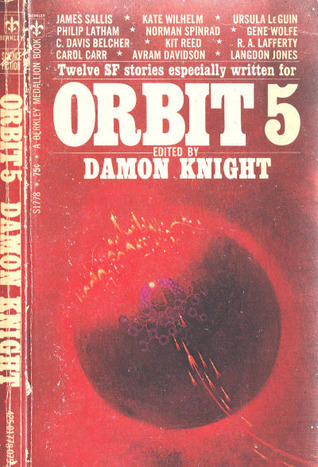
I was born in 1969, the year for this anthology was first published. That was the year of The Who's Tommy, Jackie Mason, Vietnam and Nixon. It was a time when everything about society was being questioned. All of these things are reflected in this story collection.
This was one of the better Orbits, since many of the stories had a clear plot and conclusion. Knight hadn't filled his stable of writers with his friends yet, though his wife was always assured of at least one slot of the dozen. He was still open to other, less popular voices, including (I think) an ophthalmologist.
Selections:
* "Somerset Dreams" by Kate Wilhelm/Mrs. Damon Knight. This sad novella about a creepy town would wind up in several other sci-fi anthologies, but it's not one of her best. It's written in a trippy, dream-like way. The Somerset is in America, not England.
* "The Roads, The Roads, the Beautiful Roads" by Avram Davidson. A short, sharp shock about not building more damn highways in America.
* "Look, You Think You've Got Troubles" by Carol Carr. Incisive parody of Guess Who's Coming to Dinner? A Jewish girl loves a Martian boy.
* "Winter's King" by Ursula K. LeGuin. This story is part of the Hainish Cycle. It's difficult and disjointed, but try and stick with it, even if you've never read anything in the Hainish Cycle before.
* "The Time Machine" by Langdon Jones. This convoluted novella is nothing more than a wet dream. Skip it.
* "Configuration of the North Shore" by R. A. Lafferty. One of Lafferty's more understandable stories, with a good basic premise, but a disappointing ending.
* "Paul's Treehouse" by Gene Wolfe. This was most likely written in 1968, when it seemed there was one riot after another. It terrified whitebread America, and this gently crafted story taps into that fear.
* "The Price" by C. Davis Belcher. I'm not entirely sure, but I think the writer was an ophthalmologist. This was written soon after the first "successful" heart transplant was done (the recipient only lived 18 days). The legal implications of transplants had not been worked out yet. Despite the advancement of transplantation (and legalities ironed out), this story still holds up.
* "The Rose Bowl-Pluto Hypothesis" by Philip Latham. A very science-related story about a changing universe, mirrored by a bit of the humanities. Written decades before Usain Bolt.
* "Winston" by Kit Reed. Very sad, poignant story superficially about small savant children sold as pets, but really about the ways pedigreed puppies are abused. Get your Kleenex ready.
* "The History Makers" by James Sallis. Very difficult piece about a human trying to live in a world that has a different rate of time. Second piece to mention Dali's "The Persistance of Memory" (the first in Lafferty's piece.)
* "The Big Flash" by Norman Spinrad. Rock and roll inspires popular favor to use nukes in the Vietnam War. Very predictable stuff. Both rock and nuclear weapons terrified many people in 1969.